CONSERVATION
Presented by Group3
Ar. Shova Thapa | Ar. Renu Maharjan
Literature Review and Case Studies
Purushottam Ghimire (THA077BAR026)
Safala Bista (THA077BAR031)
Sakshyam Shakya (THA077BAR032)
Sanskriti Lamsal (THA077BAR034)
Sukriti Gyawali (THA077BAR042)
2.
CONSERVATION in Architecture
•preserve buildings and sites of historical, cultural
or social significance for future generations
• maintenance, preservation, restoration or
reconstruction –with respect to a place’s cultural
significance
• heritage must be handed down “in the full
richness of [its] authenticity”
• carefully balancing authenticity, material
integrity, and cultural values when intervening in
historic fabric
• philosophy has evolved from early post‑war
guidelines to more holistic, community‑oriented
approaches worldwide.
3.
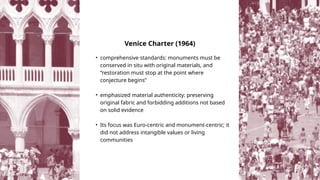
• comprehensive standards:monuments must be
conserved in situ with original materials, and
“restoration must stop at the point where
conjecture begins”
• emphasized material authenticity: preserving
original fabric and forbidding additions not based
on solid evidence
• Its focus was Euro‑centric and monument‑centric; it
did not address intangible values or living
communities
Venice Charter (1964)
4.
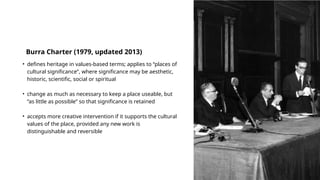
• defines heritagein values-based terms; applies to “places of
cultural significance”, where significance may be aesthetic,
historic, scientific, social or spiritual
• change as much as necessary to keep a place useable, but
“as little as possible” so that significance is retained
• accepts more creative intervention if it supports the cultural
values of the place, provided any new work is
distinguishable and reversible
Burra Charter (1979, updated 2013)
5.
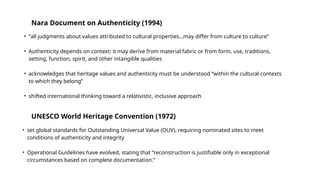
• “all judgmentsabout values attributed to cultural properties…may differ from culture to culture”
• Authenticity depends on context: it may derive from material fabric or from form, use, traditions,
setting, function, spirit, and other intangible qualities
• acknowledges that heritage values and authenticity must be understood “within the cultural contexts
to which they belong”
• shifted international thinking toward a relativistic, inclusive approach
Nara Document on Authenticity (1994)
• set global standards for Outstanding Universal Value (OUV), requiring nominated sites to meet
conditions of authenticity and integrity
• Operational Guidelines have evolved, stating that “reconstruction is justifiable only in exceptional
circumstances based on complete documentation.”
UNESCO World Heritage Convention (1972)
8.
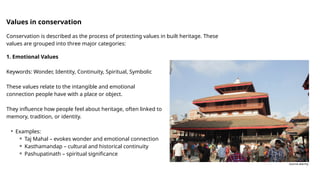
1. Emotional Values
Keywords:Wonder, Identity, Continuity, Spiritual, Symbolic
These values relate to the intangible and emotional
connection people have with a place or object.
They influence how people feel about heritage, often linked to
memory, tradition, or identity.
• Examples:
⚬ Taj Mahal – evokes wonder and emotional connection
⚬ Kasthamandap – cultural and historical continuity
⚬ Pashupatinath – spiritual significance
Values in conservation
Conservation is described as the process of protecting values in built heritage. These
values are grouped into three major categories:
source-alarmy
9.
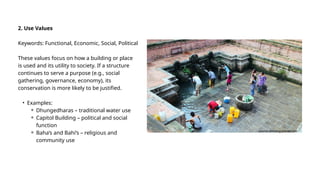
2. Use Values
Keywords:Functional, Economic, Social, Political
These values focus on how a building or place
is used and its utility to society. If a structure
continues to serve a purpose (e.g., social
gathering, governance, economy), its
conservation is more likely to be justified.
• Examples:
⚬ Dhungedharas – traditional water use
⚬ Capitol Building – political and social
function
⚬ Baha’s and Bahi’s – religious and
community use
s
source-amusing planet.com
10.
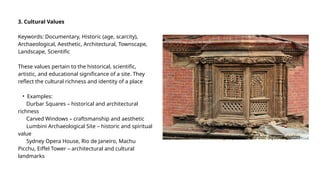
3. Cultural Values
Keywords:Documentary, Historic (age, scarcity),
Archaeological, Aesthetic, Architectural, Townscape,
Landscape, Scientific
These values pertain to the historical, scientific,
artistic, and educational significance of a site. They
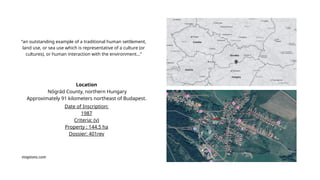
reflect the cultural richness and identity of a place
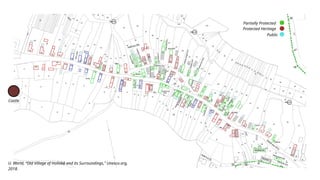
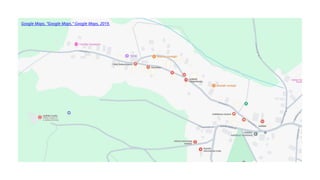
• Examples:
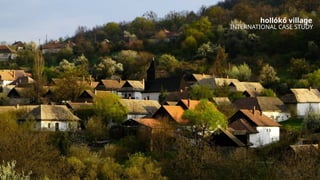
Durbar Squares – historical and architectural
richness
Carved Windows – craftsmanship and aesthetic
Lumbini Archaeological Site – historic and spiritual
value
Sydney Opera House, Rio de Janeiro, Machu
Picchu, Eiffel Tower – architectural and cultural
landmarks
-details-on-the-royal-palace-durbar-square-patan-
11.
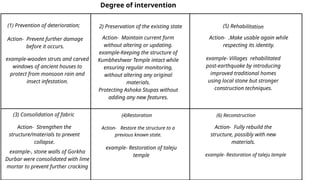
Degree of intervention
(1)Prevention of deterioration;
(3) Consolidation of fabric (4)Restoration
(5) Rehabilitation
(6) Reconstruction
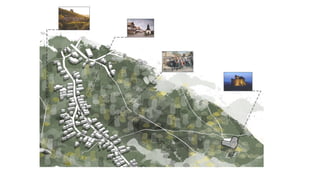
2) Preservation of the existing state
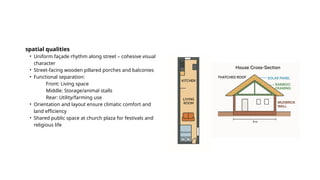
Action- Prevent further damage
before it occurs.
Action- Strengthen the
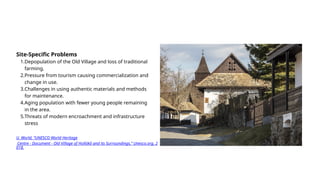
structure/materials to prevent
collapse.
Action- Restore the structure to a
previous known state.
Action- Fully rebuild the
structure, possibly with new
materials.
Action- .Make usable again while
respecting its identity.
Action- Maintain current form
without altering or updating.
example-wooden struts and carved
windows of ancient houses to
protect from monsoon rain and
insect infestation.
example-, stone walls of Gorkha
Durbar were consolidated with lime
mortar to prevent further cracking
example- Restoration of taleju
temple example- Restoration of taleju temple
example- Villages rehabilitated
post-earthquake by introducing
improved traditional homes
using local stone but stronger
construction techniques.
example-Keeping the structure of
Kumbheshwar Temple intact while
ensuring regular monitoring,
without altering any original
materials.
Protecting Ashoka Stupas without
adding any new features.
12.
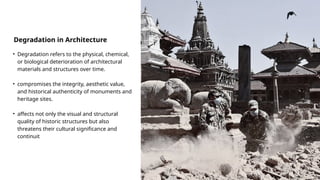
Degradation in Architecture
•Degradation refers to the physical, chemical,
or biological deterioration of architectural
materials and structures over time.
• compromises the integrity, aesthetic value,
and historical authenticity of monuments and
heritage sites.
• affects not only the visual and structural
quality of historic structures but also
threatens their cultural significance and
continuit
13.
• Environmental Exposure: Continuous exposure to rain, sunlight, humidity, and temperature fluctuations
weakens building materials.
• Pollution : Emissions from vehicles, factories, and industrial processes lead to chemical reactions that
corrode surfaces.
• Neglect and Poor Maintenance : Infrequent inspections, lack of repairs, and water leakage can accelerate
decay.
• Human Activities : Encroachments, vandalism, unregulated tourism, and inappropriate renovations disturb
structural and cultural integrity.
• Biological Infestation : Growth of moss, algae, fungi, and insect activity damages wood, plaster, and stone.
• Natural Aging : Over time, materials lose strength and cohesion due to their inherent life cycles.
Causes of degradation
14.
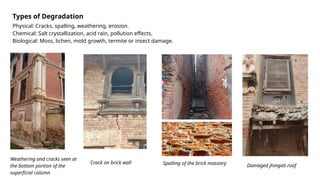
Types of Degradation
Physical:Cracks, spalling, weathering, erosion.
Chemical: Salt crystallization, acid rain, pollution effects.
Biological: Moss, lichen, mold growth, termite or insect damage.
Weathering and cracks seen at
the bottom portion of the
superficial column
Spalling of the brick masonry Damaged jhingati roof
Crack on brick wall
15.
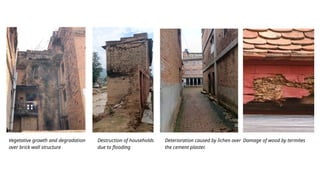
Vegetative growth anddegradation
over brick wall structure
Destruction of households
due to flooding
Deterioration caused by lichen over
the cement plaster.
Damage of wood by termites
16.
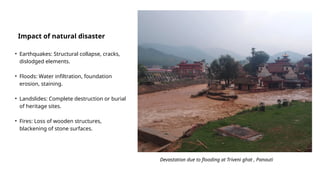
Impact of naturaldisaster
• Earthquakes: Structural collapse, cracks,
dislodged elements.
• Floods: Water infiltration, foundation
erosion, staining.
• Landslides: Complete destruction or burial
of heritage sites.
• Fires: Loss of wooden structures,
blackening of stone surfaces.
Devastation due to flooding at Triveni ghat , Panauti
17.
• Regular Maintenance:Cleaning, minor repairs, pest control.
• Structural Reinforcement: Use of compatible materials for strengthening.
• Buffer Zones: Prevent encroachment by zoning regulations.
• Environmental Monitoring: Track pollution and weathering effects.
• Community Involvement: Local stewardship for heritage preservation.
Protective Measures Against Degradation
Ancient Monument PreservationAct (AMPA) 1956
• Objective: Preserve ancient monuments ( 100 years old)
≥
with historical, artistic, or scientific value.
• Ownership: Public (managed by DOA) and private
(maintained by owners with DOA approval).
• Importance: International, national, or local.
• Protected Areas:
Govt. can declare "Preserved Monument Areas"
• Construction/modification in these zones requires DOA
approval.
Ancient Monuments Preservation Rules 2046 (1989
A.D)
Ancient Monument Conservation Procedure 2064
(2007 A.D)
20.
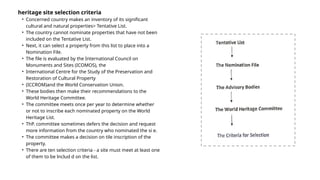
heritage site selectioncriteria
• Concerned country makes an inventory of its significant
cultural and natural properties> Tentative List.
• The country cannot nominate properties that have not been
included on the Tentative List.
• Next, it can select a property from this list to place into a
Nomination File.
• The file is evaluated by the International Council on
Monuments and Sites (ICOMOS), the
• International Centre for the Study of the Preservation and
Restoration of Cultural Property
• (ICCROM)and the World Conservation Union.
• These bodies then make their recommendations to the
World Heritage Committee.
• The committee meets once per year to determine whether
or not to inscribe each nominated property on the World
Heritage List.
• ThP. committee sometimes defers the decision and request
more information from the country who nominated the si e.
• The committee makes a decision on tile inscription of the
property.
• There are ten selection criteria - a site must meet at least one
of them to be lnclud d on the list.
21.
monumental zones
• Asper Ancient Monument Preservation Act point 3.1, for the
declared Kathmandu, Bhaktapur and Patan Durbar
Preserved Monument Area.
• For preservation and management of the architectural and
historical environment of the monument zones.
1. Title, Extension and Commencement:
2. Definitions
a. Preserved Monument Area:
As declared by AMPA 3.1
a. Cornice: Projected brick or timber lining on the outer wall
of the building.
b. Traditional Windows:
Timber carved, simple shuttered or louvered.
Floor Height Floor to Floor Height.
c. Malla Style: Non-Plastered brick walls
d. Rana Style: Lime, Surkhi Plastered
Green/ Yellow Louvered Window
e. Classified Buildings (As in AMPA)
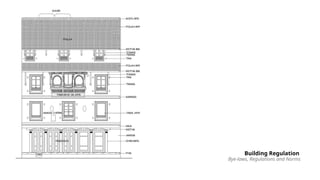
byelaws for conservation and preservation of classified
buildings
• Protect and Preserve uniqueness of part or whole of the
building.
• Compatible design fo rest of the parts
• Consulting Committee formed by DOA for above work.
NON-CLASSIFIED BUILDINGS AND BUILDINGS TO BE BUILT
ON VACANT LAND OF THE CORE ZONE
• Maximum Ground Coverage: 100% If re-building For Vacant
Land: Upto 0-2-2-0 90% More than 0-2-2-0, 80% or 770 sq.ft
whichever is more.
• For plots upto 6m depth, no need of set backs at the back.
• Floor Area Ratio (FAR) Rebuild: 3.5 Vacant Land: 3 Maximum
Floor Height: 8', Maximum Building height 35', Lower height
if near a monument. If monument is of height lower than 28',
skyline is taken for reference.
• Rebuilding: Be of any original height, rebuilt with max.
35' ,Helght Datum: Ground level in front of the main door
• Maximum Floors: 4, inclusive of Attic and Staircase Cover
22.
• Structure System:structurally exposed not allowed,
Earthquake Safe, Load bearing, RCC, Brick and timber,
Chinese Brick & tiled facade not allowed
• Finishing/ Elevation: Visible brick façade/ no paint that
hides the texture, No any kind of plaster allowed on the
facades In case of cornices and frames around the
openings, lime and surkhi can be allowed. Compatible
plaster for Rana Style buildings, Pointing allowed, match
with skyline.
• Cantilevers and Projections: Allowed on 3rd floor to
protect facade, max. 3' deep, Sloped at 25-30, with struts,
Continuing Plinth, Pati for public use.
• Openings: Proper sill and Lintel Levels Traditional Style
and Proportions Openings @ 50% of façade area In case
of L.B structures, 3' distance for windows from edge Odd
numbers of openings Single panel window in ground
floors Minimum panel width 2'-6" Proportion: 1:1.5 1:1.2
Latticed Windows: not larger than 3'/3' Encourage the re-
use and re-design of original windows, Shutters of Timber
Grills if used, should be concealed with outer timber
shutters, Flexibility for other elevations ,Strict application
for facades visible from main roads and public places
• Roof: Two way slope with tiles, If only one façade free, one
way slope ,R.C.C construction concealed with tiled roof
covering and timber eaves board allowed ,Sloped at 25-30
,Sloped chajjas as per skyline ,Should not cause problems
to neighbors, No installations should be visible from road.
• Veranda/ Balcony: 3' projected from 3rd floor Recess
veranda not allowed, In back elevation, 2m set back with
1m deep veranda allowed
• Cornice: Max. 9" projection to represent the floors of the
building ,Materials as per building style: timber, surkhi,
lime and brick, plain or decorative , In harmony with the
skyline
• Footpath: 1-1.5' high and max. 2'-6" deep,Centre of façade
as the reference point
• Terrace: 33% of roof area allowed for flat parapeted
terrace
• No basement, semi-basement allowed
23.
BYELAWS FOR OTHERCONSTRUCTIONS AND DEVELOPMENT
• Preservation of Cultural Value and Use Preserving the
nature, scale and proportion of public spaces and continuing
the original use.
• No encroachment of public space by plinth etc. of private
building. Public vacant lots to be preserved. Safety of
monuments during construction near them.
• Pedestrianisation of core area Parking outside core area/
entry for emergency vehicles.
• Paving streets and squares with brick and stone Use of old
materials while renovating.. Proper cleaning of same.
• Surface Rain Water Drain Design for maximum run off,
Concealing of gutters and pipes in facades Sewer Pipes
Treatment before mixing in rivers. Septic tank where needed.
Preserving Traditional Water Sources/New Pipe lines should
not endanger monuments.
• Underground electrical lines encouraged/Visual pollution to
be discouraged.. Lighting in public/semi-public areas to
enhance and not disturb the visual quality of cultural
environment. All types of Cables to be concealed. Meters,
antenna and other installation should be hidden from public
view.
• Designated place for waste collection
• No hamper by/ of any kind to traditional roles of the
spaces. Discouraging large sign boards.
• Preserving green areas, restricting construction,
preserving waterfronts.Preserving, Cleaning water
bodies.
• MISCELLLANEOUS Associated buildings, government,
security buildings design in harmony with skyline.
• Extra map for building in mentioned area
• Sanitary Layout -Installations layout on roofs along with
position and size.
24.
• Architectural degradationand loss of authenticity
• Encroachment and uncontrolled urbanization
• Loss of cultural identity and historical continuity
• Tourism and economic decline
• Social displacement and marginalization
• Lack of regulatory enforcement and policy gaps
• Gentrification pressure
• Fragmentation of urban and heritage planning
URBAN DECAY AND ITS IMPACTS ON
HERITAGE SITES
• Adaptive reuse of heritage buildings
• Traditional repair and conservation techniques
• Revitalizing local craftsmanship
• Architecturally sensitive retrofitting
• Integrated heritage based urban planning
• Community participation in conservation
• Supportive policies and incentives
• Following global frameworks and best practices
MINIMIZING THE IMPACT OF URBAN
DECAY IN HERITAGE SITES
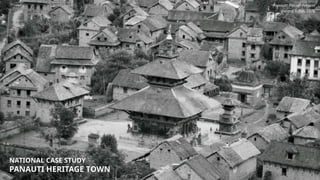
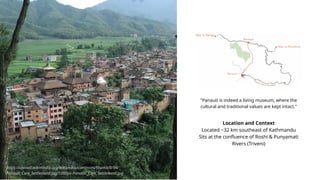
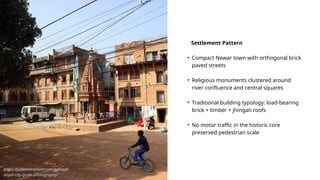
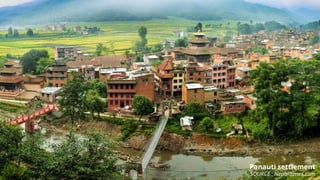
Location and Context
Located~32 km southeast of Kathmandu
Sits at the confluence of Roshi & Punyamati
Rivers (Triveni)
"Panauti is indeed a living museum, where the
cultural and traditional values are kept intact."
https://upload.wikimedia.org/wikipedia/commons/thumb/9/94/
Panauti_Core_Settlement.jpg/1200px-Panauti_Core_Settlement.jpg
27.
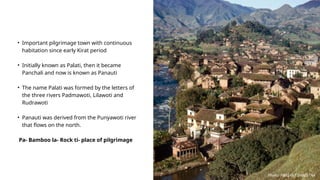
• Important pilgrimagetown with continuous
habitation since early Kirat period
• Initially known as Palati, then it became
Panchali and now is known as Panauti
• The name Palati was formed by the letters of
the three rivers Padmawoti, Lilawoti and
Rudrawoti
• Panauti was derived from the Punyawoti river
that flows on the north.
Pa- Bamboo la- Rock ti- place of pilgrimage
Photo: PRASANT SHRESTHA
28.
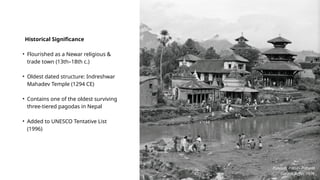
Historical Significance
• Flourishedas a Newar religious &
trade town (13th–18th c.)
• Oldest dated structure: Indreshwar
Mahadev Temple (1294 CE)
• Contains one of the oldest surviving
three-tiered pagodas in Nepal
• Added to UNESCO Tentative List
(1996)
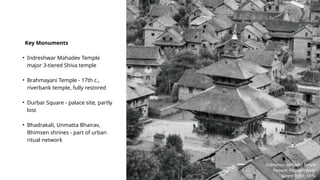
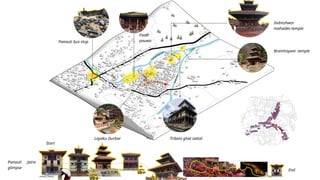
Panauti: Passé– Présent
Gerard Toffin, 1976
Sorakhutte pati infront of a Buddhist stupa.
Panauti: Passé– Présent, Gerard Toffin, 1976
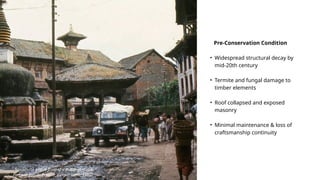
Pre-Conservation Condition
• Widespread structural decay by
mid-20th century
• Termite and fungal damage to
timber elements
• Roof collapsed and exposed
masonry
• Minimal maintenance & loss of
craftsmanship continuity
32.
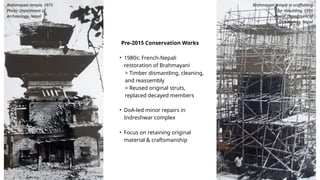
Pre-2015 Conservation Works
•1980s: French-Nepali
restoration of Brahmayani
• DoA-led minor repairs in
Indreshwar complex
• Focus on retaining original
material & craftsmanship
> Timber dismantling, cleaning,
and reassembly
> Reused original struts,
replaced decayed members
Brahmayani temple, 1975
Photo: Department of
Archaeology, Nepal
Brahmayani temple in scaffolding
for rebuilding, 1991
Photo: Department of
Archaeology, Nepal
33.
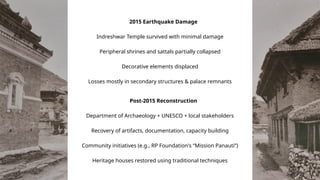
2015 Earthquake Damage
IndreshwarTemple survived with minimal damage
Peripheral shrines and sattals partially collapsed
Decorative elements displaced
Losses mostly in secondary structures & palace remnants
Post-2015 Reconstruction
Department of Archaeology + UNESCO + local stakeholders
Recovery of artifacts, documentation, capacity building
Community initiatives (e.g., RP Foundation's “Mission Panauti”)
Heritage houses restored using traditional techniques
34.
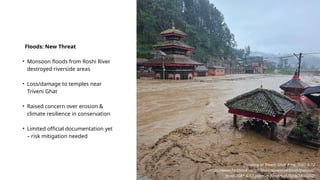
Floods: New Threat
•Monsoon floods from Roshi River
destroyed riverside areas
• Loss/damage to temples near
Triveni Ghat
• Raised concern over erosion &
climate resilience in conservation
• Limited official documentation yet
– risk mitigation needed
Flooding at Triveni Ghat Area, 2081-6-12
https://www.facebook.com/historicalpanauti/posts/panauti-
flood-2081-6-12-panauti-flood/930202465816602/
35.
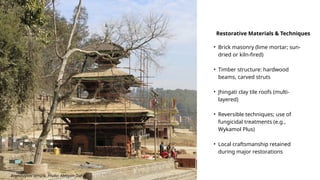
Bramhayani temple. Photo:Abhiyan Dahal
• Brick masonry (lime mortar; sun-
dried or kiln-fired)
• Timber structure: hardwood
beams, carved struts
• Jhingati clay tile roofs (multi-
layered)
• Reversible techniques; use of
fungicidal treatments (e.g.,
Wykamol Plus)
• Local craftsmanship retained
during major restorations
Restorative Materials & Techniques
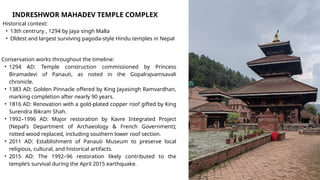
INDRESHWOR MAHADEV TEMPLECOMPLEX
Historical context:
• 13th centrury , 1294 by Jaya singh Malla
• Oldest and largest surviving pagoda-style Hindu temples in Nepal
Conservation works throughout the timeline:
• 1294 AD: Temple construction commissioned by Princess
Biramadevi of Panauti, as noted in the Gopalrajvamsavali
chronicle.
• 1383 AD: Golden Pinnacle offered by King Jayasingh Ramvardhan,
marking completion after nearly 90 years.
• 1816 AD: Renovation with a gold-plated copper roof gifted by King
Surendra Bikram Shah.
• 1992–1996 AD: Major restoration by Kavre Integrated Project
(Nepal's Department of Archaeology & French Government);
rotted wood replaced, including southern lower roof section.
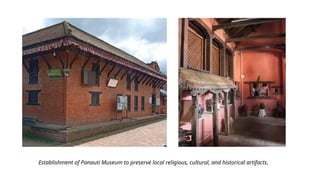
• 2011 AD: Establishment of Panauti Museum to preserve local
religious, cultural, and historical artifacts.
• 2015 AD: The 1992–96 restoration likely contributed to the
temple’s survival during the April 2015 earthquake.
38.
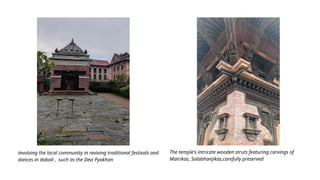
involving the localcommunity in reviving traditional festivals and
dances in dabali , such as the Devi Pyakhan
The temple's intricate wooden struts featuring carvings of
Matrikas, Salabhanjikas,carefully preserved
39.
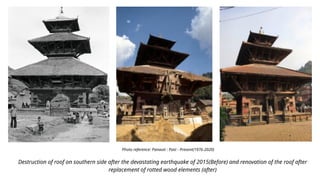
Destruction of roofon southern side after the devastating earthquake of 2015(Before) and renovation of the roof after
replacement of rotted wood elements (after)
Photo reference: Panauti : Past - Present(1976-2020)
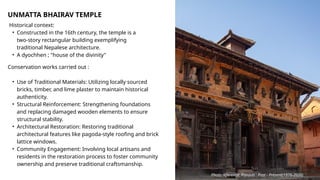
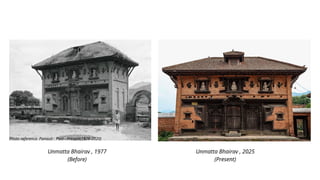
UNMATTA BHAIRAV TEMPLE
Historicalcontext:
• Constructed in the 16th century, the temple is a
two-story rectangular building exemplifying
traditional Nepalese architecture.
• A dyochhen ; "house of the divinity"
Conservation works carried out :
• Use of Traditional Materials: Utilizing locally sourced
bricks, timber, and lime plaster to maintain historical
authenticity.
• Structural Reinforcement: Strengthening foundations
and replacing damaged wooden elements to ensure
structural stability.
• Architectural Restoration: Restoring traditional
architectural features like pagoda-style roofing and brick
lattice windows.
• Community Engagement: Involving local artisans and
residents in the restoration process to foster community
ownership and preserve traditional craftsmanship.
Photo reference: Panauti : Past - Present(1976-2020)
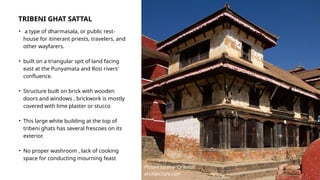
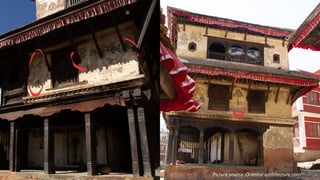
TRIBENI GHAT SATTAL
•a type of dharmasala, or public rest-
house for itinerant priests, travelers, and
other wayfarers.
• built on a triangular spit of land facing
east at the Punyamata and Rosi rivers'
confluence.
• Structure built on brick with wooden
doors and windows , brickwork is mostly
covered with lime plaster or stucco
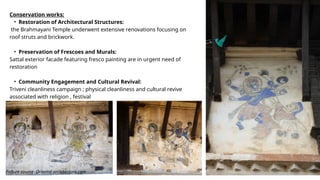
• This large white building at the top of
tribeni ghats has several frescoes on its
exterior.
• No proper washroom , lack of cooking
space for conducting mourning feast
Picture source :Oriental
architecture.com
44.
Conservation works:
• Restorationof Architectural Structures:
the Brahmayani Temple underwent extensive renovations focusing on
roof struts and brickwork.
• Preservation of Frescoes and Murals:
Sattal exterior facade featuring fresco painting are in urgent need of
restoration
• Community Engagement and Cultural Revival:
Triveni cleanliness campaign ; physical cleanliness and cultural revive
associated with religion , festival
Picture source :Oriental architecture.com
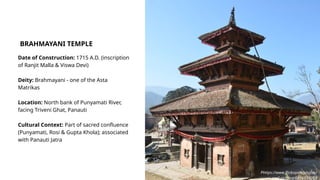
Date of Construction:1715 A.D. (inscription
of Ranjit Malla & Viswa Devi)
Deity: Brahmayani - one of the Asta
Matrikas
Location: North bank of Punyamati River,
facing Triveni Ghat, Panauti
Cultural Context: Part of sacred confluence
(Punyamati, Rosi & Gupta Khola); associated
with Panauti Jatra
BRAHMAYANI TEMPLE
Phttps://www.flickr.com/photos/
prof_richard/6856574269
47.
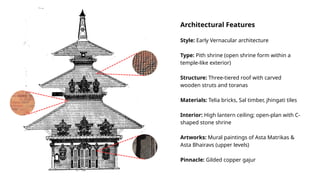
Architectural Features
Style: EarlyVernacular architecture
Type: Pith shrine (open shrine form within a
temple-like exterior)
Structure: Three-tiered roof with carved
wooden struts and toranas
Materials: Telia bricks, Sal timber, jhingati tiles
Interior: High lantern ceiling; open-plan with C-
shaped stone shrine
Artworks: Mural paintings of Asta Matrikas &
Asta Bhairavs (upper levels)
Pinnacle: Gilded copper gajur
48.
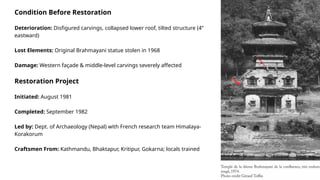
Condition Before Restoration
Deterioration:Disfigured carvings, collapsed lower roof, tilted structure (4”
eastward)
Lost Elements: Original Brahmayani statue stolen in 1968
Damage: Western façade & middle-level carvings severely affected
Restoration Project
Initiated: August 1981
Completed: September 1982
Led by: Dept. of Archaeology (Nepal) with French research team Himalaya-
Korakorum
Craftsmen From: Kathmandu, Bhaktapur, Kritipur, Gokarna; locals trained
49.
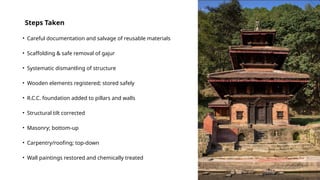
Steps Taken
• Carefuldocumentation and salvage of reusable materials
• Scaffolding & safe removal of gajur
• Systematic dismantling of structure
• Wooden elements registered; stored safely
• R.C.C. foundation added to pillars and walls
• Structural tilt corrected
• Masonry; bottom-up
• Carpentry/roofing; top-down
• Wall paintings restored and chemically treated
50.
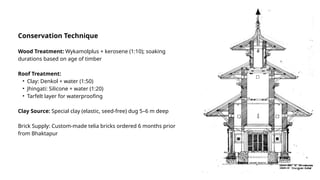
Conservation Technique
Wood Treatment:Wykamolplus + kerosene (1:10); soaking
durations based on age of timber
Roof Treatment:
• Clay: Denkol + water (1:50)
• Jhingati: Silicone + water (1:20)
• Tarfelt layer for waterproofing
Clay Source: Special clay (elastic, seed-free) dug 5–6 m deep
Brick Supply: Custom-made telia bricks ordered 6 months prior
from Bhaktapur
51.
Cultural Significance
• RareTemple: One of the few dedicated to Brahmayani in Nepal
• Festival Role: Part of Panauti Jatra (9-day celebration)
Day 4: Dwicā Nyakegu – Tantric rituals at the temple
Day 5: Animal sacrifices and offerings
Day 6–9: Return of deities to temples
• Security Concern: Current statue stored safely; original stolen
Outcome
Current State: Restored using original materials and traditional methods
Impact: Revived temple integrity; trained local artisans; sustained religious function
2015 Earthquake: No reported damage post-restoration
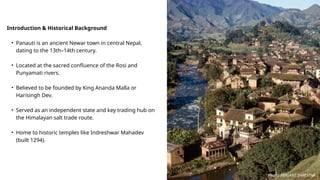
Introduction & HistoricalBackground
• Panauti is an ancient Newar town in central Nepal,
dating to the 13th–14th century.
• Located at the sacred confluence of the Rosi and
Punyamati rivers.
• Believed to be founded by King Ananda Malla or
Harisingh Dev.
• Served as an independent state and key trading hub on
the Himalayan salt trade route.
• Home to historic temples like Indreshwar Mahadev
(built 1294).
Photo: PRASANT SHRESTHA
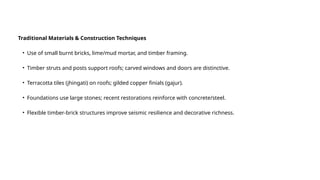
Traditional Materials &Construction Techniques
• Use of small burnt bricks, lime/mud mortar, and timber framing.
• Timber struts and posts support roofs; carved windows and doors are distinctive.
• Terracotta tiles (jhingati) on roofs; gilded copper finials (gajur).
• Foundations use large stones; recent restorations reinforce with concrete/steel.
• Flexible timber-brick structures improve seismic resilience and decorative richness.
56.
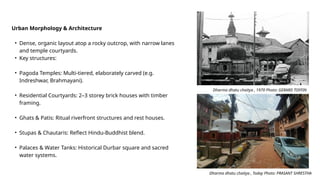
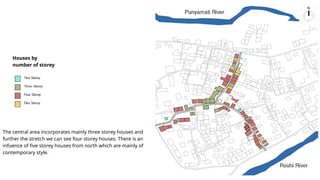
The central areaincorporates mainly three storey houses and
further the stretch we can see four storey houses. There is an
infuence of five storey houses from north which are mainly of
contemporary style.
Houses by
number of storey
57.
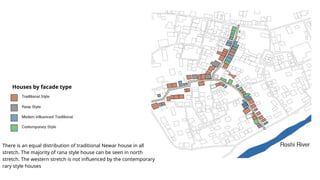
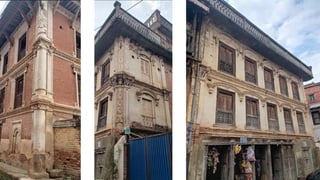
There is anequal distribution of traditional Newar house in all
stretch. The majority of rana style house can be seen in north
stretch. The western stretch is not influenced by the contemporary
rary style houses
Houses by facade type
59.
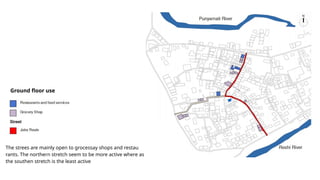
The strees aremainly open to grocessay shops and restau
rants. The northern stretch seem to be more active where as
the southen stretch is the least active
Ground floor use
60.
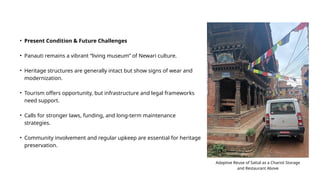
• Present Condition& Future Challenges
• Panauti remains a vibrant “living museum” of Newari culture.
• Heritage structures are generally intact but show signs of wear and
modernization.
• Tourism offers opportunity, but infrastructure and legal frameworks
need support.
• Calls for stronger laws, funding, and long-term maintenance
strategies.
• Community involvement and regular upkeep are essential for heritage
preservation.
Adaptive Reuse of Sattal as a Chariot Storage
and Restaurant Above
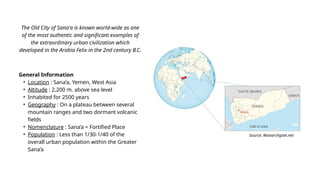
General Information
• Location: Sana’a, Yemen, West Asia
• Altitude : 2,200 m. above sea level
• Inhabited for 2500 years
• Geography : On a plateau between several
mountain ranges and two dormant volcanic
fields
• Nomenclature : Sana’a = Fortified Place
• Population : Less than 1/30-1/40 of the
overall urban population within the Greater
Sana’a
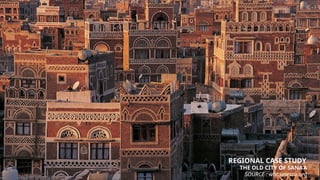
The Old City of Sana'a is known world-wide as one
of the most authentic and significant examples of
the extraordinary urban civilization which
developed in the Arabia Felix in the 2nd century B.C.
Source: Researchgate.net
63.
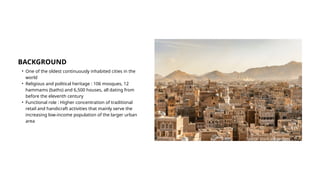
• One ofthe oldest continuously inhabited cities in the
world
• Religious and political heritage : 106 mosques, 12
hammams (baths) and 6,500 houses, all dating from
before the eleventh century
• Functional role : Higher concentration of traditional
retail and handicraft activities that mainly serve the
increasing low-income population of the larger urban
area
BACKGROUND
Source: stock.adobe.com
64.
Urban pattern transformationswithin the city walls of the Old
City since 1930s
The ‘Twin Cities’ of Sana’a : The Old City and Bir Al Azab
Source: [1]
Ancient walls of the Old City of Sana’a (6-9 meters high)
Ancient walls of Bir Al Azab (Demolished)
New pattern of thoroughfares
Ancient main roads
New Central Business District
Historic Souk Area
65.
ARCHITECTURE EXPRESSIONS
Building Typologies
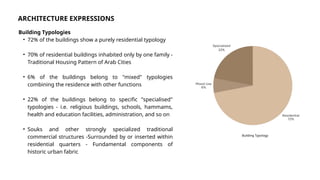
•72% of the buildings show a purely residential typology
• 70% of residential buildings inhabited only by one family -
Traditional Housing Pattern of Arab Cities
• 6% of the buildings belong to "mixed" typologies
combining the residence with other functions
• 22% of the buildings belong to specific "specialised"
typologies - i.e. religious buildings, schools, hammams,
health and education facilities, administration, and so on
• Souks and other strongly specialized traditional
commercial structures -Surrounded by or inserted within
residential quarters - Fundamental components of
historic urban fabric
Building Typology
66.
ARCHITECTURE EXPRESSIONS
Building Materials
•Gypsum plaster
• Baked Bricks
• Symmetrical Ashlar Stonework - 6-10m
above street level
Settlement Pattern
• Dense Settlement
• Multi-storey Buildings
• Narrow Streets
• Urban Gardens
• Houses, Minarets, Mosques, Hammams and
Caravanserias
• Space between buildings - Width enough
for pedestrians and mule-drawn carts
• Symmetricity preferred in Houses
Source: Tripadvisor,Jean R
Houses in Sana’a
Source: [1]
Pathways in Sana’a
Source: Mapio.net
Left : Stonework
Right : Baked Bricks
67.
SANA’S HOUSE ARCHITECTURE
•8 or 9 floor buildings.
• Six floor houses (Tower House)
• Four floor houses (Turkish House)
• Three floor houses (Jewish House)
Building materials
• Stonework of the lower levels may be
rough rubble with loose mortar, but for
most of their height the buildings are of
mud
• Local materials such as baked bricks,
stones and dried flowers have been
used
• Mud and stone are usually used for the
lower classes of the building and for the
higher class, baked bricks is more often
applied
Source: [1]
Tower House
Source: [1]
Turkish House
Source: [1]
Jewish House
Source: [1]
The Application off Sana’a House Floors
• Nascent andrapid modernization and urbanization
affected the authenticity and integrity of the city -
Demolitions, reconstructions, vertical or horizontal
additions, etc.
• Demolition of the walls of the Old City and Bir Al
Azab - Allows new settlements to come in contact
with ancient and traditional urban fabric - New
overwhelming pressure on the morphological
integrity and function of the ancient urban fabric
• Fast and considerable social changes - Departure of
the higher income population, rural migration and
increase of poverty - Transformation of historic
tower houses into apartment blocks
THREATS, DEGRADATION AND DETERIORATION
Source: [7]
Modern housing is directly adjacent to the old city
72.
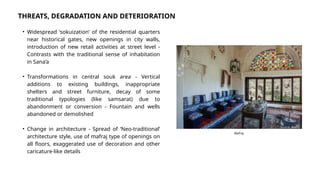
• Widespread ‘sokuization’of the residential quarters
near historical gates, new openings in city walls,
introduction of new retail activities at street level -
Contrasts with the traditional sense of inhabitation
in Sana’a
• Transformations in central souk area - Vertical
additions to existing buildings, inappropriate
shelters and street furniture, decay of some
traditional typologies (like samsarat) due to
abandonment or conversion - Fountain and wells
abandoned or demolished
• Change in architecture - Spread of ‘Neo-traditional’
architecture style, use of mafraj type of openings on
all floors, exaggerated use of decoration and other
caricature-like details
THREATS, DEGRADATION AND DETERIORATION
Source: Alamy
Mafraj
73.
• New vertical(often 2 or more floors) and horizontal
additions to existing buildings, demolition and
reconstruction of existing buildings, construction of
new buildings the reduce the extent of open spaces
and damage the bustans and gardens - To improve
living standards or to meet increasing housing
demands
• Occupation of green areas and gardens for building -
improper densification of historic fabric
• Urban landscape and skyline - Affected by neo-
traditional skyscrapers and by new out-of-scale
minaret - Also affected by water tanks and satellite
installations
• Use of inappropriate materials and natural disasters
THREATS, DEGRADATION AND DETERIORATION
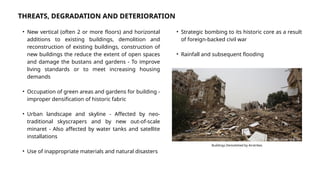
• Strategic bombing to its historic core as a result
of foreign-backed civil war
• Rainfall and subsequent flooding
Source: Times of Israel
Buildings Demolished by Airstrikes
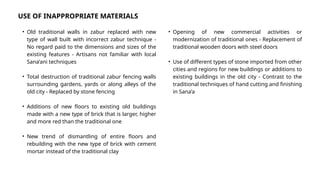
• Old traditionalwalls in zabur replaced with new
type of wall built with incorrect zabur technique -
No regard paid to the dimensions and sizes of the
existing features - Artisans not familiar with local
Sana’ani techniques
• Total destruction of traditional zabur fencing walls
surrounding gardens, yards or along alleys of the
old city - Replaced by stone fencing
• Additions of new floors to existing old buildings
made with a new type of brick that is larger, higher
and more red than the traditional one
• New trend of dismantling of entire floors and
rebuilding with the new type of brick with cement
mortar instead of the traditional clay
USE OF INAPPROPRIATE MATERIALS
• Opening of new commercial activities or
modernization of traditional ones - Replacement of
traditional wooden doors with steel doors
• Use of different types of stone imported from other
cities and regions for new buildings or additions to
existing buildings in the old city - Contrast to the
traditional techniques of hand cutting and finishing
in Sana’a
76.
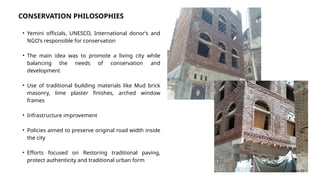
• Yemini officials,UNESCO, International donor’s and
NGO’s responsible for conservation
• The main idea was to promote a living city while
balancing the needs of conservation and
development
• Use of traditional building materials like Mud brick
masonry, lime plaster finishes, arched window
frames
• Infrastructure improvement
• Policies aimed to preserve original road width inside
the city
• Efforts focused on Restoring traditional paving,
protect authenticity and traditional urban form
CONSERVATION PHILOSOPHIES
Source: [2)
77.
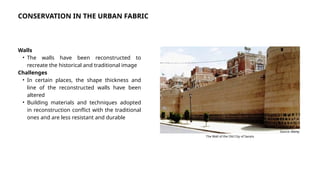
Walls
• The wallshave been reconstructed to
recreate the historical and traditional image
Challenges
• In certain places, the shape thickness and
line of the reconstructed walls have been
altered
• Building materials and techniques adopted
in reconstruction conflict with the traditional
ones and are less resistant and durable
Source: Alamy
The Wall of the Old City of Sana’a
CONSERVATION IN THE URBAN FABRIC
78.
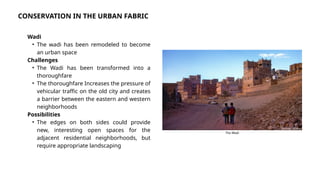
Wadi
• The wadihas been remodeled to become
an urban space
Challenges
• The Wadi has been transformed into a
thoroughfare
• The thoroughfare Increases the pressure of
vehicular traffic on the old city and creates
a barrier between the eastern and western
neighborhoods
Possibilities
• The edges on both sides could provide
new, interesting open spaces for the
adjacent residential neighborhoods, but
require appropriate landscaping
Source: Alamy
The Wadi
CONSERVATION IN THE URBAN FABRIC
79.
Paving
• Most streetsurfaces have been paved since the
80s in the souk area and many residential
neighborhoods - increases liveablility
Challenges
• Recent repaving interventions have used
inappropriate materials and building
techniques
Adaptive Reuse
• Some historical buildings have been restored
and reused for administrative, cultural and
handicraft and commercial activities
• Remarkable private houses have been restored
and reused to house museums or other
cultural activities
Inappropriate Interventions
Some interventions taken in the attempt to ‘rejuvenate’
the image of the old city contradict acceptable concepts of
conservation:
• Widespread and systematic whitewashing of the
facades along Wadi Saila and many parts of the
historic fabric
• Construction of an open air theatre in bustan Al Amri
besides Al Mahdi Mosque, along the Wadi Saila which
used to provide impressive views of the old city skyline
These types of interventions show a concern only for a
somewhat vague idea of ‘traditional’ architectural style
and not to the effects of the historic morphological and
functional features of the urban structure.
CONSERVATION IN THE URBAN FABRIC
• Decree issuedby the Prime Minister regarding
“Regulations for Constructions and Violations
in the Historical Cities”
• It defines very strict conditions for any type of
construction and gives the GOPHCY (General
Organization for the Preservation of the
Historical Cities) a crucial role in the control of
building activity
• Provides legislative tools aimed at the
preservation and protection of historical cities,
landmarks and sites
• Provides a list of conditions and controls which
have to be ensured in order to legitimize
building renovation and demolition works
THE LEGISLATIVE FRAMEWORK FOR CONSERVATION
Conditions and Controls
• Use of traditional building materials and conformity
to the general pattern of historical cities
• Preservation of existing open spaces between
buildings as well as green and cultivated areas
• Conservation of existing functions of historical
buildings and landmarks
• Prevention of any uses that may be hazardous to
these structures or make them lose their original
style or properties
• The suspension of any new and additional work that
changes the historical elements and the
architectural style of historical buildings
82.
THE LEGISLATIVE FRAMEWORKFOR CONSERVATION
Prohibitions
• Additional or annexed constructions to an existing
building, including "vertical and horizontal
expansions if such works will alter the
architectural style of a historical city
• Any kind of intervention that may imply the direct
or indirect demolition, expunction, deformation,
alteration or damage to the historical cities and
sights, including engravings and decorations that
are found on the buildings
• The construction of new buildings attached to
historical buildings, elements or landmarks, as
well as in the religious areas, in public areas, in
open and cultivated areas
• The uprooting of trees and the use of the open and
cultivated areas for disposing of waste or garbage
• The creation of new commercial outlets in the
residential areas and the alteration of the function
of a building or any part thereof without written
approval of the GOPHCY
• The use of building materials which do not conform
to traditional approaches such as reinforced
concrete, iron doors and aluminum windows in lieu
of wooden doors and wooden windows, scraping
red bricks or covering thereof with defacing
materials such as paints, etc.
83.
THE VIOLATIONS
Violations -GOPHCY Survey, 2002/03
• The use of different building materials and
techniques not conforming to the traditional and
historical architecture
• The construction of new buildings on open and
public spaces
• The opening of new commercial outlets
• Additions (mainly vertical) to existing buildings.
These violations are spread in the urban fabric. As of
the publication of “The Inventory of the Historic City
of Sana’a: A Tool for Urban Conservation” in 2018,
there are about 1800 violations, and 400 of them are
considered to be particularly serious
UNESCO’s Criticisms
• The concept itself of "violations" is unclear and
covers a set of interventions which are disparate
and have a very different impact on the urban
fabric and the cityscape
• No clear distinction is made between the new
constructions and the reconstruction of pre-
existing buildings
• Violations are recorded only with reference to the
use of wrong materials without any concern for the
scale of the interventions or the functions of the
building
84.
ADAPTIVE REUSE -TOWER HOUSES
Why? Weak economy due to frequent civil war
By whom ? Owners
How?
• Partial use of the original spaces at the ground
floor as groceries, services, shops, etc.
• Full adaptation into galleries, hotels, cultural
houses, etc.
Consequence
• Commencement of construction without
consulting experts or gaining approval form the
Building Authority
• Loss of traditional features, addition of new
functions like indoor plumbing, extensions have
different floor-to-ceiling height, wider rooms and
openings, etc. - Lack of manual on conservation;
Lack of technical drawings during construction
proposal
Source: [10]
Types of Permission and Required Criteria
85.
Source: [10]
New toiletsinstallation with new windows
Source: [10] Source: [10]
Refurbishments old toilet with Alabaster opening Water piping installations on the walls of old toilets
86.
Source: [10]
New bedroomconstruction (at fourth floor) with straw stalk
ceiling finishes.
Source: [10]
Old bedroom refurbishment (at second floor) with traditional
plaster ceiling construction
• Main functionof the ground floor
still reflects to some extent its
traditional use
• "Store" for 41% of the buildings,
and residence for 28%
• Stores are common in the oldest
quarters of the city (central and
eastern areas), known as "intra
muros" (within the old city walls)
• Ground-floor spaces are used for
religious or cultural purposes.
USE OF STREET-LEVEL SPACES IN RESIDENTIAL DISTRICTS
Source: [1]
Source: [1]
90.
CULTURAL REFLECTION
• Mostlyislamic ceremonies are
celebrated.
• Great mosque and main market
are main cultural axis
Source: [1]
WHAT SHOULD BEDONE? | INFERENCES
• Establish a ‘Conservation and Rehabilitation Plan’
based on a broader concept of heritage
• The conservation and rehabilitation plan should
include not just the monuments and remarkable
buildings but also their context
• The context should include both minor and
vernacular architectural expressions, the
articulation of urban spaces, landscape features,
etc.
• Adaptive reuse can be done if the functions and
meanings which are favored are compatible with
the characteristics of the heritage site
• Conservation has to be done with rehabilitation
and the plan has to provide tools to protect
heritage features from further deterioration while
favoring all possible compatible interventions
which can improve the living conditions of the
population and bring new activities and uses
• Improvement and development of a cultural,
legislative and institutional framework
• Incremental planning process that can be
gradually implemented should be set up
Location
Nógrád County, northernHungary
Approximately 91 kilometers northeast of Budapest.
maptons.com
Date of Inscription:
1987
Criteria: (v)
Property : 144.5 ha
Dossier: 401rev
“an outstanding example of a traditional human settlement,
land use, or sea use which is representative of a culture (or
cultures), or human interaction with the environment...”
98.
U. World, “OldVillage of Hollókő and its Surroundings,” Unesco.org,
2018.
Protected Heritage
Castle
Partially Protected
Public
99.
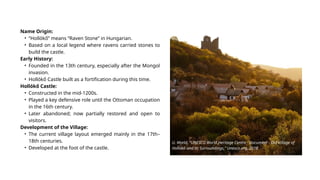
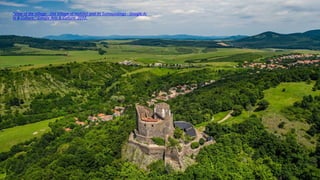
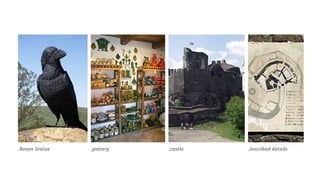
Name Origin:
• “Hollókő”means “Raven Stone” in Hungarian.
• Based on a local legend where ravens carried stones to
build the castle.
Early History:
• Founded in the 13th century, especially after the Mongol
invasion.
• Hollókő Castle built as a fortification during this time.
Hollókő Castle:
• Constructed in the mid-1200s.
• Played a key defensive role until the Ottoman occupation
in the 16th century.
• Later abandoned; now partially restored and open to
visitors.
Development of the Village:
• The current village layout emerged mainly in the 17th–
18th centuries.
• Developed at the foot of the castle.
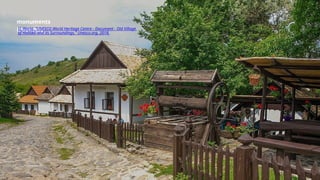
U. World, “UNESCO World Heritage Centre - Document - Old Village of
Hollókő and its Surroundings,” Unesco.org, 2018.
100.
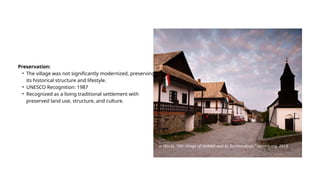
Preservation:
• The villagewas not significantly modernized, preserving
its historical structure and lifestyle.
• UNESCO Recognition: 1987
• Recognized as a living traditional settlement with
preserved land use, structure, and culture.
U. World, “Old Village of Hollókő and its Surroundings,” Unesco.org, 2018.
101.
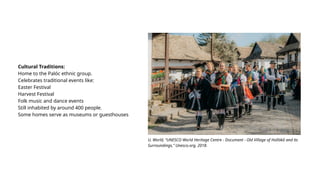
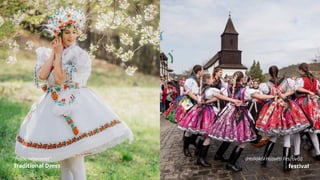
Cultural Traditions:
Home tothe Palóc ethnic group.
Celebrates traditional events like:
Easter Festival
Harvest Festival
Folk music and dance events
Still inhabited by around 400 people.
Some homes serve as museums or guesthouses
U. World, “UNESCO World Heritage Centre - Document - Old Village of Hollókő and its
Surroundings,” Unesco.org, 2018.
102.
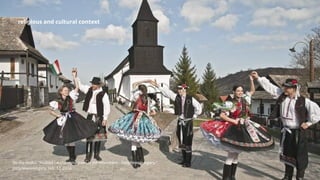
Dorina Haász, “Hollókő- a charming town in the mountains - DailyNewsHungary,”
DailyNewsHungary, Feb. 17, 2018.
religious and cultural context
103.
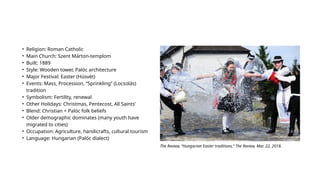
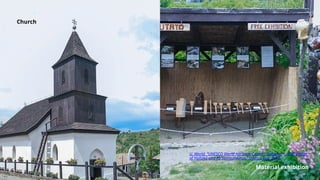
• Religion: RomanCatholic
• Main Church: Szent Márton-templom
• Built: 1889
• Style: Wooden tower, Palóc architecture
• Major Festival: Easter (Húsvét)
• Events: Mass, Procession, “Sprinkling” (Locsolás)
tradition
• Symbolism: Fertility, renewal
• Other Holidays: Christmas, Pentecost, All Saints’
• Blend: Christian + Palóc folk beliefs
• Older demographic dominates (many youth have
migrated to cities)
• Occupation: Agriculture, handicrafts, cultural tourism
• Language: Hungarian (Palóc dialect)
The Review, “Hungarian Easter traditions,” The Review, Mar. 22, 2018.
104.
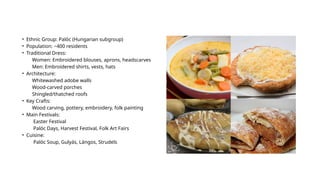
• Ethnic Group:Palóc (Hungarian subgroup)
• Population: ~400 residents
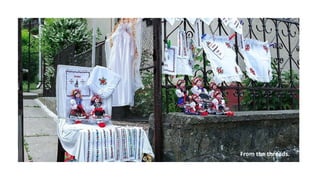
• Traditional Dress:
Women: Embroidered blouses, aprons, headscarves
Men: Embroidered shirts, vests, hats
• Architecture:
Whitewashed adobe walls
Wood-carved porches
Shingled/thatched roofs
• Key Crafts:
Wood carving, pottery, embroidery, folk painting
• Main Festivals:
Easter Festival
Palóc Days, Harvest Festival, Folk Art Fairs
• Cuisine:
Palóc Soup, Gulyás, Lángos, Strudels
105.
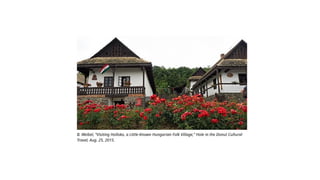
B. Weibel, “VisitingHolloko, a Little-Known Hungarian Folk Village,” Hole in the Donut Cultural
Travel, Aug. 25, 2015.
106.
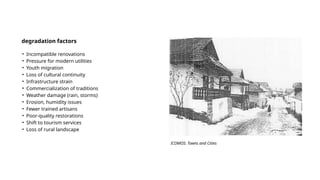
ICOMOS: Towns andCities
• Incompatible renovations
• Pressure for modern utilities
• Youth migration
• Loss of cultural continuity
• Infrastructure strain
• Commercialization of traditions
• Weather damage (rain, storms)
• Erosion, humidity issues
• Fewer trained artisans
• Poor-quality restorations
• Shift to tourism services
• Loss of rural landscape
degradation factors
107.
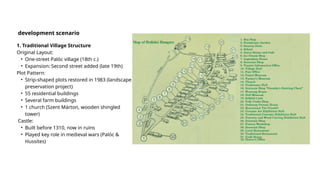
1. Traditional VillageStructure
Original Layout:
• One-street Palóc village (18th c.)
• Expansion: Second street added (late 19th)
Plot Pattern:
• Strip-shaped plots restored in 1983 (landscape
preservation project)
• 55 residential buildings
• Several farm buildings
• 1 church (Szent Márton, wooden shingled
tower)
Castle:
• Built before 1310, now in ruins
• Played key role in medieval wars (Palóc &
Hussites)
development scenario
108.
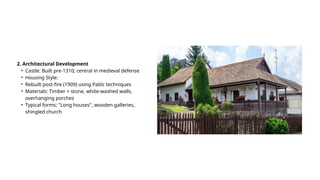
2. Architectural Development
•Castle: Built pre-1310; central in medieval defense
• Housing Style:
• Rebuilt post-fire (1909) using Palóc techniques
• Materials: Timber + stone, white-washed walls,
overhanging porches
• Typical forms: "Long houses", wooden galleries,
shingled church
109.
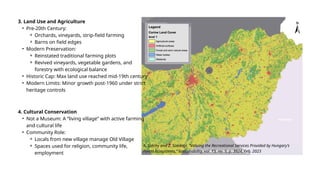
3. Land Useand Agriculture
• Pre-20th Century:
⚬ Orchards, vineyards, strip-field farming
⚬ Barns on field edges
• Modern Preservation:
⚬ Reinstated traditional farming plots
⚬ Revived vineyards, vegetable gardens, and
forestry with ecological balance
• Historic Cap: Max land use reached mid-19th century
• Modern Limits: Minor growth post-1960 under strict
heritage controls
4. Cultural Conservation
• Not a Museum: A “living village” with active farming
and cultural life
• Community Role:
⚬ Locals from new village manage Old Village
⚬ Spaces used for religion, community life,
employment
A. Széchy and Z. Szerényi, “Valuing the Recreational Services Provided by Hungary’s
Forest Ecosystems,” Sustainability, vol. 15, no. 5, p. 3924, Feb. 2023
110.
Legal Protection Framework
•Protected under:
⚬ Act LXIV of 2001 – Protection of Cultural Heritage
⚬ Act LIII of 1996 – Protection of Nature
• Designations:
⚬ Monumental Protection: Since 1972, extended to
145 ha in 1989
⚬ Nature Conservation Area: Designated in 1987
⚬ ~50 buildings individually protected as
monuments
Governance & Oversight
• Local Municipality: Functions as World Heritage
Management Body
• World Heritage Act (2011):
⚬ Management Plan Government Decree
→
⚬ Review cycle: Minimum every 7 years
⚬ Regular monitoring and reporting to National
Assembly
• Maintain living village character, not a museum village
111.
“View of thevillage - Old Village of Hollókő and its Surroundings - Google Ar
ts & Culture,” Google Arts & Culture, 2017.
112.
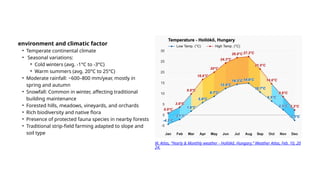
environment and climaticfactor
• Temperate continental climate
• Seasonal variations:
⚬ Cold winters (avg. -1°C to -3°C)
⚬ Warm summers (avg. 20°C to 25°C)
• Moderate rainfall: ~600–800 mm/year, mostly in
spring and autumn
• Snowfall: Common in winter, affecting traditional
building maintenance
• Forested hills, meadows, vineyards, and orchards
• Rich biodiversity and native flora
• Presence of protected fauna species in nearby forests
• Traditional strip-field farming adapted to slope and
soil type
W. Atlas, “Yearly & Monthly weather - Hollókő, Hungary,” Weather Atlas, Feb. 10, 20
24.
113.
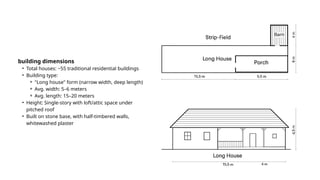
building dimensions
• Totalhouses: ~55 traditional residential buildings
• Building type:
⚬ "Long house" form (narrow width, deep length)
⚬ Avg. width: 5–6 meters
⚬ Avg. length: 15–20 meters
• Height: Single-story with loft/attic space under
pitched roof
• Built on stone base, with half-timbered walls,
whitewashed plaster
114.
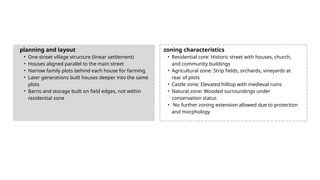
planning and layout
•One-street village structure (linear settlement)
• Houses aligned parallel to the main street
• Narrow family plots behind each house for farming
• Later generations built houses deeper into the same
plots
• Barns and storage built on field edges, not within
residential zone
zoning characteristics
• Residential core: Historic street with houses, church,
and community buildings
• Agricultural zone: Strip fields, orchards, vineyards at
rear of plots
• Castle zone: Elevated hilltop with medieval ruins
• Natural zone: Wooded surroundings under
conservation status
• No further zoning extension allowed due to protection
and morphology
spatial qualities
• Uniformfaçade rhythm along street – cohesive visual
character
• Street-facing wooden pillared porches and balconies
• Functional separation:
Front: Living space
Middle: Storage/animal stalls
Rear: Utility/farming use
• Orientation and layout ensure climatic comfort and
land efficiency
• Shared public space at church plaza for festivals and
religious life
117.
User Perspectives &Occupation
1.Then:
⚬ Families lived in multi-generational long houses.
⚬ Occupation centered on subsistence farming,
animal husbandry, and local crafts.
⚬ Social life was deeply tied to religion and seasonal
festivals.
2.Now:
⚬ Locals partly shifted to tourism-based jobs (guides,
guesthouses, handicrafts).
⚬ Many original residents now live in the new village
nearby.
⚬ Heritage houses are used for cultural showcases,
rentals, and community events.
Road Width Comparison
1.Then:
⚬ Narrow village paths (~2.5–3 m), unpaved, meant
for carts and walking.
⚬ Served both transportation and communal
functions.
2.Now:
⚬ Core historic road preserved in original width.
⚬ Peripheral access roads widened (~4–5 m) for
emergency and service vehicles, but strictly
regulated.
118.
Site-Specific Problems
1.Depopulation ofthe Old Village and loss of traditional
farming.
2.Pressure from tourism causing commercialization and
change in use.
3.Challenges in using authentic materials and methods
for maintenance.
4.Aging population with fewer young people remaining
in the area.
5.Threats of modern encroachment and infrastructure
stress
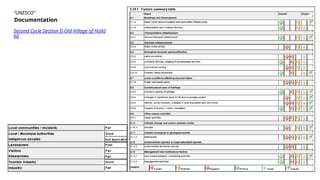
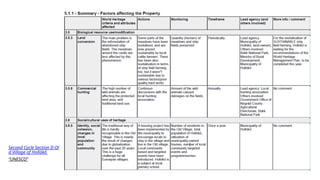
U. World, “UNESCO World Heritage
Centre - Document - Old Village of Hollókő and its Surroundings,” Unesco.org, 2
018.
119.
U. World, “UNESCOWorld Heritage Centre - Document - Old Village of Hollókő an
d its Surroundings,” Unesco.org, 2018.
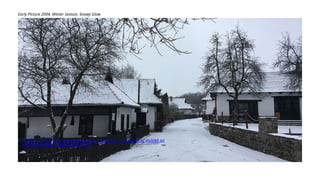
Early Picture 2004, Winter Season, Snowy Glow
SOURCES
[1] U. World,“The Inventory of the historic city of Sana’a: a tool for urban conservation,” Unesco.org, 2018.
[2] X. Armenta, “Heritage Preservation in War: Proactive and reactive approaches applied to the Old City in Sana’a, Yemen,”
ResearchGate, 2018.
[3] C. du, “Vieille ville de Sana’a,” Unesco.org, 2018.
[4] The, “Sanaa | History, Population, & Facts,” Encyclopedia Britannica, Jul. 20, 1998
[5] Hossein Soltanzadeh and M. S. Moghaddam, “Sana’a, Structure, Historical Form, Architecture and Culture,” Civil Engineering and
Architecture, vol. 3, no. 3, pp. 56–67, Jun. 2015, doi: https://doi.org/10.13189/cea.2015.030303
[6] AR Editors, “Sana’a under threat - The Architectural Review,” The Architectural Review, Jun. 1976
[7] Conservation of the Old Walled City of Sana’a, Republic of Yemen,” Mit.edu, 2025
[8] “Yemen’s Old City of Sana’a: Stripped of Its Identity,” Carnegie Endowment for International Peace, 2020
[9] L. A. Haidar and A. Talib, “Adaptive Reuse in the Traditional Neighbourhood of the Old City Sana’a -Yemen,” Procedia - Social and
Behavioral Sciences, vol. 105, pp. 811–822, Dec. 2013, doi: https://doi.org/10.1016/j.sbspro.2013.11.084.
[10] L. Haidar and A. Talib, “Adaptive Reuse Practice in Tower Houses of Old City Sana’a Yemen,” Procedia - Social and Behavioral
Sciences, vol. 202, pp. 351–360, Aug. 2015, doi: https://doi.org/10.1016/j.sbspro.2015.08.239.
[11] S. Saleh, H. Alshawesh, N. Al-Abyad, amp; Nada, and I. Al-Abyad, “Green Spaces in Sana’a Old City -Yemen between Past to Present
Green Spaces in Sana’a Old City -Yemen between Past to Present.” Available: https://globaljournals.org/GJSFR_Volume22/2-Green-
Spaces-in-Sanaa.pdf
[12] A Contribution to the Preservation of the Cultural Heritage of Nepal: The Restoration of the Brahmayani Temple in Panauti
https://d1i1jdw69xsqx0.cloudfront.net/digitalhimalaya/collections/journals/ancientnepal/pdf/ancient_nepal_80_01.pdf
[13] UNESCO Historic Urban Landscape (HUL) Recommendation (2011)
[14] ICOMOS Charters and Conservation Guidelines
![CONSERVATION in Architecture
• preserve buildings and sites of historical, cultural
or social significance for future generations
• maintenance, preservation, restoration or
reconstruction –with respect to a place’s cultural
significance
• heritage must be handed down “in the full
richness of [its] authenticity”
• carefully balancing authenticity, material
integrity, and cultural values when intervening in
historic fabric
• philosophy has evolved from early post‑war
guidelines to more holistic, community‑oriented
approaches worldwide.](https://image.slidesharecdn.com/conservationliteraturereviewcasestudy-250623132358-d3705420/85/ConservationLiterature-review-Case-study-pptx-2-320.jpg)


![Urban pattern transformations within the city walls of the Old
City since 1930s
The ‘Twin Cities’ of Sana’a : The Old City and Bir Al Azab
Source: [1]
Ancient walls of the Old City of Sana’a (6-9 meters high)
Ancient walls of Bir Al Azab (Demolished)
New pattern of thoroughfares
Ancient main roads
New Central Business District
Historic Souk Area](https://image.slidesharecdn.com/conservationliteraturereviewcasestudy-250623132358-d3705420/85/ConservationLiterature-review-Case-study-pptx-64-320.jpg)
![ARCHITECTURE EXPRESSIONS
Building Materials
• Gypsum plaster
• Baked Bricks
• Symmetrical Ashlar Stonework - 6-10m
above street level
Settlement Pattern
• Dense Settlement
• Multi-storey Buildings
• Narrow Streets
• Urban Gardens
• Houses, Minarets, Mosques, Hammams and
Caravanserias
• Space between buildings - Width enough
for pedestrians and mule-drawn carts
• Symmetricity preferred in Houses
Source: Tripadvisor,Jean R
Houses in Sana’a
Source: [1]
Pathways in Sana’a
Source: Mapio.net
Left : Stonework
Right : Baked Bricks](https://image.slidesharecdn.com/conservationliteraturereviewcasestudy-250623132358-d3705420/85/ConservationLiterature-review-Case-study-pptx-66-320.jpg)
![SANA’S HOUSE ARCHITECTURE
• 8 or 9 floor buildings.
• Six floor houses (Tower House)
• Four floor houses (Turkish House)
• Three floor houses (Jewish House)
Building materials
• Stonework of the lower levels may be
rough rubble with loose mortar, but for
most of their height the buildings are of
mud
• Local materials such as baked bricks,
stones and dried flowers have been
used
• Mud and stone are usually used for the
lower classes of the building and for the
higher class, baked bricks is more often
applied
Source: [1]
Tower House
Source: [1]
Turkish House
Source: [1]
Jewish House
Source: [1]
The Application off Sana’a House Floors](https://image.slidesharecdn.com/conservationliteraturereviewcasestudy-250623132358-d3705420/85/ConservationLiterature-review-Case-study-pptx-67-320.jpg)
![Source: [1]
Residential Cluster Consisting of Several Building Units
Typical Facade Layout](https://image.slidesharecdn.com/conservationliteraturereviewcasestudy-250623132358-d3705420/85/ConservationLiterature-review-Case-study-pptx-68-320.jpg)
![Source: [1]](https://image.slidesharecdn.com/conservationliteraturereviewcasestudy-250623132358-d3705420/85/ConservationLiterature-review-Case-study-pptx-69-320.jpg)
![Source: [1]](https://image.slidesharecdn.com/conservationliteraturereviewcasestudy-250623132358-d3705420/85/ConservationLiterature-review-Case-study-pptx-70-320.jpg)
![• Nascent and rapid modernization and urbanization
affected the authenticity and integrity of the city -
Demolitions, reconstructions, vertical or horizontal
additions, etc.
• Demolition of the walls of the Old City and Bir Al
Azab - Allows new settlements to come in contact
with ancient and traditional urban fabric - New
overwhelming pressure on the morphological
integrity and function of the ancient urban fabric
• Fast and considerable social changes - Departure of
the higher income population, rural migration and
increase of poverty - Transformation of historic
tower houses into apartment blocks
THREATS, DEGRADATION AND DETERIORATION
Source: [7]
Modern housing is directly adjacent to the old city](https://image.slidesharecdn.com/conservationliteraturereviewcasestudy-250623132358-d3705420/85/ConservationLiterature-review-Case-study-pptx-71-320.jpg)
![Source: [8]
Buildings Ravaged by Floods
Source: [8]
Ceiling on the verge of collapsing](https://image.slidesharecdn.com/conservationliteraturereviewcasestudy-250623132358-d3705420/85/ConservationLiterature-review-Case-study-pptx-74-320.jpg)
![SOURCE: [1]
STREET VIEW
ARCHITECTURAL ELEMENTS
ARCHITECTURAL ELEMENTS
SOURCE: [1] SOURCE: [1]](https://image.slidesharecdn.com/conservationliteraturereviewcasestudy-250623132358-d3705420/85/ConservationLiterature-review-Case-study-pptx-80-320.jpg)
![ADAPTIVE REUSE - TOWER HOUSES
Why? Weak economy due to frequent civil war
By whom ? Owners
How?
• Partial use of the original spaces at the ground
floor as groceries, services, shops, etc.
• Full adaptation into galleries, hotels, cultural
houses, etc.
Consequence
• Commencement of construction without
consulting experts or gaining approval form the
Building Authority
• Loss of traditional features, addition of new
functions like indoor plumbing, extensions have
different floor-to-ceiling height, wider rooms and
openings, etc. - Lack of manual on conservation;
Lack of technical drawings during construction
proposal
Source: [10]
Types of Permission and Required Criteria](https://image.slidesharecdn.com/conservationliteraturereviewcasestudy-250623132358-d3705420/85/ConservationLiterature-review-Case-study-pptx-84-320.jpg)
![Source: [10]
New toilets installation with new windows
Source: [10] Source: [10]
Refurbishments old toilet with Alabaster opening Water piping installations on the walls of old toilets](https://image.slidesharecdn.com/conservationliteraturereviewcasestudy-250623132358-d3705420/85/ConservationLiterature-review-Case-study-pptx-85-320.jpg)
![Source: [10]
New bedroom construction (at fourth floor) with straw stalk
ceiling finishes.
Source: [10]
Old bedroom refurbishment (at second floor) with traditional
plaster ceiling construction](https://image.slidesharecdn.com/conservationliteraturereviewcasestudy-250623132358-d3705420/85/ConservationLiterature-review-Case-study-pptx-86-320.jpg)
![Source: [1] Source: [1]](https://image.slidesharecdn.com/conservationliteraturereviewcasestudy-250623132358-d3705420/85/ConservationLiterature-review-Case-study-pptx-87-320.jpg)
![SOURCE: [1] Source: [1]](https://image.slidesharecdn.com/conservationliteraturereviewcasestudy-250623132358-d3705420/85/ConservationLiterature-review-Case-study-pptx-88-320.jpg)
![• Main function of the ground floor
still reflects to some extent its
traditional use
• "Store" for 41% of the buildings,
and residence for 28%
• Stores are common in the oldest
quarters of the city (central and
eastern areas), known as "intra
muros" (within the old city walls)
• Ground-floor spaces are used for
religious or cultural purposes.
USE OF STREET-LEVEL SPACES IN RESIDENTIAL DISTRICTS
Source: [1]
Source: [1]](https://image.slidesharecdn.com/conservationliteraturereviewcasestudy-250623132358-d3705420/85/ConservationLiterature-review-Case-study-pptx-89-320.jpg)
![CULTURAL REFLECTION
• Mostly islamic ceremonies are
celebrated.
• Great mosque and main market
are main cultural axis
Source: [1]](https://image.slidesharecdn.com/conservationliteraturereviewcasestudy-250623132358-d3705420/85/ConservationLiterature-review-Case-study-pptx-90-320.jpg)
![Source: [1]](https://image.slidesharecdn.com/conservationliteraturereviewcasestudy-250623132358-d3705420/85/ConservationLiterature-review-Case-study-pptx-91-320.jpg)
![Source: [1]
Source: [1]](https://image.slidesharecdn.com/conservationliteraturereviewcasestudy-250623132358-d3705420/85/ConservationLiterature-review-Case-study-pptx-92-320.jpg)
![Source: [1] Source: [1]](https://image.slidesharecdn.com/conservationliteraturereviewcasestudy-250623132358-d3705420/85/ConservationLiterature-review-Case-study-pptx-93-320.jpg)
![SOURCES
[1] U. World, “The Inventory of the historic city of Sana’a: a tool for urban conservation,” Unesco.org, 2018.
[2] X. Armenta, “Heritage Preservation in War: Proactive and reactive approaches applied to the Old City in Sana’a, Yemen,”
ResearchGate, 2018.
[3] C. du, “Vieille ville de Sana’a,” Unesco.org, 2018.
[4] The, “Sanaa | History, Population, & Facts,” Encyclopedia Britannica, Jul. 20, 1998
[5] Hossein Soltanzadeh and M. S. Moghaddam, “Sana’a, Structure, Historical Form, Architecture and Culture,” Civil Engineering and
Architecture, vol. 3, no. 3, pp. 56–67, Jun. 2015, doi: https://doi.org/10.13189/cea.2015.030303
[6] AR Editors, “Sana’a under threat - The Architectural Review,” The Architectural Review, Jun. 1976
[7] Conservation of the Old Walled City of Sana’a, Republic of Yemen,” Mit.edu, 2025
[8] “Yemen’s Old City of Sana’a: Stripped of Its Identity,” Carnegie Endowment for International Peace, 2020
[9] L. A. Haidar and A. Talib, “Adaptive Reuse in the Traditional Neighbourhood of the Old City Sana’a -Yemen,” Procedia - Social and
Behavioral Sciences, vol. 105, pp. 811–822, Dec. 2013, doi: https://doi.org/10.1016/j.sbspro.2013.11.084.
[10] L. Haidar and A. Talib, “Adaptive Reuse Practice in Tower Houses of Old City Sana’a Yemen,” Procedia - Social and Behavioral
Sciences, vol. 202, pp. 351–360, Aug. 2015, doi: https://doi.org/10.1016/j.sbspro.2015.08.239.
[11] S. Saleh, H. Alshawesh, N. Al-Abyad, amp; Nada, and I. Al-Abyad, “Green Spaces in Sana’a Old City -Yemen between Past to Present
Green Spaces in Sana’a Old City -Yemen between Past to Present.” Available: https://globaljournals.org/GJSFR_Volume22/2-Green-
Spaces-in-Sanaa.pdf
[12] A Contribution to the Preservation of the Cultural Heritage of Nepal: The Restoration of the Brahmayani Temple in Panauti
https://d1i1jdw69xsqx0.cloudfront.net/digitalhimalaya/collections/journals/ancientnepal/pdf/ancient_nepal_80_01.pdf
[13] UNESCO Historic Urban Landscape (HUL) Recommendation (2011)
[14] ICOMOS Charters and Conservation Guidelines
](https://image.slidesharecdn.com/conservationliteraturereviewcasestudy-250623132358-d3705420/85/ConservationLiterature-review-Case-study-pptx-127-320.jpg)


