Connected KidsTechnology and 21st Century Learning
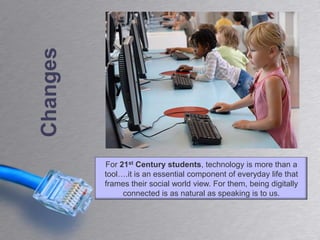
ChangesFor 21st Century students, technology is more than a tool….it is an essential component of everyday life that frames their social world view. For them, being digitally connected is as natural as speaking is to us.
We live in a globally connected societyOur vision is to create Excellent Learning Environments that ensure we meet our mandate to prepare our students for adult life.21st century learning is all about preparing young people to become caring, competent Canadians with the knowledge, skills, and attributes to be successful global citizens
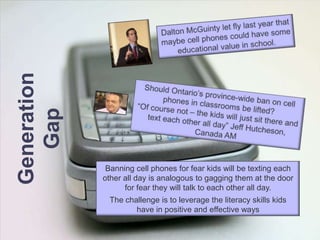
Dalton McGuinty let fly last year that maybe cell phones could have some educational value in school.Should Ontario’s province-wide ban on cell phones in classrooms be lifted?“Of course not – the kids will just sit there and text each other all day” Jeff Hutcheson, Canada AMGeneration GapBanning cell phones for fear kids will be texting each other all day is analogous to gagging them at the door for fear they will talk to each other all day.The challenge is to leverage the literacy skills kids have in positive and effective ways
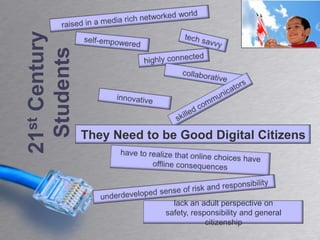
raised in a media rich networked world tech savvy self-empowered highly connected 21st Century Studentscollaborative innovativeskilled communicatorsBut…They Need to be Good Digital Citizenshave to realize that online choices have offline consequencesunderdeveloped sense of risk and responsibilitylack an adult perspective on safety, responsibility and general citizenship
Citizen: a member of a societyCitizenship: The character of an individual in a societyDigital Citizenship: The character of an individual in a digitally-mediated society
Today’s digital world is considerably different than the world most of our teachers grew up and went to school inChallengesTechnology tools are the contemporarytools of literacy, yet for many of our teachers both the tools and the environments that they enable are foreign Yet these are essential tools and learning environments in the 21st CenturyTo help guide students wisely, we need to develop a deeper understanding of the digitally connected world and what it means to be good digital citizensWe need to remind students of what it means to be good digital citizens each time we use digital tools in our classrooms.
Why Digital Citizenship?Some would say we don’t need to teach Digital Citizenship just citizenship as they are one in the same now.Others argue that we need to have a common language and resources that we use with parents, students and teachers.www.digitalcitizenship.net/www.wolfcreek.ab.ca/digital citizenship
What is Digital Citizenship?Digital Citizenship is more than just a teaching tool; it is a way to prepare students/technology users for a society full of technology. Too often we are seeing students as well as adults misusing and abusing technology (sometimes unknowingly). Teaching Digital Citizenship starts at an early age and needs continual reinforcement.
Digital CitizenshipBy embracing technology and encouraging students to explore its various forms, educators also have aresponsibility to teach students to use technology in a responsible manner.
What Resources Are Availablefor Wolf Creek Teachers , Students and Parents?
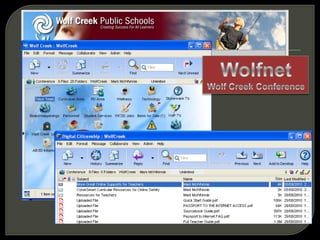
WolfnetWolf Creek Conference
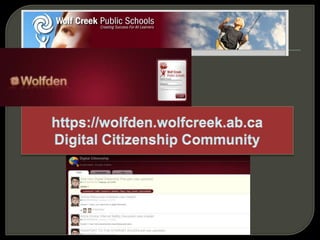
 Login: Wolf Denhttps://wolfden.wolfcreek.ab.ca/login/Screen clipping taken: 06/09/2010, 12:47 PM  https://wolfden.wolfcreek.ab.caDigital Citizenship Community
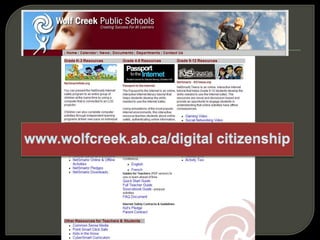
www.wolfcreek.ab.ca/digital citizenship

Connected Kids by Mark McWhinnie WCPS

  • 1.
    Connected KidsTechnology and21st Century Learning
  • 2.
    ChangesFor 21st Centurystudents, technology is more than a tool….it is an essential component of everyday life that frames their social world view. For them, being digitally connected is as natural as speaking is to us.
  • 3.
    We live ina globally connected societyOur vision is to create Excellent Learning Environments that ensure we meet our mandate to prepare our students for adult life.21st century learning is all about preparing young people to become caring, competent Canadians with the knowledge, skills, and attributes to be successful global citizens
  • 4.
    Dalton McGuinty letfly last year that maybe cell phones could have some educational value in school.Should Ontario’s province-wide ban on cell phones in classrooms be lifted?“Of course not – the kids will just sit there and text each other all day” Jeff Hutcheson, Canada AMGeneration GapBanning cell phones for fear kids will be texting each other all day is analogous to gagging them at the door for fear they will talk to each other all day.The challenge is to leverage the literacy skills kids have in positive and effective ways
  • 5.
    raised in amedia rich networked world tech savvy self-empowered highly connected 21st Century Studentscollaborative innovativeskilled communicatorsBut…They Need to be Good Digital Citizenshave to realize that online choices have offline consequencesunderdeveloped sense of risk and responsibilitylack an adult perspective on safety, responsibility and general citizenship
  • 6.
    Citizen: a memberof a societyCitizenship: The character of an individual in a societyDigital Citizenship: The character of an individual in a digitally-mediated society
  • 7.
    Today’s digital worldis considerably different than the world most of our teachers grew up and went to school inChallengesTechnology tools are the contemporarytools of literacy, yet for many of our teachers both the tools and the environments that they enable are foreign Yet these are essential tools and learning environments in the 21st CenturyTo help guide students wisely, we need to develop a deeper understanding of the digitally connected world and what it means to be good digital citizensWe need to remind students of what it means to be good digital citizens each time we use digital tools in our classrooms.
  • 8.
    Why Digital Citizenship?Somewould say we don’t need to teach Digital Citizenship just citizenship as they are one in the same now.Others argue that we need to have a common language and resources that we use with parents, students and teachers.www.digitalcitizenship.net/www.wolfcreek.ab.ca/digital citizenship
  • 9.
    What is DigitalCitizenship?Digital Citizenship is more than just a teaching tool; it is a way to prepare students/technology users for a society full of technology. Too often we are seeing students as well as adults misusing and abusing technology (sometimes unknowingly). Teaching Digital Citizenship starts at an early age and needs continual reinforcement.
  • 10.
    Digital CitizenshipBy embracingtechnology and encouraging students to explore its various forms, educators also have aresponsibility to teach students to use technology in a responsible manner.
  • 11.
    What Resources AreAvailablefor Wolf Creek Teachers , Students and Parents?
  • 12.
  • 13.
     Login: Wolf Denhttps://wolfden.wolfcreek.ab.ca/login/Screenclipping taken: 06/09/2010, 12:47 PM  https://wolfden.wolfcreek.ab.caDigital Citizenship Community
  • 14.