http://www.xtec.es/~ogodoy/sac/rephrasing/conditionals.htm)
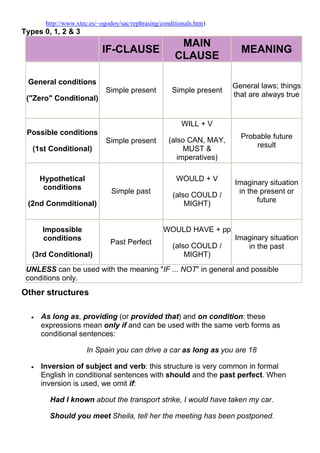
Types 0, 1, 2 & 3
                                                       MAIN
                           IF-CLAUSE                                    MEANING
                                                      CLAUSE

 General conditions
                                                                      General laws; things
                             Simple present          Simple present
 ("Zero" Conditional)                                                 that are always true


                                                         WILL + V
 Possible conditions
                                                    (also CAN, MAY,     Probable future
                             Simple present
   (1st Conditional)                                     MUST &             result
                                                       imperatives)

      Hypothetical                                     WOULD + V
                                                                      Imaginary situation
       conditions
                               Simple past           (also COULD /     in the present or
 (2nd Conmditional)                                      MIGHT)              future


      Impossible                                  WOULD HAVE + pp
      conditions                                                      Imaginary situation
                              Past Perfect
                                                     (also COULD /       in the past
   (3rd Conditional)                                     MIGHT)
 UNLESS can be used with the meaning "IF ... NOT" in general and possible
 conditions only.
Other structures

     As long as, providing (or provided that) and on condition: these
      expressions mean only if and can be used with the same verb forms as
      conditional sentences:

                      In Spain you can drive a car as long as you are 18

     Inversion of subject and verb: this structure is very common in formal
      English in conditional sentences with should and the past perfect. When
      inversion is used, we omit if:

        Had I known about the transport strike, I would have taken my car.

        Should you meet Sheila, tell her the meeting has been postponed.

Conditionals

  • 1.
    http://www.xtec.es/~ogodoy/sac/rephrasing/conditionals.htm) Types 0, 1,2 & 3 MAIN IF-CLAUSE MEANING CLAUSE General conditions General laws; things Simple present Simple present ("Zero" Conditional) that are always true WILL + V Possible conditions (also CAN, MAY, Probable future Simple present (1st Conditional) MUST & result imperatives) Hypothetical WOULD + V Imaginary situation conditions Simple past (also COULD / in the present or (2nd Conmditional) MIGHT) future Impossible WOULD HAVE + pp conditions Imaginary situation Past Perfect (also COULD / in the past (3rd Conditional) MIGHT) UNLESS can be used with the meaning "IF ... NOT" in general and possible conditions only. Other structures  As long as, providing (or provided that) and on condition: these expressions mean only if and can be used with the same verb forms as conditional sentences: In Spain you can drive a car as long as you are 18  Inversion of subject and verb: this structure is very common in formal English in conditional sentences with should and the past perfect. When inversion is used, we omit if: Had I known about the transport strike, I would have taken my car. Should you meet Sheila, tell her the meeting has been postponed.