Concept Mapping ResearchA look at concept mapping as an instructional method
 Horton, P.B., McConney, A.A., Gallo, M., Woods, A.L., Senn, G.J., & Hamelin, D. (1993). An investigation of the effectiveness of concept mapping as an instructional tool [ Electronic Version]. Science Education, 77(1), 95-111.Novak, J. D., & Musonda, D.(1991). A twelve-year longitudinal study of science concept learning [Electronic version]. American Educational Research Journal, 28(1),117-153.Schmid, R.F., & Telaro, G.(1990). Concept mapping as an instructional strategy for high school Biology [Electronic version]. Journal of Education Research,84(2), 78-85. Articles
Novak et al.  The research used concept maps as a measure in research of how well students were able to build upon content exposure.developed  methods allowing for accurate scoring of concept maps across groups.Primary use of maps is summative in natureConceptual Schema
Schmid and Telaro. Use of maps to teach groups in biology. Approximately 3 hours of training- using course content.Able to integrate concepts in ways that inquiry falls short.Teaching content with Concept Maps
Sufficient timeVariations in structures of mapsSkill developmentDifferentiation between groupsOffer graded credit/rewardSmall groups / sharing mapsIdeas for use by teachers
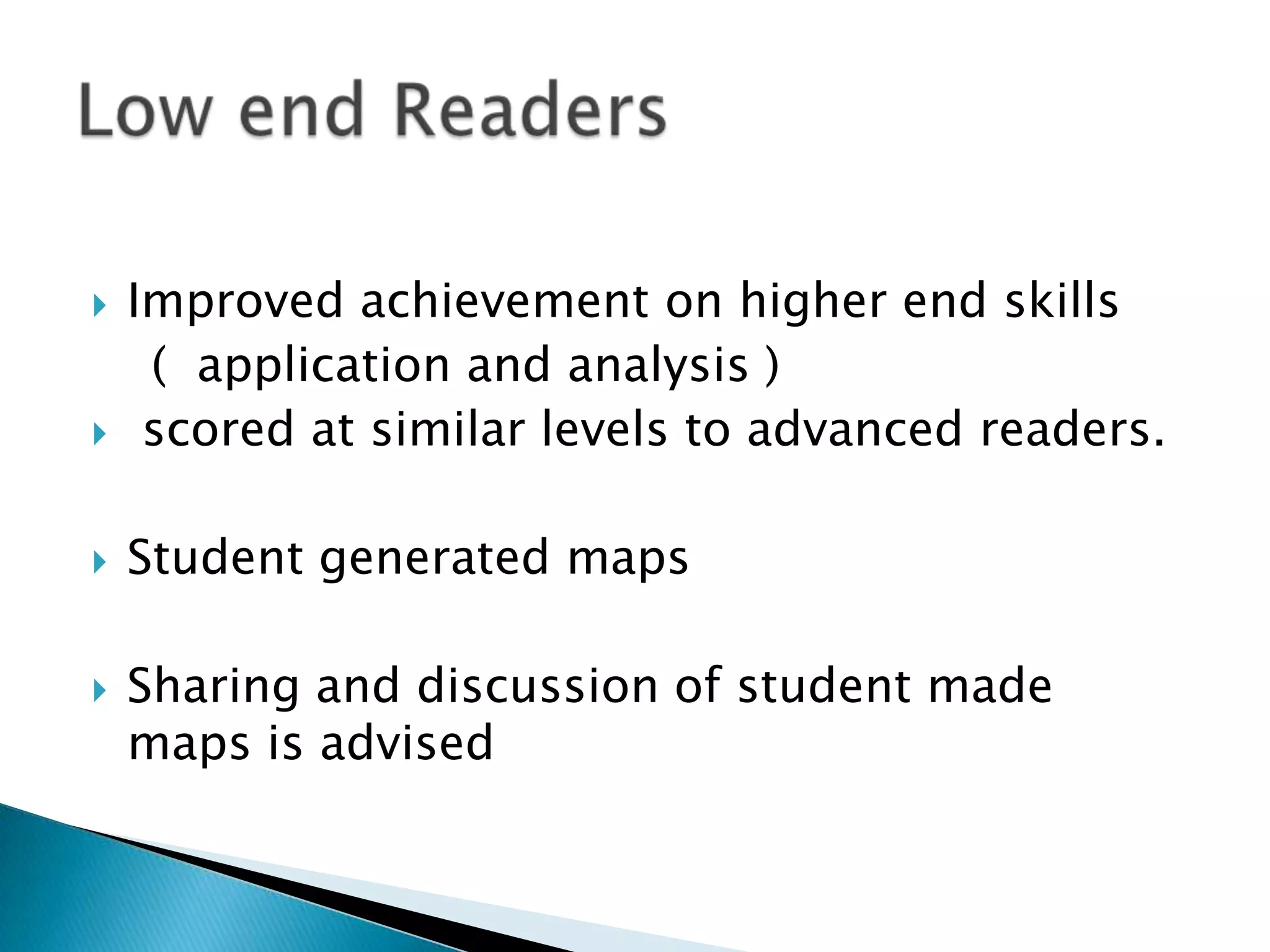
Improved achievement on higher end skills    (  application and analysis )  scored at similar levels to advanced readers.Student generated mapsSharing and discussion of student made maps is advised Low end Readers
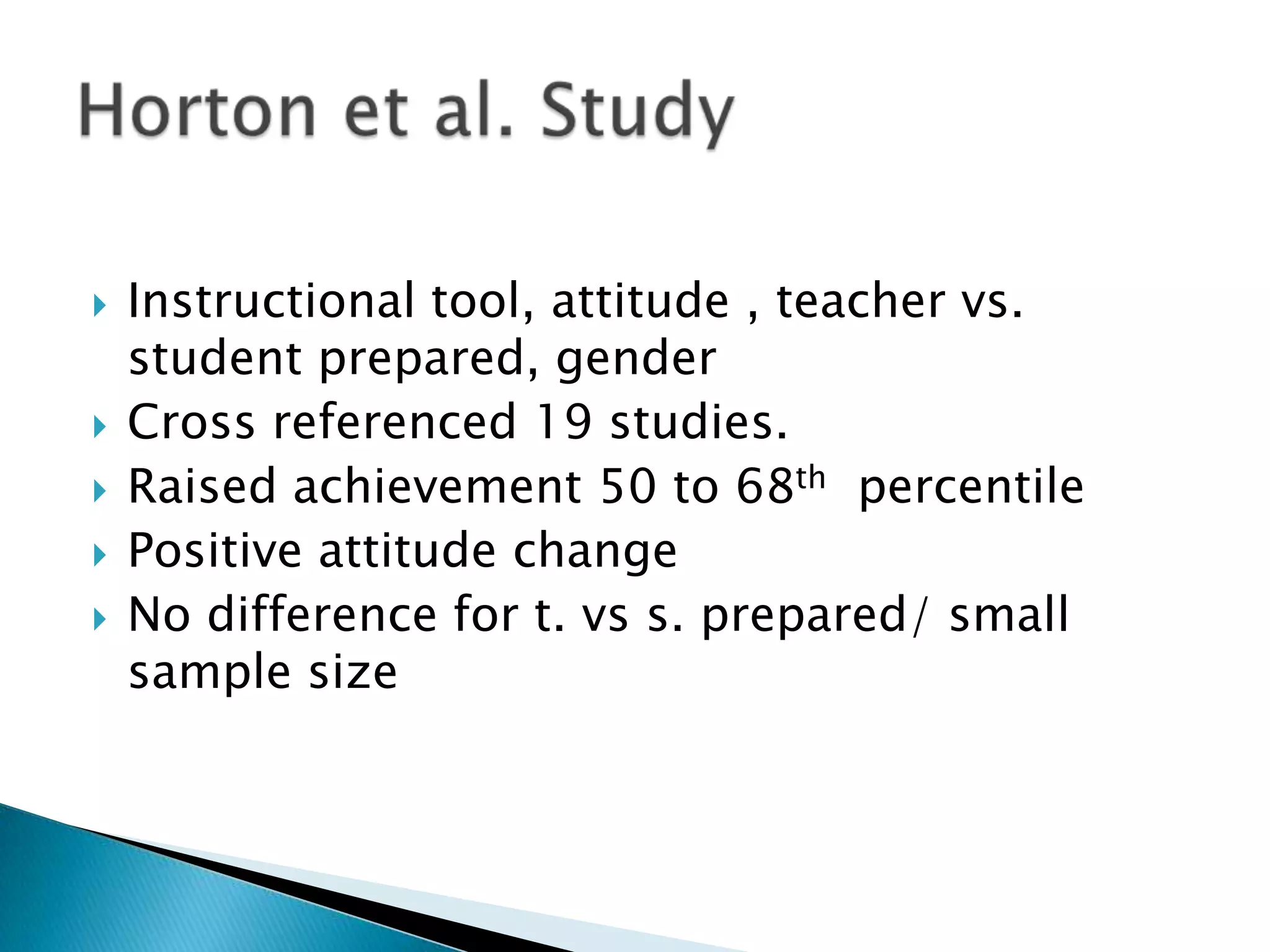
Instructional tool, attitude , teacher vs. student prepared, genderCross referenced 19 studies.Raised achievement 50 to 68th  percentilePositive attitude changeNo difference for t. vs s. prepared/ small sample sizeHorton et al. Study
Concept Mapping Research

Concept Mapping Research

  • 1.
    Concept Mapping ResearchAlook at concept mapping as an instructional method
  • 2.
     Horton, P.B., McConney,A.A., Gallo, M., Woods, A.L., Senn, G.J., & Hamelin, D. (1993). An investigation of the effectiveness of concept mapping as an instructional tool [ Electronic Version]. Science Education, 77(1), 95-111.Novak, J. D., & Musonda, D.(1991). A twelve-year longitudinal study of science concept learning [Electronic version]. American Educational Research Journal, 28(1),117-153.Schmid, R.F., & Telaro, G.(1990). Concept mapping as an instructional strategy for high school Biology [Electronic version]. Journal of Education Research,84(2), 78-85. Articles
  • 3.
    Novak et al. The research used concept maps as a measure in research of how well students were able to build upon content exposure.developed methods allowing for accurate scoring of concept maps across groups.Primary use of maps is summative in natureConceptual Schema
  • 4.
    Schmid and Telaro.Use of maps to teach groups in biology. Approximately 3 hours of training- using course content.Able to integrate concepts in ways that inquiry falls short.Teaching content with Concept Maps
  • 5.
    Sufficient timeVariations instructures of mapsSkill developmentDifferentiation between groupsOffer graded credit/rewardSmall groups / sharing mapsIdeas for use by teachers
  • 6.
    Improved achievement onhigher end skills ( application and analysis ) scored at similar levels to advanced readers.Student generated mapsSharing and discussion of student made maps is advised Low end Readers
  • 7.
    Instructional tool, attitude, teacher vs. student prepared, genderCross referenced 19 studies.Raised achievement 50 to 68th percentilePositive attitude changeNo difference for t. vs s. prepared/ small sample sizeHorton et al. Study