1.1
Chapter 1
Introduction
Copyright © The McGraw-Hill Companies, Inc. Permission required for reproduction or display.
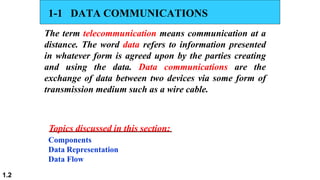
1-1 DATA COMMUNICATIONS
The term telecommunication means communication at a
distance. The word data refers to information presented
in whatever form is agreed upon by the parties creating
and using the data. Data communications are the
exchange of data between two devices via some form of
transmission medium such as a wire cable.
Topics discussed in this section:
Components
Data Representation
Data Flow
1.2
1-1 DATA COMMUNICATIONS
1.3
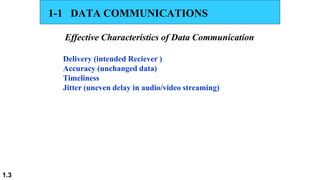
Effective Characteristics of Data Communication
Delivery (intended Reciever )
Accuracy (unchanged data)
Timeliness
Jitter (uneven delay in audio/video streaming)
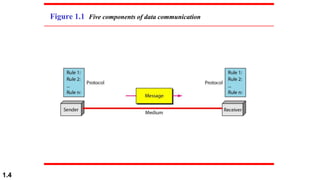
Figure 1.1 Five components of data communication
1.4
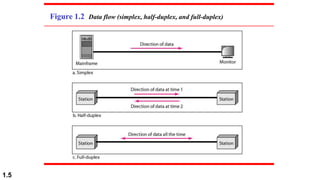
Figure 1.2 Data flow (simplex, half-duplex, and full-duplex)
1.5
1-2 NETWORKS
A network is a set of devices (often referred to as nodes)
connected by communication links. A node can be a
computer, printer, or any other device capable of sending
and/or receiving data generated by other nodes on the
network.
Topics discussed in this section:
Distributed Processing
Network Criteria
Physical Structures
Network Models
Categories of Networks
Interconnection of Networks: Internetwork
1.6
1-2 NETWORKS
1.7
Network Criteria
Performance:
transit time (device to device)
response time (enquiry to response)
Throughput
delay
Reliability
Security
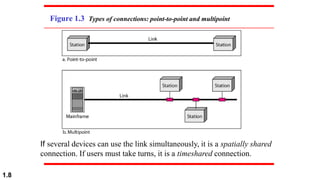
Figure 1.3 Types of connections: point-to-point and multipoint
If several devices can use the link simultaneously, it is a spatially shared
connection. If users must take turns, it is a timeshared connection.
1.8
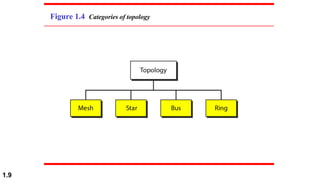
Figure 1.4 Categories of topology
1.9
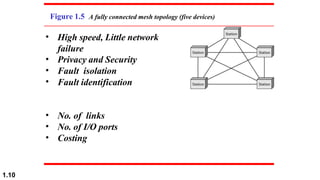
Figure 1.5 A fully connected mesh topology (five devices)
•
1.10
•
•
•
High speed, Little network
failure
Privacy and Security
Fault isolation
Fault identification
•
•
•
No. of links
No. of I/O ports
Costing
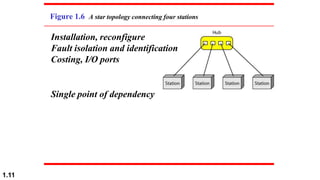
Figure 1.6 A star topology connecting four stations
Installation, reconfigure
Fault isolation and identification
Costing, I/O ports
Single point of dependency
1.11
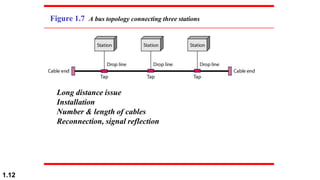
Figure 1.7 A bus topology connecting three stations
Long distance issue
Installation
Number & length of cables
Reconnection, signal reflection
1.12
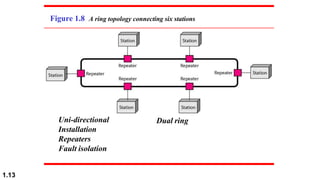
Figure 1.8 A ring topology connecting six stations
Uni-directional
Installation
Repeaters
Fault isolation
1.13
Dual ring
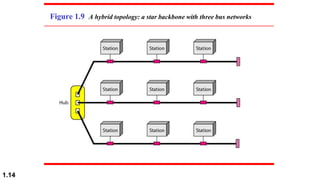
Figure 1.9 A hybrid topology: a star backbone with three bus networks
1.14
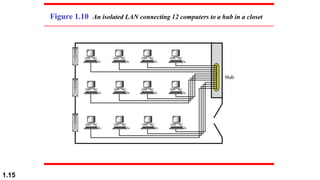
Figure 1.10 An isolated LAN connecting 12 computers to a hub in a closet
1.15
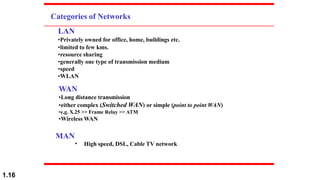
Categories of Networks
LAN
•Privately owned for office, home, buildings etc.
•limited to few kms.
•resource sharing
•generally one type of transmission medium
•speed
•WLAN
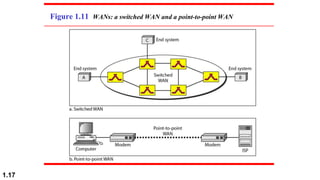
WAN
•Long distance transmission
•either complex (Switched WAN) or simple (point to point WAN)
•e.g. X.25 >> Frame Relay >> ATM
•Wireless WAN
MAN
1.16
• High speed, DSL, Cable TV network
Figure 1.11 WANs: a switched WAN and a point-to-point WAN
1.17
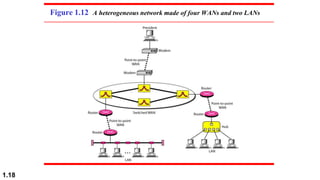
Figure 1.12 A heterogeneous network made of four WANs and two LANs
1.18
1-3 THE INTERNET
The Internet has revolutionized many aspects of our daily
lives. It has affected the way we do business as well as the
way we spend our leisure time. The Internet is a
communication system that has brought a wealth of
information to our fingertips and organized it for our use.
Topics discussed in this section:
A Brief History
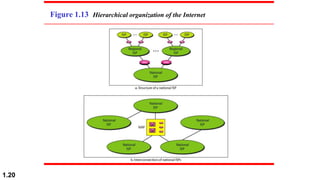
The Internet Today (ISPs)
1.19
Figure 1.13 Hierarchical organization of the Internet
1.20
1-4 PROTOCOLS AND STANDARDS
In this section, we define two widely used terms: protocols
and standards. First, we define protocol, which is
synonymous with rule. Then we discuss standards, which
are agreed-upon rules.
Topics discussed in this section:
Protocols
Standards
Standards Organizations
Internet Standards
1.21
1-4 PROTOCOLS AND STANDARDS
1.22
Protocols (rules)
what to communicate, how to communicate and when to
communicate
Key Elements of Protocols
1.Syntax
Structure of format of data
2.Semantics
Meaning of each section bits
3.Timing
When to send and how fast..
1-4 PROTOCOLS AND STANDARDS
1.23
Standards (agreed upon rules)
Categories of Standards
1.De facto.
By convention or by fact
2.De jure.
By Law or by Government

computer networks fundamentals chapter 1

  • 1.
    1.1 Chapter 1 Introduction Copyright ©The McGraw-Hill Companies, Inc. Permission required for reproduction or display.
  • 2.
    1-1 DATA COMMUNICATIONS Theterm telecommunication means communication at a distance. The word data refers to information presented in whatever form is agreed upon by the parties creating and using the data. Data communications are the exchange of data between two devices via some form of transmission medium such as a wire cable. Topics discussed in this section: Components Data Representation Data Flow 1.2
  • 3.
    1-1 DATA COMMUNICATIONS 1.3 EffectiveCharacteristics of Data Communication Delivery (intended Reciever ) Accuracy (unchanged data) Timeliness Jitter (uneven delay in audio/video streaming)
  • 4.
    Figure 1.1 Fivecomponents of data communication 1.4
  • 5.
    Figure 1.2 Dataflow (simplex, half-duplex, and full-duplex) 1.5
  • 6.
    1-2 NETWORKS A networkis a set of devices (often referred to as nodes) connected by communication links. A node can be a computer, printer, or any other device capable of sending and/or receiving data generated by other nodes on the network. Topics discussed in this section: Distributed Processing Network Criteria Physical Structures Network Models Categories of Networks Interconnection of Networks: Internetwork 1.6
  • 7.
    1-2 NETWORKS 1.7 Network Criteria Performance: transittime (device to device) response time (enquiry to response) Throughput delay Reliability Security
  • 8.
    Figure 1.3 Typesof connections: point-to-point and multipoint If several devices can use the link simultaneously, it is a spatially shared connection. If users must take turns, it is a timeshared connection. 1.8
  • 9.
    Figure 1.4 Categoriesof topology 1.9
  • 10.
    Figure 1.5 Afully connected mesh topology (five devices) • 1.10 • • • High speed, Little network failure Privacy and Security Fault isolation Fault identification • • • No. of links No. of I/O ports Costing
  • 11.
    Figure 1.6 Astar topology connecting four stations Installation, reconfigure Fault isolation and identification Costing, I/O ports Single point of dependency 1.11
  • 12.
    Figure 1.7 Abus topology connecting three stations Long distance issue Installation Number & length of cables Reconnection, signal reflection 1.12
  • 13.
    Figure 1.8 Aring topology connecting six stations Uni-directional Installation Repeaters Fault isolation 1.13 Dual ring
  • 14.
    Figure 1.9 Ahybrid topology: a star backbone with three bus networks 1.14
  • 15.
    Figure 1.10 Anisolated LAN connecting 12 computers to a hub in a closet 1.15
  • 16.
    Categories of Networks LAN •Privatelyowned for office, home, buildings etc. •limited to few kms. •resource sharing •generally one type of transmission medium •speed •WLAN WAN •Long distance transmission •either complex (Switched WAN) or simple (point to point WAN) •e.g. X.25 >> Frame Relay >> ATM •Wireless WAN MAN 1.16 • High speed, DSL, Cable TV network
  • 17.
    Figure 1.11 WANs:a switched WAN and a point-to-point WAN 1.17
  • 18.
    Figure 1.12 Aheterogeneous network made of four WANs and two LANs 1.18
  • 19.
    1-3 THE INTERNET TheInternet has revolutionized many aspects of our daily lives. It has affected the way we do business as well as the way we spend our leisure time. The Internet is a communication system that has brought a wealth of information to our fingertips and organized it for our use. Topics discussed in this section: A Brief History The Internet Today (ISPs) 1.19
  • 20.
    Figure 1.13 Hierarchicalorganization of the Internet 1.20
  • 21.
    1-4 PROTOCOLS ANDSTANDARDS In this section, we define two widely used terms: protocols and standards. First, we define protocol, which is synonymous with rule. Then we discuss standards, which are agreed-upon rules. Topics discussed in this section: Protocols Standards Standards Organizations Internet Standards 1.21
  • 22.
    1-4 PROTOCOLS ANDSTANDARDS 1.22 Protocols (rules) what to communicate, how to communicate and when to communicate Key Elements of Protocols 1.Syntax Structure of format of data 2.Semantics Meaning of each section bits 3.Timing When to send and how fast..
  • 23.
    1-4 PROTOCOLS ANDSTANDARDS 1.23 Standards (agreed upon rules) Categories of Standards 1.De facto. By convention or by fact 2.De jure. By Law or by Government