By Vipul Yadav
PRESENTATION
COMPREHENSIVE GUIDE TO FIRST AID & CPR TRAINING
on
In emergencies, quick and correct actions can save lives.
First Aid and CPR (Cardiopulmonary Resuscitation) training
equips individuals with essential skills to handle critical
situations effectively. Whether in workplaces, schools, or
homes, this training ensures that anyone can become a
first responder.
This article explores the key aspects of First Aid & CPR
training, including techniques, practical applications, and
its importance in fostering safety and preparedness.
BACKGROUND
INTRODUCTION TO FIRST AID & CPR
Why is First Aid & CPR Important?
Prevents conditions from
worsening
Saves lives in emergencies
Builds confidence to respond
effectively
Promotes safety in workplaces,
schools, and communities
First Aid involves immediate care provided to an injured or ill person
before professional medical help arrives. CPR is a life-saving
procedure used when a person's heart stops beating.
Legal and Ethical Considerations
Good Samaritan Law: Protects
first responders acting in good
faith.
Ethical responsibility to assist in
emergencies.
Assess the Scene: Check for safety hazards and
ensure personal safety.
Provide Immediate Care: Administer basic First
Aid or CPR.
Activate Emergency Services: Contact 911 or
local emergency numbers promptly.
ROLE OF A FIRST RESPONDER
KEY RESPONSIBILITIES
A first responder is someone who is trained to assess and manage
emergencies until professional help arrives.
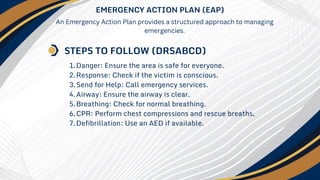
EMERGENCY ACTION PLAN (EAP)
Danger: Ensure the area is safe for everyone.
1.
Response: Check if the victim is conscious.
2.
Send for Help: Call emergency services.
3.
Airway: Ensure the airway is clear.
4.
Breathing: Check for normal breathing.
5.
CPR: Perform chest compressions and rescue breaths.
6.
Defibrillation: Use an AED if available.
7.
STEPS TO FOLLOW (DRSABCD)
An Emergency Action Plan provides a structured approach to managing
emergencies.
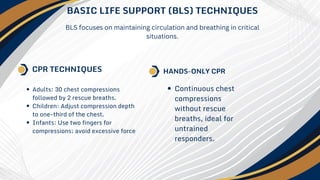
BASIC LIFE SUPPORT (BLS) TECHNIQUES
Adults: 30 chest compressions
followed by 2 rescue breaths.
Children: Adjust compression depth
to one-third of the chest.
Infants: Use two fingers for
compressions; avoid excessive force
CPR TECHNIQUES
Continuous chest
compressions
without rescue
breaths, ideal for
untrained
responders.
HANDS-ONLY CPR
BLS focuses on maintaining circulation and breathing in critical
situations.
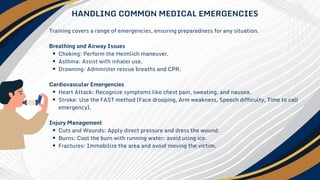
Training covers a range of emergencies, ensuring preparedness for any situation.
Breathing and Airway Issues
Choking: Perform the Heimlich maneuver.
Asthma: Assist with inhaler use.
Drowning: Administer rescue breaths and CPR.
Cardiovascular Emergencies
Heart Attack: Recognize symptoms like chest pain, sweating, and nausea.
Stroke: Use the FAST method (Face drooping, Arm weakness, Speech difficulty, Time to call
emergency).
Injury Management
Cuts and Wounds: Apply direct pressure and dress the wound.
Burns: Cool the burn with running water; avoid using ice.
Fractures: Immobilize the area and avoid moving the victim.
HANDLING COMMON MEDICAL EMERGENCIES
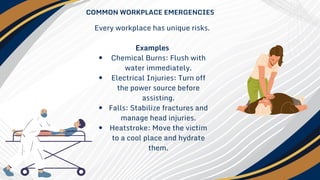
Every workplace has unique risks.
Examples
Chemical Burns: Flush with
water immediately.
Electrical Injuries: Turn off
the power source before
assisting.
Falls: Stabilize fractures and
manage head injuries.
Heatstroke: Move the victim
to a cool place and hydrate
them.
COMMON WORKPLACE EMERGENCIES
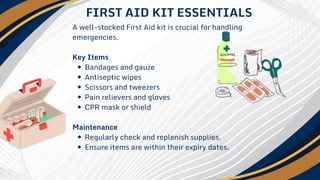
A well-stocked First Aid kit is crucial for handling
emergencies.
Key Items
Bandages and gauze
Antiseptic wipes
Scissors and tweezers
Pain relievers and gloves
CPR mask or shield
Maintenance
Regularly check and replenish supplies.
Ensure items are within their expiry dates.
FIRST AID KIT ESSENTIALS
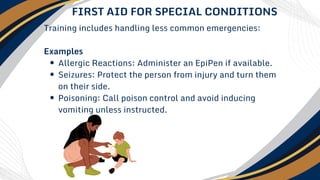
Training includes handling less common emergencies:
Examples
Allergic Reactions: Administer an EpiPen if available.
Seizures: Protect the person from injury and turn them
on their side.
Poisoning: Call poison control and avoid inducing
vomiting unless instructed.
FIRST AID FOR SPECIAL CONDITIONS
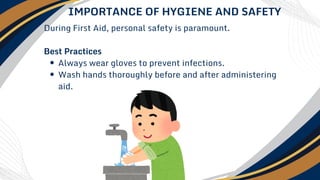
During First Aid, personal safety is paramount.
Best Practices
Always wear gloves to prevent infections.
Wash hands thoroughly before and after administering
aid.
IMPORTANCE OF HYGIENE AND SAFETY
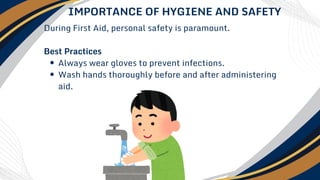
During First Aid, personal safety is paramount.
Best Practices
Always wear gloves to prevent infections.
Wash hands thoroughly before and after administering
aid.
IMPORTANCE OF HYGIENE AND SAFETY
CONCLUSION
First Aid & CPR Training is not just a skill—it’s a responsibility that
empowers individuals to save lives. Whether at work, school, or home,
these skills foster a safer environment and ensure readiness for
emergencies.
By investing in this training, organizations and individuals can promote
safety, build confidence, and make a real difference in critical moments.

Comprehensive Guide to First Aid & CPR Training.pdf

  • 1.
    By Vipul Yadav PRESENTATION COMPREHENSIVEGUIDE TO FIRST AID & CPR TRAINING on
  • 2.
    In emergencies, quickand correct actions can save lives. First Aid and CPR (Cardiopulmonary Resuscitation) training equips individuals with essential skills to handle critical situations effectively. Whether in workplaces, schools, or homes, this training ensures that anyone can become a first responder. This article explores the key aspects of First Aid & CPR training, including techniques, practical applications, and its importance in fostering safety and preparedness. BACKGROUND
  • 3.
    INTRODUCTION TO FIRSTAID & CPR Why is First Aid & CPR Important? Prevents conditions from worsening Saves lives in emergencies Builds confidence to respond effectively Promotes safety in workplaces, schools, and communities First Aid involves immediate care provided to an injured or ill person before professional medical help arrives. CPR is a life-saving procedure used when a person's heart stops beating. Legal and Ethical Considerations Good Samaritan Law: Protects first responders acting in good faith. Ethical responsibility to assist in emergencies.
  • 4.
    Assess the Scene:Check for safety hazards and ensure personal safety. Provide Immediate Care: Administer basic First Aid or CPR. Activate Emergency Services: Contact 911 or local emergency numbers promptly. ROLE OF A FIRST RESPONDER KEY RESPONSIBILITIES A first responder is someone who is trained to assess and manage emergencies until professional help arrives.
  • 5.
    EMERGENCY ACTION PLAN(EAP) Danger: Ensure the area is safe for everyone. 1. Response: Check if the victim is conscious. 2. Send for Help: Call emergency services. 3. Airway: Ensure the airway is clear. 4. Breathing: Check for normal breathing. 5. CPR: Perform chest compressions and rescue breaths. 6. Defibrillation: Use an AED if available. 7. STEPS TO FOLLOW (DRSABCD) An Emergency Action Plan provides a structured approach to managing emergencies.
  • 6.
    BASIC LIFE SUPPORT(BLS) TECHNIQUES Adults: 30 chest compressions followed by 2 rescue breaths. Children: Adjust compression depth to one-third of the chest. Infants: Use two fingers for compressions; avoid excessive force CPR TECHNIQUES Continuous chest compressions without rescue breaths, ideal for untrained responders. HANDS-ONLY CPR BLS focuses on maintaining circulation and breathing in critical situations.
  • 7.
    Training covers arange of emergencies, ensuring preparedness for any situation. Breathing and Airway Issues Choking: Perform the Heimlich maneuver. Asthma: Assist with inhaler use. Drowning: Administer rescue breaths and CPR. Cardiovascular Emergencies Heart Attack: Recognize symptoms like chest pain, sweating, and nausea. Stroke: Use the FAST method (Face drooping, Arm weakness, Speech difficulty, Time to call emergency). Injury Management Cuts and Wounds: Apply direct pressure and dress the wound. Burns: Cool the burn with running water; avoid using ice. Fractures: Immobilize the area and avoid moving the victim. HANDLING COMMON MEDICAL EMERGENCIES
  • 8.
    Every workplace hasunique risks. Examples Chemical Burns: Flush with water immediately. Electrical Injuries: Turn off the power source before assisting. Falls: Stabilize fractures and manage head injuries. Heatstroke: Move the victim to a cool place and hydrate them. COMMON WORKPLACE EMERGENCIES
  • 9.
    A well-stocked FirstAid kit is crucial for handling emergencies. Key Items Bandages and gauze Antiseptic wipes Scissors and tweezers Pain relievers and gloves CPR mask or shield Maintenance Regularly check and replenish supplies. Ensure items are within their expiry dates. FIRST AID KIT ESSENTIALS
  • 10.
    Training includes handlingless common emergencies: Examples Allergic Reactions: Administer an EpiPen if available. Seizures: Protect the person from injury and turn them on their side. Poisoning: Call poison control and avoid inducing vomiting unless instructed. FIRST AID FOR SPECIAL CONDITIONS
  • 11.
    During First Aid,personal safety is paramount. Best Practices Always wear gloves to prevent infections. Wash hands thoroughly before and after administering aid. IMPORTANCE OF HYGIENE AND SAFETY
  • 12.
    During First Aid,personal safety is paramount. Best Practices Always wear gloves to prevent infections. Wash hands thoroughly before and after administering aid. IMPORTANCE OF HYGIENE AND SAFETY
  • 13.
    CONCLUSION First Aid &CPR Training is not just a skill—it’s a responsibility that empowers individuals to save lives. Whether at work, school, or home, these skills foster a safer environment and ensure readiness for emergencies. By investing in this training, organizations and individuals can promote safety, build confidence, and make a real difference in critical moments.