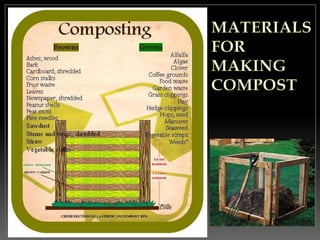
All organic materials
e.g. Plant waste or residues
• Dry material
- e.g. tree leaves
• Wet materials
- e.g. Chicken manure
• Mixture used : Dry
materials, wet materials, soil
(6:3:1)
Carbon to Nitrogen Rates
The balance of carbon and
nitrogen is called the C/N RATIO
The proportion of this two
elements used by the bacteria
averages about 30 parts of
carbon to 1 part of nitrogen.
30:1 ratio bacteria can work
organic material very quickly.
1.

Make a movable wooden frame. This serve as a guide in stacking as the
piles go higher.
2. Select a level area near a water source. And it also receives an equal
amount of sun light and shade
3. Place a layer of dry brown materials.(branches)
4. Place green wet material.(grass clipping)
5. Add a thin third layer of soil.
6. Ratio Dry Materials: Wet material: Soil = 6:3:1
7. Place a hollow bamboo stick in the center of the pile for aeration.
8. Add water if the material is dry
9. Repeat the procedure 3 to 5. move the wooden frame up as the
additional piles are made. Build the heap until 4 feet high.
10. Remove the wooden frame
11. Cover the heap surface
12. The temperature should reach 55% to 70% °C after a few
days and it will kill off most pathogen, weed and seed.
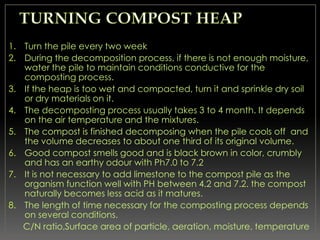
1. Turn the pile every two week
2. During the decomposition process, if there is not enough moisture,
water the pile to maintain conditions conductive for the
composting process.
3. If the heap is too wet and compacted, turn it and sprinkle dry soil
or dry materials on it.
4. The decomposting process usually takes 3 to 4 month. It depends
on the air temperature and the mixtures.
5. The compost is finished decomposing when the pile cools off and
the volume decreases to about one third of its original volume.
6. Good compost smells good and is black brown in color, crumbly
and has an earthy odour with Ph7.0 to 7.2
7. It is not necessary to add limestone to the compost pile as the
organism function well with PH between 4.2 and 7.2. the compost
naturally becomes less acid as it matures.
8. The length of time necessary for the composting process depends
on several conditions.
C/N ratio,Surface area of particle, aeration, moisture, temperature
•
•
•
•
•

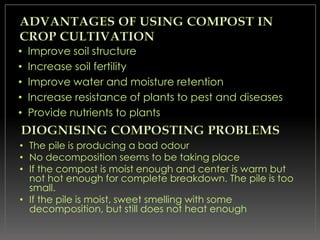
Improve soil structure
Increase soil fertility
Improve water and moisture retention
Increase resistance of plants to pest and diseases
Provide nutrients to plants

• The pile is producing a bad odour
• No decomposition seems to be taking place
• If the compost is moist enough and center is warm but
not hot enough for complete breakdown. The pile is too
small.
• If the pile is moist, sweet smelling with some
decomposition, but still does not heat enough
• Composting Spent Layers (or Disaster Losses). 2004. AAFRD
publication No. Agdex 451/29-1.
• https://www.google.com.my/search?q=advantage+of+using+
compos
• http://www.gardenorganic.org.uk/organicgardening/compos
t_pf.php
• http://www.acrd.bc.ca/cms.asp?wpID=233
• Book, Teknik memproses sampah menjadi kompos. (Mohd
Fahmin B. Abd. Aziz)

compost

  • 1.
    All organic materials e.g.Plant waste or residues • Dry material - e.g. tree leaves • Wet materials - e.g. Chicken manure • Mixture used : Dry materials, wet materials, soil (6:3:1) Carbon to Nitrogen Rates The balance of carbon and nitrogen is called the C/N RATIO The proportion of this two elements used by the bacteria averages about 30 parts of carbon to 1 part of nitrogen. 30:1 ratio bacteria can work organic material very quickly.
  • 3.
    1. Make a movablewooden frame. This serve as a guide in stacking as the piles go higher. 2. Select a level area near a water source. And it also receives an equal amount of sun light and shade 3. Place a layer of dry brown materials.(branches) 4. Place green wet material.(grass clipping) 5. Add a thin third layer of soil. 6. Ratio Dry Materials: Wet material: Soil = 6:3:1 7. Place a hollow bamboo stick in the center of the pile for aeration. 8. Add water if the material is dry 9. Repeat the procedure 3 to 5. move the wooden frame up as the additional piles are made. Build the heap until 4 feet high. 10. Remove the wooden frame 11. Cover the heap surface 12. The temperature should reach 55% to 70% °C after a few days and it will kill off most pathogen, weed and seed.
  • 4.
    1. Turn thepile every two week 2. During the decomposition process, if there is not enough moisture, water the pile to maintain conditions conductive for the composting process. 3. If the heap is too wet and compacted, turn it and sprinkle dry soil or dry materials on it. 4. The decomposting process usually takes 3 to 4 month. It depends on the air temperature and the mixtures. 5. The compost is finished decomposing when the pile cools off and the volume decreases to about one third of its original volume. 6. Good compost smells good and is black brown in color, crumbly and has an earthy odour with Ph7.0 to 7.2 7. It is not necessary to add limestone to the compost pile as the organism function well with PH between 4.2 and 7.2. the compost naturally becomes less acid as it matures. 8. The length of time necessary for the composting process depends on several conditions. C/N ratio,Surface area of particle, aeration, moisture, temperature
  • 5.
    • • • • • Improve soil structure Increasesoil fertility Improve water and moisture retention Increase resistance of plants to pest and diseases Provide nutrients to plants • The pile is producing a bad odour • No decomposition seems to be taking place • If the compost is moist enough and center is warm but not hot enough for complete breakdown. The pile is too small. • If the pile is moist, sweet smelling with some decomposition, but still does not heat enough
  • 6.
    • Composting SpentLayers (or Disaster Losses). 2004. AAFRD publication No. Agdex 451/29-1. • https://www.google.com.my/search?q=advantage+of+using+ compos • http://www.gardenorganic.org.uk/organicgardening/compos t_pf.php • http://www.acrd.bc.ca/cms.asp?wpID=233 • Book, Teknik memproses sampah menjadi kompos. (Mohd Fahmin B. Abd. Aziz)