ONPAGE SEO CHECKLIST
On-Page SEO Checklist
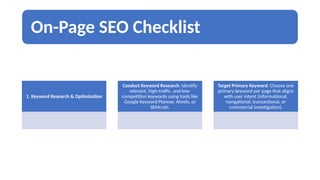
1. Keyword Research & Optimization
Conduct Keyword Research: Identify
relevant, high-traffic, and low-
competition keywords using tools like
Google Keyword Planner, Ahrefs, or
SEMrush.
Target Primary Keyword: Choose one
primary keyword per page that aligns
with user intent (informational,
navigational, transactional, or
commercial investigation).
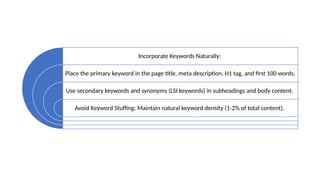
Incorporate Keywords Naturally:
Place the primary keyword in the page title, meta description, H1 tag, and first 100 words.
Use secondary keywords and synonyms (LSI keywords) in subheadings and body content.
Avoid Keyword Stuffing: Maintain natural keyword density (1-2% of total content).
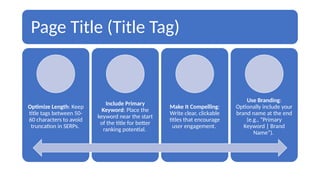
Page Title (Title Tag)
Optimize Length: Keep
title tags between 50-
60 characters to avoid
truncation in SERPs.
Include Primary
Keyword: Place the
keyword near the start
of the title for better
ranking potential.
Make It Compelling:
Write clear, clickable
titles that encourage
user engagement.
Use Branding:
Optionally include your
brand name at the end
(e.g., “Primary
Keyword | Brand
Name”).
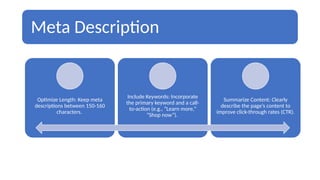
Meta Description
Optimize Length: Keep meta
descriptions between 150-160
characters.
Include Keywords: Incorporate
the primary keyword and a call-
to-action (e.g., “Learn more,”
“Shop now”).
Summarize Content: Clearly
describe the page’s content to
improve click-through rates (CTR).

Complete SEO Course by Danish Khan .pptx

  • 1.
  • 2.
    On-Page SEO Checklist 1.Keyword Research & Optimization Conduct Keyword Research: Identify relevant, high-traffic, and low- competition keywords using tools like Google Keyword Planner, Ahrefs, or SEMrush. Target Primary Keyword: Choose one primary keyword per page that aligns with user intent (informational, navigational, transactional, or commercial investigation).
  • 3.
    Incorporate Keywords Naturally: Placethe primary keyword in the page title, meta description, H1 tag, and first 100 words. Use secondary keywords and synonyms (LSI keywords) in subheadings and body content. Avoid Keyword Stuffing: Maintain natural keyword density (1-2% of total content).
  • 4.
    Page Title (TitleTag) Optimize Length: Keep title tags between 50- 60 characters to avoid truncation in SERPs. Include Primary Keyword: Place the keyword near the start of the title for better ranking potential. Make It Compelling: Write clear, clickable titles that encourage user engagement. Use Branding: Optionally include your brand name at the end (e.g., “Primary Keyword | Brand Name”).
  • 5.
    Meta Description Optimize Length:Keep meta descriptions between 150-160 characters. Include Keywords: Incorporate the primary keyword and a call- to-action (e.g., “Learn more,” “Shop now”). Summarize Content: Clearly describe the page’s content to improve click-through rates (CTR).