By Lauren and Dora
 Communications is the system that carries
information throughout Canada.
 Communications technology is used around
the world.
 Communication began thousands of years ago
with the invention of writing, but has, since
then, changed drastically.
 Communications technology is used to make
communicating with people easier.
 The telegraph, radio, and television are all
examples of communications technology.
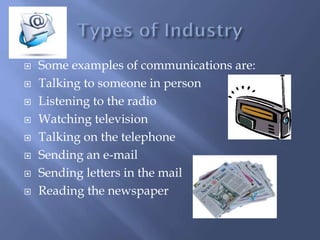
 Some examples of communications are:
 Talking to someone in person
 Listening to the radio
 Watching television
 Talking on the telephone
 Sending an e-mail
 Sending letters in the mail
 Reading the newspaper
 Canadian telecommunications companies
provide services to countries all over the world.
This brings money into Canada’s economy.
 Cellphones and other devices are sold
domestically.
 Communications also creates jobs for people in
many different industries such as sales,
engineering, repair, and development.
 If a new type of Communications technology is
developed and provides 100 jobs for engineers,
it will also provide 300 jobs for salespeople.
This is how the multiplier effect impacts other
industries.
 There is a fairly large work force for
communications because there are so many
aspects to the industry such as development,
sales, and engineering.
 One problem would be that it takes up a lot of
energy and electricity to power all the
communications technology.
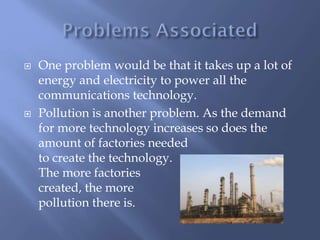
 Pollution is another problem. As the demand
for more technology increases so does the
amount of factories needed
to create the technology.
The more factories
created, the more
pollution there is.
 This industry is constantly changing and
improving.
 In the future there will be new technology and
new ways to communicate over longer
distances with ease.
 Communications will continue to create jobs as
the industry expands.
 It could also bring more money into the
Canadian economy if people continue buying
Canadian-made products and working with
Canadian engineers.
 http://www.hospitalradioplymouth.org.uk/
 http://www.theemailadmin.com/category/e
mail-archiving-storage/
 http://tyrannyoftradition.com/2011/08/20/p
ure-unadulterated-filth/
 http://www.mitre.org/capabilities/systems-
engineering/overview
 http://phys.org/news/2013-01-factory-
clouds-china-pollution-pledges.html

Communications

  • 1.
  • 2.
     Communications isthe system that carries information throughout Canada.  Communications technology is used around the world.  Communication began thousands of years ago with the invention of writing, but has, since then, changed drastically.  Communications technology is used to make communicating with people easier.  The telegraph, radio, and television are all examples of communications technology.
  • 3.
     Some examplesof communications are:  Talking to someone in person  Listening to the radio  Watching television  Talking on the telephone  Sending an e-mail  Sending letters in the mail  Reading the newspaper
  • 4.
     Canadian telecommunicationscompanies provide services to countries all over the world. This brings money into Canada’s economy.  Cellphones and other devices are sold domestically.  Communications also creates jobs for people in many different industries such as sales, engineering, repair, and development.
  • 5.
     If anew type of Communications technology is developed and provides 100 jobs for engineers, it will also provide 300 jobs for salespeople. This is how the multiplier effect impacts other industries.  There is a fairly large work force for communications because there are so many aspects to the industry such as development, sales, and engineering.
  • 6.
     One problemwould be that it takes up a lot of energy and electricity to power all the communications technology.  Pollution is another problem. As the demand for more technology increases so does the amount of factories needed to create the technology. The more factories created, the more pollution there is.
  • 7.
     This industryis constantly changing and improving.  In the future there will be new technology and new ways to communicate over longer distances with ease.  Communications will continue to create jobs as the industry expands.  It could also bring more money into the Canadian economy if people continue buying Canadian-made products and working with Canadian engineers.
  • 8.
     http://www.hospitalradioplymouth.org.uk/  http://www.theemailadmin.com/category/e mail-archiving-storage/ http://tyrannyoftradition.com/2011/08/20/p ure-unadulterated-filth/  http://www.mitre.org/capabilities/systems- engineering/overview  http://phys.org/news/2013-01-factory- clouds-china-pollution-pledges.html