Communication for Peace: How Digital Technologies can Enhance Empathy and Dialogue Carole St. LaurentWeb/MultimediaSpecialistFluidITSolutionswww.fluidITsolutions.com
Websites, multimedia, capacity buildingCellular-based storytelling in AustraliaCapacity building in UgandaeGovernment collaboration in CanadaPeace work inspired by Rwandan filmmakerPilot project, www.cryrwanda.com@fluidIT
I do not want the peace that passeth understanding. I want the understanding which bringeth peace. Helen Keller
Communication for PeaceDigital technologies enhance empathy and dialogueDigital storytellingSocial mediaInterventions and ActionConflict & incident mappingMobile reporting
The ChallengeTrue understanding is hard enough when you share:Common languageCommon cultureCommon standard of livingSimilar life experiences
The ChallengeSometimes even the people closest to us seem like they’re from different planets!
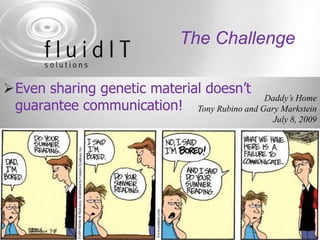
The ChallengeEven sharing genetic material doesn’tguarantee communication!Daddy’s HomeTony Rubino and Gary MarksteinJuly 8, 2009
Peace CommunicationsTrue understanding is even more difficult when you must overcome:Language differencesSocio-economic differencesReligious differencesValues differencesGenerations or even centuries of conflict
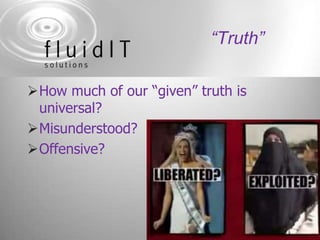
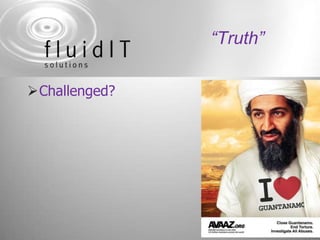
“Truth”How much of our “given” truth is universal?Misunderstood?Offensive?
“Truth”Challenged?
Enabling EmpathyHow can we enable deeper understanding and empathy?See the world through their eyes – a world that outsiders cannot usually seeHear sounds from their worldHear their voiceEmpathize with their emotions
Digital StorytellingEmpowers people to speak their own truthTranscend geography, timeRich mediums – sights, soundsMultiple speakersComplete, unfiltered messagesUninterrupted messages
Digital StorytellingInvites audiences behind the walls which usually obscure “the other” Into homesInto sacred spaces and eventsInto the speaker’s thoughts and emotions
Visual StorytellingWaris Ali Chaudhry’s photographshttp://www.internationalpeaceandconflict.org
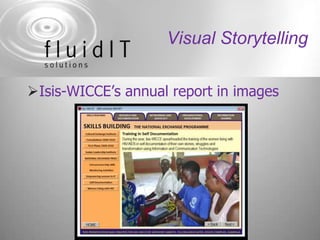
Visual StorytellingIsis-WICCE’s annual report in images
“Pray for Healing of the World”Painting by David Chapman
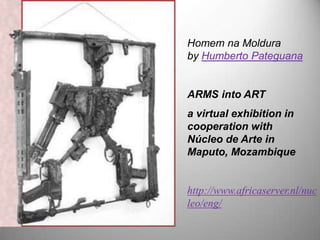
Homem na Molduraby Humberto PateguanaARMS into ARTa virtual exhibition in cooperation with Núcleo de Arte in Maputo, Mozambiquehttp://www.africaserver.nl/nucleo/eng/
ReflectionReflections?How do images impact your empathy for the other?Examples?
Oral StorytellingAmos, “If I were in their shoes”U2, Peace on Earth
Alternative AccessCell-based stories/reports[murmur] (global)Freedom Fone, ZimbabwePodcastsRadio
ReflectionReflections?How does audio impact your empathy for the other?Examples?
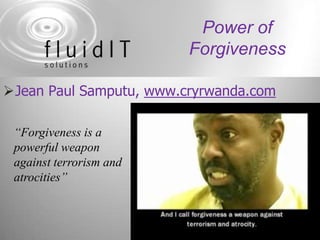
Power of ForgivenessJean Paul Samputu, www.cryrwanda.com“Forgiveness is a powerful weapon against terrorism and atrocities”
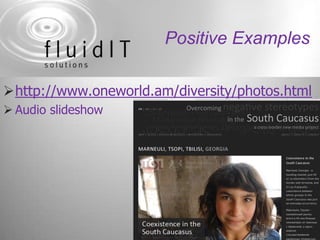
Positive Exampleshttp://www.oneworld.am/diversity/photos.htmlAudio slideshow
ReflectionReflections?How do audiovisuals impact your empathy for the other?Examples?
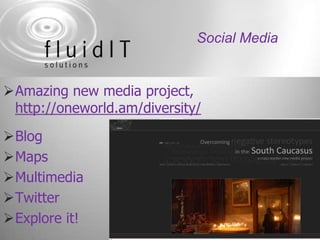
Social MediaAmazing new media project, http://oneworld.am/diversity/Blog
Maps
Multimedia
Twitter
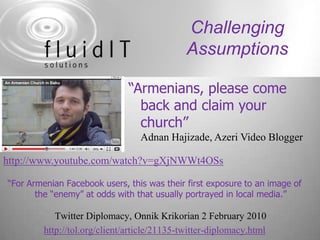
Explore it!Challenging Assumptions“Armenians, please come back and claim your church”AdnanHajizade, Azeri Video Bloggerhttp://www.youtube.com/watch?v=gXjNWWt4OSs“For Armenian Facebook users, this was their first exposure to an image of the “enemy” at odds with that usually portrayed in local media.”Twitter Diplomacy, Onnik Krikorian 2 February 2010http://tol.org/client/article/21135-twitter-diplomacy.html
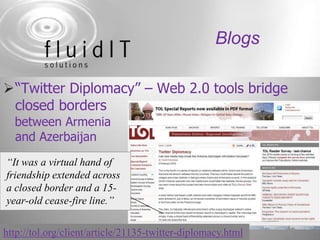
Blogs“Twitter Diplomacy” – Web 2.0 tools bridge closed borders   between Armenia and Azerbaijan“It was a virtual hand of friendship extended across a closed border and a 15-year-old cease-fire line.”http://tol.org/client/article/21135-twitter-diplomacy.html
TwitterShare or read real-time newsSearch #hashtags or keywords
Follow organizations or people
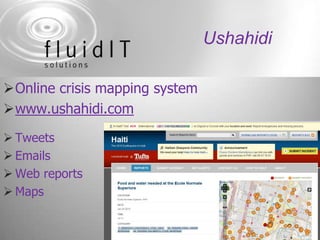
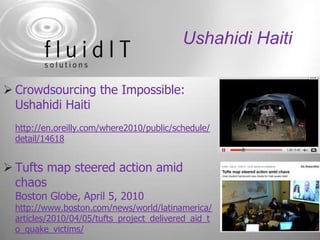
Create or follow listsUshahidiOnline crisis mapping systemwww.ushahidi.comTweets
Emails
Web reports
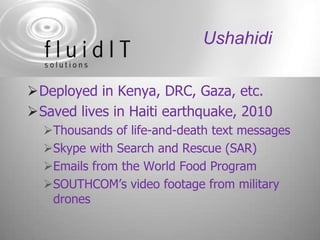
MapsUshahidiDeployed in Kenya, DRC, Gaza, etc.Saved lives in Haiti earthquake, 2010Thousands of life-and-death text messagesSkype with Search and Rescue (SAR)Emails from the World Food ProgramSOUTHCOM’s video footage from military drones

Communication for Peace: How Digital Technologies can Enhance Empathy and Dialogue

Editor's Notes

  • #3 -let me share some of my recent projects so you understand where I’m coming from -one of the most personally fulfilling moments was sharing the video in Rwanda last year
  • #4 “I do not want…”Today’s workshop is about Communication for peace-as this quote says, deep understanding is the path to peace-very challenging-very necessary-exciting developments in technology that enable richer communications from a broader base-I will share some examples from the field-lot of wisdom/experience in the room; a chance to share your own experience & questions
  • #5 -I am convinced, from my experience & research, that we can build empathy & understanding through technologies-the technologies are enablers; people use them powerfully-most exciting developments is how inexpensive & easy to use technologies are becoming-as simple as cell phones, in SMS/voice only mode, as well as multimedia features-when you harness these technologies and combine them in specific ways, very powerful outcomesConflict mapping/interventionsCitizen reporting/communication
  • #9 How easy do you imagine empathy is between people from:America & IraqPakistan and IndiaIsrael and the Palestinian territoriesSuicide bombers and their victims You and a person you imagine having the most difficulty respecting
  • #10 -what we don’t even notice as assumptions can be huge barriers to understanding, and ultimately peace -even openly discussed, consensus & mutual respect is very hard to nurture -very important to reveal, discuss, & respect each others’ differences
  • #12 -the “other” is so inaccessible to us -beyond our experience -behind so many ‘walls’ of barriersDigital stories allow outsiders a unique invitation behind the usual walls that obscure “the other”
  • #13 -in conflict situations, often the “enemy” speaks for each other, and imputes the most negative portrayals and intentions to them-states pretend to speak for all people-words are imputed to the “other”Digital stories & new media empower speakers to speak their own truth, not have words imputed to them-goes beyond words & facts, to the emotions
  • #20 -as simple as voice recorder on your cell phone, or free software & a microphone on the computer-that’s how I captured Amos’ storyAudio offers a great deal of creativity-sound-voice-surroundings-plays-interviews
  • #21 -about murmur-especially for geographically located stories
  • #23 Jean Paul Samputu – survivor, peacebuilder, friend-peace is impossible without forgiveness
  • #24 -building bridges across conflict zones is the topic of this piece-simple technology; photographs/voiceover-great as a positive examples – celebrate them
  • #27 Multiple channels, repurposing, viral marketing expands new media’s reach– exploding online channels-enabled community building that is not possible in person, even traditional communications (phones)-strangers, “enemies”-imprisoned; new media enabled transparency & pressure on authorities(Quote, Timecode 1:50)
  • #28 Encourage you to read more later
  • #29 How many of you use Twitter personally?Organizationally?Experience?
  • #30 One of strongest peace-specific digital tools-free, open source-demonstrate live
  • #32 Very good online reports that share more-top link is a 5 minute overview by the founder, Patrick Meier-important to note the Haiti work was done almost exclusively by students in Boston-offsite, volunteers, coordinating with on-the-ground professionals-invaluable
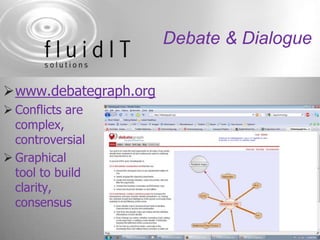
  • #33 Peace & conflict are complex & controversialPresenting all sides of the issues, in response to each other, is a good step at clarity & consensus on the issues
  • #34 -live online demo