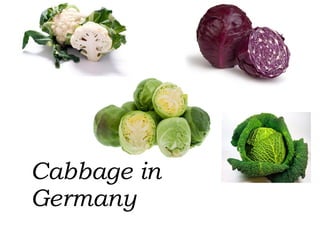
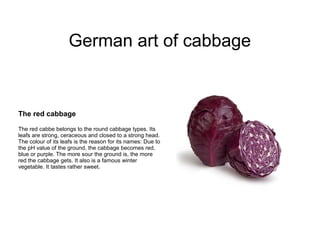
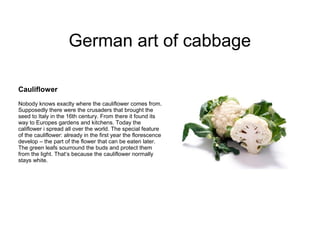
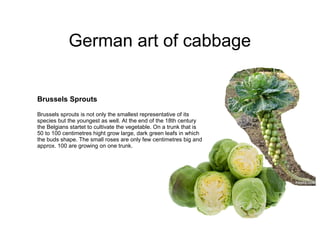
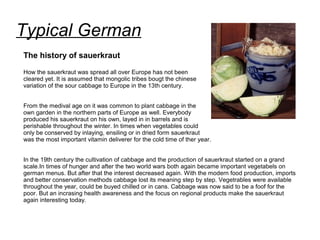
Cabbage has a long history in Germany. It was first mentioned in the 8th century and found ideal growing conditions in northern Germany. Cabbage was often considered a "poor people's food" and helped populations survive hard times. Today, there are many varieties of cabbage cultivated and celebrated in German culture and cuisine, including white, red, savoy, cauliflower, broccoli, kohlrabi, and brussels sprouts. Sauerkraut production transformed cabbage into a vitamin-rich food that could be preserved for winter and was an important source of nutrition. Cabbage continues to be viewed for its healing properties and health benefits.