Partnerships and Collaborations in
Aviation Training
Capt. Maina Njeru
Authorized Examinar and Instructor
KCAA
Who are the stakeholders of Aviation
industry?
Aircraft Operators
Ground Handlers
Airport Operators
Air Traffic Control
Management
&
Regulators
AVIATION TRAINING INSTITUTESAVIATION TRAINING INSTITUTES
Scope of Presentation
Partnerships and Collaborations Defined……
Voluntary relationship among different parties to work together
to achieve a common goal
Drivers to Partnerships
• Organizational:
– New supply links, learning,
legitimate, performance, restructure
• Economic:
– Costs and risks, co-specialization,
economies of scale
• Strategic:
– R&D, competitive edge, rivals
cooperation, product and technology
development, Bandwagon effect
• Political:
– Legal and regulatory barriers
Drivers to Partnerships
Low Interest High Interest
Low power
High power
Keep Satisfied Manage Closely
Monitor
(Minimum Effort)
Keep Informed
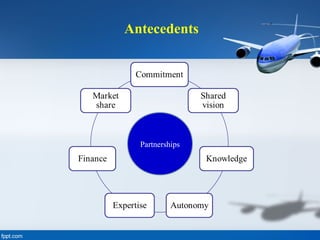
Attributes
Antecedents
Partnerships
Consequences - Pros and Cons
• Fusion vs Fission
• Positive vs Negative
interdependence
• Stronger advocacy
• Transformative potential
• Inventions and Innovations
• Strengthened knowledge
base
• Leverage of funds and
resources
• Build Support
• Less repetition of services
provision
• Greater efficiency and
effectiveness
• Overcoming challenges
• Meeting Goals
• Conservation Planning
• Society as a System
perspective
• Joint Decision Making
Consequences - Pros and Cons
• Bridging the gap; n-gap
• Less counter productive
• Improving Performance
• Desire for Lower Costs
• Increased productivity
• Getting Word of Mouth
Advertising
• Increasing Product Quality
• Enhancing Competitive
Advantage
• Co-specialization
• Legitimation
• Developing technical
standards
• Diversification
• Restructuring to improve
performance
• Risk diversification /
reduction
• Bandwagon effect
• Cooperation of potential
rivals..Power vs Interest
So, do we engage?
• What are the fundamentals?
– Work plan
– Agreements
• Formal
• Informal
Elements of a successful partnership
• Functional trust
• Common ground
• Shared interest
• Shared decision making
• Clear goals
• Clearly defined roles
• Open communication
• Shared leadership
• Growing capacity / skills
• Celebrate success together
Conclusion
• “The purpose of collaborations is to have shared visions
and joint strategies that address beyond the individual’s
agenda”
• Coopetition is a contemporary global trend that seeks to
provide a win-win strategy
• None of the stakeholders is a “know-it-all”
Two heads are better than one!
COLLABORATIONS

COLLABORATIONS

  • 1.
    Partnerships and Collaborationsin Aviation Training Capt. Maina Njeru Authorized Examinar and Instructor KCAA
  • 2.
    Who are thestakeholders of Aviation industry? Aircraft Operators Ground Handlers Airport Operators Air Traffic Control Management & Regulators AVIATION TRAINING INSTITUTESAVIATION TRAINING INSTITUTES
  • 3.
  • 4.
    Partnerships and CollaborationsDefined…… Voluntary relationship among different parties to work together to achieve a common goal
  • 5.
    Drivers to Partnerships •Organizational: – New supply links, learning, legitimate, performance, restructure • Economic: – Costs and risks, co-specialization, economies of scale • Strategic: – R&D, competitive edge, rivals cooperation, product and technology development, Bandwagon effect • Political: – Legal and regulatory barriers
  • 6.
    Drivers to Partnerships LowInterest High Interest Low power High power Keep Satisfied Manage Closely Monitor (Minimum Effort) Keep Informed
  • 7.
  • 8.
  • 9.
    Consequences - Prosand Cons • Fusion vs Fission • Positive vs Negative interdependence • Stronger advocacy • Transformative potential • Inventions and Innovations • Strengthened knowledge base • Leverage of funds and resources • Build Support • Less repetition of services provision • Greater efficiency and effectiveness • Overcoming challenges • Meeting Goals • Conservation Planning • Society as a System perspective • Joint Decision Making
  • 10.
    Consequences - Prosand Cons • Bridging the gap; n-gap • Less counter productive • Improving Performance • Desire for Lower Costs • Increased productivity • Getting Word of Mouth Advertising • Increasing Product Quality • Enhancing Competitive Advantage • Co-specialization • Legitimation • Developing technical standards • Diversification • Restructuring to improve performance • Risk diversification / reduction • Bandwagon effect • Cooperation of potential rivals..Power vs Interest
  • 11.
    So, do weengage? • What are the fundamentals? – Work plan – Agreements • Formal • Informal
  • 12.
    Elements of asuccessful partnership • Functional trust • Common ground • Shared interest • Shared decision making • Clear goals • Clearly defined roles • Open communication • Shared leadership • Growing capacity / skills • Celebrate success together
  • 13.
    Conclusion • “The purposeof collaborations is to have shared visions and joint strategies that address beyond the individual’s agenda” • Coopetition is a contemporary global trend that seeks to provide a win-win strategy • None of the stakeholders is a “know-it-all” Two heads are better than one!