Cochannel Interference
Cochannel interference is a major challenge in cellular communication networks. It occurs when the
same frequency channel is used by multiple nearby cells, leading to signals from these cells interfering
with each other and degrading overall network performance.
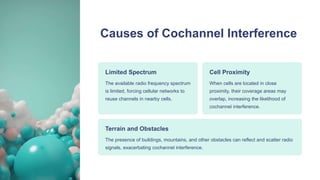
Causes of Cochannel Interference
Limited Spectrum
The available radio frequency spectrum
is limited, forcing cellular networks to
reuse channels in nearby cells.
Cell Proximity
When cells are located in close
proximity, their coverage areas may
overlap, increasing the likelihood of
cochannel interference.
Terrain and Obstacles
The presence of buildings, mountains, and other obstacles can reflect and scatter radio
signals, exacerbating cochannel interference.
Impact of Cochannel Interference
Reduced Capacity
Cochannel interference
reduces the overall capacity
of the cellular network,
limiting the number of users
that can be supported.
Degraded Service
Quality
Interference can lead to
dropped calls, poor voice
quality, and slower data
speeds for end-users.
Increased Power
Consumption
Devices may need to transmit
at higher power levels to
overcome the interference,
draining their batteries faster.
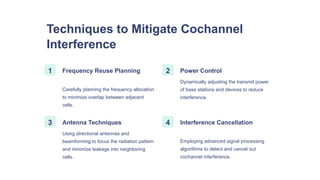
Techniques to Mitigate Cochannel
Interference
1 Frequency Reuse Planning
Carefully planning the frequency allocation
to minimize overlap between adjacent
cells.
2 Power Control
Dynamically adjusting the transmit power
of base stations and devices to reduce
interference.
3 Antenna Techniques
Using directional antennas and
beamforming to focus the radiation pattern
and minimize leakage into neighboring
cells.
4 Interference Cancellation
Employing advanced signal processing
algorithms to detect and cancel out
cochannel interference.
Frequency Planning and Channel
Allocation
1 Cell Clustering
Grouping cells into clusters and assigning unique frequency channels to each
cluster to minimize overlap.
2 Reuse Distance
Determining the minimum distance between cells using the same frequency
channel to limit interference.
3 Dynamic Allocation
Implementing algorithms to dynamically allocate and reassign channels
based on real-time network conditions.
Power Control and Interference
Management
Base Station Power
Adjusting the transmit power of
base stations to balance
coverage and interference.
Device Power
Controlling the transmit power
of user devices to minimize
interference with neighboring
cells.
Adaptive Algorithms
Implementing smart algorithms
to dynamically manage and
optimize power levels across
the network.
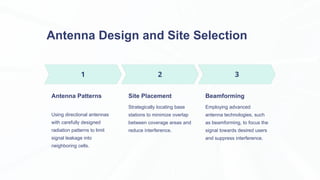
Antenna Design and Site Selection
Antenna Patterns
Using directional antennas
with carefully designed
radiation patterns to limit
signal leakage into
neighboring cells.
Site Placement
Strategically locating base
stations to minimize overlap
between coverage areas and
reduce interference.
Beamforming
Employing advanced
antenna technologies, such
as beamforming, to focus the
signal towards desired users
and suppress interference.
Conclusion
Despite the challenges of cochannel interference, implementing effective
techniques is crucial for optimizing wireless network performance.
By strategically planning frequencies, managing power and interference,
and utilizing advanced antenna designs, networks can mitigate cochannel
interference and provide better service to end-users.

Cochannel-Interference Introduction.pptx

  • 1.
    Cochannel Interference Cochannel interferenceis a major challenge in cellular communication networks. It occurs when the same frequency channel is used by multiple nearby cells, leading to signals from these cells interfering with each other and degrading overall network performance.
  • 2.
    Causes of CochannelInterference Limited Spectrum The available radio frequency spectrum is limited, forcing cellular networks to reuse channels in nearby cells. Cell Proximity When cells are located in close proximity, their coverage areas may overlap, increasing the likelihood of cochannel interference. Terrain and Obstacles The presence of buildings, mountains, and other obstacles can reflect and scatter radio signals, exacerbating cochannel interference.
  • 3.
    Impact of CochannelInterference Reduced Capacity Cochannel interference reduces the overall capacity of the cellular network, limiting the number of users that can be supported. Degraded Service Quality Interference can lead to dropped calls, poor voice quality, and slower data speeds for end-users. Increased Power Consumption Devices may need to transmit at higher power levels to overcome the interference, draining their batteries faster.
  • 4.
    Techniques to MitigateCochannel Interference 1 Frequency Reuse Planning Carefully planning the frequency allocation to minimize overlap between adjacent cells. 2 Power Control Dynamically adjusting the transmit power of base stations and devices to reduce interference. 3 Antenna Techniques Using directional antennas and beamforming to focus the radiation pattern and minimize leakage into neighboring cells. 4 Interference Cancellation Employing advanced signal processing algorithms to detect and cancel out cochannel interference.
  • 5.
    Frequency Planning andChannel Allocation 1 Cell Clustering Grouping cells into clusters and assigning unique frequency channels to each cluster to minimize overlap. 2 Reuse Distance Determining the minimum distance between cells using the same frequency channel to limit interference. 3 Dynamic Allocation Implementing algorithms to dynamically allocate and reassign channels based on real-time network conditions.
  • 6.
    Power Control andInterference Management Base Station Power Adjusting the transmit power of base stations to balance coverage and interference. Device Power Controlling the transmit power of user devices to minimize interference with neighboring cells. Adaptive Algorithms Implementing smart algorithms to dynamically manage and optimize power levels across the network.
  • 7.
    Antenna Design andSite Selection Antenna Patterns Using directional antennas with carefully designed radiation patterns to limit signal leakage into neighboring cells. Site Placement Strategically locating base stations to minimize overlap between coverage areas and reduce interference. Beamforming Employing advanced antenna technologies, such as beamforming, to focus the signal towards desired users and suppress interference.
  • 8.
    Conclusion Despite the challengesof cochannel interference, implementing effective techniques is crucial for optimizing wireless network performance. By strategically planning frequencies, managing power and interference, and utilizing advanced antenna designs, networks can mitigate cochannel interference and provide better service to end-users.