Welcome
Cambridge Medical English:

             What we do:
Teach medical English courses for:
• Doctors of all specialties,
• Medical Students
• Nurses.
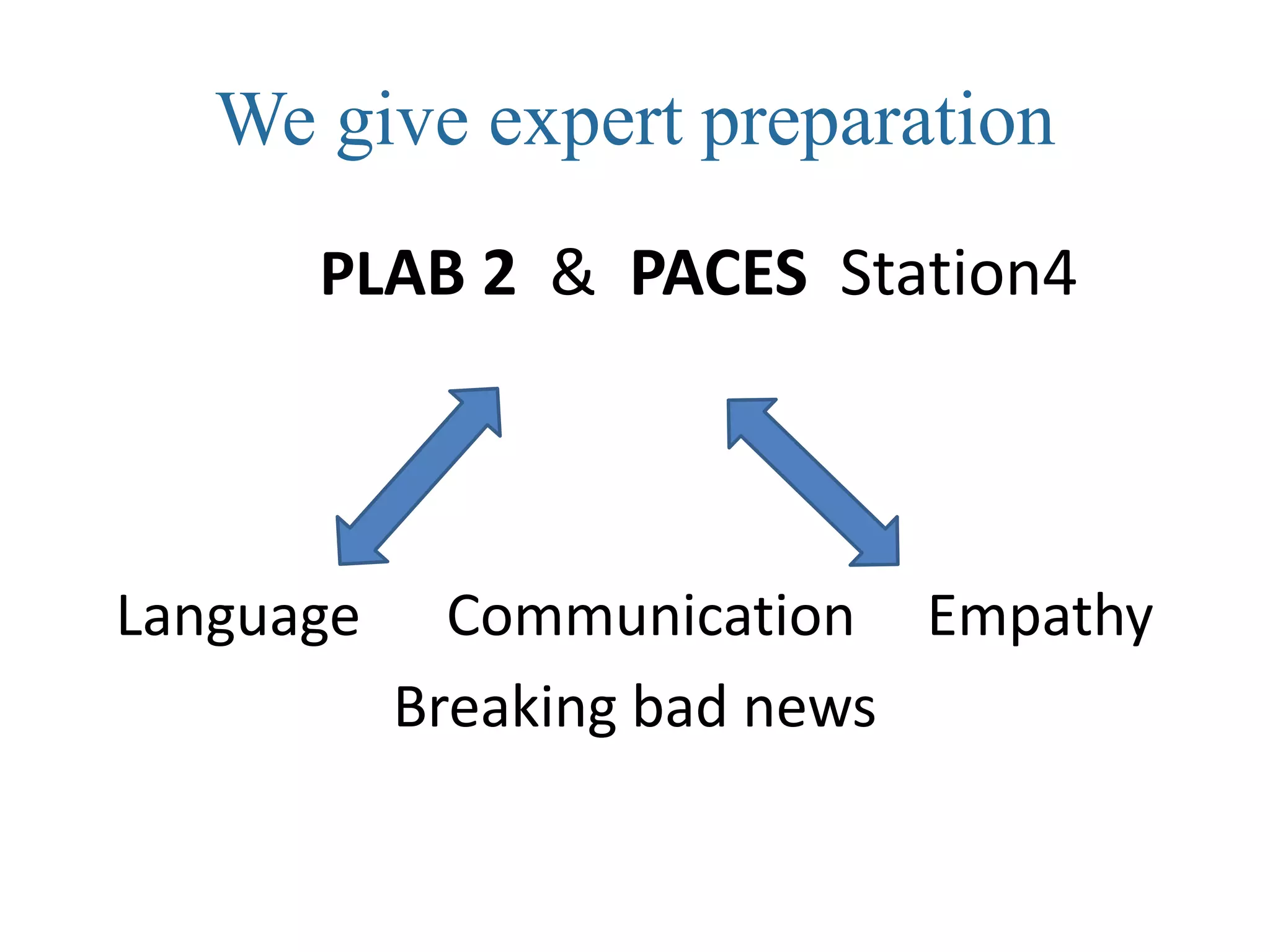
We give expert preparation
      PLAB 2 & PACES Station4


Language     Communication Empathy
           Breaking bad news
Why a Medical English course cont.

• Gives you best chance possible
• Shows you have the right attitude to an
  employer.
• Patients, doctors, relatives, hospital colleagues
  no longer tolerant.
• Complaints will be made if you have poor
  English or poor communication*.
*New European directive*
  Following fatal mistakes, and serious
  complaints from patients, and from
  NHS doctors:
GMC: “----- have secured an agreement
 to give hospitals powers to regulate
 doctors from the EU, with regard to
 English skills----”
Therefore your medical English will be tested in
  the future, even if you are from the EU
Where do we teach?
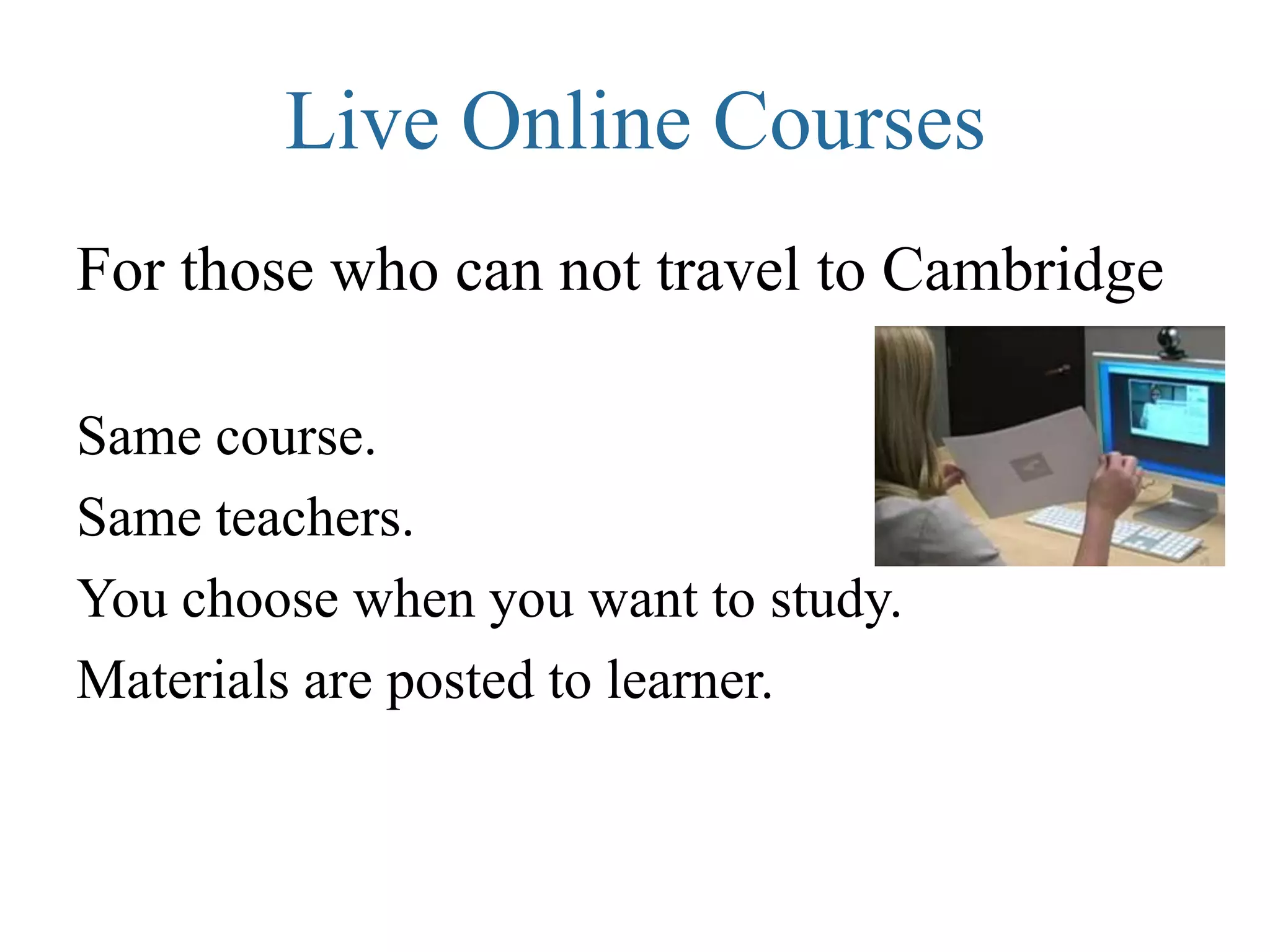
Live Online Courses
For those who can not travel to Cambridge

Same course.
Same teachers.
You choose when you want to study.
Materials are posted to learner.
Specialist Tutors

 Tutors are trained doctors or nurses


they understand exactly the authentic
         language you need
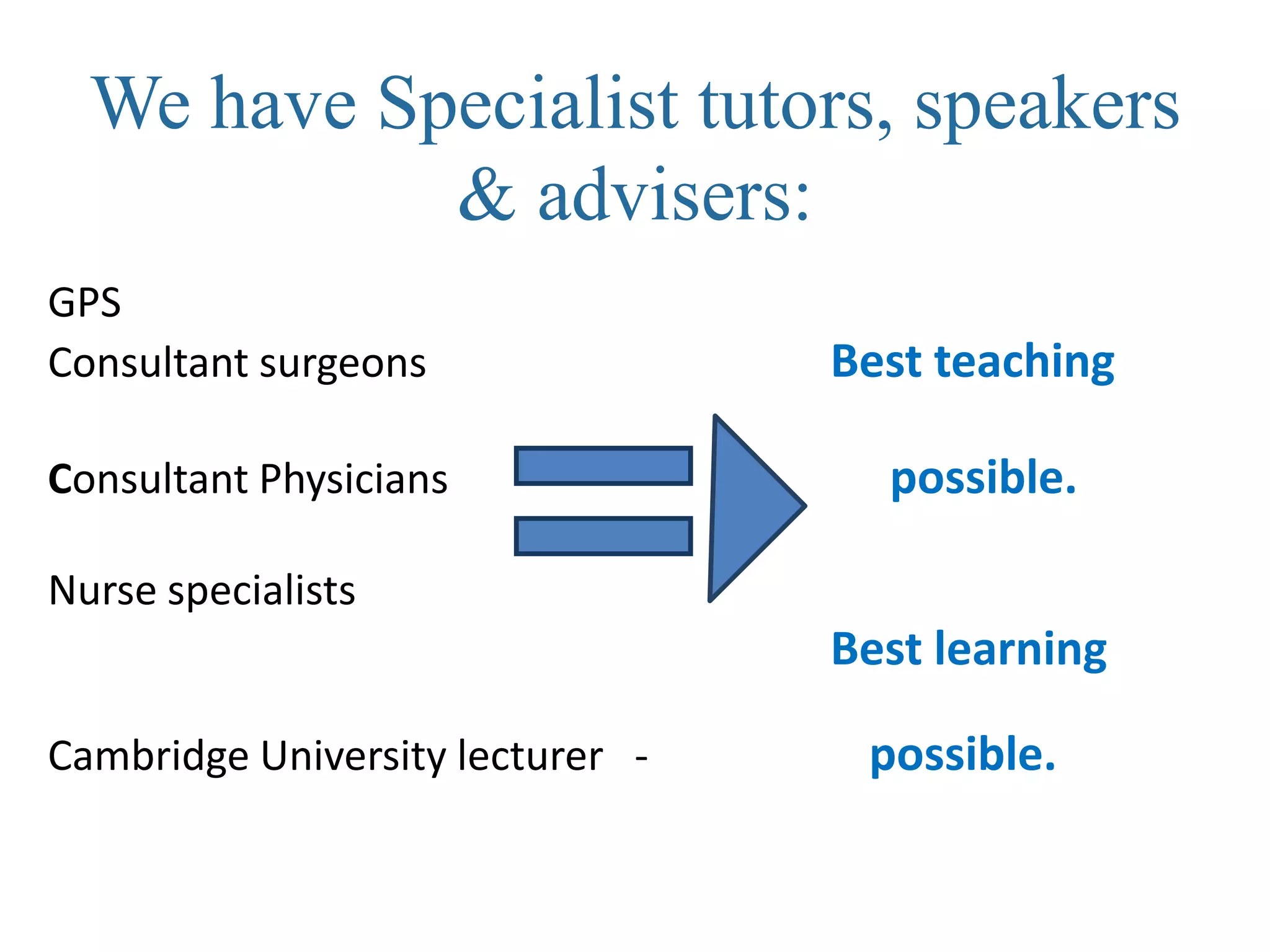
We have Specialist tutors, speakers
            & advisers:
GPS
Consultant surgeons               Best teaching

Consultant Physicians               possible.

Nurse specialists
                                  Best learning

Cambridge University lecturer -    possible.
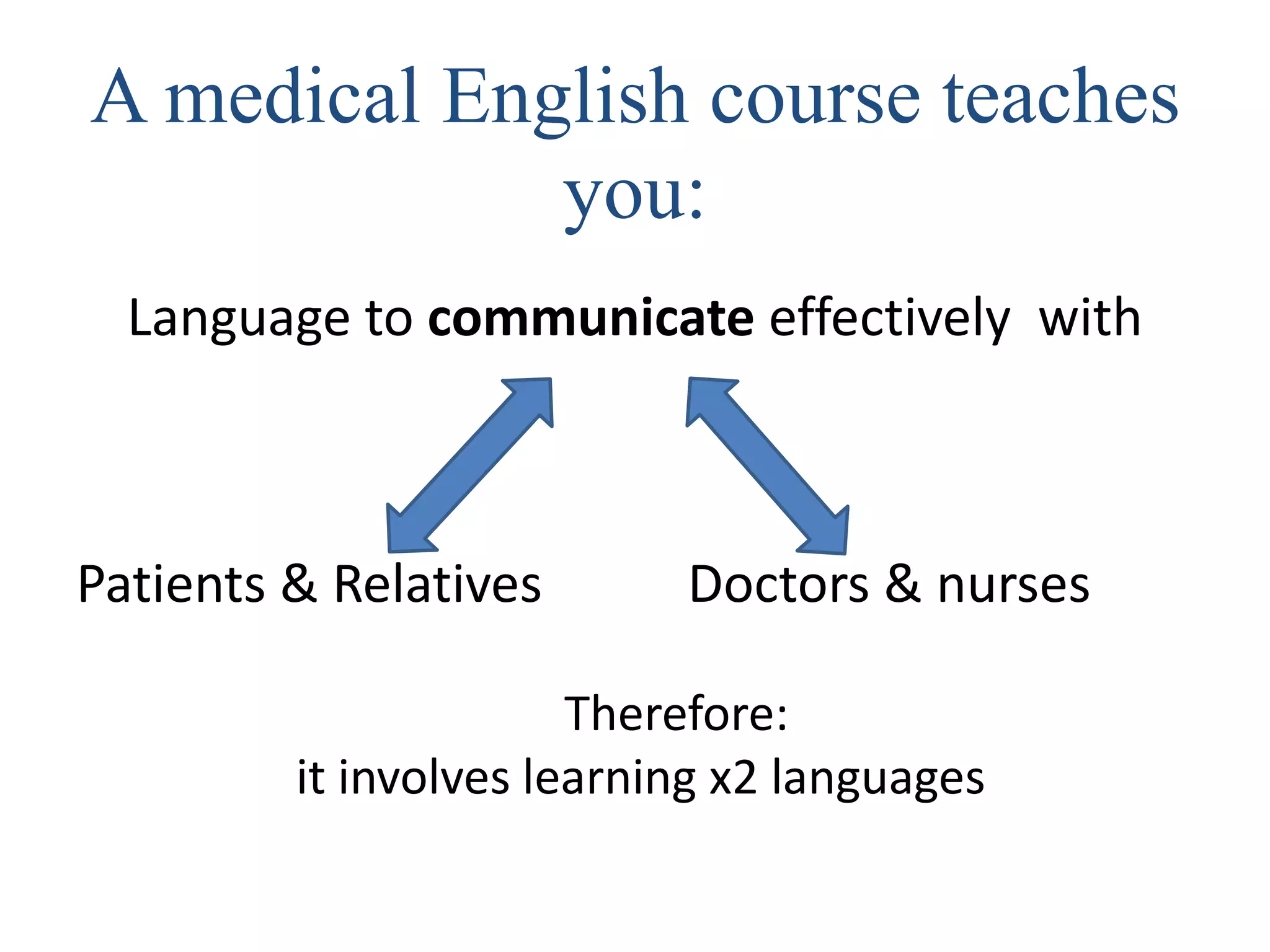
A medical English course teaches
             you:
  Language to communicate effectively with


Patients & Relatives       Doctors & nurses

                       Therefore:
         it involves learning x2 languages
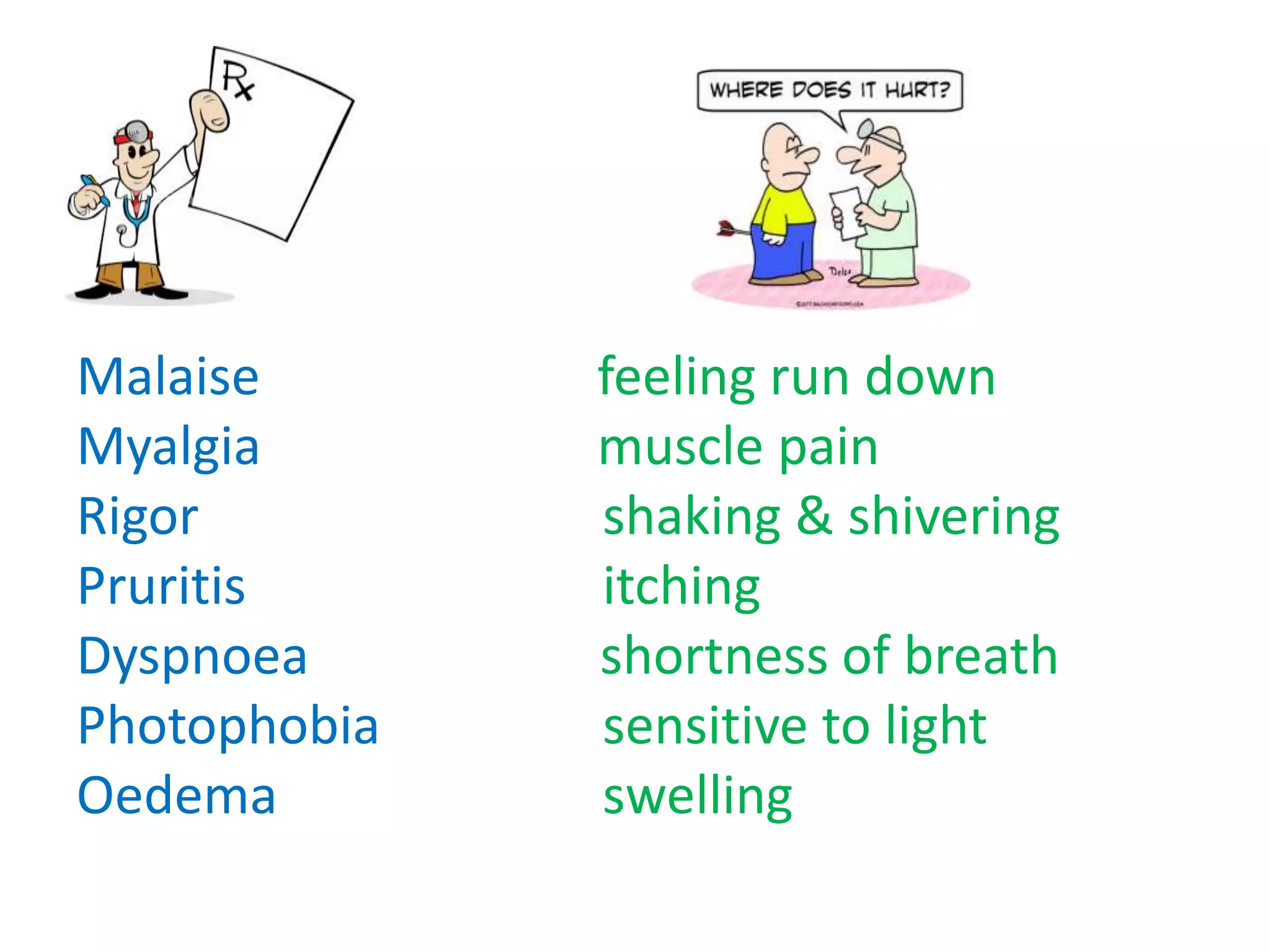
Malaise       feeling run down
Myalgia       muscle pain
Rigor         shaking & shivering
Pruritis      itching
Dyspnoea      shortness of breath
Photophobia   sensitive to light
Oedema        swelling
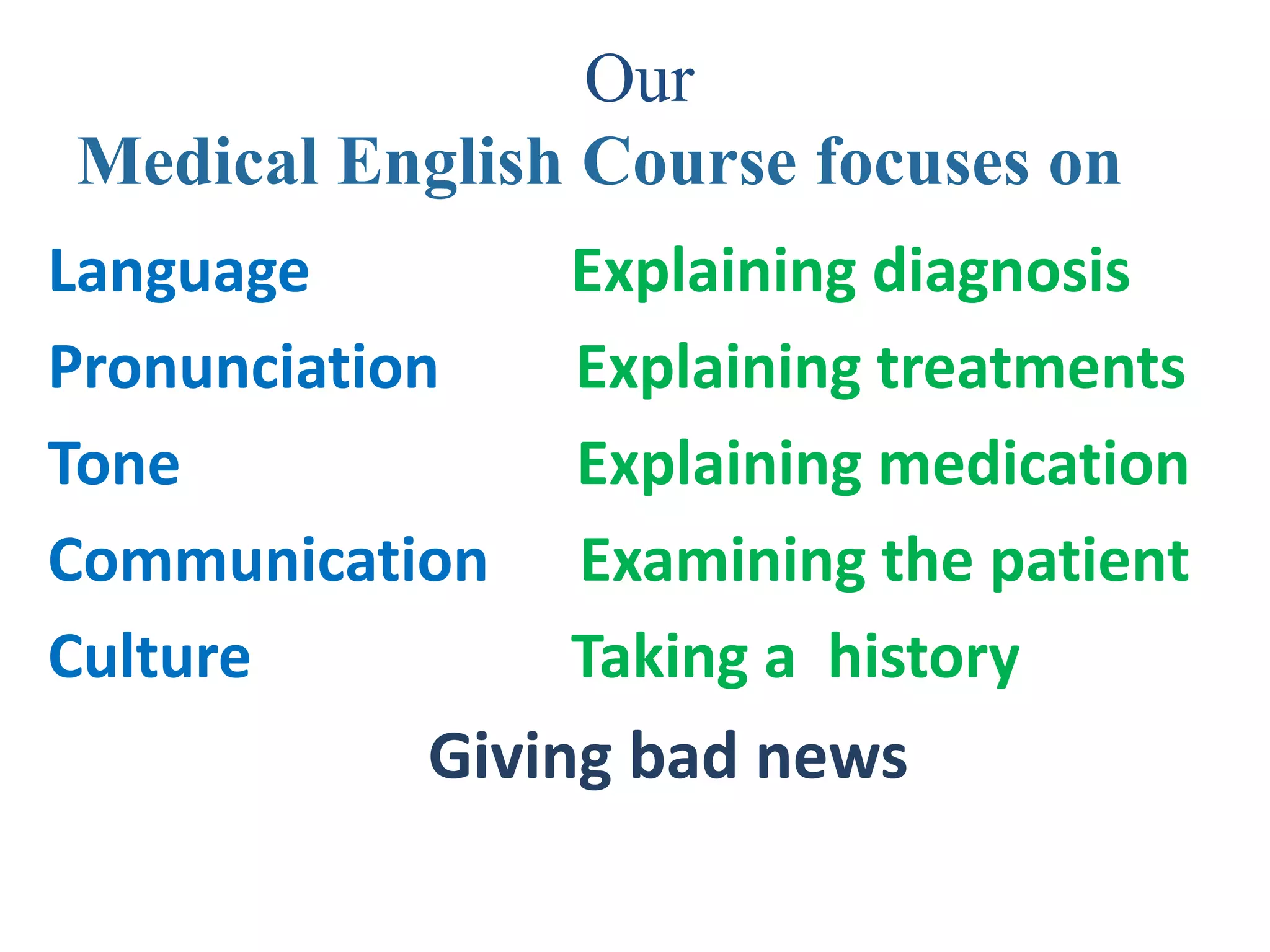
Our
Medical English Course focuses on
Language        Explaining diagnosis
Pronunciation   Explaining treatments
Tone            Explaining medication
Communication   Examining the patient
Culture         Taking a history
           Giving bad news
cambridgemedicalenglish.co.uk


Good luck with your future careers.

Cambridge Medical English - Medical English for Doctors, Nurses and Students

  • 1.
  • 2.
    Cambridge Medical English: What we do: Teach medical English courses for: • Doctors of all specialties, • Medical Students • Nurses.
  • 3.
    We give expertpreparation PLAB 2 & PACES Station4 Language Communication Empathy Breaking bad news
  • 4.
    Why a MedicalEnglish course cont. • Gives you best chance possible • Shows you have the right attitude to an employer. • Patients, doctors, relatives, hospital colleagues no longer tolerant. • Complaints will be made if you have poor English or poor communication*.
  • 5.
    *New European directive* Following fatal mistakes, and serious complaints from patients, and from NHS doctors: GMC: “----- have secured an agreement to give hospitals powers to regulate doctors from the EU, with regard to English skills----” Therefore your medical English will be tested in the future, even if you are from the EU
  • 6.
  • 8.
    Live Online Courses Forthose who can not travel to Cambridge Same course. Same teachers. You choose when you want to study. Materials are posted to learner.
  • 9.
    Specialist Tutors Tutorsare trained doctors or nurses they understand exactly the authentic language you need
  • 10.
    We have Specialisttutors, speakers & advisers: GPS Consultant surgeons Best teaching Consultant Physicians possible. Nurse specialists Best learning Cambridge University lecturer - possible.
  • 11.
    A medical Englishcourse teaches you: Language to communicate effectively with Patients & Relatives Doctors & nurses Therefore: it involves learning x2 languages
  • 12.
    Malaise feeling run down Myalgia muscle pain Rigor shaking & shivering Pruritis itching Dyspnoea shortness of breath Photophobia sensitive to light Oedema swelling
  • 13.
    Our Medical English Coursefocuses on Language Explaining diagnosis Pronunciation Explaining treatments Tone Explaining medication Communication Examining the patient Culture Taking a history Giving bad news
  • 14.