Cloud Monitoring 101
The 5 Key Elements of Effective Cloud Monitoring
Current State of Cloud Monitoring
 No surprise that cloud computing is growing at a rampant rate
 Broader and broader base of organizations worldwide is pushing cloud
infrastructure to:
 Drive new levels of innovation
 Accelerate their business
 Save money
 These users have an ever-increasing set of demands for:
 Speed, simplicity, quality of service and value
 Demands that the rst generation of cloud application and server monitoring tools
just can’t provide
Enter the Second Generation
 New breed of cloud monitoring on the rise
 SaaS–based solutions
 Smarter, faster, easier, more unified, lighter weight, and more accessible than the previous generation
of cloud monitoring tools
 Many organizations looking for alternatives to current tools
 Nagios, Ganglia, NewRelic, Pingdom, Graphite, and the list goes on
 Users dislike most of these fragmented tools due to the limited functionality or
heavy care and feeding required
 Other tools are either too expensive or too complex for everyday use
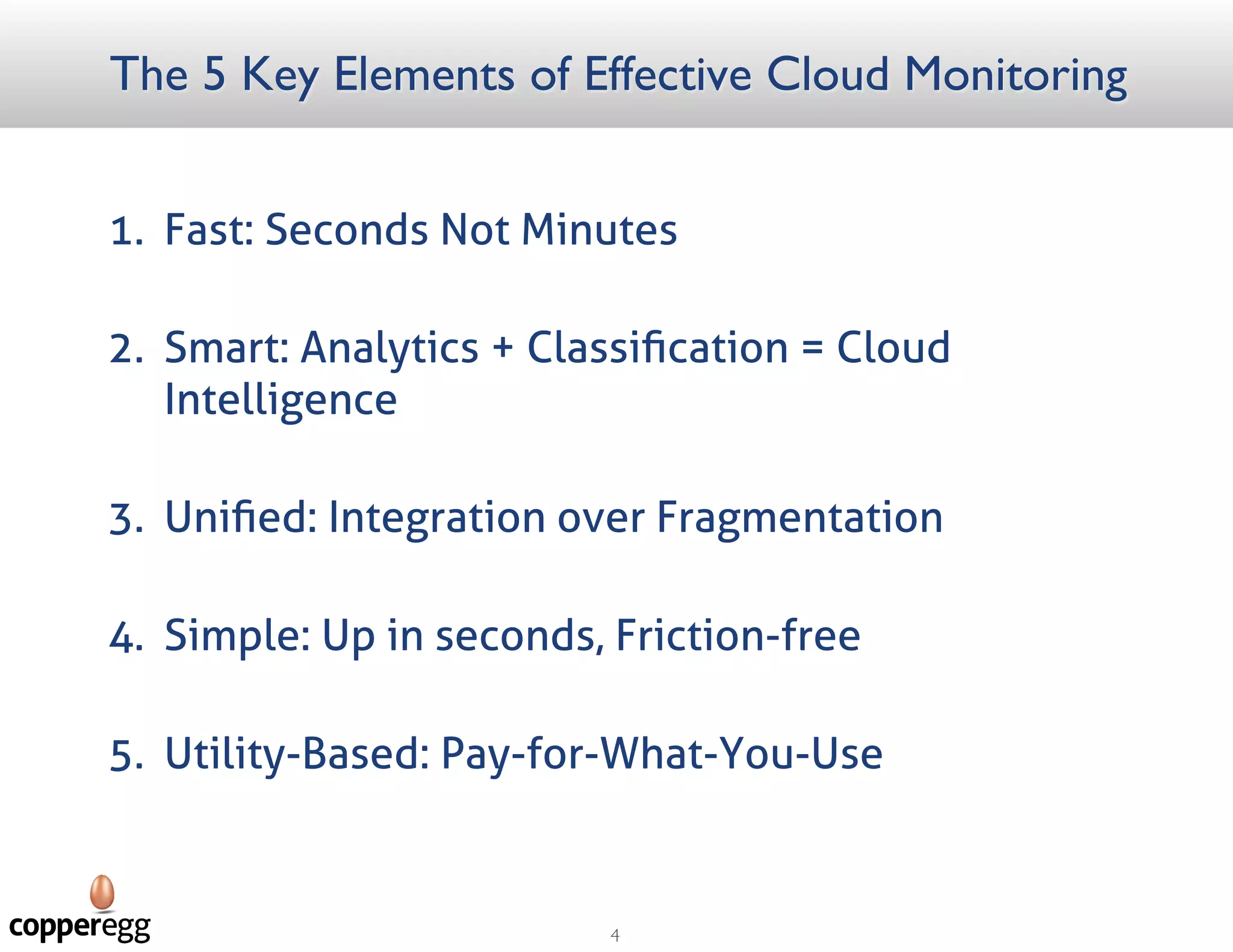
The 5 Key Elements of Effective Cloud
Monitoring
1. Fast: Seconds Not Minutes
2. Smart: Analytics + Classication = Cloud Intelligence
3. Unied: Integration over Fragmentation
4. Simple: Up in seconds, Friction-free
5. Utility-Based: Pay-for-What-You-Use
I. Fast: Seconds not Minutes
 Continuous operations required instant visibility
 Code deploys happen many, many times a day
 You can’t wait 15 minutes for a problem to be detected
 Next generation cloud monitoring is leveraging Big Data, NoSQL architectural advantages
 To measure performance and deliver results in seconds not minutes
 Cloud monitoring must operate on a second-by-second basis
 To know immediately when something goes wrong and where that problem is located
II. Smart: Analytics, Classification
 Cloud Intelligence
 Data analytics + relevant classification = cloud intelligence
 Creates information, insight, and visibility
 Integrate for automation with DevOps tools like Chef
 Seamlessly combine how you deploy servers (through Chef recipes and cookbooks) with how you
want them monitored,
 Results in automated monitoring that follows your servers as they are created, updated, and recycled
 Tag servers and instances based on their function, location, OS, or application tier
 Unlocks the value of analytics further by automatically applying appropriate logic for analysis,
alerting, and problem resolution
III. Unified: Integration over Fragmentation
 First generation cloud monitoring tools
were siloed and one-dimensional
 Hodgepodge of views and fragmented visibility,
 No unified perspective
 Look for platforms designed for real-time
processing and analysis
 Integrated views across Windows, MacOS X,
multiple flavors of Linux, and FreeBSD systems
 Across hosted environments including Amazon
EC2, Rackspace, private data centers, and any
variety of public cloud providers
 Multi-user access is imperative
 Collaborative operations requires multiple ops
users to share a common view
 Admin views plus read-only options
IV. Simple: Up in Seconds, Friction free
 On-premise, enterprise-centric management tools have been notoriously complex
to setup, install, congure, and use
 Not an option with cloud-dependent users
 Cloud monitoring requires instant access to install & immediate time to value
 Admins and ops team are seeking simpler to use, easier to maintain, and more
affordable monitoring solutions than the first gen tools out there today
 Ops teams need tools just like developers
 Without the need for code insertion or system surgery to provide value
 Ops teams need simple, quick, and valuable solutions that integrate together and scale if and when
they scale
V. Utility-Based: Pay-for-What-You-Use
 Public cloud services are on-demand
and paid for per hour
 Cloud monitoring solutions must follow that
model
 Consistent utility, pay-for-use pricing
 Cost-effectively monitor your infrastructure
and apps as your instances spin up and spin
down
 Only get charged for what you actually
monitor
 As cloud users ebb and flow
throughout the day, their instances
spin up and down
 Cloud monitoring pricing should fairly reflect
how the system is being used
Summary
 Cloud monitoring demands growth
 First generation users losing patience, looking for something better
 Second generation users demanding less complexity, better value
 Five key elements of effective cloud monitoring
1. Fast: Seconds Not Minutes
2. Smart: Analytics + Classication = Cloud Intelligence
3. Unied: Integration over Fragmentation
4. Simple: Up in seconds, Friction-free
5. Utility-Based: Pay-for-What-You-Use
 For more cloud monitoring information check out CopperEgg at
 http://copperegg.com/
 https://twitter.com/copperegg

Cloud Monitoring 101 - The Five Key Elements to Effective Cloud Monitoring

  • 1.
    Cloud Monitoring 101 The5 Key Elements of Effective Cloud Monitoring
  • 2.
    Current State ofCloud Monitoring  No surprise that cloud computing is growing at a rampant rate  Broader and broader base of organizations worldwide is pushing cloud infrastructure to:  Drive new levels of innovation  Accelerate their business  Save money  These users have an ever-increasing set of demands for:  Speed, simplicity, quality of service and value  Demands that the first generation of cloud application and server monitoring tools just can’t provide
  • 3.
    Enter the SecondGeneration  New breed of cloud monitoring on the rise  SaaS–based solutions  Smarter, faster, easier, more unified, lighter weight, and more accessible than the previous generation of cloud monitoring tools  Many organizations looking for alternatives to current tools  Nagios, Ganglia, NewRelic, Pingdom, Graphite, and the list goes on  Users dislike most of these fragmented tools due to the limited functionality or heavy care and feeding required  Other tools are either too expensive or too complex for everyday use
  • 4.
    The 5 KeyElements of Effective Cloud Monitoring 1. Fast: Seconds Not Minutes 2. Smart: Analytics + Classication = Cloud Intelligence 3. Unied: Integration over Fragmentation 4. Simple: Up in seconds, Friction-free 5. Utility-Based: Pay-for-What-You-Use
  • 5.
    I. Fast: Secondsnot Minutes  Continuous operations required instant visibility  Code deploys happen many, many times a day  You can’t wait 15 minutes for a problem to be detected  Next generation cloud monitoring is leveraging Big Data, NoSQL architectural advantages  To measure performance and deliver results in seconds not minutes  Cloud monitoring must operate on a second-by-second basis  To know immediately when something goes wrong and where that problem is located
  • 6.
    II. Smart: Analytics,Classification  Cloud Intelligence  Data analytics + relevant classification = cloud intelligence  Creates information, insight, and visibility  Integrate for automation with DevOps tools like Chef  Seamlessly combine how you deploy servers (through Chef recipes and cookbooks) with how you want them monitored,  Results in automated monitoring that follows your servers as they are created, updated, and recycled  Tag servers and instances based on their function, location, OS, or application tier  Unlocks the value of analytics further by automatically applying appropriate logic for analysis, alerting, and problem resolution
  • 7.
    III. Unified: Integrationover Fragmentation  First generation cloud monitoring tools were siloed and one-dimensional  Hodgepodge of views and fragmented visibility,  No unified perspective  Look for platforms designed for real-time processing and analysis  Integrated views across Windows, MacOS X, multiple flavors of Linux, and FreeBSD systems  Across hosted environments including Amazon EC2, Rackspace, private data centers, and any variety of public cloud providers  Multi-user access is imperative  Collaborative operations requires multiple ops users to share a common view  Admin views plus read-only options
  • 8.
    IV. Simple: Upin Seconds, Friction free  On-premise, enterprise-centric management tools have been notoriously complex to setup, install, configure, and use  Not an option with cloud-dependent users  Cloud monitoring requires instant access to install & immediate time to value  Admins and ops team are seeking simpler to use, easier to maintain, and more affordable monitoring solutions than the first gen tools out there today  Ops teams need tools just like developers  Without the need for code insertion or system surgery to provide value  Ops teams need simple, quick, and valuable solutions that integrate together and scale if and when they scale
  • 9.
    V. Utility-Based: Pay-for-What-You-Use Public cloud services are on-demand and paid for per hour  Cloud monitoring solutions must follow that model  Consistent utility, pay-for-use pricing  Cost-effectively monitor your infrastructure and apps as your instances spin up and spin down  Only get charged for what you actually monitor  As cloud users ebb and flow throughout the day, their instances spin up and down  Cloud monitoring pricing should fairly reflect how the system is being used
  • 10.
    Summary  Cloud monitoringdemands growth  First generation users losing patience, looking for something better  Second generation users demanding less complexity, better value  Five key elements of effective cloud monitoring 1. Fast: Seconds Not Minutes 2. Smart: Analytics + Classification = Cloud Intelligence 3. Unified: Integration over Fragmentation 4. Simple: Up in seconds, Friction-free 5. Utility-Based: Pay-for-What-You-Use  For more cloud monitoring information check out CopperEgg at  http://copperegg.com/  https://twitter.com/copperegg