CLOUD COST
CLOUD COST
OBSERVABILITY
OBSERVABILITY
METRICS TO
METRICS TO
WATCH
WATCH
to optimize cloud performance
& control spending
TOP 10
Tracking CPU and memory usage ensures resources
are efficiently allocated and reduces both
underutilization and performance degradation.
Best Practice: Use tools like Kubernetes dashboards
and Amnic to rightsize instances and enable
autoscaling.
Compute Resource Utilization
01
Mismanaged storage and data transfer can
significantly increase cloud costs. Monitor data egress
and optimize storage tiers to reduce spending.
Best Practice: Use compression and move rarely
accessed data to cold storage.
Data Transfer and Storage Costs
02
Excessive inter-region data transfer and bandwidth
consumption can quickly inflate costs.
Best Practice: Monitor traffic and use CDNs to reduce
bandwidth use and costs.
Network Traffic and Bandwidth Usage
03
Overprovisioned nodes or misconfigured pods can
drive up costs without improving performance.
Best Practice: URight-size nodes and consider spot
instances for non-critical workloads.
Kubernetes Node and Pod Costs
04
Unused resources like unattached volumes can
accumulate, leading to wasteful spending.
Best Practice: Automate the cleanup of idle resources
and run regular audits to identify inefficiencies.
Idle and Abandoned Resources
05
Autoscaling dynamically adjusts resources based on
demand, while spot instances offer cost-effective,
preemptible capacity.
Best Practice: Leverage Kubernetes autoscaling
features and spot instances to reduce cloud costs.
Autoscaling and Spot Instances
06
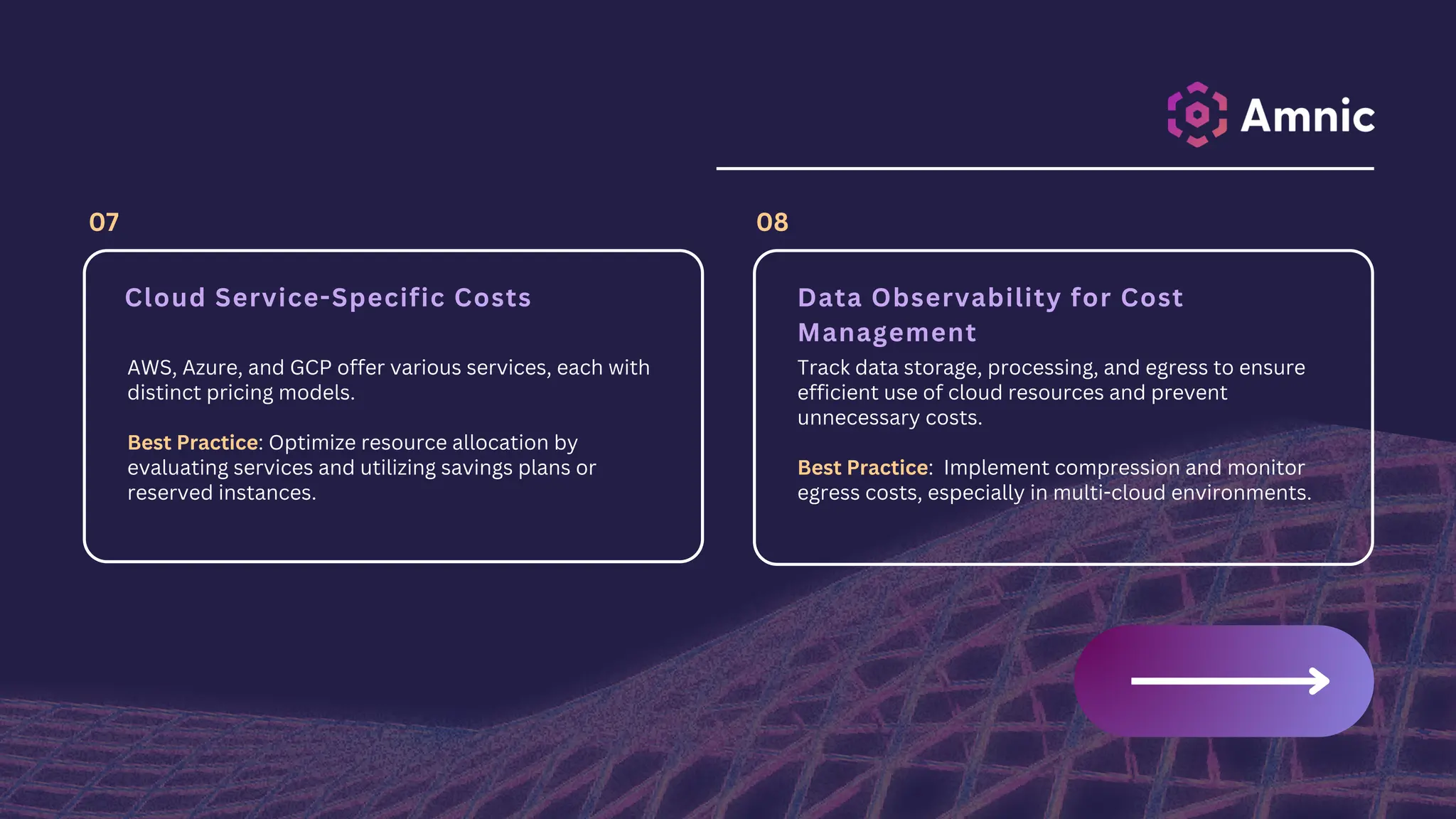
AWS, Azure, and GCP offer various services, each with
distinct pricing models.
Best Practice: Optimize resource allocation by
evaluating services and utilizing savings plans or
reserved instances.
Cloud Service-Specific Costs
07
Track data storage, processing, and egress to ensure
efficient use of cloud resources and prevent
unnecessary costs.
Best Practice: Implement compression and monitor
egress costs, especially in multi-cloud environments.
Data Observability for Cost
Management
08
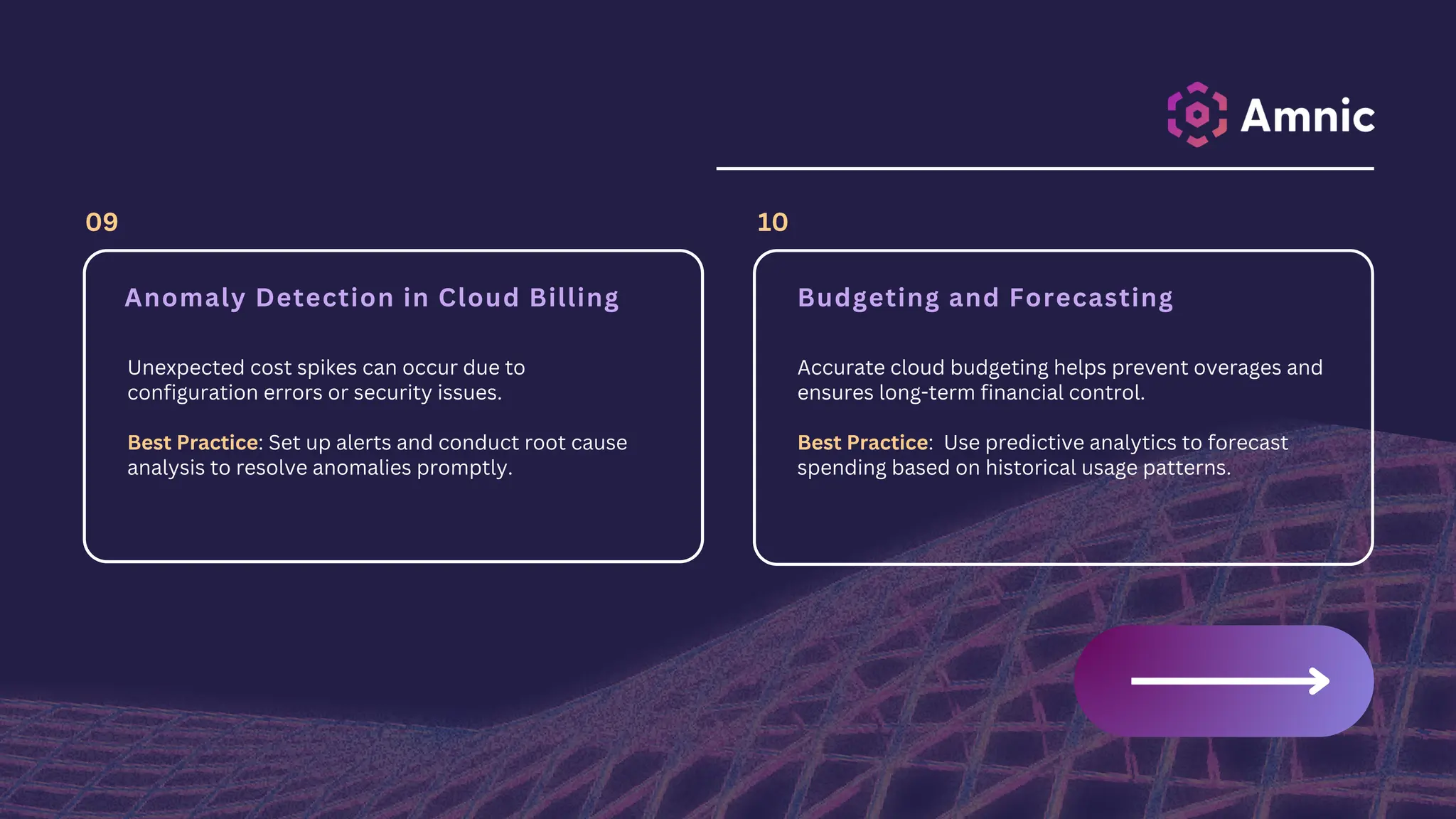
Unexpected cost spikes can occur due to
configuration errors or security issues.
Best Practice: Set up alerts and conduct root cause
analysis to resolve anomalies promptly.
Anomaly Detection in Cloud Billing
09
Accurate cloud budgeting helps prevent overages and
ensures long-term financial control.
Best Practice: Use predictive analytics to forecast
spending based on historical usage patterns.
Budgeting and Forecasting
10
CLOUD COSTS
CLOUD COSTS
with
with Amnic
Amnic
TAKE CONTROL OF
Platforms like Amnic make it easy to manage costs and
ensure high efficiency across your cloud environment.
Want to sign up for a 30-day free trial or request a
demo to see Amnic in action? Visit www.amnic.com to
learn more!

Cloud Cost Observability Metrics to Watch

  • 1.
    CLOUD COST CLOUD COST OBSERVABILITY OBSERVABILITY METRICSTO METRICS TO WATCH WATCH to optimize cloud performance & control spending TOP 10
  • 2.
    Tracking CPU andmemory usage ensures resources are efficiently allocated and reduces both underutilization and performance degradation. Best Practice: Use tools like Kubernetes dashboards and Amnic to rightsize instances and enable autoscaling. Compute Resource Utilization 01 Mismanaged storage and data transfer can significantly increase cloud costs. Monitor data egress and optimize storage tiers to reduce spending. Best Practice: Use compression and move rarely accessed data to cold storage. Data Transfer and Storage Costs 02
  • 3.
    Excessive inter-region datatransfer and bandwidth consumption can quickly inflate costs. Best Practice: Monitor traffic and use CDNs to reduce bandwidth use and costs. Network Traffic and Bandwidth Usage 03 Overprovisioned nodes or misconfigured pods can drive up costs without improving performance. Best Practice: URight-size nodes and consider spot instances for non-critical workloads. Kubernetes Node and Pod Costs 04
  • 4.
    Unused resources likeunattached volumes can accumulate, leading to wasteful spending. Best Practice: Automate the cleanup of idle resources and run regular audits to identify inefficiencies. Idle and Abandoned Resources 05 Autoscaling dynamically adjusts resources based on demand, while spot instances offer cost-effective, preemptible capacity. Best Practice: Leverage Kubernetes autoscaling features and spot instances to reduce cloud costs. Autoscaling and Spot Instances 06
  • 5.
    AWS, Azure, andGCP offer various services, each with distinct pricing models. Best Practice: Optimize resource allocation by evaluating services and utilizing savings plans or reserved instances. Cloud Service-Specific Costs 07 Track data storage, processing, and egress to ensure efficient use of cloud resources and prevent unnecessary costs. Best Practice: Implement compression and monitor egress costs, especially in multi-cloud environments. Data Observability for Cost Management 08
  • 6.
    Unexpected cost spikescan occur due to configuration errors or security issues. Best Practice: Set up alerts and conduct root cause analysis to resolve anomalies promptly. Anomaly Detection in Cloud Billing 09 Accurate cloud budgeting helps prevent overages and ensures long-term financial control. Best Practice: Use predictive analytics to forecast spending based on historical usage patterns. Budgeting and Forecasting 10
  • 7.
    CLOUD COSTS CLOUD COSTS with withAmnic Amnic TAKE CONTROL OF Platforms like Amnic make it easy to manage costs and ensure high efficiency across your cloud environment. Want to sign up for a 30-day free trial or request a demo to see Amnic in action? Visit www.amnic.com to learn more!