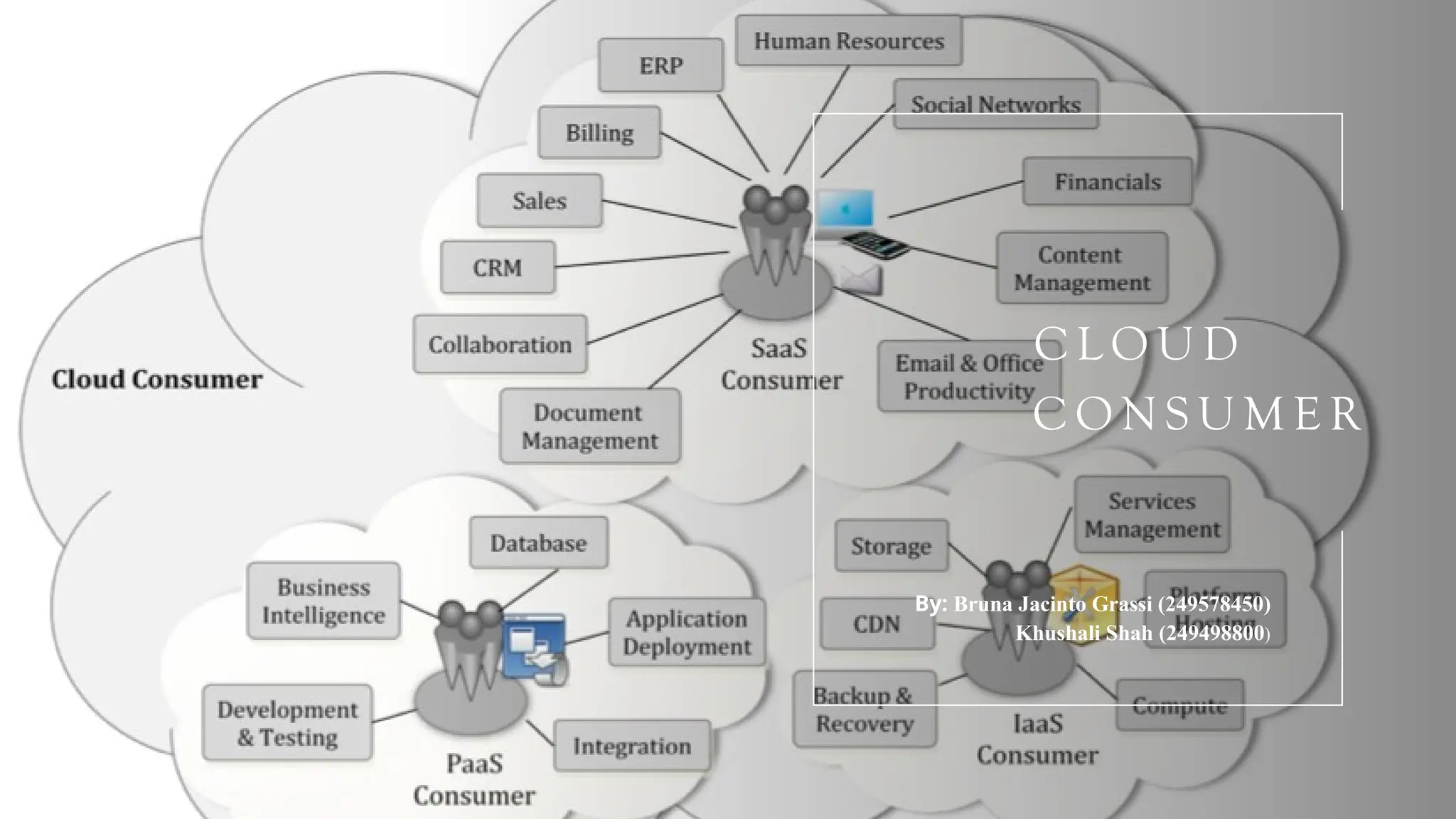
C L O U D
C O N S U M E R
By: Bruna Jacinto Grassi (249578450)
Khushali Shah (249498800)
TA B L E O F
C O N T E N T S
Introduction
SaaS
PaaS
Iaas
Service Level Agreements
Conclusion
I N T R O D U C T I O N
What is Cloud Consumer?
• A cloud consumer is an organization, stakeholder, or individual that uses cloud
services.
• The choice of service model depends on the company’s technical expertise, budget,
goals, and the specific business needs.
• Cloud services are delivered in three main models:
• SaaS (Software-as-a-Service)
• PaaS (Platform-as-a-Service)
• IaaS (Infrastructure-as-a-Service)
• Each model offers different levels of control, flexibility, and management.
S A A S OV E RV I E W
• SaaS allows cloud consumers to access applications over the internet.
• The cloud provider handles all physical infrastructure, software updates, and
maintenance.
• Consumers typically access SaaS services through a web browser without needing to
manage underlying hardware or software.
• Ideal for businesses with limited IT resources that require quick deployment of
software applications.
• Examples:
• Dropbox: Cloud storage solution.
• Google Workspace: Productivity tools for collaboration.
• Microsoft 365: Business productivity suite including Word, Excel, Outlook, and more.
A DVA N TAG E S
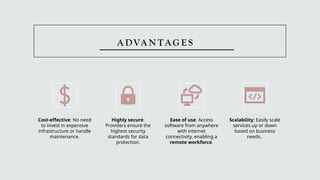
Cost-effective: No need
to invest in expensive
infrastructure or handle
maintenance.
Highly secure:
Providers ensure the
highest security
standards for data
protection.
Ease of use: Access
software from anywhere
with internet
connectivity, enabling a
remote workforce.
Scalability: Easily scale
services up or down
based on business
needs.
PA A S OV E RV I E W
• PaaS provides a platform for developers to build, test, and deploy applications without
managing the underlying hardware and operating systems.
• The cloud provider takes care of the infrastructure, including operating systems,
middleware, and runtime environments.
• Developers can focus on writing code and creating software without worrying about
infrastructure management.
• Suitable for organizations that need a platform for software development, without the
overhead of managing complex infrastructure.
• Examples:
• Microsoft Azure App Services: Develop and host web applications.
• Google App Engine: Build highly scalable applications on Google's infrastructure.
• AWS Elastic Beanstalk: Deploy and manage applications without worrying about
infrastructure.
A DVA N TAG E S
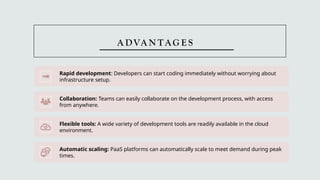
Rapid development: Developers can start coding immediately without worrying about
infrastructure setup.
Collaboration: Teams can easily collaborate on the development process, with access
from anywhere.
Flexible tools: A wide variety of development tools are readily available in the cloud
environment.
Automatic scaling: PaaS platforms can automatically scale to meet demand during peak
times.
I A A S OV E RV I E W
• IaaS provides virtualized computing resources over the internet. Consumers rent virtual
machines, storage, networks, and other infrastructure from cloud providers.
• The consumer has control over the operating system, applications, data, and
middleware, while the cloud provider manages the hardware.
• Best suited for organizations that want to maintain more control over their infrastructure
but avoid the costs of owning and maintaining physical data centers.
• Key characteristics: Pay-per-use pricing, flexibility, and full control over the operating
environment.
• Examples:
• Amazon Web Services (AWS): Offers a wide range of IaaS services including EC2 for
computing power.
• Microsoft Azure: Provides virtual machines, storage, and networking resources.
• Google Cloud Platform (GCP): Offers customizable virtual infrastructure for businesses.
A DVA N TAG E S
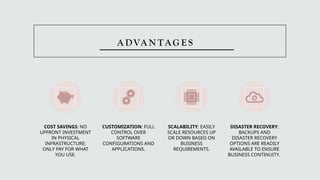
COST SAVINGS: NO
UPFRONT INVESTMENT
IN PHYSICAL
INFRASTRUCTURE;
ONLY PAY FOR WHAT
YOU USE.
CUSTOMIZATION: FULL
CONTROL OVER
SOFTWARE
CONFIGURATIONS AND
APPLICATIONS.
SCALABILITY: EASILY
SCALE RESOURCES UP
OR DOWN BASED ON
BUSINESS
REQUIREMENTS.
DISASTER RECOVERY:
BACKUPS AND
DISASTER RECOVERY
OPTIONS ARE READILY
AVAILABLE TO ENSURE
BUSINESS CONTINUITY.
S E RV I C E - L E V E L AG R E E M E N T S
• An SLA is a contract between the cloud provider and the consumer that defines the
service expectations.
• It outlines important aspects such as:
• Quality of service: Uptime guarantees, performance standards.
• Security: Commitments to data protection and privacy.
• Responsibilities: Defines the roles and obligations of both the provider and the
consumer.
• Remedies: Specifies what actions will be taken if the service fails to meet the
agreed-upon standards, such as service credits or compensation.
• SLAs ensure that the cloud consumer gets the agreed-upon performance and reliability
for the price paid.
C O N C L U S I O N
• SaaS: Best for organizations that want a ready-to-use application without managing
infrastructure.
• PaaS: Ideal for developers and businesses focused on application development, with less
concern about managing underlying systems.
• IaaS: Provides maximum flexibility and control over the infrastructure, suitable for
businesses with advanced IT capabilities.
• Importance of SLAs: Defines service expectations, performance standards, and
responsibilities between cloud providers and consumers.
• Call to action: When choosing a cloud service model, consider your organization’s specific
needs, budget, and technical resources to determine which model fits best.

Cloud Consumer for Cloud Computing .pptx

  • 1.
    C L OU D C O N S U M E R By: Bruna Jacinto Grassi (249578450) Khushali Shah (249498800)
  • 2.
    TA B LE O F C O N T E N T S Introduction SaaS PaaS Iaas Service Level Agreements Conclusion
  • 3.
    I N TR O D U C T I O N What is Cloud Consumer? • A cloud consumer is an organization, stakeholder, or individual that uses cloud services. • The choice of service model depends on the company’s technical expertise, budget, goals, and the specific business needs. • Cloud services are delivered in three main models: • SaaS (Software-as-a-Service) • PaaS (Platform-as-a-Service) • IaaS (Infrastructure-as-a-Service) • Each model offers different levels of control, flexibility, and management.
  • 4.
    S A AS OV E RV I E W • SaaS allows cloud consumers to access applications over the internet. • The cloud provider handles all physical infrastructure, software updates, and maintenance. • Consumers typically access SaaS services through a web browser without needing to manage underlying hardware or software. • Ideal for businesses with limited IT resources that require quick deployment of software applications. • Examples: • Dropbox: Cloud storage solution. • Google Workspace: Productivity tools for collaboration. • Microsoft 365: Business productivity suite including Word, Excel, Outlook, and more.
  • 5.
    A DVA NTAG E S Cost-effective: No need to invest in expensive infrastructure or handle maintenance. Highly secure: Providers ensure the highest security standards for data protection. Ease of use: Access software from anywhere with internet connectivity, enabling a remote workforce. Scalability: Easily scale services up or down based on business needs.
  • 6.
    PA A SOV E RV I E W • PaaS provides a platform for developers to build, test, and deploy applications without managing the underlying hardware and operating systems. • The cloud provider takes care of the infrastructure, including operating systems, middleware, and runtime environments. • Developers can focus on writing code and creating software without worrying about infrastructure management. • Suitable for organizations that need a platform for software development, without the overhead of managing complex infrastructure. • Examples: • Microsoft Azure App Services: Develop and host web applications. • Google App Engine: Build highly scalable applications on Google's infrastructure. • AWS Elastic Beanstalk: Deploy and manage applications without worrying about infrastructure.
  • 7.
    A DVA NTAG E S Rapid development: Developers can start coding immediately without worrying about infrastructure setup. Collaboration: Teams can easily collaborate on the development process, with access from anywhere. Flexible tools: A wide variety of development tools are readily available in the cloud environment. Automatic scaling: PaaS platforms can automatically scale to meet demand during peak times.
  • 8.
    I A AS OV E RV I E W • IaaS provides virtualized computing resources over the internet. Consumers rent virtual machines, storage, networks, and other infrastructure from cloud providers. • The consumer has control over the operating system, applications, data, and middleware, while the cloud provider manages the hardware. • Best suited for organizations that want to maintain more control over their infrastructure but avoid the costs of owning and maintaining physical data centers. • Key characteristics: Pay-per-use pricing, flexibility, and full control over the operating environment. • Examples: • Amazon Web Services (AWS): Offers a wide range of IaaS services including EC2 for computing power. • Microsoft Azure: Provides virtual machines, storage, and networking resources. • Google Cloud Platform (GCP): Offers customizable virtual infrastructure for businesses.
  • 9.
    A DVA NTAG E S COST SAVINGS: NO UPFRONT INVESTMENT IN PHYSICAL INFRASTRUCTURE; ONLY PAY FOR WHAT YOU USE. CUSTOMIZATION: FULL CONTROL OVER SOFTWARE CONFIGURATIONS AND APPLICATIONS. SCALABILITY: EASILY SCALE RESOURCES UP OR DOWN BASED ON BUSINESS REQUIREMENTS. DISASTER RECOVERY: BACKUPS AND DISASTER RECOVERY OPTIONS ARE READILY AVAILABLE TO ENSURE BUSINESS CONTINUITY.
  • 10.
    S E RVI C E - L E V E L AG R E E M E N T S • An SLA is a contract between the cloud provider and the consumer that defines the service expectations. • It outlines important aspects such as: • Quality of service: Uptime guarantees, performance standards. • Security: Commitments to data protection and privacy. • Responsibilities: Defines the roles and obligations of both the provider and the consumer. • Remedies: Specifies what actions will be taken if the service fails to meet the agreed-upon standards, such as service credits or compensation. • SLAs ensure that the cloud consumer gets the agreed-upon performance and reliability for the price paid.
  • 11.
    C O NC L U S I O N • SaaS: Best for organizations that want a ready-to-use application without managing infrastructure. • PaaS: Ideal for developers and businesses focused on application development, with less concern about managing underlying systems. • IaaS: Provides maximum flexibility and control over the infrastructure, suitable for businesses with advanced IT capabilities. • Importance of SLAs: Defines service expectations, performance standards, and responsibilities between cloud providers and consumers. • Call to action: When choosing a cloud service model, consider your organization’s specific needs, budget, and technical resources to determine which model fits best.