Clinical Social Work Practice An Integrated Approach Marlene Cooper
Clinical Social Work Practice An Integrated Approach Marlene Cooper
Clinical Social Work Practice An Integrated Approach Marlene Cooper
Clinical Social Work Practice An Integrated Approach Marlene Cooper
Clinical Social Work Practice An Integrated Approach Marlene Cooper
1.
Clinical Social WorkPractice An Integrated
Approach Marlene Cooper download
https://ebookultra.com/download/clinical-social-work-practice-an-
integrated-approach-marlene-cooper/
Explore and download more ebooks or textbooks
at ebookultra.com
2.
Here are somerecommended products for you. Click the link to
download, or explore more at ebookultra.com
Theory practice in clinical social work 2nd Edition
Brandell
https://ebookultra.com/download/theory-practice-in-clinical-social-
work-2nd-edition-brandell/
Neuroendocrinology An Integrated Approach 1st Edition
David Lovejoy
https://ebookultra.com/download/neuroendocrinology-an-integrated-
approach-1st-edition-david-lovejoy/
Social Work Practice with Children Second Edition Social
Work Practice with Children and Families Nancy Boyd Webb
https://ebookultra.com/download/social-work-practice-with-children-
second-edition-social-work-practice-with-children-and-families-nancy-
boyd-webb/
An Introduction to Family Social Work Practice Behaviors
Workbook 4th Edition Donald Collins
https://ebookultra.com/download/an-introduction-to-family-social-work-
practice-behaviors-workbook-4th-edition-donald-collins/
3.
An Integrated Approachto Intermediate Japanese Workbook
Akira Miura
https://ebookultra.com/download/an-integrated-approach-to-
intermediate-japanese-workbook-akira-miura/
Sediment Cascades An Integrated Approach 1st Edition Tim
Burt
https://ebookultra.com/download/sediment-cascades-an-integrated-
approach-1st-edition-tim-burt/
An Integrated Approach to Environmental Management 1st
Edition Datta
https://ebookultra.com/download/an-integrated-approach-to-
environmental-management-1st-edition-datta/
Social Work with Children and Families Transforming Social
Work Practice 2nd Edition Maureen O'Loughlin
https://ebookultra.com/download/social-work-with-children-and-
families-transforming-social-work-practice-2nd-edition-maureen-
oloughlin/
Coping with the Death of a Child An Integrated Clinical
Approach to Working with Bereaved Families Darin D
Schiffman
https://ebookultra.com/download/coping-with-the-death-of-a-child-an-
integrated-clinical-approach-to-working-with-bereaved-families-darin-
d-schiffman/
5.
Clinical Social WorkPractice An Integrated Approach
Marlene Cooper Digital Instant Download
Author(s): Marlene Cooper
ISBN(s): 9780205956371, 0205956378
Edition: Paperback
File Details: PDF, 3.80 MB
Year: 2014
Language: english
7.
CSWE’s Core Competenciesand Practice Behavior Examples in this Text
Competency Chapter
Professional Identity
Practice Behavior Examples…
Serve as representatives of the profession, its mission, and its core values 1, 2
Know the profession’s history
Commit themselves to the profession’s enhancement and to their own professional conduct
and growth
1
Advocate for client access to the services of social work 5
Practice personal reflection and self-correction to assure continual professional development 1, 2, 3
Attend to professional roles and boundaries 1, 2
Demonstrate professional demeanor in behavior, appearance, and communication 1
Engage in career-long learning 1
Use supervision and consultation 1
Clinical Practice Behavior Examples…
Readily identify as social work professionals 1, 2
Demonstrate professional use of self with client(s) 2
Understand and identify professional strengths, limitations, and challenges 2
Develop, manage, and maintain therapeutic relationships with clients within the person-in-
environment and strengths perspectives
4
Ethical Practice
Practice Behavior Examples…
Obligation to conduct themselves ethically and engage in ethical decision making 2
Know about the value base of the profession, its ethical standards, and relevant law 2
Recognize and manage personal values in a way that allows professional values to guide practice 2
Make ethical decisions by applying standards of the National Association of Social Workers
Code of Ethics and, as applicable, of the International Federation of Social Workers/International
Association of Schools of Social Work Ethics in Social Work, Statement of Principles
2
Tolerate ambiguity in resolving ethical conflicts 2
Apply strategies of ethical reasoning to arrive at principled decisions 2
Clinical Practice Behavior Examples…
Apply ethical decision-making skills to issues specific to clinical social Work 2, 5, 9
Employ strategies of ethical reasoning to address the use of technology in clinical practice and
its effect on client rights
2
Identify and use knowledge of relationship dynamics, including power differentials 3, 4, 5, 11
Recognize and manage personal biases as they affect the therapeutic relationship in the service
of the clients’ well-being.
2, 3, 8
Adapted with the permission of Council on Social Work Education
8.
Competency Chapter
Critical Thinking
PracticeBehavior Examples…
Know about the principles of logic, scientific inquiry, and reasoned discernment
Use critical thinking augmented by creativity and curiosity 1, 2, 3, 4, 5, 6, 7,
8, 9, 10, 11, 12,
13, 14
Requires the synthesis and communication of relevant information 4
Distinguish, appraise, and integrate multiple sources of knowledge, including research-based
knowledge and practice wisdom
5, 9, 10, 11, 12,
13, 14
Analyze models of assessment, prevention, intervention, and evaluation 3, 4, 5, 6, 7, 8, 9,
10, 11, 12, 13, 14
Demonstrate effective oral and written communication in working with individuals, families,
groups, organizations, communities, and colleagues
1
Clinical Practice Behavior Examples… 1, 2, 3, 4, 5, 6, 7,
8, 9, 10, 11, 12,
13, 14
Engage in reflective practice 2, 3, 8
Identify and articulate clients’ strengths and vulnerabilities 3
Evaluate, select, and implement appropriate multidimensional assessment, diagnostic,
intervention, and practice evaluation tools
9, 10, 13, 14
Evaluate the strengths and weaknesses of multiple theoretical perspectives and differentially
apply them to client situations
Communicate professional judgments to other social workers and to professionals from other
disciplines, in both verbal and written format
1, 2
Diversity in Practice
Practice Behavior Examples…
Understand how diversity characterizes and shapes the human experience and is critical to the
formation of identity
2, 4, 5, 11, 12, 13
Understand the dimensions of diversity as the intersectionality of multiple factors, including age,
class, color, culture, disability, ethnicity, gender, gender identity and expression, immigration
status, political ideology, race, religion, sex, and sexual orientation
4, 5
Appreciate that, as a consequence of difference, a person’s life experiences may include
oppression, poverty, marginalization, and alienation as well as privilege, power, and acclaim
4, 5, 6, 7, 8, 11
Recognize the extent to which a culture’s structures and values may oppress, marginalize,
alienate, or create or enhance privilege and power
5, 8
Gain sufficient self-awareness to eliminate the influence of personal biases and values in working
with diverse groups
5, 7, 8
Recognize and communicate their understanding of the importance of difference in shaping life
experiences
3, 4, 5
View themselves as learners and engage those with whom they work as informants 1, 5
Clinical Practice Behavior Examples…
Research and apply knowledge of diverse populations to enhance client well-being 5, 9, 10, 12, 14
Work effectively with diverse populations 3, 4, 6, 7, 8, 11, 12
Identify and use practitioner/client differences from a strengths perspective 3
9.
Competency Chapter
Human Rights& Justice
Practice Behavior Examples…
Understand that each person, regardless of position in society, has basic human rights, such as
freedom, safety, privacy, an adequate standard of living, health care, and education
3, 5
Recognize the global interconnections of oppression and are knowledgeable about theories of
justice and strategies to promote human and civil rights
2, 5
Incorporates social justice practices in organizations, institutions, and society to ensure that
these basic human rights are distributed equitably and without prejudice
Understand the forms and mechanisms of oppression and discrimination 4, 5, 11, 14
Advocate for human rights and social and economic justice
Engage in practices that advance social and economic justice
Clinical Practice Behavior Examples…
Use knowledge of the effects of oppression, discrimination, and historical trauma on client and
client systems to guide treatment planning and intervention
3, 4, 5, 6, 7, 13
Advocate at multiple levels for mental health parity and reduction of health disparities for
diverse populations
2
Research-Based Practice
Practice Behavior Examples…
Use practice experience to inform research, employ evidence-based interventions, evaluate their
own practice, and use research findings to improve practice, policy, and social service delivery
5, 6, 9, 10
Comprehend quantitative and qualitative research and understand scientific and ethical
approaches to building knowledge
5, 6
Use practice experience to inform scientific inquiry 5
Use research evidence to inform practice 5
Clinical Practice Behavior Examples…
Use the evidence-based practice process in clinical assessment and intervention with clients 5, 9, 10, 14
Participate in the generation of new clinical knowledge, through research and practice 5
Use research methodology to evaluate clinical practice effectiveness and/or outcomes 8, 9, 14
Human Behavior
Practice Behavior Examples…
Know about human behavior across the life course; the range of social systems in which people live;
and the ways social systems promote or deter people in maintaining or achieving health and well-being
4
Apply theories and knowledge from the liberal arts to understand biological, social, cultural,
psychological, and spiritual development
Utilize conceptual frameworks to guide the processes of assessment, intervention, and
evaluation
4, 5, 6, 7, 8, 9, 10,
11, 12, 13, 14
Critique and apply knowledge to understand person and environment 3
Clinical Practice Behavior Examples…
Synthesize and differentially apply theories of human behavior and the social environment to
guide clinical practice
3, 4, 5, 6, 7, 8, 9,
10, 11, 12, 13, 14
Use bio-psycho-social-spiritual theories and multiaxial diagnostic classification systems in
formulation of comprehensive assessments
4
Consult with medical professionals, as needed, to confirm diagnosis and/or to monitor
medication in the treatment process
4
10.
Competency Chapter
Policy Practice
PracticeBehavior Examples…
Understand that policy affects service delivery and they actively engage in policy practice
Know the history and current structures of social policies and services; the role of policy in
service delivery; and the role of practice in policy development
Analyze, formulate, and advocate for policies that advance social well-being
Collaborate with colleagues and clients for effective policy action
Clinical Practice Behavior Examples…
Communicate to stakeholders the implication of policies and policy change in the lives of clients
Use evidence-based practice and practice-based evidence in advocacy for policies that advance
social and economic well-being
Advocate with and inform administrators and legislators to influence policies that impact clients
and service
Practice Contexts
Practice Behavior Examples…
Keep informed, resourceful, and proactive in responding to evolving organizational, community,
and societal contexts at all levels of practice
2, 5
Recognize that the context of practice is dynamic and use knowledge and skill to respond
proactively
5, 6, 7, 8, 9, 10,
11, 12, 13, 14
Continuously discover, appraise, and attend to changing locales, populations, scientific and
technological developments, and emerging societal trends to provide relevant services
2, 5, 6, 7, 8, 9, 10,
11, 12, 13, 14
Provide leadership in promoting sustainable changes in service delivery and practice to improve
the quality of social services
Clinical Practice Behavior Examples…
Assess the quality of clients’ interactions within their social contexts
Develop intervention plans to accomplish systemic change
Work collaboratively with others to effect systemic change that is sustainable
Engage, Assess Intervene, Evaluate
Practice Behavior Examples…
Identify, analyze, and implement evidence-based interventions designed to achieve client goals 9, 10, 14
Use research and technological advances
Evaluate program outcomes and practice effectiveness
Develop, analyze, advocate, and provide leadership for policies and services
Promote social and economic justice
A) Engagement
substantively and effectively prepare for action with individuals, families, groups, organizations,
and communities
2, 3
Use empathy and other interpersonal skills 3, 4, 5, 6, 7, 8, 9,
10, 11, 12, 13, 14
Develop a mutually agreed on focus of work and desired outcomes 3, 4, 5, 6, 7, 8, 9,
10, 11, 12, 13, 14
11.
Competency Chapter
Clinical PracticeBehavior Examples…
Develop a culturally responsive therapeutic relationship 6, 7, 8, 11, 12, 14
Attend to the interpersonal dynamics and contextual factors that both strengthen and
potentially threaten the therapeutic alliance
3, 6, 7, 8
Establish a relationally based process that encourages clients to be equal participants in the
establishment of treatment goals and expected outcomes
6, 7, 11, 12, 14
B) ASSESSMENT
collect, organize, and interpret client data
3, 5, 6, 7, 8, 9, 10,
11, 12, 13, 14
Assess client strengths and limitations
Develop mutually agreed-on intervention goals and objectives
Select appropriate intervention strategies 3, 5, 6, 7, 8, 9, 10,
11, 12, 13, 14
Clinical Practice Behavior Examples…
Use multidimensional bio-psycho-social-spiritual assessment tools 4, 9, 10
Assess clients’ readiness for change 3
Assess client coping strategies to reinforce and improve adaptation to life
situations, circumstances, and events
4
Select and modify appropriate intervention strategies based on continuous clinical assessment 6, 7, 8, 9, 10, 11,
12, 13, 14
Use differential and multiaxial diagnoses 3, 4
C) INTERVENTION
Initiate actions to achieve organizational goals
Implement prevention interventions that enhance client capacities
Help clients resolve problems 3, 6, 7, 8, 9, 10,
11, 12, 13, 14
Negotiate, mediate, and advocate for clients
Facilitate transitions and endings 3
Clinical Practice Behavior Examples…
Critically evaluate, select, and apply best practices and evidence-based interventions 3, 4, 5, 6, 7, 8, 9,
10, 11, 12, 13, 14
Demonstrate the use of appropriate clinical techniques for a range of presenting concerns
identified in the assessment, including crisis intervention strategies as needed
3, 4, 5, 6, 7, 8, 9,
10, 11, 12, 13, 14
Collaborate with other professionals to coordinate treatment interventions 3, 12
D) Evaluation
Critically analyze, monitor, and evaluate interventions
10, 14
Clinical Practice Behavior Examples…
Contribute to the theoretical knowledge base of the social work profession through
practice-based research
5, 9, 10, 12, 14
Use clinical evaluation of the process and/or outcomes to develop best practice interventions
for a range of bio-psycho-social-spiritual conditions
3
Clinical Social WorkPractice
An Integrated Approach
Marlene G. Cooper
Fordham University
Joan Granucci Lesser
Smith College
F i f t h E d i t i o n
Boston Columbus Indianapolis New York San Francisco Upper Saddle River
Amsterdam Cape Town Dubai London Madrid Milan Munich Paris Montréal Toronto
Delhi Mexico City São Paulo Sydney Hong Kong Seoul Singapore Taipei Tokyo
ix
Contents
Preface xv
Acknowledgments xix
1. An IntegratedApproach to Clinical Practice 1
Theoretical Base for Clinical Social Work Practice 1
The Integrative Model 1
The Practice Class as Laboratory: Learning to
Integrate 1
The Integrative Journal 2
Clinical Supervision: The Learning Alliance 6
Faculty Field Advisement 8
Practice Evaluation and Research 8
2. Key Issues in Clinical Practice 10
Brief Treatment 10
Client Suitability 11
The First Meeting 11
The Working Relationship 12
Mindfulness in the Therapeutic Relationship 13
Ethics and Boundaries 13
Sexual Relationships with Clients 14
Other Dual Relationships 15
The Suicidal Client 15
Guidelines for Assessing Suicide 16
Providing Safety 17
Child and Adolescent Suicide 18
Suicide among the Elderly 18
Managed Care 19
Ethical Dilemmas under Managed Care 19
Opportunities under Managed Care 20
Coaching and Social Work 20
Confidentiality and Technology: HIPAA 21
Social Work in a Digital Age 22
Fee for Service 22
The Client in a System of Care 23
16.
x Contents
Spirituality andReligion 23
Social Work in a Global Economy 24
Therapist Self-Care and Self-Compassion 24
3. The Clinical Interview: The Process of
Assessment 27
Beginning, Middle, and End Stages of Treatment 27
The First Meeting 27
Self-Awareness 28
Introductions 28
Why Is the Client Here? 28
Confidentiality 29
Answering Personal Questions 29
The Therapeutic Relationship 30
Transference and Countertransference 31
The Real Relationship and the Working Alliance 32
Resistance 32
Using These Concepts in Practice 32
Transtheoretical Model: The Stages of Change 33
The Middle Stage of Treatment—Moving to Contemplation,
Preparation, and Action 37
The Ending Phase of Treatment 41
4. The Psychosocial Study: The Product of
Assessment 44
Preparing the Psychosocial Study 44
A Human Rights Perspective 44
A Psychosocial Model Outline 45
5. Multicultural Practice 60
Cultural Competence 61
Multicultural Clinical Practice 62
Cultural Trauma 63
Roles for Cross-Cultural Therapists 64
Theoretical Models of Treatment 64
The Culturagram 66
Therapy with Transnational Immigrants 66
Example of Culturally Competent Practice 67
Example of Culturally Specific Practice: Research across Cultures 72
Skilled Dialog 73
The Research 74
17.
Contents xi
6. ObjectRelations Theory: A Relational
Psychodynamic Model 76
The Work of Melanie Klein 76
The Internal Object: The Subjective Experience 76
Splitting and Projective Identification 77
The Internal Object and Child Abuse 77
The Internal Object and Internalized Oppression 77
The Work of Ronald Fairbairn 77
The Internalized Bad Object: The Environmental
Influence 77
Introjection and Self-Blame 78
Trauma Bonding 78
The Work of Harry Guntrip 78
The Internalized Good Object 78
Object Loss and Ego Weakness 79
The Work of Donald Winnicott 79
The Internal Object(s) and Interpersonal Relationships 79
The Transitional Object 80
The Interpersonal School 80
The Significance of the Therapeutic Relationship 80
Object Relations Theory and Brief Treatment 80
Cyclical Maladaptive Pattern 81
Multicultural Considerations 82
Research Perspectives 89
7. Self-Psychology: A Relational Psychodynamic
Model 91
Self-Psychology as a Theoretical Framework 91
Empathy 92
The Role of the Therapist in Self-Psychology 92
Self-Psychology and the Treatment of Children and
Adolescents 93
Self-Psychology and Learning Disorders in Children and
Adolescents 94
Self-Psychology and Self-Harm in Adolescents 95
Self-Psychology and the Elderly 95
Self-Psychology and Brief Treatment 96
Brief Psychotherapy with Women 101
18.
xii Contents
8. RelationalTheory 106
The Therapeutic Relationship 106
Transference, Countertransference, and
Intersubjectivity 106
Relational Theory and the Third Space 107
Relational Mindfulness 108
Relational Cultural Theory 113
Relational Cultural Theory and Women’s Group 115
9. Cognitive Theory: A Structural Approach 120
History and Definition 120
The Therapeutic Relationship 120
Research Perspective 121
Client Characteristics 121
A Structured Approach 122
Rational Emotive Therapy 123
The ABCs of RET 123
Frequent Disturbances in Thinking 124
Constructive Perspective 125
Beck’s Model of Cognitive Therapy 127
Testing of Automatic Thoughts 129
Schema Therapy 129
Cognitive Processing Therapy 133
Mindfullness-based cognitive therapy 133
Positive Psychology 133
10. Behavior Therapy: A Structural Approach 143
The Three Generations or Three Waves 143
Traditional Behavior Therapy 143
Behavioral Assessment 144
Cognitive Behavior Therapy 145
The Third Generation of Behavior Therapy 150
The Therapeutic Relationship 151
Research Perspectives 151
Empirical Evidence for ACT 156
11. Narrative Therapy 157
A Postmodern Approach 157
The Language of Narrative 158
The Structure of Narrative: Narrative as Metaphor 158
19.
Contents xiii
The Deconstructionof Narrative 159
Externalizing Conversations 160
Therapeutic Strategies 162
Reauthoring 162
Positions 164
Definitional Ceremony 164
Therapeutic Documents 165
Cross-Cultural Counseling 165
Collective Narrative Practice 172
Narrative Theater 173
Research Perspectives 173
12. Solution-Focused Therapy 175
A Postmodern Approach 175
The Editorial Reflection 177
Postassessment Session and Self-Reflection 178
Solution-Oriented Family Assessment 178
Interdisciplinary Collaboration 180
Solution-Focused Strategies 180
Crisis Intervention 187
Research Perspectives 188
13. Trauma Theory 190
Definition of Trauma 190
Types of Trauma 190
Complex Trauma 190
Acute Trauma 191
Acute Stress Disorder 191
Post-Traumatic Stress Disorder 191
Trauma, Attachment, and Development 192
Treatment of Trauma 193
Trauma Theory 194
Psychodynamic Mentalization-Based Treatment 194
Trauma-Focused Cognitive Behavioral Therapy 197
Self Care 202
14. Clinical Practice with Children and
Adolescents 204
Developmental Assessment 204
Child Psychopathology 205
20.
xiv Contents
The ClinicalInterview 205
With the Parent(s) 205
With the Child or Adolescent 208
Confidentiality 209
Learning Disturbances 209
Play Therapy 210
Behavioral Therapy 213
Narrative Therapy 217
Working with Parents 217
Index 245
trying to getto sleep when the naughty wind commenced to blow and it
began again to rain, and the rain would blow on their heads and they would
draw them further into their tents, and then it would rain on their feet, and
pretty soon there came up such a hurricane that it blew all their tents clear
off of them, and there they were lying on the muddy ground, and the cold
rain pouring down on them. And they all had to get up out of bed. It had
rained so hard that it put all their fires nearly out so they couldn't get warm.
Poor soldiers, don't you pity them?
Some of the soldiers were out, away off in the dark woods on that terrible
night on picket (get Willie or Uncle Aleck to tell you what that is). And they
had to sit all night on their poor horses away out by themselves with their
guns in their hands and swords by their sides, watching to keep the wicked
rebels from slipping into camp in the dark night and killing your poor papa
and the rest of the soldiers. After a while the rain stopped, but the wind kept
blowing and whistling through the trees and over the mountains and making
such a terrible noise. You can hear it whistle around the corner of
grandmamma's house, but it moans and whistles so much louder out here
over the mountains, it might frighten little girls if they did not know what it
was. Soon the wind began to change around toward the north where Jack
Frost lives and from where the white snow comes, and the rain began to
freeze, and the ground got hard, and it was so cold, oh bitter cold. The poor
soldiers could sleep no more that night, their blankets were all frozen stiff as
an icicle, and they had to build great big fires to keep their coats and pants
from freezing on them. It was all they could do to keep from freezing; they
could not keep warm.
Some of the men, when we went out to drive away the rebels from the
other side of the mountain, were hungry and they stopped behind us at a
farmhouse to get something to eat, and the wicked rebels caught them and
took their overcoats away from them, and took their warm boots off their
feet; and some of the poor fellows got away from them and walked all the
way from the rebel camp over the frozen ground barefooted. To-day the
soldiers have done nothing but build big fires and stand close up to them and
try to keep warm.
These poor soldiers and your papa have come away from our homes and
left good mammas and dear little daughters to keep the wicked bad rebels
from making this country a poor, unhappy one, and that when little Alice and
the dear children of the other soldiers grow up they will have a good and a
happy country, and won't have to know about wars and such terrible things.
You must remember about the poor soldiers, and pray God that He will be
23.
very kind tothem and make the time soon come when they and your papa
can all of them go home to their dear little daughters and good mammas.
Kiss mamma and little Sister Edith for me, and tell your little cousins Gwyn
and Foster and Johnny that your papa hopes to come home soon and that he
will then come around with you and see them all.
As intimated in the last letter to my wife, General Foster did make a forward
movement with his entire force, and pushed the enemy toward the Virginia
line, but thereafter there was a lull in army operations for the rest of the
winter on both sides. The time had come for which I had so long looked
when I could without injury to the service ask for a leave of absence, which
General Foster, commanding the Department, cheerfully granted, and before
the last of January, 1864, I was on my way home, going by way of
Chattanooga and Nashville, as the railroad communication was then well
established.
I have noted the death of my father in April, 1863. He had been actively
engaged in extensive mercantile affairs, and while not wealthy (as the world
estimates wealth now), was possessed of considerable property, both real
and personal. By his will he made me the executor of his estate and guardian
of the two minor children. In August, 1863, after I was well on the march to
East Tennessee, I received a letter from my brother stating that the court at
Evansville had required my presence in the proceedings for the settlement of
my father's estate, but I obtained a stay until I should be able to get released
from my army duties, with the assurance on my part that I would make as
little delay as possible.
When I reached home I found the affairs of my father's estate in such
condition that I could not conclude my duties as executor in the time fixed
for my leave from my command. There was the widow, two minor and four
adult heirs claiming attention to my duties as executor. Under the
circumstances I felt it proper to tender my resignation from the army,
especially as I had already determined to do so at the expiration of my three
years' term of service, which would be within four months.
There was no reason for me to tender my resignation except the
undischarged duty of executor and my earnest desire to be with my family.
During my entire army service I had enjoyed good health and was pleased
with the active life. I had been reasonably successful in military affairs, and
had held large and important commands to the satisfaction of my superior
officers, and there was every prospect of my early promotion in rank. But I
put aside preferment and possible military distinction for the more immediate
24.
call of familyduty. The outlook for the suppression of the rebellion was at
that date most favorable. Grant had been made commander-in-chief, and
was organizing his army for the final march on Richmond; Sherman was
preparing for his advance on Atlanta and his march to the sea; and at no
time since the opening of hostilities had the cause of the Union looked so
auspicious.
General Sturgis, in command of the cavalry corps to which I belonged, in
forwarding my resignation to the Department general made the following
endorsement:—
In approving this resignation, I cannot refrain from expressing my deep
regret in parting with so intelligent, energetic, and brave an officer. I have for
some time been aware of the business and family interests which I feared
would sooner or later deprive the army of the services of Colonel Foster, yet
after so long and faithful service he should be, I think, relieved under the
circumstances. His loss, however, will be severely felt in this corps and his
place hard to fill.
When my resignation became known to the Sixty-fifth Regiment the officers
held a meeting in which a series of resolutions were adopted declaring that
Colonel Foster, since his connection with the regiment has been unceasing in
his labors in, and untiring in his devotion to, the cause in which we are
engaged, and has spared no means to render his regiment efficient; that he
has commanded the regiment with distinguished honor to himself and to the
regiment; that in his resignation the regiment and the service have lost an
efficient and valuable officer; and that he bears with him to his home our
highest esteem and our best wishes as a citizen.
An editorial of considerable length appeared in the Evansville Journal, from
which the following is an extract:—
We regret exceedingly to learn that Colonel John W. Foster has felt it to be
his duty to resign his commission as colonel of the Sixty-fifth Indiana
Regiment, and that his resignation has been accepted. We have known for
some time that circumstances—growing out of his father's death, occasioned
an almost absolute necessity for his personal attention to the settlement of a
vast amount of unfinished business left by the Judge—were conspiring to
force Colonel Foster out of the service, but we were in hope that matters
might be so arranged as to enable him to remain in the field. It seems,
however, that this could not be done, and our Government loses the services
of one of its most gallant, energetic, and experienced officers. Colonel Foster
entered the service of his country in the summer of 1861, as major of the
25.
Twenty-fifth Regiment IndianaVolunteers. He laid aside the profession of the
law, and took upon himself the profession of arms, from a conscientious
belief that his first service was due to his Government. Without experience,
or even a theoretical knowledge of military life when he entered the service,
so close was his application to study, that but a short time elapsed before he
was a thorough master of all the duties incumbent upon his position as Major
of the regiment, or for that matter with any position connected with the
regiment. Colonel Foster was a rigid disciplinarian, yet he exacted nothing
from his men that was not essential to the efficiency of his regiment, or that
he was unwilling to perform himself.
After a detailed review of my military service, it adds:—
Colonel Foster has proven his patriotism by his actions and in retiring to
private life he will carry with him the assurance that he has merited the good
wishes of his countrymen and secured the great satisfaction of an approving
conscience.
From an editorial in the Louisville Journal the following is extracted:—
The resignation of Colonel John W. Foster of the Sixty-fifth Indiana Regiment
has been accepted. His retirement from the army is to be regretted, as he
was one of the most experienced, efficient and gallant officers in the service.
After a sketch of my military career, it says:—
Colonel Foster accompanied the expedition of General Burnside in the
movement on East Tennessee, at times commanding brigades and even
divisions. Just before tendering his resignation he was recommended for a
brigadier-general's commission by Generals Burnside and Grant. Important
business relating to his father's estate demanded immediate attention, and
forced his resignation. The army and the country alike regret his retirement
to private life.
26.
VIII
WITH THE HUNDREDDAYS MEN
About three months elapsed after my return home from the East Tennessee
campaign when a new appeal was made to me to reënter the military
service. General Sherman was assembling at and near Chattanooga an army
to make his great drive on Atlanta and into the very heart of the rebellion. To
succeed in his decisive movement he had to draw his supplies from north of
the Ohio River over a single long line of railroad communication, reaching
from Louisville through the States of Kentucky and Tennessee to
Chattanooga, and beyond as his army advanced. This line of supplies was
mainly through hostile territory, and every part of it had to be guarded by
armed soldiers. In order to give Sherman every possible trained soldier to
swell his army so as to make the movement a success, it was determined to
send all the soldiers then guarding this line of railroad to the front, which
would prove a large addition to the fighting force of Sherman's army, and to
replace them as guards with new recruits, who could be effective behind
intrenchments and when on the defensive. Accordingly the Governors of the
States of the Middle West made a call upon their several States for regiments
of volunteers to serve for one hundred days, the estimated period of
Sherman's campaign to Atlanta.
The call upon the State of Indiana was responded to with alacrity, and within
a few days several regiments were formed and in a short time made ready
for service. It was the desire of Governor Morton to have these raw recruits
commanded, as far as possible, as colonels and other staff officers, by men
who had already seen service and were experienced in actual fighting. One
of these regiments, largely made up from Evansville and the adjoining
counties, expressed a strong desire that I might be appointed to command
them, and this action was followed by a telegram from Governor Morton
tendering me a commission as colonel, and making a strong appeal to me to
again give my services to the country in this great emergency.
I confess the call did not strongly appeal to me from a military viewpoint, as
the contemplated service did not promise any distinction in warlike
operations; but on the other hand, it was a service which would be just as
27.
useful in promotingSherman's success as if we should be sent to the front
and take part in the actual fighting, for without this line of communication for
supplies being maintained his campaign must assuredly prove a failure. I
recalled the fact in ancient history that the greatest of Hebrew generals,
following the well-recognized rules of warfare, insisted on giving to those
who guarded the camp and protected the line to the rear the same honor
and emoluments as those who did the fighting. The Scriptural historian has
preserved King David's words: As his part is that goeth down to the battle,
so shall his part be that tarrieth by the stuff; they shall part alike. So
important did he deem this principle that the historian records that from that
day forward he made it a statute and an ordinance for Israel unto this day.
I had made much progress in the business of settling my father's estate, the
cause of my previous resignation, and having secured my wife's consent to
my reënlistment, there seemed to be no good reason for not responding to
the call of the Governor and my townsmen and neighbors, and within three
days after tender of my commission I was on the way to put myself at the
head of the One Hundred and Thirty-sixth Indiana Infantry Volunteers. I have
indicated that the character of the service to which we were to be assigned,
the guarding of the railroad, did not promise any brilliant military exploits,
and the extracts which I shall make from my letters may not be found of
much interest, but they will at least set forth the manner in which we filled
up our Hundred Days' service in the cause of our country.
The One Hundred and Thirty-sixth Indiana was mustered into service May 23,
1864, at Indianapolis, and passed through Louisville. My letter of the 31st
states:—
We left Louisville on Saturday morning, and I stationed the companies along
the railroad from Shepardsville to Nolin, ten miles below here (Elizabethtown)
on the railroad. I had hardly got the companies distributed, selected my
headquarters here, and got my dinner, before the train arrived from Nashville
bringing an aide to Major-General Rousseau, who was on the hunt for the
One Hundred and Thirty-sixth Indiana, which should go to his command in
Tennessee, but he saw by the Louisville papers that it had been stopped, and
would go along the railroad. The aide had orders for me to go direct to
Nashville at once, disregarding all orders from all sources but the War
Department; but as General Burbridge had ordered me to come here, and as
I was in his district, and was guarding important bridges which should not be
abandoned, I decided to wait until the generals should get their conflict in
orders adjusted. We have been waiting in doubt as to our future for two
days; meanwhile the generals had been telegraphing with each other and
28.
with me, untillast night I received orders to go to Nashville as soon as
transportation was provided. How soon the cars will be ready to take me
down I do not know.
Within two days we arrived in Nashville whence my letter of June 4 says:—
I wrote you a note yesterday that we would go to Murfreesboro. I went
down there yesterday and returned this morning. I will be off for that place
again in an hour with three companies. The rest of the regiment will follow
to-night and in the morning. We shall not be quite so well situated there as
we were at Elizabethtown, nor for that matter as comfortably situated as at
home, but I think we can get through the one hundred days there at least
tolerably safely, which is the great point with you, is it not? Uncle Tom
arrived here yesterday from the Sixty-fifth in poor health. I have been
hunting for him this morning, but have not as yet been able to find him.
This last refers to Colonel Johnson, of whom I have made reference in
previous letters. Three times he had been granted furlough on account of ill-
health, but with the grim determination of a martyr, he persisted in his effort
to remain with his command, at that time at the front with Sherman's army.
In my letter of June 8, I give an account of our camp and surroundings at
Murfreesboro:—
When we arrived here the general directed me to camp the regiment in the
fortress, a large and very strong series of earthworks and rifle-pits, built by
Rosecrans's army after the battle of Stone River. The enclosures are large,
open spaces, without a particle of shade or grass, entirely exposed to the
sun. The troops already in the fortress have erected tolerably comfortable
barracks, but there was no material out of which to make any more; and as
our men had nothing but shelter tents, I was afraid if put into such a camp
the exposure would bring on sickness. So I rode all round the vicinity of the
town and found several very good camping-places, and induced the general
to let us camp out of the fortress, in such suitable place as I might select. I
found a very fine camp in a beautiful grove just at the edge of the town, and
adjoining a very fine spring of water, which pleases officers and men very
much. Two companies are stationed below on the railroad, and we shall have
eight companies here, making a very respectable battalion.
How long we will remain here is very uncertain, but we shall be very well
satisfied to stay here during the remainder of our one hundred days. Since
we went into camp I have been putting the regiment through in drill and
duties of soldiers, keeping officers and men quite busy. Besides these drills,
29.
Lieutenant-Colonel Walker drillsthe officers an hour, and I have two
recitations of officers an hour each in Tactics and Regulations. In the
evenings after supper I give them a lecture on the Army Regulations,
organization, and military customs, which is quite as profitable to me as to
them, as it requires considerable study and posting on my part. We had our
first battalion drill to-day and it proved quite interesting. At the present rate
of daily duties in one month I shall have the regiment in a condition to
compare favorably with the veteran regiments in drill at least. I want to bring
them home well drilled and thoroughly instructed in the duties of the soldier.
I have the reputation of being a strict disciplinarian, but I think the officers
and the intelligent men appreciate it. The exercises not only make them
better soldiers, but the active service makes them more healthy than to lie
idle in camp.
Our camping-ground is on the lawn in front of one of the finest houses in
the State. The surroundings were before the ravages of war very beautiful.
The house was the headquarters of the rebel General Bragg, before he fell
back after the battle of Stone River. The owner was formerly quite wealthy,
the possessor of a large plantation here and one in Mississippi. He is now
keeping a store in town for the support of his family, reaping the reward of
the rebellion of himself and relatives.
In my letter of June 13 I give another view of camp life:—
Yesterday was our first real Sabbath in camp, and we spent it very
pleasantly. We had the Sunday morning inspection at eight o'clock, beginning
it with a short religious exercise by the chaplain. The inspection would have
been very creditable to old soldiers. The men had their arms and
accouterments and clothing in fine order and looked well. These Sunday
morning inspections have a fine effect, it causes the men to clean up
themselves and their arms, and makes them feel it is a real Sabbath, which
they are likely to forget in camp.
After inspection we were quite liberal in allowing the men more passes for
the day, going out in squads in charge of officers. Some went to church, but
many went to stroll over the battlefield of Stone River, which is about two
miles from town. Major Hynes and I went in town to church, and heard Dr.
Gazeton preach. He has just returned from the South. The Doctor is (or was)
a New School Presbyterian of some reputation in Tennessee before the
rebellion. He is a bitter rebel, but, of course, did not give any manifestation
of it in his services. There was a strong New School Church here before the
30.
war, but theywere all rebels; the church building almost ruined by the
armies, and its members very much scattered.
At five we had preaching by our chaplain, a Baptist brother from Spencer
County, a good man but a very poor preacher, an old farmer and ignorant; is
worse than the chaplains of my other two regiments. I shall go out of the
war, I fear, with a poor opinion of chaplains from personal experience.
Although our chaplain's sermon was a poor affair, the men were attentive
and respectful. Altogether the day was very creditably passed by the One
Hundred and Thirty-sixth Indiana. But how much more pleasantly and
profitably it would have been spent by me at home, with my own family and
in our own church.
In a letter of June 15 I refer to the character of the regiment:—
We are getting along very pleasantly in camp; everything passes off quietly;
the men are making a commendable degree of progress in the drill, and take
to soldiering very readily. Thus far I have had no difficulty in controlling the
men. I never saw a regiment more easily governed. This comes in part from
its personnel. Being called upon for only one hundred days of service, many
business and professional men, who could not well afford to give up their
business entirely, can arrange to go into the army for so short a time; and as
a result the lower officers and the men are many of them among our best
citizens. Besides, the service is easy. We have none of the hard marches and
exposures described by me in the campaigning of the Twenty-fifth and Sixty-
fifth Indiana. As a private in one of the Evansville companies, was my
younger brother James H., who left the senior class at the Indiana University
before graduating to serve his country.
This letter also relates an event which brings out the terrible consequences of
war in dividing families, especially in the border State of Kentucky:—
I wrote you some time since that a brother of Major Hynes (of our One
Hundred and Thirty-sixth) was in the rebel army and had been at home at
Bardstown, Kentucky. Hynes received a letter this evening from his father
telling him that his brother had been killed in trying to get back through our
lines to the Southern army. He was shot in the woods and lay in the bushes
two weeks before his father found the body.
Referring to the rebel cavalry raids which were just then threatening
Washington and Baltimore, I wrote:—
Even if Washington is burnt the rebels can't hold it, and it would be the
means, I hope, of raising up the North to renewed efforts, and then there
31.
would be agood opportunity to remove the Capital to the West, where it
ought to be. We have not suffered enough in the North yet to make the
people see that there is to be no peace with the rebels except by their
complete overthrow. Otherwise we are disgraced, ruined, forever destroyed
as a nation. We must and will in the end put down this wicked rebellion. The
ways of Providence are inscrutable. 'God moves in a mysterious way His
wonders to perform,' but He is a God of Justice and Right, and we will
triumph in the end. Had I been an infidel or a weak believer in the
righteousness of God, long since I would have been discouraged, but I am
not. Let us pray for our country, for the triumph of right, of truth, of freedom,
and that God may in His wisdom hasten the end of this bloody war and the
return of peace; and that we may together live to enjoy our family and
Christian privileges under it.
On July 16 I report:—
General Van Cleve has been called temporarily to Tullahoma, which leaves
me in command of the post and brigade here, including Fortress Rosecrans.
The change will probably be only for a few days or a week. I would much
rather be with the regiment, as I am interested in the drill and instruction of
the regiment, and can spend the time pleasantly with them.
I am now at headquarters of the post very comfortably situated; have a
room for myself carpeted and well furnished. Captain Otis, General Van
Cleve's adjutant-general, a very competent officer, is left here, and he has his
wife with him. It looks quite homelike to sit down at a table with a lady to
preside, and also to nurse the baby. It was reported that the rebels were
crossing the Tennessee River yesterday at Claysville, intending to make a raid
on the railroad, but I hardly believe it.
A bright side of the soldier's life is given in my letter of July 21:—
We have no news of special importance. I don't have very much to do in my
post command, am comfortably situated in quarters, and have about enough
business to keep the time from being dull. Captain Otis and his wife and I are
the only members of our mess, and we have a very pleasant table. When
General Rosecrans was in command here he established a large hospital
garden, worked by the convalescents in the hospitals. It is now producing
large quantities of vegetables, and our table is very liberally supplied from it
with green corn, tomatoes, beets, cucumbers, potatoes, squashes, etc. We
also enjoy plenty of milk and butter, with ice to cool them. The general left
his servant here, and he has nothing to do but take care of my room, black
my boots, and brush my clothes, etc. There are a number of officers' wives
32.
here, and wehave frequent company in our parlor of these and occasionally
of rebel ladies. So you see the hardships of the poor soldier's life at present
being undergone by me are such as I may be able to endure with safety to
my life!
In my letter of July 30, I report my return to the regiment:—
General Van Cleve arrived last night and I returned to the command of the
regiment. I think it was needing my attention from appearances. In the two
weeks I have been absent there has been only one battalion drill. Although
this is Saturday afternoon and we are not accustomed to having drill that
afternoon, yet I am going to give them battalion drill to make up for lost
time. I want them to make a fine appearance when we return to Indiana. We
are now drilling in the bayonet exercise, which interests the men very much.
A week later I write:—
We are having as usual a quiet Sabbath. My present term of service is so
very different from that which I have heretofore been used to. Before it was
all activity, bustle, battles, pursuits or retreats. But now it is all the quiet
monotony of camp life, broken only by the routine of drill. Heretofore I
seldom had a quiet Sunday. Now I can read my Bible and religious papers
regularly, write to my dear one, and attend Church services. But with all
these privileges there is no day in which I miss home so much.
Taking advantage of our quiet camp life, I obtained leave to visit Knoxville,
where I had spent so many pleasant days the year before. My letter of the
13th of August gives some account of that visit:—
Does it look natural to you to see this letter dated from Knoxville? I left
Murfreesboro day before yesterday, woke up in the morning and found
myself across the Tennessee River and in the midst of the mountains. The
scenery is quite romantic and attractive. I felt at once that I was in East
Tennessee. There is nothing in scenery like the mountains. In a little while
we came in sight of Lookout Mountain, stretching far away with its range into
Georgia, and jutting up with its bold promontory into the Tennessee River,
and far above the mist of the river rose the spur so celebrated as Hooker's
Battle of the Clouds. Soon we came into Chattanooga, bristling with its many
battlements, and alive with the hurry and bustle of that great army dépôt. It
is astonishing to note what a vast machinery it requires in the rear to support
and keep supplied a large army.
The run up to Knoxville was quite pleasant, where we arrived at half-past
five in the evening. On my way up to the hotel I met an old Tennessee
33.
acquaintance who actedas a guide for me in my raids last autumn. He would
listen to nothing but that I must be his guest, so I went around and stopped
with him. I came down in town in the evening, and called on some of my old
friends who showed much pleasure in seeing me again. To-day I have been
busy in calling on other old friends, and took dinner to-day with Mrs. Locke,
who was very glad to have me again at her house. I am to take supper with
General Tillottson, commanding the post. I have found a number of the old
Sixty-fifth and of my staff here on detailed duty.
They are organizing an expedition for a raid into upper East Tennessee, in
my old route of campaigning, and, to be frank, I have been very much
tempted to go up with them, as they are anxious to have me. But it would
detain me beyond my leave, and I might expect a scolding from my dear
little wife. So I will leave in two or three days and return direct to
Murfreesboro.
As the term of enlistment of our regiment was drawing to a close, a
movement was set on foot to have me continue in the service. The Union
men of western Kentucky were very anxious to have me return to that district
and drive out the guerrillas, who had been very troublesome after I had left
that region. They had been in conference with my older brother George, who
took a great pride in my military career and was very ambitious for me. The
plan was to have me made a brigadier general, and given a special command
of western Kentucky. When this was made known to me I answered my
brother George that if the command was tendered me without any effort on
my part I might take it into consideration, but only on the express condition
that my wife would consent to it. It is to this plan I refer in some of my
letters to her. In the one of July 31 I say:—
The expiration of our term of enlistment is drawing near and a strong effort
will be made to get our regiment to reënlist for one, two, or three years.
What do you say,—must I go in for it? They are also writing me from
Kentucky urging me to come back there and clear the guerrillas out of my old
field of operations. I must confess the latter proposition is something of a
temptation to me. I would like to spend three or four weeks there in chasing
out the guerrillas, and then I really do believe I could come home and stay
there in peace.
On August 7 I write my wife:—
I had been back from the army just long enough with my wife and little
darlings to appreciate how much I had missed during the three years gone,
and I do believe when I get home this time I shall be able to conclude that I
34.
have discharged myduty to my country and done my share of the fighting,
and that I have also a duty to discharge to my family, which I have sadly
neglected for the three years past; and I hope that for the rest of my life I
shall devote myself to them. Major Hynes was saying to me the other day
that you had acted so nobly during my absence he thought I owed it to you
and my children when I was out of the service this time to stay at home. But
I take so much interest in the war and am so thoroughly satisfied with the
correctness of the principles for which it is being prosecuted, that I must
confess I do not like to leave the army, when all of our experienced officers
and men are so badly needed, but I hope I will be able to see my duty clear
to stay at home. I trust my influence and efforts there will not be entirely
useless.
I wrote fully to my wife of the plans of my Kentucky friends and my brother,
and from my letters it appears they met with her decided disapproval. On
August 20 I wrote: I was sorry on my return from Knoxville and read your
letters and saw how you felt about my going into the service again, that I
had written George on the subject. And again I wrote: I was sorry to know
from your letter that my letter in which I had said something about
reëntering the service had given you any pain or solicitude, as I did not
design that it should do so. I never yet have entered the service or left home
except with your consent or approval, and I will not do it in the future. As I
have written heretofore, I think I have served my country long enough to
serve my family awhile; and I hope nothing will occur to prevent my early
return to my home.
Some fear was entertained that the efforts of the Confederate cavalry to
break up the railroad connections would detain our regiment in Tennessee
beyond the term of enlistment, but no such untoward event occurred. The
One Hundred and Thirty-sixth left Murfreesboro on August 25 under my
command, passed through Louisville the next day, and the day following took
the cars at New Albany for Indianapolis. The citizens of Bloomington, the
seat of Indiana University where the Foster boys had received their
education, having notice that the regiment would pass their town about
noon, entertained them with a hurried but sumptuous dinner. We found a
warm supper awaiting us and were comfortably quartered at Indianapolis in
barracks, where we spent one week waiting to be paid off and mustered out
of the service. During this time we took part in a review by Governor Morton
of six thousand troops gathered at the Capital of the State, and in this and
our regimental parades we were enabled with much pride to exhibit our
accomplishments in soldiery.
35.
In the introductionto the compilation of these letters I described myself in
entering the service as a peace man, as having no desire for military glory,
having no special fitness for the life of a soldier, and entertaining a horror of
war. The reader of these letters must have noted the gradual development of
a taste for or satisfaction with the service. Even at the outset in Missouri, in
describing in glowing colors the exposure to the climate and the hard
marching, I manifest a certain enthusiasm for my success as a wagon-
master, or for my prospective work of an architect of the log-hut winter
quarters. I early mastered the tactics, army regulations, and camp régime,
and often wrote of my interest in the drill and regimental and brigade
exercises. I refer to the gallant charges of our regiment and brigade at
Donelson, and speak of some parts of the bloody battle of Shiloh as grand
beyond description. I hardly had words sufficient to describe the deliverance
by our army of the Union citizens of East Tennessee. My intercourse with my
comrades, superior and inferior officers and men, is noticed as in all respects
agreeable. When I entered the army I was not robust, having too long led a
student and office life, but during my entire service I enjoyed almost
uninterrupted good health, the letters constantly speaking of how the
outdoor life and the most active campaigning best agreed with me. So that it
has been seen that while at the end of three years of army service I was
rejoiced to go back to my home, to my wife and little ones, an offer to
reënter the army was quite a temptation to me.
But my life in the army did not alter the views I had formed in my college life
of the horror and futility of war, but rather strengthened and confirmed them.
I witnessed the sad effects of the conflict in dividing and embittering brothers
of the same blood, the ravages of the battlefield and the hospital, the
valuable lives lost and the widows and orphans, the enormous expenditure of
money, and the great war debt and pensions to be paid by a coming
generation. All these evils might have been avoided by a peaceful adjustment
of the questions which were settled by the armed conflict. The emancipation
of the slaves by purchase would have been many times less than the cost of
the war in money, without counting the saving of the lives lost, the widows
and orphans, and the bitterness engendered. There is a certain glamour
about warfare which attracts the participant, but it is fictitious and
unchristian. I pray God that our country may be delivered from its horrors in
the future.
THE END
36.
Copyright by Bassand Woodworth, Indianapolis
SOLDIERS' MONUMENT, INDIANAPOLIS
38.
APPENDIX
INDIANA SOLDIERS' MONUMENT
Someyears after the close of the Civil War the Legislature of Indiana
determined to erect a monument at Indianapolis, designed to glorify the
heroic epoch of the Republic and to commemorate the valor and fortitude of
Indiana's Soldiers and Sailors in the War of the Rebellion and other wars.
The corner-stone of this monument was laid in 1887 with appropriate
services, including an oration by President Benjamin Harrison. It was
completed and dedicated in 1902. It stands upon a terrace 110 feet in
diameter, with a foundation of 69 by 53 feet, the height of the monument
from the street level is 284 feet, and is crowned by a Victory statue of 38
feet. On subordinate pedestals occupying positions in the four segments are
bronze statues of Governor Morton, Governor Whitcomb, General William
Henry Harrison, and General George Rogers Clark. It is claimed to be the
largest and most expensive soldiers' monument in the United States, and one
of the grandest achievements of architectural and sculptural art in the world.
The dedication services on the completion of the monument were held on
May 15, 1902, attended by military and civic delegations from all parts of the
State, parades, salutes, dedication exercises, and illuminations, occupying the
entire day and evening. The dedication address follows.
Address of John W. Foster, delivered at the
Dedication of Soldiers' Monument, at Indianapolis
May 15, 1902
Mr. Chairman, Governor Durbin, Comrades and Fellow Citizens:
We are gathered to-day inspired by mingled feelings of joy and sadness, of
pride and sorrow. To the generation who have come upon the stage of public
life since the scenes were enacted which are glorified in this noble
monument, it may well be an occasion of exultation, for they see only the
blessings conferred upon the State and Nation by the deeds of the heroic
dead whose memory we are assembled to honor. But to those of us who
were their comrades in service, there arises the sad recollection of the
carnage of battle and the wasting experience of the hospital. While the
stirring notes of martial music, the booming of cannon, and the waving of
39.
flags awaken theenthusiasm and the patriotic pride of the people, there are
many mothers and widows to whom this brilliant scene is but the reopening
of the fountain not yet dried up by twoscore years of weeping.
It is for no idle purpose I recall the solemn phase of the pageantry of these
dedication exercises, for it cannot fail to impress more deeply upon us the
debt we owe to the men for whom this magnificent memorial has been
raised.
It commemorates the sacrifice of twenty-five thousand men—Indiana's
contribution to the cause of the Union. A fearful price this Nation paid for its
life. A veritable army is this, larger than any gathered under Washington or
Scott. In those dark days, when our comrades were pouring out their life's
blood on a hundred battlefields, when new calls were made for more men to
fill the depleted ranks, when the scales hung trembling between success and
failure, it seemed sometimes as if the State could not endure the fearful
slaughter. But the triumph of the right came at last. And time has healed the
scars of war. We can now look back upon the scene as one only of heroic
deeds.
It was highly appropriate that on the apex of this shaft there should be
placed the emblem of Victory. Never in the history of human warfare has
there been a triumph more significant of blessing to mankind. The Goddess
of Victory crowns this monument, but it is not in exultation over a fallen foe.
I thank God that in the dedication services to-day there is no feeling of
bitterness toward the men who fought against our dead comrades. We
rejoice to know that they are loyal citizens with us of a common country. We
must not, however, belittle the sacrifice of our honored dead. Right,
humanity, and progress were on the side of the Union armies, and it was
chiefly for this reason we have reared this noble pile of bronze and marble.
What the victory they gained signifies to this Nation, to this continent, and to
all peoples, has been so often, so exhaustively, and so eloquently told, that I
hesitate to even allude to it. But my observation in foreign lands has so
forcibly impressed on me one of the inestimable blessings which has been
secured to us and to future generations by the triumph of the Union arms,
that I deem this a fitting occasion to call it to mind.
Scarcely second in importance to the maintenance of republican government
in its purity and vigor and the extirpation of slavery, are the reign of peace
and deliverance from standing armies, which the unbroken Union guarantees
to us and to our children. It requires no vivid imagination to conceive of
some of the results which would have followed a division of the states—a
40.
frontier lined withfortifications, bristling with cannon and garrisoned by a
hostile soldiery; conscription and taxation such as had never been known
before; constant alarms of war; and political and international complications
which would have put an end to our boasted American policy and Monroe
Doctrine.
One of the things which most attracts the attention of foreigners who visit
our shores is the absence of soldiers about our public buildings, in our cities,
and along the thoroughfares of commerce. And those who have never seen
our country can scarcely realize that it is possible to carry on a government
of order and stability without a constant show of military force. In all the
nations of Europe it has been for so many generations the continuous
practice to maintain standing armies, that it is considered a necessary and
normal part of the system of political organizations. The existence of rival
and neighboring nations, constantly on the alert to protect themselves from
encroachment on their territory and to maintain their own integrity, and the
recent advances in military science and warlike equipment, have caused a
great increase in the armies, enormously enlarged the expenditures, and
compelled a rigorous enforcement of the most exacting and burdensome
term of service; until to-day, in this high noon of Christian civilization, Europe
is one vast military camp, and, with such tension in the international
relations, that the slightest incident may set its armies in battle array—the
merest spark light the fires of war and envelop the continent, if not the
whole world, in the conflagration.
Germany and France maintain an army on a peace footing of about a half-
million of men each, Russia of three quarters of a million, and other
Continental powers armies of relatively large proportions. The term of
military service required in each is from three to four years. To support these
enormous burdens the nations of Europe have imposed upon their
inhabitants the most oppressive taxation, and, besides, have multiplied their
public debts to the utmost extent of their national credit. But great as these
exactions are, they are as nothing compared to the heavy demands made for
the personal military service of the people. To take from the best energies of
every young man's life from three to four years, just at the time when he is
ready to lay the foundations of his career and establish his domestic
relations, is a tax which can scarcely be estimated in money value, and is a
burden upon the inhabitants so heavy and so irritating that they stagger
under its weight and would rebel against it, did they dare resist the iron
tyranny of military rule.
41.
Thanks to thesoldiers who fought triumphantly for the maintenance of our
Union of States, and that there might continue to be one great and supreme
nation on this continent, we are released from this curse of a large standing
army, we are free from its burdensome taxation and debt, our young men
are permitted to devote the flower of their lives to useful industry and
domestic enjoyment, and our free institutions are not menaced by military
oppression. To conquer a peace such as the world has not heretofore seen,
and to secure a reign of prosperity and plenty which no other people of the
present or the past has enjoyed, did the men of Indiana fight and die.
We are here to honor the soldier and the sailor; but it is well to recall that
ours is not a warlike people, and I pray God they never may be. An event
which greatly attracted the attention of Europe was that when our Civil War
was over the vast armies of near two millions of men quietly laid down their
arms and, without outlawry or marauding, retired to their homes to renew
their peaceful avocations. They had not become professional soldiers. They
were citizens of a great republic, and felt their responsibilities as such.
In all, our foreign wars have occupied less than five years in a period of one
hundred and twenty of our independence. Our greatest achievements as a
nation have been in the domain of peace. The one aggressive war in which
we have been engaged was that with Mexico, and it was the unrighteous
cause of slavery which led us to depart from the line of justice in that
instance. It is to be hoped that no evil influence or ambition will ever again
lead us into acts of unjustifiable aggression. In the Spanish War, I think I
speak the sentiment of the great majority of my countrymen when I say, it
was a feeling of humanity which occasioned that conflict. It brought with it
results which we could not anticipate and which many of our people lament.
It has led to the expulsion of Spain and its bad system of government from
this hemisphere, certainly not an untoward event. If it was a desire to benefit
our fellow men that led us into that contest, I feel sure the same spirit will
control our conduct toward the millions of people on the other side of the
globe whom the fortunes of war have so unexpectedly brought into our
dominion.
We are proud of the record which our country has made in the settlement of
disputes with foreign nations by the peaceful method of arbitration. It is
possible that all matters of difference cannot be adjusted in that way, but it
offers a remedy which commends itself to the lover of peace and good-will
among men, and it is our boast that we have resorted to it more often than
any other nation.
42.
It is notincumbent on me to give any account of this structure, so perfect in
art, so appropriate in design, embracing all arms of the military service on
land and sea. I must, however, as a comrade of those whose fame it
perpetuates, bear cheerful testimony to the generosity of a grateful people,
who have reared this costly column. It is in keeping also with the munificence
of the Federal Government in all that relates to the memory and the welfare
of those who fought to secure the Union of these States. In the National
Capital and throughout the land, in every city, and in almost every town,
there are monuments to the Union soldiers, and the important battlefields
have been turned into public parks consecrated to the Nation's dead.
And no government has been so liberal in its provisions for the surviving
veterans. Listen to a few eloquent figures. At the close of the War for the
Union our national debt amounted to the stupendous sum of $2,700,000,000.
And yet there has been paid out of the National Treasury, since that date, for
pensions an amount equal to that sum. Before the Spanish War the pension
roll amounted to two fifths of the entire expenses of the Government, and it
is even now, with the large increase of both the civil and military list, one
fourth of the total. The payments on this account for the last year were
about $140,000,000. There are now on the roll, nearly forty years after the
war, 997,735 pensioners. Of the amount paid out, the pensioners from
Indiana receive $10,291,000 every year, and the Indianians on the list
number 66,974. The two great martial nations of Europe are France and
Germany, but their expenditures for military pensions are only one fifth and
one sixth of ours. In addition to these unparalleled disbursements, vast sums
have been expended for the establishment and maintenance of Soldiers'
Homes in various parts of the country. Surely the old soldier cannot charge
his Government with ingratitude.
This day constitutes the culmination of the history of Indiana. This imposing
monument, peerless of its kind among the nations, the gift of a rich and
prosperous Commonwealth, the testimonial of a grateful people to the men
who gave their lives to save the Union and perpetuate free institutions,
stands to-day, with the quaternion of soldiers and statesmen about it, a
memorial of past achievement, an evidence of present accomplishment in
government, society, and industry, an assurance of future prosperity and
happiness. It was a wise discernment of the memorable epochs in the history
of the State which cause to be associated with this central monument the
statues of the two soldiers and the two statesmen who adorn this artistic
Circle.
43.
Of all thesoldiers who were famous in the War of the Revolution, few have
rendered more imperishable services to the country than General George
Rogers Clark. I have not the time to dwell upon his military career. You recall
the repeated journeys he made across the mountains from his Kentucky
home to implore the Revolutionary authorities to furnish him the means to
save the great Northwest to the new nation. The story of his voyage down
the Ohio with a mere handful of resolute patriots, his capture of Kaskaskia,
his marvelous march in the dead of winter to the assault and capture of
Vincennes, are among the most thrilling narratives of that heroic struggle;
yet history has failed to give him due credit for his great achievement. But for
his expedition, it is safe to say that the Northwest would have remained
British territory, and Indiana would to-day be a crown colony or a Canadian
province, rather than a free commonwealth of an independent people. Had
the United States been confined in its territorial extent to the Atlantic
seaboard, as our ally France wished it to be, the young republic might have
survived as a shriveled and sickly nation under the guardianship of France;
but the vast expansion to the Northwest, across the Mississippi, to the Pacific
Coast, and to the Islands of the Orient never could have taken place. As we
look upon that dashing figure, moulded in bronze, let us not forget the great
debt we and all this Nation owe to the intrepid soldier who conquered the
Northwest.
The second period of the history of Indiana is fitly represented by General
William Henry Harrison, the territorial Governor and the defender of the
frontier. He stands for the men who laid the foundations of our government
and society, and freed the territory from the ruthless savage.
In Governor Whitcomb we have a typical Indianian of the early period of
statehood. A farmer's son, he had his share, as a boy and young man, of the
privations of frontier life, the Herculean labor of clearing away the forests,
and bringing the land under cultivation. At the same period of time Indiana
was nurturing another young man in like experience and labors of frontier life
—that matchless American, Abraham Lincoln. In this era of abounding
prosperity and luxurious living, we are too apt to forget that they rest upon
the toils and trials of our fathers. Whitcomb showed the stuff of which he
was made by supporting himself at school and college by his own manual
labor. He filled many public offices with usefulness and honor, and had the
distinction of occupying the gubernatorial chair during the Mexican War, in
which Indiana soldiers did their full share toward the victories which gained
for us the wide domain stretching to the Pacific.
44.
For the fourthperiod of the history of Indiana, which records the contest for
the preservation of the Union, there could be but one man whose statue
should be a companion piece to this superb monument. No soldier, no citizen,
no man high or low, could take rank in point of heroic service, of tireless
labors, of commanding influence, of exposure to dangers, of courage, self-
denial and suffering, with Oliver P. Morton. He was a man endowed with rare
intellectuality, and made a high place for himself in the Nation as a
statesman, but to the people of Indiana, and especially to the old soldiers, he
will be remembered as the Great War Governor.
It is fitting that the name of another son of Indiana should be mentioned on
this occasion. His statue is not in this Circle, but will soon adorn another
portion of this beautiful capital. When the corner-stone of this edifice was laid
thirteen years ago he took part in the exercises, and, but for his untimely
death, would doubtless have been called to occupy my place in this day's
dedication. Benjamin Harrison has the distinction of being one of the first to
inspire this great undertaking now so happily consummated. He himself was
a gallant soldier and would have rejoiced to participate in this pageant. In
every department of public and private life he did his work well, and we are
proud to honor him as President and citizen.
It is a pleasing service to thus recall the names of some of our public men. I
heartily believe in State pride. I believe in local attachments. The associations
which cluster about the home are the dearest and the best. If we as
Indianians have not, in times past, been as conspicuous as some of our
neighbors for our State pride, it was not because we loved Indiana less, but
the Union more; and since we have forever settled the question of State
rights, I see no reason why we should not on all proper occasions and with
the vehemence of domestic loyalty exalt our State, and boast of its
resources, its merits, and its memories. Among these there are none which
constitute a nobler heritage or awaken more enthusiastic pride than the
services and attainments of our public men.
I have not dwelt at any length upon the wonderful prosperity which our
country is now enjoying, as one of the direct results of the preservation of
the Union. We all rejoice in our present high and honorable position among
the nations of the earth, and we may well look forward to a continuance of
this era of peace and prosperity. But in the day of our exaltation we should
remember that no people of the earth have proved to be indestructible as a
nation. Every country may carry within itself the seeds of its own dissolution.
We need not revert to the history of Rome, Greece, Egypt, or Assyria to learn
of the decay and death of empires. The archæologist tells us that in the
45.
territory covered bythe State of Indiana there once existed, at a period so
remote that no legend of them remained among the aborigines at the
discovery by Columbus, a great and powerful people who built populous
cities, were possessed of a high grade of military science, were advanced in
the arts, founded dynasties, had an educated priesthood, and were of a
heroic frame.
I have not time to moralize upon this, but I venture a few practical
suggestions which may appeal to us as citizens of a great nation whose
prosperity and happiness we desire may continue through all time. If we
would realize this expectation we must have an honest government, Federal,
State, and local. I have given the figures which show the enormous
expenditures for pensions. It is common rumor that this sum has been
swelled by perjury and fraud. Every faithful soldier who receives a pension
from the Government justly regards it as a badge of honor. He should watch
with jealous care that no deserter, no skulker, no unworthy camp-follower,
through the cunning of dishonest claim agents, should have the same badge
of honor. So, also, bribery and corruption in our public and municipal bodies,
may soon destroy the foundations of our national life. All good citizens should
denounce and combine to punish every attempt at corruption.
As we should have an honest government, so we should have a pure
government. I have spoken of State pride. More than once I have been made
to blush when away from home to hear the charge that the elections in
Indiana were sometimes corrupt. I trust I may entertain the hope that there
is exaggeration in this, and that our errors of the past no longer exist. It is a
sure sign of national decay in a republican government, when the fountain
head of power, the ballot, becomes corrupt.
While we must have an honest and pure government to insure the
perpetuation of our institutions, we should also have an efficient government.
And this I think can best be brought about by the universal application of the
system of competitive civil service. I know that many an Indiana politician
has mocked at it as the dream of the idealist, but it is the only democratic
method of filling the offices where all applicants stand upon a common level,
and the only way of securing the best results in administration.
I have entered upon a fruitful theme, but must not pursue it further. I have
suggested three points which seem appropriate for our consideration to-day,
when we are gathered to honor the soldiers who died that our country might
live. We owe it to them to so act as citizens that they shall not have offered
up their lives in vain. Let us cherish their memory, and in our day and
46.
generation do whatwe can to perpetuate for the people in the ages to come
the blessings of free institutions among men. Should we thus prove true to
our trust, this imposing memorial, so patriotic in design, and so perfect in
execution, will stand in future years as a testimonial, not only to the fallen
heroes of the war, but also to the faithful citizens, who handed down
unimpaired their heritage of republican government to mankind.
MILITARY SERVICE OF JOHN W. FOSTER
War Department
The Adjutant-General's Office
Statement of the Military Service of
John W. Foster
Lieutenant-Colonel, Twenty-fifth Regiment, Indiana Volunteer Infantry,
and Colonel, Sixty-fifth and One Hundred and Thirty-sixth Regiments,
Indiana Volunteer Infantry
The records show that John W. Foster was mustered into service August 19,
1861, as major, Twenty-fifth Indiana Volunteer Infantry, to serve three years.
He was subsequently commissioned lieutenant-colonel of the regiment and is
recognized by the War Department as having been in the military service of
the United States as of that grade and organization from April 30, 1862. He
was mustered out of service as lieutenant-colonel to date August 24, 1862, to
accept promotion. He was mustered into service as colonel, Sixty-fifth
Indiana Volunteer Infantry, to date August 24, 1862, to serve three years. He
was in command of the District of Western Kentucky, Department of Ohio,
with headquarters at Henderson, Kentucky, in October and November, 1862,
and in March, April, and May, 1863, but the records do not show either the
date on which he assumed command or the date on which he was relieved
therefrom. From August 21, 1863, to September 5, 1863, and from
September 7, 1863, to October 18, 1863, he was in command of the Second
Brigade, Fourth Division, Twenty-third Army Corps. The designation of the
brigade was changed to the Fourth Brigade, same division, October 18, 1863,
Colonel Foster remaining in command to November 3, 1863. This brigade
was assigned to the Second Division, Cavalry Corps, Army of the Ohio,
November 3, 1863, and Colonel Foster commanded the Second Brigade of
47.
that division fromNovember 3 to November —, 1863, and he commanded
the Second Division, Cavalry Corps, Army of the Ohio, from November —,
1863, to January —, 1864, exact dates not shown. He was honorably
discharged March 12, 1864, as colonel, upon tender of resignation.
The records further show that John W. Foster was mustered into service as
colonel, One Hundred Thirty-sixth Indiana Volunteer Infantry, May 23, 1864,
to serve one hundred days, and that he was mustered out of service with the
regiment as colonel September 2, 1864, at Indianapolis, Indiana.
In the operations February 12-16, 1862, resulting in the capture of Fort
Donelson, Tennessee, Major Foster was commended by his brigade
commander for the fearless and energetic manner in which he discharged
his duties. His conduct was said to be worthy of the highest commendation.
At the battle of Pittsburg Landing, Tennessee, April 6-7, 1862, the command
of his regiment devolved upon Major Foster on the first day. The brigade
commander, in his official report of that battle, stated with reference to Major
Foster as follows: The command devolved on Major Foster, who proved
himself every way worthy of it. He was active, brave, and energetic, inspiring
his men with courage and confidence. His worthy example was felt by all
around him.
Official statement furnished to Hon. John W. Foster, 1323 Eighteenth Street,
N.W., Washington, D.C., October 13, 1915.
By authority of the Secretary of War:
P. C. Marth
Adjutant-General
In charge of office
48.
Transcriber's Note
Obvious errorsof punctuation and diacritical markings were corrected.
Hyphenation was made consistent.
P. 37: to take steamer for Cairo - to take a steamer for Cairo.
P. 156: Brunside's cavalry - Burnside's cavalry.
49.
*** END OFTHE PROJECT GUTENBERG EBOOK WAR STORIES FOR
MY GRANDCHILDREN ***
Updated editions will replace the previous one—the old editions will
be renamed.
Creating the works from print editions not protected by U.S.
copyright law means that no one owns a United States copyright in
these works, so the Foundation (and you!) can copy and distribute it
in the United States without permission and without paying
copyright royalties. Special rules, set forth in the General Terms of
Use part of this license, apply to copying and distributing Project
Gutenberg™ electronic works to protect the PROJECT GUTENBERG™
concept and trademark. Project Gutenberg is a registered trademark,
and may not be used if you charge for an eBook, except by following
the terms of the trademark license, including paying royalties for use
of the Project Gutenberg trademark. If you do not charge anything
for copies of this eBook, complying with the trademark license is
very easy. You may use this eBook for nearly any purpose such as
creation of derivative works, reports, performances and research.
Project Gutenberg eBooks may be modified and printed and given
away—you may do practically ANYTHING in the United States with
eBooks not protected by U.S. copyright law. Redistribution is subject
to the trademark license, especially commercial redistribution.
START: FULL LICENSE
PLEASE READ THISBEFORE YOU DISTRIBUTE OR USE THIS WORK
To protect the Project Gutenberg™ mission of promoting the free
distribution of electronic works, by using or distributing this work (or
any other work associated in any way with the phrase “Project
Gutenberg”), you agree to comply with all the terms of the Full
Project Gutenberg™ License available with this file or online at
www.gutenberg.org/license.
Section 1. General Terms of Use and
Redistributing Project Gutenberg™
electronic works
1.A. By reading or using any part of this Project Gutenberg™
electronic work, you indicate that you have read, understand, agree
to and accept all the terms of this license and intellectual property
(trademark/copyright) agreement. If you do not agree to abide by all
the terms of this agreement, you must cease using and return or
destroy all copies of Project Gutenberg™ electronic works in your
possession. If you paid a fee for obtaining a copy of or access to a
Project Gutenberg™ electronic work and you do not agree to be
bound by the terms of this agreement, you may obtain a refund
from the person or entity to whom you paid the fee as set forth in
paragraph 1.E.8.
1.B. “Project Gutenberg” is a registered trademark. It may only be
used on or associated in any way with an electronic work by people
who agree to be bound by the terms of this agreement. There are a
few things that you can do with most Project Gutenberg™ electronic
works even without complying with the full terms of this agreement.
See paragraph 1.C below. There are a lot of things you can do with
Project Gutenberg™ electronic works if you follow the terms of this
agreement and help preserve free future access to Project
Gutenberg™ electronic works. See paragraph 1.E below.
52.
1.C. The ProjectGutenberg Literary Archive Foundation (“the
Foundation” or PGLAF), owns a compilation copyright in the
collection of Project Gutenberg™ electronic works. Nearly all the
individual works in the collection are in the public domain in the
United States. If an individual work is unprotected by copyright law
in the United States and you are located in the United States, we do
not claim a right to prevent you from copying, distributing,
performing, displaying or creating derivative works based on the
work as long as all references to Project Gutenberg are removed. Of
course, we hope that you will support the Project Gutenberg™
mission of promoting free access to electronic works by freely
sharing Project Gutenberg™ works in compliance with the terms of
this agreement for keeping the Project Gutenberg™ name associated
with the work. You can easily comply with the terms of this
agreement by keeping this work in the same format with its attached
full Project Gutenberg™ License when you share it without charge
with others.
1.D. The copyright laws of the place where you are located also
govern what you can do with this work. Copyright laws in most
countries are in a constant state of change. If you are outside the
United States, check the laws of your country in addition to the
terms of this agreement before downloading, copying, displaying,
performing, distributing or creating derivative works based on this
work or any other Project Gutenberg™ work. The Foundation makes
no representations concerning the copyright status of any work in
any country other than the United States.
1.E. Unless you have removed all references to Project Gutenberg:
1.E.1. The following sentence, with active links to, or other
immediate access to, the full Project Gutenberg™ License must
appear prominently whenever any copy of a Project Gutenberg™
work (any work on which the phrase “Project Gutenberg” appears,
or with which the phrase “Project Gutenberg” is associated) is
accessed, displayed, performed, viewed, copied or distributed:
53.
This eBook isfor the use of anyone anywhere in the United
States and most other parts of the world at no cost and with
almost no restrictions whatsoever. You may copy it, give it away
or re-use it under the terms of the Project Gutenberg License
included with this eBook or online at www.gutenberg.org. If you
are not located in the United States, you will have to check the
laws of the country where you are located before using this
eBook.
1.E.2. If an individual Project Gutenberg™ electronic work is derived
from texts not protected by U.S. copyright law (does not contain a
notice indicating that it is posted with permission of the copyright
holder), the work can be copied and distributed to anyone in the
United States without paying any fees or charges. If you are
redistributing or providing access to a work with the phrase “Project
Gutenberg” associated with or appearing on the work, you must
comply either with the requirements of paragraphs 1.E.1 through
1.E.7 or obtain permission for the use of the work and the Project
Gutenberg™ trademark as set forth in paragraphs 1.E.8 or 1.E.9.
1.E.3. If an individual Project Gutenberg™ electronic work is posted
with the permission of the copyright holder, your use and distribution
must comply with both paragraphs 1.E.1 through 1.E.7 and any
additional terms imposed by the copyright holder. Additional terms
will be linked to the Project Gutenberg™ License for all works posted
with the permission of the copyright holder found at the beginning
of this work.
1.E.4. Do not unlink or detach or remove the full Project
Gutenberg™ License terms from this work, or any files containing a
part of this work or any other work associated with Project
Gutenberg™.
1.E.5. Do not copy, display, perform, distribute or redistribute this
electronic work, or any part of this electronic work, without
prominently displaying the sentence set forth in paragraph 1.E.1
54.
Welcome to ourwebsite – the ideal destination for book lovers and
knowledge seekers. With a mission to inspire endlessly, we offer a
vast collection of books, ranging from classic literary works to
specialized publications, self-development books, and children's
literature. Each book is a new journey of discovery, expanding
knowledge and enriching the soul of the reade
Our website is not just a platform for buying books, but a bridge
connecting readers to the timeless values of culture and wisdom. With
an elegant, user-friendly interface and an intelligent search system,
we are committed to providing a quick and convenient shopping
experience. Additionally, our special promotions and home delivery
services ensure that you save time and fully enjoy the joy of reading.
Let us accompany you on the journey of exploring knowledge and
personal growth!
ebookultra.com









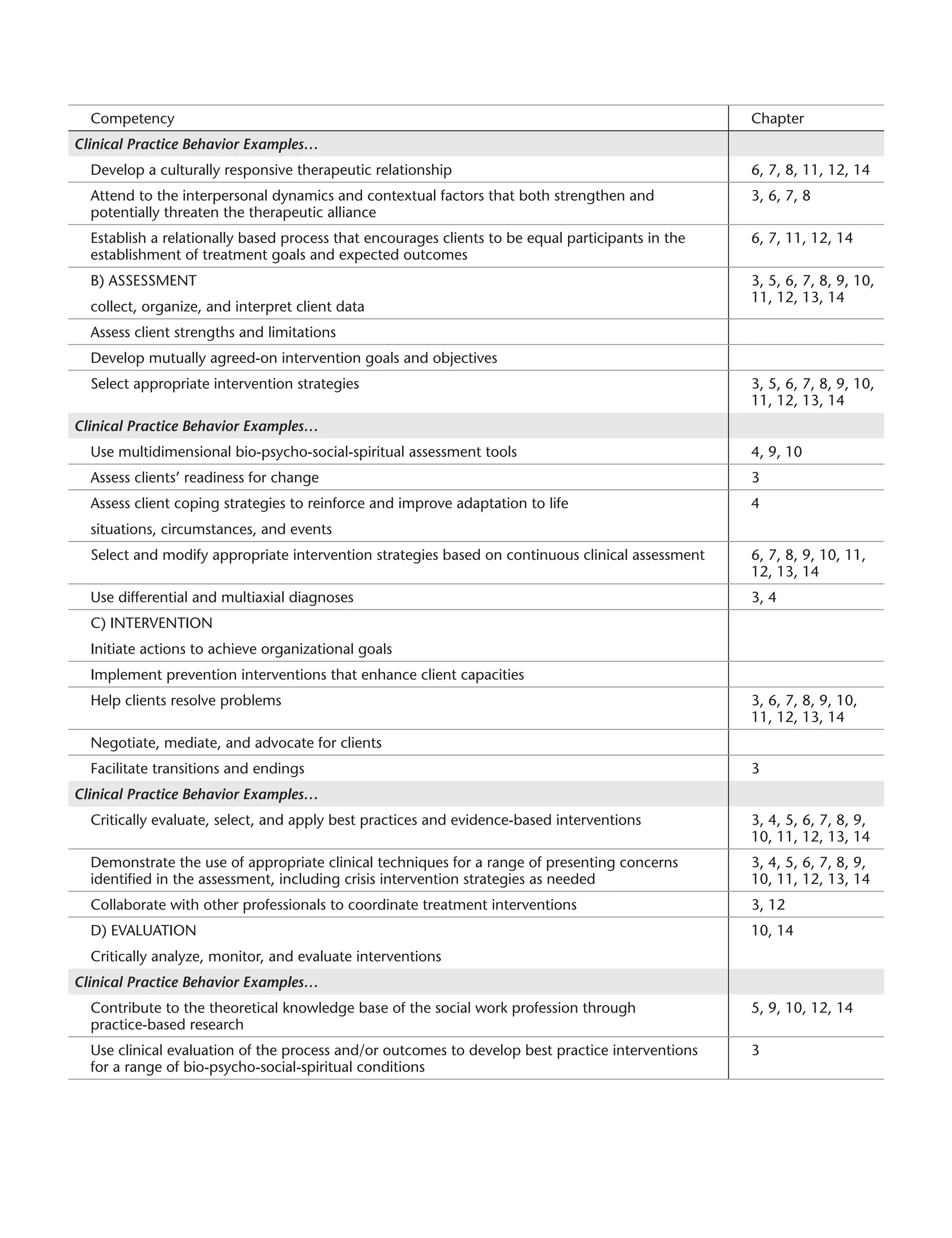


![Credits and acknowledgments borrowed from other sources and reproduced, with permission, in
this textbook appear on appropriate page within the text.
Copyright © 2015, 2011, 2008, by Pearson Education, Inc. All rights reserved. Printed in the
United States of America. This publication is protected by Copyright and permission should be
obtained from the publisher prior to any prohibited reproduction, storage in a retrieval system, or
transmission in any form or by any means, electronic, mechanical, photocopying, recording, or
likewise. To obtain permission(s) to use material from this work, please submit a written request to
Pearson Education, Inc., Permissions Department, One Lake Street, Upper Saddle River, New Jersey
07458 or you may fax your request to 201-236-3290.
Many of the designations by manufacturers and seller to distinguish their products are claimed
as trademarks. Where those designations appear in this book, and the publisher was aware of a
trademark claim, the designations have been printed in initial caps or all caps.
Library of Congress Cataloging-in-Publication Data
Cooper, Marlene G., 1942-
Clinical social work practice : an integrative approach / Marlene G. Cooper, Fordham University,
Joan Granucci Lesser, Smith College. — 5e [edition].
pages cm
Includes bibliographical references and index.
ISBN 978-0-205-95637-1 (alk. paper) — ISBN 0-205-95637-8 (alk. paper) 1. Psychiatric social work.
I. Lesser, Joan Granucci, 1952- II. Title.
HV689.C65 2015
361.3’2—dc23
2014014151
10 9 8 7 6 5 4 3 2 1
ISBN 10: 0-205-95637-8
ISBN 13: 978-0-205-95637-1
VP and Editorial Director: Jeffery W. Johnston
Acquisitions Editor: Julie Peters
Program Manager: Alicia Ritchey
Editorial Assistant: Andrea Hall
Executive Marketing Manager: Krista Clark
Marketing Coordinator: Elizabeth Mackenzie Lamb
Operations Specialist: Deidra Skahill
Art Director: Diane Ernsberger
Cover Art: Rob/Fotolia
Media Producer: Allison Longley
Full-Service Project Management: PreMediaGlobal/
Murugesh Namasivayam
Composition: PreMediaGlobal
Printer/Binder: Courier Digital Solutions
Cover Printer: Courier Digital Solutions
Text Font: Minion Pro 10/12](https://image.slidesharecdn.com/71477-250502172539-40b164c5/75/Clinical-Social-Work-Practice-An-Integrated-Approach-Marlene-Cooper-14-2048.jpg)