(eBook PDF) Techniques and Guidelines for Social Work Practice 10th Edition
(eBook PDF) Techniques and Guidelines for Social Work Practice 10th Edition
(eBook PDF) Techniques and Guidelines for Social Work Practice 10th Edition
(eBook PDF) Techniques and Guidelines for Social Work Practice 10th Edition
(eBook PDF) Techniques and Guidelines for Social Work Practice 10th Edition
1.
(eBook PDF) Techniquesand Guidelines for Social
Work Practice 10th Edition download
https://ebookluna.com/product/ebook-pdf-techniques-and-
guidelines-for-social-work-practice-10th-edition/
Download more ebook from https://ebookluna.com
3.
vii
Contents
Principles That GuidePractice Activities 58
The Social Worker Should Do No Harm 59
The Social Worker Should Engage in Evidence-Based Practice 59
The Social Worker Should Engage in Value-Guided and Ethical Practice 59
The Social Worker Should Address All Relevant Client Systems 60
The Social Worker Should Serve the Most Vulnerable Members of Society 60
The Social Worker Should Treat the Client with Dignity 61
The Social Worker Should Individualize the Client 61
The Social Worker Should Consider Clients Experts on Their Own Lives 62
The Social Worker Should Lend Vision to the Client 62
The Social Worker Should Build on Client Strengths 62
The Social Worker Should Maximize Client Participation 63
The Social Worker Should Maximize Client Self-Determination 63
The Social Worker Should Help the Client Learn Self-Directed
Problem-Solving Skills 64
The Social Worker Should Maximize Client Empowerment 64
The Social Worker Should Protect Client Confidentiality 64
The Social Worker Should Adhere to the Philosophy of Normalization 65
The Social Worker Should Continuously Evaluate the Progress of the Change Process 66
The Social Worker Should Be Accountable to Clients, Agency, Community,
and the Social Work Profession 66
Conclusion 66
Selected Bibliography 67
6. Practice Frameworks for Social Work 68
Requirements of a Practice Framework 69
Guidelines for Selecting a Practice Framework 69
Selected Practice Frameworks 71
Selected Practice Perspectives 72
Generalist Perspective 72
Ecosystems Perspective 73
Strengths Perspective 75
Ethnic-Sensitive Perspective 76
Feminist Perspective 77
Selected Practice Theories and Models 78
Behavioral Theory 78
Cognitive-Behavioral Theory 79
Dialectical Behavioral Therapy (DBT) 80
Exchange Theory 81
Psychodynamic Theory 82
Person-Centered Theory 83
Interactional Model 84
Structural Model 85
Crisis Intervention Model 85
Task-Centered Model 86
Psychoeducation Model 86
Addiction Model 87
Self-Help Model 88
Solution-Focused Model 89
4.
viii Contents
Narrative Model89
Trauma-Related Interventions 90
Family Therapies 91
Small-Group Theories 93
Organizational Change Models 94
Community Change Models 96
Conclusion 98
Selected Bibliography 98
7. Using Evidence in the Change Process 99
Conducting Evidence-Based Practice 100
Critical Thinking When Making Practice Decisions 101
Guiding the Planned Change Process 104
The Context of Planned Change 105
Identifying Actors in Planned Change 106
Phases of the Planned Change Process 107
Conclusion 109
Selected Bibliography 109
Part 3: Techniques Common to All Social Work
Practice 111
8. Basic Communication and Helping Skills 112
8.1 Creating an Effective Helping Relationship 114
8.2 Verbal Communication Skills 116
8.3 Nonverbal Communication Skills 119
8.4 Helping Skills 121
8.5 Enhancing Client Motivation 132
8.6 Understanding Emotions and Feelings 135
8.7 Responding to Defensive Communication 137
8.8 Applying Cultural Competence to Helping 139
9. Basic Skills for Agency Practice 145
9.1 Written Reports and Correspondence 146
9.2 Effective Telephone Communication 148
9.3 Using Information Technology 149
9.4 Client Records and Documentation 152
9.5 Dealing with Ethical Issues 154
9.6 Managing Time and Workload 157
9.7 Elements of Professional Behavior 159
5.
ix
Contents
Part 4: Techniquesand Guidelines for Phases of the
Planned Change Process 161
10. Intake and Engagement 162
Section A Techniques and Guidelines for Direct Practice 163
10.1 Making the First Telephone Contact 165
10.2 Conducting the First Face-to-Face Meeting 166
10.3 Clarifying the Client’s Problem, Concern, or Request 168
10.4 Making a Referral 170
10.5 Obtaining, Protecting, and Releasing Client Information 173
10.6 Conducting an In-Home Interview 176
10.7 Engaging the Mandated Client 178
10.8 Responding to the Manipulative Client 180
10.9 Increasing Personal Safety in Dangerous Situations 183
10.10 Clarifying Roles and Responsibilities 186
10.11 Addressing Power Differentials with Clients 187
Section B Techniques and Guidelines for Indirect Practice 188
10.12 Orienting Yourself to Your Agency 190
10.13 Selecting and Orienting New Staff and Volunteers 192
10.14 Orienting Yourself to Your Community 195
11. Data Collection and Assessment 199
Section A Techniques and Guidelines for Direct Practice 200
11.1 Assessing a Client’s Social Functioning 203
11.2 The Meaning of Work in Social Functioning 208
11.3 The Social Assessment Report 211
11.4 Mapping Client Conditions 216
11.5 Expanding a Client’s Vision of Changes That Are Possible 219
11.6 Identifying Client Strengths 221
11.7 Assessing a Client’s Social Support 224
11.8 Assessing a Client’s Coping Strategies and Ego Defenses 225
11.9 Assessing a Client’s Role Performance 228
11.10 Assessing a Client’s Self-Concept 230
11.11 Assessing a Client’s Needed Level of Care 233
11.12 Using Questionnaires, Checklists, and Vignettes 234
11.13 Identifying Developmental Delays in Young Children 239
11.14 Assessing a Client’s Mental Status 241
11.15 Using the Diagnostic and Statistical Manual of Mental Disorders (DSM) and the
Person-in-Environment (PIE) Assessment Tools 243
6.
x Contents
11.16 Assessinga Child’s Need for Protection 245
11.17 Mandated Reporting of Abuse and Neglect 249
11.18 Referral for Psychological Testing 252
11.19 Assessing Family Functioning 253
11.20 Understanding the Family Life Cycle 258
11.21 Assessing Small-Group Functioning 261
11.22 Accessing Evidence-Based Information 264
Section B Techniques and Guidelines for Indirect Practice 266
11.23 Assessing Agency Structure 266
11.24 Assessing Human Services Needs 268
11.25 Community Decision-Making Analysis 269
11.26 Analyzing Social Policy Implications 271
11.27 Conducting a Community Assets Assessment 273
12. Planning and Contracting 276
Section A Techniques and Guidelines for Direct Practice 277
12.1 Selecting Target Problems and Goals 278
12.2 The Problem Search 280
12.3 The Client Needs List 281
12.4 Formulating Intervention Objectives 282
12.5 Written Service Contracts 284
12.6 Making Use of Informal Resources 287
12.7 Family Group Conferencing 288
12.8 The Small Group as a Resource 291
Section B Techniques and Guidelines for Indirect Practice 295
12.9 Establishing and Changing Organizations 296
12.10 Agency Planning Processes 298
12.11 Selecting Change Issues for Advocacy 300
12.12 Project Planning and Evaluation 301
12.13 Planning a Primary Prevention Program 303
12.14 Participatory Action Planning 306
13. Intervention and Monitoring 309
Section A Techniques and Guidelines for Direct Practice 310
13.1 Preparing for an Interview 311
13.2 Information, Advice, and Persuasion 312
13.3 Reinforcement and Related Behavioral Techniques 314
13.4 Behavioral Rehearsal 318
13.5 Behavioral Contracting 318
7.
xi
Contents
13.6 Role Reversal319
13.7 Managing Self-Talk 320
13.8 Building Self-Esteem 323
13.9 Confrontation and Challenge 325
13.10 Reframing 326
13.11 Helping Clients Make Difficult Decisions 327
13.12 Helping Clients with Harmful Habits 329
13.13 Helping Clients with Financial Problems 332
13.14 Helping Clients in Crisis 336
13.15 Homework Assignments 338
13.16 The Feelings List 338
13.17 Client Advocacy 339
13.18 Client Empowerment 341
13.19 Resolving Conflict through Counseling and Mediation 343
13.20 Providing Support for Caregivers 345
13.21 Indirect Discussion of Self in Small Groups 347
13.22 Programming in Group Work 348
Section B Techniques and Guidelines for Indirect Practice 350
13.23 Working with a Governing or Advisory Board 350
13.24 Conducting Effective Staff Meetings 352
13.25 Building Interprofessional Teamwork and Cooperation 353
13.26 Leading Small-Group Meetings 354
13.27 The RISK Technique 357
13.28 The Nominal Group Technique (NGT) 358
13.29 Chairing a Formal Committee 359
13.30 Problem Solving by a Large Group 362
13.31 Brainstorming 362
13.32 Class Advocacy 364
13.33 Teaching and Training 366
13.34 Preparing a Budget 368
13.35 Marketing and Fund-Raising for Human Services 370
13.36 Developing Grant Applications 373
13.37 Organizing Neighborhoods and Communities 377
13.38 Influencing Legislators and Other Decision Makers 378
14. Evaluation and Termination 382
Section A Techniques and Guidelines for Direct Practice 384
14.1 Measuring Change with Frequency Counts 388
14.2 Measuring Change with Individualized Rating Scales 390
8.
xii Contents
14.3 MeasuringChange with Standardized Rating Scales 392
14.4 A Service Plan Outcome Checklist (SPOC) 394
14.5 Task Achievement Scaling (TAS) 399
14.6 Goal Attainment Scaling (GAS) 401
14.7 Single-Subject Designs (SSDs) 404
14.8 Termination of Service 409
Section B Techniques and Guidelines for Indirect Practice 411
14.9 Program Evaluation 412
14.10 A Client Satisfaction Questionnaire (CSQ) 415
14.11 Agency Evaluation 417
Part 5:
Specialized Techniques and Guidelines for
Social Work Practice 419
15. Guidelines for Working with Vulnerable Client Groups 420
15.1 The Client Experiencing Poverty 421
15.2 The Client Who is a Child 425
15.3 The Client Who is an Adolescent 432
15.4 The Client Who is a Parent or Grandparent 435
15.5 The Client Who is an Older Person 439
15.6 The Client Who is Experiencing Domestic Violence 442
15.7 The Client Who is at Risk of Suicide 445
15.8 The Client with an Intellectual Disability 448
15.9 The Client with Brain Injury 451
15.10 The Client with a Serious Physical Disability 453
15.11 The Client Who is Chemically Dependent 456
15.12 The Client with Serious Mental Illness 465
15.13 The Client with a Personality Disorder 469
15.14 The Client on Psychotropic Medication 473
15.15 The Client Who is Lesbian, Gay, Bisexual, or Transgender 475
15.16 The Client with an Eating Disorder 478
15.17 The Client Experiencing Grief or Loss 481
15.18 The Client with Concerns Related to Spirituality and Religion 483
15.19 The Client Who is Impacted by the Criminal Justice System 490
15.20 The Client or Family Affected by War 497
15.21 The Client or Family Experiencing an Adoption 502
15.22 The Client Who is an Immigrant or Refugee 507
15.23 The Client or Community Experiencing an Emergency or Disaster 511
9.
xiii
Contents
16. Techniques forSustaining Social Work Practice 516
16.1 Getting a Social Work Job 517
16.2 Preparing for Social Work Competency Exams 519
16.3 Developing Self-Awareness 522
16.4 Avoiding Compassion Fatigue and Stress Management 525
16.5 Dealing with Sexual Misconduct 528
16.6 Avoiding Malpractice Suits 529
16.7 Testifying in Court 533
16.8 Providing and Receiving Supervision 536
16.9 Building and Maintaining Mentoring Relationships 539
16.10 Consuming and Contributing to Professional Knowledge 542
16.11 Improving the Social Work Image 553
16.12 Becoming a Leader 554
Author Index 558
Subject Index 564
Preface
Many people areinfluenced, directly and indirectly, by the decisions and actions of
social workers. Working in courts, clinics, hospitals, schools, businesses, private practice,
and a myriad of private and public social agencies, social workers deliver a wide vari-
ety of services directly to clients while also striving to promote positive community and
social changes. Improving the quality of life for an individual, a family, or the people of
a
community ultimately impacts society as a whole and elevates the health, happiness,
safety, and productivity of all its members.
This book is about what social workers actually do when helping their clients solve
problems and/or enhance their functioning. Although many books describe social work’s
basic principles and theory, Techniques and Guidelines for Social Work Practice focuses on a
more specific and concrete level. It describes 154 techniques and guidelines that social
workers use in everyday practice.
Most social workers have been exposed to a variety of practice theories and con-
ceptual frameworks described in the literature and taught in programs of social work
education. Although that knowledge base is essential, practice is much more than a set
of beliefs and ideas about how people can be helped. In reality, social work practice is a
set of actions and behaviors by the social worker. Clients are not directly affected by the
worker’s theory; rather, they are influenced by what the worker actually does—by the
social worker’s specific actions and behaviors. We do not intend to suggest that atten-
tion to the techniques can or should replace attention to theoretical frameworks. Rather,
techniques and specific guidelines complete the package of knowledge and skills needed
by the social worker.
Plan and Structure
Understanding the design of a book helps the reader make use of its contents. This book
has five major parts.
Part I, “Social Work and the Social Worker,” reviews the background knowledge and
characteristics we believe a social worker must possess, including:
• A clear conception of the domain of social work and the competencies the social
worker is expected to bring to the change process (Chapter 1)
• An understanding of the challenges a social worker faces in merging his or her
personal life with professional roles and responsibilities (Chapter 2)
• The native talents necessary for perceptively creating and entering into the inter-
personal relations that are at the heart of practice (i.e., the art of social work), as
well as a commitment to draw on and apply the science of social work—that is,
the profession’s knowledge base and its ethical principles (Chapter 3)
xv
12.
xvi Preface
Part II,“The Building Blocks of Social Work Practice,” stresses the need for the
social worker to become familiar with the central features of effective helping. To
serve clients ranging from individuals to communities, a social worker must have these
qualities:
• An understanding of the varied roles performed by social workers in deliv-
ering human services and the specific functions associated with these roles
(Chapter 4)
• A deep appreciation for the profession’s fundamental practice principles and a
commitment to be guided by those principles (Chapter 5)
• A basic knowledge of the various perspectives, theories, and models that have
proven useful in practice (Chapter 6)
• The ability to use critical thinking to select the best possible knowledge, values,
and skills to help clients make sound decisions about how they might improve
their lives (Chapter 7)
In Chapters 8 to 16 we present numerous techniques and guidelines, each of which
has a number and a title (e.g., 10.4: Making a Referral). In this example, 10.4 signifies the
fourth item in Chapter 10. This system of numbering is used to refer the reader to related
information in other parts of the book.
Several paragraphs describe each technique or guideline and its application. In addi-
tion, we present a Selected Bibliography, which usually lists two to four books or articles
that we consider particularly useful for obtaining more in-depth information related to
the topic discussed.
In Part III of the book, “Techniques Common to All Social Work Practice,” we
have included techniques that strengthen the social worker’s performance regardless of
agency setting and irrespective of whether the client is an individual, family, group, orga-
nization, or community. Underlying our selection was the belief that the social worker
must have these basic skills:
• The interpersonal competence to communicate effectively and engage the client
in a set of basic helping activities (Chapter 8)
• The ability to address ethical issues, handle organization-related details
of
service delivery, and effectively manage her or his time and workload
(Chapter 9)
Part IV, “Techniques and Guidelines for Phases of the Planned Change Process,”
lists techniques and guidelines for both direct and indirect practice in chapters organized
around the five phases of the planned change process. Although social work authors use
differing names for these phases, we have elected to use the following:
• Intake and engagement (Chapter 10)
• Data collection and assessment (Chapter 11)
• Planning and contracting (Chapter 12)
• Intervention and monitoring (Chapter 13)
• Evaluation and termination (Chapter 14)
When introducing these five chapters, we describe what should be accomplished dur-
ing that particular phase of the planned change process. These general concepts are then
elaborated to more clearly describe the direct-practice applications (Section A) and the
indirect-practice applications (Section B) in those chapters. A worker can readily examine
13.
xvii
Preface
several suggested techniquesor guidelines by identifying the phase of the change pro-
cess, determining if the activity is a direct or indirect intervention, and then locating the
most applicable technique or guideline.
Part V, “Specialized Techniques and Guidelines for Social Work Practice,” includes
some items that cut across the five phases of the planned change process and thus did
not fit into the classification system used in Part IV. To address these issues, we cre-
ated two chapters containing items related to serving vulnerable client populations
(Chapter 15) and the items related to maintaining a social work position and enhancing
one’s
professional performance (Chapter 16).
Definition of Terms
Writing about social work practice inherently presents some language problems. One has
to read only a few social work texts or articles to become at least a little confused when
various authors use terms somewhat differently. Unfortunately, some commonly used
terms lack a precise or an agreed-upon definition. Perhaps that is to be expected in a pro-
fession that focuses on complex and dynamic human and social interactions. This book
cannot overcome these long-standing problems of terminology, yet the ideas presented
here will be more readily understood if we make the meanings of several terms, particu-
larly those in the title of the book, more explicit.
A technique is viewed as a circumscribed, goal-oriented behavior performed in a
practice situation by the social worker. It is a planned action deliberately taken by the
practitioner. The application of a simple technique (e.g., making the first telephone con-
tact) may take only a few minutes, whereas more complex techniques (e.g., assessing a
client’s social functioning) may require several hours or more.
Guidelines, by comparison, are a set of directions intended to influence the social
worker’s behavior and decisions. Guidelines are essentially lists of do’s and don’ts. They
might be used when working with a specific type of client (e.g., a child or a client with
mental illness) or when carrying out workload management tasks (e.g., recording or
writing reports).
Social work is a term applied to a specific profession that is committed to improving
the quality of life for vulnerable people by helping them deal more effectively with the
challenges they face and/or helping to change the social and economic conditions that
create or exacerbate individual and social problems. In our introduction to Part I, we
more fully spell out our perception of social work.
Practice is a term used when speaking about what social workers actually do, as
in the phrase social work practice. The word practice infers action and performance by
the social worker. The word practice also implies that social workers always are learning
from what they do, always open to new insights, and never content to do what they have
always done. Thus, social workers take the viewpoint that they are continually practic-
ing, evaluating, and improving their craft.
In addition to terms in the book’s title, the reader should be alert to the varied mean-
ings of the term client. Common usage implies an individual who is the consumer of
services. However, as used in this book, the term has a broader connotation. The
client
of the social worker may be an individual, a family or another form of household, or
even a small group, committee, organization, neighborhood, community, or larger
social
system. Throughout the book, the term client is occasionally expanded to mention
clientele, clients, client groups, or client systems, reminding the reader that the tradi-
tional narrow definition of client is not intended.
14.
xviii Preface
Finally, theterm intervention is sometimes confusing to someone new to social
work. The practice of social work is all about change—for example, change in the client’s
thoughts, perceptions, and actions, as well as change in the environment that affects or
impinges on the client. The word intervention suggests that the social worker enters into
and guides the client’s search and struggle to deal more effectively with some particular
challenge or problem.
New to This Edition
Techniques and Guidelines for Social Work Practice has been carefully updated to provide
students with easy access to current information on fundamental techniques required for
social work practice from the generalist perspective. Virtually every chapter and every
item has been revised to add new understanding, to delete outdated material, and so far
as we are able, to offer clear descriptions and explanations. In addition, new features of
this tenth edition of Techniques and Guidelines include:
• The brief descriptions of intervention approaches commonly used by social
workers (see Chapter 6) have been expanded to include dialectical behavioral
therapy and various trauma-related approaches.
• Several new items related to direct-practice interventions are included in this
edition: clarifying roles and responsibilities, the meaning of work in social func-
tioning, assessing a client’s needed level of care, mandated reporting of abuse and
neglect, understanding the family life cycle, accessing evidence-based informa-
tion, and providing support for caregivers.
• We have also added two new indirect-practice items: conducting community
assets assessments and participatory action planning.
• An item on measuring client change with frequency counts was added to
Chapter 14 to complement the items on measuring with individualized and
standardized assessment scales.
• In Chapter 15 new items related to the client with a personality disorder and the
client or family experiencing an adoption have been added.
• With each new edition of this text it has been necessary to delete some items
in order to make room for new content we believed was important to include.
Many of these deleted items are quite relevant today and we are making them
available by indicating through marginal notes how to access them. The notes
appear near related content in this current edition.
Supplements for Instructors
For instructors using this book in their classes, we have created an Instructor’s Manual
and Test Bank to assist them in using this text. This manual can be obtained from your
campus Pearson representative or by writing to Pearson Education (One Lake Street,
Upper Saddle River, NJ, 07458).
Acknowledgments
Social work practice involves many different activities with a wide variety of clients
having many different problems and concerns. Moreover, social work practice takes
place within a wide spectrum of organizational settings and social environments.
Consequently, social work practice entails a vast array of knowledge and skills. This book
15.
xix
Preface
is ambitious inthe sense that it describes techniques and guidelines used by social work-
ers practicing in different settings and with many differing types of clients and situations.
That goal and broad scope calls for more expertise than that possessed by its two authors.
Consequently, in preparing this book we asked more than 65 colleagues and former stu-
dents in social work practice and social work education to critique our drafts of the items
included in the book. We thank them for enhancing the quality of this publication, but
take full responsibility for the final product.
We would also like to acknowledge the following individuals, who reviewed this
tenth edition and offered suggestions for improving this publication: Kathleen Belanger,
Stephen F. Austin State University; Rosalyn Deckerhoff, Florida State University;
Kimberly Delles, Aurora University; Lettie Lockhart, University of Georgia; and Patricia
Magee, Pittsburg State University.
Bradford W. Sheafor
Charles R. Horejsi
CHAPTER I.
“A livelydesire of knowing and recording
our ancestors so generally prevails, that
it must depend on the influence of some
common principle in the minds of men.
We seem to have lived in the persons of
our forefathers; our calmer judgment will
rather tend to moderate than suppress
the pride of an ancient and worthy race.
The satirist may laugh; the philosopher
may preach; but reason herself will
respect the prejudices and habits which
have been consecrated by the
experience of mankind.”[41]
Of all nations on the globe, the Irish, as a people, are universally
admitted to possess, in a pre-eminent degree, those finer
sensibilities of the human heart, which, were they but wisely
controlled, would exalt man above the level of ordinary humanity,
and make him, as it were, a being of another species. The numerous
instances adduced in all periods of their history, of ardent and
enterprising zeal, in every case wherein personal honour or national
glory may be involved, are in themselves sufficient to establish this
assertion. But while granting their pre-eminence as to the
possession of those feelings, and the capability of the feelings
themselves to be refined and sublimated to the very acme of
cultivation, we may still doubt whether the mere possession of them
be not less a blessing than a curse—whether, in fact, their quick
perception of disquietudes and pains be not more than a
counterpoise to their keen enjoyment of delight or pleasure.
19.
Foremost, however, inthe train of the many virtues which flow
therefrom, is that “amor patriæ,” or love of country, which,
unsubdued often by the most galling miseries and the most hopeless
wants, throws a halo round the loneliness of their present despair in
the proud retrospection of their former buoyancy. This spirit it is
which, despite of obvious advantages to be derived from emigration,
has riveted the Irish peasant so immutably to his home, that any
effort on his part to dissolve those local fetters would be equivalent
to the disruption of all the ties and attachments which nature or
habit had implanted within him.
“The lofty scenes around their sires recall,
Fierce in the field and generous in the hall;
The mountain crag, the stream and waving tree,
Breathe forth some proud and glorious history—
Urges their steps where patriot virtue leads,
And fires the kindred souls to kindred deeds.
They tread elate the soil their fathers trod,
The same their country, and the same their God.”
But it may be said that this is a day-dream of youth—the hereditary
vanity of one of Iran’s sons, arrogating antiquity and renown for an
inconsiderable little island, without a particle of proof to substantiate
their assumption, or a shadow of authority to give colour to their
claims. Why, sir, cast your eye over the fair face of the land itself,
and does not the scene abound with the superfluity of its evidences?
What are those high aspiring edifices which rise with towering
elevation towards the canopy of the “Most High”?[42] What are those
stupendous and awful structures of another form—the study at once
and admiration of the antiquarian and the philosopher, to be found
on the summits of our various hills[43] as well as in the bowels[44] of
the earth itself?—what are they but the historical monuments of
splendour departed—surviving the ravages of time and decay, not as
London’s column, to “lift their heads and lie,” but to give the lie and
discomfiture to those, who, from the interested suggestions of an
illiberal policy, or the more pardonable delusions of a beclouded
20.
judgment, would denythe authenticity of our historic records, and
question the truth of our primeval civilisation?
It is true, the magnificence which those memorials demonstrate is
but the unenviable grandeur of druidical, as it is called, idolatry and
unenlightened paganism,—when man, relinquishing that supremacy
consigned to him at his creation, or rather divested thereof in
punishment for the transgression of his degenerate disposition, lost
sight of that Being to whom he owed his safety and his life, and bent
himself in homage before perishable creatures that crawl their
ephemeral pilgrimage through the same scene with himself.
Granted; yet that cannot well be objected to us as a disgrace, which,
co-extensive in its adoption with the amplitude of the earth’s
extension, equally characterised the illiterate and the sage; and if,
amidst this lamentable prostration of the human understanding,
anything like redemption or feature of superiority may be allowed, it
must be, unquestionably, to the adherents of that system, which,
excluding the objects of matter and clay, recognised, in its worship
of the bright luminaries of the firmament, the purity and
omnipotence of that Spirit who brought all into existence, and who
guides and preserves them in their respective spheres;—and when I
shall have proved that the intent and application of those Sabian[45]
Towers,—or, to speak more correctly, those primitive Budhist
Temples,—which decorate our landscape and commemorate our past
renown, appertained to this species of purified idolatry, which
worshipped only the host of heaven, the moon and the solar body,
which gives vigour to all things, I shall, methinks, have removed one
obstacle from the elucidation of our antiquities, and facilitated the
road to further adventure in this interesting inquiry.
Let me not be supposed, however, by the preceding remarks to
restrict their destination to one single purpose. All I require of my
readers is a patient perusal of my details; and I deceive myself very
much, and overrate my powers of enunciation, else I shall establish
in their minds as thorough a conviction of the development of the
“Towers” as I am myself satisfied with the accuracy of my
21.
conclusions. I shallonly entreat, then, of their courtesy that I be not
anticipated in my course, or definitively judged of by isolated scraps,
but that, as my notice for this competition has been limited and
recent, allowing but little time for the observance of tactique or
rules, in the utterance of the novel views which I now venture to put
forward, the proofs of which, however, have been long registered in
my thoughts, and additionally confirmed by every new research, the
merits of the production may not be estimated by parcels, but by the
combined tendency of the parts altogether.
To begin, therefore. The origins I have heard assigned to those
records of antiquity,—however invidious it may appear, at this the
outset of my labours, to assume so self-sufficient a tone, yet can I
not avoid saying that, whether I consider their multiplicity or their
extravagance, they have not more frequently excited my ridicule
than my commiseration. That specimens of architecture, so costly
and so elegant, should be designed for the paltry purposes of
purgatorial columns or penitential heights, to which criminals should
be elevated for the ablution of their enormities—while the honest
citizen, virtuous and unstained, should be content to grovel amongst
lowly terrestrials ’mid the dense exhalations of forests and bogs, in a
mud-wall hut, or at best a conglomeration of wattles and hurdles—
is, I conceive, an outrage upon human reason too palpable to be
listened to.
Not less ridiculous is the idea of their having been intended for
beacons; for, were such their destination, a hill or rising ground
would have been the proper site for their erection, and not a valley
or low land, where it happens that we generally meet them.
The belfry theory alone, unfounded in one sense though it really be,
and when confined to that application equally contemptible with the
others, is, notwithstanding, free from the objection that would lie
against the place, as it is well known that the sound of bells which
hang in plains and valleys is heard much farther than that of such as
hang upon elevations or hills: for, air being the medium of sound,
the higher the sonorous body is placed, the more rarefied is that
22.
medium, and consequentlythe less proper vehicle to convey the
sound to a distance. The objection of situation, therefore, does not
apply to this theory; and, accordingly, we shall find that the
exercising of bells—though in a way and for an object little
contemplated by our theorists—constituted part of the machinery of
the complicated ceremonial of those mysterious edifices.
The truth is, the “Round Towers” of Ireland were not all intended for
one and the same use, nor any one of them limited to one single
purpose; and this, I presume, will account for the variety in their
construction, not less perceptible in their diameters and altitudes
than in other characteristic bearings. For I am not to be told that
those varieties we observe were nothing more than the
capriciousness of taste, when I find that the indulgence of that
caprice, in one way, would defeat the very object to which one party
would ascribe them, whilst its extension, in a different way, would
frustrate the hopes of another set of speculators.
But what must strike the most cursory as irresistibly convincing that
they were not erected all with one view, is the fact of our sometimes
finding two of them together in one and the same locality.
Now, if they were intended as beacons or belfries, would it not be
the most wasteful expenditure of time and wealth to erect two of
them together on almost the same spot? And when I mention
expenditure, perhaps I may be allowed, incidentally, to observe,
that, of all species of architecture, this particular form, as it is the
most durable, so is it also the most difficult and the most costly.
Need I name the sum of money which Nelson’s monument has cost
in modern times? or that imperfect testimonial in the Phœnix Park
which commemorates the glories of the hero of Waterloo. No; but I
will mention what Herodotus tells us was the purport of an
inscription upon one of the pyramids of Egypt, the form of some of
which, be it known, was not very dissimilar to our Irish pyramids,
while their intent and object were more congenial; viz. that no less a
sum than 1600 talents of silver, or about £400,000 of our money,
23.
had been expendedupon radishes, onions, and garlic alone, for
360,000 men, occupied for twenty years in bringing that stupendous
fabric, that combined instrument of religion and science, to
completion!
Our Round Towers, we may well conceive, must have been
attended, at the early period of their erection, with comparatively
similar expense: and assuredly, the motive which could suggest such
an outlay must have been one of corresponding import, of the most
vital, paramount, and absorbing consideration.
Would the receptacles for a bell be of such moment? And that, too,
whilst the churches, to which, of course, they must have
appertained, were thought worthy of no better materials than
temporary hurdles, and so leave behind them no vestiges of their
local site,—no evidence or trace of their ever having existed! And,
indeed, how could they?—for existence they never had, except in
the creative imagination of our hypothetical antiquaries.
Ruins, it is true, of chapels and dilapidated cathedrals are frequently
found in the vicinity of our Round Towers; but these betray in their
materials and architecture the stamp of a later age, having been
founded by missionaries of the early Christian Church, and purposely
thus collocated—contiguous to edifices long before hallowed by a
religious use—to at once conciliate the prejudices of those whom
they would fain persuade, and divert their adoration to a more
purified worship.
And yet, upon this single circumstance of proximity to ecclesiastical
dilapidations—coupled with the bas-relief of a crucifix which presents
itself over the door of the Budhist temple of Donoghmore in Ireland,
and that of Brechin in Scotland—have the deniers of the antiquity of
those venerable memorials raised that superstructure of historical
imposture, which, please God, I promise them, will soon crumble
round their ears before the indignant effulgence of regenerated
veracity.
24.
It might besufficient for this purpose, perhaps, to tell them that
similar ruins of early Christian churches are to be met with
abundantly in the neighbourhood of Cromleachs and Mithratic caves
all through the island; and that they might as well, from this vicinity,
infer that those two other vestiges of heathenish adoration were
contrived by our early Christians as appendages to the chapels, as
they would fain make out—by precisely the same mode of inference
—that the Round Towers had been!
But this would not suit; they could find no ascription associated with
Christianity which cave or cromleach could subserve; and thus have
the poor missionaries escaped the cumbrous imputation of having
those colossal pagan slabs and those astounding gentile excavations
affiliated upon them.
Not so fortunate the Towers. After ransacking the whole catalogue of
available applications appertaining to the order of monastic
institutions with which to Siamise those temples, Montmorency has
at last hit upon the noble and dignified department of a “dungeon-
keep” or “lock-up!” as the sole use and intention of their original
erection!
As I intend, however, to unravel this fallacy in its proper quarter, I
shall resume, for the present, the thread of my discourse.
Besides the absurdity, then, of bestowing such magnificence upon so
really inconsiderable a thing as a belfry, while the supposed churches
were doomed to dwindle and moulder in decay, is it not astonishing
that we find no vestiges of the like fashion, or structures of the like
form, in any of those countries where the people to whom the
advocates of this theory ascribe their erection have since and before
exercised sway?
The Danes had dominion in Britain longer and more extensively than
they ever had in this island; and yet, in the whole compass of
England, from one extremity to the other, is there not one fragment
25.
of architecture remainingto sanction the idea of identity or
resemblance!
Nay, in all Denmark and Scandinavia, the original residence of the
Ostmen and Danes, there is not a single parallel to be found to
those columnar edifices!
Ireland, on the contrary, exhibits them in every quarter; in districts
and baronies where Danish authority was never felt; and surely our
forefathers were not so much in love with the usages and habits of
their barbarian intruders, as to multiply the number of those stately
piles, solely in imitation of such detested taskmasters.
But what renders it demonstrative that those professional pirates
had no manner of connection with the Irish Round Towers, is the
glaring fact, that in the two cities of Wexford and Waterford—where
their power was absolute, their influence uncontrolled—there is not a
solitary structure that could possibly be ascribed to the class of those
which we now discuss!
In Scotland alone, of all European countries besides Ireland, do we
meet with two of them,—one at Brechin, and the other at
Abernethy;—but they are smaller than the Irish, and, with other
characteristics, seem to have been built, after their model, at a
comparatively recent period, by a colony from this country, “as if
marking the fact,” to use Dalton’s accidentally[46] appropriate phrase,
“of that colonisation having taken place when the rites, for which the
Round Towers were erected, in the mother-country, were on the
decline.”
But, forsooth, they are called “cloghachd” by the peasantry, and
that, without further dispute, fixes their destination as belfries! Oh!
seri studiorum quîne difficile putetis?
That some of them had been appropriated in latter times, nay, and
still are, to this purpose, I very readily concede; but, “toto cœlo,” I
deny that such had ever entered into the contemplation of their
constructors, as I do, also, the universality of the very name, which I
26.
myself know, bypopular converse, to be but partial in its adoption,
extending only to such as had been converted by the moderns to the
purpose described, or such as may, originally, have had a clogh, or
bell, of which I admit there were some, as part of their apparatus.
The first bells of which we have any mention are those described by
Moses, as attached to the garments of the high-priest. From these,
the Gentiles, as they affected to rival the Israelites in all their
ceremonies, borrowed the idea, and introduced its exercise into the
celebration of their own ritual. By “Israelites,” however, I deem it
necessary to explain that I do not understand those who, in
strictness of speech, are so denominated as the descendants of
Israel, i.e. Jacob, who, in fact, were a comparatively modern people;
but I particularise that old stock of patriarchal believers which
existed from the Creation, and upon which the Israelites, rigidly so
called, were afterwards engrafted.
Our Irish history abounds with proofs of the “ceol,” and “ceolan,” the
bell and the little bell, having been used by the pagan priests in the
ministry of their religious ordinances; and to the fictitious sanctity
which they attributed to this instrument may we ascribe that
superstitious regard which the illiterate and uneducated still continue
to entertain for the music of its sound.
From the Sabian ceremonial—succeeded by the Druidical—it
unquestionably was that the Christian missionaries in Ireland first
adopted the use of bells, wishing, wisely, therein to conform as
much as possible to the prejudices of the natives, when they did not
essentially interfere with the spirit of their divine mission. I shall
hereafter relate the astonishment excited in England, at the
appearance of one of those bells, brought there in the beginning of
the sixth century by Gildas, who had just returned after finishing his
education in Ireland; and this, in itself, should satisfy the most
incredulous that the Britons, as well pagan as Christian, were ever
before strangers to such a sight; and no wonder, for they were
strangers also to such things as Round Towers, to which I shall
prove those implements properly and exclusively belonged.
27.
“Clogad” is thename, and which literally signifies a “pyramid,” that
has led people into this “belfry” mistake. To conclude, therefore, this
portion of our investigation, I shall observe, in Dr. Milner’s words,
“that none of these towers are large enough for a single bell of a
moderate size to swing about in it; that, from the whole of their
form and dimensions, and from the smallness of the apertures in
them, they are rather calculated to stifle than to transmit to a
distance any sound that is made in them; lastly, that though possibly
a small bell may have been accidentally put up in one or two of
them at some late period, yet we constantly find other belfries, or
contrivances for hanging bells, in the churches adjoining to them.”
I fear greatly I may have bestowed too much pains in dispelling the
delusion of this preposterous opinion. But as it had been put forward
with so much confidence by a much-celebrated “antiquarian,”—
though how he merited the designation I confess myself at a loss to
know,—I thought it my duty not to content myself with the mere
exposure of the fallacy, without following it up with proofs, which
must evermore, I trust, encumber its advocates with shame; and the
rather, as this great champion of Danish civilisation and proclaimer of
his country’s barbarism is at no ordinary trouble to affect ridicule and
contempt for a most enlightened and meritorious English officer,
who, from the sole suggestion of truth, promoted by observation
and antiquarian research, stood forward as the advocate of our
ancestral renown, to make amends, as it were, for the aspersions of
domestic calumniators.
Both parties are, however, now appreciated as they ought; and
though Vallancey, certainly, did not understand the purport of our
Round Towers, his view of them, after all, was not far from being
correct; and the laborious industry with which he prosecuted his
inquiries, and the disinterested warmth with which he ushered them
into light, should shield his memory from every ill-natured sneer, and
make every child of Iran feel his grateful debtor.
Having given Milner a little while ago the opportunity of tolling the
death-knell of the belfry hypothesis, I think I could not do better
28.
now than giveLedwich, in return, a triumph, by demolishing the
symmetry of the anchorite vagary.
“It must require a warm imagination,” says this writer,—after quoting
the account given by Evagrius of Simeon Stylites’ pillar, upon which
Richardson, Harris, and Milner after them had founded the anchorite
vagary,—“to point out the similarity between this pillar and our
‘tower’: the one was solid, and the other hollow—the one square,
and the other circular: the ascetic there was placed without on the
pillar; with us enclosed in the tower. He adds, these habitations of
anchorites were called inclusoria, or arcti inclusorii ergastula, but
these were very different from our round towers; for he mistakes
Raderus, on whom he depends, and who says, ‘The house of the
recluse ought to be of stone, the length and breadth twelve feet,
with three windows, one facing the choir, the other opposite,
through which food is conveyed to him, and the third for the
admission of light—the latter to be always covered with glass or
horn.’
“Harris, speaking of Donchad O’Brien, Abbot of Clonmacnois, who
shut himself up in one of these cells, adds, ‘I will not take upon me
to affirm that it was in one of these towers of Clonmacnois he was
enclosed.’ It must have been the strangest perversion of words and
ideas to have attempted it. Is it not astonishing that a reverie thus
destitute of truth, and founded on wilful mistakes of the plainest
passages, should have been attended to, and even be, for some
time, believed?”
Thus have I allowed him to retaliate in his own words; but in order
to render his victory complete, by involving a greater number within
his closing denunciation, he should have waited until he had seen a
note appended to the fourteenth of Dr. Milner’s Letters, which,
unquestionably, would deserve a similar rebuke for its gross
perversion of a “cell” into a “tower.”
It is this: “We learn from St. Bernard, that St. Malachy, afterwards
Archbishop of Armagh, in the twelfth century, applied for religious
29.
instruction, when ayouth, to a holy solitary by name Imarus, who
was shut up in a ‘cell,’ near the cathedral of the said city, probably in
a Round Tower.” Risum teneatis?
But I am tired of fencing with shadows and special pleading with
casuists. And yet, as I would wish to render this Essay systematically
complete, I am forced, however reluctant, to notice the conjecture,
which others have hazarded, of those Round Towers having been
places of retreat and security in the event of invasion from an
enemy; or depositories and reservoirs for the records of State, the
Church utensils and national treasures!
To the former, I shall reply, that Stanihurst’s description of the
“excubias in castelli vertice,” upon which it would seem to have been
founded, does not at all apply to the case; because, while the
“castella” have vanished, the Round Towers—which never belonged
to them—do, many of them still firmly, maintain their post; and as to
the latter, the boldness with which it has been put forward, by its
author before named,[47] requires a more lengthened examination
than its utter instability could otherwise justify.
30.
CHAPTER II.
This chivalrousson of Mars, more conversant, I should hope, with
tactics than with literary disquisitions, has started with a position
which he is himself, shortly after, the most industrious to contradict;
namely, “that the gods, to punish so much vanity and presumption,
had consigned to everlasting oblivion the founders, names, dates,
periods, and all records relating to them.”[48]
Surely, if they were intended for the despicable dungeons which the
Colonel would persuade us was their origin, there existed neither
“vanity” nor “presumption” in that humble design; and when to this
we add the nature of that security, which he tells us they were to
establish, one would think that this should be a ground for the
perpetuity of their registration, rather than for consigning their
history to “everlasting oblivion.”
But secure in the consciousness of the whole history of those
structures, and satisfied that truth will never suffer anything by
condescending to investigation, I will, to put the reader in full
possession of this adversary’s statement, here capitulate his
arguments with all the fidelity of an honourable rival.
His object, then, being to affix the Round Towers to the Christian
era, he begins by insisting that, as “the architects of those buildings
were consummate masters in masonic art,” it follows, that “a people
so admirably skilled in masonry never could have experienced any
impediments in building substantial dwellings, strong castles,
palaces, or any other structures of public or private conveniency,
some fragments of which, however partial and insignificant, would
still be likely to appear, in despite of the corroding breath of time or
the torch of devastation.”
31.
His next argumentis, “that the busy and fantastic bard, whose
occupation led him to interfere in private and public concerns,—who,
in truth (he adds) is our oldest and most circumstantial annalist,—on
the subject of the Pillar Tower is dumb and silent as the dead”;
whence he infers the “non-existence of those Towers during the
remote ages of bardic influence,”—“and of their being utterly
unknown to them, and to our ancestors, anterior to the reception of
the Christian faith.”
His third proposition is, that as “Strabo, Pomponius Mela, Solinus,
Diodorus Siculus, and other writers of antiquity, have represented
the condition of Ireland and its inhabitants to be barbarous in their
days,—in common with their neighbours the Britons, Gauls, and
Germans, to whom the art systematically to manufacture stone had
been unknown,—ergo, those barbarians could not be set up as the
authors of the Pillar Tower.”
His fourth premise is, that “wherever we chance to light upon a
cromleach, we seldom fail to find near it one of those miserable
caves”—and which he has described before as “surpassing in
dreariness everything in the imagination of man”;—whereas in the
vicinity of the Pillar Tower no such thing is seen, unless some natural
or accidental excavation may happen to exist unaccountably in that
direction. His inference from which is, that “although the cromleach
and the cave do claim, the first a Celtic, the second a Phœnician
origin, and happen here to be united, the Pillar Tower, nevertheless,
disavows even the most distant connection with either of them.”
His fifth is a continuation of the foregoing, with an erroneous
parallelism, viz. “at Bael Heremon, in India, not far from Mount
Lebanon, there stood a temple dedicated to Bael, near to which
were many caves, of which one was roomy enough to admit into it
four thousand persons.” “The size of those temples,” he adds, “was
regulated according to the extent or amount of the local population,
being spacious and magnificent in large cities, and small and simple
in the inferior towns and villages; but nowhere, nor in any case, do
32.
we meet anexample of a lofty spiral tower, internally too confined to
admit into it at once a dozen bulky persons, denominated a temple.”
“An edifice,” he resumes, “like the Pillar Tower, might easily serve for
a belfry; and there are instances where it has been converted, in
modern times, to that use; on the other hand, a temple, properly
speaking, gives an idea of a spacious edifice, or of one calculated to
accommodate, withinside its walls, a certain congregation of devout
people, met to pray. Should the building, to answer any partial or
private use, be constructed upon a diminutive scale, like the little
round temple at Athens,[49] called Demosthenes’, the edifice,” he
continues, “in that case, obtains its appropriate shape, yet differing
in plan, size, and elevation from the Irish Pillar Tower, to which it
cannot, in any one respect, be assimilated.”
“Moreover,” he says, “the ancients had hardly any round temples.
Vitruvius barely speaks of two kinds, neither of which bears the
slightest resemblance to a tower. Upon the whole,” concludes he, “if
we will but bestow a moment’s reflection on the geographical and
political condition of primitive Ireland, and the avowed tardy
progress towards civilisation and an acquaintance with the fine arts
then common to those nations not conveniently placed within the
enlightened and enlivening pale of Attic and Roman instruction, it
will be impossible not to pronounce Vallancey’s conjectures
respecting the Pillar Towers as receptacles for the sacred fire
altogether chimerical and fabulous.”
Before I proceed to demolish, seriatim, this tissue of cobwebs, I wish
it to be emphatically laid down that I do not tread in General
Vallancey’s footsteps. To his undoubted services, when temperately
guarded, I have already paid the tribute of my national gratitude;
but, pitying his mistakes, while sick of his contradictions, I have
taken the liberty to chalk out my own road.
Now for Montmorency. As to the first, then, of those objections
against the antiquity of our Round Towers, it is readily repelled by
explaining that, in the early ages of the world, masonic edifices, of
33.
architectural precision, wereexclusively appropriated, as a mark of
deferential homage, to the worship of the Great Architect of the
universe; and with this view it was that the science was, at first,
studied as a sort of religious mystery, of which there can be required
no greater possible corroboration than the circumstance of that
ancient and mysterious society who date the existence of their
institution from Noah himself—and it is incomparably older—still
retaining, amid the thousand changes which the world has since
undergone, and the thousand attempts that have been made to
explore and explode their secrets, the mystic denominational ligature
of “Free and Accepted Masons.”[50]
The absence, therefore, of any vestiges of other coeval structures,
for private abode or public exhibition, should excite in us no
surprise; more especially when we recollect that in the East also—
whence all our early customs have been derived—their mud-built
houses present the greatest possible contrast between the simplicity
of their domestic residences and the magnificence and grandeur of
their religious conventicles—Verum illi delubra deorum pietate,
domos sua gloria decorabant.[51]
But though this my reply is triumphantly subversive of the Colonel’s
first position, I shall dwell upon it a little longer, to hold forth, with
merited retaliation, either his disingenuousness or his forgetfulness;
because the same inference which he deduced from the non-
appearance of coeval architecture of any other class, would apply as
well to the period which he wishes to establish as the era of the
erection of the Towers,—and of which era, he admits, no other
architectural monuments do remain,—as to that which I shall
incontrovertibly prove was their proper epoch.
Then, without having recourse to the impossibility—of which all
travellers complain—to ascertain even the situation of those gigantic
cities which in other parts of the globe, at equally remote periods of
time, were cried up as the wonders of the age—the masterpieces of
human genius, making their domes almost kiss the stars; without
betaking myself, I say, to those, the only memorials of which are
34.
now to befound in that of the echo, which, to your affrighted fancy,
asking inquisitively and incredulously, “Where are they?” only
repeats responsively, “Where are they?”—passing over this, I tell him
that, more highly favoured than other countries, we possess, in
Ireland, ample evidences of those remnants which he so vauntingly
challenges. Traverse the isle in its inviting richness, over its romantic
mountains and its fertile valleys, and there is scarcely an old wall
you meet, or an old hedge you encounter, that you will not find,
embedded among the mass, some solitary specimens of chiselled
execution, which, in their proud, aristocratic bearing, afford ocular
and eloquent demonstration of their having once occupied a more
respectable post.
Not less futile than the foregoing is his second objection, arising
from what he represents as the silence of “the busy and fantastic
bard.” Doubtless he reckoned upon this as his most impregnable
battery; and I readily believe that most of his readers anticipate the
same result: but this little book will soon shiver the fallacy of such
calculations, and adduce, in its proper place, from the very head and
principal of the bardic order—no less a personage than Amergin
himself—its towering refutation; as well as the final, incontrovertible
appropriation of those structures to their actual founders.
In the interim, I must not let the opportunity pass of vindicating our
ancient bards from the false imputations of “busy and fantastic.”
If pride of descent be a weakness of Irishmen, it is one in which
they are countenanced by all the nations of the globe who have had
anything like pretensions to support the claim; and I fearlessly affirm
that the more sensitive a people prove themselves of their national
renown, their hereditary honour, and ancestral splendour, the more
tenacious will they show themselves, in support of that repute,—
whether as individuals or a community,—in every cause involving the
far higher interests of moral rectitude, of virtue, and of religion. In
the legitimate indulgence of this honourable emotion the Irish have
ever stood conspicuously high. No nation ever attended with more
religious zeal to their acts and genealogies, their wars, alliances, and
35.
migrations, than theydid; and while no people ever excelled them in
enterprise or heroism, or the wisdom and administration of their
legislative code, so were they surpassed by none in the number and
capability of those who could delineate such events, and impart to
reality the additional charm of imagery and verse.
The bards were a set of men exclusively devoted, like the tribe of
Levi amongst the Israelites, to the superintendence of those
subjects. Their agency in this department was a legitimately
recognised and graduate faculty; and, in accuracy of speech, the
only one which merited the designation of learned, being attainable
only after the most severe novitiate of preliminary study and rigid
exercise of all the mental powers.
The industry and patience bestowed on such a course were not,
however, without their reward. In a classical point of view this
exhibited itself in the high estimation in which they were held—both
amongst foreigners and natives—as poets, as prophets, and as
philosophers; while the dignity and emolument attached to their
situation, and the distinguished rank assigned them, at the general
triennial assemblies of the state at Tara—with the endowments
conferred upon them by the monarch and the several provincial
kings—were sure to render it, at all times, an object of ambition and
pursuit to members of the noblest families throughout the various
parts of the realm.
The moral deportment and personal correctness of those literary
sages contributed still further to add to their esteem; and, probably,
I could not succeed better, in depicting the almost sanctity of their
general behaviour, than by transcribing a stanza descriptive of the
qualities which won to them, as a society, the mingled sentiments of
veneration and of awe. It is taken from a very ancient Irish poem,
and runs thus—
“Iod na laimh lith gan ghuin,
Iod na beorl gan ean neamhuib,
36.
Iod na foghlamagan ean ghes,
Is iod na lanamh nas.”
That is—
“Theirs were the hands free from violence,
Theirs the mouths free from calumny,
Theirs the learning without pride,
And theirs the love free from venery.”
In later times I admit there was a lamentable degeneracy in the
bardic class,—or rather the innumerable pretenders to the
assumption of the name; and the “fescennine licentiousness” with
which they violated the sanctity of domestic seclusion, in exposing
the objects of their private spleen, tended not a little to bring their
body into disrepute, and subject them additionally to the salutary
restrictions of legislative severity. They were not less extravagant in
the lavishment of their fulsome commendations; so that one can
hardly avoid drawing a parallel between them and those poetasters,
formerly, of Italy, whom Horace so happily describes in those
remarkable hexameters, viz.:—
“Fescinnina per hunc invecta licentia morem,
Versibus alternis opprobria rustica fudit,
... quin etiam lex
Pœnaque lata malo quæ mallet carmine quenquam,
Describi.”[52]
You would imagine the Roman poet was speaking of the Irish bards
in the night of their decline; but the description by no means applies
to the original institution, whose object it was to perpetuate the
history and records of the nation, and preserve its history from the
intrusions of barbarism. To this end it was that they met for revision
at the senatorial synod; and the importance of this trust it was that
procured to their body the many dignities before described, giving
them precedence above the aggregate of the community at large,
and investing them with an authority little short of royalty.
37.
Rhyme was thevehicle in which their lucubrations were presented;
verse the medium selected for their thoughts. To gain perfection in
this accomplishment their fancies were ever on the stretch; while the
varieties of metre which they invented for the purpose, and the
facility with which they bent them to each application and use, were
not the least astonishing part of their arduous avocations, and leave
the catalogue of modern measures far away in the shade.
Music is the sister of poetry, and it is natural to suppose that they
went hand in hand here. In all countries, the voice was the original
organ of musical sounds. With this they accompanied their
extemporaneous hymns; with this they chanted the honours of their
heroes. The battle-shout and the solemnity of the hour of sacrifice
were the usual scenes for the concerts of our ancestors. Singing the
glory of former warriors, the combatant was himself inspired; and
while the victim expired on the altar of immolation, the priest sang
the praise of the deity he invoked.
The introduction of the Christian truths gave a new and elevated
scope to the genius of the bards. A new enthusiasm kindled up their
ardour—a new vitality invigorated their frames; and they who, but
the moment before, were most conspicuous in upholding the
dogmas of the pagan creed, became now the most distinguished in
proclaiming the blessings of the Christian dispensation. Fiech,
Amergin, Columba, Finan, etc., are glorious examples of this
transmuted zeal.
About the twelfth or thirteenth centuries, however, a change burst
forth for the destinies of this order. Verse ceased to be used in their
historical announcements. Prose succeeded, as a more simple
narrative; and from that moment the respectability of the bards
progressively evaporated.
The jealousy of the English Government at the martial feeling
excited by their effusions, and the intrepid acts of heroism inculcated
by their example, if not the actual cause of this national declension,
preponderated very largely amongst its component ingredients.
38.
In the heightof the battle, when the war-cry was most loud, and the
carnage most severe, those poetic enthusiasts would fling
themselves amongst the ranks of the enraged contenders, and
determine the victory to whatever party they chose to befriend.
When, too, under the pressure of an untoward fate, and the
disheartening yoke of—what they deemed—a treacherous
subjugation, the nobles would seem dispirited at the aspect of
circumstances, and all but subscribe to the thraldom of slavery, the
bards would rouse the energies of their slumbering patriotism, and,
as Tyrtæus used the Spartans, enkindle in their bosoms a passion for
war. We must not be surprised, therefore, to find in the preamble to
some of the acts passed in those times for the suppression of this
body of men, the following harsh and deprecating allusions, viz.:
—“That those rymors do, by their ditties and rymes made to divers
lords and gentlemen in Ireland, in the commendacyon and high
praise of extortion, rebellyon, rape, raven, and outhere injustice,
encourage those lords and gentlemen rather to follow those vices
than to leave them.”
For two centuries after the invasion of Henry ii., the voice of the
Muse was but faintly heard in Ireland. The arms of Cromwell and
William iii. completely swept away her feudal reminiscences. As it
was their country’s lustre that inspired the enthusiasm of the bards,
so, on the tarnishing of its honour, did they become mute and
spiritless. They fell with its fall; and, like the captive Israelites,
hanging their untuned harps on the willows, they may be supposed
to exclaim in all the vehemence of the royal psalmist—
“Now while our harps were hanged soe,
The men whose captives there we lay
Did on our griefs insulting goe,
And more to grieve us thus did say:
You that of musique make such show,
Come, sing us now a Zion lay.—
Oh no! we have nor voice nor hand
For such a song in such a land.”
39.
Montmorency’s third objectionagainst the antiquity of the Round
Towers—founded on the statements of those Greek and Latin writers
above named, respecting the “barbarous” condition of the then Irish,
—I thus dissipate into thin air.
The inhabitants of Ireland, at the time in which those authors
flourished, had nothing to do with the erection of the Round Towers.
Those edifices were hoary with antiquity at that moment. They
belonged to an era and to a dynasty, not only of a more ancient but
of a more exalted character in every sense of the word, and whose
religious ceremonials, for the celebration of which the Round Towers
were constructed, the then inhabitants did not only abhor, but did all
in their power to efface and obliterate. Nor was it the religion alone
of this inoffensive and sacred tribe that this new and devastating
race of militants laboured to extirpate; but, what was far more to be
deplored, they, for a season, extinguished their literature also; until
at length, fired by the moral ether which the lessons of their now
slaves had inspired, their souls got attuned to the sublimity of such
studies, and they sat themselves down accordingly to emulate their
instructors.
As to the puny detractions, therefore, of either Greece or Rome, they
might well have been spared, as they knew less than nothing of our
real history. When they were lowly and obscure, and immersed in
the darkness of circumambient benightment, our high careering
name, synonymous with civilisation, was wafted by the four winds of
heaven to all the quarters of the world which that heaven irradiates.
The commerce of the whole East pressed tumultuously to our shores
—the courts of the polished universe (not including Greece or Rome
amongst the number) sent us embassies of congratulation; while the
indomitable ardour and public-spirited zeal of the “islanders”
themselves launched them abroad over the bosom of the wide
watery circumference; exploring in every region the gradations of
civil institutes, as well as the master productions of Nature herself;
civilising life with the results of their discoveries, and garnishing their
houses, like so many museums, with the fruits of their research, for
40.
the benefit, atonce, and entertainment of their less favoured,
though not less ambitious brethren at home.
Think you that the testimony of Festus Avienus, who wrote before
the Christian light, and who avowedly only compiled his treatise from
other more ancient authorities—think you, I say, that his designation
of this island as “sacred”—and which he says was the appropriate
denomination by which the still greater ancients used to call it—was
an idle sobriquet or an arbitrary adjective? Amongst the many
discoveries which will develop themselves in succession, before I
shall have done with this little book, I pledge myself to the public
incontrovertibly to prove that the word “Hibernian”—so grossly
abused and so malignantly vilified, and which Avienus has recorded
as the name of the islanders at the period in which he wrote, as it is
still to this day—signifies, in its component essence, and according
to the nicest scrutiny of etymological analysis, independently
altogether of historical corroboration, an inhabitant of the sacred
isle; and has nothing on earth to do with Heber or Heremon; or hiar,
the west; or iberin, extremes; or any other such outlandish
nonsense!
Now comes the Colonel’s fifth and last objection; viz. that because
there existed at Baal Heremon, in India, a temple sacred to Baal, the
capacity of which was sufficient to accommodate four thousand
persons, therefore the Round Towers, which are “internally too
confined to admit into them, at once, a dozen bulky persons, could
not be denominated a temple.”
Does not the Colonel know that there existed a plurality of those
Baals? that, in fact, they were as innumerable as the stars in the
firmament, resolving themselves—according to the character of
every distinct country, and of every minor subdivision and canton in
that country—into the specific and gentile classifications of Baal
Shamaim, Baal Pheor or Phearagh, Baal Meon, Baal Zephon, Baal
Hemon, etc.; while under the veil of all, the learned ever understood
to have been solely personated the sun and moon. “Howbeit every
41.
nation made godsof their own, and the men of Babylon made
Succoth-Benoth.”[53]
In accordance with the different views under which each people
considered the bounties of those luminaries, so did their temples
assume a corresponding shape; and it shall be my lot, in the
progress of this litigated research, to show why the followers of one
of those Baals, namely, Baal Phearagh, gave their temples this erect,
narrow, and elevated roundness.
I have thus annihilated those visionary ramparts which my opponent
had flattered himself he had raised against the intrusion of long-
suppressed truth; and by the help of which, as a military bastion, he
had fondly hoped he might link together the Church and the sword
in one cemented bond of anachronism. Let us see, however, how he
would bring about the match, with the articles of intermarriage, and
so forth.
His assumption is, that “the founders of those Towers were primitive
Cœnobites and Bishops, munificently supported in the undertaking
by the newly-converted kings and toparchs; the builders and
architects being those monks and pilgrims who, from Greece and
Rome, either preceded or accompanied our early missionaries in the
fifth and sixth centuries”; which he pretends to substantiate in the
following manner.
Having discovered, by a most miraculous effort of penetration, that
one hundred and fifty Greek and Roman religionists had
accompanied St. Abhan on his return from imperial Rome,—whither
he had gone to complete his theological studies, towards the end of
the fifth century,—and not knowing how to occupy those strangers
in this then pagan land, the Colonel, with his industrious habits, well
aware that “idleness is the mother of mischief,” sets them, at once,
about building the Towers.
But as it would be too lavish a display of knight-errantry to waste
their time and strength without some ostensible purpose, he must,
42.
of course, findout for them a pretext, at least, for such; and so, in
the eagerness of his milito-monastic zeal, he flies off, at a tangent,
to the top of Mount Colzoum, near the desert of Gebel,—“a short
day’s journey from the Red Sea,”—where he thinks he has got, in the
monasteries of the Egyptian monks, a direct, immediate, and
indubitable prototype.
Reader, you shall be the judge. Here is his own translation of
Bonnani’s description of the place, viz.:
“There are three churches, of which St. Anthony’s, which is small
and very old, is the most distinguished; the second is dedicated to
the apostles Peter and Paul; and the third church is raised in honour
of St. Macaire, who has been a lay brother in this convent. All the
cells stand separately from each other; they are ill built, the walls
being composed of clay, covered in with flat roofs and diminutive
windows only one foot square. Close to the refectory, which is dark
and dirty, the monks have added a rather decent apartment, in their
wonted hospitality, destined to the reception of visitors.
“Within the central courtyard, an isolated square tower of masonry,
which is approached by a drawbridge, holds a formidable station.
Here the Cophtes preserve whatever wealth or precious objects they
possess; and if assailed by the plundering Arabs, defend themselves
with stones. There are four more celebrated monasteries in the
desert of St. Macaire, distant about three days’ journey from Grand
Cairo. The first is the convent of St. Macaire, which is ancient and in
a ruinous state—the bones of the founder are enshrined in a stone
coffin, placed behind an iron gate, enveloped in a chafe or pluvial (a
sort of church ornament), formed into a canopy. A square tower of
stone, which you enter by a drawbridge, is the only solid building
belonging to the Abbey that remains. The friars store their books
and their provisions, and obstinately defend themselves in this hold,
whenever the wild Arabs come to pay them a predatory visit.
“There are similar (square) towers attached to the three other
monasteries in the desert, the doors of which, and of the convent of
43.
St. Macaire, arealike covered with iron plates,” etc.
To the candid and dispassionate reader,—who has gone through this
extract, and who is told that this is the basis upon which Colonel de
Montmorency builds his superstructure of monastic appropriation,—
to such I fearlessly appeal whether he will not scout the indignity
with intellectual scorn.
Here are edifices spread, in numbers, over our island, in unity of
design and elegance of execution, admitted by this writer himself as
“the most imposing objects of antiquity in all Christendom,” and
“placed by an almost supernatural power to brave the stormy winds
and the wrath of time”; yet, in the same breath, made the
counterparts of a few trumpery, temporary, and crazy old piles,
which were originally erected as military stations, totally distinct
from religion or religious uses—similar to those erected by Helena,
mother to Constantine the Great, on the coast of Syria, against
piratical incursions, and analogous to what we find in India, viz. a
whole fortress converted into a conventual establishment. The thing
is absurd,—it is revolting to common sense,—and bears on its
forehead its own discomfiture.
44.
CHAPTER III.
Observe, then,the structures which he compares are altogether
different; one being square, and the other round. Nor, in the whole
compass of possible analogies, is there a single feature in which the
two classes of edifices could be said to correspond, but that they
both have their doors—which, by the way, are different in their form
—at a distance from the ground. The Pyramids of Egypt bear the
same correspondence,—their entrance being one-third of the height
from the surface,—and why does not the Colonel bestow them also
upon the monks? No; those poor, denuded, inoffensive, exemplary,
unearthly victims of maceration were incapable of, either the
masonic acme, or—at the era which Montmorency particularises—of
the corporate influence and pecuniary or equivalent supplies
indispensable for the erection of either “pyramid” or “tower”;—
contenting themselves rather with their lowly cells, whence they
issued out, at all seasons, to diffuse the word of “life,” than in raising
maypoles of stone, within which to garrison their inexpressible
treasures.
But to reconcile this discrepancy in exterior outfit, he has recourse to
a miracle, which he thus conjures up. “Doubtless, in the beginning,
when first those Cœnobites settled in the desert, the convent-tower
was round;” then, by a single word, præsto,—or “doubtless,”—right-
about face, takes place a metamorphosis, from round to square!—
the more miraculous, in that the former round ones left behind them
no vestiges! Upon which, again, a counter miracle is effected: “The
square ones having subsequently fallen into disuse, the round tower,
in after ages,” he says, “appears to have acquired a degree of
increased celebrity, especially in Europe, during the preponderance
of the feudal system, when every baronial castle in Great Britain,
Ireland, Germany, France, etc., was furnished with one or more.”
Now, has he not before told us, and told us truly, by chance, that the
45.
Welcome to ourwebsite – the ideal destination for book lovers and
knowledge seekers. With a mission to inspire endlessly, we offer a
vast collection of books, ranging from classic literary works to
specialized publications, self-development books, and children's
literature. Each book is a new journey of discovery, expanding
knowledge and enriching the soul of the reade
Our website is not just a platform for buying books, but a bridge
connecting readers to the timeless values of culture and wisdom. With
an elegant, user-friendly interface and an intelligent search system,
we are committed to providing a quick and convenient shopping
experience. Additionally, our special promotions and home delivery
services ensure that you save time and fully enjoy the joy of reading.
Let us accompany you on the journey of exploring knowledge and
personal growth!
ebookluna.com
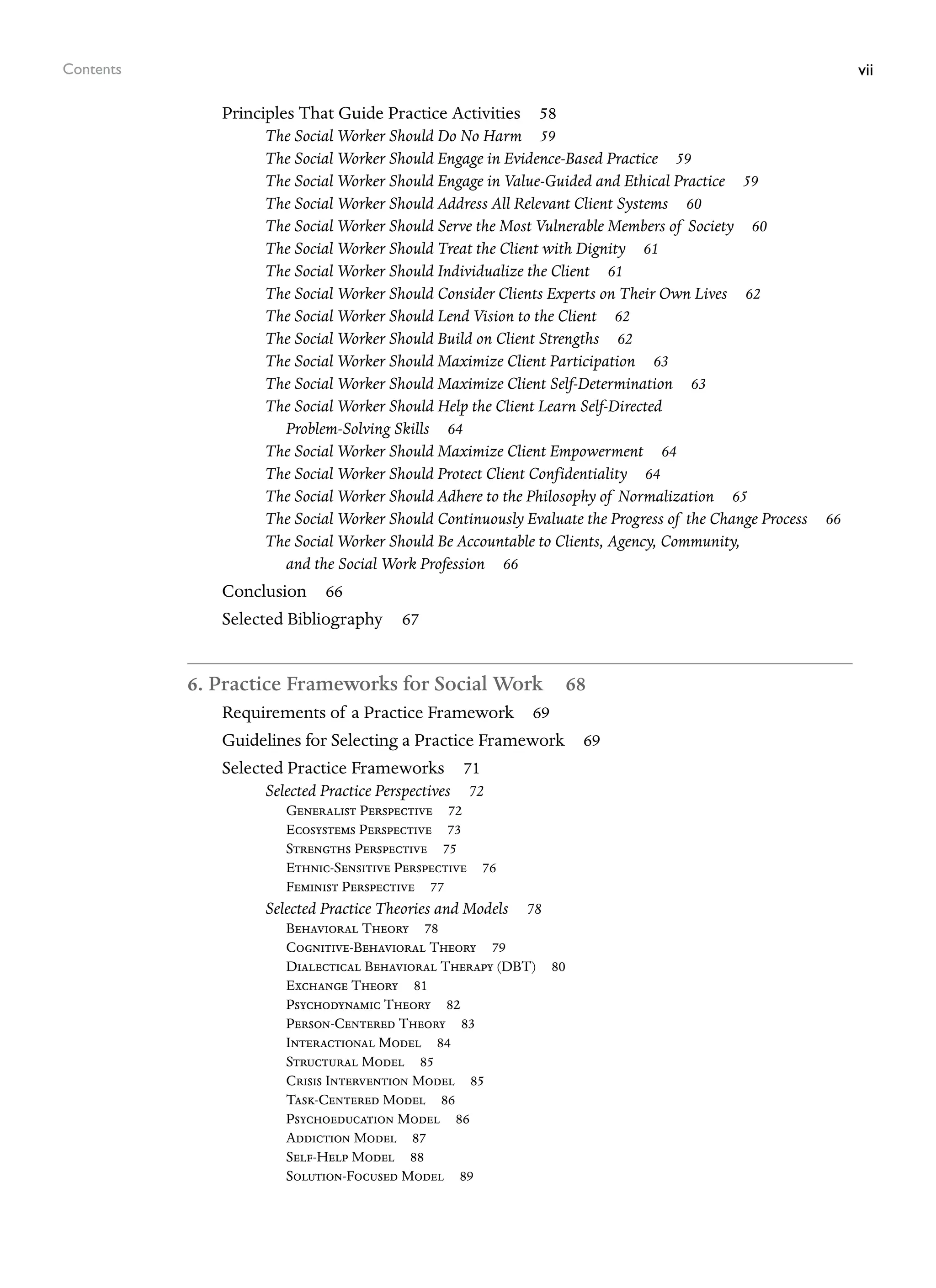
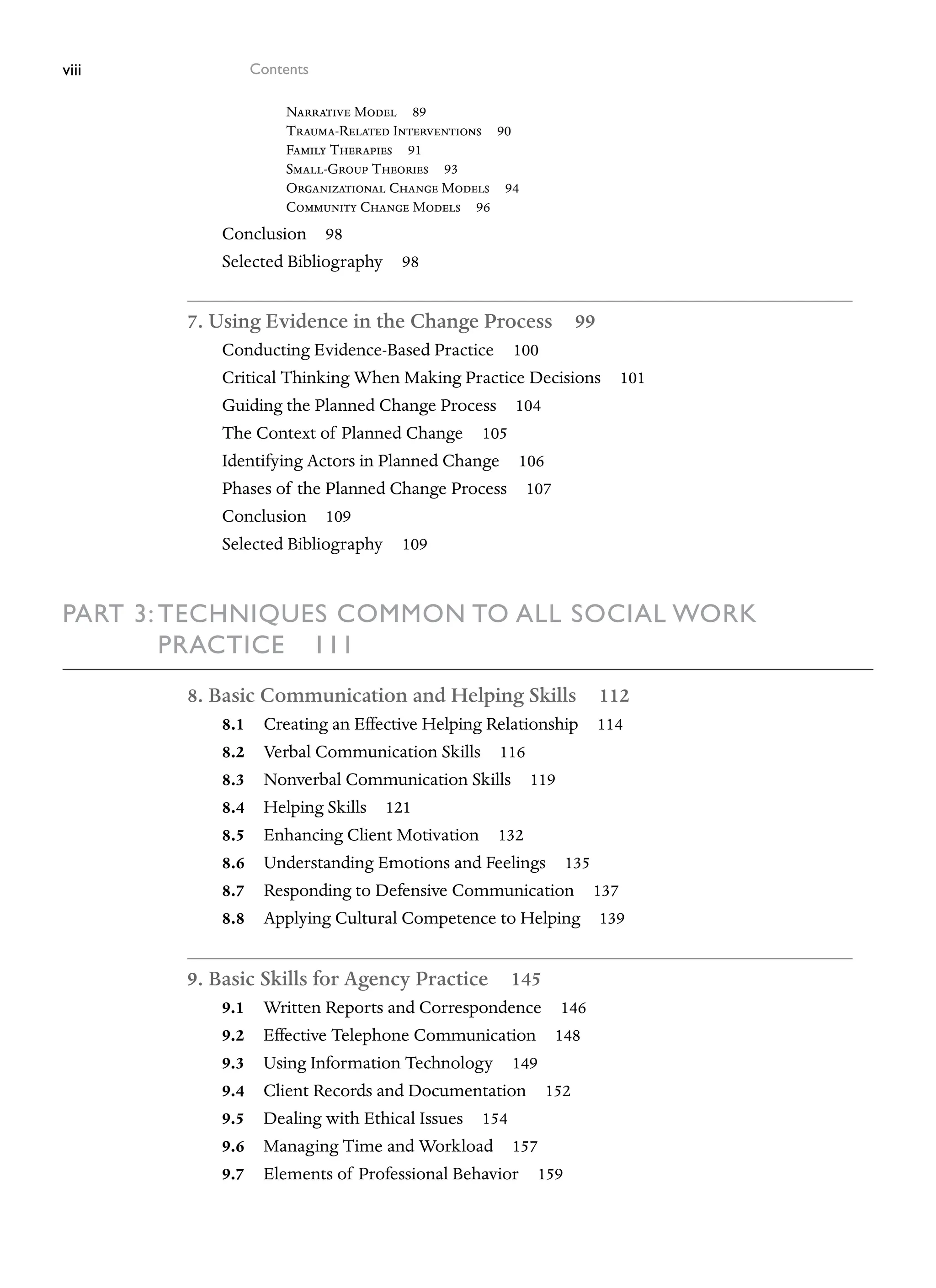
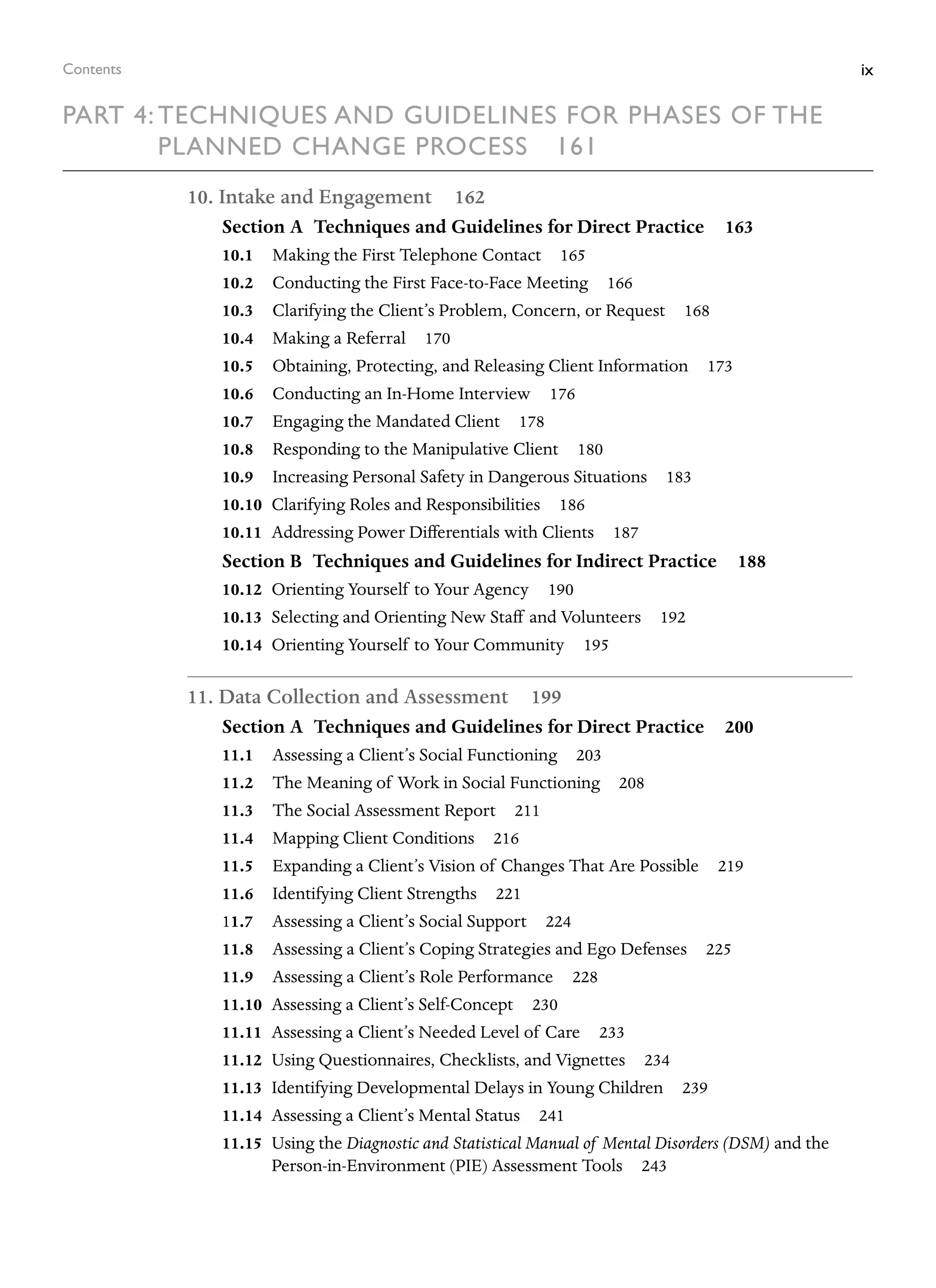
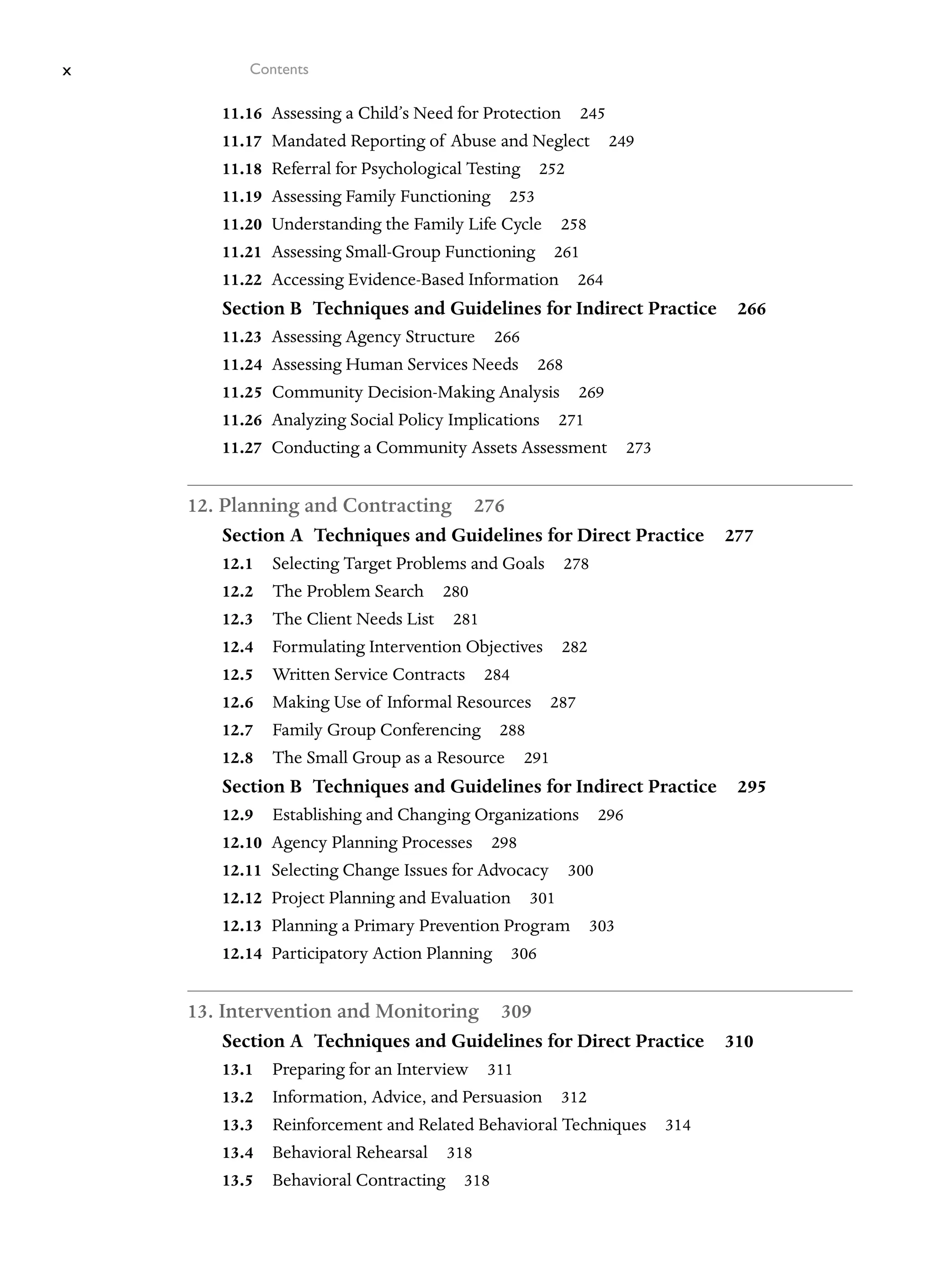
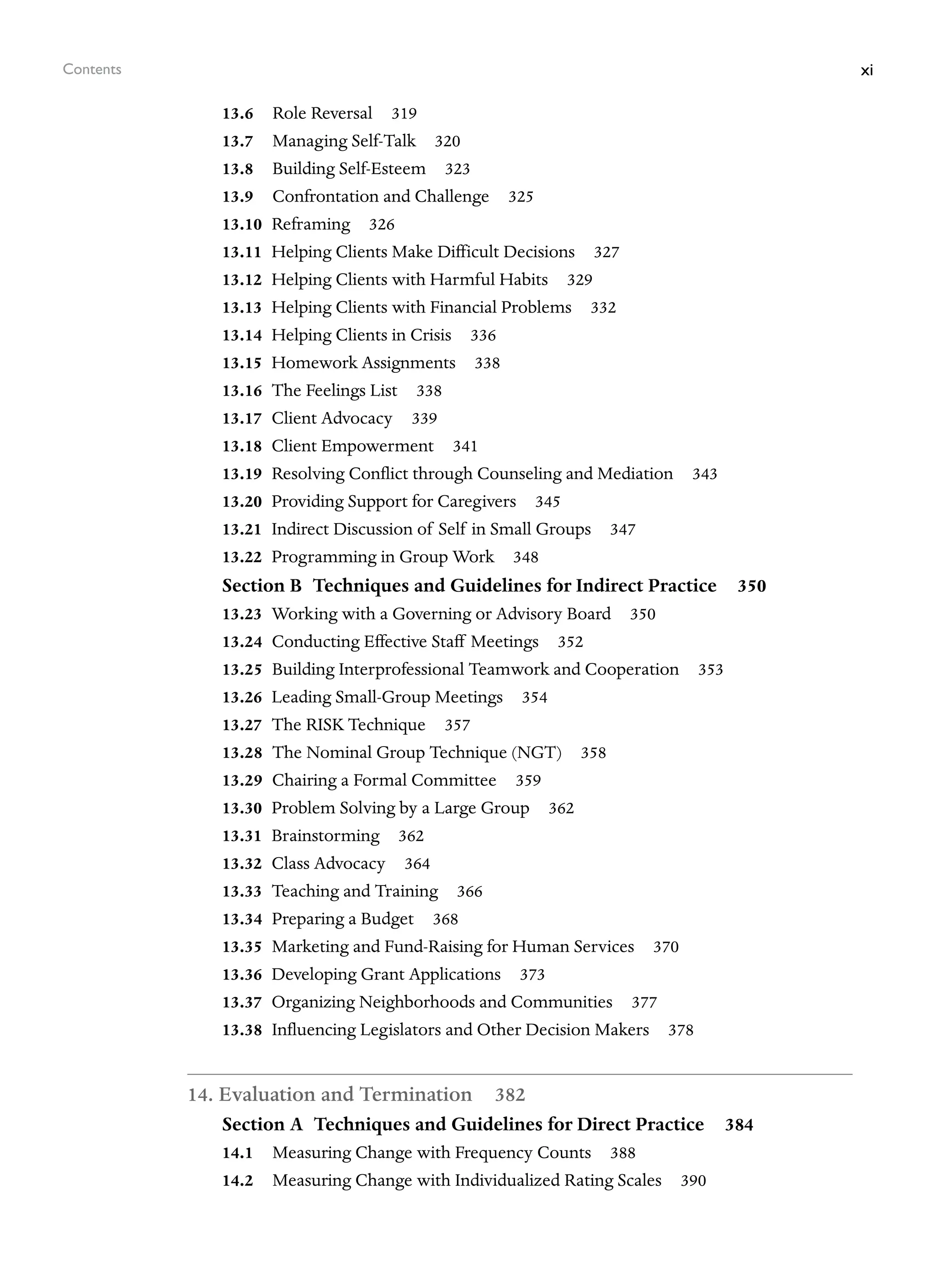
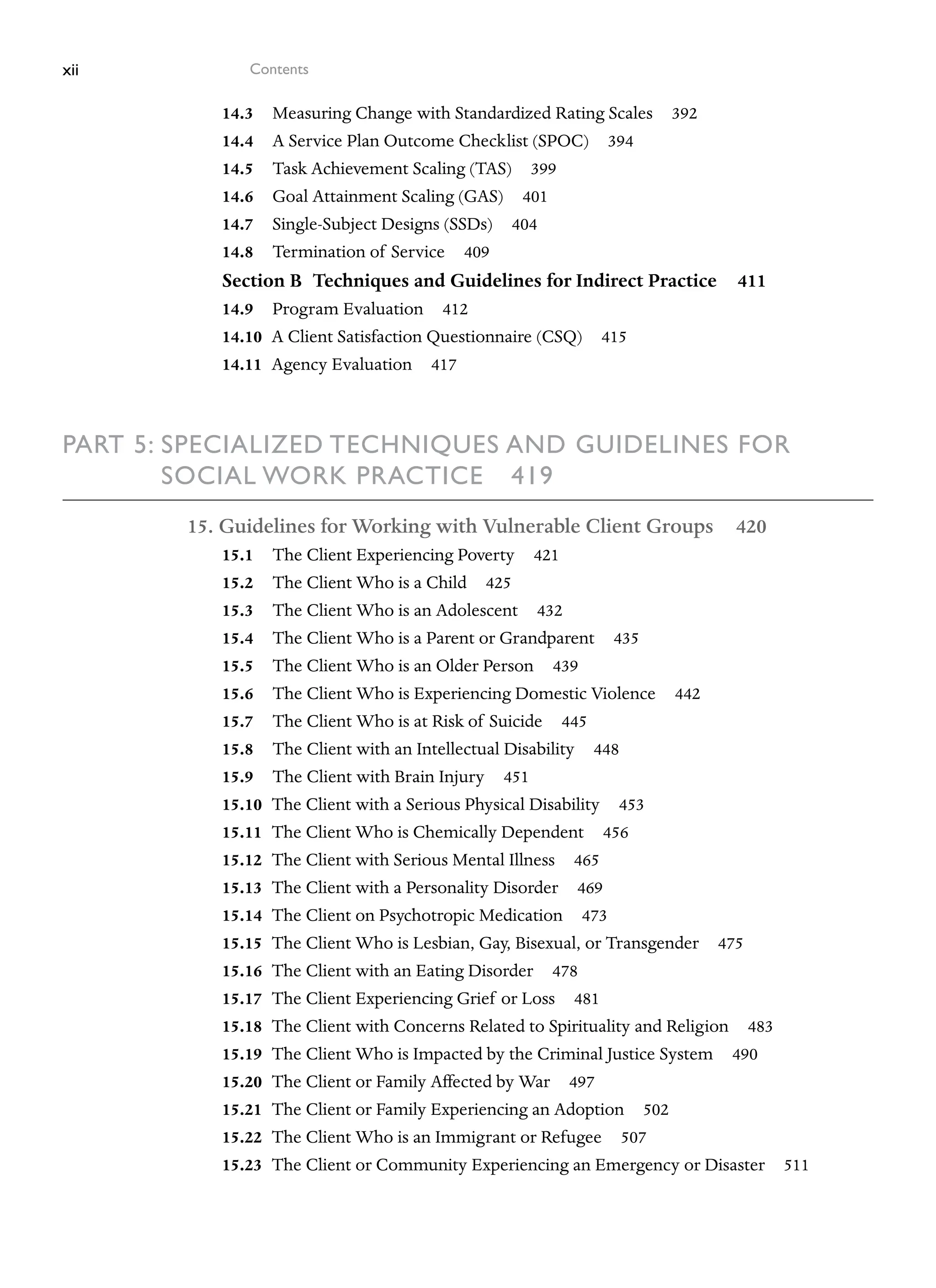
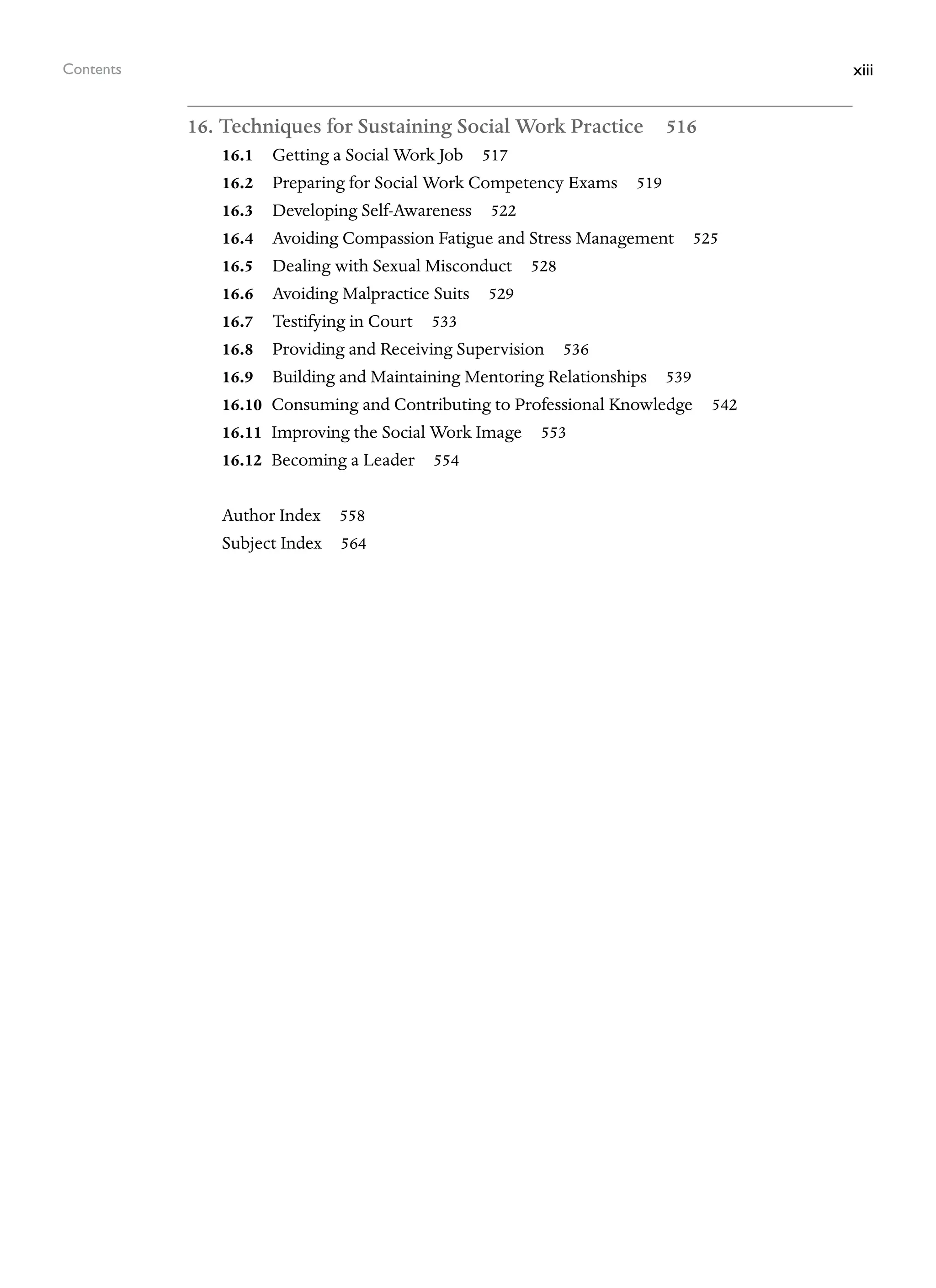



![CHAPTER I.
“A lively desire of knowing and recording
our ancestors so generally prevails, that
it must depend on the influence of some
common principle in the minds of men.
We seem to have lived in the persons of
our forefathers; our calmer judgment will
rather tend to moderate than suppress
the pride of an ancient and worthy race.
The satirist may laugh; the philosopher
may preach; but reason herself will
respect the prejudices and habits which
have been consecrated by the
experience of mankind.”[41]
Of all nations on the globe, the Irish, as a people, are universally
admitted to possess, in a pre-eminent degree, those finer
sensibilities of the human heart, which, were they but wisely
controlled, would exalt man above the level of ordinary humanity,
and make him, as it were, a being of another species. The numerous
instances adduced in all periods of their history, of ardent and
enterprising zeal, in every case wherein personal honour or national
glory may be involved, are in themselves sufficient to establish this
assertion. But while granting their pre-eminence as to the
possession of those feelings, and the capability of the feelings
themselves to be refined and sublimated to the very acme of
cultivation, we may still doubt whether the mere possession of them
be not less a blessing than a curse—whether, in fact, their quick
perception of disquietudes and pains be not more than a
counterpoise to their keen enjoyment of delight or pleasure.](https://image.slidesharecdn.com/11550-250402224933-51ff3de1/75/eBook-PDF-Techniques-and-Guidelines-for-Social-Work-Practice-10th-Edition-18-2048.jpg)
![Foremost, however, in the train of the many virtues which flow
therefrom, is that “amor patriæ,” or love of country, which,
unsubdued often by the most galling miseries and the most hopeless
wants, throws a halo round the loneliness of their present despair in
the proud retrospection of their former buoyancy. This spirit it is
which, despite of obvious advantages to be derived from emigration,
has riveted the Irish peasant so immutably to his home, that any
effort on his part to dissolve those local fetters would be equivalent
to the disruption of all the ties and attachments which nature or
habit had implanted within him.
“The lofty scenes around their sires recall,
Fierce in the field and generous in the hall;
The mountain crag, the stream and waving tree,
Breathe forth some proud and glorious history—
Urges their steps where patriot virtue leads,
And fires the kindred souls to kindred deeds.
They tread elate the soil their fathers trod,
The same their country, and the same their God.”
But it may be said that this is a day-dream of youth—the hereditary
vanity of one of Iran’s sons, arrogating antiquity and renown for an
inconsiderable little island, without a particle of proof to substantiate
their assumption, or a shadow of authority to give colour to their
claims. Why, sir, cast your eye over the fair face of the land itself,
and does not the scene abound with the superfluity of its evidences?
What are those high aspiring edifices which rise with towering
elevation towards the canopy of the “Most High”?[42] What are those
stupendous and awful structures of another form—the study at once
and admiration of the antiquarian and the philosopher, to be found
on the summits of our various hills[43] as well as in the bowels[44] of
the earth itself?—what are they but the historical monuments of
splendour departed—surviving the ravages of time and decay, not as
London’s column, to “lift their heads and lie,” but to give the lie and
discomfiture to those, who, from the interested suggestions of an
illiberal policy, or the more pardonable delusions of a beclouded](https://image.slidesharecdn.com/11550-250402224933-51ff3de1/75/eBook-PDF-Techniques-and-Guidelines-for-Social-Work-Practice-10th-Edition-19-2048.jpg)
![judgment, would deny the authenticity of our historic records, and
question the truth of our primeval civilisation?
It is true, the magnificence which those memorials demonstrate is
but the unenviable grandeur of druidical, as it is called, idolatry and
unenlightened paganism,—when man, relinquishing that supremacy
consigned to him at his creation, or rather divested thereof in
punishment for the transgression of his degenerate disposition, lost
sight of that Being to whom he owed his safety and his life, and bent
himself in homage before perishable creatures that crawl their
ephemeral pilgrimage through the same scene with himself.
Granted; yet that cannot well be objected to us as a disgrace, which,
co-extensive in its adoption with the amplitude of the earth’s
extension, equally characterised the illiterate and the sage; and if,
amidst this lamentable prostration of the human understanding,
anything like redemption or feature of superiority may be allowed, it
must be, unquestionably, to the adherents of that system, which,
excluding the objects of matter and clay, recognised, in its worship
of the bright luminaries of the firmament, the purity and
omnipotence of that Spirit who brought all into existence, and who
guides and preserves them in their respective spheres;—and when I
shall have proved that the intent and application of those Sabian[45]
Towers,—or, to speak more correctly, those primitive Budhist
Temples,—which decorate our landscape and commemorate our past
renown, appertained to this species of purified idolatry, which
worshipped only the host of heaven, the moon and the solar body,
which gives vigour to all things, I shall, methinks, have removed one
obstacle from the elucidation of our antiquities, and facilitated the
road to further adventure in this interesting inquiry.
Let me not be supposed, however, by the preceding remarks to
restrict their destination to one single purpose. All I require of my
readers is a patient perusal of my details; and I deceive myself very
much, and overrate my powers of enunciation, else I shall establish
in their minds as thorough a conviction of the development of the
“Towers” as I am myself satisfied with the accuracy of my](https://image.slidesharecdn.com/11550-250402224933-51ff3de1/75/eBook-PDF-Techniques-and-Guidelines-for-Social-Work-Practice-10th-Edition-20-2048.jpg)
![of architecture remaining to sanction the idea of identity or
resemblance!
Nay, in all Denmark and Scandinavia, the original residence of the
Ostmen and Danes, there is not a single parallel to be found to
those columnar edifices!
Ireland, on the contrary, exhibits them in every quarter; in districts
and baronies where Danish authority was never felt; and surely our
forefathers were not so much in love with the usages and habits of
their barbarian intruders, as to multiply the number of those stately
piles, solely in imitation of such detested taskmasters.
But what renders it demonstrative that those professional pirates
had no manner of connection with the Irish Round Towers, is the
glaring fact, that in the two cities of Wexford and Waterford—where
their power was absolute, their influence uncontrolled—there is not a
solitary structure that could possibly be ascribed to the class of those
which we now discuss!
In Scotland alone, of all European countries besides Ireland, do we
meet with two of them,—one at Brechin, and the other at
Abernethy;—but they are smaller than the Irish, and, with other
characteristics, seem to have been built, after their model, at a
comparatively recent period, by a colony from this country, “as if
marking the fact,” to use Dalton’s accidentally[46] appropriate phrase,
“of that colonisation having taken place when the rites, for which the
Round Towers were erected, in the mother-country, were on the
decline.”
But, forsooth, they are called “cloghachd” by the peasantry, and
that, without further dispute, fixes their destination as belfries! Oh!
seri studiorum quîne difficile putetis?
That some of them had been appropriated in latter times, nay, and
still are, to this purpose, I very readily concede; but, “toto cœlo,” I
deny that such had ever entered into the contemplation of their
constructors, as I do, also, the universality of the very name, which I](https://image.slidesharecdn.com/11550-250402224933-51ff3de1/75/eBook-PDF-Techniques-and-Guidelines-for-Social-Work-Practice-10th-Edition-25-2048.jpg)
![instruction, when a youth, to a holy solitary by name Imarus, who
was shut up in a ‘cell,’ near the cathedral of the said city, probably in
a Round Tower.” Risum teneatis?
But I am tired of fencing with shadows and special pleading with
casuists. And yet, as I would wish to render this Essay systematically
complete, I am forced, however reluctant, to notice the conjecture,
which others have hazarded, of those Round Towers having been
places of retreat and security in the event of invasion from an
enemy; or depositories and reservoirs for the records of State, the
Church utensils and national treasures!
To the former, I shall reply, that Stanihurst’s description of the
“excubias in castelli vertice,” upon which it would seem to have been
founded, does not at all apply to the case; because, while the
“castella” have vanished, the Round Towers—which never belonged
to them—do, many of them still firmly, maintain their post; and as to
the latter, the boldness with which it has been put forward, by its
author before named,[47] requires a more lengthened examination
than its utter instability could otherwise justify.](https://image.slidesharecdn.com/11550-250402224933-51ff3de1/75/eBook-PDF-Techniques-and-Guidelines-for-Social-Work-Practice-10th-Edition-29-2048.jpg)
![CHAPTER II.
This chivalrous son of Mars, more conversant, I should hope, with
tactics than with literary disquisitions, has started with a position
which he is himself, shortly after, the most industrious to contradict;
namely, “that the gods, to punish so much vanity and presumption,
had consigned to everlasting oblivion the founders, names, dates,
periods, and all records relating to them.”[48]
Surely, if they were intended for the despicable dungeons which the
Colonel would persuade us was their origin, there existed neither
“vanity” nor “presumption” in that humble design; and when to this
we add the nature of that security, which he tells us they were to
establish, one would think that this should be a ground for the
perpetuity of their registration, rather than for consigning their
history to “everlasting oblivion.”
But secure in the consciousness of the whole history of those
structures, and satisfied that truth will never suffer anything by
condescending to investigation, I will, to put the reader in full
possession of this adversary’s statement, here capitulate his
arguments with all the fidelity of an honourable rival.
His object, then, being to affix the Round Towers to the Christian
era, he begins by insisting that, as “the architects of those buildings
were consummate masters in masonic art,” it follows, that “a people
so admirably skilled in masonry never could have experienced any
impediments in building substantial dwellings, strong castles,
palaces, or any other structures of public or private conveniency,
some fragments of which, however partial and insignificant, would
still be likely to appear, in despite of the corroding breath of time or
the torch of devastation.”](https://image.slidesharecdn.com/11550-250402224933-51ff3de1/75/eBook-PDF-Techniques-and-Guidelines-for-Social-Work-Practice-10th-Edition-30-2048.jpg)
![we meet an example of a lofty spiral tower, internally too confined to
admit into it at once a dozen bulky persons, denominated a temple.”
“An edifice,” he resumes, “like the Pillar Tower, might easily serve for
a belfry; and there are instances where it has been converted, in
modern times, to that use; on the other hand, a temple, properly
speaking, gives an idea of a spacious edifice, or of one calculated to
accommodate, withinside its walls, a certain congregation of devout
people, met to pray. Should the building, to answer any partial or
private use, be constructed upon a diminutive scale, like the little
round temple at Athens,[49] called Demosthenes’, the edifice,” he
continues, “in that case, obtains its appropriate shape, yet differing
in plan, size, and elevation from the Irish Pillar Tower, to which it
cannot, in any one respect, be assimilated.”
“Moreover,” he says, “the ancients had hardly any round temples.
Vitruvius barely speaks of two kinds, neither of which bears the
slightest resemblance to a tower. Upon the whole,” concludes he, “if
we will but bestow a moment’s reflection on the geographical and
political condition of primitive Ireland, and the avowed tardy
progress towards civilisation and an acquaintance with the fine arts
then common to those nations not conveniently placed within the
enlightened and enlivening pale of Attic and Roman instruction, it
will be impossible not to pronounce Vallancey’s conjectures
respecting the Pillar Towers as receptacles for the sacred fire
altogether chimerical and fabulous.”
Before I proceed to demolish, seriatim, this tissue of cobwebs, I wish
it to be emphatically laid down that I do not tread in General
Vallancey’s footsteps. To his undoubted services, when temperately
guarded, I have already paid the tribute of my national gratitude;
but, pitying his mistakes, while sick of his contradictions, I have
taken the liberty to chalk out my own road.
Now for Montmorency. As to the first, then, of those objections
against the antiquity of our Round Towers, it is readily repelled by
explaining that, in the early ages of the world, masonic edifices, of](https://image.slidesharecdn.com/11550-250402224933-51ff3de1/75/eBook-PDF-Techniques-and-Guidelines-for-Social-Work-Practice-10th-Edition-32-2048.jpg)
![architectural precision, were exclusively appropriated, as a mark of
deferential homage, to the worship of the Great Architect of the
universe; and with this view it was that the science was, at first,
studied as a sort of religious mystery, of which there can be required
no greater possible corroboration than the circumstance of that
ancient and mysterious society who date the existence of their
institution from Noah himself—and it is incomparably older—still
retaining, amid the thousand changes which the world has since
undergone, and the thousand attempts that have been made to
explore and explode their secrets, the mystic denominational ligature
of “Free and Accepted Masons.”[50]
The absence, therefore, of any vestiges of other coeval structures,
for private abode or public exhibition, should excite in us no
surprise; more especially when we recollect that in the East also—
whence all our early customs have been derived—their mud-built
houses present the greatest possible contrast between the simplicity
of their domestic residences and the magnificence and grandeur of
their religious conventicles—Verum illi delubra deorum pietate,
domos sua gloria decorabant.[51]
But though this my reply is triumphantly subversive of the Colonel’s
first position, I shall dwell upon it a little longer, to hold forth, with
merited retaliation, either his disingenuousness or his forgetfulness;
because the same inference which he deduced from the non-
appearance of coeval architecture of any other class, would apply as
well to the period which he wishes to establish as the era of the
erection of the Towers,—and of which era, he admits, no other
architectural monuments do remain,—as to that which I shall
incontrovertibly prove was their proper epoch.
Then, without having recourse to the impossibility—of which all
travellers complain—to ascertain even the situation of those gigantic
cities which in other parts of the globe, at equally remote periods of
time, were cried up as the wonders of the age—the masterpieces of
human genius, making their domes almost kiss the stars; without
betaking myself, I say, to those, the only memorials of which are](https://image.slidesharecdn.com/11550-250402224933-51ff3de1/75/eBook-PDF-Techniques-and-Guidelines-for-Social-Work-Practice-10th-Edition-33-2048.jpg)
![Iod na foghlama gan ean ghes,
Is iod na lanamh nas.”
That is—
“Theirs were the hands free from violence,
Theirs the mouths free from calumny,
Theirs the learning without pride,
And theirs the love free from venery.”
In later times I admit there was a lamentable degeneracy in the
bardic class,—or rather the innumerable pretenders to the
assumption of the name; and the “fescennine licentiousness” with
which they violated the sanctity of domestic seclusion, in exposing
the objects of their private spleen, tended not a little to bring their
body into disrepute, and subject them additionally to the salutary
restrictions of legislative severity. They were not less extravagant in
the lavishment of their fulsome commendations; so that one can
hardly avoid drawing a parallel between them and those poetasters,
formerly, of Italy, whom Horace so happily describes in those
remarkable hexameters, viz.:—
“Fescinnina per hunc invecta licentia morem,
Versibus alternis opprobria rustica fudit,
... quin etiam lex
Pœnaque lata malo quæ mallet carmine quenquam,
Describi.”[52]
You would imagine the Roman poet was speaking of the Irish bards
in the night of their decline; but the description by no means applies
to the original institution, whose object it was to perpetuate the
history and records of the nation, and preserve its history from the
intrusions of barbarism. To this end it was that they met for revision
at the senatorial synod; and the importance of this trust it was that
procured to their body the many dignities before described, giving
them precedence above the aggregate of the community at large,
and investing them with an authority little short of royalty.](https://image.slidesharecdn.com/11550-250402224933-51ff3de1/75/eBook-PDF-Techniques-and-Guidelines-for-Social-Work-Practice-10th-Edition-36-2048.jpg)
![nation made gods of their own, and the men of Babylon made
Succoth-Benoth.”[53]
In accordance with the different views under which each people
considered the bounties of those luminaries, so did their temples
assume a corresponding shape; and it shall be my lot, in the
progress of this litigated research, to show why the followers of one
of those Baals, namely, Baal Phearagh, gave their temples this erect,
narrow, and elevated roundness.
I have thus annihilated those visionary ramparts which my opponent
had flattered himself he had raised against the intrusion of long-
suppressed truth; and by the help of which, as a military bastion, he
had fondly hoped he might link together the Church and the sword
in one cemented bond of anachronism. Let us see, however, how he
would bring about the match, with the articles of intermarriage, and
so forth.
His assumption is, that “the founders of those Towers were primitive
Cœnobites and Bishops, munificently supported in the undertaking
by the newly-converted kings and toparchs; the builders and
architects being those monks and pilgrims who, from Greece and
Rome, either preceded or accompanied our early missionaries in the
fifth and sixth centuries”; which he pretends to substantiate in the
following manner.
Having discovered, by a most miraculous effort of penetration, that
one hundred and fifty Greek and Roman religionists had
accompanied St. Abhan on his return from imperial Rome,—whither
he had gone to complete his theological studies, towards the end of
the fifth century,—and not knowing how to occupy those strangers
in this then pagan land, the Colonel, with his industrious habits, well
aware that “idleness is the mother of mischief,” sets them, at once,
about building the Towers.
But as it would be too lavish a display of knight-errantry to waste
their time and strength without some ostensible purpose, he must,](https://image.slidesharecdn.com/11550-250402224933-51ff3de1/75/eBook-PDF-Techniques-and-Guidelines-for-Social-Work-Practice-10th-Edition-41-2048.jpg)