Instructor’s Name
Webinar Date
Data Quality, Coding, and
MedDRA
1
MedDRA was developed under the auspices of
the International Council for Harmonisation of
Technical Requirements for Pharmaceuticals for
Human Use (ICH). The activities of the MedDRA
Maintenance and Support Services Organization
(MSSO) are overseen by an ICH MedDRA
Management Committee, which is composed of
the ICH parties, the Medicines and Healthcare
products Regulatory Agency (MHRA) of the UK,
Health Canada, and the WHO (as Observer).
2
000906
3
000906
Disclaimer &
Copyright Notice
4
000906
Overview
To provide an understanding of:
• Importance of good quality data
• How clinical data are coded
• MedDRA background
• Coding examples
• Benefits of good quality data
5
000906
Data Quality in Clinical
Development
• Highly regulated environment with strong
emphasis on safety surveillance and data
quality
• Applies to clinical trials and post-
marketing arena
• Increasing harmonization of safety
reporting regulations globally
6
000906
What is Meant by
Good Quality Data?
• Complete
• Accurate
• Diagnosis supported by appropriate
investigations
• Causality assessment for adverse events
7
000906
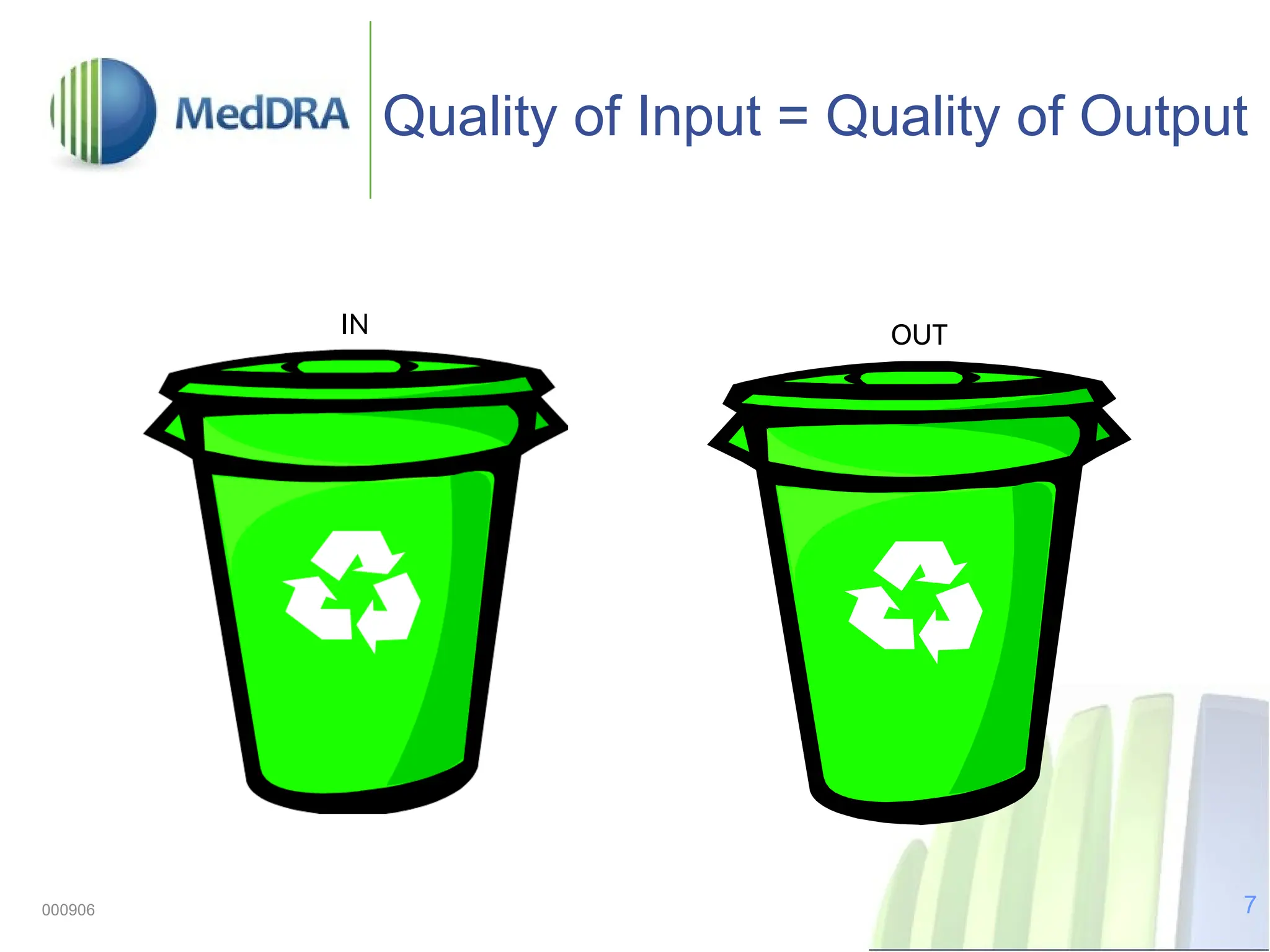
Quality of Input = Quality of Output
IN OUT
8
000906
Coding of Clinical Trial
Data
• Most data entered on Case Report Forms are “coded” in some
form
• Facilitates storage, retrieval, analysis, and presentation of
data
• Some coding is performed by investigators at point of data
entry
– For example, numeric codes for severity of adverse event: 1=
mild, 2= moderate, etc.
• Other coding of text data is performed by the sponsor
company after data collection
• Accuracy of initial coding determines accuracy of analysis
9
000906
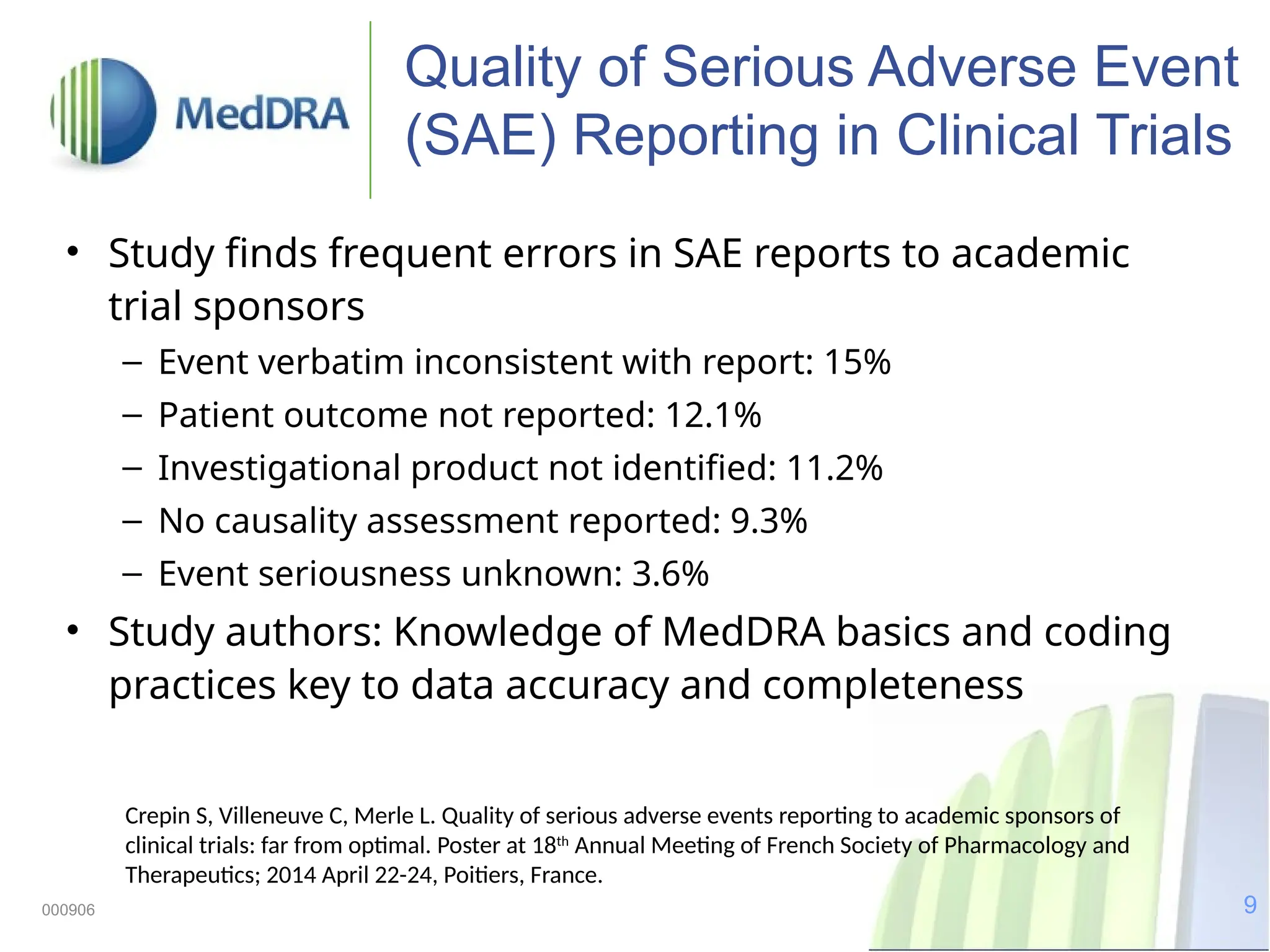
Quality of Serious Adverse Event
(SAE) Reporting in Clinical Trials
• Study finds frequent errors in SAE reports to academic
trial sponsors
– Event verbatim inconsistent with report: 15%
– Patient outcome not reported: 12.1%
– Investigational product not identified: 11.2%
– No causality assessment reported: 9.3%
– Event seriousness unknown: 3.6%
• Study authors: Knowledge of MedDRA basics and coding
practices key to data accuracy and completeness
Crepin S, Villeneuve C, Merle L. Quality of serious adverse events reporting to academic sponsors of
clinical trials: far from optimal. Poster at 18th
Annual Meeting of French Society of Pharmacology and
Therapeutics; 2014 April 22-24, Poitiers, France.
MedDRA Background
000906 10
11
000906
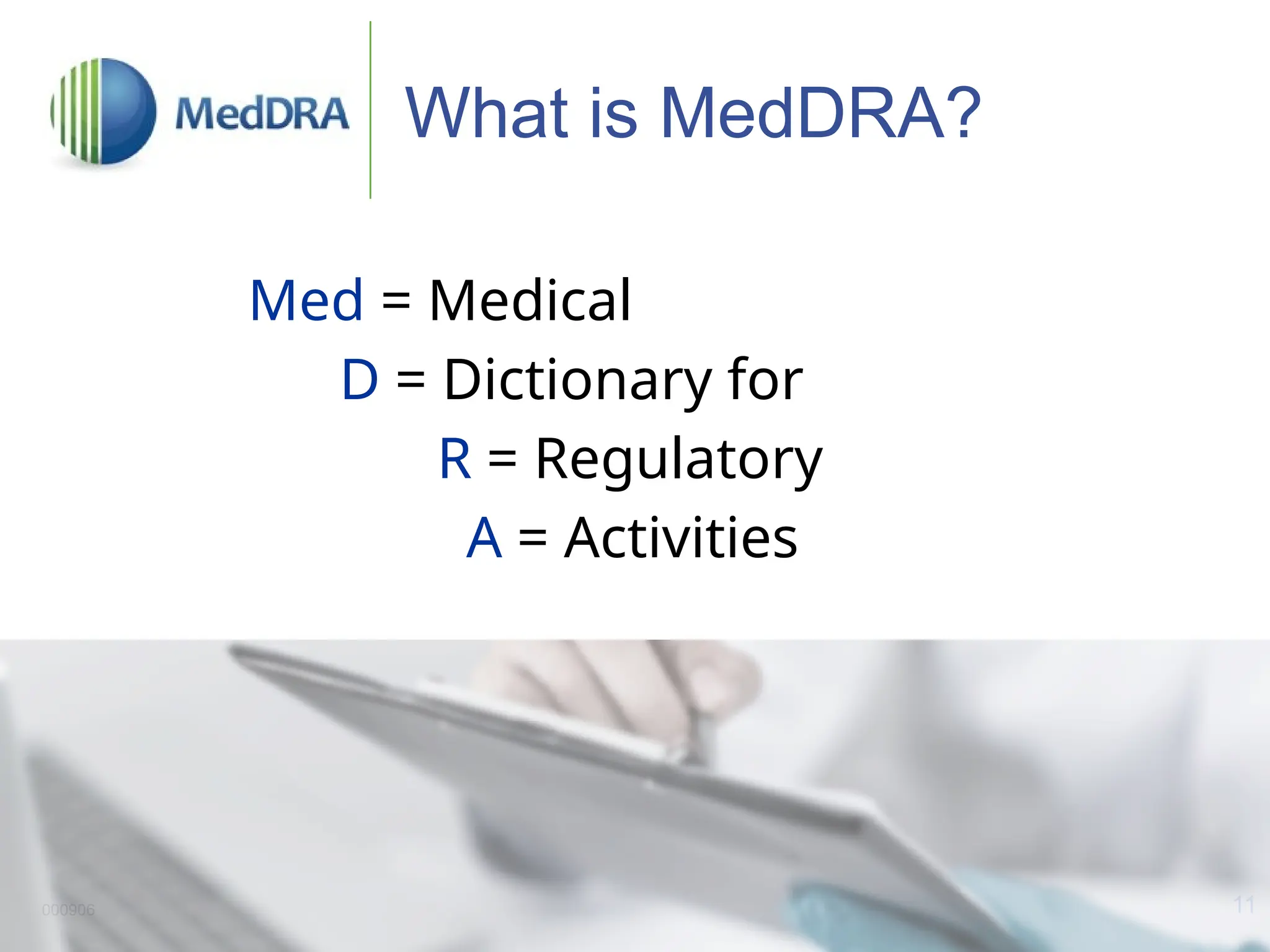
What is MedDRA?
Med = Medical
D = Dictionary for
R = Regulatory
A = Activities
12
000906
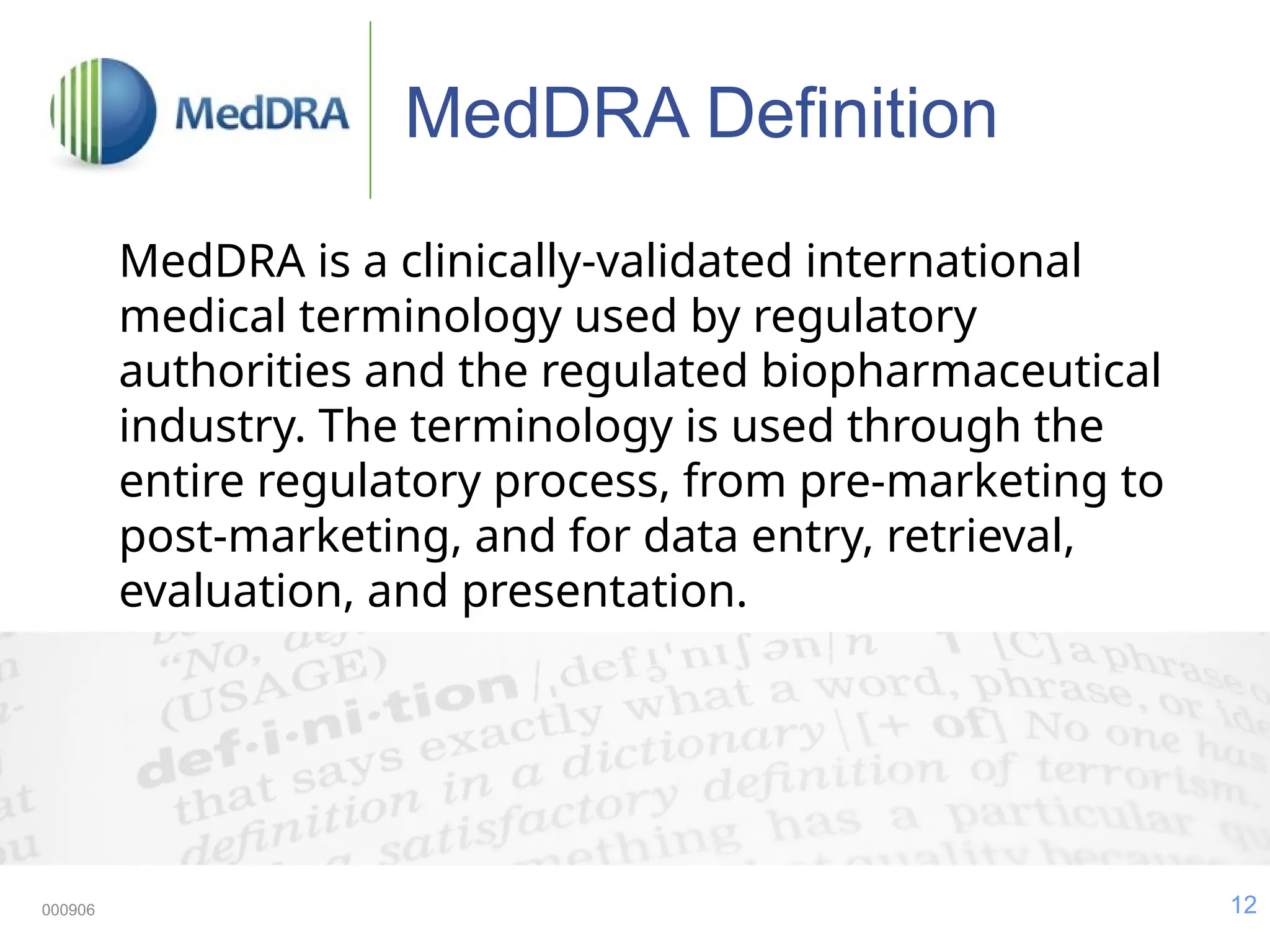
MedDRA Definition
MedDRA is a clinically-validated international
medical terminology used by regulatory
authorities and the regulated biopharmaceutical
industry. The terminology is used through the
entire regulatory process, from pre-marketing to
post-marketing, and for data entry, retrieval,
evaluation, and presentation.
13
000906
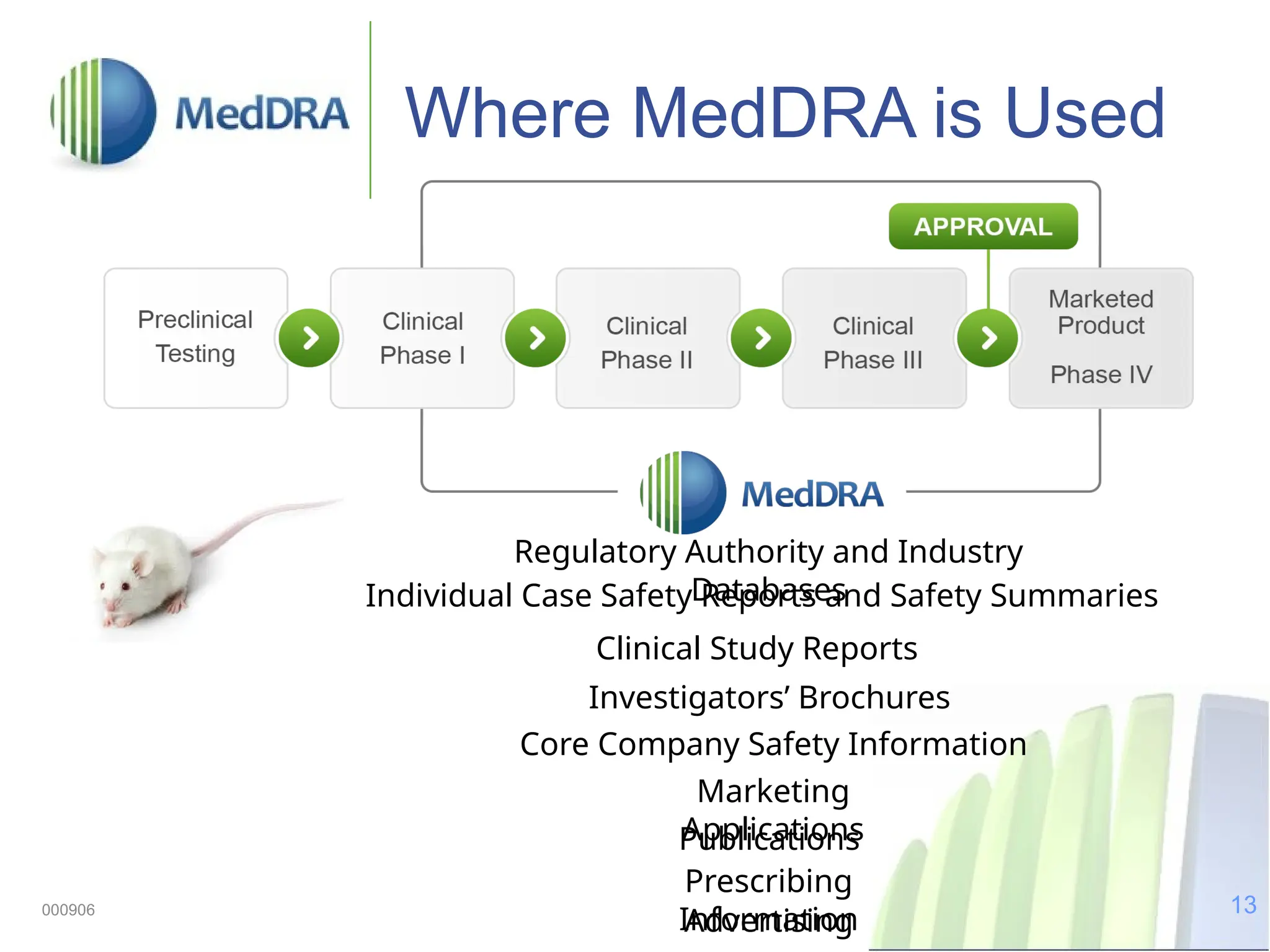
Where MedDRA is Used
Individual Case Safety Reports and Safety Summaries
Clinical Study Reports
Investigators’ Brochures
Core Company Safety Information
Marketing
Applications
Publications
Prescribing
Information
Advertising
Regulatory Authority and Industry
Databases
14
000906
Key Features of MedDRA
• Standardized terminology
• International scope –available in a
constantly growing number of languages
• Managed by Maintenance and Support
Services Organization (MSSO) and
updated bi-annually with input from users
15
000906
Key Features of MedDRA
(cont)
• Structure facilitates data entry, analysis,
reporting, and electronic communication
• Large terminology which allows greater
specificity
• Contains Preferred Terms, each
representing a unique medical concept
• Used to classify a wide range of information
associated with the use of
biopharmaceuticals and other medical
products (e.g., medical devices and
vaccines).
16
000906
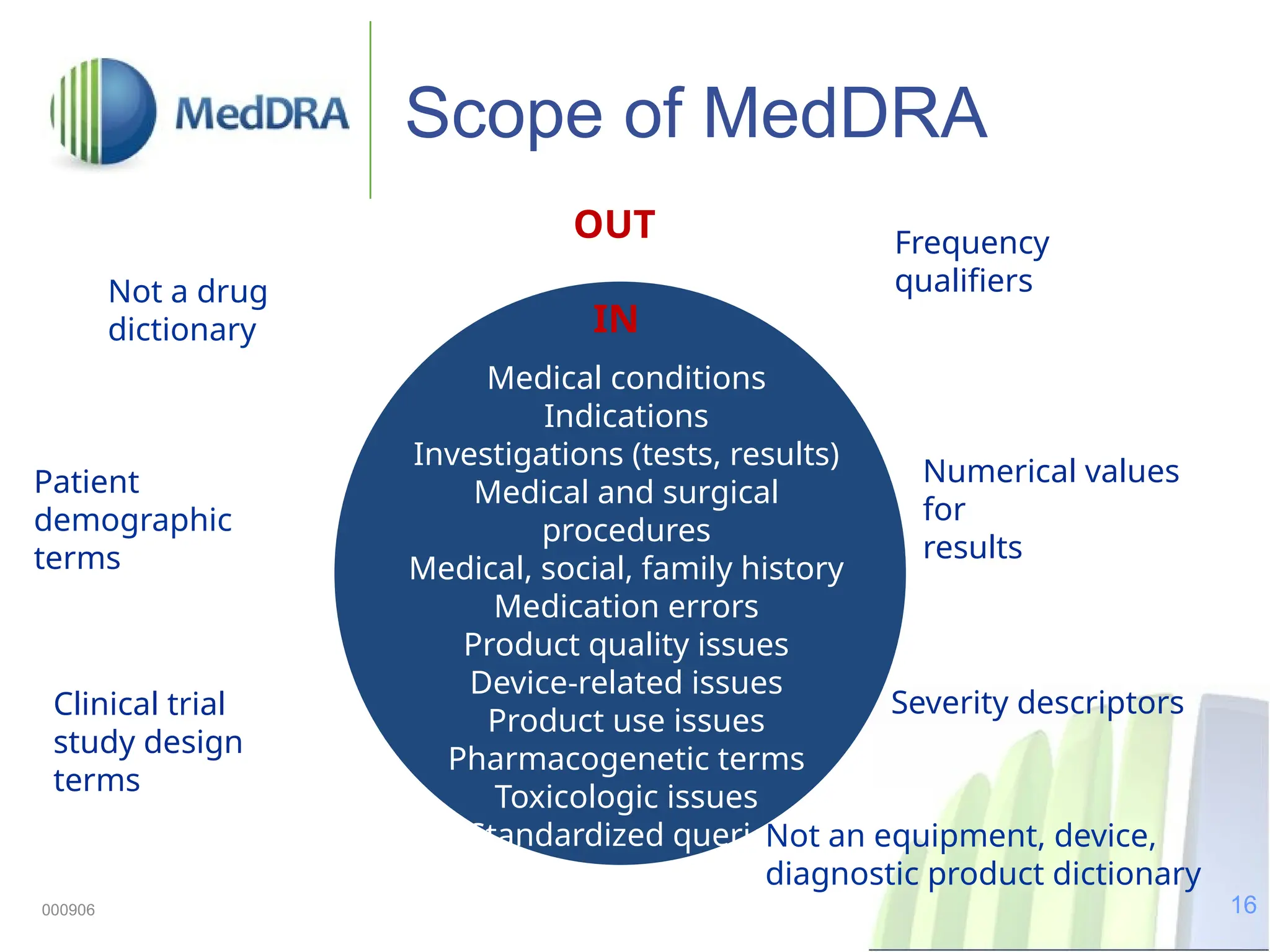
Scope of MedDRA
Medical conditions
Indications
Investigations (tests, results)
Medical and surgical
procedures
Medical, social, family history
Medication errors
Product quality issues
Device-related issues
Product use issues
Pharmacogenetic terms
Toxicologic issues
Standardized queries
Not a drug
dictionary
Not an equipment, device,
diagnostic product dictionary
Clinical trial
study design
terms
Patient
demographic
terms
Frequency
qualifiers
Numerical values
for
results
Severity descriptors
IN
OUT
17
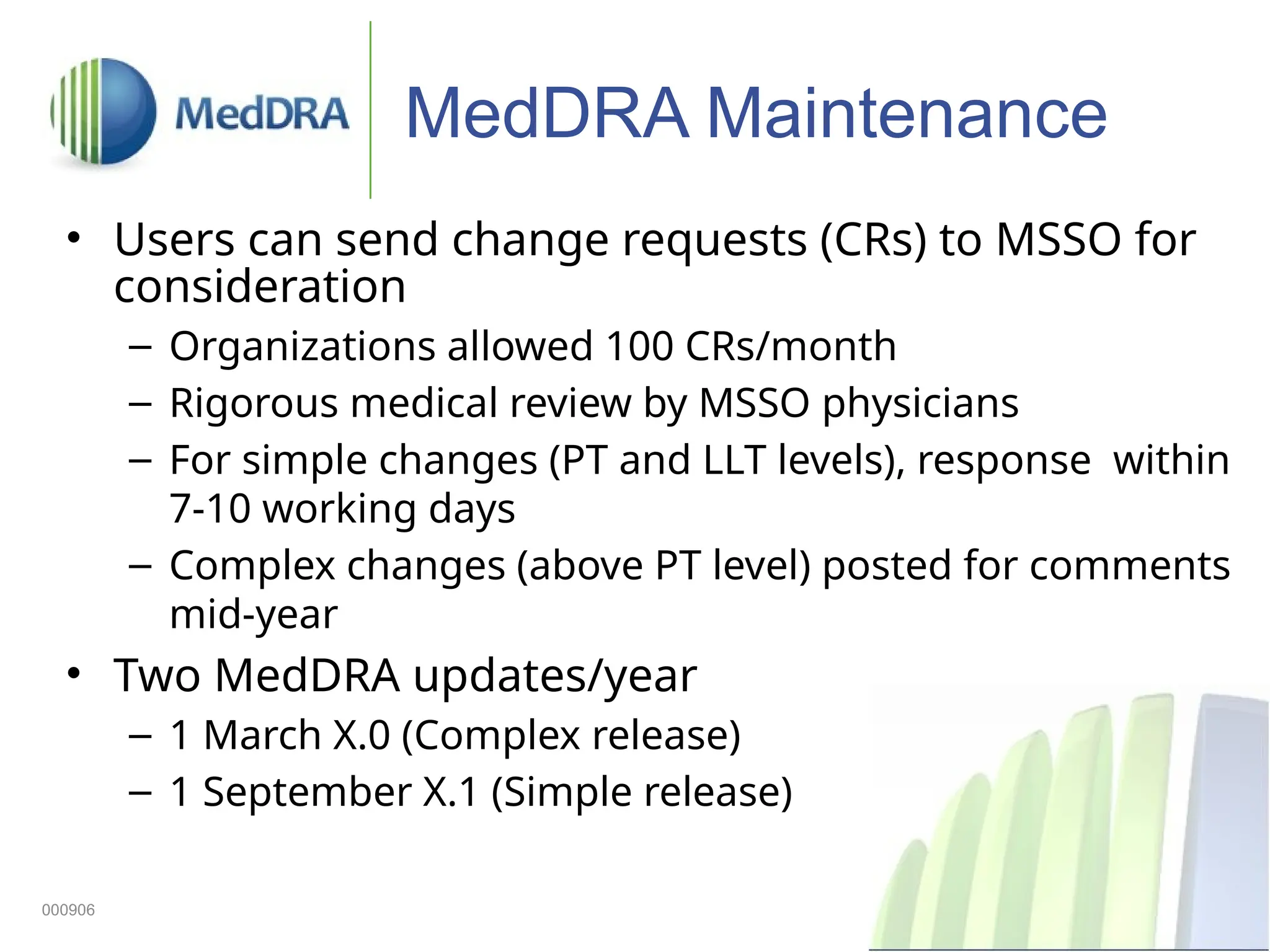
MedDRA Maintenance
• Users can send change requests (CRs) to MSSO for
consideration
– Organizations allowed 100 CRs/month
– Rigorous medical review by MSSO physicians
– For simple changes (PT and LLT levels), response within
7-10 working days
– Complex changes (above PT level) posted for comments
mid-year
• Two MedDRA updates/year
– 1 March X.0 (Complex release)
– 1 September X.1 (Simple release)
000906
18
000906
Making the Most of
MedDRA
• To take advantage of MedDRA’s richness
and specificity, the source data should be
– Clear
– Concise
– Complete
– Accurate
• General principles apply to all clinical data
19
000906
Problems With Coding
Data
• Appropriate coding requires clear initial data
• What is clear to the investigator at the point of data
entry may be unclear to the sponsor at the point of
data coding
• Sponsor must only code reported verbatim term; not
permitted to interpret or draw information from other
sources
• Example: Ambiguous information
– Congestion (nasal, liver, sinus, pulmonary?)
– Cramp (muscle, menstrual, abdominal?)
– Pain (pain where?)
20
000906
Problems With Coding
Data (cont)
• Example: Ambiguous abbreviations
– MI (myocardial infarction or mitral incompetence?)
– GU pain (gastric ulcer pain or genito-urinary pain?)
– Decreased BS (breath sounds, bowel sounds or
blood sugar?)
• Exercise caution with abbreviations that could be
misinterpreted
• ECG, COPD, HIV are examples of standard
abbreviations
21
000906
Problems With Coding
Data (cont)
• Example: Vague information
– Patient felt “fuzzy”, “weird”, “experienced every
adverse event”
Try to use accepted medical terminology
• Example: Non-specific information
– “Left wrist edema” (coded as Peripheral edema)
– More specific - “Injection site edema left wrist”
(coded as Injection site edema)
22
000906
Problems With Coding
Data (cont)
• Death, hospitalization, and disability are outcomes
and are not usually considered to be adverse events
• Provide details of the underlying event, if known
• Examples:
– “Death due to myocardial infarction” (Coded as
Myocardial infarction with death captured as the
outcome)
– “Hospitalization due to congestive heart failure”
(Coded as Congestive heart failure with hospitalization
captured as the outcome)
23
000906
Problems With Coding
Data (cont)
• Example: Ambiguous laboratory data
– “Glucose of 40”
– (Source of specimen - blood, urine, CSF? What
units?)
– Would have to code as Glucose abnormal if
additional clarification is not obtained
• Example: Conflicting laboratory data
– “Hyperkalemia with serum potassium of 1.6 mEq/L”
– Would have to code as Serum potassium abnormal
If using numeric values, provide units and
reference range. Be specific about specimen
source and diagnostic result/clinical diagnosis.
24
000906
Problems With Coding
Data (cont)
• Example: Combination terms
– Diarrhea, nausea, and vomiting
Try to avoid combination terms - these will
have to be split into three individual terms:
– Diarrhea
– Nausea
– Vomiting
25
000906
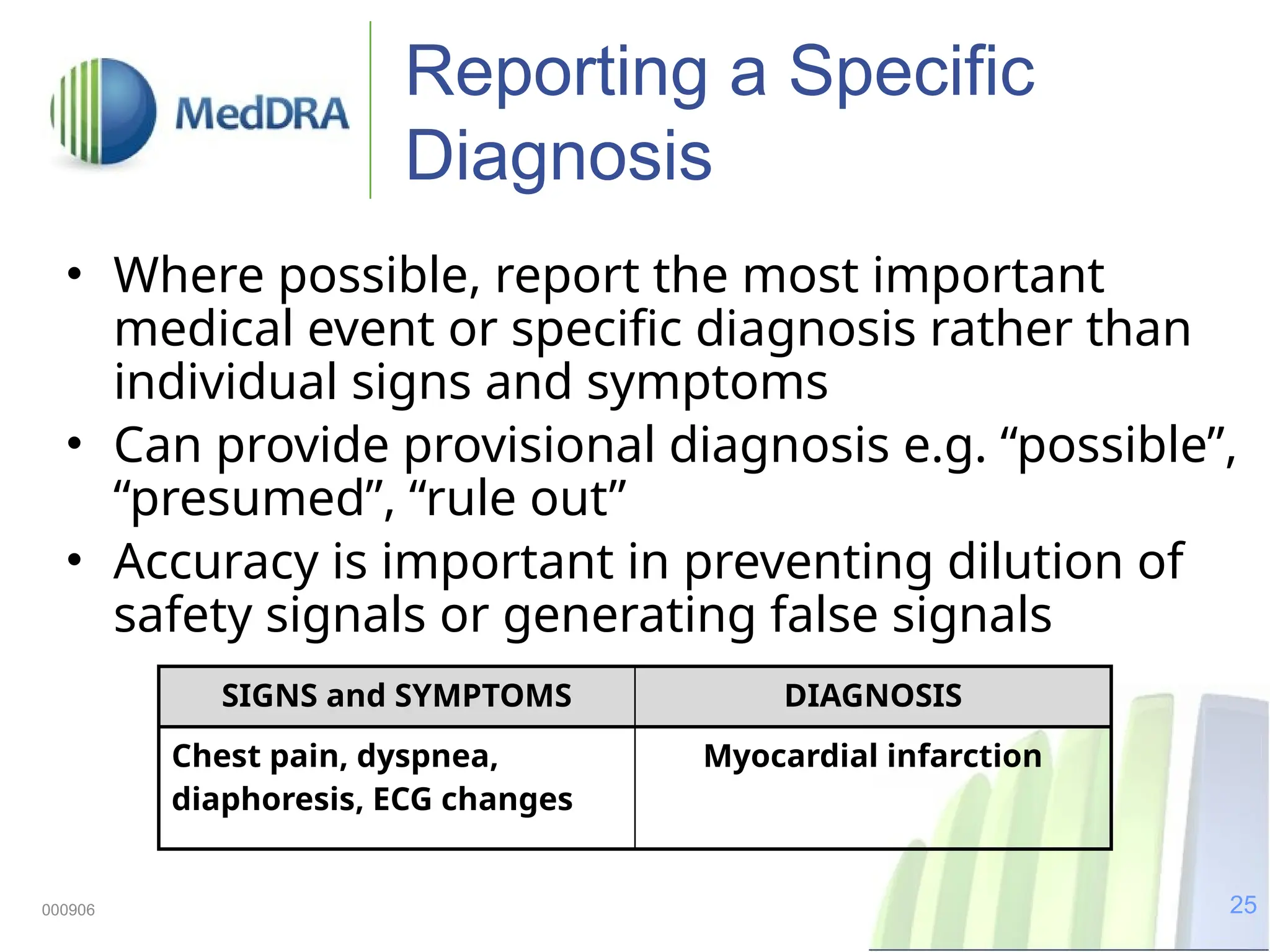
Reporting a Specific
Diagnosis
• Where possible, report the most important
medical event or specific diagnosis rather than
individual signs and symptoms
• Can provide provisional diagnosis e.g. “possible”,
“presumed”, “rule out”
• Accuracy is important in preventing dilution of
safety signals or generating false signals
SIGNS and SYMPTOMS DIAGNOSIS
Chest pain, dyspnea,
diaphoresis, ECG changes
Myocardial infarction
26
000906
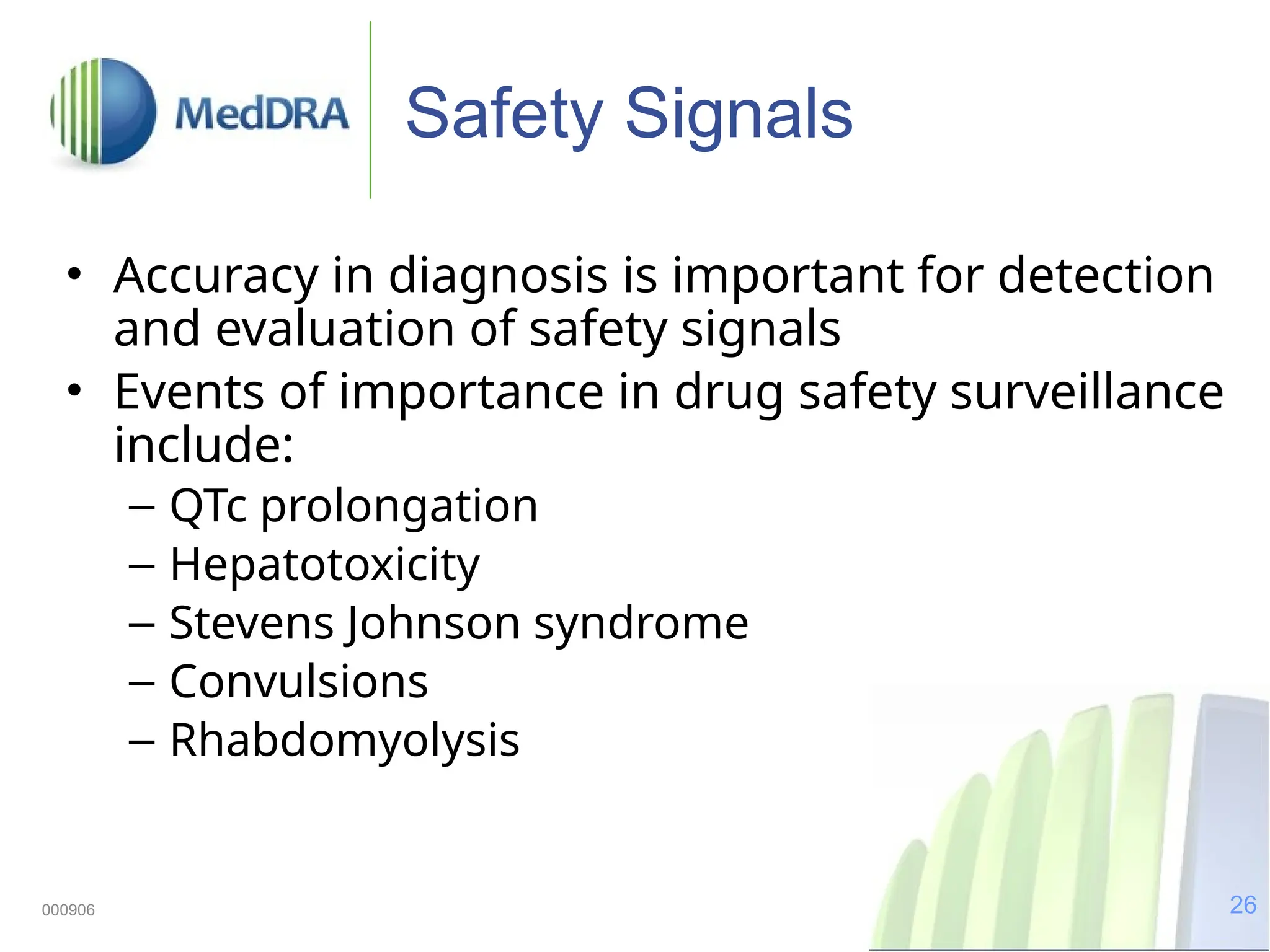
Safety Signals
• Accuracy in diagnosis is important for detection
and evaluation of safety signals
• Events of importance in drug safety surveillance
include:
– QTc prolongation
– Hepatotoxicity
– Stevens Johnson syndrome
– Convulsions
– Rhabdomyolysis
27
000906
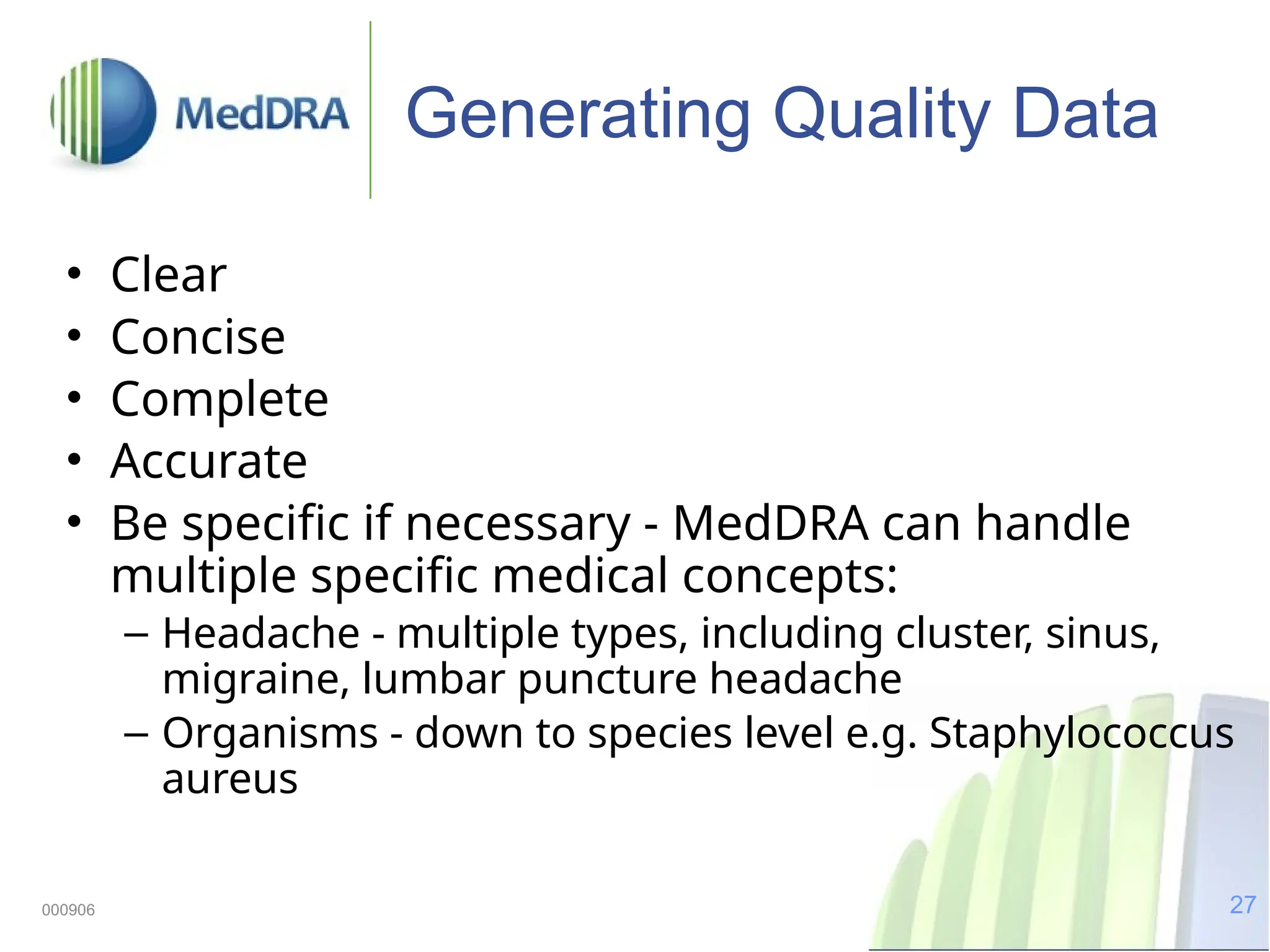
Generating Quality Data
• Clear
• Concise
• Complete
• Accurate
• Be specific if necessary - MedDRA can handle
multiple specific medical concepts:
– Headache - multiple types, including cluster, sinus,
migraine, lumbar puncture headache
– Organisms - down to species level e.g. Staphylococcus
aureus
28
000906
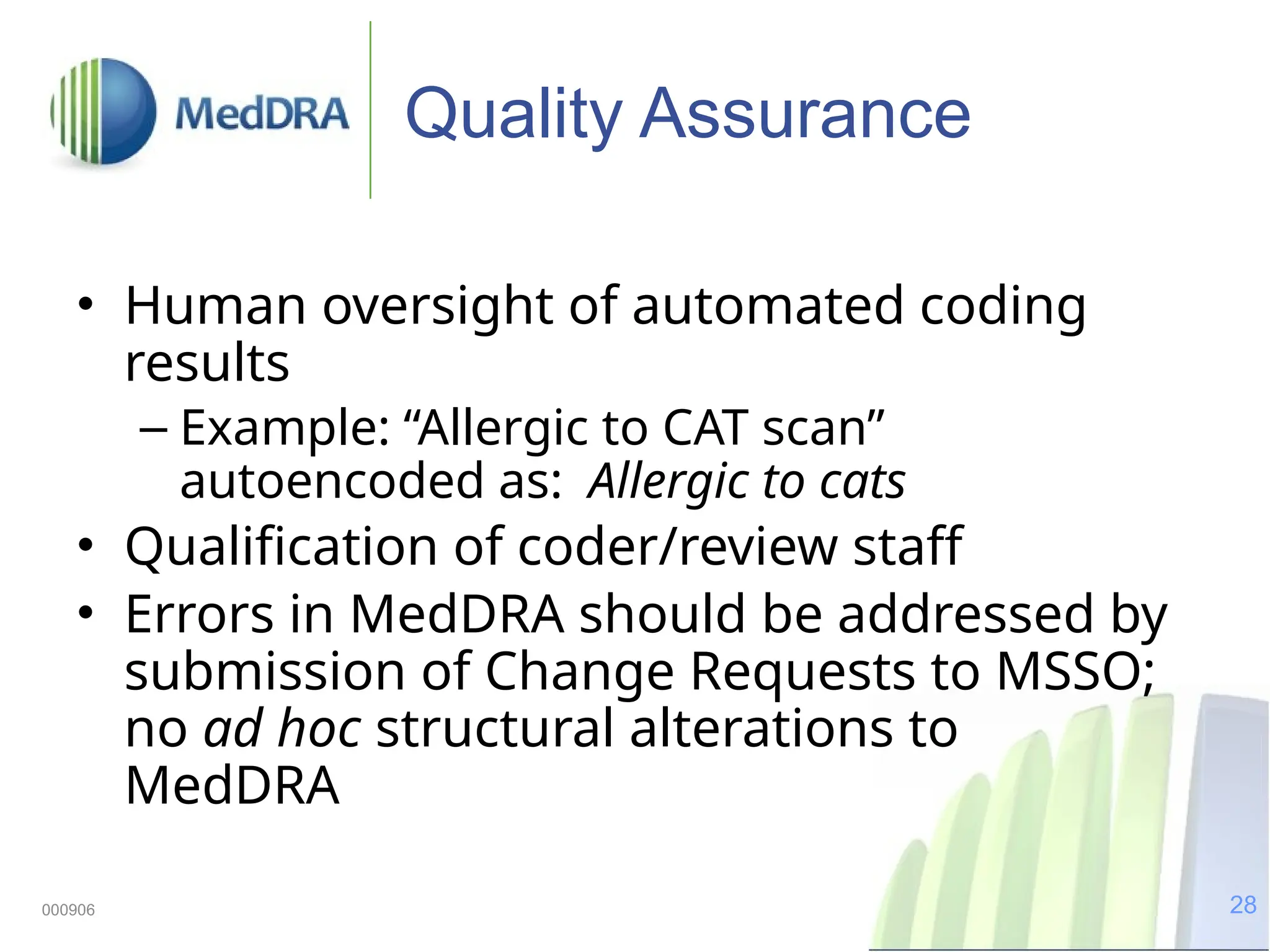
Quality Assurance
• Human oversight of automated coding
results
– Example: “Allergic to CAT scan”
autoencoded as: Allergic to cats
• Qualification of coder/review staff
• Errors in MedDRA should be addressed by
submission of Change Requests to MSSO;
no ad hoc structural alterations to
MedDRA
Unqualified Test Name
Term List
• MSSO developed and maintains list of
unqualified test name terms
– These terms (e.g., PT Blood glucose) should
never be reported as AEs
– Intended for use in E2B test name field only
• List can be used to check data quality
– Identifies inappropriate terms in data fields
other than test name data element
– Intended as recommendation only
000906
Unqualified Test Name
Term List (cont)
• Link on Support Documentation page on
MedDRA website
• Spreadsheet of LLT/PT names and codes from
SOC Investigations
• Explanatory document
– Purpose, uses, development of list
• Also available in Japanese on JMO website
000906
31
Important Coding Errors
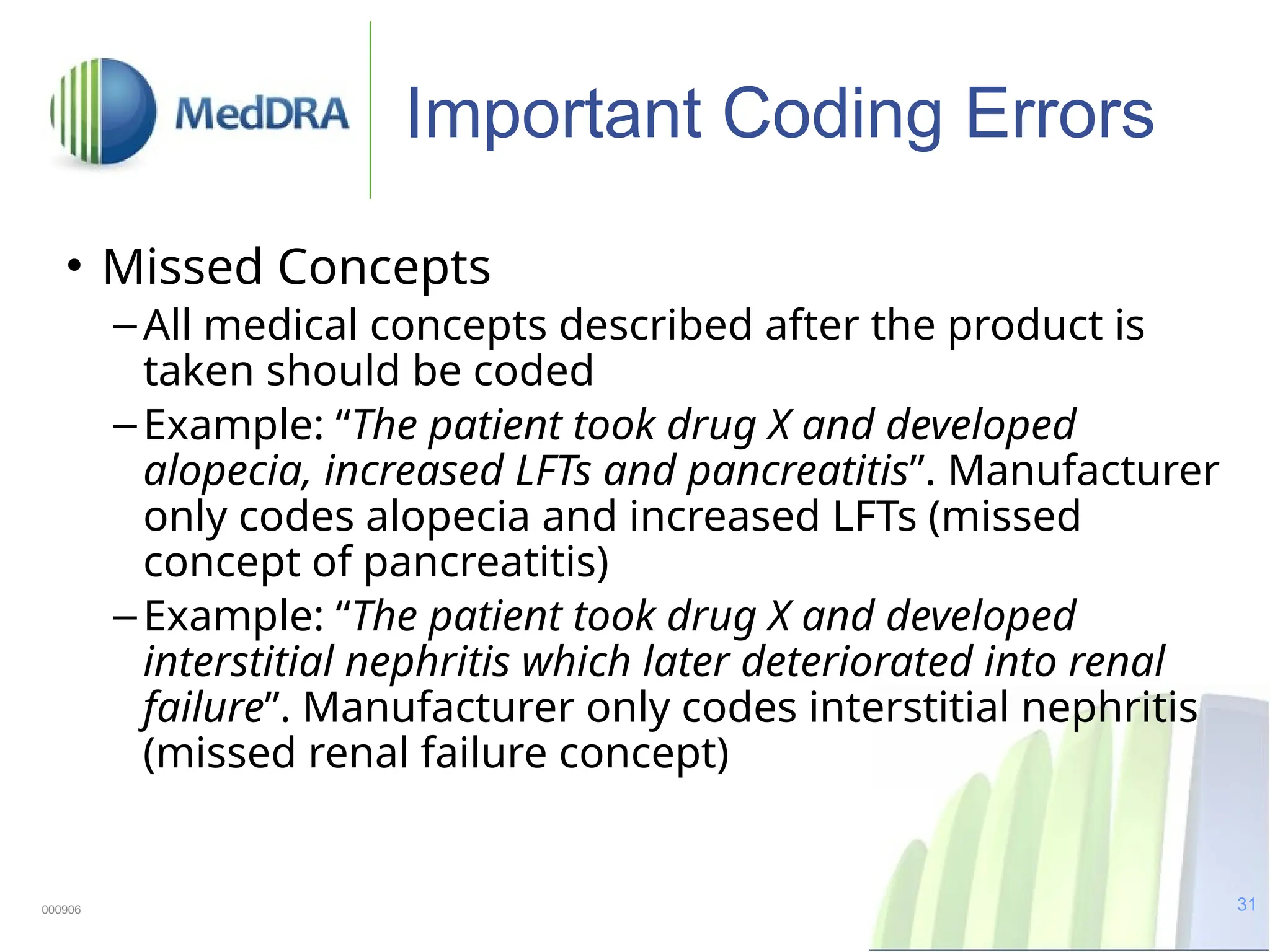
• Missed Concepts
–All medical concepts described after the product is
taken should be coded
–Example: “The patient took drug X and developed
alopecia, increased LFTs and pancreatitis”. Manufacturer
only codes alopecia and increased LFTs (missed
concept of pancreatitis)
–Example: “The patient took drug X and developed
interstitial nephritis which later deteriorated into renal
failure”. Manufacturer only codes interstitial nephritis
(missed renal failure concept)
000906
32
Important Coding Errors
(cont)
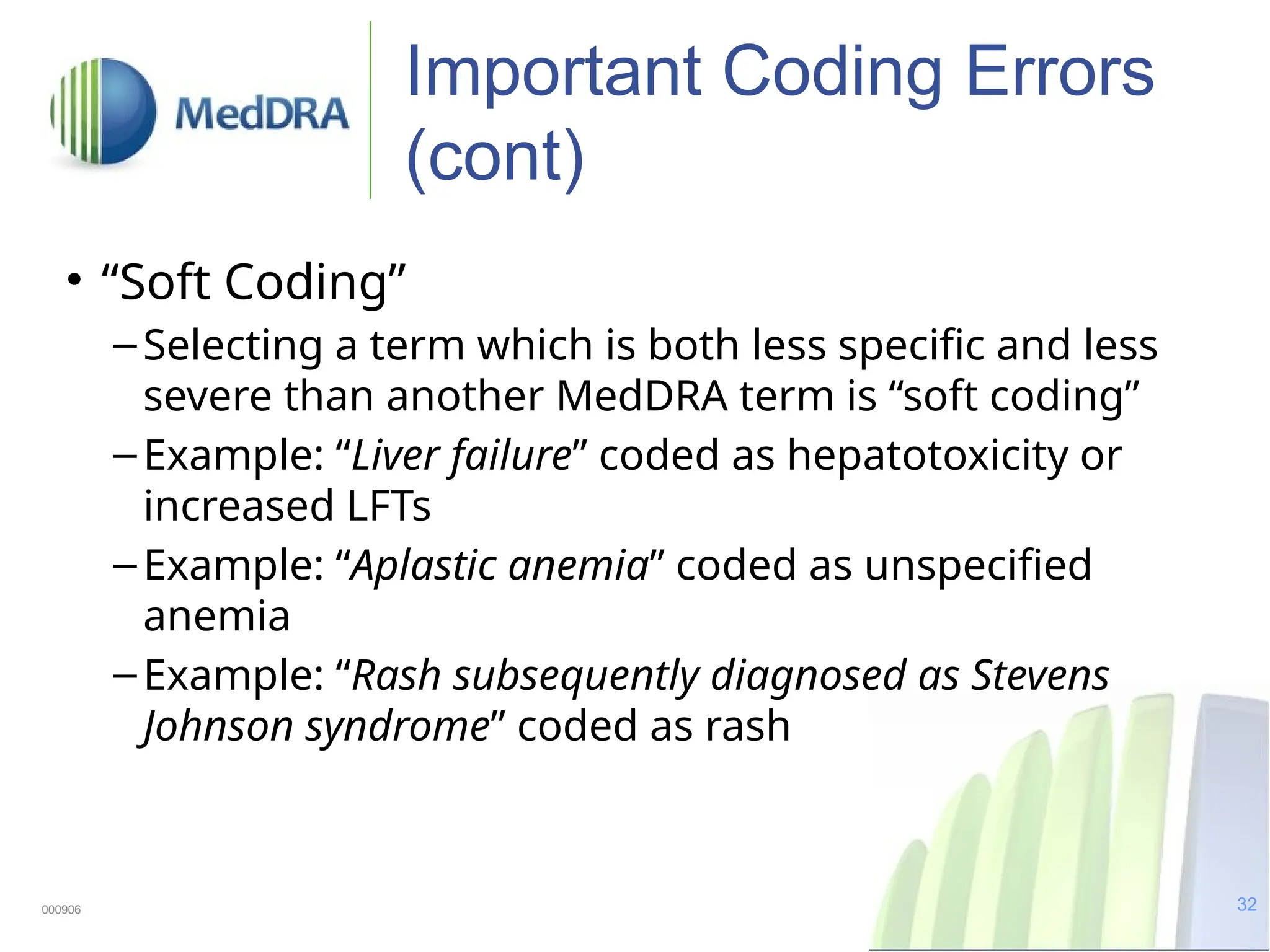
• “Soft Coding”
–Selecting a term which is both less specific and less
severe than another MedDRA term is “soft coding”
–Example: “Liver failure” coded as hepatotoxicity or
increased LFTs
–Example: “Aplastic anemia” coded as unspecified
anemia
–Example: “Rash subsequently diagnosed as Stevens
Johnson syndrome” coded as rash
000906
33
000906
Miscellaneous Verbatims:
Coding Challenges
– Went to hell
– Recurrent fatal stroke
– Hears New Age music when the furnace turns on
– LK RTCTL UNSP XTRNDL
– Charcoal-like, gritty granules in his underwear
– Can’t control patient during menses
– His nodule is sticking out
– Normally normal after drinking coffee
– Died of cancer of the placebo
– Superior members fornication
– Barely visible posterior
– Seeing people in room, seeing chickens at window
– Seeing stars and chicken farting
– Patient recently began new job where he works around chicken wings and
barbecue sauce
34
000906
Company-Specific
Conventions
• Insert slides as required to cover company’s
specific data collection and recording
conventions
• Could include instructions on how to complete
data fields for adverse events, medical history
etc. on paper or electronic CRFs
• Could include general principles of how to
record text-based information as well as specific
instructions for particular therapeutic areas
35
000906
Benefits of Quality Data
• Accurate and timely information on issues that
affect conduct of clinical trial and affect patient
safety
• Improved communication among sponsors,
investigators, and regulatory agencies about
medicinal products
– Aids in safety signal detection and evaluation
– Ensures accuracy of information about the
product including investigators’ brochures and
prescribing information
– Benefits medical professionals
– Benefits patients
36
000906
Benefits of Quality Data
(cont)
• Fewer queries for investigator and
sponsor
37
000906
Additional Data Quality
Resource
• Working group of ICH Management
Committee developed and maintains the
MedDRA Points to Consider (PtC)
Companion Document
• PtC Companion Document has a section
on Data Quality
• Available on Support Documentation page
of MedDRA website
38
000906
Quality Data
IN OUT
39
MSSO Contacts
• Website
– www.meddra.org
• Email
– mssohelp@meddra.org
• Frequently Asked Questions
– www.meddra.org/faq
• MedDRA Browsers
– https://www.meddra.org/meddra-desktop-browsers
(Desktop Browser)
– https://tools.meddra.org/wbb/ (Web-Based Browser)
– https://mmb.meddra.org (Mobile Browser)
000906
40
MSSO Contacts (cont)
• Change Request Submission
– https://www.meddra.org/how-to-use/change-r
equests
• Training Schedule
– https://www.meddra.org/training/schedule
• MedDRA Support Documentation
– https://www.meddra.org/how-to-use/support-docu
mentation
000906

clincal data management of the clinmical

  • 1.
    Instructor’s Name Webinar Date DataQuality, Coding, and MedDRA 1
  • 2.
    MedDRA was developedunder the auspices of the International Council for Harmonisation of Technical Requirements for Pharmaceuticals for Human Use (ICH). The activities of the MedDRA Maintenance and Support Services Organization (MSSO) are overseen by an ICH MedDRA Management Committee, which is composed of the ICH parties, the Medicines and Healthcare products Regulatory Agency (MHRA) of the UK, Health Canada, and the WHO (as Observer). 2 000906
  • 3.
  • 4.
    4 000906 Overview To provide anunderstanding of: • Importance of good quality data • How clinical data are coded • MedDRA background • Coding examples • Benefits of good quality data
  • 5.
    5 000906 Data Quality inClinical Development • Highly regulated environment with strong emphasis on safety surveillance and data quality • Applies to clinical trials and post- marketing arena • Increasing harmonization of safety reporting regulations globally
  • 6.
    6 000906 What is Meantby Good Quality Data? • Complete • Accurate • Diagnosis supported by appropriate investigations • Causality assessment for adverse events
  • 7.
    7 000906 Quality of Input= Quality of Output IN OUT
  • 8.
    8 000906 Coding of ClinicalTrial Data • Most data entered on Case Report Forms are “coded” in some form • Facilitates storage, retrieval, analysis, and presentation of data • Some coding is performed by investigators at point of data entry – For example, numeric codes for severity of adverse event: 1= mild, 2= moderate, etc. • Other coding of text data is performed by the sponsor company after data collection • Accuracy of initial coding determines accuracy of analysis
  • 9.
    9 000906 Quality of SeriousAdverse Event (SAE) Reporting in Clinical Trials • Study finds frequent errors in SAE reports to academic trial sponsors – Event verbatim inconsistent with report: 15% – Patient outcome not reported: 12.1% – Investigational product not identified: 11.2% – No causality assessment reported: 9.3% – Event seriousness unknown: 3.6% • Study authors: Knowledge of MedDRA basics and coding practices key to data accuracy and completeness Crepin S, Villeneuve C, Merle L. Quality of serious adverse events reporting to academic sponsors of clinical trials: far from optimal. Poster at 18th Annual Meeting of French Society of Pharmacology and Therapeutics; 2014 April 22-24, Poitiers, France.
  • 10.
  • 11.
    11 000906 What is MedDRA? Med= Medical D = Dictionary for R = Regulatory A = Activities
  • 12.
    12 000906 MedDRA Definition MedDRA isa clinically-validated international medical terminology used by regulatory authorities and the regulated biopharmaceutical industry. The terminology is used through the entire regulatory process, from pre-marketing to post-marketing, and for data entry, retrieval, evaluation, and presentation.
  • 13.
    13 000906 Where MedDRA isUsed Individual Case Safety Reports and Safety Summaries Clinical Study Reports Investigators’ Brochures Core Company Safety Information Marketing Applications Publications Prescribing Information Advertising Regulatory Authority and Industry Databases
  • 14.
    14 000906 Key Features ofMedDRA • Standardized terminology • International scope –available in a constantly growing number of languages • Managed by Maintenance and Support Services Organization (MSSO) and updated bi-annually with input from users
  • 15.
    15 000906 Key Features ofMedDRA (cont) • Structure facilitates data entry, analysis, reporting, and electronic communication • Large terminology which allows greater specificity • Contains Preferred Terms, each representing a unique medical concept • Used to classify a wide range of information associated with the use of biopharmaceuticals and other medical products (e.g., medical devices and vaccines).
  • 16.
    16 000906 Scope of MedDRA Medicalconditions Indications Investigations (tests, results) Medical and surgical procedures Medical, social, family history Medication errors Product quality issues Device-related issues Product use issues Pharmacogenetic terms Toxicologic issues Standardized queries Not a drug dictionary Not an equipment, device, diagnostic product dictionary Clinical trial study design terms Patient demographic terms Frequency qualifiers Numerical values for results Severity descriptors IN OUT
  • 17.
    17 MedDRA Maintenance • Userscan send change requests (CRs) to MSSO for consideration – Organizations allowed 100 CRs/month – Rigorous medical review by MSSO physicians – For simple changes (PT and LLT levels), response within 7-10 working days – Complex changes (above PT level) posted for comments mid-year • Two MedDRA updates/year – 1 March X.0 (Complex release) – 1 September X.1 (Simple release) 000906
  • 18.
    18 000906 Making the Mostof MedDRA • To take advantage of MedDRA’s richness and specificity, the source data should be – Clear – Concise – Complete – Accurate • General principles apply to all clinical data
  • 19.
    19 000906 Problems With Coding Data •Appropriate coding requires clear initial data • What is clear to the investigator at the point of data entry may be unclear to the sponsor at the point of data coding • Sponsor must only code reported verbatim term; not permitted to interpret or draw information from other sources • Example: Ambiguous information – Congestion (nasal, liver, sinus, pulmonary?) – Cramp (muscle, menstrual, abdominal?) – Pain (pain where?)
  • 20.
    20 000906 Problems With Coding Data(cont) • Example: Ambiguous abbreviations – MI (myocardial infarction or mitral incompetence?) – GU pain (gastric ulcer pain or genito-urinary pain?) – Decreased BS (breath sounds, bowel sounds or blood sugar?) • Exercise caution with abbreviations that could be misinterpreted • ECG, COPD, HIV are examples of standard abbreviations
  • 21.
    21 000906 Problems With Coding Data(cont) • Example: Vague information – Patient felt “fuzzy”, “weird”, “experienced every adverse event” Try to use accepted medical terminology • Example: Non-specific information – “Left wrist edema” (coded as Peripheral edema) – More specific - “Injection site edema left wrist” (coded as Injection site edema)
  • 22.
    22 000906 Problems With Coding Data(cont) • Death, hospitalization, and disability are outcomes and are not usually considered to be adverse events • Provide details of the underlying event, if known • Examples: – “Death due to myocardial infarction” (Coded as Myocardial infarction with death captured as the outcome) – “Hospitalization due to congestive heart failure” (Coded as Congestive heart failure with hospitalization captured as the outcome)
  • 23.
    23 000906 Problems With Coding Data(cont) • Example: Ambiguous laboratory data – “Glucose of 40” – (Source of specimen - blood, urine, CSF? What units?) – Would have to code as Glucose abnormal if additional clarification is not obtained • Example: Conflicting laboratory data – “Hyperkalemia with serum potassium of 1.6 mEq/L” – Would have to code as Serum potassium abnormal If using numeric values, provide units and reference range. Be specific about specimen source and diagnostic result/clinical diagnosis.
  • 24.
    24 000906 Problems With Coding Data(cont) • Example: Combination terms – Diarrhea, nausea, and vomiting Try to avoid combination terms - these will have to be split into three individual terms: – Diarrhea – Nausea – Vomiting
  • 25.
    25 000906 Reporting a Specific Diagnosis •Where possible, report the most important medical event or specific diagnosis rather than individual signs and symptoms • Can provide provisional diagnosis e.g. “possible”, “presumed”, “rule out” • Accuracy is important in preventing dilution of safety signals or generating false signals SIGNS and SYMPTOMS DIAGNOSIS Chest pain, dyspnea, diaphoresis, ECG changes Myocardial infarction
  • 26.
    26 000906 Safety Signals • Accuracyin diagnosis is important for detection and evaluation of safety signals • Events of importance in drug safety surveillance include: – QTc prolongation – Hepatotoxicity – Stevens Johnson syndrome – Convulsions – Rhabdomyolysis
  • 27.
    27 000906 Generating Quality Data •Clear • Concise • Complete • Accurate • Be specific if necessary - MedDRA can handle multiple specific medical concepts: – Headache - multiple types, including cluster, sinus, migraine, lumbar puncture headache – Organisms - down to species level e.g. Staphylococcus aureus
  • 28.
    28 000906 Quality Assurance • Humanoversight of automated coding results – Example: “Allergic to CAT scan” autoencoded as: Allergic to cats • Qualification of coder/review staff • Errors in MedDRA should be addressed by submission of Change Requests to MSSO; no ad hoc structural alterations to MedDRA
  • 29.
    Unqualified Test Name TermList • MSSO developed and maintains list of unqualified test name terms – These terms (e.g., PT Blood glucose) should never be reported as AEs – Intended for use in E2B test name field only • List can be used to check data quality – Identifies inappropriate terms in data fields other than test name data element – Intended as recommendation only 000906
  • 30.
    Unqualified Test Name TermList (cont) • Link on Support Documentation page on MedDRA website • Spreadsheet of LLT/PT names and codes from SOC Investigations • Explanatory document – Purpose, uses, development of list • Also available in Japanese on JMO website 000906
  • 31.
    31 Important Coding Errors •Missed Concepts –All medical concepts described after the product is taken should be coded –Example: “The patient took drug X and developed alopecia, increased LFTs and pancreatitis”. Manufacturer only codes alopecia and increased LFTs (missed concept of pancreatitis) –Example: “The patient took drug X and developed interstitial nephritis which later deteriorated into renal failure”. Manufacturer only codes interstitial nephritis (missed renal failure concept) 000906
  • 32.
    32 Important Coding Errors (cont) •“Soft Coding” –Selecting a term which is both less specific and less severe than another MedDRA term is “soft coding” –Example: “Liver failure” coded as hepatotoxicity or increased LFTs –Example: “Aplastic anemia” coded as unspecified anemia –Example: “Rash subsequently diagnosed as Stevens Johnson syndrome” coded as rash 000906
  • 33.
    33 000906 Miscellaneous Verbatims: Coding Challenges –Went to hell – Recurrent fatal stroke – Hears New Age music when the furnace turns on – LK RTCTL UNSP XTRNDL – Charcoal-like, gritty granules in his underwear – Can’t control patient during menses – His nodule is sticking out – Normally normal after drinking coffee – Died of cancer of the placebo – Superior members fornication – Barely visible posterior – Seeing people in room, seeing chickens at window – Seeing stars and chicken farting – Patient recently began new job where he works around chicken wings and barbecue sauce
  • 34.
    34 000906 Company-Specific Conventions • Insert slidesas required to cover company’s specific data collection and recording conventions • Could include instructions on how to complete data fields for adverse events, medical history etc. on paper or electronic CRFs • Could include general principles of how to record text-based information as well as specific instructions for particular therapeutic areas
  • 35.
    35 000906 Benefits of QualityData • Accurate and timely information on issues that affect conduct of clinical trial and affect patient safety • Improved communication among sponsors, investigators, and regulatory agencies about medicinal products – Aids in safety signal detection and evaluation – Ensures accuracy of information about the product including investigators’ brochures and prescribing information – Benefits medical professionals – Benefits patients
  • 36.
    36 000906 Benefits of QualityData (cont) • Fewer queries for investigator and sponsor
  • 37.
    37 000906 Additional Data Quality Resource •Working group of ICH Management Committee developed and maintains the MedDRA Points to Consider (PtC) Companion Document • PtC Companion Document has a section on Data Quality • Available on Support Documentation page of MedDRA website
  • 38.
  • 39.
    39 MSSO Contacts • Website –www.meddra.org • Email – mssohelp@meddra.org • Frequently Asked Questions – www.meddra.org/faq • MedDRA Browsers – https://www.meddra.org/meddra-desktop-browsers (Desktop Browser) – https://tools.meddra.org/wbb/ (Web-Based Browser) – https://mmb.meddra.org (Mobile Browser) 000906
  • 40.
    40 MSSO Contacts (cont) •Change Request Submission – https://www.meddra.org/how-to-use/change-r equests • Training Schedule – https://www.meddra.org/training/schedule • MedDRA Support Documentation – https://www.meddra.org/how-to-use/support-docu mentation 000906