Event : THE CLEAN BIN PROJECT DOCUMENTARY


                     Slides will be posted on our blog:
                     theconservationists@wordpress.com
25
You don’t have to be David Suzuki to make a
                difference!

        Anyone can make changes no
          matter how big or small!
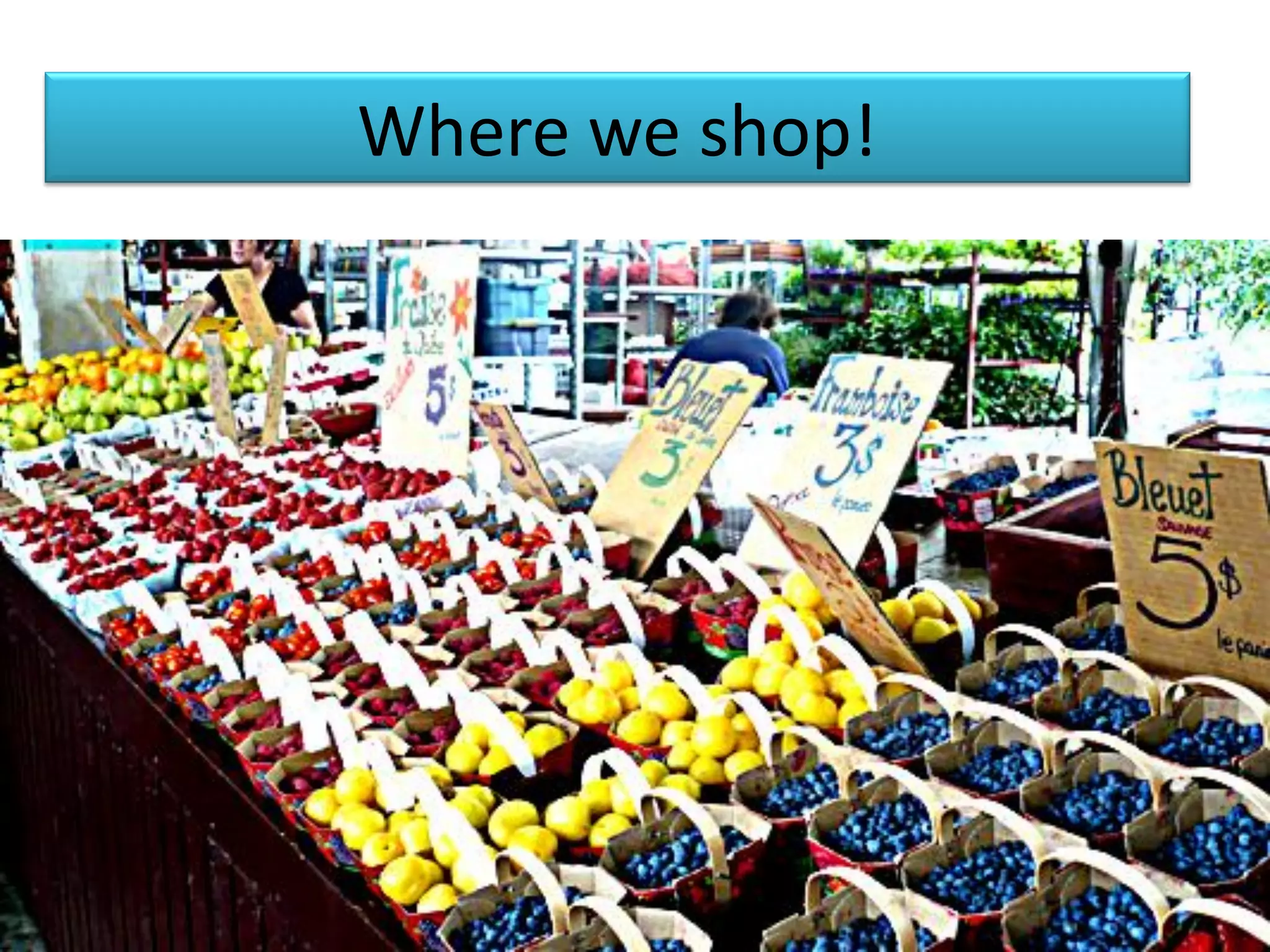
Where we shop!
Places to shop:

• Farmers markets are a great way to
  connect with the people who make your
  food. There are four major ones in
  Montreal: www.marchespublic-mlt.com
• Student cooperatives, like:
   – Le frigo Vert, 2130 Rue Mackay
   – Local food shop, in SSMU
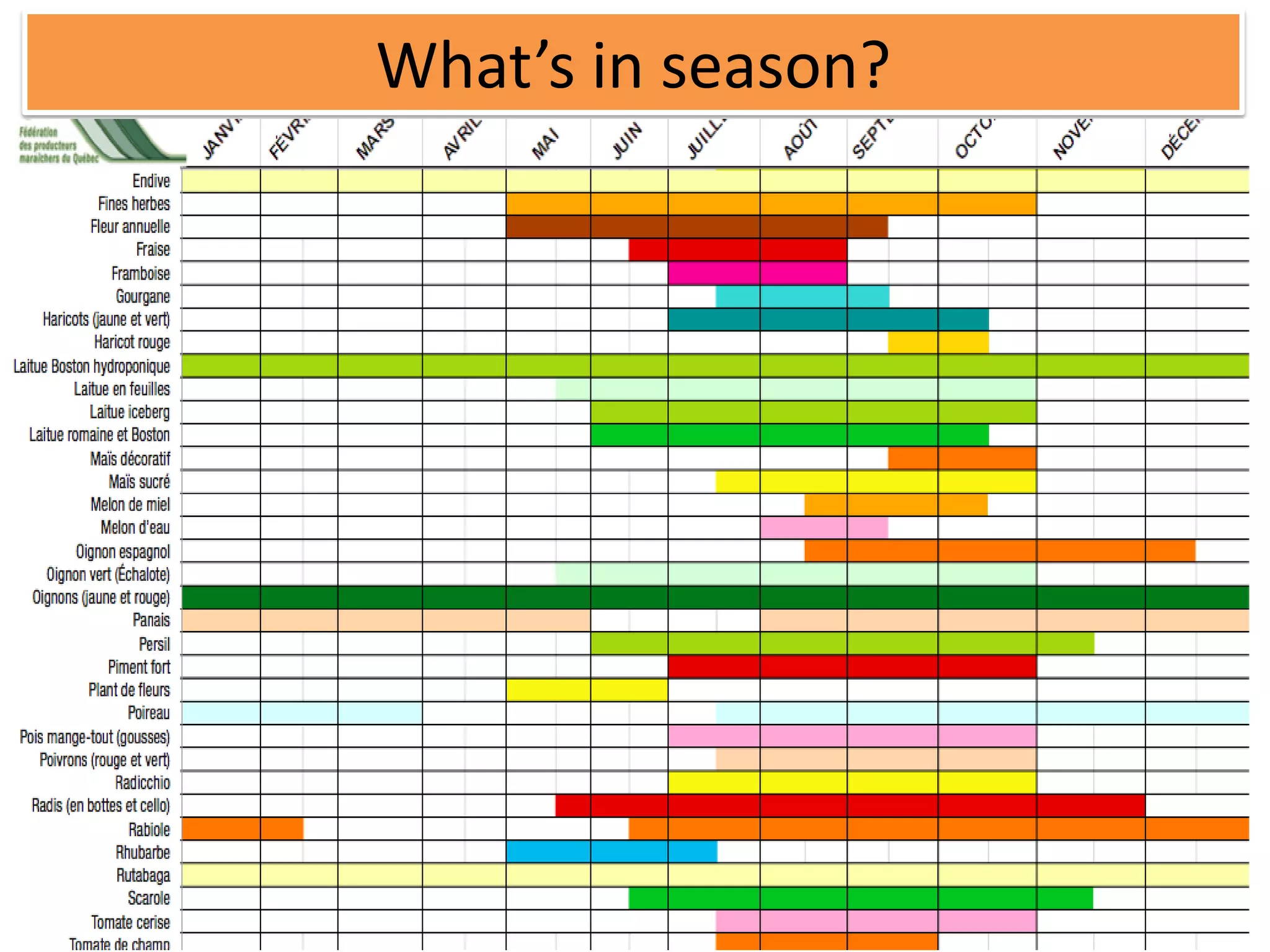
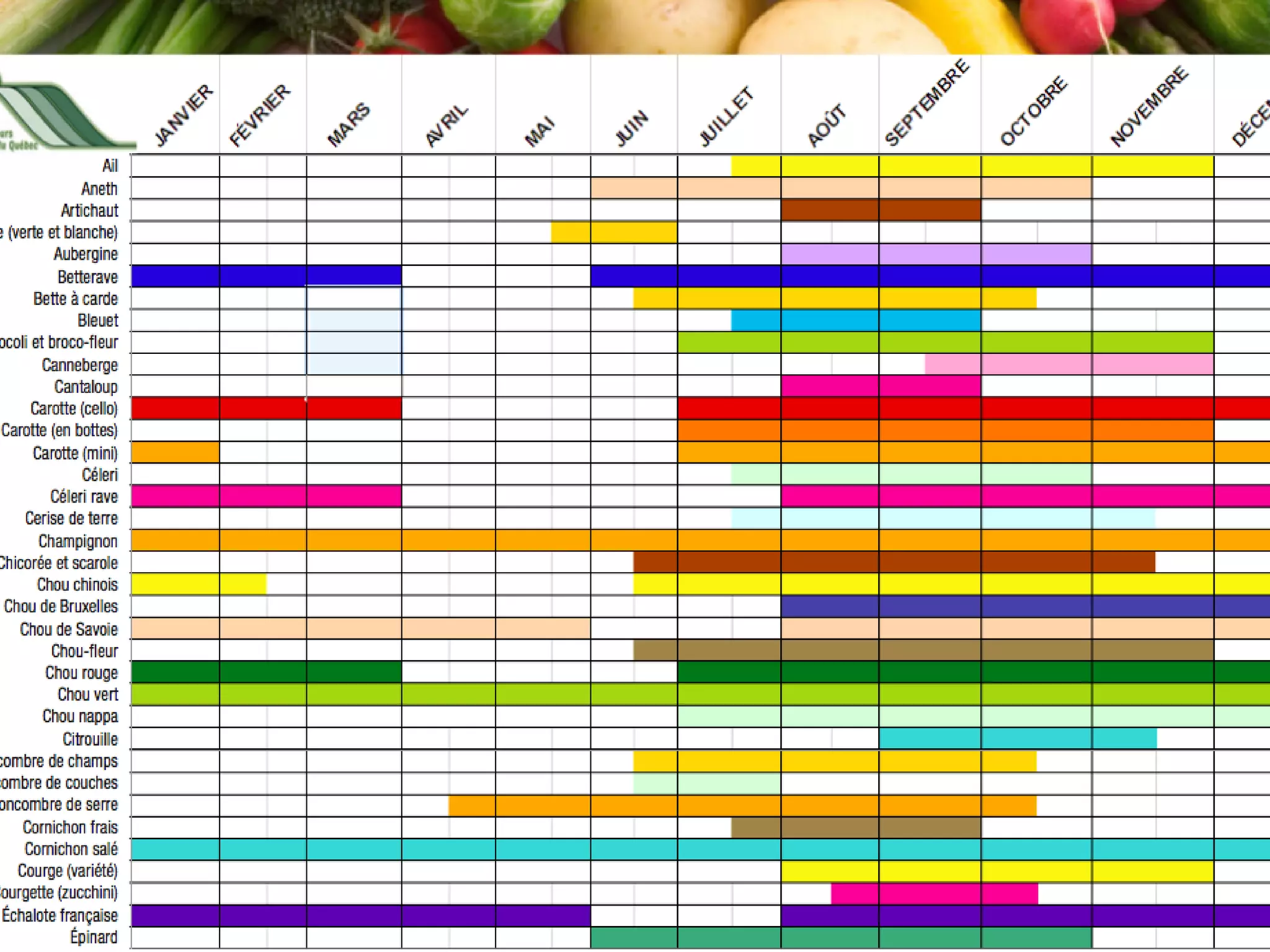
What’s in season?
DANGER
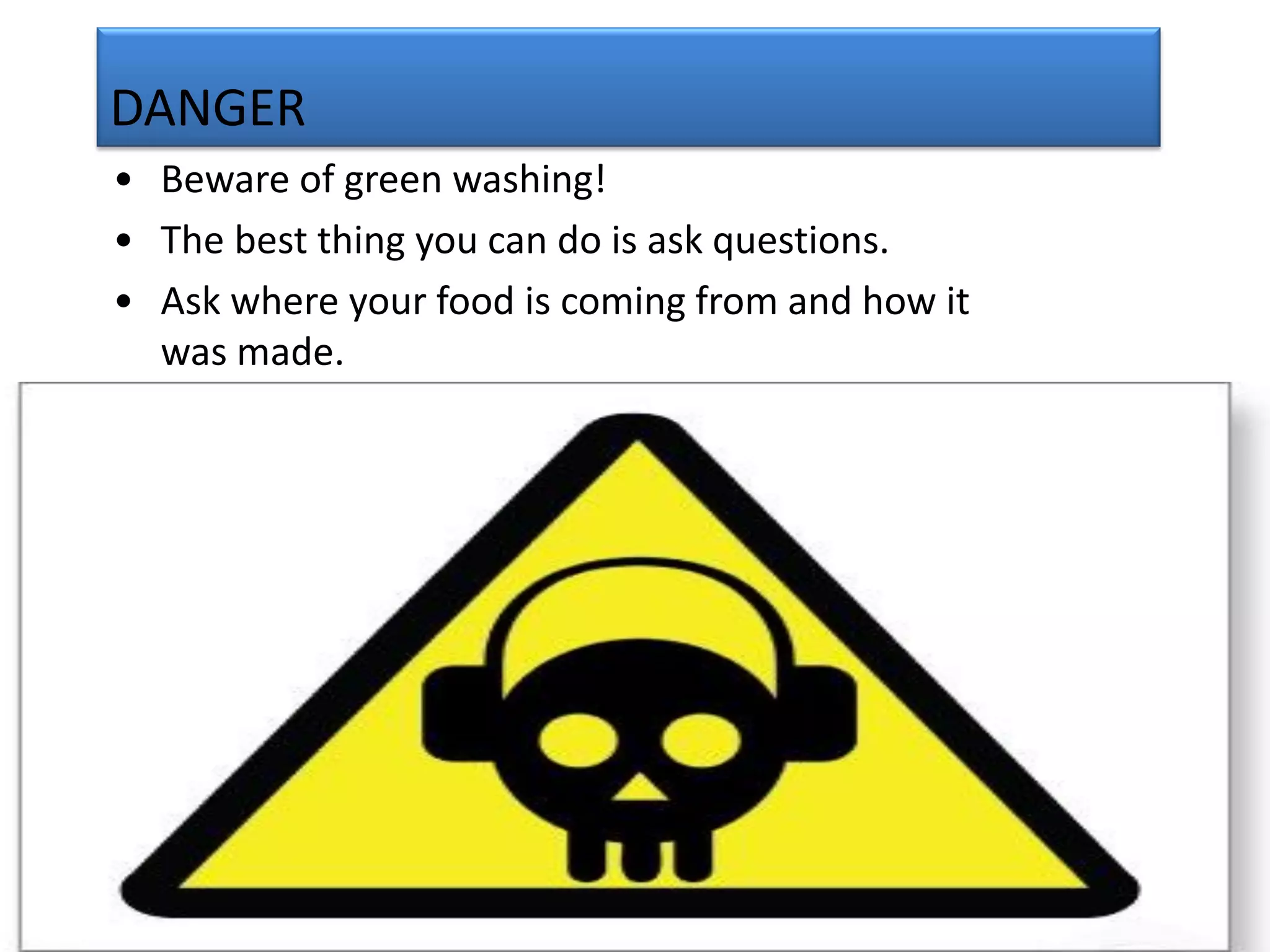
• Beware of green washing!
• The best thing you can do is ask questions.
• Ask where your food is coming from and how it
  was made.
What is the most important thing I can
do for the environment?
A. Get involved!

The most profound effect you can have on
  changing your habits is getting involved in
  your community. From volunteering at your
  local eco-quartier to collecting one-sided
  paper, there are a plethora of things to get
  involved in.
• There are many projects on campus that are
  dedicated to sustainability, like:
   – Edible Campus
   – Idea slam (vision 2020)
   – Eco café
B. Share your ideas!

• Your voice wants to be heard!
   – Check out
   – http://mcgillvision2020.ideascale.c
     om/
C. Waste


Reduce, Re-use, Recycle!
D. Reduce!
             On-campus:


             • Alkaline batteries: red boxes located in most
               building lobbies
             • How to compost:
               http://gorilla.mcgill.ca/howtocompost.php
             • Used clothes: ChinaCare bins (in building
               lobbies before Feb.)
             • List of hazardous materials accepted by McGill:
               http://www.mcgill.ca/hwm/recycling
             • Avoid disposable food containers: borrow
               plates from the plate club (SSMU cafe, Mon-
               Fri), bring your own container / thermos
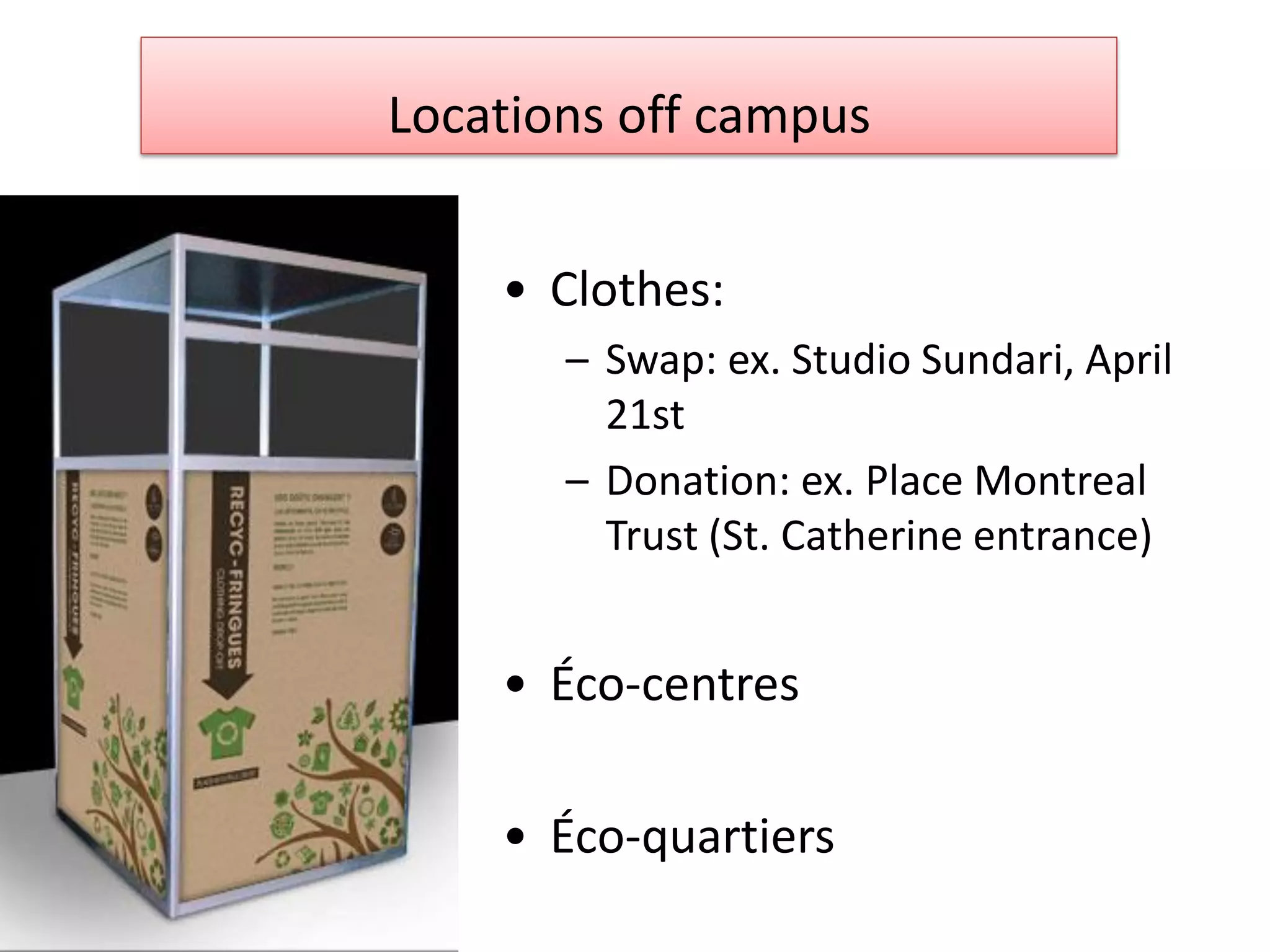
Locations off campus


    • Clothes:
       – Swap: ex. Studio Sundari, April
         21st
       – Donation: ex. Place Montreal
         Trust (St. Catherine entrance)


    • Éco-centres

    • Éco-quartiers
Éco-quartiers

• Provides:
  – Information on local waste-management
    laws
  – Green products such as rain barrels /
    composters / clear bags for recycling
  – Consultation services
  Closest location:
            http://www.eco-quartierpm.org
            1240 Saint-Marc Street
Éco-centres

• Accepts:
  – Appliances, tires, construction
    residues, household hazardous
    waste, ink cartridges,
    housewares etc.
  – Bring proof of residence +
    photo ID
  – Closest locations:
           1868, rue Cabot
           1100, rue des Carrières
So how are you going to get involved?
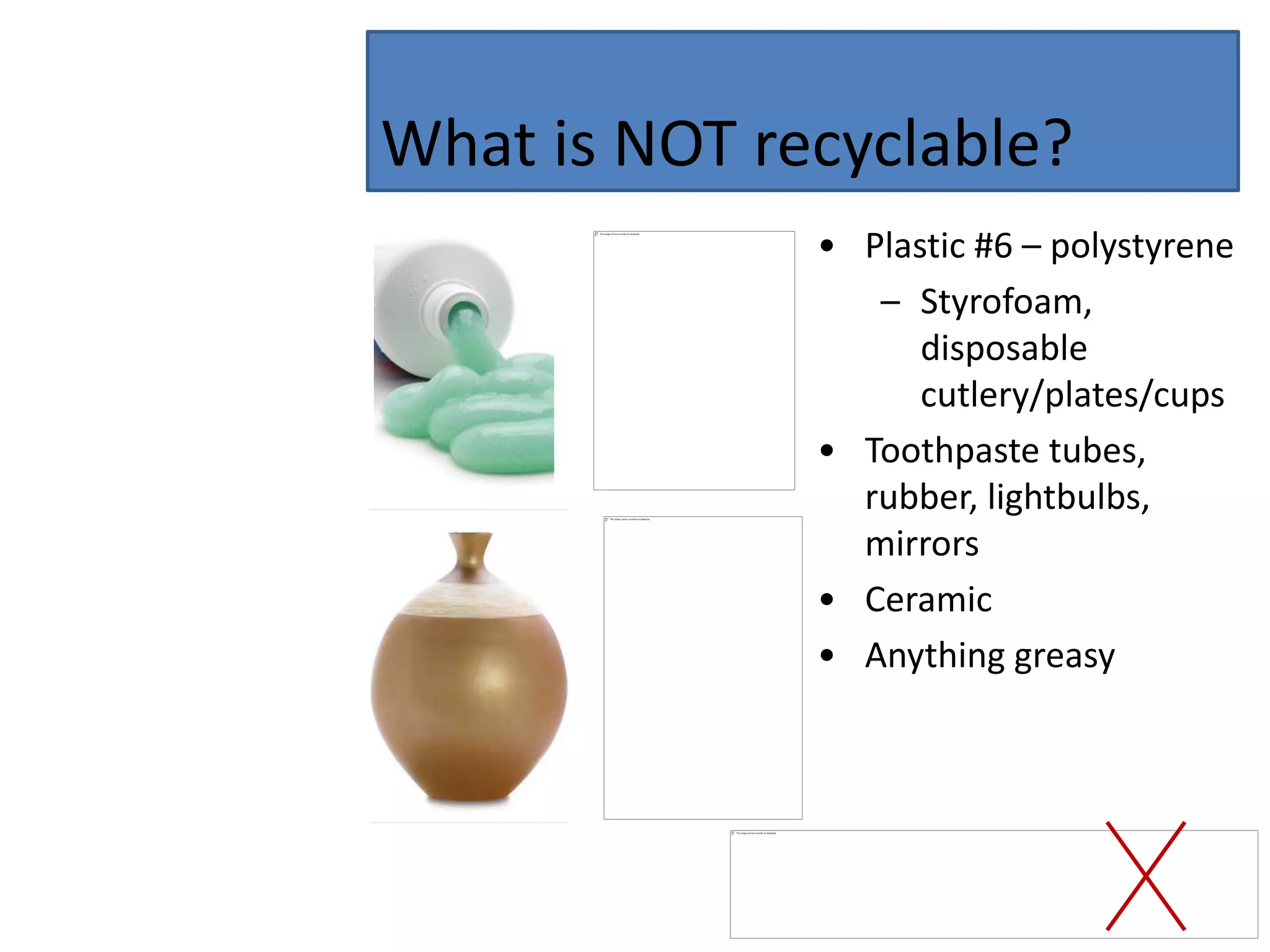
What is NOT recyclable?
              • Plastic #6 – polystyrene
                 – Styrofoam,
                    disposable
                    cutlery/plates/cups
              • Toothpaste tubes,
                rubber, lightbulbs,
                mirrors
              • Ceramic
              • Anything greasy
Got a green thumb?

• There are plenty of places in Montreal to help you fulfill
  your addiction of urban agriculture:
   – eng.agiculturemontreal.info/about-us/directory
   – At Mcgill: Edible Campus
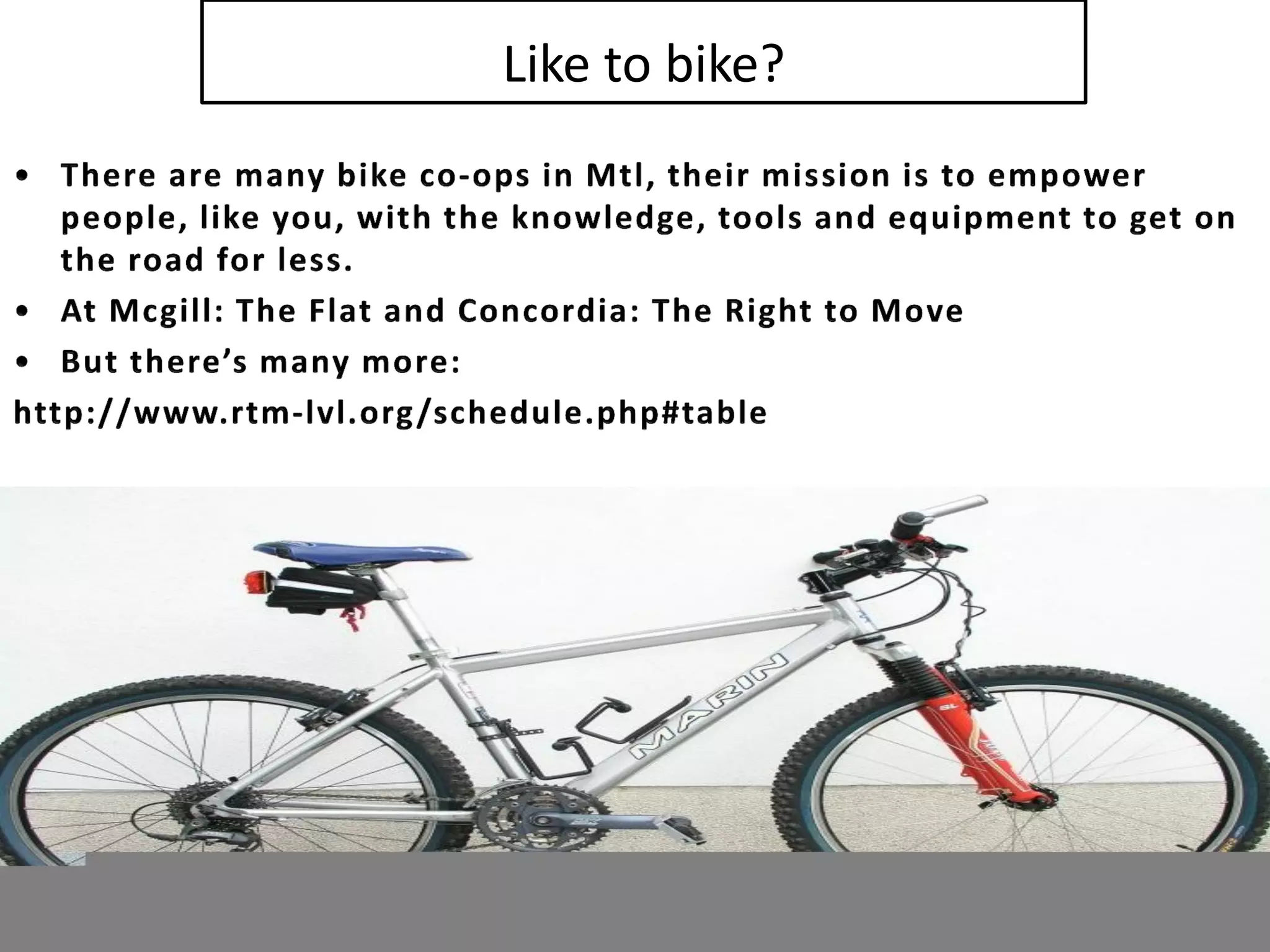
Like to bike?

Clean Bin Project

  • 1.
    Event : THECLEAN BIN PROJECT DOCUMENTARY Slides will be posted on our blog: theconservationists@wordpress.com
  • 3.
    25 You don’t haveto be David Suzuki to make a difference! Anyone can make changes no matter how big or small!
  • 4.
  • 5.
    Places to shop: •Farmers markets are a great way to connect with the people who make your food. There are four major ones in Montreal: www.marchespublic-mlt.com • Student cooperatives, like: – Le frigo Vert, 2130 Rue Mackay – Local food shop, in SSMU
  • 6.
  • 8.
    DANGER • Beware ofgreen washing! • The best thing you can do is ask questions. • Ask where your food is coming from and how it was made.
  • 9.
    What is themost important thing I can do for the environment?
  • 10.
    A. Get involved! Themost profound effect you can have on changing your habits is getting involved in your community. From volunteering at your local eco-quartier to collecting one-sided paper, there are a plethora of things to get involved in. • There are many projects on campus that are dedicated to sustainability, like: – Edible Campus – Idea slam (vision 2020) – Eco café
  • 11.
    B. Share yourideas! • Your voice wants to be heard! – Check out – http://mcgillvision2020.ideascale.c om/
  • 12.
  • 13.
    D. Reduce! On-campus: • Alkaline batteries: red boxes located in most building lobbies • How to compost: http://gorilla.mcgill.ca/howtocompost.php • Used clothes: ChinaCare bins (in building lobbies before Feb.) • List of hazardous materials accepted by McGill: http://www.mcgill.ca/hwm/recycling • Avoid disposable food containers: borrow plates from the plate club (SSMU cafe, Mon- Fri), bring your own container / thermos
  • 14.
    Locations off campus • Clothes: – Swap: ex. Studio Sundari, April 21st – Donation: ex. Place Montreal Trust (St. Catherine entrance) • Éco-centres • Éco-quartiers
  • 15.
    Éco-quartiers • Provides: – Information on local waste-management laws – Green products such as rain barrels / composters / clear bags for recycling – Consultation services Closest location: http://www.eco-quartierpm.org 1240 Saint-Marc Street
  • 16.
    Éco-centres • Accepts: – Appliances, tires, construction residues, household hazardous waste, ink cartridges, housewares etc. – Bring proof of residence + photo ID – Closest locations: 1868, rue Cabot 1100, rue des Carrières
  • 17.
    So how areyou going to get involved?
  • 19.
    What is NOTrecyclable? • Plastic #6 – polystyrene – Styrofoam, disposable cutlery/plates/cups • Toothpaste tubes, rubber, lightbulbs, mirrors • Ceramic • Anything greasy
  • 20.
    Got a greenthumb? • There are plenty of places in Montreal to help you fulfill your addiction of urban agriculture: – eng.agiculturemontreal.info/about-us/directory – At Mcgill: Edible Campus
  • 21.