Classification of helminthes:
intestinal nematodes 1
Dr. Omokhua G.I
University of Benin
23th July 2025
Outline
• Classes of helminthes
• Mode of transmission
• Laboratory diagnosis
• Treatment
• Prevention and control
Classification of Helminths
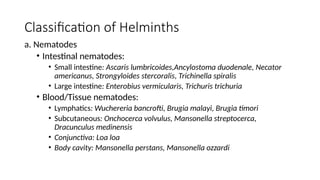
a. Nematodes
• Intestinal nematodes:
• Small intestine: Ascaris lumbricoides,Ancylostoma duodenale, Necator
americanus, Strongyloides stercoralis, Trichinella spiralis
• Large intestine: Enterobius vermicularis, Trichuris trichuria
• Blood/Tissue nematodes:
• Lymphatics: Wuchereria bancrofti, Brugia malayi, Brugia timori
• Subcutaneous: Onchocerca volvulus, Mansonella streptocerca,
Dracunculus medinensis
• Conjunctiva: Loa loa
• Body cavity: Mansonella perstans, Mansonella ozzardi
Classification of Helminths
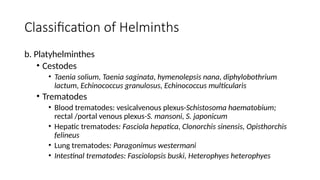
b. Platyhelminthes
• Cestodes
• Taenia solium, Taenia saginata, hymenolepsis nana, diphylobothrium
lactum, Echinococcus granulosus, Echinococcus multicularis
• Trematodes
• Blood trematodes: vesicalvenous plexus-Schistosoma haematobium;
rectal /portal venous plexus-S. mansoni, S. japonicum
• Hepatic trematodes: Fasciola hepatica, Clonorchis sinensis, Opisthorchis
felineus
• Lung trematodes: Paragonimus westermani
• Intestinal trematodes: Fasciolopsis buski, Heterophyes heterophyes
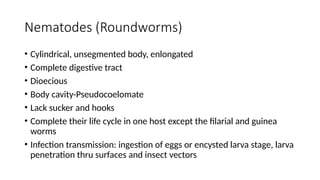
Nematodes (Roundworms)
• Cylindrical, unsegmented body, enlongated
• Complete digestive tract
• Dioecious
• Body cavity-Pseudocoelomate
• Lack sucker and hooks
• Complete their life cycle in one host except the filarial and guinea
worms
• Infection transmission: ingestion of eggs or encysted larva stage, larva
penetration thru surfaces and insect vectors
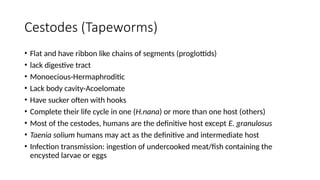
Cestodes (Tapeworms)
• Flat and have ribbon like chains of segments (proglottids)
• lack digestive tract
• Monoecious-Hermaphroditic
• Lack body cavity-Acoelomate
• Have sucker often with hooks
• Complete their life cycle in one (H.nana) or more than one host (others)
• Most of the cestodes, humans are the definitive host except E. granulosus
• Taenia solium humans may act as the definitive and intermediate host
• Infection transmission: ingestion of undercooked meat/fish containing the
encysted larvae or eggs
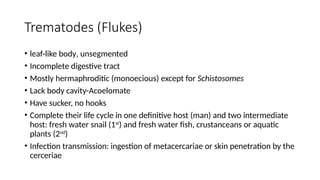
Trematodes (Flukes)
• leaf-like body, unsegmented
• Incomplete digestive tract
• Mostly hermaphroditic (monoecious) except for Schistosomes
• Lack body cavity-Acoelomate
• Have sucker, no hooks
• Complete their life cycle in one definitive host (man) and two intermediate
host: fresh water snail (1st
) and fresh water fish, crustanceans or aquatic
plants (2nd
)
• Infection transmission: ingestion of metacercariae or skin penetration by the
cerceriae
Modes of Transmission
• 1. Fecal-oral route
• 2. Skin penetration
• 3. Vector-borne
• 4. Ingestion of raw or undercooked meat/fish
Risk Factors
• Poor sanitation and hygiene
• Walking barefoot in contaminated area
• Consuming raw or undercooked food
• Drinking contaminated water
• Tropical and subtropical endemic regions
• Children
• farmers
Prevention and Control
• Hand washing
• Provision of clean water
• Proper cooking
• Wearing shoes
• Regular deworming programs
• Vector control (nets, sprays)
• Avoid contact with contaminated freshwater
Practice exercise
• Classify helminthes of medical importance
• Differentiate between nematodes, cestodes and trematodes based on
their shapes, sexes, alimentary canal, body cavity and mode of
infection transmission
• Discuss the mode of transmission of helminthic infections with
examples
• Discuss the risk factors of helminthiasis
• Discuss the prevention and control of helminthiasis

Classification of helminthes slide presentation

  • 1.
    Classification of helminthes: intestinalnematodes 1 Dr. Omokhua G.I University of Benin 23th July 2025
  • 2.
    Outline • Classes ofhelminthes • Mode of transmission • Laboratory diagnosis • Treatment • Prevention and control
  • 3.
    Classification of Helminths a.Nematodes • Intestinal nematodes: • Small intestine: Ascaris lumbricoides,Ancylostoma duodenale, Necator americanus, Strongyloides stercoralis, Trichinella spiralis • Large intestine: Enterobius vermicularis, Trichuris trichuria • Blood/Tissue nematodes: • Lymphatics: Wuchereria bancrofti, Brugia malayi, Brugia timori • Subcutaneous: Onchocerca volvulus, Mansonella streptocerca, Dracunculus medinensis • Conjunctiva: Loa loa • Body cavity: Mansonella perstans, Mansonella ozzardi
  • 4.
    Classification of Helminths b.Platyhelminthes • Cestodes • Taenia solium, Taenia saginata, hymenolepsis nana, diphylobothrium lactum, Echinococcus granulosus, Echinococcus multicularis • Trematodes • Blood trematodes: vesicalvenous plexus-Schistosoma haematobium; rectal /portal venous plexus-S. mansoni, S. japonicum • Hepatic trematodes: Fasciola hepatica, Clonorchis sinensis, Opisthorchis felineus • Lung trematodes: Paragonimus westermani • Intestinal trematodes: Fasciolopsis buski, Heterophyes heterophyes
  • 5.
    Nematodes (Roundworms) • Cylindrical,unsegmented body, enlongated • Complete digestive tract • Dioecious • Body cavity-Pseudocoelomate • Lack sucker and hooks • Complete their life cycle in one host except the filarial and guinea worms • Infection transmission: ingestion of eggs or encysted larva stage, larva penetration thru surfaces and insect vectors
  • 6.
    Cestodes (Tapeworms) • Flatand have ribbon like chains of segments (proglottids) • lack digestive tract • Monoecious-Hermaphroditic • Lack body cavity-Acoelomate • Have sucker often with hooks • Complete their life cycle in one (H.nana) or more than one host (others) • Most of the cestodes, humans are the definitive host except E. granulosus • Taenia solium humans may act as the definitive and intermediate host • Infection transmission: ingestion of undercooked meat/fish containing the encysted larvae or eggs
  • 7.
    Trematodes (Flukes) • leaf-likebody, unsegmented • Incomplete digestive tract • Mostly hermaphroditic (monoecious) except for Schistosomes • Lack body cavity-Acoelomate • Have sucker, no hooks • Complete their life cycle in one definitive host (man) and two intermediate host: fresh water snail (1st ) and fresh water fish, crustanceans or aquatic plants (2nd ) • Infection transmission: ingestion of metacercariae or skin penetration by the cerceriae
  • 8.
    Modes of Transmission •1. Fecal-oral route • 2. Skin penetration • 3. Vector-borne • 4. Ingestion of raw or undercooked meat/fish
  • 9.
    Risk Factors • Poorsanitation and hygiene • Walking barefoot in contaminated area • Consuming raw or undercooked food • Drinking contaminated water • Tropical and subtropical endemic regions • Children • farmers
  • 10.
    Prevention and Control •Hand washing • Provision of clean water • Proper cooking • Wearing shoes • Regular deworming programs • Vector control (nets, sprays) • Avoid contact with contaminated freshwater
  • 11.
    Practice exercise • Classifyhelminthes of medical importance • Differentiate between nematodes, cestodes and trematodes based on their shapes, sexes, alimentary canal, body cavity and mode of infection transmission • Discuss the mode of transmission of helminthic infections with examples • Discuss the risk factors of helminthiasis • Discuss the prevention and control of helminthiasis