The Sparks
Foundation
GRIP
(TALENT
ACQUISITION)
Saina afroz
Human resource intern at TSF
TASK-1
Recruitment Articles
and Posts
1.1
Different and
Effective ways of
Recruitment
3
What is recruitment ?
• Recruitment is the process of attracting individuals on a
timely basis, in sufficient numbers, and with appropriate
qualifications, to apply for jobs with an organization.
• The organization can look to internal company sources and, if
necessary, to sources external to the company. The
organization’s choice of a particular method of external
recruitment to effectively “get its message across” to external
candidates, can make all the difference to the success of
recruiting efforts.
4
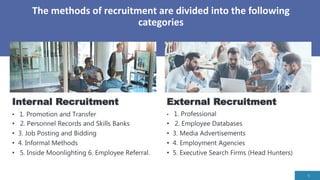
The methods of recruitment are divided into the following
categories
5
External Recruitment
• 1. Professional
• 2. Employee Databases
• 3. Media Advertisements
• 4. Employment Agencies
• 5. Executive Search Firms (Head Hunters)
Internal Recruitment
• 1. Promotion and Transfer
• 2. Personnel Records and Skills Banks
• 3. Job Posting and Bidding
• 4. Informal Methods
• 5. Inside Moonlighting 6. Employee Referral.
Various Internal Recruitment Methods
6
Job Posting and
Bidding
• It requires that
management post or
otherwise circulates and
notifies listings of
available job openings
and let the current
employees bid for the
same, should they be
interested. While job
posting is often a
requirement in
unionized firms,
managerial jobs are not
covered which,
therefore, may not be
posted
Personnel Records
and Skills Banks
• Organizations can also
effectively use skills
inventories for
identifying internal
applicants for job
vacancies. Computerized
systems can help to
ensure that qualified
internal candidates are
identified and
considered for the
opening.
Informal Methods
• Job posting is a formalized process of
advertising available positions to
employees and a means by which
employees can express an interest in being
considered for those positions. There are
many organizations that have not
formalized that process. For example, the
grapevine may provide information about
anticipated openings within the firm.
• An indication of interest by an employee
through the use of ‘important’ channels
may result in his or her screening that
position. Unfortunately, the less formalized
the process, the more likely that
organizational politics and issues other than
employee qualifications will decide who
receives a particular position.
7
Some methods of external recruitment are
8
Professional or
Trade Associations
• Many associations
provide placement
services for their
members. These services
may consist of compiling
listings of job .These
publications often carry
classified advertisements
from employers
interested in recruiting
their members, along with
articles of interest for its
membership.
Accountants, engineers,
and many other
professionals have such
associations and
publications
Employee
Databases
• Organizations maintaining
resume databases are not
an employment agency,
but rather a company that
compiles a data base of
resumes from people who
are looking for jobs. That
database is then available
on – line to all businesses,
service organizations, and
government agencies that
subscribe to the
company’s large
computerized information
network.
Media Advertisements
• There are several reasons why
employers use newspaper
advertisements. Job openings can be
announced quickly appearing in the
newspaper within 1 or 2 days. They
are fairly inexpensive when compared
with other methods, and more than
one position can be included in the
same advertisement.
9
1.2 How to get referrals from people on LinkedIn
• That job seekers have reported first discovering a job, was through someone they knew.
Not that surprising as nearly 50% of recruiters say referrals are the leading source of
quality hires. And once you've asked for one and applied for the job, you're 4X more likely
to hear back from a recruiter at that company.
• Ask for referral can make this process even more easier
• See jobs where you already know someone through the “In Your Network” search filter on
LinkedIn Jobs.
• Easily request a referral by clicking the “Ask For A Referral” button on jobs where you know
people.
• Know what to say with suggestions on how to craft your message and put your best foot
forward.
10
How to use ask for Referral
• When you’re searching for a job
• While you’ve always been able to see your connections on job listings, now
we’re making it even easier to search for jobs where you already have an in
through someone you know.
• We’ve introduced a new job search filter on desktop so you can look
specifically for jobs “in your network”. Of course, you can still use additional
filters like location, industry, job function, even specific companies to find the
role that’s perfect for you
11
Once you have found a job where you can get Referred
• You're ready to tap into the people you know to find your way in. At the top of the job listing, tap
the "Ask for a referral" button, then select the person you'd like to reach out to. We'll help you
write your request by suggesting a pre-populated message, but we recommend you personalize
your message.
• Here are 3 tips:
• Remind them how they know you. Jog their memory of where you met if you haven’t been in
touch recently. Call out things you have in common, like if you went to the same school.
• Share why you’re a good fit. Include why you’d be a good fit for the job, including your skills and
relevant experience. This will make it easier for the person you know to recommend you to the
hiring manager or recruiter.
• Highlight why you’re interested. Stand out by telling them why you’re interested in this role. This
can be anything from being a fan of the company’s product or service to wanting to move to the
city their office is located in.
12
1.3 Steps and Plans for Recruitment
• 1. Analise your recruitment needs and skill requirements
• The first step to create a recruitment plan is to identify your personnel need
and. Where there are skill gaps that your existing employee can’t fill
• By learning which skills your team will be missing and the ones you’ll need to
tackle the future workload. Estimate which departments and roles will need
strengthening.
• 2. Create a plan for hiring people
• Next you can put your analysis on how many people each department will
need and approximately when they are needed. With this information, you
can build out a full recruitment calender this year. This should include the
positions you will need to hire for each department
13
• 3. Identity the recruitment tools and requirements
for each department
• Some of the most critical solutions for your recruitment are an applicant
tracking system (ATS), accounts on various online job boards, pre-
employment assessment and screening tools and analytics or BI software for
data driven decisions
• With idea of which roles you will be hiring for, you can begin determining the
requirements for each job opening
• You should meet with hiring manager and develop a thoroug understanding
of each role and what needs to be fill effectively, you need to look further at
your current openings and think at your company culture and skills tgat
people should have to be a good fit
14
• 4. Build out advertisements for compelling job descriptions
• Attracting the best candidate all starts with a strong job description you can
estimate how much your recruitment costs are going to be for the year ahead
• Some common recruitment costs include:
• Advertising in social media
• Job fairs and campus recruitments
• Recruiting technology costs
• Background checks and drug test
• Avoid mistakes and instead aim to write compelling and inclusive job
descriptions that will appeal to job seekers
15
• 5. Establish a candidate selection process
• Clearly define how the overall process will work by establishing how many
interview rounds you’ll have you should look for different ways to personalize
the experience for each candidate.
• There are many different types if assessments, from measuring skills and
personality to determine one’s ability and cultural fit.
• 6. Make an offer to the chosen candidate
• You should define who will make the offer and further negotiate with the
chosen candidate, as part of the overall recruitment plan
• First you should call or e-mail your ideal candidate and offer the position.
Once you have confirmation that your candidate will be accepting the role,
it’s common to follow up with the official offer letter.
16
17

Classic bold block presentation

  • 1.
  • 2.
  • 3.
  • 4.
    What is recruitment? • Recruitment is the process of attracting individuals on a timely basis, in sufficient numbers, and with appropriate qualifications, to apply for jobs with an organization. • The organization can look to internal company sources and, if necessary, to sources external to the company. The organization’s choice of a particular method of external recruitment to effectively “get its message across” to external candidates, can make all the difference to the success of recruiting efforts. 4
  • 5.
    The methods ofrecruitment are divided into the following categories 5 External Recruitment • 1. Professional • 2. Employee Databases • 3. Media Advertisements • 4. Employment Agencies • 5. Executive Search Firms (Head Hunters) Internal Recruitment • 1. Promotion and Transfer • 2. Personnel Records and Skills Banks • 3. Job Posting and Bidding • 4. Informal Methods • 5. Inside Moonlighting 6. Employee Referral.
  • 6.
    Various Internal RecruitmentMethods 6 Job Posting and Bidding • It requires that management post or otherwise circulates and notifies listings of available job openings and let the current employees bid for the same, should they be interested. While job posting is often a requirement in unionized firms, managerial jobs are not covered which, therefore, may not be posted Personnel Records and Skills Banks • Organizations can also effectively use skills inventories for identifying internal applicants for job vacancies. Computerized systems can help to ensure that qualified internal candidates are identified and considered for the opening.
  • 7.
    Informal Methods • Jobposting is a formalized process of advertising available positions to employees and a means by which employees can express an interest in being considered for those positions. There are many organizations that have not formalized that process. For example, the grapevine may provide information about anticipated openings within the firm. • An indication of interest by an employee through the use of ‘important’ channels may result in his or her screening that position. Unfortunately, the less formalized the process, the more likely that organizational politics and issues other than employee qualifications will decide who receives a particular position. 7
  • 8.
    Some methods ofexternal recruitment are 8 Professional or Trade Associations • Many associations provide placement services for their members. These services may consist of compiling listings of job .These publications often carry classified advertisements from employers interested in recruiting their members, along with articles of interest for its membership. Accountants, engineers, and many other professionals have such associations and publications Employee Databases • Organizations maintaining resume databases are not an employment agency, but rather a company that compiles a data base of resumes from people who are looking for jobs. That database is then available on – line to all businesses, service organizations, and government agencies that subscribe to the company’s large computerized information network.
  • 9.
    Media Advertisements • Thereare several reasons why employers use newspaper advertisements. Job openings can be announced quickly appearing in the newspaper within 1 or 2 days. They are fairly inexpensive when compared with other methods, and more than one position can be included in the same advertisement. 9
  • 10.
    1.2 How toget referrals from people on LinkedIn • That job seekers have reported first discovering a job, was through someone they knew. Not that surprising as nearly 50% of recruiters say referrals are the leading source of quality hires. And once you've asked for one and applied for the job, you're 4X more likely to hear back from a recruiter at that company. • Ask for referral can make this process even more easier • See jobs where you already know someone through the “In Your Network” search filter on LinkedIn Jobs. • Easily request a referral by clicking the “Ask For A Referral” button on jobs where you know people. • Know what to say with suggestions on how to craft your message and put your best foot forward. 10
  • 11.
    How to useask for Referral • When you’re searching for a job • While you’ve always been able to see your connections on job listings, now we’re making it even easier to search for jobs where you already have an in through someone you know. • We’ve introduced a new job search filter on desktop so you can look specifically for jobs “in your network”. Of course, you can still use additional filters like location, industry, job function, even specific companies to find the role that’s perfect for you 11
  • 12.
    Once you havefound a job where you can get Referred • You're ready to tap into the people you know to find your way in. At the top of the job listing, tap the "Ask for a referral" button, then select the person you'd like to reach out to. We'll help you write your request by suggesting a pre-populated message, but we recommend you personalize your message. • Here are 3 tips: • Remind them how they know you. Jog their memory of where you met if you haven’t been in touch recently. Call out things you have in common, like if you went to the same school. • Share why you’re a good fit. Include why you’d be a good fit for the job, including your skills and relevant experience. This will make it easier for the person you know to recommend you to the hiring manager or recruiter. • Highlight why you’re interested. Stand out by telling them why you’re interested in this role. This can be anything from being a fan of the company’s product or service to wanting to move to the city their office is located in. 12
  • 13.
    1.3 Steps andPlans for Recruitment • 1. Analise your recruitment needs and skill requirements • The first step to create a recruitment plan is to identify your personnel need and. Where there are skill gaps that your existing employee can’t fill • By learning which skills your team will be missing and the ones you’ll need to tackle the future workload. Estimate which departments and roles will need strengthening. • 2. Create a plan for hiring people • Next you can put your analysis on how many people each department will need and approximately when they are needed. With this information, you can build out a full recruitment calender this year. This should include the positions you will need to hire for each department 13
  • 14.
    • 3. Identitythe recruitment tools and requirements for each department • Some of the most critical solutions for your recruitment are an applicant tracking system (ATS), accounts on various online job boards, pre- employment assessment and screening tools and analytics or BI software for data driven decisions • With idea of which roles you will be hiring for, you can begin determining the requirements for each job opening • You should meet with hiring manager and develop a thoroug understanding of each role and what needs to be fill effectively, you need to look further at your current openings and think at your company culture and skills tgat people should have to be a good fit 14
  • 15.
    • 4. Buildout advertisements for compelling job descriptions • Attracting the best candidate all starts with a strong job description you can estimate how much your recruitment costs are going to be for the year ahead • Some common recruitment costs include: • Advertising in social media • Job fairs and campus recruitments • Recruiting technology costs • Background checks and drug test • Avoid mistakes and instead aim to write compelling and inclusive job descriptions that will appeal to job seekers 15
  • 16.
    • 5. Establisha candidate selection process • Clearly define how the overall process will work by establishing how many interview rounds you’ll have you should look for different ways to personalize the experience for each candidate. • There are many different types if assessments, from measuring skills and personality to determine one’s ability and cultural fit. • 6. Make an offer to the chosen candidate • You should define who will make the offer and further negotiate with the chosen candidate, as part of the overall recruitment plan • First you should call or e-mail your ideal candidate and offer the position. Once you have confirmation that your candidate will be accepting the role, it’s common to follow up with the official offer letter. 16
  • 17.