Download to read offline


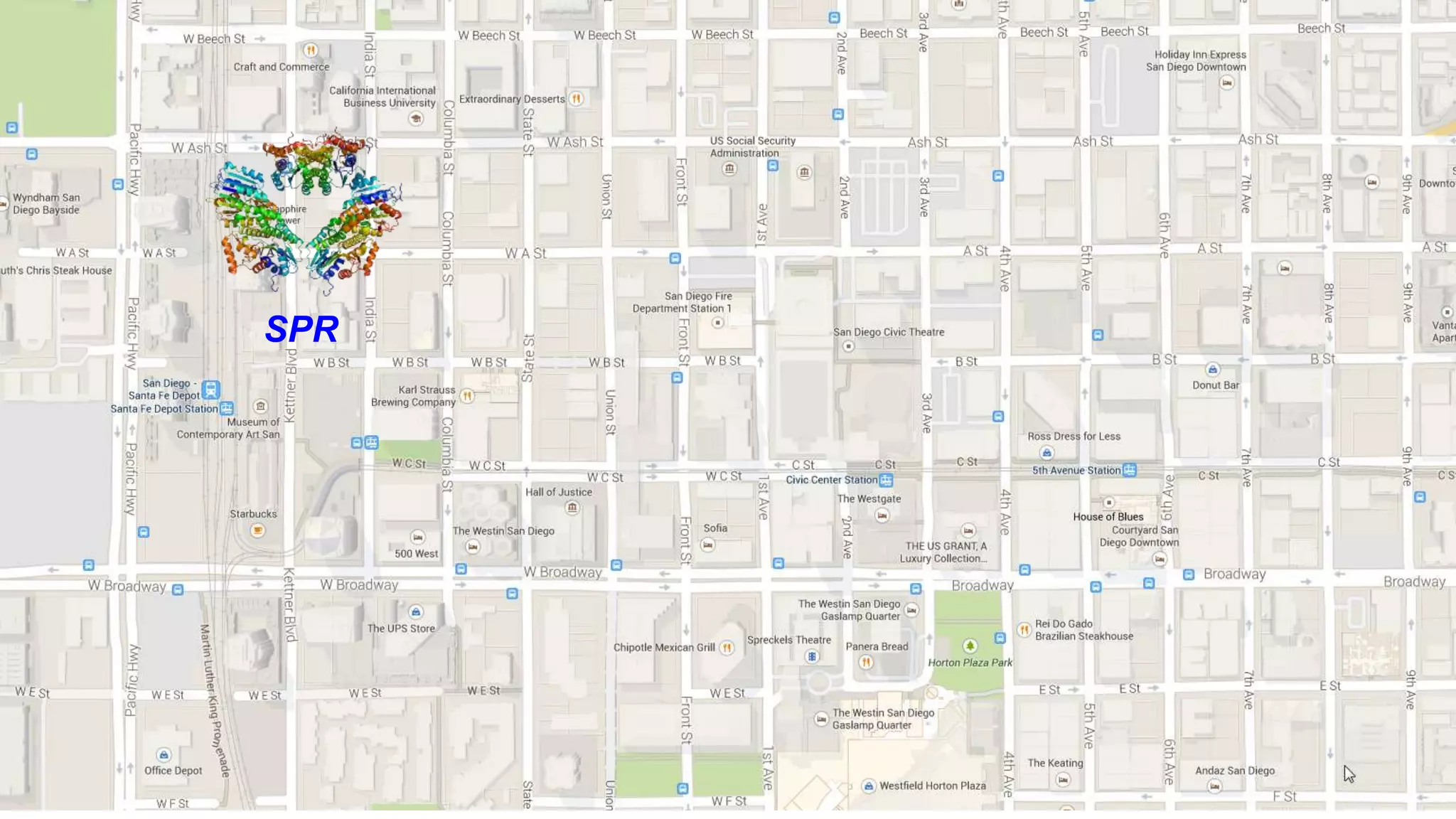


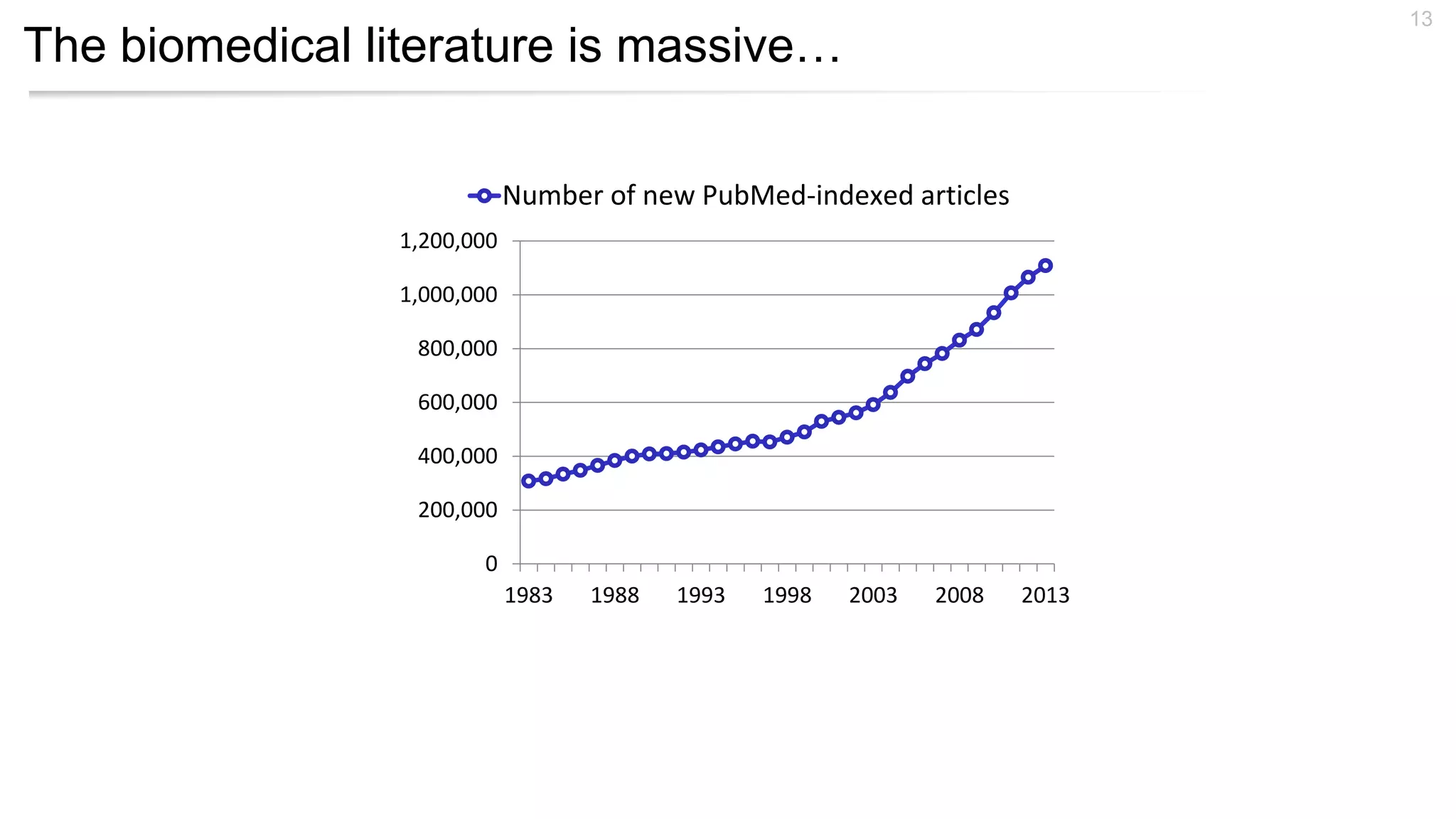


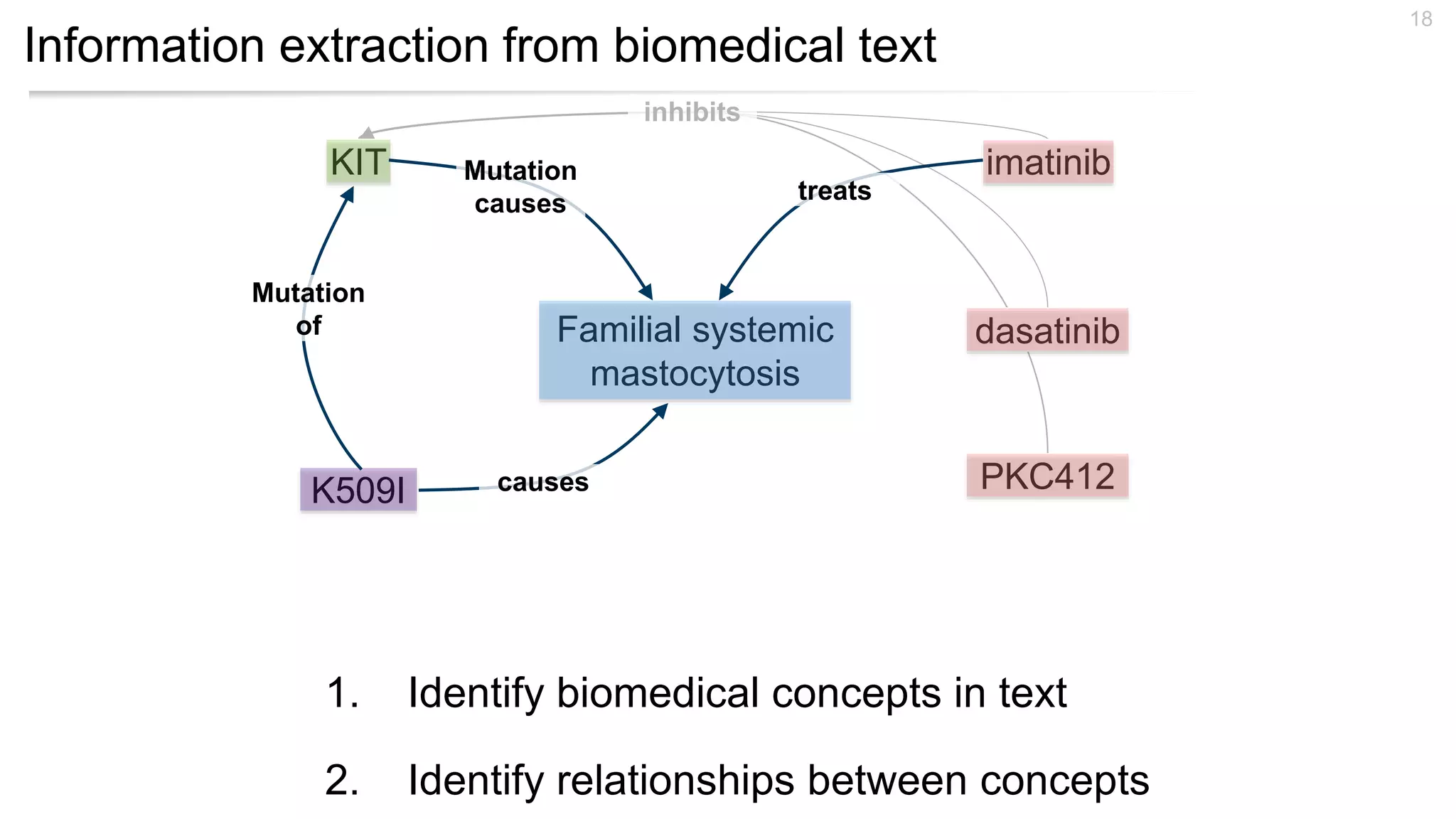


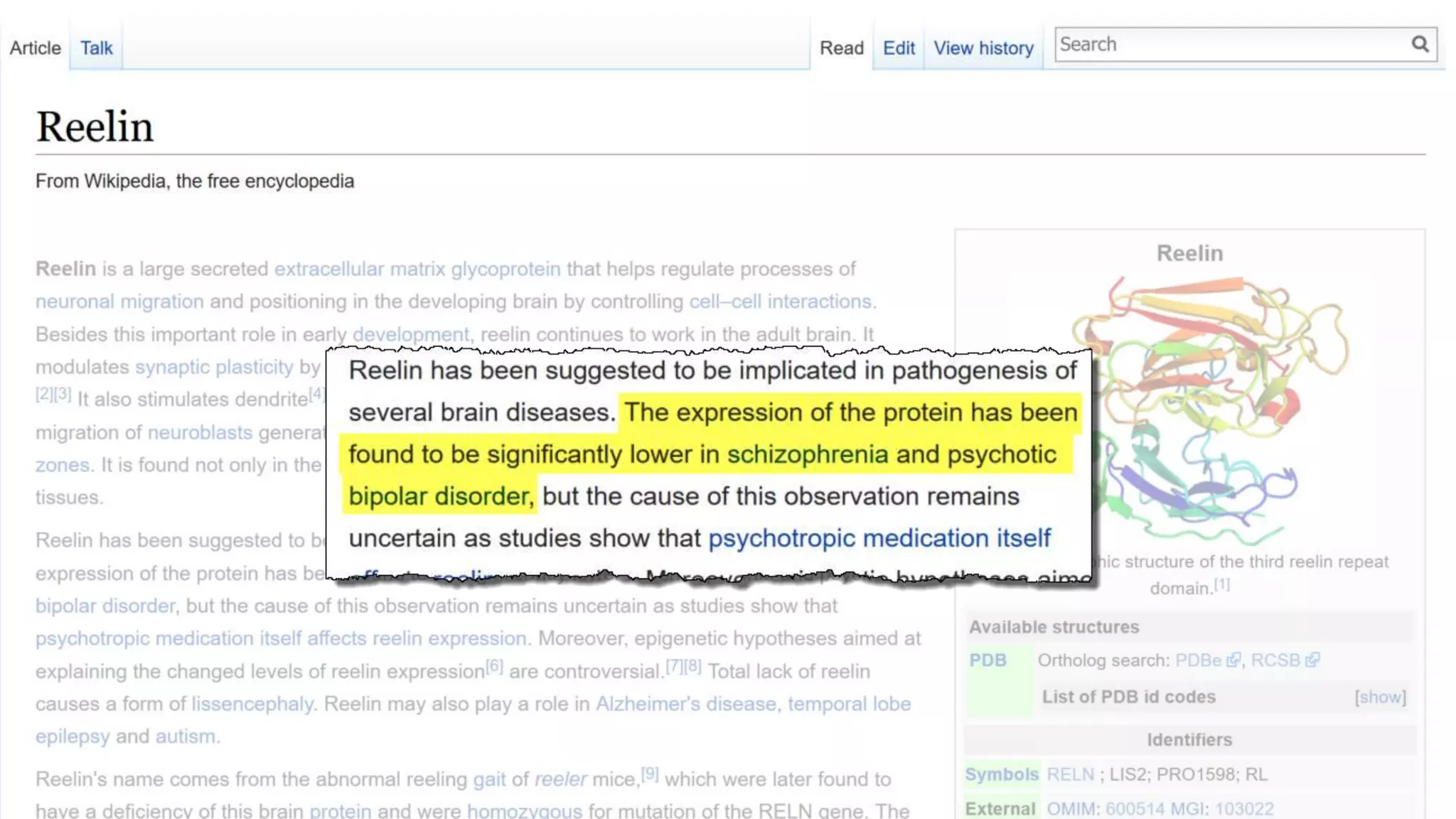





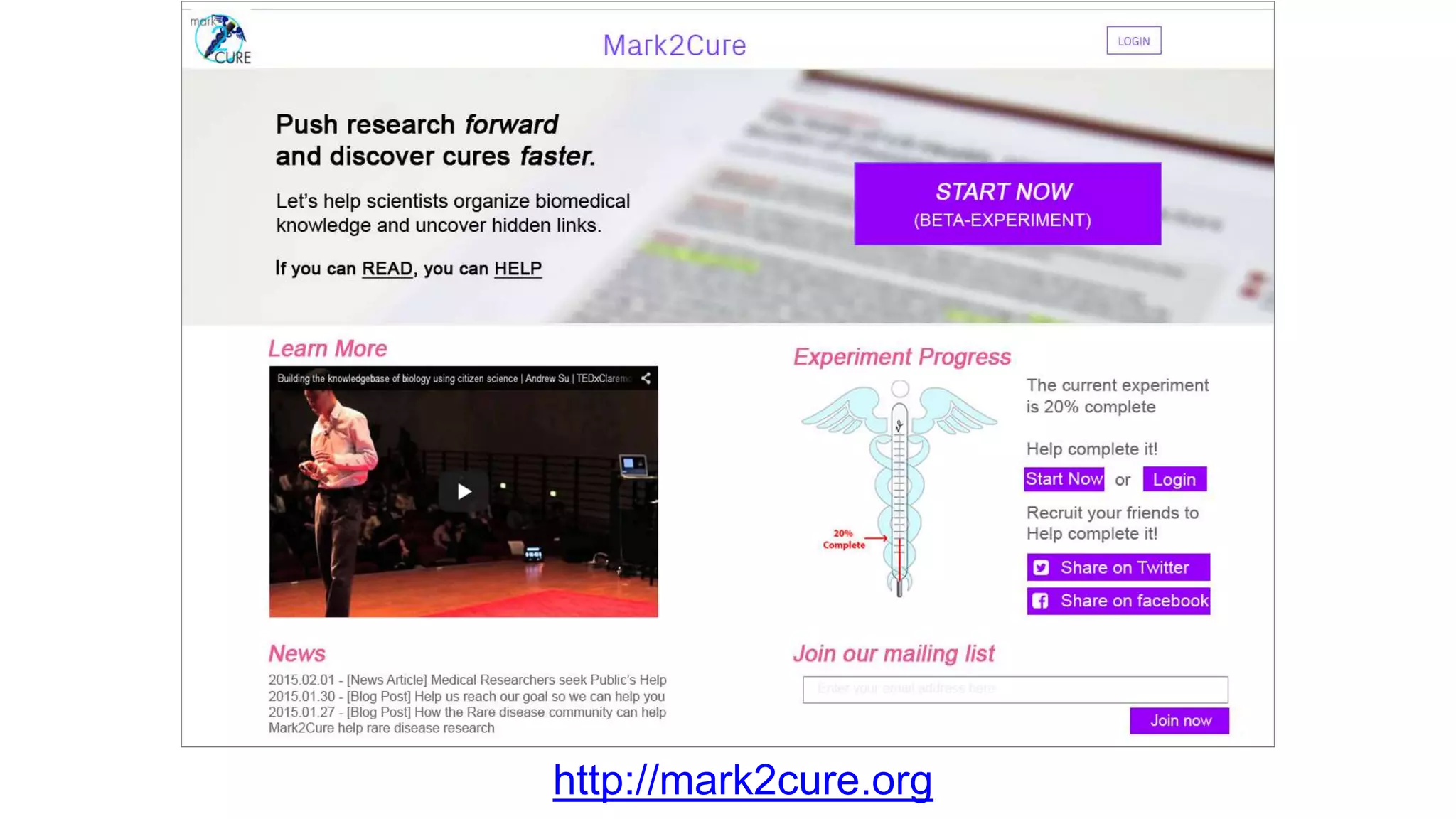


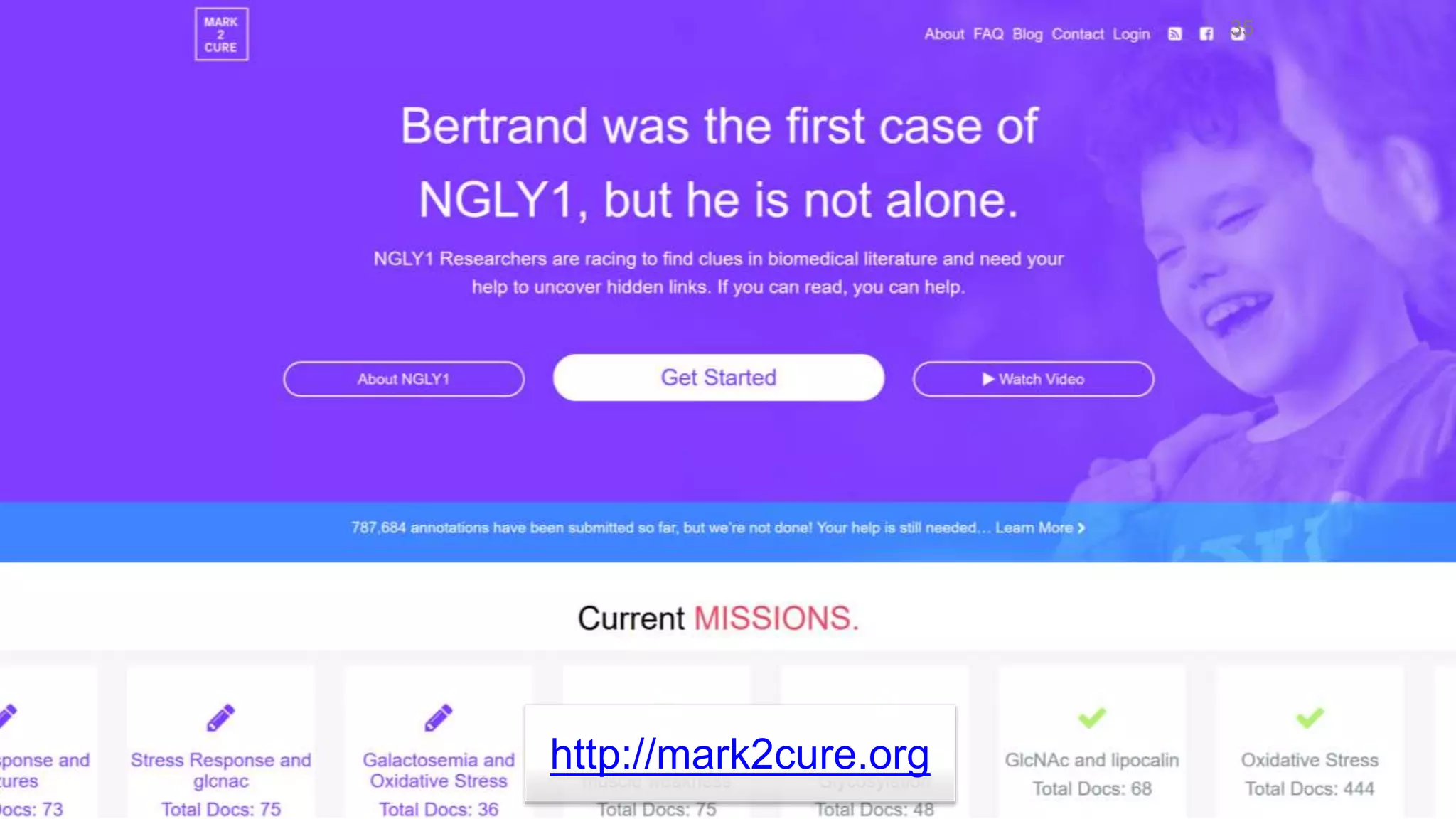
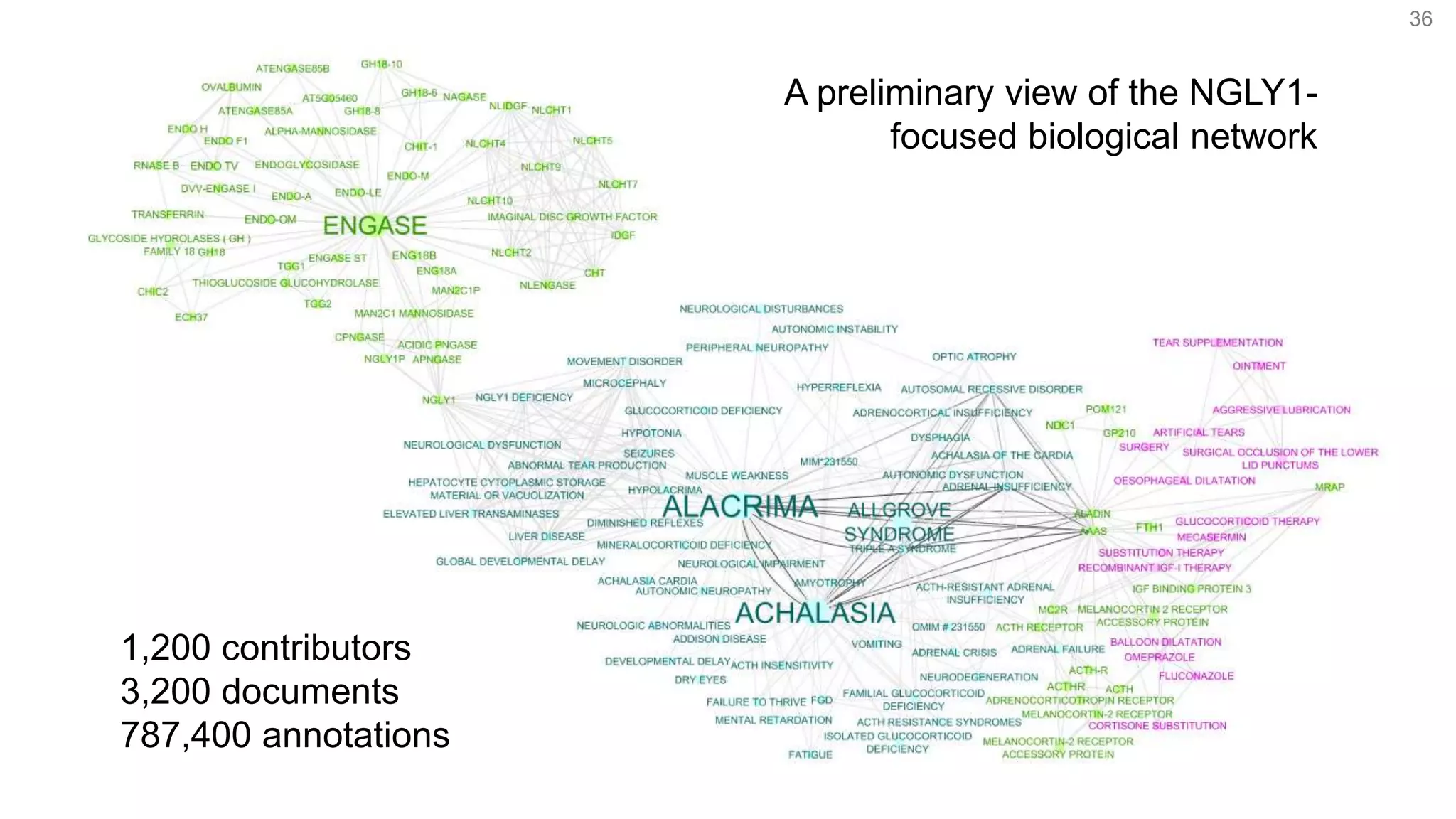


This document summarizes how citizen science and crowdsourcing can help advance rare disease research. It describes two case studies of rare diseases, SPR and NGLY1, that were advanced through citizen science efforts. The document discusses how the biomedical literature is massive but difficult to query, and how citizen science can help extract and organize knowledge from texts through crowdsourced concept identification and relationship annotation. It presents results showing non-experts can identify disease concepts in texts with similar accuracy to experts. The document concludes by describing the Mark2Cure project, which has mapped biological networks around NGLY1 through crowdsourced annotations by over 1,200 contributors.


