Circulation – pumping of blood through the entire
body by the heart.
Circulation
Coronary circulation – the
circulation of blood within the
heart.
Pulmonary circulation – the flow
of blood between the heart and
lungs.
Systemic circulation – the flow of
blood between the heart and the
cells of the body.
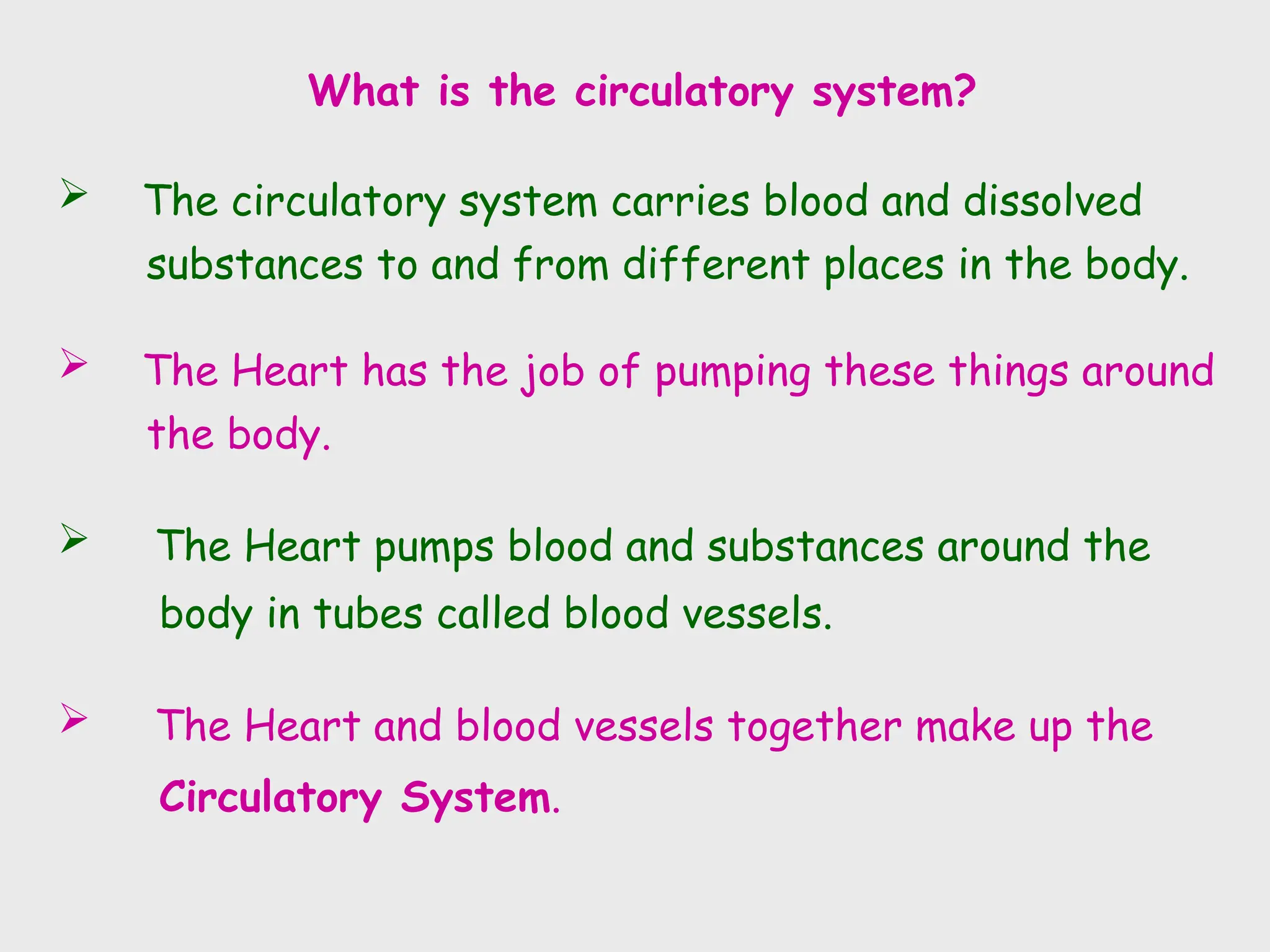
 The circulatory system carries blood and dissolved
substances to and from different places in the body.
 The Heart has the job of pumping these things around
the body.
 The Heart pumps blood and substances around the
body in tubes called blood vessels.
 The Heart and blood vessels together make up the
Circulatory System.
What is the circulatory system?
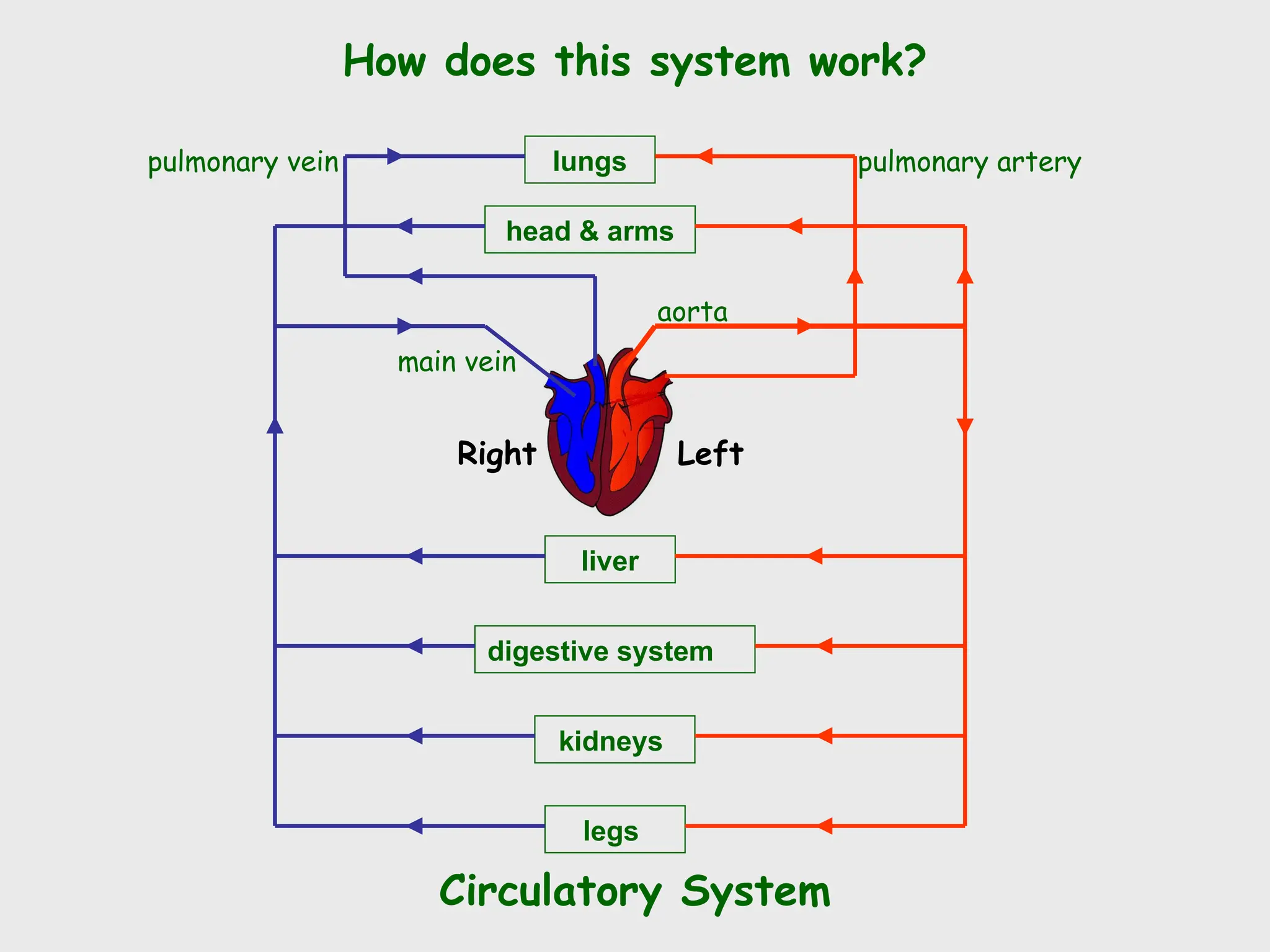
lungs
head & arms
liver
digestive system
kidneys
legs
pulmonary artery
aorta
pulmonary vein
main vein
Left
Right
How does this system work?
Circulatory System
Lungs
Body cells
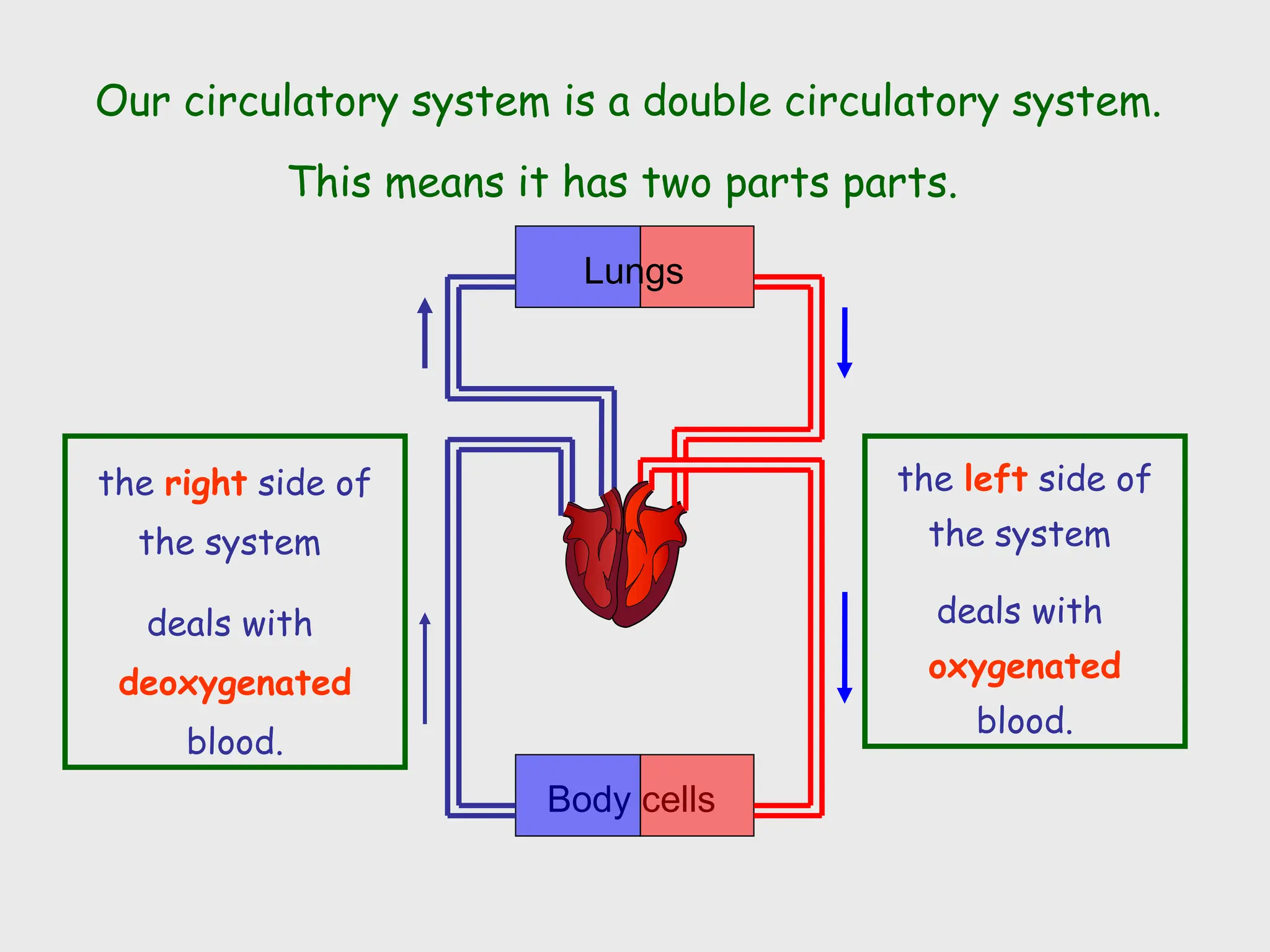
Our circulatory system is a double circulatory system.
This means it has two parts parts.
the right side of
the system
deals with
deoxygenated
blood.
the left side of
the system
deals with
oxygenated
blood.
The Heart
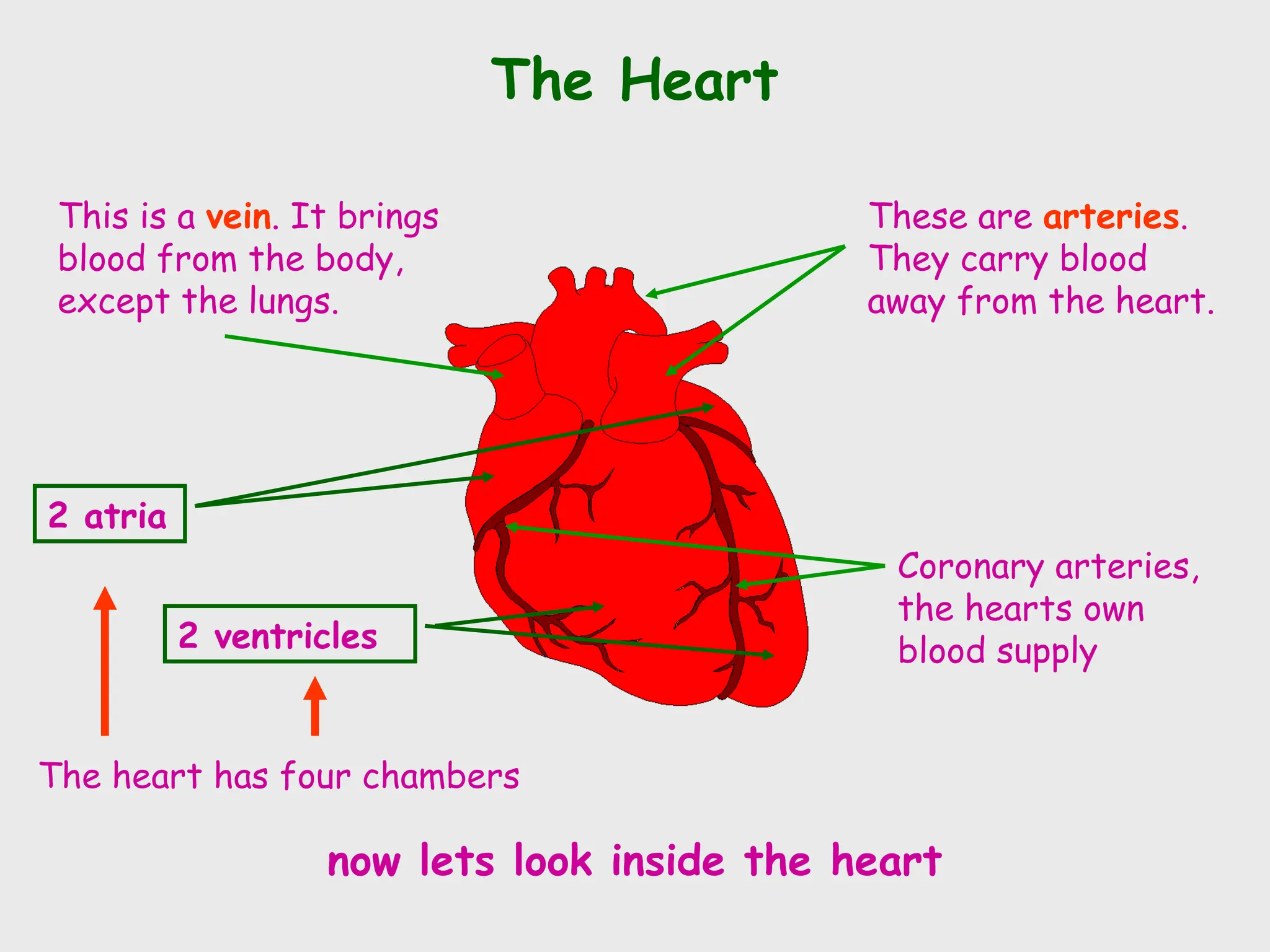
These are arteries.
They carry blood
away from the heart.
This is a vein. It brings
blood from the body,
except the lungs.
Coronary arteries,
the hearts own
blood supply
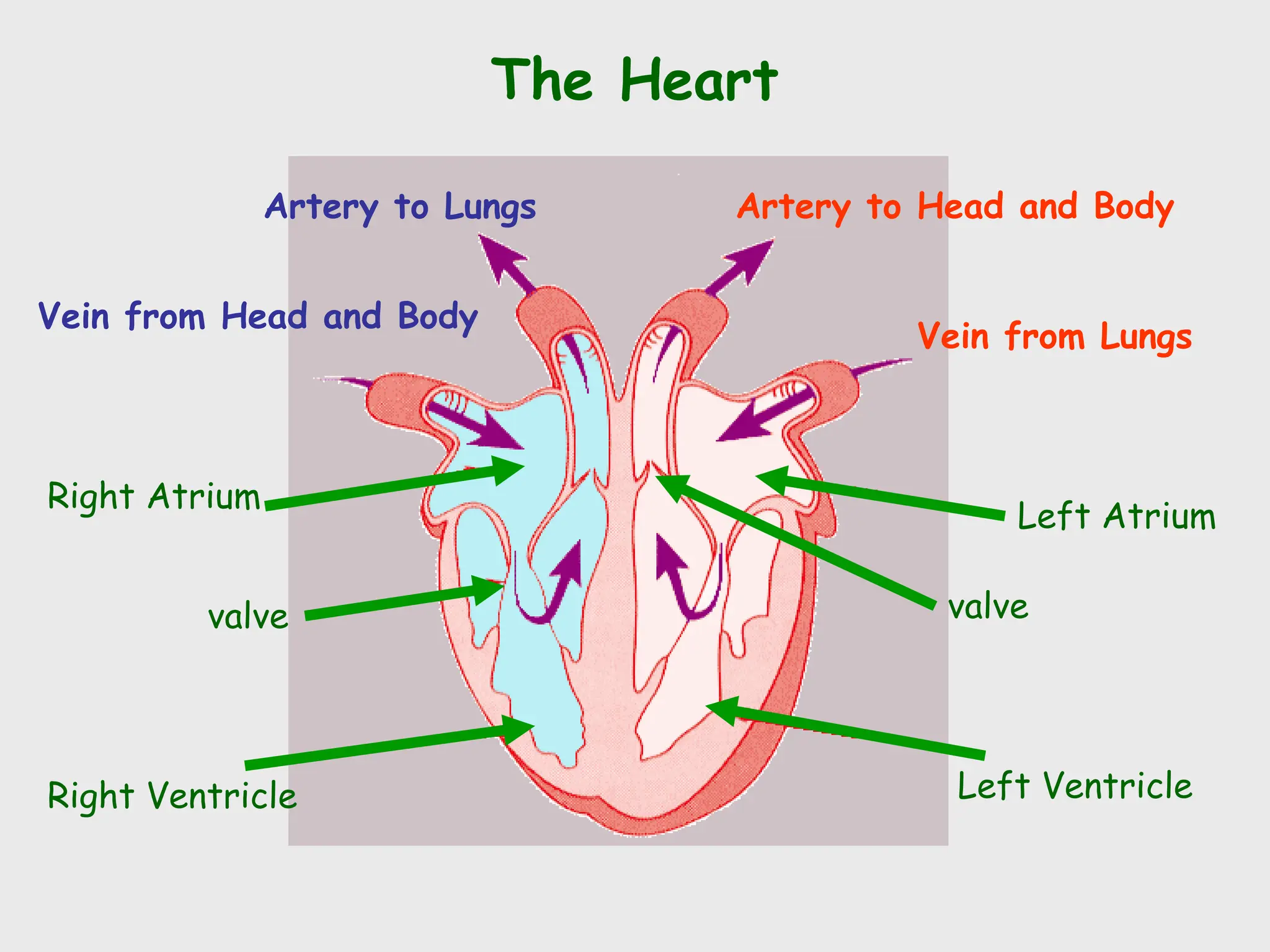
The heart has four chambers
2 atria
2 ventricles
now lets look inside the heart
The Heart
Left Ventricle
Left Atrium
Right Atrium
Right Ventricle
valve
Vein from Lungs
Artery to Head and Body
Artery to Lungs
Vein from Head and Body
valve
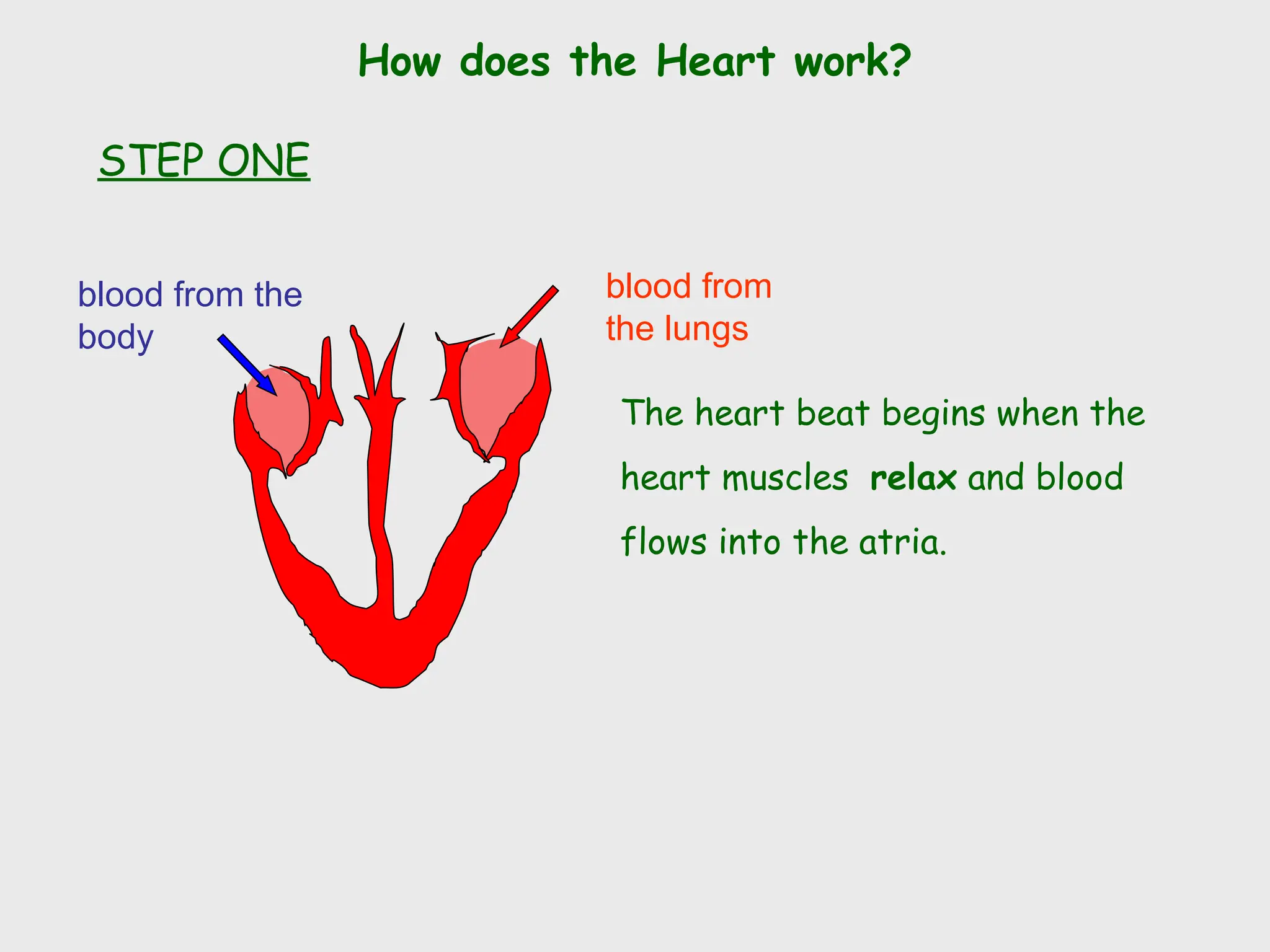
How does the Heart work?
blood from the
body
blood from
the lungs
The heart beat begins when the
heart muscles relax and blood
flows into the atria.
STEP ONE
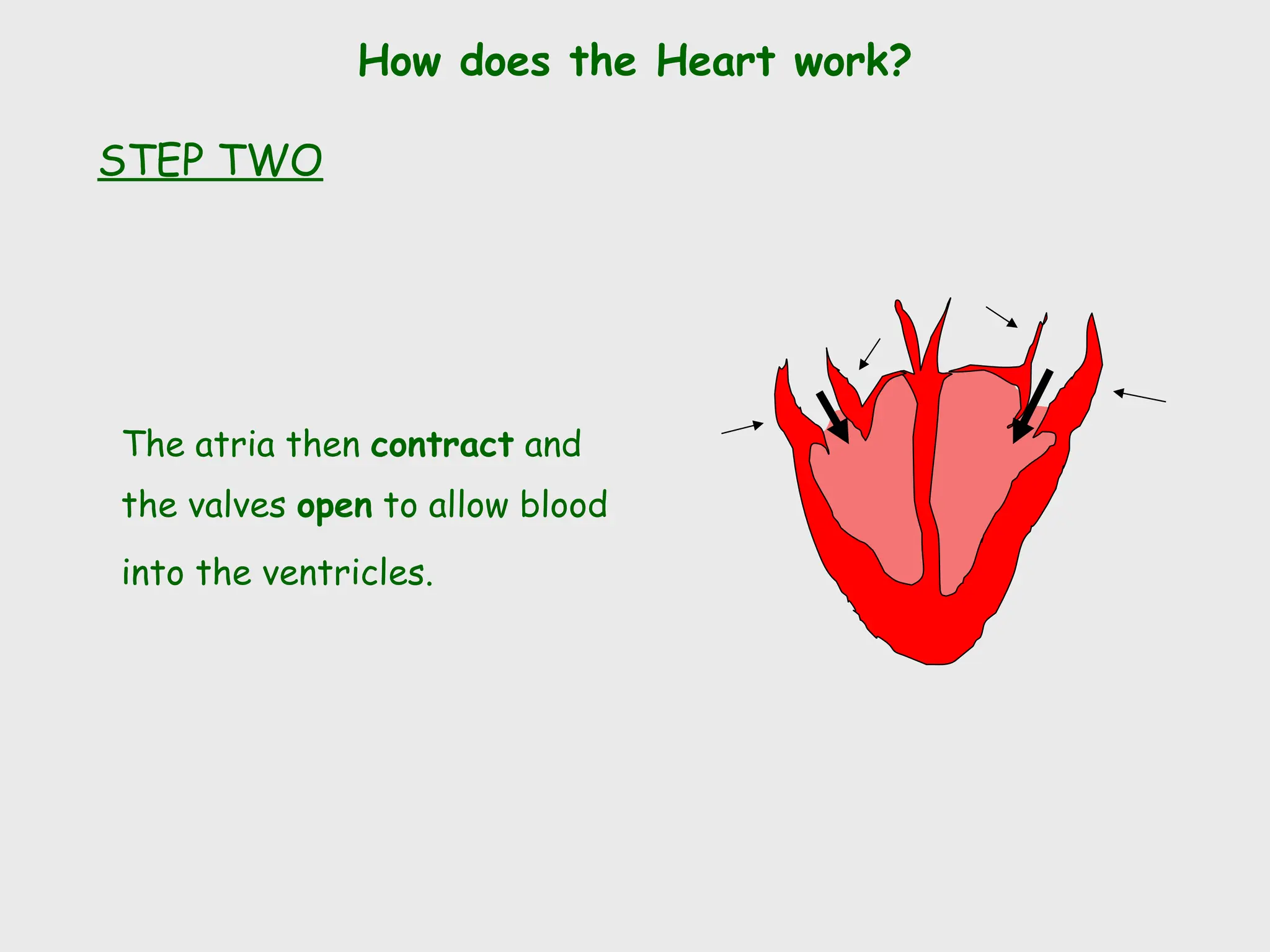
The atria then contract and
the valves open to allow blood
into the ventricles.
How does the Heart work?
STEP TWO
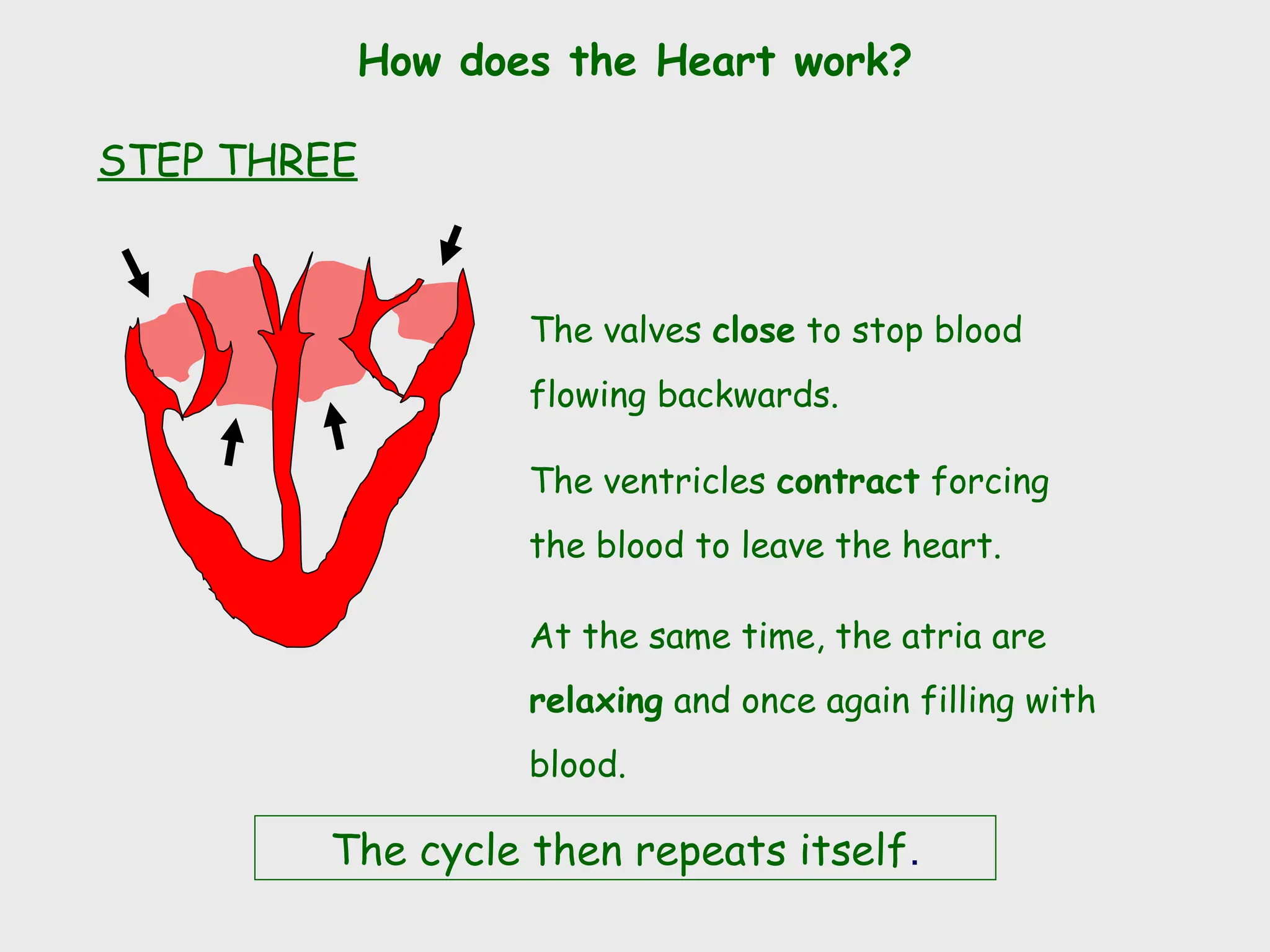
How does the Heart work?
The valves close to stop blood
flowing backwards.
The ventricles contract forcing
the blood to leave the heart.
At the same time, the atria are
relaxing and once again filling with
blood.
The cycle then repeats itself.
STEP THREE
blood from the heart gets around
the body through blood vessels
There are 3 types of blood vessels
a. ARTERY
b. VEIN
c. CAPILLARY
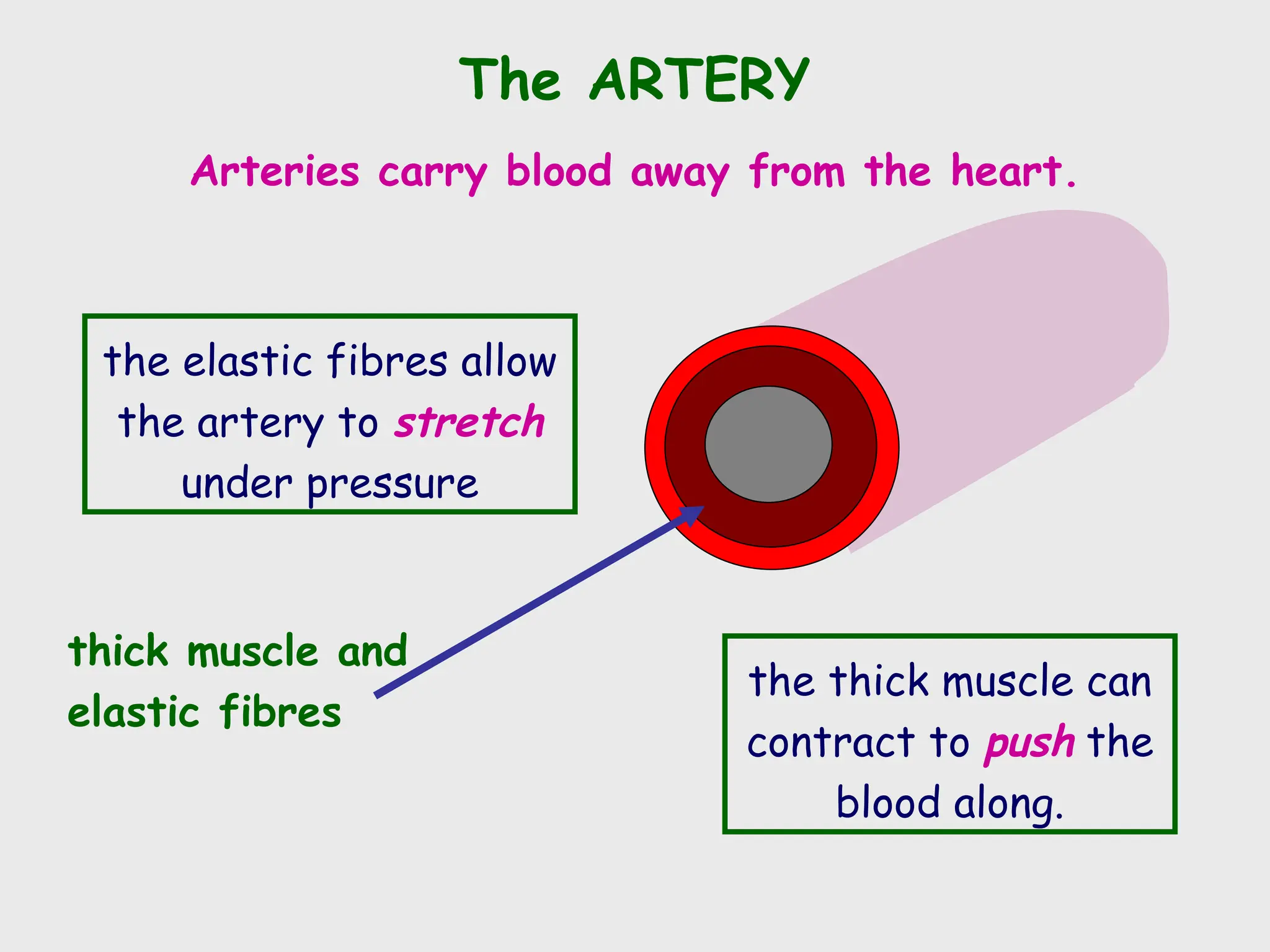
The ARTERY
thick muscle and
elastic fibres
Arteries carry blood away from the heart.
the elastic fibres allow
the artery to stretch
under pressure
the thick muscle can
contract to push the
blood along.
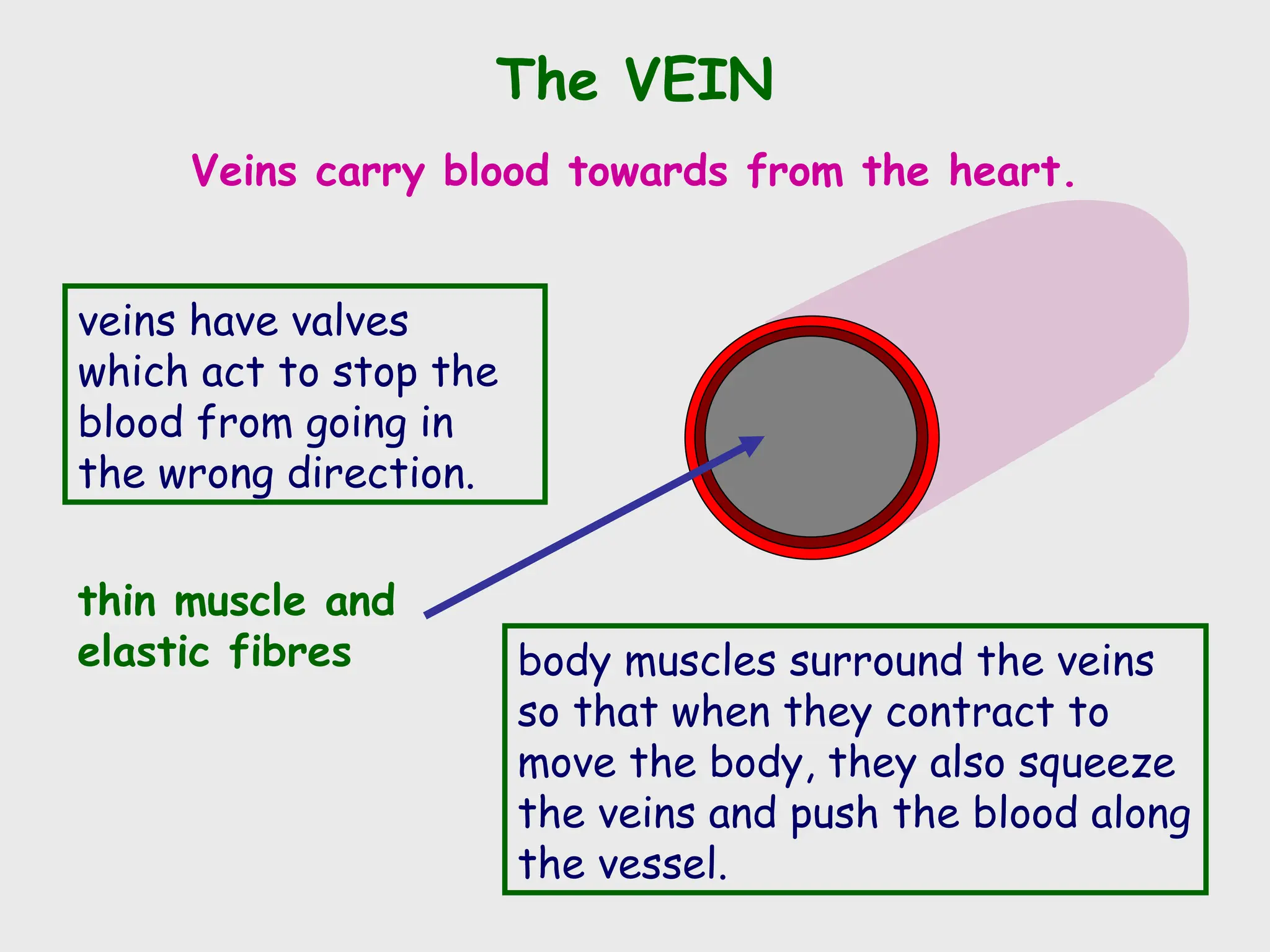
The VEIN
Veins carry blood towards from the heart.
thin muscle and
elastic fibres
veins have valves
which act to stop the
blood from going in
the wrong direction.
body muscles surround the veins
so that when they contract to
move the body, they also squeeze
the veins and push the blood along
the vessel.
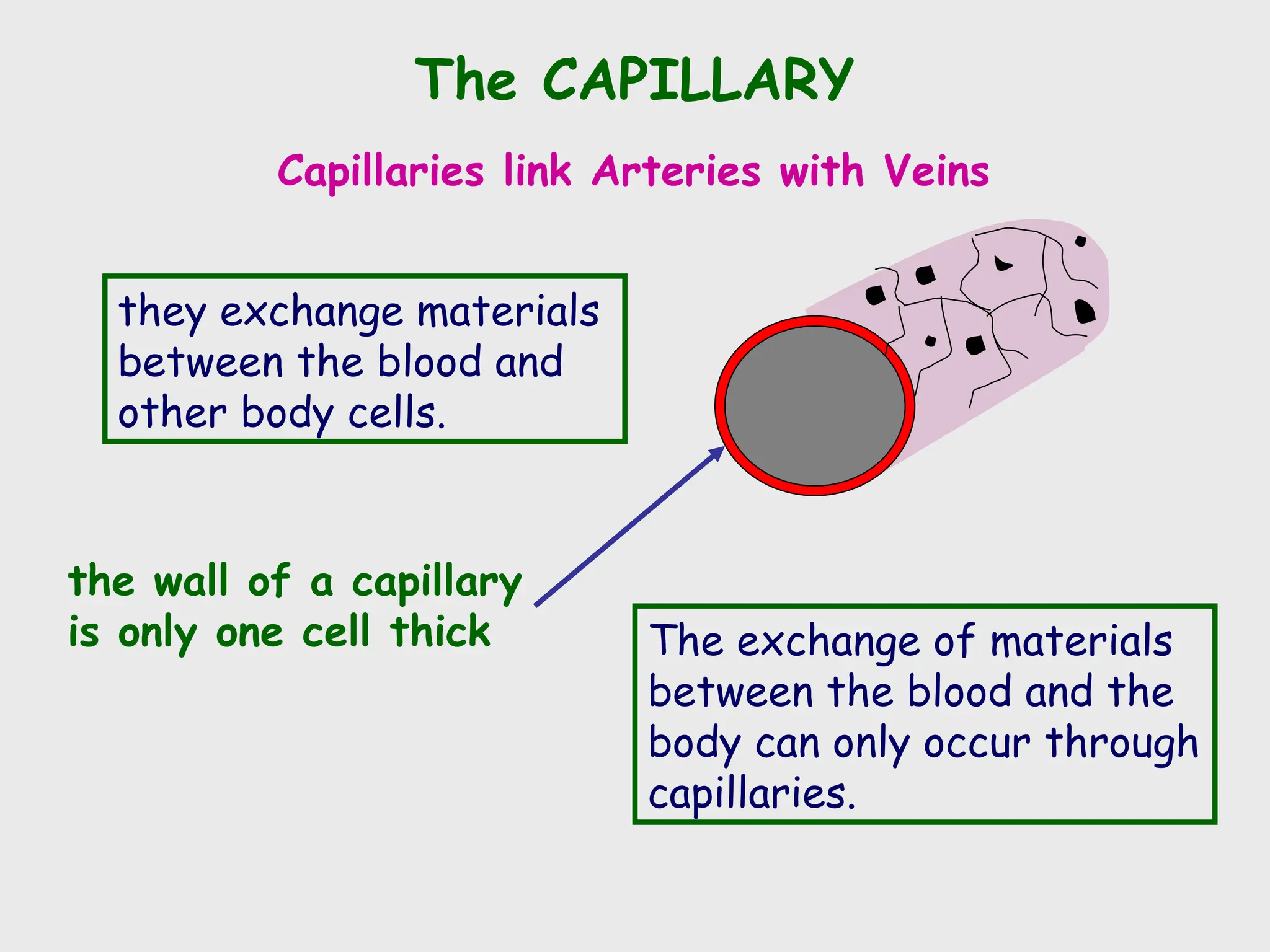
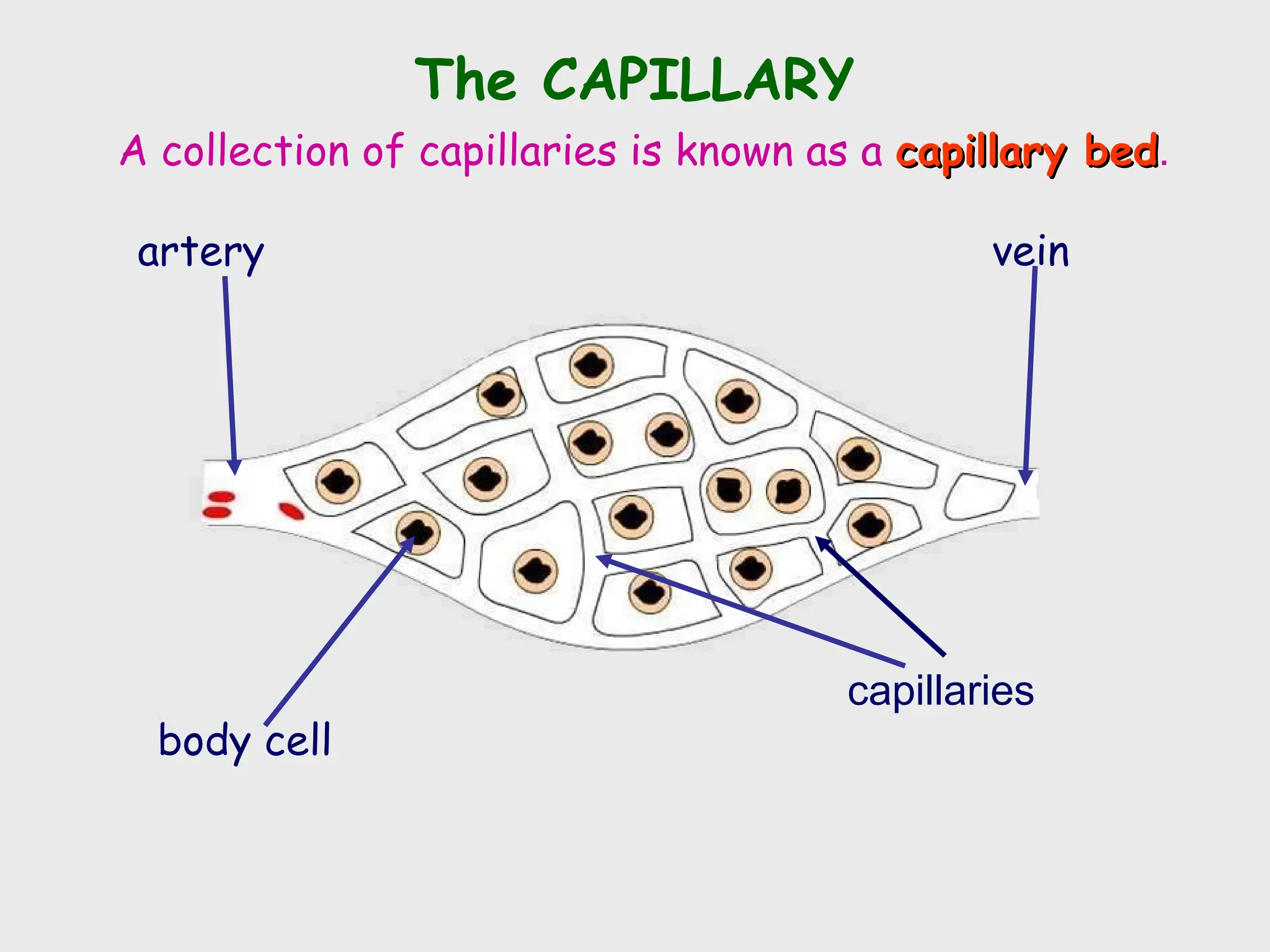
The CAPILLARY
Capillaries link Arteries with Veins
the wall of a capillary
is only one cell thick
they exchange materials
between the blood and
other body cells.
The exchange of materials
between the blood and the
body can only occur through
capillaries.
artery vein
capillaries
body cell
The CAPILLARY
A collection of capillaries is known as a capillary bed
capillary bed.
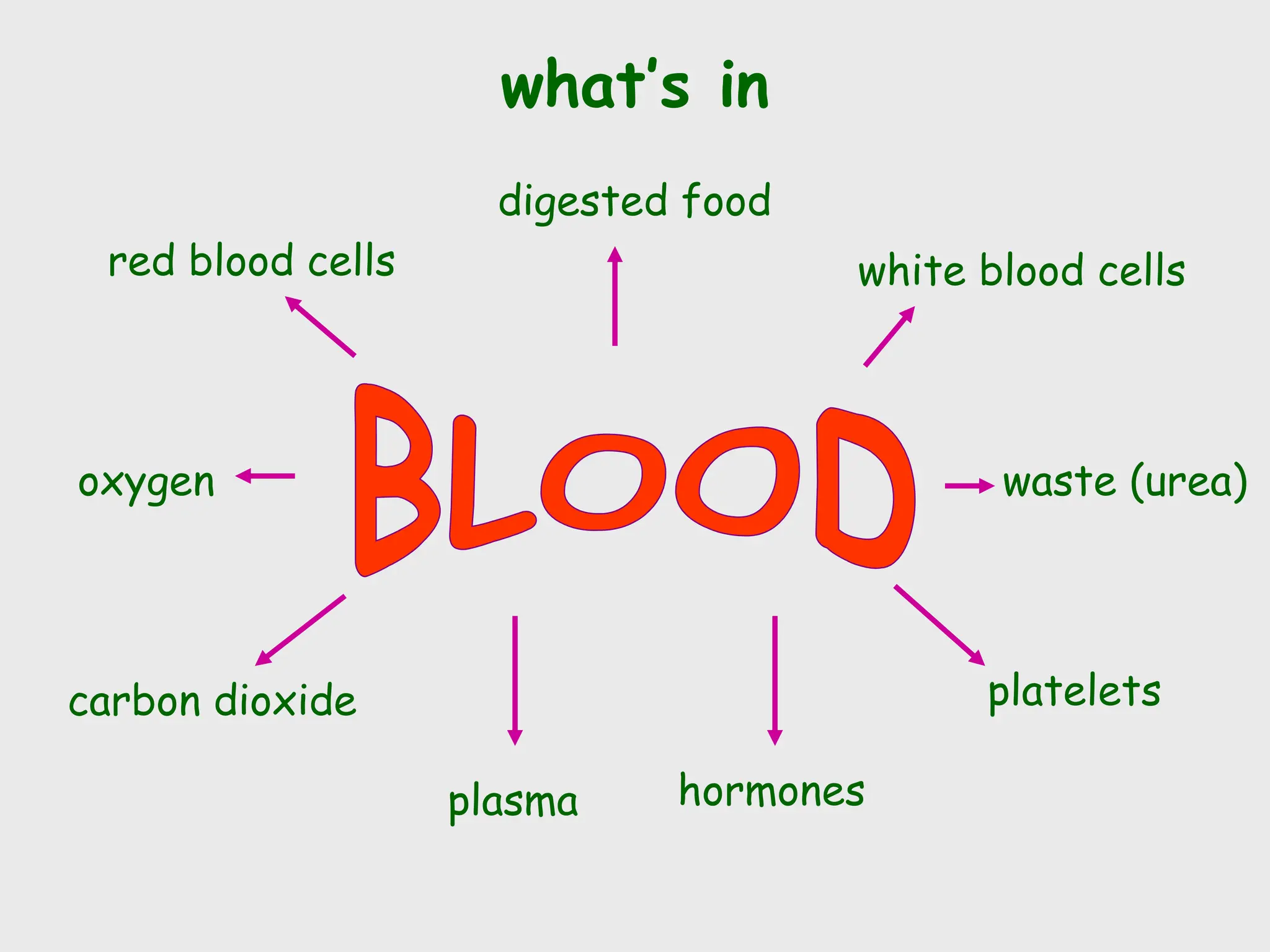
what’s in
red blood cells white blood cells
platelets
plasma
carbon dioxide
digested food
waste (urea)
hormones
oxygen
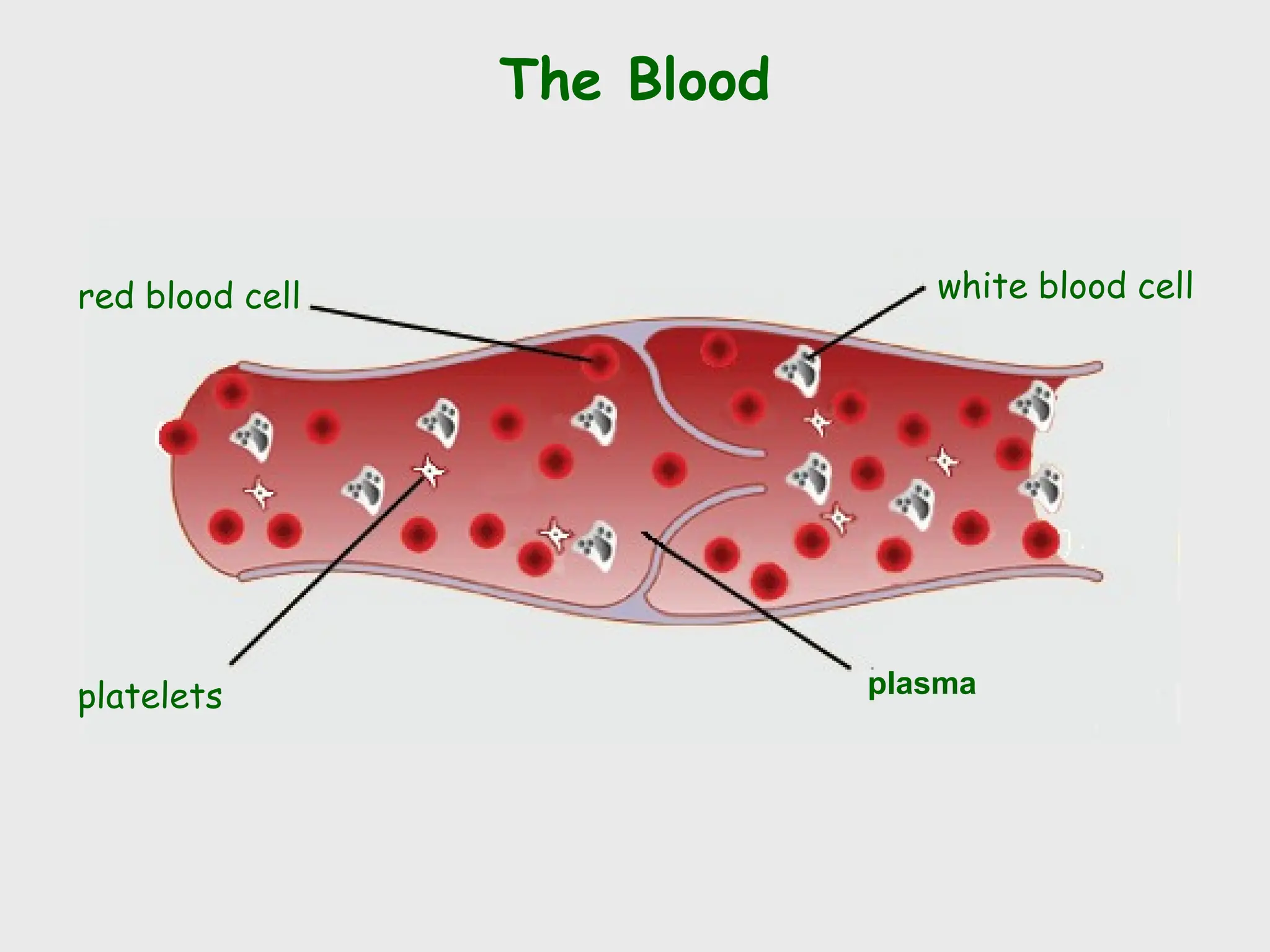
The Blood
plasma
red blood cell white blood cell
platelets
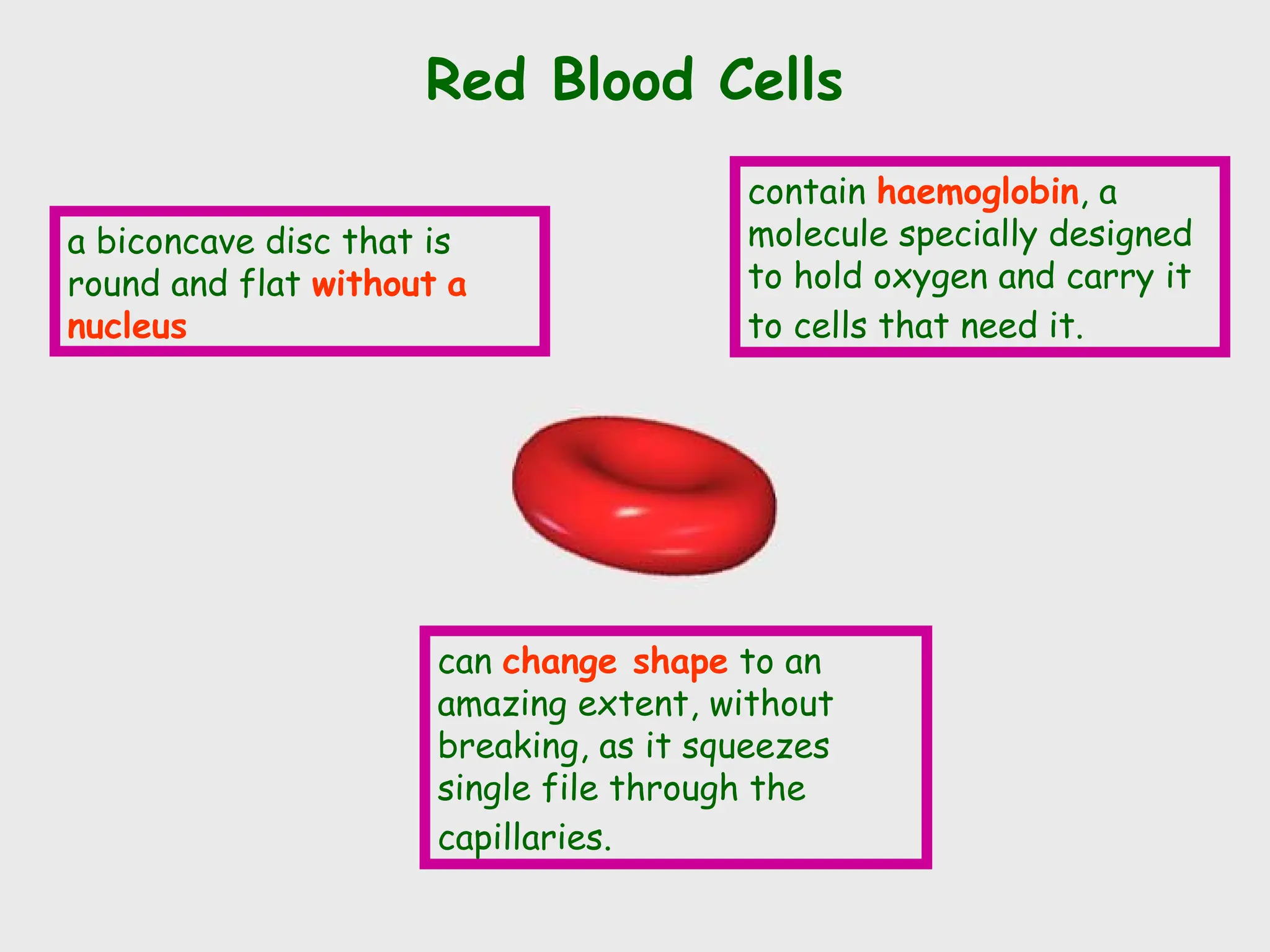
Red Blood Cells
contain haemoglobin, a
molecule specially designed
to hold oxygen and carry it
to cells that need it.
can change shape to an
amazing extent, without
breaking, as it squeezes
single file through the
capillaries.
a biconcave disc that is
round and flat without a
nucleus
White Blood Cells
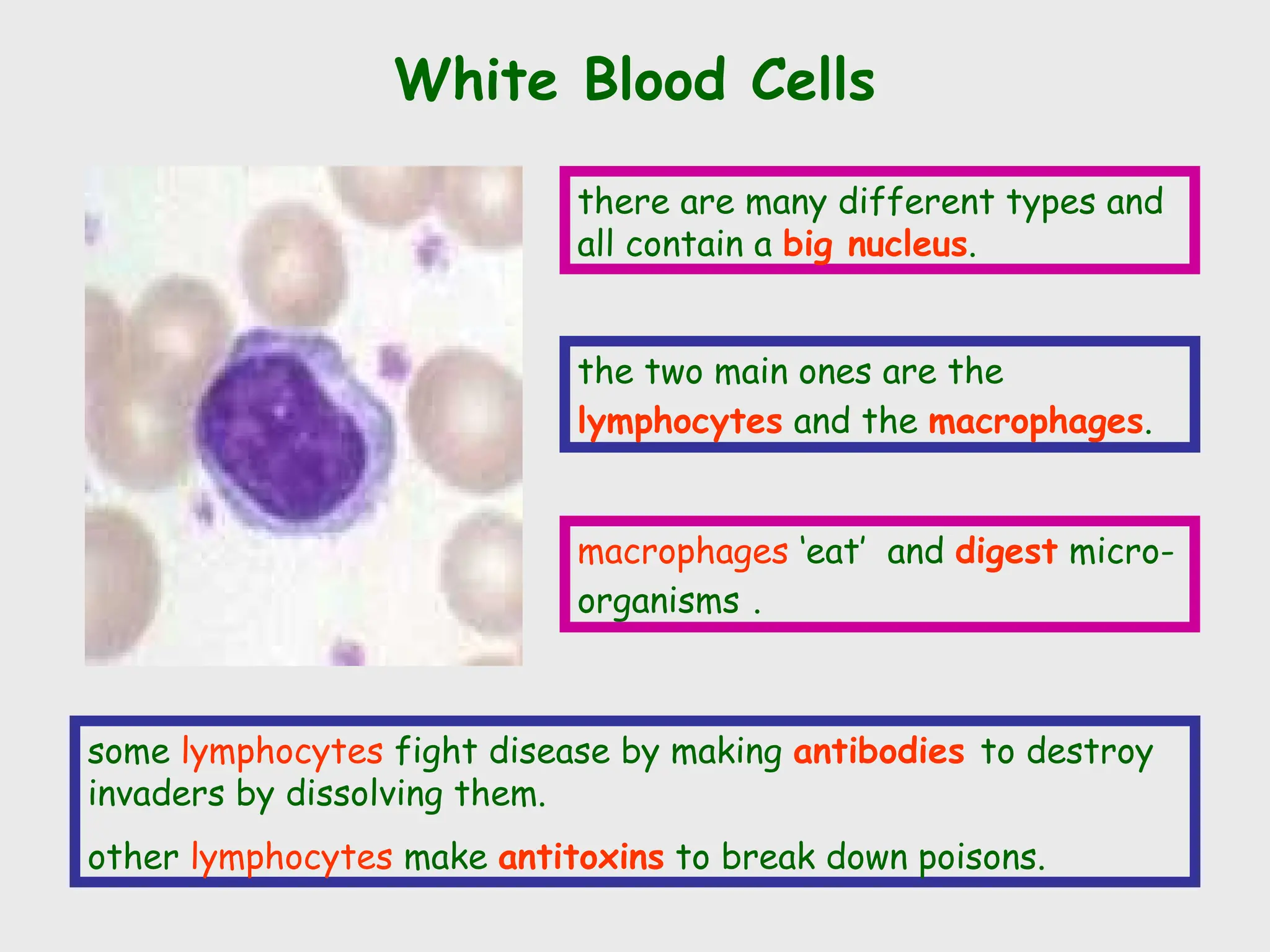
there are many different types and
all contain a big nucleus.
the two main ones are the
lymphocytes and the macrophages.
some lymphocytes fight disease by making antibodies to destroy
invaders by dissolving them.
other lymphocytes make antitoxins to break down poisons.
macrophages ‘eat’ and digest micro-
organisms .
Platelets
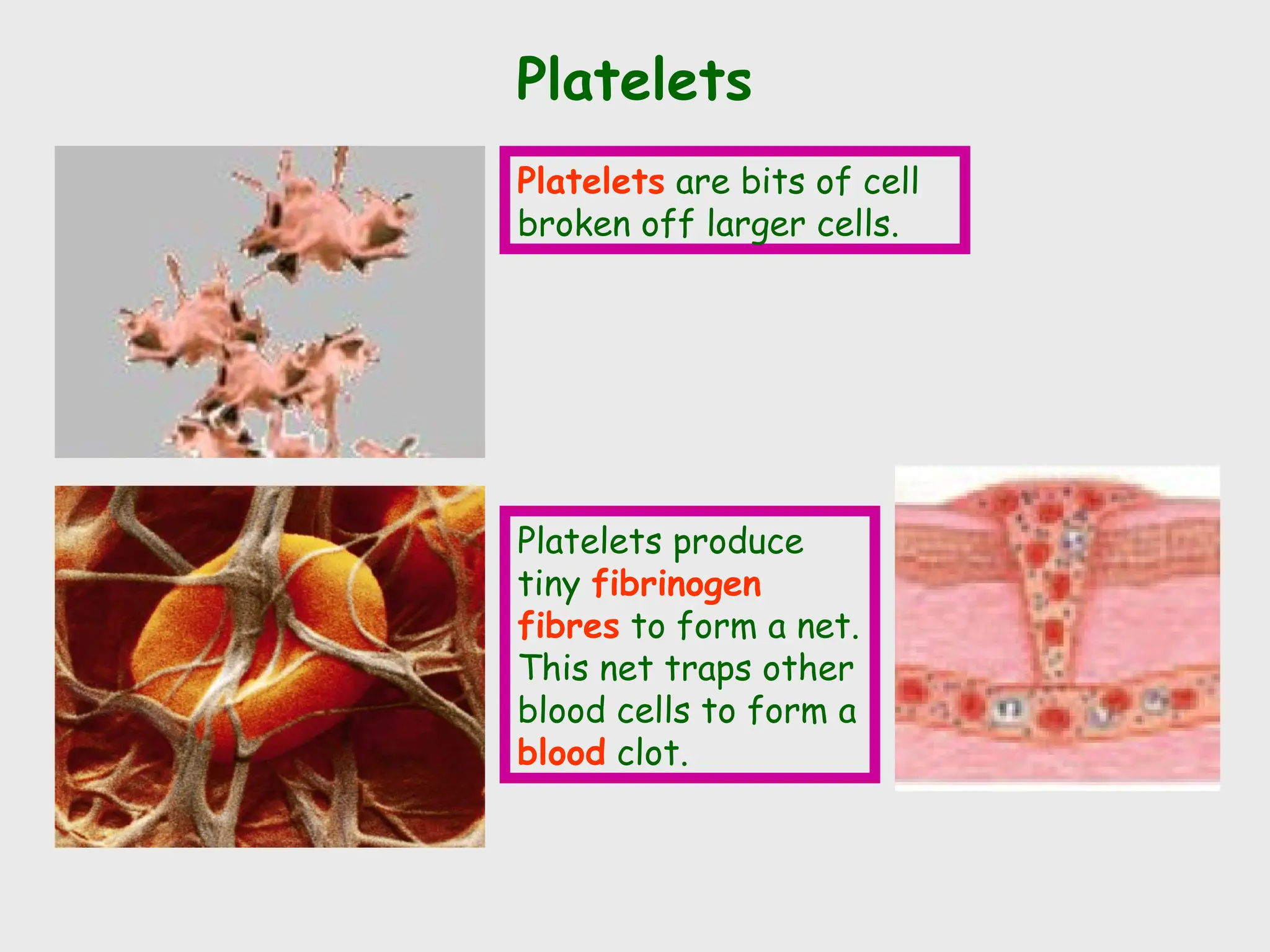
Platelets are bits of cell
broken off larger cells.
Platelets produce
tiny fibrinogen
fibres to form a net.
This net traps other
blood cells to form a
blood clot.
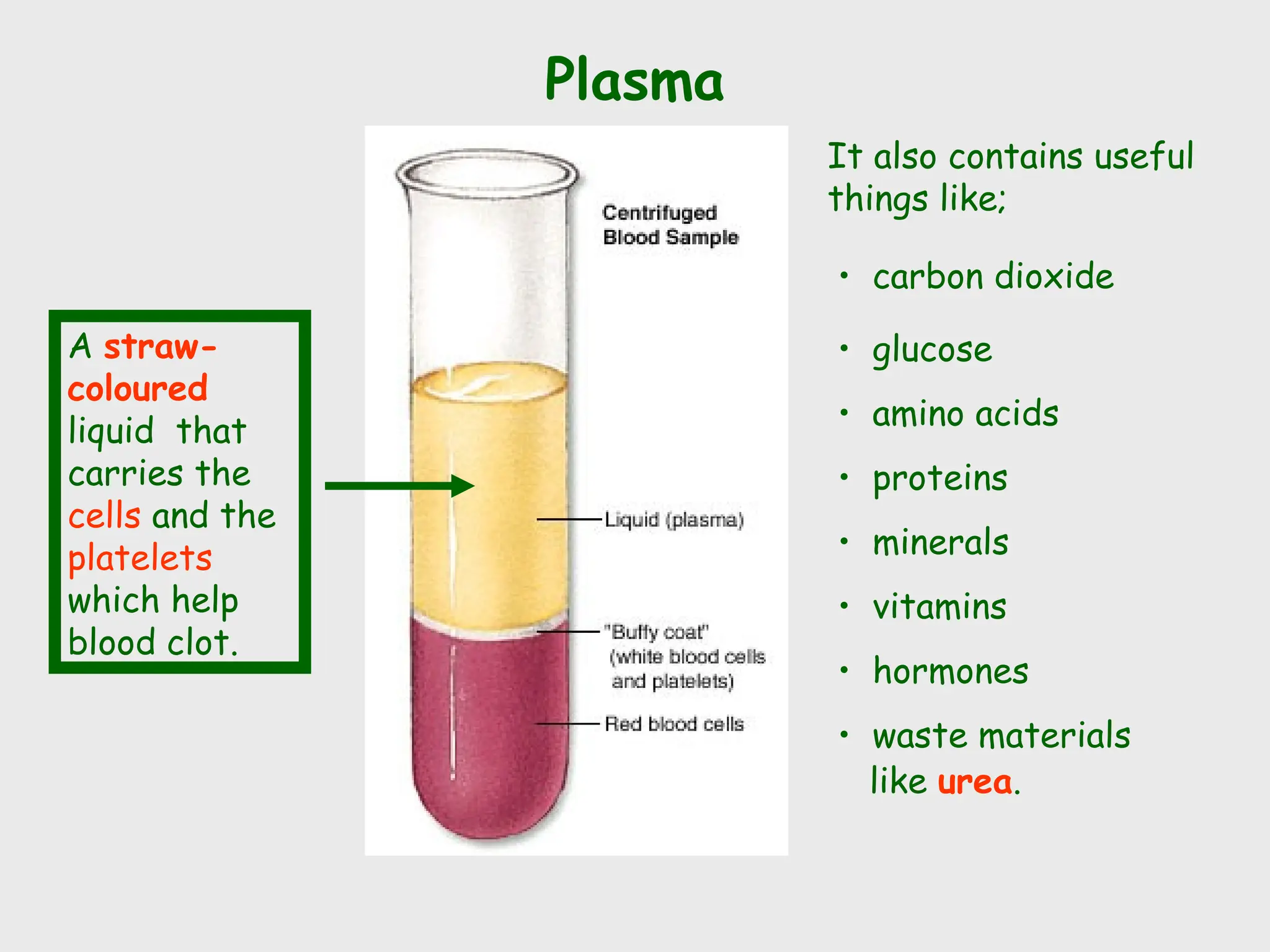
Plasma
A straw-
coloured
liquid that
carries the
cells and the
platelets
which help
blood clot.
• carbon dioxide
• glucose
• amino acids
• proteins
• minerals
• vitamins
• hormones
• waste materials
like urea.
It also contains useful
things like;
circulatorysystem-131214085723-phpapp01.ppt

  • 2.
    Circulation – pumpingof blood through the entire body by the heart. Circulation Coronary circulation – the circulation of blood within the heart. Pulmonary circulation – the flow of blood between the heart and lungs. Systemic circulation – the flow of blood between the heart and the cells of the body.
  • 3.
     The circulatorysystem carries blood and dissolved substances to and from different places in the body.  The Heart has the job of pumping these things around the body.  The Heart pumps blood and substances around the body in tubes called blood vessels.  The Heart and blood vessels together make up the Circulatory System. What is the circulatory system?
  • 4.
    lungs head & arms liver digestivesystem kidneys legs pulmonary artery aorta pulmonary vein main vein Left Right How does this system work? Circulatory System
  • 5.
    Lungs Body cells Our circulatorysystem is a double circulatory system. This means it has two parts parts. the right side of the system deals with deoxygenated blood. the left side of the system deals with oxygenated blood.
  • 6.
    The Heart These arearteries. They carry blood away from the heart. This is a vein. It brings blood from the body, except the lungs. Coronary arteries, the hearts own blood supply The heart has four chambers 2 atria 2 ventricles now lets look inside the heart
  • 7.
    The Heart Left Ventricle LeftAtrium Right Atrium Right Ventricle valve Vein from Lungs Artery to Head and Body Artery to Lungs Vein from Head and Body valve
  • 8.
    How does theHeart work? blood from the body blood from the lungs The heart beat begins when the heart muscles relax and blood flows into the atria. STEP ONE
  • 9.
    The atria thencontract and the valves open to allow blood into the ventricles. How does the Heart work? STEP TWO
  • 10.
    How does theHeart work? The valves close to stop blood flowing backwards. The ventricles contract forcing the blood to leave the heart. At the same time, the atria are relaxing and once again filling with blood. The cycle then repeats itself. STEP THREE
  • 11.
    blood from theheart gets around the body through blood vessels There are 3 types of blood vessels a. ARTERY b. VEIN c. CAPILLARY
  • 12.
    The ARTERY thick muscleand elastic fibres Arteries carry blood away from the heart. the elastic fibres allow the artery to stretch under pressure the thick muscle can contract to push the blood along.
  • 13.
    The VEIN Veins carryblood towards from the heart. thin muscle and elastic fibres veins have valves which act to stop the blood from going in the wrong direction. body muscles surround the veins so that when they contract to move the body, they also squeeze the veins and push the blood along the vessel.
  • 14.
    The CAPILLARY Capillaries linkArteries with Veins the wall of a capillary is only one cell thick they exchange materials between the blood and other body cells. The exchange of materials between the blood and the body can only occur through capillaries.
  • 15.
    artery vein capillaries body cell TheCAPILLARY A collection of capillaries is known as a capillary bed capillary bed.
  • 16.
    what’s in red bloodcells white blood cells platelets plasma carbon dioxide digested food waste (urea) hormones oxygen
  • 17.
    The Blood plasma red bloodcell white blood cell platelets
  • 18.
    Red Blood Cells containhaemoglobin, a molecule specially designed to hold oxygen and carry it to cells that need it. can change shape to an amazing extent, without breaking, as it squeezes single file through the capillaries. a biconcave disc that is round and flat without a nucleus
  • 19.
    White Blood Cells thereare many different types and all contain a big nucleus. the two main ones are the lymphocytes and the macrophages. some lymphocytes fight disease by making antibodies to destroy invaders by dissolving them. other lymphocytes make antitoxins to break down poisons. macrophages ‘eat’ and digest micro- organisms .
  • 20.
    Platelets Platelets are bitsof cell broken off larger cells. Platelets produce tiny fibrinogen fibres to form a net. This net traps other blood cells to form a blood clot.
  • 21.
    Plasma A straw- coloured liquid that carriesthe cells and the platelets which help blood clot. • carbon dioxide • glucose • amino acids • proteins • minerals • vitamins • hormones • waste materials like urea. It also contains useful things like;