Understanding History
Pre Historic India- Stone Age
(Origin to 10000 BCE)
600 BCE-350 BCE
Indus Valley Civilisation – 2500
BCE- 1600 BCE)
Aryans & Vedic Age (1500
BCE-600 BCE)
Mahajanapda- Foreign Invasions
Buddhism & Jainism
Mauryan Age (325-185 BCE)
Post Mauryan India (200 BCE-300CE)
Gupta Age (320-550CE)
Post Gupta-(600-750 CE)
Harsha, Chalukya & Pallava
Early Medieval ( 750-1000 CE, 1000-1200
CE)
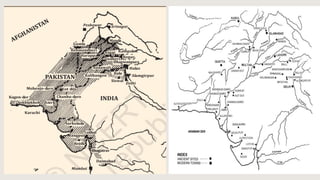
Indus Valley Civilisation
Q. Origin – Phases – Trends – Stages of Evolution
- Based on Archeological findings
- We can see linearity / Continuity in the cultures
- 4 phases of evolution
Pre Harappan Early Harappan Mature Harappan Late Harappan
Early Settlements & Villages Towns Great Cities Decline Period
Lothal
Kalibangan
Amri
Mehrgarh
nomadic people began to
lead a settled agricultural
life
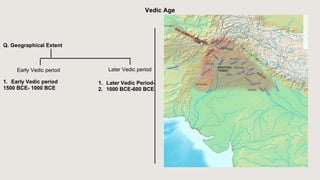
Q. Geographical Extent
Early Vedic period Later Vedic period
1. Early Vedic period
1500 BCE- 1000 BCE
(MAP)
Vedic Age
1. Later Vedic Period-
2. 1000 BCE-600 BCE
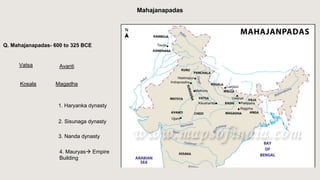
Q. Mahajanapadas- 600 to 325 BCE (MAP)
Mahajanapadas
Vatsa Avanti
Kosala Magadha
2. Sisunaga dynasty
1. Haryanka dynasty
3. Nanda dynasty
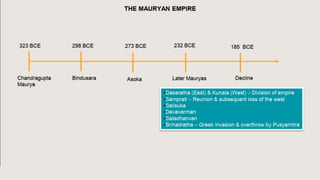
4. Mauryasà Empire
Building
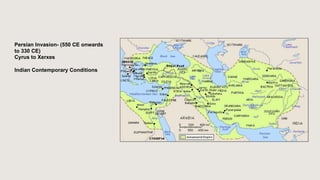
Persian Invasion- (550 CE onwards
to 330 CE)
Cyrus to Xerxes
Indian Contemporary Conditions
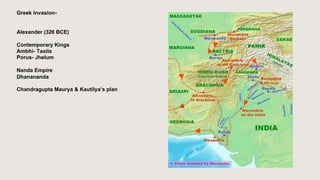
Greek Invasion-
Alexander (326 BCE)
Contemporary Kings
Ambhi- Taxila
Porus- Jhelum
Nanda Empire
Dhanananda
Chandragupta Maurya & Kautilya’s plan
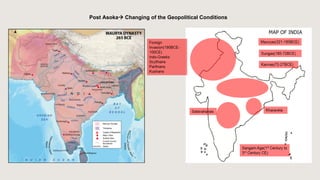
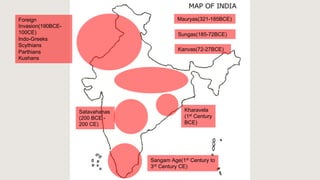
Post Asokaà Changing of the Geopolitical Conditions
Sungas(185-72BCE)
Satavahanas
(200 BCE -
200 CE)
Mauryas(321-185BCE)
Kanvas(72-27BCE)
Kharavela
(1st Century
BCE)
Foreign
Invasion(190BCE-
100CE)
Indo-Greeks
Scythians
Parthians
Kushans
Sangam Age(1st
Century to
3rd Century CE)
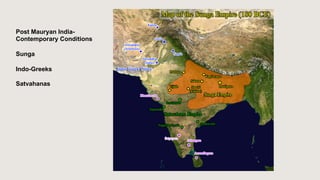
Post Mauryan India-
Contemporary Conditions
Sunga
Indo-Greeks
Satvahanas
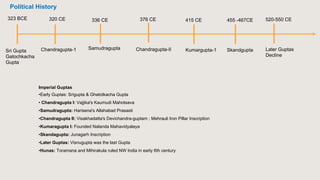
Sri Gupta
Gatochkacha
Gupta
Chandragupta-1 Samudragupta
323 BCE 320 CE 336 CE
Chandragupta-II
376 CE 415 CE
Kumargupta-1
455 -467CE
Skandgupta
520-550 CE
Later Guptas
Decline
Imperial Guptas
•Early Guptas: Srigupta & Ghatotkacha Gupta
• Chandragupta I: Vajjika's Kaumudi Mahotsava
•Samudragupta: Harisena's Allahabad Prasasti
•Chandragupta II: Visakhadatta's Devichandra-guptam ; Mehrauli Iron Pillar Inscription
•Kumaragupta I: Founded Nalanda Mahavidyalaya
•Skandagupta: Junagarh Inscription
•Later Guptas: Visnugupta was the last Gupta
•Hunas: Toramana and Mihirakula ruled NW India in early 6th century
Political History
Chandragupta II- (376 CE-415 CE)
How he came to power?
GUPTA AGE (320 CE-550 CE)
Post-Gupta Period
Formation of Regional Kingdoms
Maitrakaas
Maukharis
Gaudas
Pushyabhutis
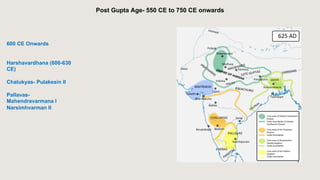
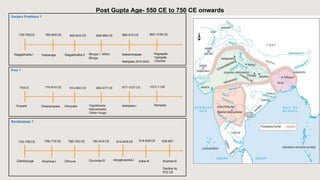
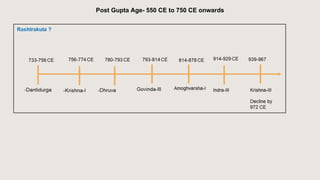
Post Gupta Age- 550 CE to 750 CE onwards
600 CE Onwards
Harshavardhana (606-630
CE)
Chalukyas- Pulakesin II
Pallavas-
Mahendravarmana I
Narsimhvarman II
Post Gupta Age- 550 CE to 750 CE onwards
UPSC CSE- Prelims 2021
CSP21-SET-C] Q.64) From the declines of Guptas until the rise of Harshavardhana in
the early seventh century, which of the following kingdoms were holding power in
Northern India?
1. The Guptas of Magadha
2. The Paramaras of Malwa
3. The Pushyabhutis of Thanesar
4. The Maukharis of Kanauj
5. The Yadavas of Devagiri
6. The Maitrakas of Valabhi
Select the correct answer using the codes given below.
a) 1, 2 and 5
b) 1, 3, 4 and 6
c) 2, 3 and 4
d) 5 and 6
Difficulty : Medium🧐
Type: Theory 📚
Attempt | Skip | 50:50
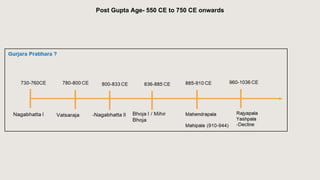
Post Gupta Age- 550 CE to 750 CE onwards
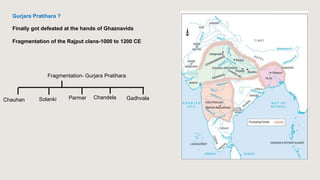
Gurjara Pratihara ?
Finally got defeated at the hands of Ghaznavids
Fragmentation of the Rajput clans-1000 to 1200 CE
Chauhan Solanki Chandela
Fragmentation- Gurjara Pratihara
Parmar Gadhvala
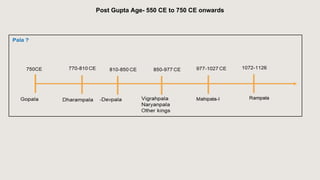
Post Gupta Age- 550 CE to 750 CE onwards
UPSC CSE- Prelims 2022
CSP22-SET-B] Q.52) Consider the following pairs :
King Dynasty
1. Nannuka — Chandela
2. Jayashakti — Paramara
3. Nagabhata II — Gurjara-Pratihara
4. Bhoja — Rashtrakuta
How many pairs given above are correctly matched ?
(a) Only one pair
(b) Only two pairs
(c) Only three pairs
(d) All four pairs
Difficulty : Tough🥵
Type: Theory 📚
Attempt | Skip | 50:50
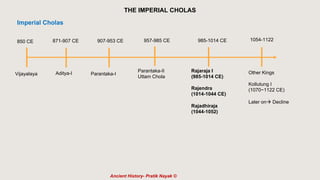
Vijayalaya Aditya-I
Parantaka-II
Uttam Chola
850 CE 871-907 CE 957-985 CE
Other Kings
Kollutung I
(1070−1122 CE)
Later onà Decline
1054-1122
Rajaraja I
(985-1014 CE)
Rajendra
(1014-1044 CE)
Rajadhiraja
(1044-1052)
985-1014 CE
Parantaka-I
907-953 CE
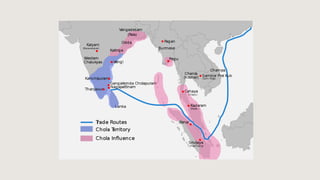
Imperial Cholas
THE IMPERIAL CHOLAS
Ancient History- Pratik Nayak ©
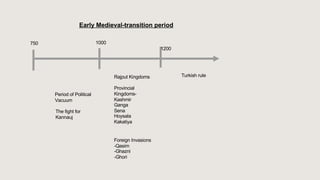
Early Medieval-transition period
750
Rajput Kingdoms
Provincial
Kingdoms-
Kashmir
Ganga
Sena
Hoysala
Kakatiya
The fight for
Kannauj
1000
Turkish rule
Period of Political
Vacuum
Foreign Invasions
-Qasim
-Ghazni
-Ghori
1200
5. Consider the following dynasties:
1. Hoysala
2. Gahadavala
3. Kakatiya
4. Yadava
How many of the above dynasties established their kingdoms in
early eighth century AD?
(a) Only one
(b) Only two
(c) Only three
(d) None
UPSC CSE- Prelims 2023
Attempt | Skip | 50:50

Chronology- Ancient India Timeline Clean.pdf

  • 1.
    Understanding History Pre HistoricIndia- Stone Age (Origin to 10000 BCE) 600 BCE-350 BCE Indus Valley Civilisation – 2500 BCE- 1600 BCE) Aryans & Vedic Age (1500 BCE-600 BCE) Mahajanapda- Foreign Invasions Buddhism & Jainism Mauryan Age (325-185 BCE) Post Mauryan India (200 BCE-300CE) Gupta Age (320-550CE) Post Gupta-(600-750 CE) Harsha, Chalukya & Pallava Early Medieval ( 750-1000 CE, 1000-1200 CE)
  • 3.
    Indus Valley Civilisation Q.Origin – Phases – Trends – Stages of Evolution - Based on Archeological findings - We can see linearity / Continuity in the cultures - 4 phases of evolution Pre Harappan Early Harappan Mature Harappan Late Harappan Early Settlements & Villages Towns Great Cities Decline Period Lothal Kalibangan Amri Mehrgarh nomadic people began to lead a settled agricultural life
  • 4.
    Q. Geographical Extent EarlyVedic period Later Vedic period 1. Early Vedic period 1500 BCE- 1000 BCE (MAP) Vedic Age 1. Later Vedic Period- 2. 1000 BCE-600 BCE
  • 5.
    Q. Mahajanapadas- 600to 325 BCE (MAP) Mahajanapadas Vatsa Avanti Kosala Magadha 2. Sisunaga dynasty 1. Haryanka dynasty 3. Nanda dynasty 4. Mauryasà Empire Building
  • 6.
    Persian Invasion- (550CE onwards to 330 CE) Cyrus to Xerxes Indian Contemporary Conditions
  • 7.
    Greek Invasion- Alexander (326BCE) Contemporary Kings Ambhi- Taxila Porus- Jhelum Nanda Empire Dhanananda Chandragupta Maurya & Kautilya’s plan
  • 9.
    Post Asokaà Changingof the Geopolitical Conditions
  • 10.
    Sungas(185-72BCE) Satavahanas (200 BCE - 200CE) Mauryas(321-185BCE) Kanvas(72-27BCE) Kharavela (1st Century BCE) Foreign Invasion(190BCE- 100CE) Indo-Greeks Scythians Parthians Kushans Sangam Age(1st Century to 3rd Century CE)
  • 11.
    Post Mauryan India- ContemporaryConditions Sunga Indo-Greeks Satvahanas
  • 12.
    Sri Gupta Gatochkacha Gupta Chandragupta-1 Samudragupta 323BCE 320 CE 336 CE Chandragupta-II 376 CE 415 CE Kumargupta-1 455 -467CE Skandgupta 520-550 CE Later Guptas Decline Imperial Guptas •Early Guptas: Srigupta & Ghatotkacha Gupta • Chandragupta I: Vajjika's Kaumudi Mahotsava •Samudragupta: Harisena's Allahabad Prasasti •Chandragupta II: Visakhadatta's Devichandra-guptam ; Mehrauli Iron Pillar Inscription •Kumaragupta I: Founded Nalanda Mahavidyalaya •Skandagupta: Junagarh Inscription •Later Guptas: Visnugupta was the last Gupta •Hunas: Toramana and Mihirakula ruled NW India in early 6th century Political History
  • 13.
    Chandragupta II- (376CE-415 CE) How he came to power? GUPTA AGE (320 CE-550 CE)
  • 14.
    Post-Gupta Period Formation ofRegional Kingdoms Maitrakaas Maukharis Gaudas Pushyabhutis Post Gupta Age- 550 CE to 750 CE onwards
  • 15.
    600 CE Onwards Harshavardhana(606-630 CE) Chalukyas- Pulakesin II Pallavas- Mahendravarmana I Narsimhvarman II Post Gupta Age- 550 CE to 750 CE onwards
  • 16.
    UPSC CSE- Prelims2021 CSP21-SET-C] Q.64) From the declines of Guptas until the rise of Harshavardhana in the early seventh century, which of the following kingdoms were holding power in Northern India? 1. The Guptas of Magadha 2. The Paramaras of Malwa 3. The Pushyabhutis of Thanesar 4. The Maukharis of Kanauj 5. The Yadavas of Devagiri 6. The Maitrakas of Valabhi Select the correct answer using the codes given below. a) 1, 2 and 5 b) 1, 3, 4 and 6 c) 2, 3 and 4 d) 5 and 6 Difficulty : Medium🧐 Type: Theory 📚 Attempt | Skip | 50:50
  • 17.
    Post Gupta Age-550 CE to 750 CE onwards
  • 18.
    Post Gupta Age-550 CE to 750 CE onwards
  • 19.
    Gurjara Pratihara ? Finallygot defeated at the hands of Ghaznavids Fragmentation of the Rajput clans-1000 to 1200 CE Chauhan Solanki Chandela Fragmentation- Gurjara Pratihara Parmar Gadhvala
  • 20.
    Post Gupta Age-550 CE to 750 CE onwards
  • 21.
    Post Gupta Age-550 CE to 750 CE onwards
  • 22.
    UPSC CSE- Prelims2022 CSP22-SET-B] Q.52) Consider the following pairs : King Dynasty 1. Nannuka — Chandela 2. Jayashakti — Paramara 3. Nagabhata II — Gurjara-Pratihara 4. Bhoja — Rashtrakuta How many pairs given above are correctly matched ? (a) Only one pair (b) Only two pairs (c) Only three pairs (d) All four pairs Difficulty : Tough🥵 Type: Theory 📚 Attempt | Skip | 50:50
  • 23.
    Vijayalaya Aditya-I Parantaka-II Uttam Chola 850CE 871-907 CE 957-985 CE Other Kings Kollutung I (1070−1122 CE) Later onà Decline 1054-1122 Rajaraja I (985-1014 CE) Rajendra (1014-1044 CE) Rajadhiraja (1044-1052) 985-1014 CE Parantaka-I 907-953 CE Imperial Cholas THE IMPERIAL CHOLAS Ancient History- Pratik Nayak ©
  • 25.
    Early Medieval-transition period 750 RajputKingdoms Provincial Kingdoms- Kashmir Ganga Sena Hoysala Kakatiya The fight for Kannauj 1000 Turkish rule Period of Political Vacuum Foreign Invasions -Qasim -Ghazni -Ghori 1200
  • 26.
    5. Consider thefollowing dynasties: 1. Hoysala 2. Gahadavala 3. Kakatiya 4. Yadava How many of the above dynasties established their kingdoms in early eighth century AD? (a) Only one (b) Only two (c) Only three (d) None UPSC CSE- Prelims 2023 Attempt | Skip | 50:50