IN SPAIN FRANCE AND ITALY
ADRIÁN JUMILLA RODRIGUEZ 4ºA
SPAIN
Spanish tradition has it that the Three Kings, (los Reyes Magos), are the ones
who on the morning of January 6th, (el Día de Reyes), bear presents for all the
children, repeating the ritual they performed after baby Jesus was born.
Influenced by American films and TV shows, some families have decided to
switch to Papá Noel on Christmas Day, arguing that this allows the kids more
time to play with their toys.
Christmas sweets are the main seasonal staple, nougat, is essential.
Marzipan figurines, are also popular, together with soft crumbly cakes
made with lard, flour and cinammon.
The 'lucky grapes'are the law on New Year's Eve tradition introduced in
the early 20th century, it's said to bring good luck if at each stroke of the
bells at midnight you take one grape and make one wish
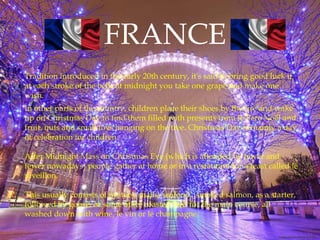
FRANCE
Tradition introduced in the early 20th century, it's said to bring good luck if
at each stroke of the bells at midnight you take one grape and make one
wish.
In other parts of the country, children place their shoes by the fire and wake
up on Christmas Day to find them filled with presents from le Père Noël and
fruit, nuts and small toys hanging on the tree. Christmas Day is mainly a day
of celebration for children.
After Midnight Mass on Christmas Eve (which is attended by fewer and
fewer nowadays) people gather at home or in a restaurant for a feast called le
réveillon.
This usually consists of oysters, snails, seafood, smoked salmon, as a starter,
followed by goose, or some other roasted bird for the main course, all
washed down with wine, le vin or le champagne.
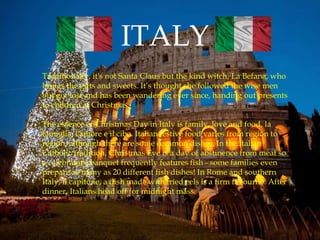
ITALY
Traditionally, it's not Santa Claus but the kind witch, La Befana, who
brings the gifts and sweets. It’s thought she followed the wise men
but got lost and has been wandering ever since, handing out presents
to children at Christmas.
The essence of Christmas Day in Italy is family, love and food, la
famiglia, l'amore e il cibo. Italian festive food varies from region to
region, although there are some common dishes. In the Italian
Catholic tradition, Christmas Eve is a day of abstinence from meat so
a celebratory banquet frequently features fish - some families even
prepare as many as 20 different fish dishes! In Rome and southern
Italy, il capitone, a dish made with fried eels is a firm favourite. After
dinner, Italians head off for midnight mass.

Christmas

  • 1.
    IN SPAIN FRANCEAND ITALY ADRIÁN JUMILLA RODRIGUEZ 4ºA
  • 2.
    SPAIN Spanish tradition hasit that the Three Kings, (los Reyes Magos), are the ones who on the morning of January 6th, (el Día de Reyes), bear presents for all the children, repeating the ritual they performed after baby Jesus was born. Influenced by American films and TV shows, some families have decided to switch to Papá Noel on Christmas Day, arguing that this allows the kids more time to play with their toys. Christmas sweets are the main seasonal staple, nougat, is essential. Marzipan figurines, are also popular, together with soft crumbly cakes made with lard, flour and cinammon. The 'lucky grapes'are the law on New Year's Eve tradition introduced in the early 20th century, it's said to bring good luck if at each stroke of the bells at midnight you take one grape and make one wish
  • 3.
    FRANCE Tradition introduced inthe early 20th century, it's said to bring good luck if at each stroke of the bells at midnight you take one grape and make one wish. In other parts of the country, children place their shoes by the fire and wake up on Christmas Day to find them filled with presents from le Père Noël and fruit, nuts and small toys hanging on the tree. Christmas Day is mainly a day of celebration for children. After Midnight Mass on Christmas Eve (which is attended by fewer and fewer nowadays) people gather at home or in a restaurant for a feast called le réveillon. This usually consists of oysters, snails, seafood, smoked salmon, as a starter, followed by goose, or some other roasted bird for the main course, all washed down with wine, le vin or le champagne.
  • 4.
    ITALY Traditionally, it's notSanta Claus but the kind witch, La Befana, who brings the gifts and sweets. It’s thought she followed the wise men but got lost and has been wandering ever since, handing out presents to children at Christmas. The essence of Christmas Day in Italy is family, love and food, la famiglia, l'amore e il cibo. Italian festive food varies from region to region, although there are some common dishes. In the Italian Catholic tradition, Christmas Eve is a day of abstinence from meat so a celebratory banquet frequently features fish - some families even prepare as many as 20 different fish dishes! In Rome and southern Italy, il capitone, a dish made with fried eels is a firm favourite. After dinner, Italians head off for midnight mass.