
A Prevention-Centered
Homelessness Assistance System:
A Paradigm Shift?
Dennis Culhane,
Stephen Metraux and
Thomas Byrne
Typology of Single Adult Homelessness
(Philadelphia)
0%
10%
20%
30%
40%
50%
60%
70%
80%
90%
Transitional Episodic Chronic
% of Persons % Days Used
 Transitionals:
 1.19 stays
 20.4 days
 Episodics:
 3.84 stays
 72.8 days
 Chronics:
 1.53 stays
 252.4 days
Disability Rates
(Single Adults in Philadelphia)
0%
10%
20%
30%
40%
50%
60%
70%
80%
90%
Mental Illness Physical Substance
Abuse
Any One
Transitional Episodic Chronic
Implications
 Transitionally Homeless: Prevention and
Relocation Assistance
 Episodically Homeless: Low Demand Residences
(Safe Havens), Harm Reduction, Transitional
Housing, Residential Treatment
 Chronically Homeless: Permanent Supportive
Housing
What has been done?:
Chronic Homeless Initiative
Congress and Bush/Obama have increased
funding $600 million since 2003; 45%
increase
80,000 units created
HUD reported a 30% decline in CH from 05
to 09
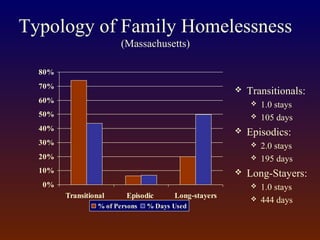
Typology of Family Homelessness
(Massachusetts)
0%
10%
20%
30%
40%
50%
60%
70%
80%
Transitional Episodic Long-stayers
% of Persons % Days Used
 Transitionals:
 1.0 stays
 105 days
 Episodics:
 2.0 stays
 195 days
 Long-Stayers:
 1.0 stays
 444 days
Intensive Service Histories of
Families
0%
10%
20%
30%
40%
50%
60%
Child Welfare
Placement
Inpt MH Inpt SA Any one
Transitional Episodic Long-Term
Income Sources
0%
10%
20%
30%
40%
50%
Earned Income SSI
Transitional Episodic Long-Term (n=99)
The Average Cost of
Shelter Stays by Type
(Massachusetts)
Transitional $11,550
Episodic $21,450
Long-term $48,440
Does not include McKinney-Vento funding or non-DTA public service contracts.
Conclusions
 Policies and programs driving long stays
 Characteristics of “graduates” may reflect
selection effects of policies and programs
 Most costly service users are not differentially
service-needy
 Need for reform
V
o
l
u
m
e
Cost per Case
Model Service System
for Addressing Housing Emergencies
Prevention Supportive
Housing
Shelter Admission
Diversion,
Relocation, and
Emergency Rental
Assistance
Mainstream systems
Community-
Based programs
Shelter
Day Care
Employment
Assistance
Housing
Placement
Family Supt
Services
MH/SA
Services
Prevailing Model Emerging Model
Housing
Stabilization
Day Care
Employment
Assistance
Shelter
Family Supt
Services
MH/SA
Services
Turning the Continuum of Care Inside – Out?
Target Population Prevention Objective
Most At – Risk Protocols for Institutional
Discharges
Imminently Homeless Crisis Intervention and
Tenancy Preservation
(Shelter Diversion)
Homeless Emergency Shelter and Rapid
Rehousing
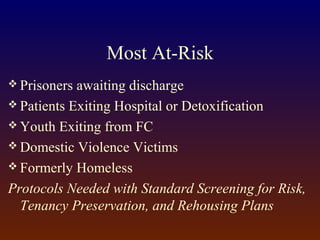
Most At-Risk
 Prisoners awaiting discharge
 Patients Exiting Hospital or Detoxification
 Youth Exiting from FC
 Domestic Violence Victims
 Formerly Homeless
Protocols Needed with Standard Screening for Risk,
Tenancy Preservation, and Rehousing Plans
Imminently Homelessness
(HH w/ Eviction Notice, Shelter Requestors)
 For Primary Tenants – Landlord Tenant Mediation
and Relocation Grant (if necessary)
 For Those Leaving Family/Friends:
 Home visits
 “Options” counseling
 Family mediation
 Transition planning
 Flexible emergency cash assistance
 Employment coaching
Homeless
 Crisis Intervention (same as for “imminently
homeless”) for newly homeless to restore prior
tenancy or provide relocation grant
 At some threshold (3-4 weeks): Rehousing Plan
 Deeper Assessment and Services Screen
 Service Coordination – referral until “touch” is made
 Relocation
 Emergency Assistance - flexible cash assistance, can
provide shallow rent supports, with six month review
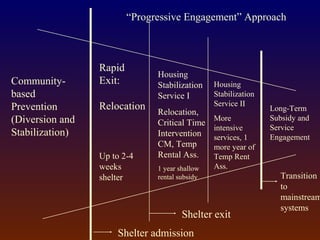
Shelter admission
Community-
based
Prevention
(Diversion and
Stabilization)
Rapid
Exit:
Relocation
Up to 2-4
weeks
shelter
Housing
Stabilization
Service I
Relocation,
Critical Time
Intervention
CM, Temp
Rental Ass.
1 year shallow
rental subsidy
Housing
Stabilization
Service II
More
intensive
services, 1
more year of
Temp Rent
Ass.
Shelter exit
Transition
to
mainstream
systems
Long-Term
Subsidy and
Service
Engagement
“Progressive Engagement” Approach
The English Experience:
Prevention Oriented System
Funded in 2003
 New Ethos: All Cases Can Be Prevented/Rehoused
 50% Decline in Homelessness from 2003-2006
 Keys to Success:
 Flexible resources that could be tailored to client
 Strong agency collaborations with mainstream systems
 Timeliness – intervening as early and quickly as
possible
Systems Transformation
 From “the Continuum” to “the Network”
 Creating a New Field of Practice: Housing
Stabilization
 New Service Priorities:
 Tenancy Sustainment
 Service Coordinators
 Benefits Counselors
 Housing Relocation Specialists
 Family Mediation
 Home Visitors
Challenges
 Engaging Human Services Systems: Prevention
Concept has to be embraced across systems
 Local Housing Authority Participation – Need for
some permanent subsidies for households with
long-term needs
 New Data Collection and Performance Standards
Needed
Issues for Philanthropy
 Engaging and convening community stakeholders
 Supporting “systems change” and “culture
change” activities
 Mobilizing private sector participation into a
housing and jobs network: landlords, legal
services, employers
 “Home” programs – move-in assistance, house-
starter kits, furniture banks, etc.
Suggested web resources
 National Alliance to End Homelessness web site:
HPRP Resources section, includes “guides for
good practice”
 Funders Together to End Homelessness:
http://funderstogether.org/
A Prevention-Centered Homelessness Assistance System: A Paradigm Shift?

A Prevention-Centered Homelessness Assistance System: A Paradigm Shift?

  • 1.
    A Prevention-Centered Homelessness AssistanceSystem: A Paradigm Shift? Dennis Culhane, Stephen Metraux and Thomas Byrne
  • 2.
    Typology of SingleAdult Homelessness (Philadelphia) 0% 10% 20% 30% 40% 50% 60% 70% 80% 90% Transitional Episodic Chronic % of Persons % Days Used  Transitionals:  1.19 stays  20.4 days  Episodics:  3.84 stays  72.8 days  Chronics:  1.53 stays  252.4 days
  • 3.
    Disability Rates (Single Adultsin Philadelphia) 0% 10% 20% 30% 40% 50% 60% 70% 80% 90% Mental Illness Physical Substance Abuse Any One Transitional Episodic Chronic
  • 4.
    Implications  Transitionally Homeless:Prevention and Relocation Assistance  Episodically Homeless: Low Demand Residences (Safe Havens), Harm Reduction, Transitional Housing, Residential Treatment  Chronically Homeless: Permanent Supportive Housing
  • 5.
    What has beendone?: Chronic Homeless Initiative Congress and Bush/Obama have increased funding $600 million since 2003; 45% increase 80,000 units created HUD reported a 30% decline in CH from 05 to 09
  • 6.
    Typology of FamilyHomelessness (Massachusetts) 0% 10% 20% 30% 40% 50% 60% 70% 80% Transitional Episodic Long-stayers % of Persons % Days Used  Transitionals:  1.0 stays  105 days  Episodics:  2.0 stays  195 days  Long-Stayers:  1.0 stays  444 days
  • 7.
    Intensive Service Historiesof Families 0% 10% 20% 30% 40% 50% 60% Child Welfare Placement Inpt MH Inpt SA Any one Transitional Episodic Long-Term
  • 8.
    Income Sources 0% 10% 20% 30% 40% 50% Earned IncomeSSI Transitional Episodic Long-Term (n=99)
  • 9.
    The Average Costof Shelter Stays by Type (Massachusetts) Transitional $11,550 Episodic $21,450 Long-term $48,440 Does not include McKinney-Vento funding or non-DTA public service contracts.
  • 10.
    Conclusions  Policies andprograms driving long stays  Characteristics of “graduates” may reflect selection effects of policies and programs  Most costly service users are not differentially service-needy  Need for reform
  • 11.
    V o l u m e Cost per Case ModelService System for Addressing Housing Emergencies Prevention Supportive Housing Shelter Admission Diversion, Relocation, and Emergency Rental Assistance Mainstream systems Community- Based programs
  • 12.
    Shelter Day Care Employment Assistance Housing Placement Family Supt Services MH/SA Services PrevailingModel Emerging Model Housing Stabilization Day Care Employment Assistance Shelter Family Supt Services MH/SA Services Turning the Continuum of Care Inside – Out?
  • 13.
    Target Population PreventionObjective Most At – Risk Protocols for Institutional Discharges Imminently Homeless Crisis Intervention and Tenancy Preservation (Shelter Diversion) Homeless Emergency Shelter and Rapid Rehousing
  • 14.
    Most At-Risk  Prisonersawaiting discharge  Patients Exiting Hospital or Detoxification  Youth Exiting from FC  Domestic Violence Victims  Formerly Homeless Protocols Needed with Standard Screening for Risk, Tenancy Preservation, and Rehousing Plans
  • 15.
    Imminently Homelessness (HH w/Eviction Notice, Shelter Requestors)  For Primary Tenants – Landlord Tenant Mediation and Relocation Grant (if necessary)  For Those Leaving Family/Friends:  Home visits  “Options” counseling  Family mediation  Transition planning  Flexible emergency cash assistance  Employment coaching
  • 16.
    Homeless  Crisis Intervention(same as for “imminently homeless”) for newly homeless to restore prior tenancy or provide relocation grant  At some threshold (3-4 weeks): Rehousing Plan  Deeper Assessment and Services Screen  Service Coordination – referral until “touch” is made  Relocation  Emergency Assistance - flexible cash assistance, can provide shallow rent supports, with six month review
  • 17.
    Shelter admission Community- based Prevention (Diversion and Stabilization) Rapid Exit: Relocation Upto 2-4 weeks shelter Housing Stabilization Service I Relocation, Critical Time Intervention CM, Temp Rental Ass. 1 year shallow rental subsidy Housing Stabilization Service II More intensive services, 1 more year of Temp Rent Ass. Shelter exit Transition to mainstream systems Long-Term Subsidy and Service Engagement “Progressive Engagement” Approach
  • 18.
    The English Experience: PreventionOriented System Funded in 2003  New Ethos: All Cases Can Be Prevented/Rehoused  50% Decline in Homelessness from 2003-2006  Keys to Success:  Flexible resources that could be tailored to client  Strong agency collaborations with mainstream systems  Timeliness – intervening as early and quickly as possible
  • 19.
    Systems Transformation  From“the Continuum” to “the Network”  Creating a New Field of Practice: Housing Stabilization  New Service Priorities:  Tenancy Sustainment  Service Coordinators  Benefits Counselors  Housing Relocation Specialists  Family Mediation  Home Visitors
  • 20.
    Challenges  Engaging HumanServices Systems: Prevention Concept has to be embraced across systems  Local Housing Authority Participation – Need for some permanent subsidies for households with long-term needs  New Data Collection and Performance Standards Needed
  • 21.
    Issues for Philanthropy Engaging and convening community stakeholders  Supporting “systems change” and “culture change” activities  Mobilizing private sector participation into a housing and jobs network: landlords, legal services, employers  “Home” programs – move-in assistance, house- starter kits, furniture banks, etc.
  • 22.
    Suggested web resources National Alliance to End Homelessness web site: HPRP Resources section, includes “guides for good practice”  Funders Together to End Homelessness: http://funderstogether.org/