• Objectives and Goals
• What do stake holders want from the school?
• How should a quality school look like?
• Bringing together, Physical, financial and human resources

together
Presentation by
Mr. S. K. Bhattacharya
Chairman
BBPS Training Centre
How Sapling Has Become A Banyan Tree
 A Humble Beginning
 First Step

 Period To Consolidation
 Giant Leap

– 1944 To 1956
– 1956 To 1969
– 1969 To 1985
– 1985 To 2013
Leaders/ Visionaries Behind The
Mammoth Developments
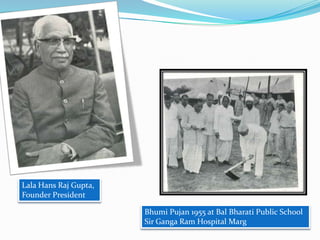
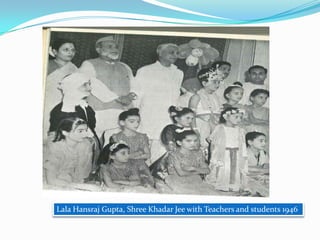
 1944 – 1956, Shri. Hansraj Gupta Ji, Founder President
 Shri. Khaddar Ji, Founder Head Master
 1956 – 1971 – 72, Shri. Hansraj Gupta Ji & Shri. K. B.

Srivastava (Dadaji)
pics

Lala Hans Raj Gupta,
Founder President
Bhumi Pujan 1955 at Bal Bharati Public School
Sir Ganga Ram Hospital Marg
Lala Hansraj Gupta, Shree Khadar Jee with Teachers and students 1946
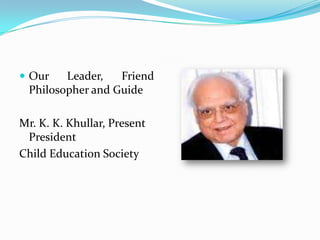
 Our

Leader,
Friend
Philosopher and Guide

Mr. K. K. Khullar, Present
President
Child Education Society
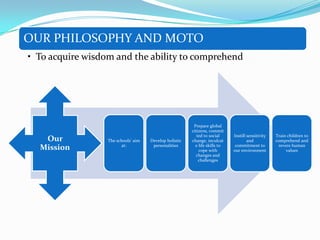
OUR PHILOSOPHY AND MOTO
• To acquire wisdom and the ability to comprehend

Our
Mission

The schools’ aim
at:

Develop holistic
personalities

Prepare global
citizens, commit
ted to social
change, inculcat
e life skills to
cope with
changes and
challenges

Instill sensitivity
and
commitment to
our environment

Train children to
comprehend and
revere human
values
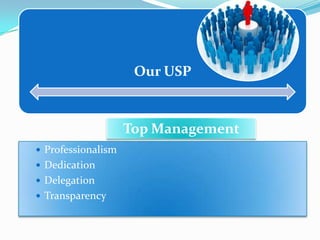
Our USP

Top Management
 Professionalism
 Dedication
 Delegation

 Transparency
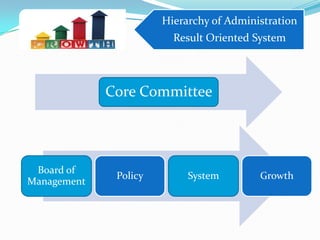
Hierarchy of Administration
Result Oriented System

Core Committee

Board of
Management

Policy

System

Growth
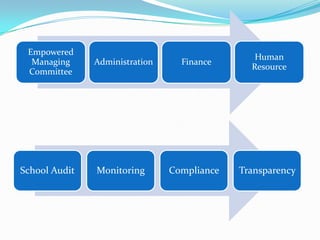
Empowered
Managing
Committee

School Audit

Administration

Monitoring

Finance

Human
Resource

Compliance

Transparency
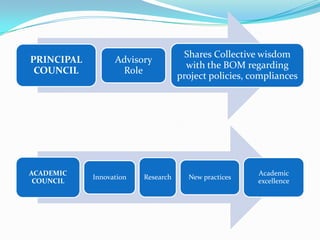
PRINCIPAL
COUNCIL

ACADEMIC
COUNCIL

Advisory
Role

Innovation

Research

Shares Collective wisdom
with the BOM regarding
project policies, compliances

New practices

Academic
excellence
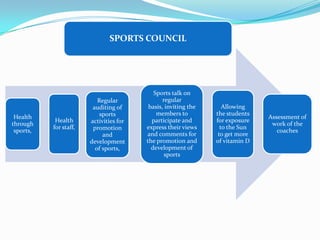
SPORTS COUNCIL

Health
through
sports,

Health
for staff,

Regular
auditing of
sports
activities for
promotion
and
development
of sports,

Sports talk on
regular
basis, inviting the
members to
participate and
express their views
and comments for
the promotion and
development of
sports

Allowing
the students
for exposure
to the Sun
to get more
of vitamin D

Assessment of
work of the
coaches
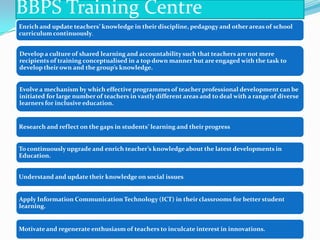
BBPS Training Centre
Enrich and update teachers’ knowledge in their discipline, pedagogy and other areas of school
curriculum continuously.

Develop a culture of shared learning and accountability such that teachers are not mere
recipients of training conceptualised in a top down manner but are engaged with the task to
develop their own and the group’s knowledge.

Evolve a mechanism by which effective programmes of teacher professional development can be
initiated for large number of teachers in vastly different areas and to deal with a range of diverse
learners for inclusive education.

Research and reflect on the gaps in students’ learning and their progress

To continuously upgrade and enrich teacher’s knowledge about the latest developments in
Education.
Understand and update their knowledge on social issues

Apply Information Communication Technology (ICT) in their classrooms for better student
learning.

Motivate and regenerate enthusiasm of teachers to inculcate interest in innovations.
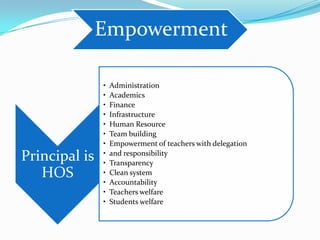
Empowerment

Principal is
HOS

•
•
•
•
•
•
•
•
•
•
•
•
•

Administration
Academics
Finance
Infrastructure
Human Resource
Team building
Empowerment of teachers with delegation
and responsibility
Transparency
Clean system
Accountability
Teachers welfare
Students welfare
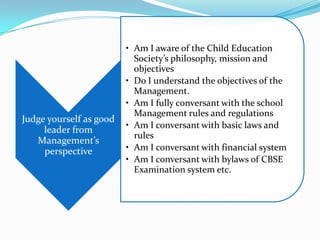
Judge yourself as good
leader from
Management’s
perspective

• Am I aware of the Child Education
Society’s philosophy, mission and
objectives
• Do I understand the objectives of the
Management.
• Am I fully conversant with the school
Management rules and regulations
• Am I conversant with basic laws and
rules
• Am I conversant with financial system
• Am I conversant with bylaws of CBSE
Examination system etc.
Do I prepare all my documents as per the directions and formats.
Do I report the developments, activities, appraisal of teachers performance
and other related matters to my Management with full transparency
Do I prepare my institutional plan and get approval from my Management
Do I check all the records documents etc. on regular basis
Do I prioritize my action plan?
• Do I have Parents Teachers
Association in my school
• Do I utilize the parents’ services
for the school development
Programmes
• Am I accessible to the parents
• Do I take suggestions from the
parents for activities for
developments
• Do I involve the community in
the school development
Programme
• Do I connect myself with the
community

From
Parents
Perspective
From Students Perspective
 Do I know the aspirations of my students

 Do I meet my students on regular basis
 Do I allow my students to come to my office for

suggestions / comments or interaction
 Do I have a special plan for the not so talented
students for their growth
Self Assessment
 Am I growing as a leader / teacher / administrator/ counselor/ coordinator
 Am I aware of my weaknesses?
 Have I made conscientious efforts to change myself in regard to the










weakness that I have identified
Do I consult and involve my teachers in the preparation of my institutional
plan
Am I doing enough for holistic Education?
Do I do enough for empowering my teachers.
Have I been successful in building up my team?
Am I treating all my colleagues equally without any prejudice
Am I easily accessible to my teachers / parents / students
Do I take care of personal grievances of my colleagues
Do I do enough for my personal growth as a professional
 Reading books and journals
 Attending Workshops and seminars
 Writing articles and research papers
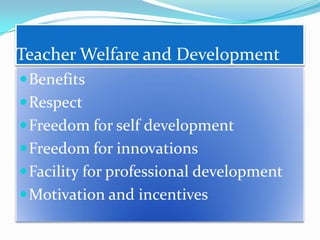
Teacher Welfare and Development
 Benefits
 Respect
 Freedom for self development
 Freedom for innovations
 Facility for professional development

 Motivation and incentives
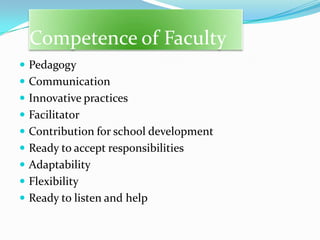
Competence of Faculty
 Pedagogy

 Communication
 Innovative practices
 Facilitator
 Contribution for school development
 Ready to accept responsibilities
 Adaptability
 Flexibility

 Ready to listen and help
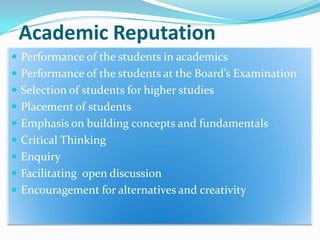
Academic Reputation
 Performance of the students in academics
 Performance of the students at the Board’s Examination
 Selection of students for higher studies
 Placement of students
 Emphasis on building concepts and fundamentals

 Critical Thinking
 Enquiry
 Facilitating open discussion

 Encouragement for alternatives and creativity
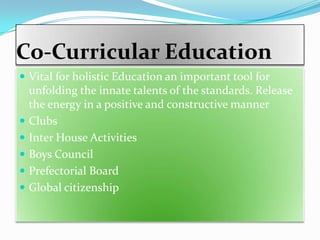
Co-Curricular Education
 Vital for holistic Education an important tool for








unfolding the innate talents of the standards. Release
the energy in a positive and constructive manner
Clubs
Inter House Activities
Boys Council
Prefectorial Board
Global citizenship
Sports Education
 Integral part of Education
 Health
 Physical fitness

 Channelize energy of the students
Life skill Education and conflict
Management
 To empower the students and make them self-reliant

and confident and more productive, life skill
Education is a must. Examples of some life skill
activities
Individual Attention

• Small class size
• Understanding the strength and weakness of each child,
• Understanding and application of Multiple Intelligence

theory
• Encourage and develop the potentiality of child
Leadership Management Quality
 Role Model
 Team Building
 Delegation and empowerment

 Collective responsibility
 Transparency
Parental Involvement
 Parents as partners in the Teaching Learning Process
 Value based Education
 Joint partnership in some community service
 Invite cooperation and suggestions for development of

infrastructure
 Voluntary contribution of parents having expertise.
Infrastructure
 Physical and student friendly environment for conducive

for holistic Education
 Facilities
 Maintenance
 Environment

 Infrastructure for games and sports – Hygiene and cleanliness
 Safety and security
 Special needs Education
 Counsellor

 Health Education
 Medical Checkup and follow up
Community services
 To

sensitize the children with
various social issues and to make
them more responsible, school
should encourage the students to
participate and contribute in
various community services

Child education society vision-BBPSTC

  • 1.
    • Objectives andGoals • What do stake holders want from the school? • How should a quality school look like? • Bringing together, Physical, financial and human resources together Presentation by Mr. S. K. Bhattacharya Chairman BBPS Training Centre
  • 2.
    How Sapling HasBecome A Banyan Tree  A Humble Beginning  First Step  Period To Consolidation  Giant Leap – 1944 To 1956 – 1956 To 1969 – 1969 To 1985 – 1985 To 2013
  • 3.
    Leaders/ Visionaries BehindThe Mammoth Developments  1944 – 1956, Shri. Hansraj Gupta Ji, Founder President  Shri. Khaddar Ji, Founder Head Master  1956 – 1971 – 72, Shri. Hansraj Gupta Ji & Shri. K. B. Srivastava (Dadaji)
  • 4.
    pics Lala Hans RajGupta, Founder President Bhumi Pujan 1955 at Bal Bharati Public School Sir Ganga Ram Hospital Marg
  • 5.
    Lala Hansraj Gupta,Shree Khadar Jee with Teachers and students 1946
  • 6.
     Our Leader, Friend Philosopher andGuide Mr. K. K. Khullar, Present President Child Education Society
  • 7.
    OUR PHILOSOPHY ANDMOTO • To acquire wisdom and the ability to comprehend Our Mission The schools’ aim at: Develop holistic personalities Prepare global citizens, commit ted to social change, inculcat e life skills to cope with changes and challenges Instill sensitivity and commitment to our environment Train children to comprehend and revere human values
  • 8.
    Our USP Top Management Professionalism  Dedication  Delegation  Transparency
  • 9.
    Hierarchy of Administration ResultOriented System Core Committee Board of Management Policy System Growth
  • 10.
  • 11.
    PRINCIPAL COUNCIL ACADEMIC COUNCIL Advisory Role Innovation Research Shares Collective wisdom withthe BOM regarding project policies, compliances New practices Academic excellence
  • 12.
    SPORTS COUNCIL Health through sports, Health for staff, Regular auditingof sports activities for promotion and development of sports, Sports talk on regular basis, inviting the members to participate and express their views and comments for the promotion and development of sports Allowing the students for exposure to the Sun to get more of vitamin D Assessment of work of the coaches
  • 13.
    BBPS Training Centre Enrichand update teachers’ knowledge in their discipline, pedagogy and other areas of school curriculum continuously. Develop a culture of shared learning and accountability such that teachers are not mere recipients of training conceptualised in a top down manner but are engaged with the task to develop their own and the group’s knowledge. Evolve a mechanism by which effective programmes of teacher professional development can be initiated for large number of teachers in vastly different areas and to deal with a range of diverse learners for inclusive education. Research and reflect on the gaps in students’ learning and their progress To continuously upgrade and enrich teacher’s knowledge about the latest developments in Education. Understand and update their knowledge on social issues Apply Information Communication Technology (ICT) in their classrooms for better student learning. Motivate and regenerate enthusiasm of teachers to inculcate interest in innovations.
  • 14.
    Empowerment Principal is HOS • • • • • • • • • • • • • Administration Academics Finance Infrastructure Human Resource Teambuilding Empowerment of teachers with delegation and responsibility Transparency Clean system Accountability Teachers welfare Students welfare
  • 15.
    Judge yourself asgood leader from Management’s perspective • Am I aware of the Child Education Society’s philosophy, mission and objectives • Do I understand the objectives of the Management. • Am I fully conversant with the school Management rules and regulations • Am I conversant with basic laws and rules • Am I conversant with financial system • Am I conversant with bylaws of CBSE Examination system etc.
  • 16.
    Do I prepareall my documents as per the directions and formats. Do I report the developments, activities, appraisal of teachers performance and other related matters to my Management with full transparency Do I prepare my institutional plan and get approval from my Management Do I check all the records documents etc. on regular basis Do I prioritize my action plan?
  • 17.
    • Do Ihave Parents Teachers Association in my school • Do I utilize the parents’ services for the school development Programmes • Am I accessible to the parents • Do I take suggestions from the parents for activities for developments • Do I involve the community in the school development Programme • Do I connect myself with the community From Parents Perspective
  • 18.
    From Students Perspective Do I know the aspirations of my students  Do I meet my students on regular basis  Do I allow my students to come to my office for suggestions / comments or interaction  Do I have a special plan for the not so talented students for their growth
  • 19.
    Self Assessment  AmI growing as a leader / teacher / administrator/ counselor/ coordinator  Am I aware of my weaknesses?  Have I made conscientious efforts to change myself in regard to the         weakness that I have identified Do I consult and involve my teachers in the preparation of my institutional plan Am I doing enough for holistic Education? Do I do enough for empowering my teachers. Have I been successful in building up my team? Am I treating all my colleagues equally without any prejudice Am I easily accessible to my teachers / parents / students Do I take care of personal grievances of my colleagues Do I do enough for my personal growth as a professional  Reading books and journals  Attending Workshops and seminars  Writing articles and research papers
  • 21.
    Teacher Welfare andDevelopment  Benefits  Respect  Freedom for self development  Freedom for innovations  Facility for professional development  Motivation and incentives
  • 22.
    Competence of Faculty Pedagogy  Communication  Innovative practices  Facilitator  Contribution for school development  Ready to accept responsibilities  Adaptability  Flexibility  Ready to listen and help
  • 23.
    Academic Reputation  Performanceof the students in academics  Performance of the students at the Board’s Examination  Selection of students for higher studies  Placement of students  Emphasis on building concepts and fundamentals  Critical Thinking  Enquiry  Facilitating open discussion  Encouragement for alternatives and creativity
  • 24.
    Co-Curricular Education  Vitalfor holistic Education an important tool for      unfolding the innate talents of the standards. Release the energy in a positive and constructive manner Clubs Inter House Activities Boys Council Prefectorial Board Global citizenship
  • 25.
    Sports Education  Integralpart of Education  Health  Physical fitness  Channelize energy of the students
  • 26.
    Life skill Educationand conflict Management  To empower the students and make them self-reliant and confident and more productive, life skill Education is a must. Examples of some life skill activities
  • 27.
    Individual Attention • Smallclass size • Understanding the strength and weakness of each child, • Understanding and application of Multiple Intelligence theory • Encourage and develop the potentiality of child
  • 28.
    Leadership Management Quality Role Model  Team Building  Delegation and empowerment  Collective responsibility  Transparency
  • 29.
    Parental Involvement  Parentsas partners in the Teaching Learning Process  Value based Education  Joint partnership in some community service  Invite cooperation and suggestions for development of infrastructure  Voluntary contribution of parents having expertise.
  • 30.
    Infrastructure  Physical andstudent friendly environment for conducive for holistic Education  Facilities  Maintenance  Environment  Infrastructure for games and sports – Hygiene and cleanliness  Safety and security  Special needs Education  Counsellor  Health Education  Medical Checkup and follow up
  • 31.
    Community services  To sensitizethe children with various social issues and to make them more responsible, school should encourage the students to participate and contribute in various community services