Dr. Vishakha Sharma
Department of Food Science and
Nutrition, CCAS, MPUAT, Udaipur 1
With increasing public health awareness
worldwide, demand for functional food with
multiple health benefits has also increased.
The use of medicinal food from folk medicine
to prevent diseases such as diabetes, obesity,
and cardiovascular problems is now gaining
momentum among the public.
2
3
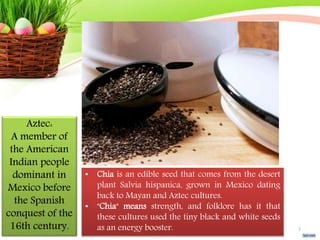
• Chia is an edible seed that comes from the desert
plant Salvia hispanica, grown in Mexico dating
back to Mayan and Aztec cultures.
• "Chia" means strength, and folklore has it that
these cultures used the tiny black and white seeds
as an energy booster.
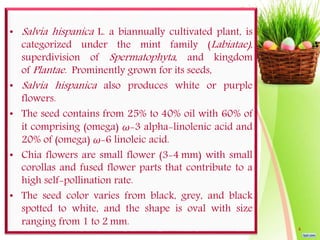
• Salvia hispanica L. a biannually cultivated plant, is
categorized under the mint family (Labiatae),
superdivision of Spermatophyta, and kingdom
of Plantae. Prominently grown for its seeds,
• Salvia hispanica also produces white or purple
flowers.
• The seed contains from 25% to 40% oil with 60% of
it comprising (omega) ω-3 alpha-linolenic acid and
20% of (omega) ω-6 linoleic acid.
• Chia flowers are small flower (3-4 mm) with small
corollas and fused flower parts that contribute to a
high self-pollination rate.
• The seed color varies from black, grey, and black
spotted to white, and the shape is oval with size
ranging from 1 to 2 mm.
4
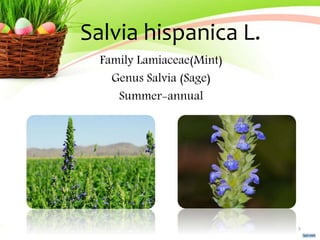
Salvia hispanica L.
Family Lamiaceae(Mint)
Genus Salvia (Sage)
Summer-annual
5
6
According to
Ali et al.
2012
• chia seeds (Salvia hispanica L.) is widely
consumed for various health benefits
especially in maintaining healthy serum
lipid level. This effect is contributed by
the presence of phenolic acid and omega
3/6 oil in the chia seed.
Vuksan,
2007
• High amount of ALA and dietary fibers
are the components of chia that are
responsible for attenuating
cardiovascular risk factors.
7
8
9
10
Gunnars, K. 2014
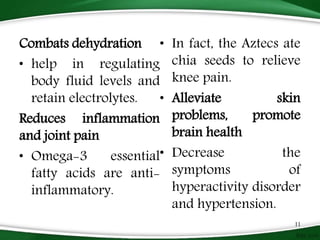
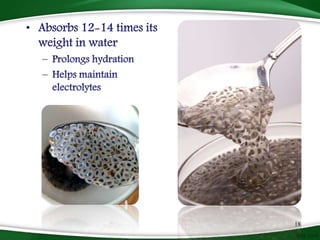
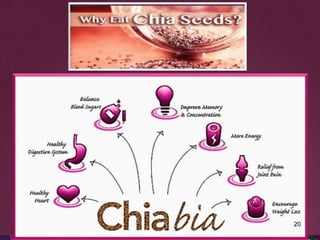
Combats dehydration
• help in regulating
body fluid levels and
retain electrolytes.
Reduces inflammation
and joint pain
• Omega-3 essential
fatty acids are anti-
inflammatory.
• In fact, the Aztecs ate
chia seeds to relieve
knee pain.
• Alleviate skin
problems, promote
brain health
• Decrease the
symptoms of
hyperactivity disorder
and hypertension.
11
13
Gunnars, K. 2014
Coelho et al. (2014)
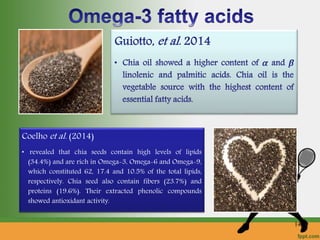
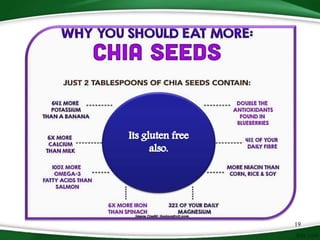
• revealed that chia seeds contain high levels of lipids
(34.4%) and are rich in Omega-3, Omega-6 and Omega-9,
which constituted 62, 17.4 and 10.5% of the total lipids,
respectively. Chia seed also contain fibers (23.7%) and
proteins (19.6%). Their extracted phenolic compounds
showed antioxidant activity.
14
15
16
17
18
19
20
21
22
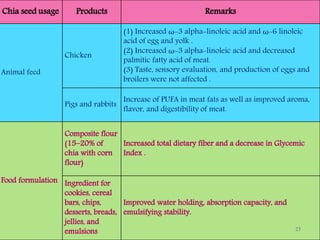
Animal feed
Chicken
(1) Increased ω-3 alpha-linoleic acid and ω-6 linoleic
acid of egg and yolk .
(2) Increased ω-3 alpha-linoleic acid and decreased
palmitic fatty acid of meat.
(3) Taste, sensory evaluation, and production of eggs and
broilers were not affected .
Pigs and rabbits
Increase of PUFA in meat fats as well as improved aroma,
flavor, and digestibility of meat.
23
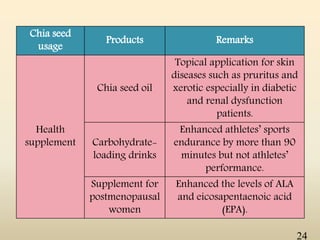
Chia seed
usage
Products Remarks
Health
supplement
Chia seed oil
Topical application for skin
diseases such as pruritus and
xerotic especially in diabetic
and renal dysfunction
patients.
Carbohydrate-
loading drinks
Enhanced athletes’ sports
endurance by more than 90
minutes but not athletes’
performance.
Supplement for
postmenopausal
women
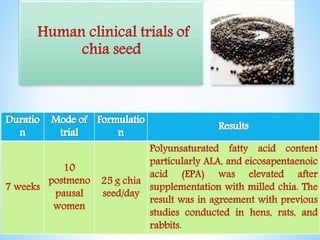
Enhanced the levels of ALA
and eicosapentaenoic acid
(EPA).
24

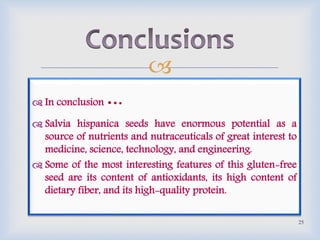
25

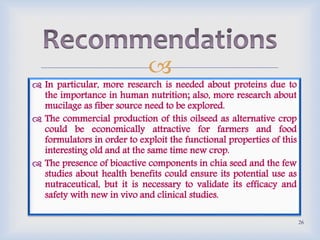
26
References
• Ayerza, R, and W. Coates. “Dietary levels of chia: influence on hen
weight, egg production and sensory quality, for two strains of hens.”
British Poultry Science 43 (2002):283-290
• “Chia Seed: The Ancient Food of the Future.” www.living-
foods.com/articles/chia.html
• Kreiter, Ted. “Seeds of Wellness: Return of a Supergrain.” Saturday
Evening Post. 40 (2005): 106-107.
• “Omega-3 Fatty Acids.” University of Maryland Medical Center.
Www.edu/altmed/articles/omega-3-000316.htm
• “Salvia hispanica L.”United States Department of Agriculture.
Http://plants.usda.gov/java/profile?symbol=SAHI6
• Sellman, Sherrill. “Salba: A Gift from the Ancient Aztecs.” Total Health
Magazine. 29.1: 52-53
27
 

Chia: World’s Newest Super seed...

  • 1.
    Dr. Vishakha Sharma Departmentof Food Science and Nutrition, CCAS, MPUAT, Udaipur 1
  • 2.
    With increasing publichealth awareness worldwide, demand for functional food with multiple health benefits has also increased. The use of medicinal food from folk medicine to prevent diseases such as diabetes, obesity, and cardiovascular problems is now gaining momentum among the public. 2
  • 3.
    3 • Chia isan edible seed that comes from the desert plant Salvia hispanica, grown in Mexico dating back to Mayan and Aztec cultures. • "Chia" means strength, and folklore has it that these cultures used the tiny black and white seeds as an energy booster.
  • 4.
    • Salvia hispanicaL. a biannually cultivated plant, is categorized under the mint family (Labiatae), superdivision of Spermatophyta, and kingdom of Plantae. Prominently grown for its seeds, • Salvia hispanica also produces white or purple flowers. • The seed contains from 25% to 40% oil with 60% of it comprising (omega) ω-3 alpha-linolenic acid and 20% of (omega) ω-6 linoleic acid. • Chia flowers are small flower (3-4 mm) with small corollas and fused flower parts that contribute to a high self-pollination rate. • The seed color varies from black, grey, and black spotted to white, and the shape is oval with size ranging from 1 to 2 mm. 4
  • 5.
    Salvia hispanica L. FamilyLamiaceae(Mint) Genus Salvia (Sage) Summer-annual 5
  • 6.
  • 7.
    According to Ali etal. 2012 • chia seeds (Salvia hispanica L.) is widely consumed for various health benefits especially in maintaining healthy serum lipid level. This effect is contributed by the presence of phenolic acid and omega 3/6 oil in the chia seed. Vuksan, 2007 • High amount of ALA and dietary fibers are the components of chia that are responsible for attenuating cardiovascular risk factors. 7
  • 8.
  • 9.
  • 10.
  • 11.
    Combats dehydration • helpin regulating body fluid levels and retain electrolytes. Reduces inflammation and joint pain • Omega-3 essential fatty acids are anti- inflammatory. • In fact, the Aztecs ate chia seeds to relieve knee pain. • Alleviate skin problems, promote brain health • Decrease the symptoms of hyperactivity disorder and hypertension. 11
  • 13.
  • 14.
    Coelho et al.(2014) • revealed that chia seeds contain high levels of lipids (34.4%) and are rich in Omega-3, Omega-6 and Omega-9, which constituted 62, 17.4 and 10.5% of the total lipids, respectively. Chia seed also contain fibers (23.7%) and proteins (19.6%). Their extracted phenolic compounds showed antioxidant activity. 14
  • 15.
  • 16.
  • 17.
  • 18.
  • 19.
  • 20.
  • 21.
  • 22.
  • 23.
    Animal feed Chicken (1) Increasedω-3 alpha-linoleic acid and ω-6 linoleic acid of egg and yolk . (2) Increased ω-3 alpha-linoleic acid and decreased palmitic fatty acid of meat. (3) Taste, sensory evaluation, and production of eggs and broilers were not affected . Pigs and rabbits Increase of PUFA in meat fats as well as improved aroma, flavor, and digestibility of meat. 23
  • 24.
    Chia seed usage Products Remarks Health supplement Chiaseed oil Topical application for skin diseases such as pruritus and xerotic especially in diabetic and renal dysfunction patients. Carbohydrate- loading drinks Enhanced athletes’ sports endurance by more than 90 minutes but not athletes’ performance. Supplement for postmenopausal women Enhanced the levels of ALA and eicosapentaenoic acid (EPA). 24
  • 25.
  • 26.
  • 27.
    References • Ayerza, R,and W. Coates. “Dietary levels of chia: influence on hen weight, egg production and sensory quality, for two strains of hens.” British Poultry Science 43 (2002):283-290 • “Chia Seed: The Ancient Food of the Future.” www.living- foods.com/articles/chia.html • Kreiter, Ted. “Seeds of Wellness: Return of a Supergrain.” Saturday Evening Post. 40 (2005): 106-107. • “Omega-3 Fatty Acids.” University of Maryland Medical Center. Www.edu/altmed/articles/omega-3-000316.htm • “Salvia hispanica L.”United States Department of Agriculture. Http://plants.usda.gov/java/profile?symbol=SAHI6 • Sellman, Sherrill. “Salba: A Gift from the Ancient Aztecs.” Total Health Magazine. 29.1: 52-53 27
  • 28.

Editor's Notes

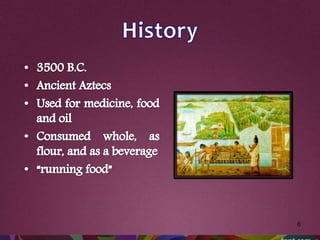
  • #7 Chia was first used by the Aztecs as early as 3500 B.C.
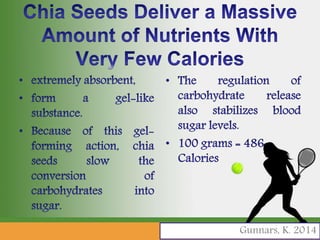
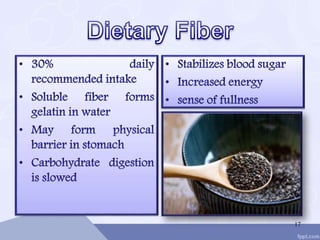
  • #11 Provides sustained energy. Chia seeds are extremely absorbent, expanding up to ten times their original size when soaked in water and forming a gel-like substance. Because of this gel-forming action, chia seeds slow the conversion of carbohydrates into sugar, meaning the carbs you eat will be able to fuel your body for longer periods of time. The regulation of carbohydrate release also stabilizes blood sugar levels. (Keep in mind that because chia seeds have almost zero carbs, you’ll still need to take energy gels before and during your workouts.)
  • #12 Combats dehydration. Because chia seeds absorb thirty times their weight in water, they help regulate body fluid levels and retain electrolytes, both key in the battle against dehydration. For long workouts in high heat and humidity, chia seeds are a handy way to prolong hydration. Reduces inflammation and joint pain. Omega-3 essential fatty acids (think fish oil) are a proven anti-inflammatory, and chia seeds are full of them. In fact, the Aztecs ate chia seeds to relieve knee pain. In addition to battling aches and joint pain, the essential fatty acids found in chia seeds alleviate skin problems, promote brain health, and have even been show to decrease the symptoms of hyperactivity disorder and hypertension.
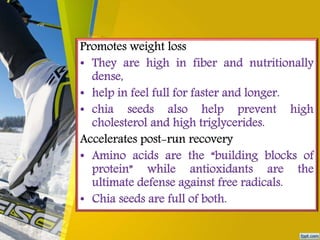
  • #13 Promotes weight loss. Because chia seeds are so high in fiber and nutritionally dense, they help you feel fuller faster and longer. The absorbent qualities regulate carbohydrate conversion, preventing blood sugar spikes and providing sustained energy. Recent studies have shown that, in addition reducing body fat, chia seeds also help prevent high cholesterol and high triglycerides. Accelerates post-run recovery. Amino acids are the “building blocks of protein” while antioxidants are the ultimate defense against free radicals. Chia seeds are full of both. Eat them soon after your workout to jumpstart recovery.