CHEST TUBE DRAINAGE
SYSTEM
Linda Starkes, RN MSN
OBJECTIVE
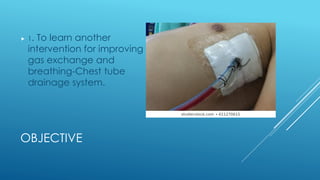
 1. To learn another
intervention for improving
gas exchange and
breathing-Chest tube
drainage system.
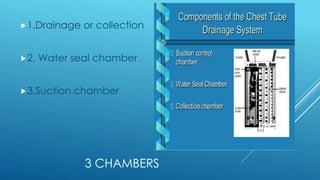
3 CHAMBERS
1.Drainage or collection
2. Water seal chamber
3.Suction chamber
 Drainage accumulates in first chamber and water seal is in the
second
 The water seal allows air to be removed from the chest but not
re-enter
 Question: Should there be continuous bubbling in the water seal?
 Suction is applied to 3rd chamber to create negative pressure
 With a third bottle the amount of suction can be controlled
WATER SEAL
 Water rises(fluctuation) in the water seal on inspiration and drops
during expiration {constant bubbling indicates air leak -
abnormal}
 Fluid passes into bottle during expiration. Normal to fluctuate with
breathing
 Keep system below the insertion site, secured and free of loops
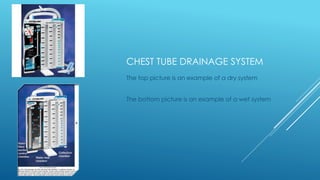
CHEST TUBE DRAINAGE SYSTEM
The top picture is an example of a dry system
The bottom picture is an example of a wet system
MUST CHECK EVERY SHIFT
 MD orders cm of H20 pressure
 Monitor water levels and output
 No constant bubbling should be present in the water seal
 Never routinely clamp tubes(for assessing air leak or changing
setup)
 Check setup frequently
 Maintain airtight system
 Keep large padded clamps at bedside
TEACH YOUR PATIENT
 Encourage diaphragmatic & pursed lip breathing or use of
incentive spirometry q 2hrs
 Encourage mobility and shoulder exercise
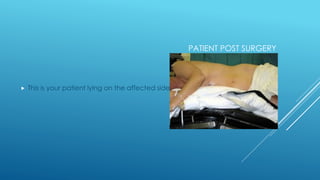
 For pneumonnectomy position affected side down so
inoperative side can fully expand—see next slide.
PATIENT POST SURGERY
 This is your patient lying on the affected side
IMPORTANT NOTES
 Keep large padded clamps at bedside
 If tube falls out of chest have client exhale and cover with
Vaseline gauze
 Drainage of > 100cc/hr requires immediate attention of MD
 “Puffed-up” appearance around upper chest and neck requires
immediate attention of MD
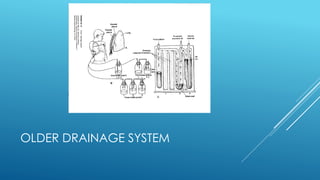
OLDER DRAINAGE SYSTEM
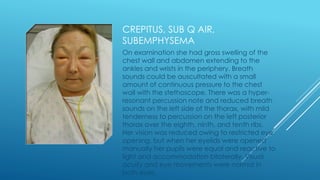
On examination she had gross swelling of the
chest wall and abdomen extending to the
ankles and wrists in the periphery. Breath
sounds could be auscultated with a small
amount of continuous pressure to the chest
wall with the stethoscope. There was a hyper-
resonant percussion note and reduced breath
sounds on the left side of the thorax, with mild
tenderness to percussion on the left posterior
thorax over the eighth, ninth, and tenth ribs.
Her vision was reduced owing to restricted eye
opening, but when her eyelids were opened
manually her pupils were equal and reactive to
light and accommodation bilaterally. Visual
acuity and eye movements were normal in
both eyes.
CREPITUS, SUB Q AIR,
SUBEMPHYSEMA
REVIEW THE ROLE OF EACH
1.Drainage or collection
2. Water seal chamber
3. Suction chamber
CHEST TUBE VIDEO
 https://www.youtube.com/watch?v=j8xNaN7TRC0&t=638s
 There are questions on blackboard that I will send you the
answers to. Try to answer them first without looking at the
answers.
The first thing I would look at after walking in pt. room, are
there any kinks in the tubing? If so correct this.
Next, how much drainage is in the first chamber which is your
collection chamber and what color is it? Make sure you mark
with the time and your initials.
Next, I would look at my water seal chamber, is their
constant bubbling (should not be—this indicates an air leak)?
How much water is in this chamber—does it have 2cm? If not
add more water. Make sure the order says 2cm. Also, is their
tidaling or fluctuation? (This is normal—if not... investigate.
Are their RR fast, are they coughing or do they have kinks in
the tubing)
Lastly, I would look at the Suction chamber. Is this a wet
drainage system or is this a dry drainage system? If it is a wet
drainage system then it should have water in the suction
chamber up to at least 20cm (the Dr. should have the amt in his
orders). If you do not then add more water until that chamber
has 20cm. (sometimes the water will evaporate) must turn
suction on wall until there are gentle bubbles in that chamber
(not constant bubbling). If it is a dry drainage system then you
would turn the dial to 20cm or whatever is ordered. There
should be a red float next to the dial—turn the suction on the
wall until it appears. This will tell you if you have enough
suction for your system.
QUESTIONS??
Please email me and I will place the question
on the discussion board for everyone.

Chest Tube Drainage System-2.pdf

  • 1.
  • 2.
    OBJECTIVE  1. Tolearn another intervention for improving gas exchange and breathing-Chest tube drainage system.
  • 3.
    3 CHAMBERS 1.Drainage orcollection 2. Water seal chamber 3.Suction chamber
  • 4.
     Drainage accumulatesin first chamber and water seal is in the second  The water seal allows air to be removed from the chest but not re-enter  Question: Should there be continuous bubbling in the water seal?  Suction is applied to 3rd chamber to create negative pressure  With a third bottle the amount of suction can be controlled
  • 5.
    WATER SEAL  Waterrises(fluctuation) in the water seal on inspiration and drops during expiration {constant bubbling indicates air leak - abnormal}  Fluid passes into bottle during expiration. Normal to fluctuate with breathing  Keep system below the insertion site, secured and free of loops
  • 6.
    CHEST TUBE DRAINAGESYSTEM The top picture is an example of a dry system The bottom picture is an example of a wet system
  • 7.
    MUST CHECK EVERYSHIFT  MD orders cm of H20 pressure  Monitor water levels and output  No constant bubbling should be present in the water seal  Never routinely clamp tubes(for assessing air leak or changing setup)  Check setup frequently  Maintain airtight system  Keep large padded clamps at bedside
  • 8.
    TEACH YOUR PATIENT Encourage diaphragmatic & pursed lip breathing or use of incentive spirometry q 2hrs  Encourage mobility and shoulder exercise  For pneumonnectomy position affected side down so inoperative side can fully expand—see next slide.
  • 9.
    PATIENT POST SURGERY This is your patient lying on the affected side
  • 10.
    IMPORTANT NOTES  Keeplarge padded clamps at bedside  If tube falls out of chest have client exhale and cover with Vaseline gauze  Drainage of > 100cc/hr requires immediate attention of MD  “Puffed-up” appearance around upper chest and neck requires immediate attention of MD
  • 11.
  • 12.
    On examination shehad gross swelling of the chest wall and abdomen extending to the ankles and wrists in the periphery. Breath sounds could be auscultated with a small amount of continuous pressure to the chest wall with the stethoscope. There was a hyper- resonant percussion note and reduced breath sounds on the left side of the thorax, with mild tenderness to percussion on the left posterior thorax over the eighth, ninth, and tenth ribs. Her vision was reduced owing to restricted eye opening, but when her eyelids were opened manually her pupils were equal and reactive to light and accommodation bilaterally. Visual acuity and eye movements were normal in both eyes. CREPITUS, SUB Q AIR, SUBEMPHYSEMA
  • 13.
    REVIEW THE ROLEOF EACH 1.Drainage or collection 2. Water seal chamber 3. Suction chamber
  • 14.
    CHEST TUBE VIDEO https://www.youtube.com/watch?v=j8xNaN7TRC0&t=638s  There are questions on blackboard that I will send you the answers to. Try to answer them first without looking at the answers.
  • 15.
    The first thingI would look at after walking in pt. room, are there any kinks in the tubing? If so correct this. Next, how much drainage is in the first chamber which is your collection chamber and what color is it? Make sure you mark with the time and your initials. Next, I would look at my water seal chamber, is their constant bubbling (should not be—this indicates an air leak)? How much water is in this chamber—does it have 2cm? If not add more water. Make sure the order says 2cm. Also, is their tidaling or fluctuation? (This is normal—if not... investigate. Are their RR fast, are they coughing or do they have kinks in the tubing) Lastly, I would look at the Suction chamber. Is this a wet drainage system or is this a dry drainage system? If it is a wet drainage system then it should have water in the suction chamber up to at least 20cm (the Dr. should have the amt in his orders). If you do not then add more water until that chamber has 20cm. (sometimes the water will evaporate) must turn suction on wall until there are gentle bubbles in that chamber (not constant bubbling). If it is a dry drainage system then you would turn the dial to 20cm or whatever is ordered. There should be a red float next to the dial—turn the suction on the wall until it appears. This will tell you if you have enough suction for your system.
  • 16.
    QUESTIONS?? Please email meand I will place the question on the discussion board for everyone.