CHEMICAL MANAGEMENT IN
TEXTILE INDUSTY
Submitted by:
MD. Rezwoanur Haque
ID:192-198-801
Bashirul Alam Badhon
192-175-801
MD. Ebadat Khan
192-193-801
AL Arafat
192-017-801
Submitted to:
Shafat Ahmed Bin Kamal
Lecturer of TE
BGMEA University of Fashion and
Technology
What is chemical management?
The chemical management system of the textile industry is
the process by which all matters relating to chemicals from
purchase to removal of chemicals are taken up for safe
application and management of chemicals in textiles and to
prevent accidents.
Chemical uses from raw material to final product transport:
Some basic steps follow in the textile
industry for chemical management:
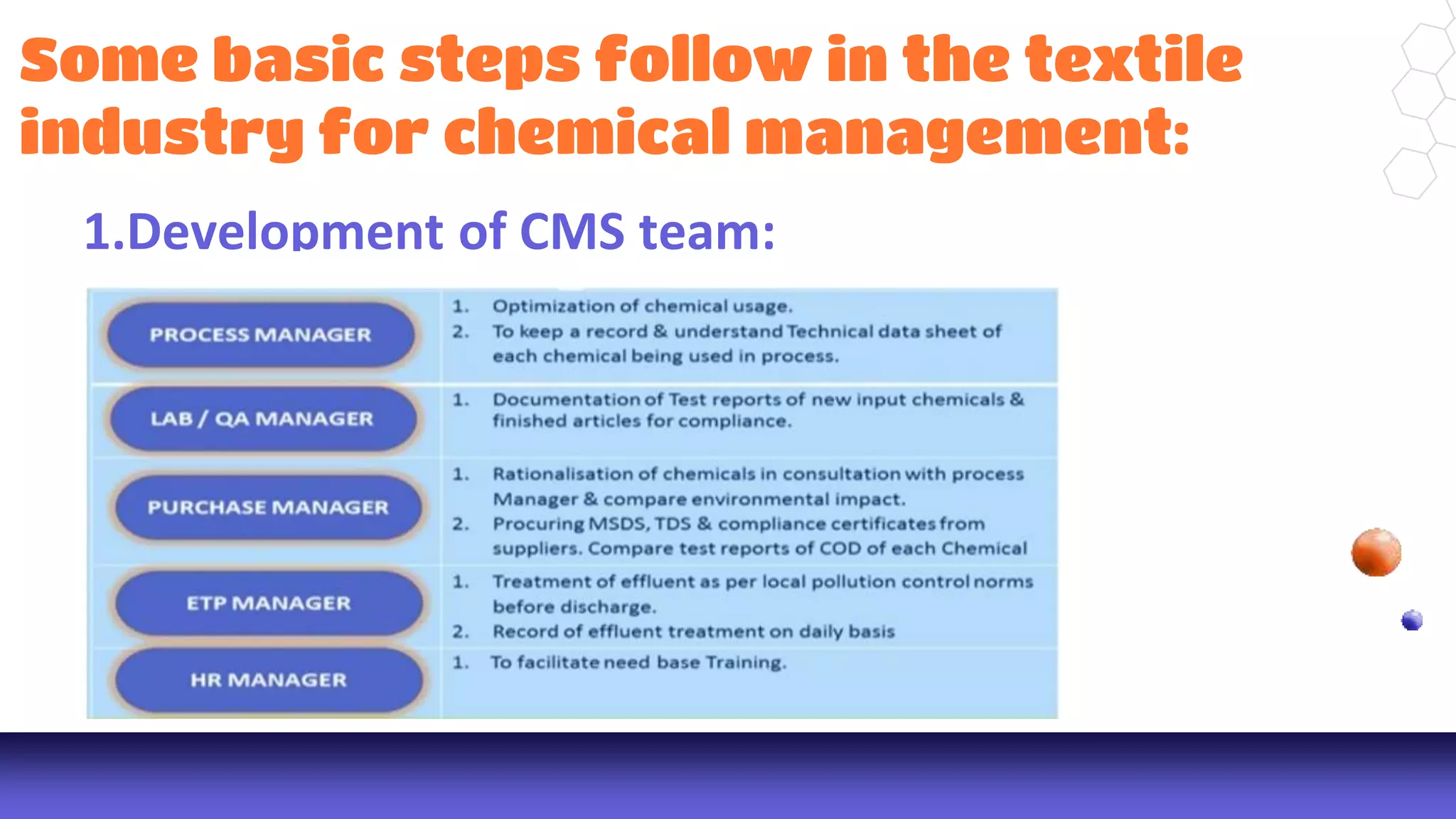
1.Development of CMS team:
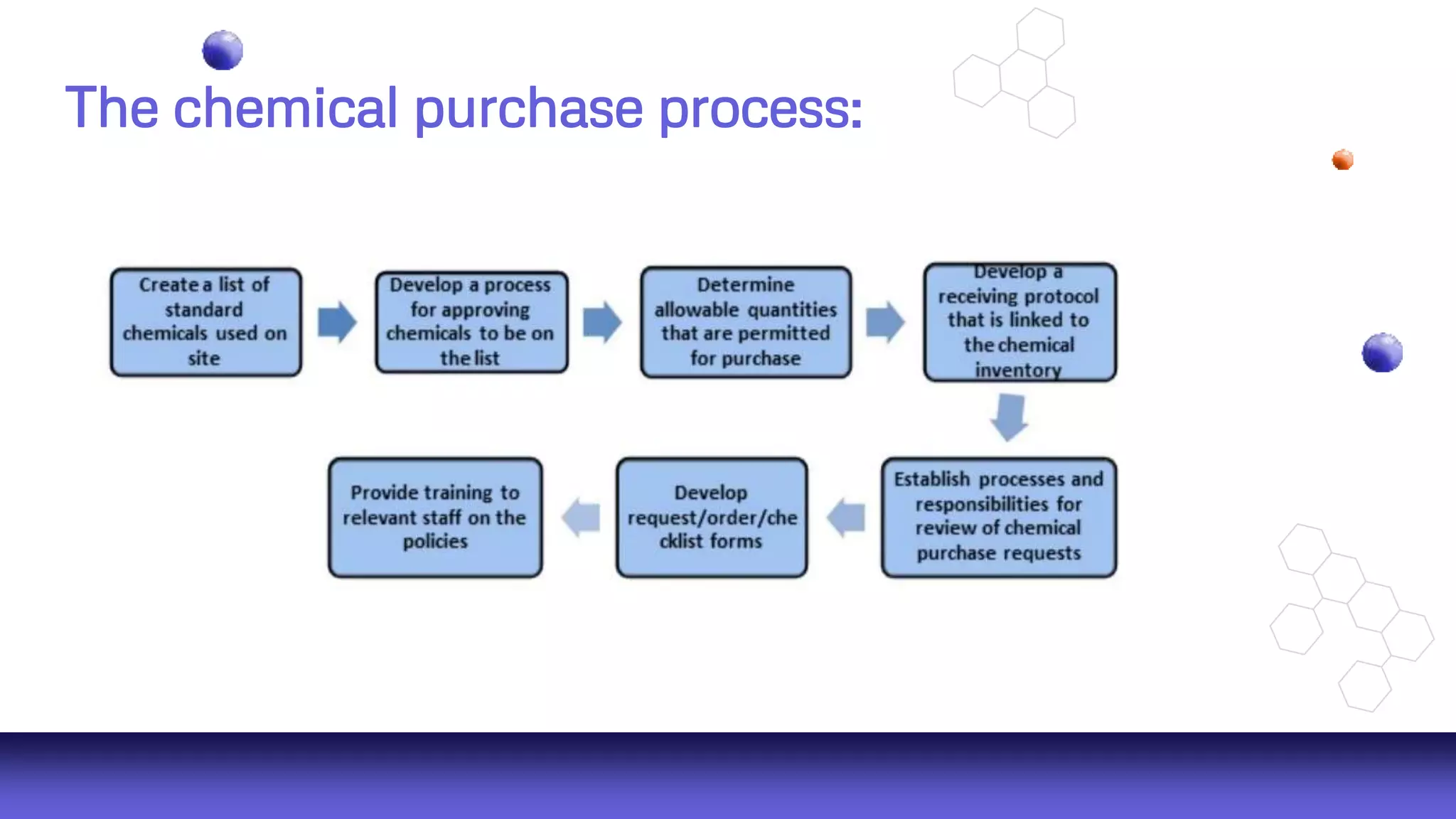
The chemical purchase process:
2.Chemical compliance policy:
We are visited at the Nice Denim mills LTD. They are committed to manage hazardous
chemicals (covering physical, health, safety and environmental hazards) during selection, use &
discharge of each chemical consumed in their plant. The chemical management will cover all
chemicals in process, product and waste. They ensure protection of workers, communities and
consumer health by managing compliance of the hazardous chemicals in Their production
systems, materials and products to the requirements of Brand RSLs and local legislations. They
understand that maintenance of safe and healthy work environment is essential for
productivity, quality, cost and above all employees’ well-being. They also confirm that the
chemicals used and produced during their processes will have a minimum adverse effect on
human health and the environment, and the use of all toxic chemicals will be eliminated by
committing the date.
3.Regulation Compliance:
 Management must appoint a specific person to manage
regulation compliance.
 He must look for most updated national regulations.
 He must review whole article and list out regulation suitable
for the defined scope of the factory.
 List out the regulations
 The Manufacturer can clearly understand whether activities
are fulfilling the chemical related regulation or not.
 He must regularly review updated regulations.
4.Risk Assessment:
The risk assessment of hazardous chemicals consists of
following steps-
1. Identify hazardous substances
2. Assess the risk
3. Control the risk
4. Training for employees
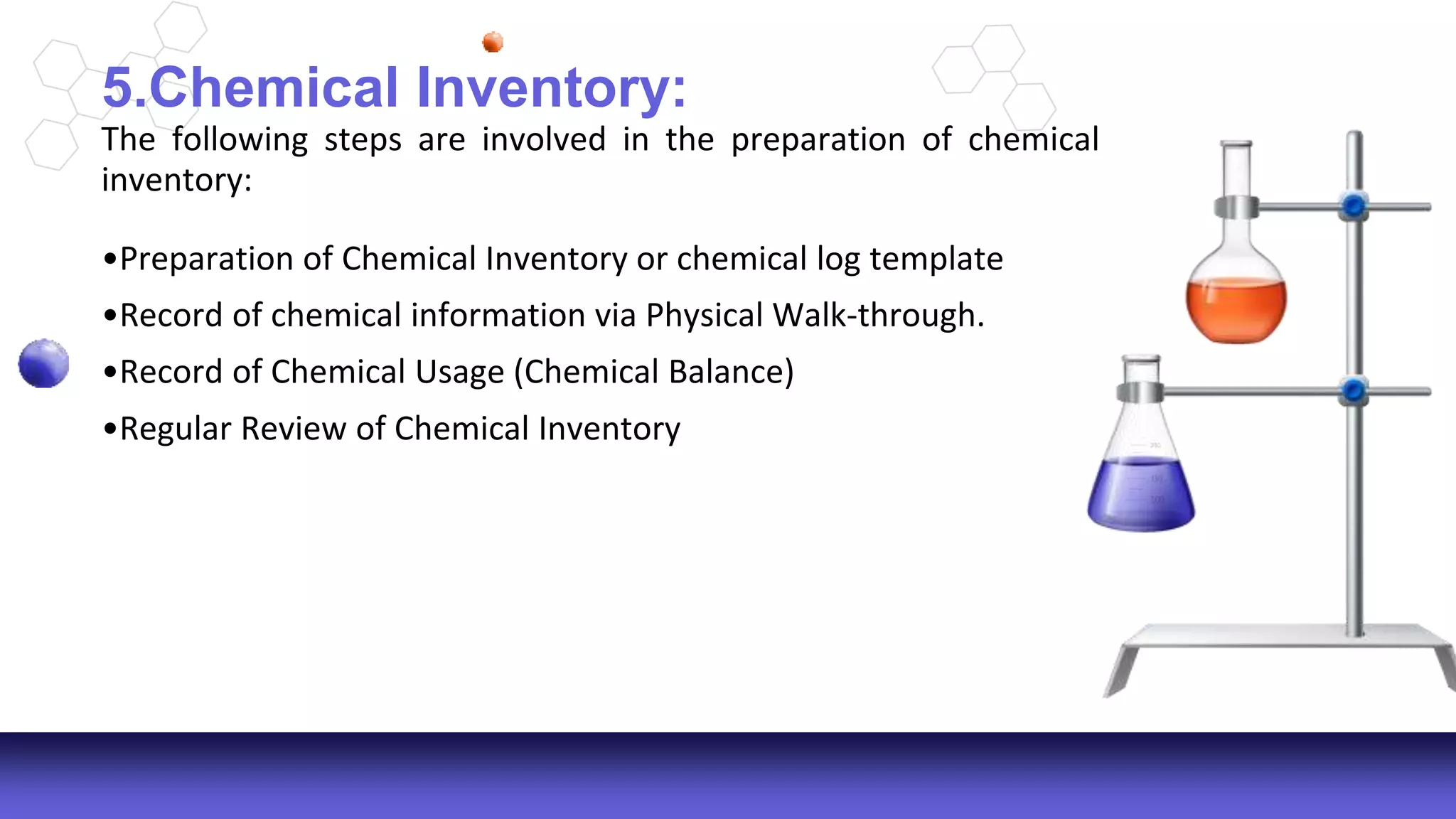
5.Chemical Inventory:
The following steps are involved in the preparation of chemical
inventory:
•Preparation of Chemical Inventory or chemical log template
•Record of chemical information via Physical Walk-through.
•Record of Chemical Usage (Chemical Balance)
•Regular Review of Chemical Inventory
6.Lebelling:
• Pictogram
• Signal words
• Hazard statement
• Precautionary
7.Storage:
• The area is secured and covered.
• Containers are stored on impervious surfaces.
• The area is well ventilated.
 Accessible safety shower/eye wash nearby
(within 30 meters).
 Restriction on drinking, eating, and smoking.
 Fire‐fighting equipment, fire hoses, and/or fire
extinguishers.
 Signs indicating PPE required to work in the
area.
 Regular inspections required.
8.Emergency Preparedness:
The emergency response equipment should include:
•Spill kits or containment equipment
•Safe work procedures for spills or release of chemicals
•Fire blankets/extinguishers
•First aid kits
•Eye wash stations/eye wash kits/emergency showers
•Emergency shutdown procedures for equipment
•Appropriate numbers of trained emergency personnel and first aiders
9.Disposal of hazardous substances:
The chemical wastes should be properly packaged, labelled and stored in suitable designated
areas. Labelling will include the material identifier, and a hazard pictogram with the correct
classification of the chemical (if relevant). Chemical waste should not be mixed with other
waste. PPE must be used when handling chemical waste as per the SDS or risk assessment
findings.
Ensure that all hazardous substances are disposed of by qualified contractors who have
obtained legal approval to collect, transport, and dispose of each specific hazardous waste
category as defined by local law.
10.Training:
The staff is provided with suitable instruction and training to enable them to work safely
with hazardous substances. All staff should receive training on the following:
 Hazards of substances used
 Risks to health presented using those substances
 Relevant workplace exposure limits
 Relevant safety data sheet (SDS) information
 The significant findings of risk assessments
 Precautions to be taken to prevent or reduce exposure
 Proper use of equipment and control measures.
 Proper disposal methods for hazardous substances.
Disposal system for chemical waste:
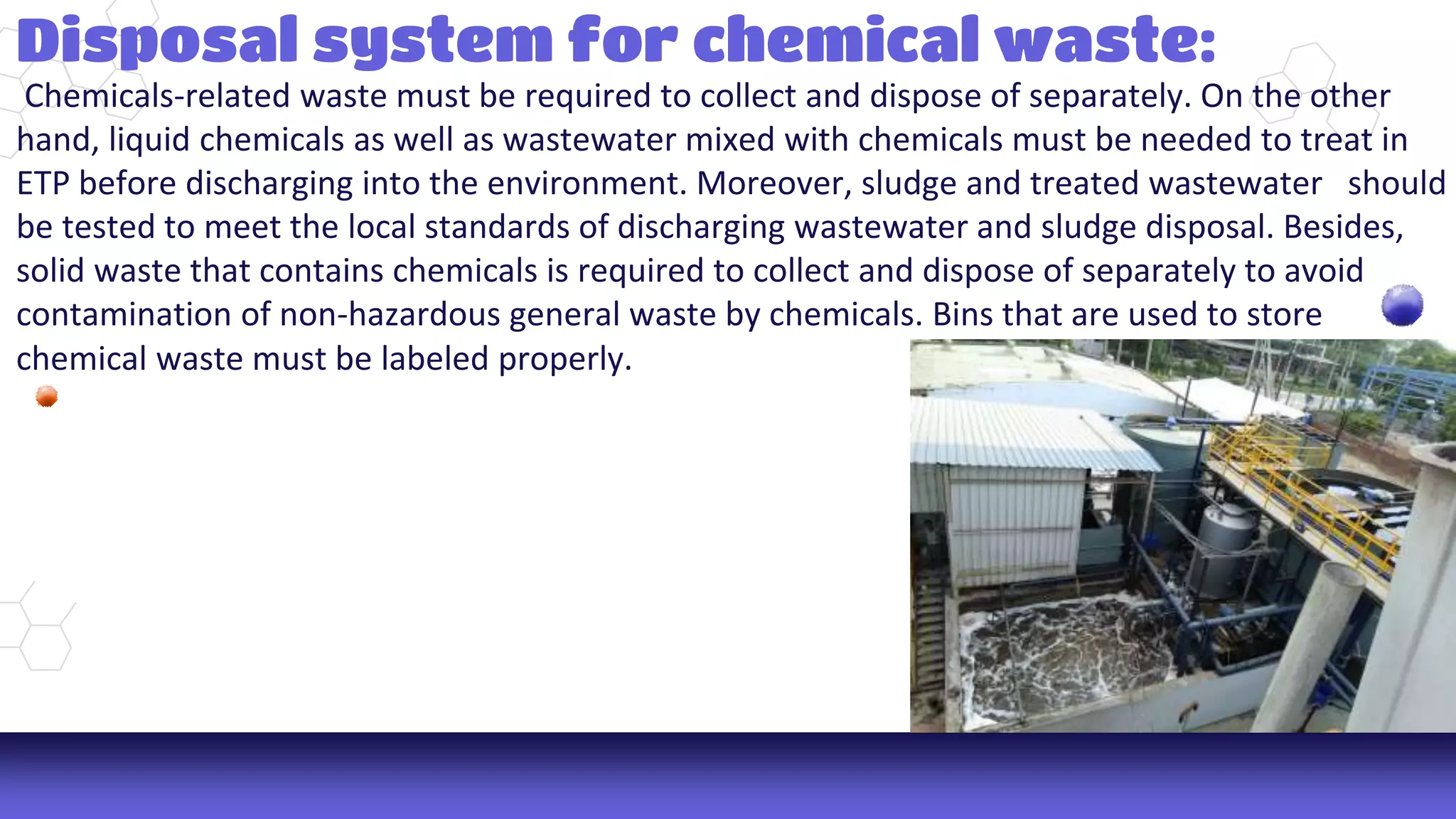
Chemicals-related waste must be required to collect and dispose of separately. On the other
hand, liquid chemicals as well as wastewater mixed with chemicals must be needed to treat in
ETP before discharging into the environment. Moreover, sludge and treated wastewater should
be tested to meet the local standards of discharging wastewater and sludge disposal. Besides,
solid waste that contains chemicals is required to collect and dispose of separately to avoid
contamination of non-hazardous general waste by chemicals. Bins that are used to store
chemical waste must be labeled properly.
Conclusion:
Chemical management is a serious concern for the textile industry. If factories could not able to
manage chemicals appropriately, it may cause serious threats to the employees and public
health as well as for the environment. Therefore, factories need to establish CMS effectively.
On the other hand, the use of chemicals and potential hazards associated with chemicals may
have alteration over the period of time depending on the types and groups of chemicals and
industrial processes. Therefore, regular update of different changes is required to consider for
ensuring the expected outcome from CMS. If the management of factories has a strong
commitment to the safe use of chemicals for their production, the CMS can be implemented
much more successfully.
Thank You

Chemical management in textile industry.pptx

  • 1.
    CHEMICAL MANAGEMENT IN TEXTILEINDUSTY Submitted by: MD. Rezwoanur Haque ID:192-198-801 Bashirul Alam Badhon 192-175-801 MD. Ebadat Khan 192-193-801 AL Arafat 192-017-801 Submitted to: Shafat Ahmed Bin Kamal Lecturer of TE BGMEA University of Fashion and Technology
  • 2.
    What is chemicalmanagement? The chemical management system of the textile industry is the process by which all matters relating to chemicals from purchase to removal of chemicals are taken up for safe application and management of chemicals in textiles and to prevent accidents.
  • 3.
    Chemical uses fromraw material to final product transport:
  • 4.
    Some basic stepsfollow in the textile industry for chemical management: 1.Development of CMS team:
  • 5.
  • 6.
    2.Chemical compliance policy: Weare visited at the Nice Denim mills LTD. They are committed to manage hazardous chemicals (covering physical, health, safety and environmental hazards) during selection, use & discharge of each chemical consumed in their plant. The chemical management will cover all chemicals in process, product and waste. They ensure protection of workers, communities and consumer health by managing compliance of the hazardous chemicals in Their production systems, materials and products to the requirements of Brand RSLs and local legislations. They understand that maintenance of safe and healthy work environment is essential for productivity, quality, cost and above all employees’ well-being. They also confirm that the chemicals used and produced during their processes will have a minimum adverse effect on human health and the environment, and the use of all toxic chemicals will be eliminated by committing the date.
  • 7.
    3.Regulation Compliance:  Managementmust appoint a specific person to manage regulation compliance.  He must look for most updated national regulations.  He must review whole article and list out regulation suitable for the defined scope of the factory.  List out the regulations  The Manufacturer can clearly understand whether activities are fulfilling the chemical related regulation or not.  He must regularly review updated regulations.
  • 8.
    4.Risk Assessment: The riskassessment of hazardous chemicals consists of following steps- 1. Identify hazardous substances 2. Assess the risk 3. Control the risk 4. Training for employees
  • 9.
    5.Chemical Inventory: The followingsteps are involved in the preparation of chemical inventory: •Preparation of Chemical Inventory or chemical log template •Record of chemical information via Physical Walk-through. •Record of Chemical Usage (Chemical Balance) •Regular Review of Chemical Inventory
  • 10.
    6.Lebelling: • Pictogram • Signalwords • Hazard statement • Precautionary
  • 11.
    7.Storage: • The areais secured and covered. • Containers are stored on impervious surfaces. • The area is well ventilated.  Accessible safety shower/eye wash nearby (within 30 meters).  Restriction on drinking, eating, and smoking.  Fire‐fighting equipment, fire hoses, and/or fire extinguishers.  Signs indicating PPE required to work in the area.  Regular inspections required.
  • 12.
    8.Emergency Preparedness: The emergencyresponse equipment should include: •Spill kits or containment equipment •Safe work procedures for spills or release of chemicals •Fire blankets/extinguishers •First aid kits •Eye wash stations/eye wash kits/emergency showers •Emergency shutdown procedures for equipment •Appropriate numbers of trained emergency personnel and first aiders
  • 13.
    9.Disposal of hazardoussubstances: The chemical wastes should be properly packaged, labelled and stored in suitable designated areas. Labelling will include the material identifier, and a hazard pictogram with the correct classification of the chemical (if relevant). Chemical waste should not be mixed with other waste. PPE must be used when handling chemical waste as per the SDS or risk assessment findings. Ensure that all hazardous substances are disposed of by qualified contractors who have obtained legal approval to collect, transport, and dispose of each specific hazardous waste category as defined by local law.
  • 14.
    10.Training: The staff isprovided with suitable instruction and training to enable them to work safely with hazardous substances. All staff should receive training on the following:  Hazards of substances used  Risks to health presented using those substances  Relevant workplace exposure limits  Relevant safety data sheet (SDS) information  The significant findings of risk assessments  Precautions to be taken to prevent or reduce exposure  Proper use of equipment and control measures.  Proper disposal methods for hazardous substances.
  • 15.
    Disposal system forchemical waste: Chemicals-related waste must be required to collect and dispose of separately. On the other hand, liquid chemicals as well as wastewater mixed with chemicals must be needed to treat in ETP before discharging into the environment. Moreover, sludge and treated wastewater should be tested to meet the local standards of discharging wastewater and sludge disposal. Besides, solid waste that contains chemicals is required to collect and dispose of separately to avoid contamination of non-hazardous general waste by chemicals. Bins that are used to store chemical waste must be labeled properly.
  • 16.
    Conclusion: Chemical management isa serious concern for the textile industry. If factories could not able to manage chemicals appropriately, it may cause serious threats to the employees and public health as well as for the environment. Therefore, factories need to establish CMS effectively. On the other hand, the use of chemicals and potential hazards associated with chemicals may have alteration over the period of time depending on the types and groups of chemicals and industrial processes. Therefore, regular update of different changes is required to consider for ensuring the expected outcome from CMS. If the management of factories has a strong commitment to the safe use of chemicals for their production, the CMS can be implemented much more successfully.
  • 17.