CHEAT SHEET FOR AD-BASED
MOBILE MONETIZATION
www.AppLift.com
Berlin • San Francisco • Seoul
Sources “AppLift Blog - www.applift.com/blog”
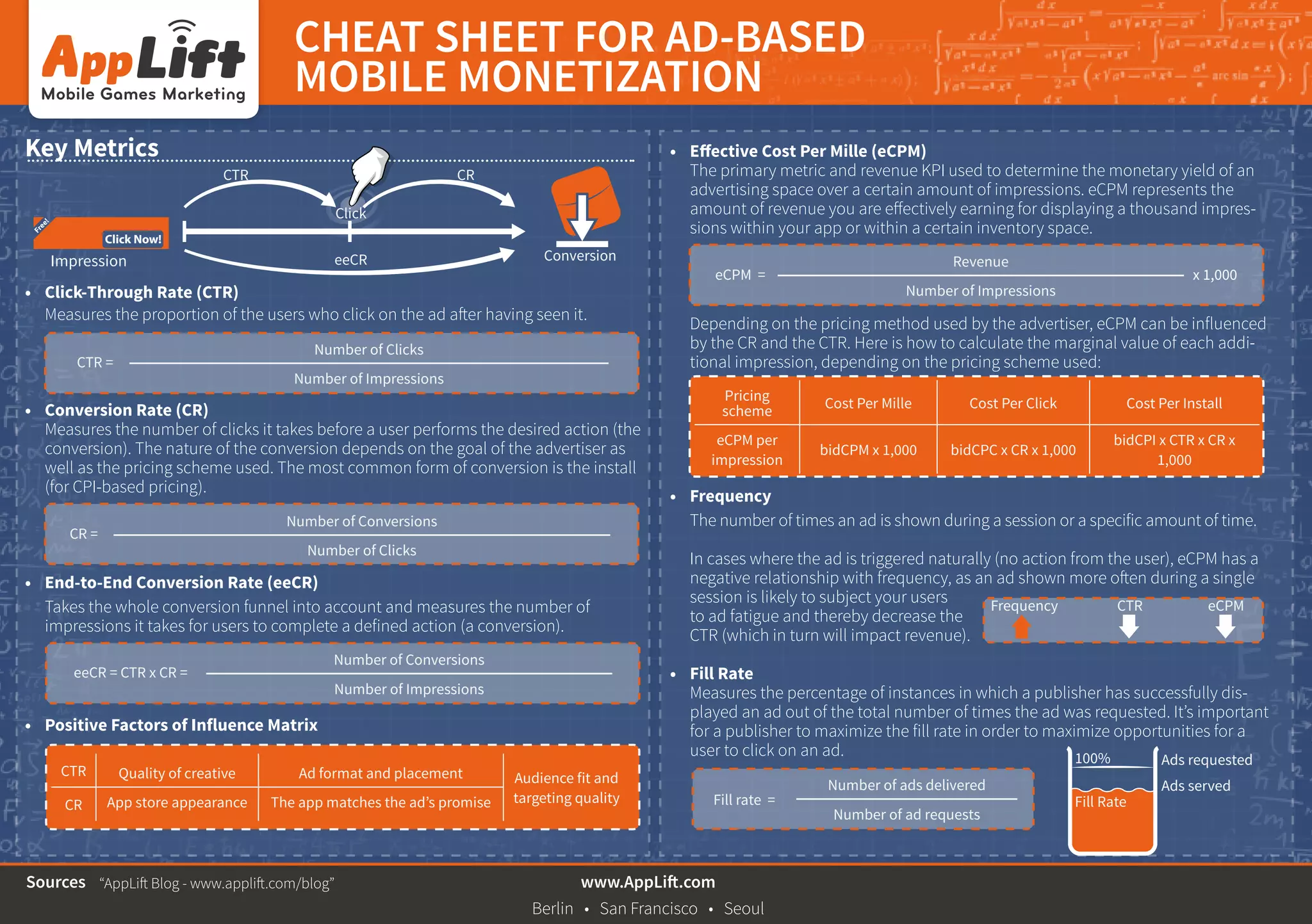
•	 Click-Through Rate (CTR)
Measures the proportion of the users who click on the ad after having seen it.
•	 Conversion Rate (CR)
Measures the number of clicks it takes before a user performs the desired action (the
conversion). The nature of the conversion depends on the goal of the advertiser as
well as the pricing scheme used. The most common form of conversion is the install
(for CPI-based pricing).
•	 End-to-End Conversion Rate (eeCR)
Takes the whole conversion funnel into account and measures the number of
impressions it takes for users to complete a defined action (a conversion).
•	 Positive Factors of Influence Matrix
Key Metrics •	 Effective Cost Per Mille (eCPM)
The primary metric and revenue KPI used to determine the monetary yield of an
advertising space over a certain amount of impressions. eCPM represents the
amount of revenue you are effectively earning for displaying a thousand impres-
sions within your app or within a certain inventory space.
Depending on the pricing method used by the advertiser, eCPM can be influenced
by the CR and the CTR. Here is how to calculate the marginal value of each addi-
tional impression, depending on the pricing scheme used:
•	 Frequency
The number of times an ad is shown during a session or a specific amount of time.
In cases where the ad is triggered naturally (no action from the user), eCPM has a
negative relationship with frequency, as an ad shown more often during a single
session is likely to subject your users
to ad fatigue and thereby decrease the
CTR (which in turn will impact revenue).
•	 Fill Rate
Measures the percentage of instances in which a publisher has successfully dis-
played an ad out of the total number of times the ad was requested. It’s important
for a publisher to maximize the fill rate in order to maximize opportunities for a
user to click on an ad.
CTR =
Number of Clicks
Number of Impressions
eCPM =
Revenue
x 1,000
Number of Impressions
Fill rate =
Number of ads delivered
Number of ad requests
CR =
Number of Conversions
Number of Clicks
eeCR = CTR x CR =
Number of Conversions
Number of Impressions
CTR Quality of creative Ad format and placement Audience fit and
targeting qualityCR App store appearance The app matches the ad’s promise
Pricing
scheme
Cost Per Mille Cost Per Click Cost Per Install
eCPM per
impression
bidCPM x 1,000 bidCPC x CR x 1,000
bidCPI x CTR x CR x
1,000
ConversioneeCR
Click
CTR CR
Click Now!
Free!
Click Now!
Free!
Impression
Frequency CTR eCPM
Fill Rate
100% Ads requested
Ads served
Main Mobile Ad Formats
Format type Banner ads Interstitial ads Offerwalls Video ads
User value Intrusive Rather Intrusive High user value High user value
Necessary amount
of impressions
High amount of
impressions
Lower amount of
impressions
Very low amount
of impressions
Very low amount
of impressions
Average eCPM level Low eCPMs Medium eCPMs High eCPMs High eCPMs
Main pricing model CPC CPC, CPI CPA
CPV (cost per
view), CPI
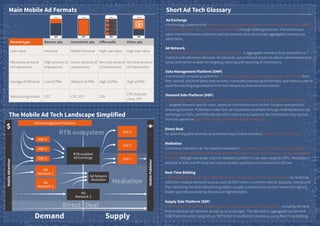
The Mobile Ad Tech Landscape Simplified
Short Ad Tech Glossary
Ad Exchange
A technology platform that facilitates the buying and selling of online media advertising inventory
from multiple DSPs, SSPs as well as ad networks through bidding practices. It functions as a
sales channel between publishers and ad networks and can provide aggregated inventory to
advertisers.
Ad Network
A company that connects advertisers to publishers. It aggregates inventory from publishers to
match it with advertiser demand. Ad networks use central ad servers to deliver advertisements to
consumers which enable the targeting, tracking and reporting of impressions.
Data Management Platform (DMP)
A centralized computing system for collecting, integrating and managing large sets of data from
first, second, and third party data sources. It provides processing of that data, and allows a user to
push the resulting segmentation into live interactive channel environments.
Demand Side Platform (DSP)
A technology that enables advertisers to buy impressions across a range of publisher invento-
ry targeted towards specific users, based on information such as their location and previous
browsing behavior. Publishers make their ad impressions available through marketplaces on ad
exchanges or SSPs, and DSPs decide which ones to buy, based on the information they receive
from the advertiser, most often using real-time bidding technology.
Direct Deal
An advertising deal whereby an advertiser buys mobile inventory directly from a publisher.
Mediation
Commonly referred to as “ad network mediation”; a technology which delivers an integrated
portfolio of ad networks to publishers and enables them to sell their inventory to the different ad
networks through one single channel. Mediation platforms can also integrate DSPs. Mediation is
possible at SDK and API level and mainly enables publishers to increase their fill rate.
Real-Time Bidding
A technology that conducts a real-time auction of available mobile ad impressions by receiving
bids from multiple demand sources such as DSPs within a set time interval (typically 100ms) and
then delivering the ad to the winning bidder; usually a second price auction where the highest
bidder pays the price bid by the second highest bidder.
Supply Side Platform (SSP)
A technology that gathers various types of advertising demand for publishers including demand
from traditional ad networks as well as ad exchanges. This demand is aggregated by Demand
Side Platforms which plug into an SSP to bid on publisher’s inventory, using Real-Time Bidding.
Data Management Platform
RTB-enabled
Ad Exchange
Ad Network
Mediation
Ad
Network 1
Ad
Network 2
Ad
Network 3
DSP 3
SSP 3
SSP 2
SSP 1
DSP 2
DSP 1
Demand Supply
MobileAdvertiser
MobilePublisher
RTB ecosystem
Mediation
Direct Deal

Cheat sheetmonetization1

  • 1.
    CHEAT SHEET FORAD-BASED MOBILE MONETIZATION www.AppLift.com Berlin • San Francisco • Seoul Sources “AppLift Blog - www.applift.com/blog” • Click-Through Rate (CTR) Measures the proportion of the users who click on the ad after having seen it. • Conversion Rate (CR) Measures the number of clicks it takes before a user performs the desired action (the conversion). The nature of the conversion depends on the goal of the advertiser as well as the pricing scheme used. The most common form of conversion is the install (for CPI-based pricing). • End-to-End Conversion Rate (eeCR) Takes the whole conversion funnel into account and measures the number of impressions it takes for users to complete a defined action (a conversion). • Positive Factors of Influence Matrix Key Metrics • Effective Cost Per Mille (eCPM) The primary metric and revenue KPI used to determine the monetary yield of an advertising space over a certain amount of impressions. eCPM represents the amount of revenue you are effectively earning for displaying a thousand impres- sions within your app or within a certain inventory space. Depending on the pricing method used by the advertiser, eCPM can be influenced by the CR and the CTR. Here is how to calculate the marginal value of each addi- tional impression, depending on the pricing scheme used: • Frequency The number of times an ad is shown during a session or a specific amount of time. In cases where the ad is triggered naturally (no action from the user), eCPM has a negative relationship with frequency, as an ad shown more often during a single session is likely to subject your users to ad fatigue and thereby decrease the CTR (which in turn will impact revenue). • Fill Rate Measures the percentage of instances in which a publisher has successfully dis- played an ad out of the total number of times the ad was requested. It’s important for a publisher to maximize the fill rate in order to maximize opportunities for a user to click on an ad. CTR = Number of Clicks Number of Impressions eCPM = Revenue x 1,000 Number of Impressions Fill rate = Number of ads delivered Number of ad requests CR = Number of Conversions Number of Clicks eeCR = CTR x CR = Number of Conversions Number of Impressions CTR Quality of creative Ad format and placement Audience fit and targeting qualityCR App store appearance The app matches the ad’s promise Pricing scheme Cost Per Mille Cost Per Click Cost Per Install eCPM per impression bidCPM x 1,000 bidCPC x CR x 1,000 bidCPI x CTR x CR x 1,000 ConversioneeCR Click CTR CR Click Now! Free! Click Now! Free! Impression Frequency CTR eCPM Fill Rate 100% Ads requested Ads served
  • 2.
    Main Mobile AdFormats Format type Banner ads Interstitial ads Offerwalls Video ads User value Intrusive Rather Intrusive High user value High user value Necessary amount of impressions High amount of impressions Lower amount of impressions Very low amount of impressions Very low amount of impressions Average eCPM level Low eCPMs Medium eCPMs High eCPMs High eCPMs Main pricing model CPC CPC, CPI CPA CPV (cost per view), CPI The Mobile Ad Tech Landscape Simplified Short Ad Tech Glossary Ad Exchange A technology platform that facilitates the buying and selling of online media advertising inventory from multiple DSPs, SSPs as well as ad networks through bidding practices. It functions as a sales channel between publishers and ad networks and can provide aggregated inventory to advertisers. Ad Network A company that connects advertisers to publishers. It aggregates inventory from publishers to match it with advertiser demand. Ad networks use central ad servers to deliver advertisements to consumers which enable the targeting, tracking and reporting of impressions. Data Management Platform (DMP) A centralized computing system for collecting, integrating and managing large sets of data from first, second, and third party data sources. It provides processing of that data, and allows a user to push the resulting segmentation into live interactive channel environments. Demand Side Platform (DSP) A technology that enables advertisers to buy impressions across a range of publisher invento- ry targeted towards specific users, based on information such as their location and previous browsing behavior. Publishers make their ad impressions available through marketplaces on ad exchanges or SSPs, and DSPs decide which ones to buy, based on the information they receive from the advertiser, most often using real-time bidding technology. Direct Deal An advertising deal whereby an advertiser buys mobile inventory directly from a publisher. Mediation Commonly referred to as “ad network mediation”; a technology which delivers an integrated portfolio of ad networks to publishers and enables them to sell their inventory to the different ad networks through one single channel. Mediation platforms can also integrate DSPs. Mediation is possible at SDK and API level and mainly enables publishers to increase their fill rate. Real-Time Bidding A technology that conducts a real-time auction of available mobile ad impressions by receiving bids from multiple demand sources such as DSPs within a set time interval (typically 100ms) and then delivering the ad to the winning bidder; usually a second price auction where the highest bidder pays the price bid by the second highest bidder. Supply Side Platform (SSP) A technology that gathers various types of advertising demand for publishers including demand from traditional ad networks as well as ad exchanges. This demand is aggregated by Demand Side Platforms which plug into an SSP to bid on publisher’s inventory, using Real-Time Bidding. Data Management Platform RTB-enabled Ad Exchange Ad Network Mediation Ad Network 1 Ad Network 2 Ad Network 3 DSP 3 SSP 3 SSP 2 SSP 1 DSP 2 DSP 1 Demand Supply MobileAdvertiser MobilePublisher RTB ecosystem Mediation Direct Deal