The document provides an overview of charts and graphs in Excel, detailing types such as pie, bar, and line charts. It also emphasizes the importance of using these graphical representations for data comparison and trend visualization. Additionally, it includes instructions on how to create and insert charts in Excel.
Common TYPES OFCHARTS
• PIE CHART:
• BAR CHART:
• COLUMN CHART:
• AREA CHART:
• LINE CHART:
6.
COLUMN CHART;
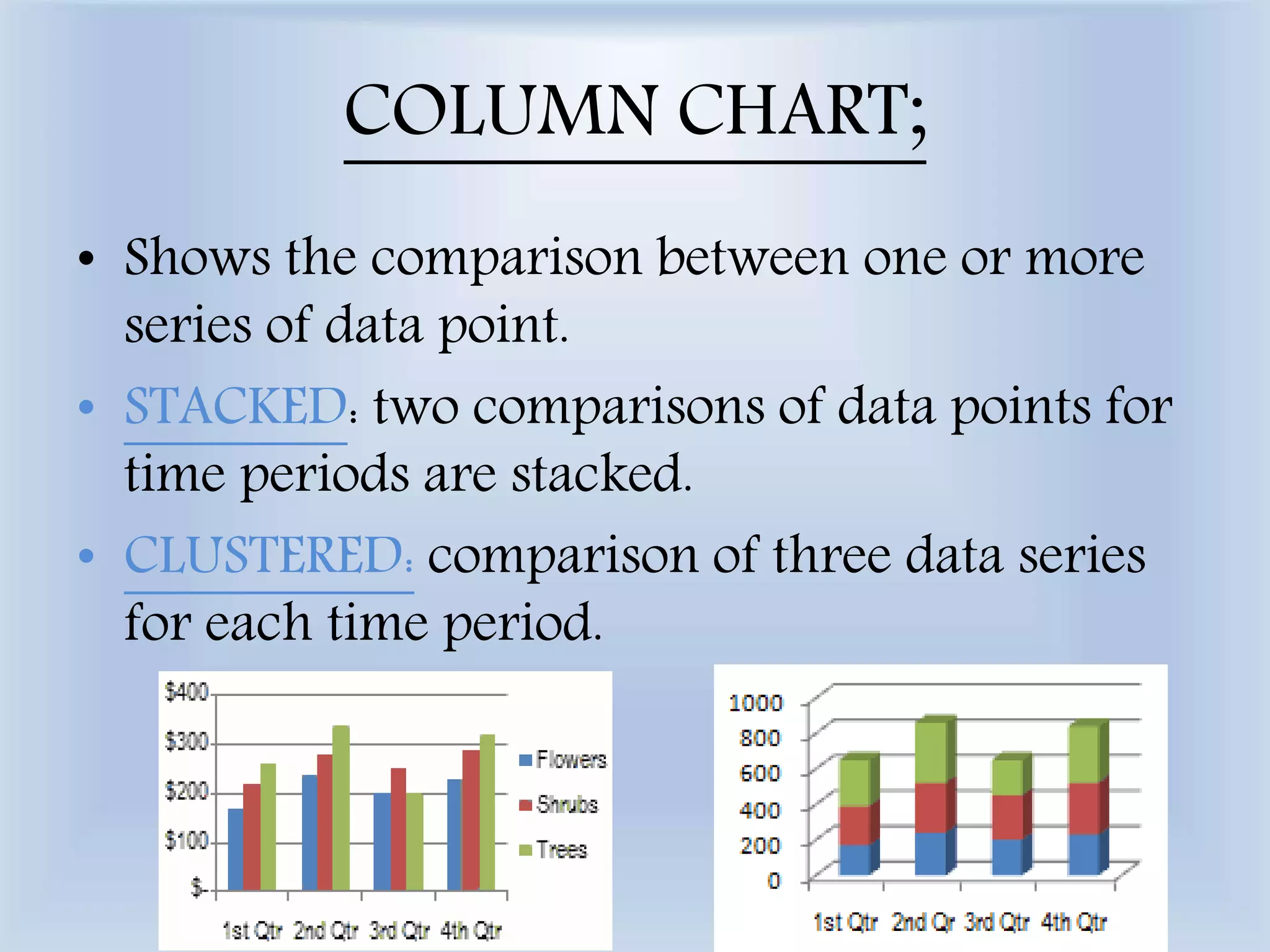
• Showsthe comparison between one or more
series of data point.
• STACKED: two comparisons of data points for
time periods are stacked.
• CLUSTERED: comparison of three data series
for each time period.
7.
PIE CHART;
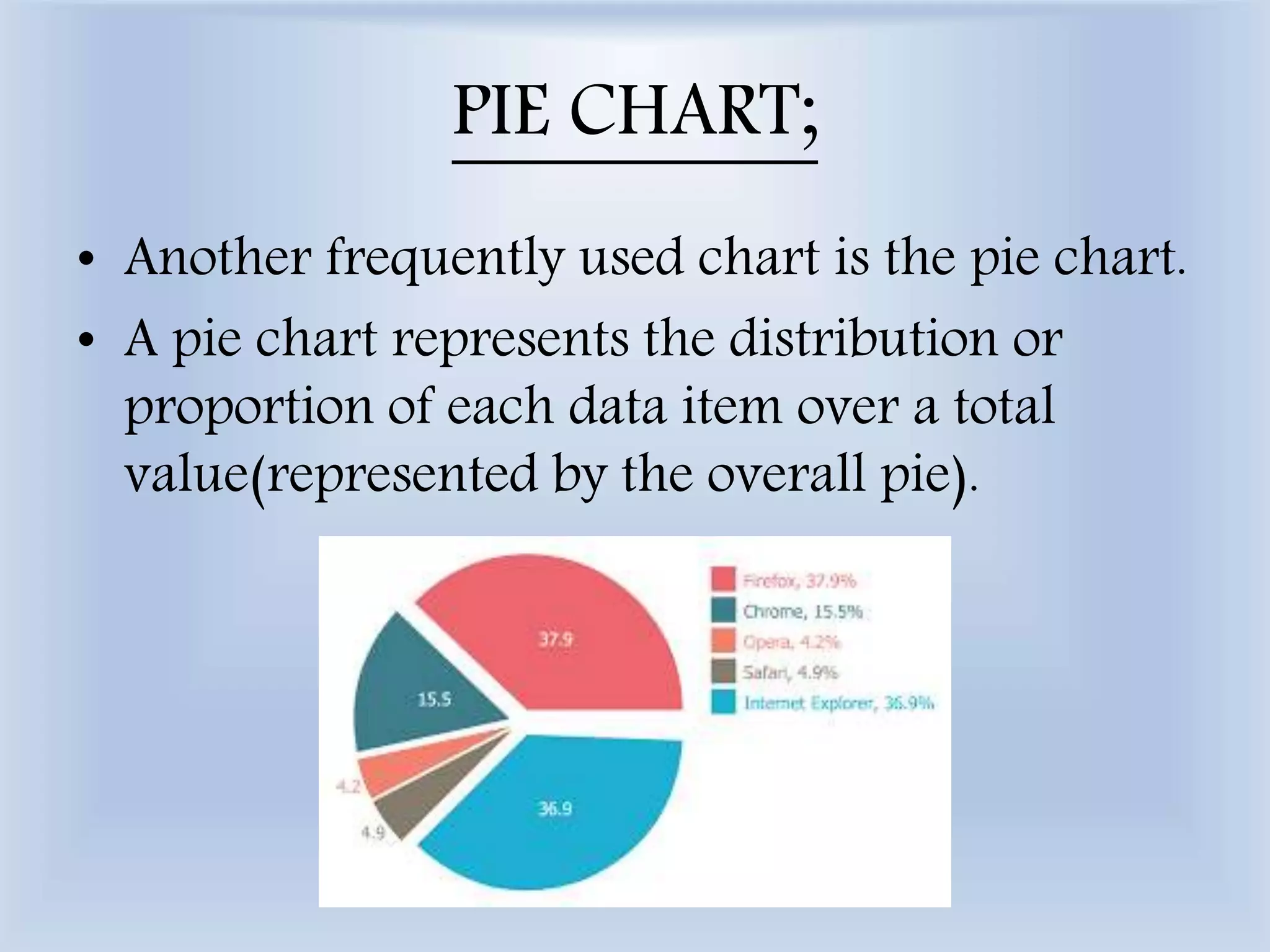
• Anotherfrequently used chart is the pie chart.
• A pie chart represents the distribution or
proportion of each data item over a total
value(represented by the overall pie).
8.
BAR CHART;
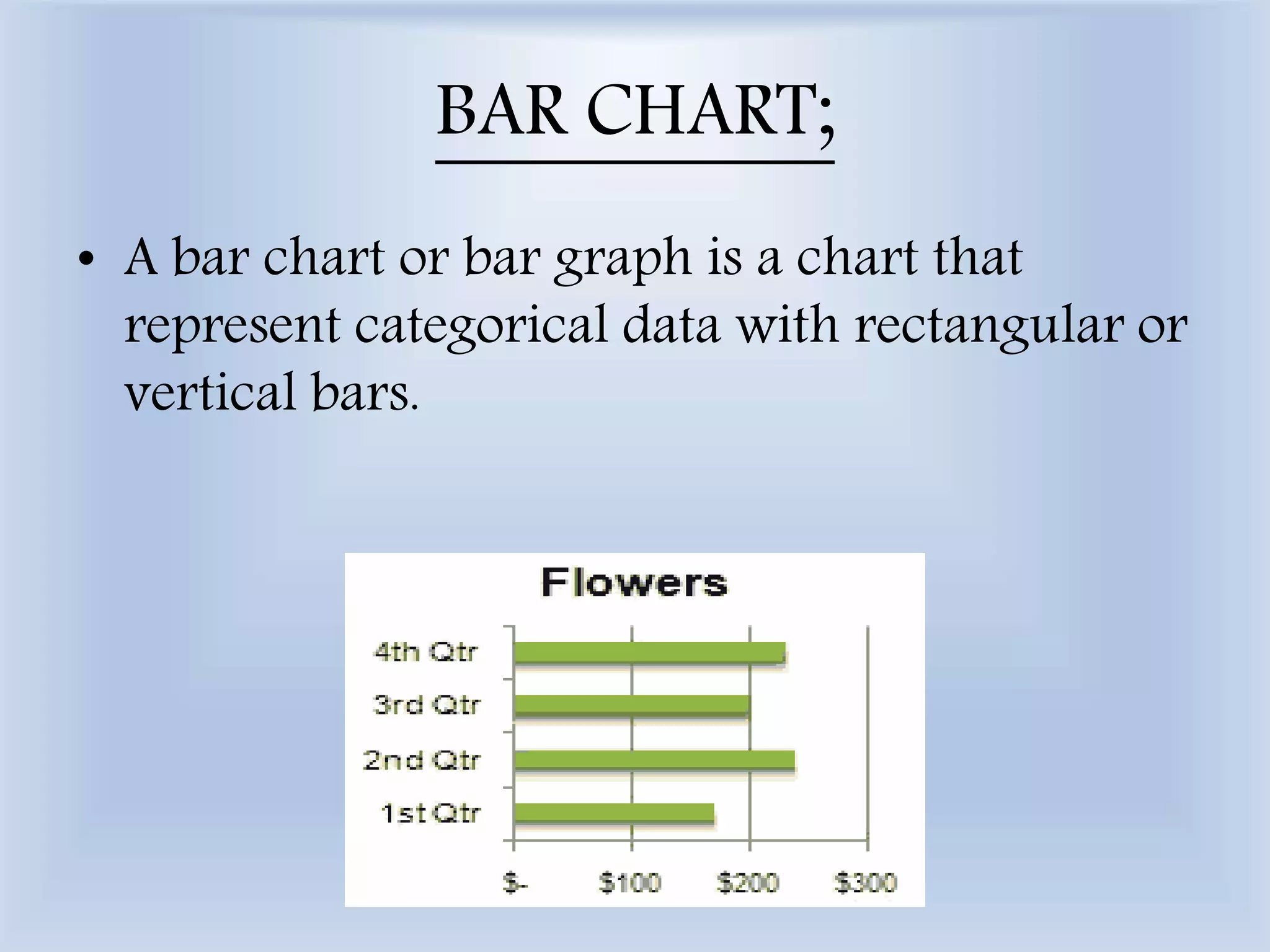
• Abar chart or bar graph is a chart that
represent categorical data with rectangular or
vertical bars.
9.
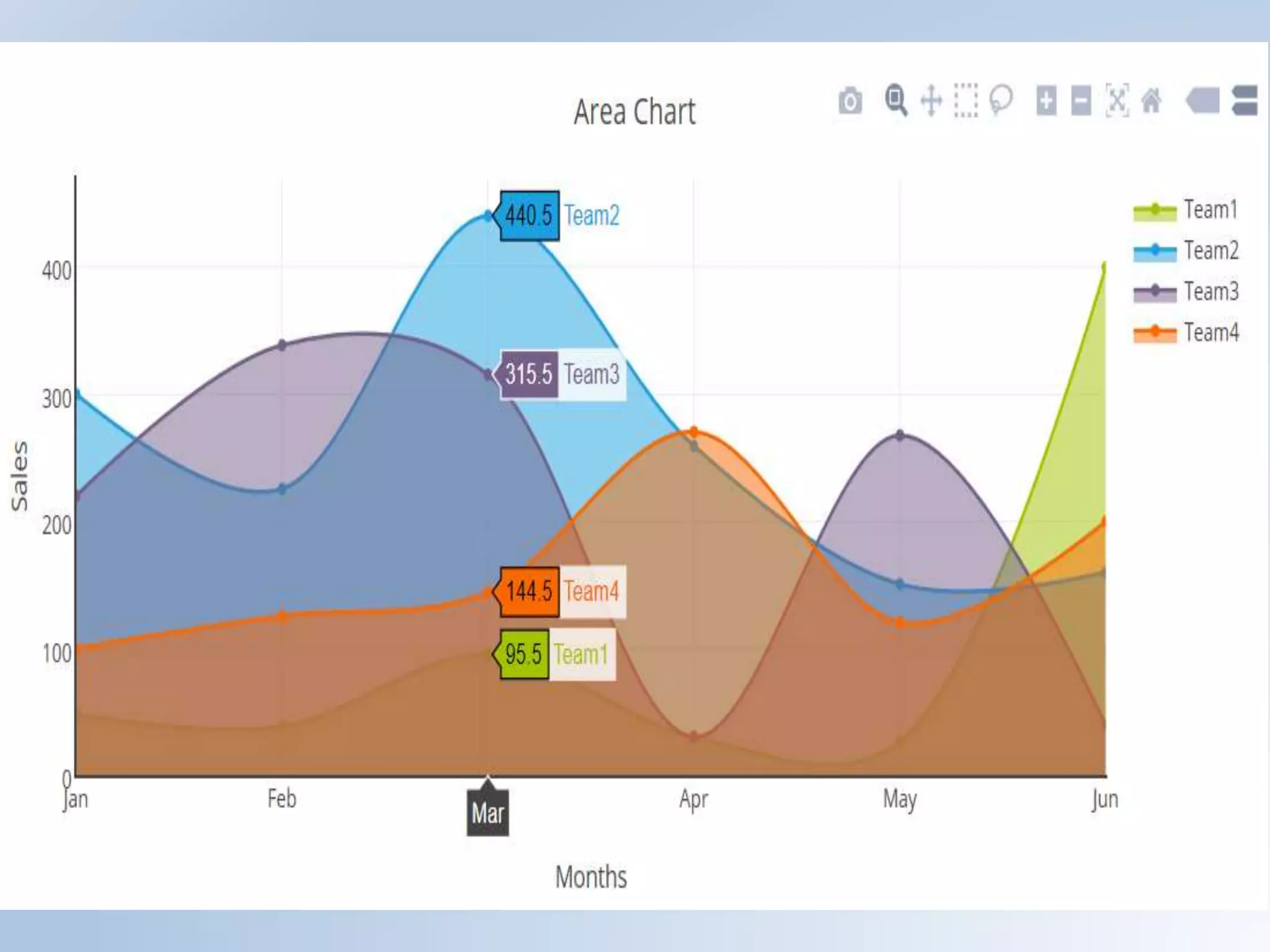
AREA CHART;
• Areacharts are like line charts except that the
area below the plot line is solid.
• And like line charts ,area charts are used
primarily to show trends over time or other
category.
11.
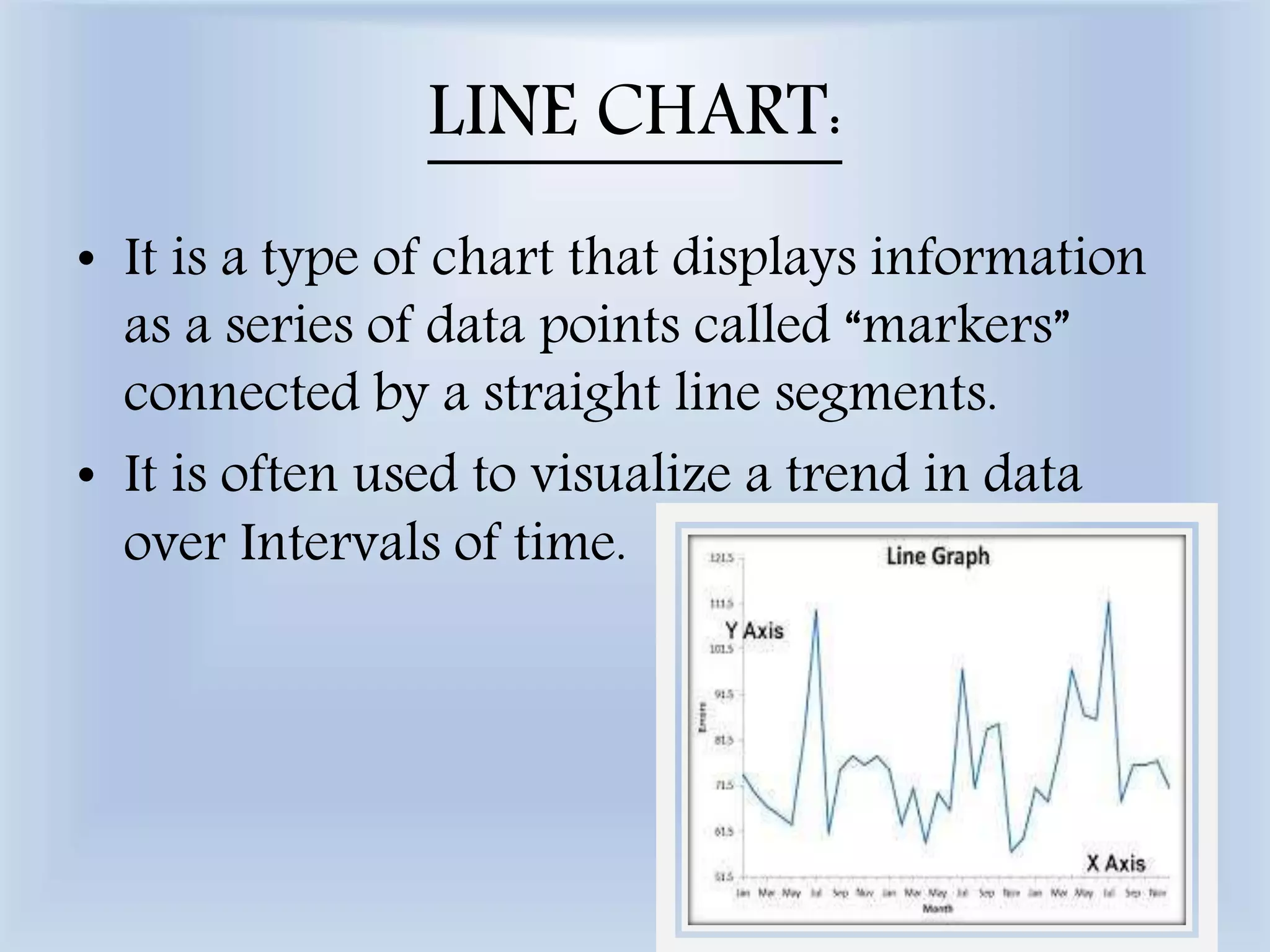
LINE CHART:
• Itis a type of chart that displays information
as a series of data points called “markers”
connected by a straight line segments.
• It is often used to visualize a trend in data
over Intervals of time.