SCIENCE Form 2 KSSM
Chapter 4: Human Health
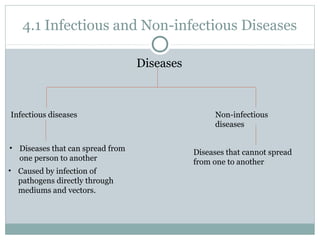
4.1 Infectious and Non-infectious Diseases
Diseases
Infectious diseases Non-infectious
diseases
• Diseases that can spread from
one person to another
Diseases that cannot spread
from one to another
• Caused by infection of
pathogens directly through
mediums and vectors.
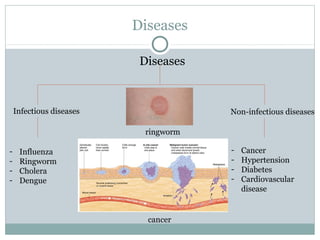
Diseases
Diseases
Infectious diseases Non-infectious diseases
- Influenza
- Ringworm
- Cholera
- Dengue
- Cancer
- Hypertension
- Diabetes
- Cardiovascular
disease
ringworm
cancer
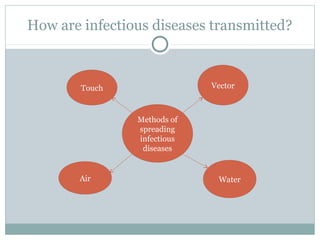
How are infectious diseases transmitted?
Methods of
spreading
infectious
diseases
Vector
Water
Air
Touch
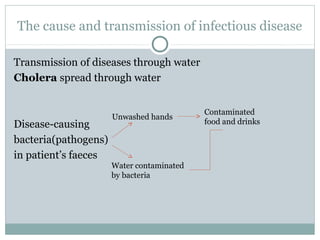
The cause and transmission of infectious disease
Transmission of diseases through water
Cholera spread through water
Disease-causing
bacteria(pathogens)
in patient’s faeces
Unwashed hands
Contaminated
food and drinks
Water contaminated
by bacteria
Transmission of diseases through air
Tuberculosis (TB), H1N1, severe acute
respiratory syndrome (SARS) and influenza
are transmitted through air.
TB is caused by bacteria, whereas H1N1 and
SARS are caused by virus.
Influenza may be caused by virus or bacteria.
Transmission of diseases through touch
Tinea versicolor is caused by a type of fungus.
This disease is infectious. We must take care of our
personal hygiene and not share our personal
belongings with an infected person.
Ringworm (Tinea corporis) is caused by a type of
fungus and spreads through direct contact
skin of an infected person.
Transmission of diseases through vector
Vectors are agents that carry the diseasing-
causing organisms.
Dengue, malaria and Zika are transmitted by
mosquitoes.
Lepstopirosis is transmitted by rats.
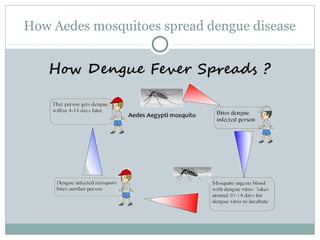
How Aedes mosquitoes spread dengue disease
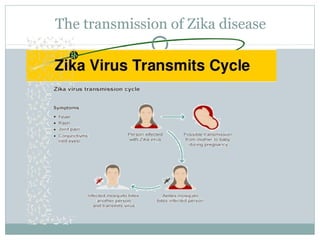
The transmission of Zika disease
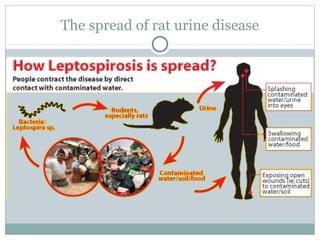
The spread of rat urine disease
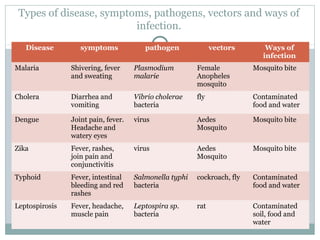
Types of disease, symptoms, pathogens, vectors and ways of
infection.
Disease symptoms pathogen vectors Ways of
infection
Malaria Shivering, fever
and sweating
Plasmodium
malarie
Female
Anopheles
mosquito
Mosquito bite
Cholera Diarrhea and
vomiting
Vibrio cholerae
bacteria
fly Contaminated
food and water
Dengue Joint pain, fever.
Headache and
watery eyes
virus Aedes
Mosquito
Mosquito bite
Zika Fever, rashes,
join pain and
conjunctivitis
virus Aedes
Mosquito
Mosquito bite
Typhoid Fever, intestinal
bleeding and red
rashes
Salmonella typhi
bacteria
cockroach, fly Contaminated
food and water
Leptospirosis Fever, headache,
muscle pain
Leptospira sp.
bacteria
rat Contaminated
soil, food and
water
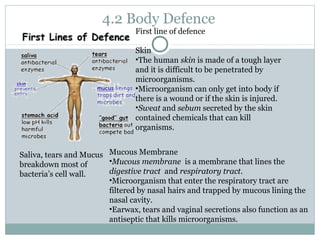
4.2 Body Defence
Saliva, tears and Mucus
breakdown most of
bacteria’s cell wall.
First line of defence
Skin
•The human skin is made of a tough layer
and it is difficult to be penetrated by
microorganisms.
•Microorganism can only get into body if
there is a wound or if the skin is injured.
•Sweat and sebum secreted by the skin
contained chemicals that can kill
organisms.
Mucous Membrane
•Mucous membrane is a membrane that lines the
digestive tract and respiratory tract.
•Microorganism that enter the respiratory tract are
filtered by nasal hairs and trapped by mucous lining the
nasal cavity.
•Earwax, tears and vaginal secretions also function as an
antiseptic that kills microorganisms.
chapter4science-human health.pdf

chapter4science-human health.pdf

  • 1.
    SCIENCE Form 2KSSM Chapter 4: Human Health
  • 2.
    4.1 Infectious andNon-infectious Diseases Diseases Infectious diseases Non-infectious diseases • Diseases that can spread from one person to another Diseases that cannot spread from one to another • Caused by infection of pathogens directly through mediums and vectors.
  • 3.
    Diseases Diseases Infectious diseases Non-infectiousdiseases - Influenza - Ringworm - Cholera - Dengue - Cancer - Hypertension - Diabetes - Cardiovascular disease ringworm cancer
  • 4.
    How are infectiousdiseases transmitted? Methods of spreading infectious diseases Vector Water Air Touch
  • 5.
    The cause andtransmission of infectious disease Transmission of diseases through water Cholera spread through water Disease-causing bacteria(pathogens) in patient’s faeces Unwashed hands Contaminated food and drinks Water contaminated by bacteria
  • 6.
    Transmission of diseasesthrough air Tuberculosis (TB), H1N1, severe acute respiratory syndrome (SARS) and influenza are transmitted through air. TB is caused by bacteria, whereas H1N1 and SARS are caused by virus. Influenza may be caused by virus or bacteria.
  • 7.
    Transmission of diseasesthrough touch Tinea versicolor is caused by a type of fungus. This disease is infectious. We must take care of our personal hygiene and not share our personal belongings with an infected person. Ringworm (Tinea corporis) is caused by a type of fungus and spreads through direct contact skin of an infected person.
  • 8.
    Transmission of diseasesthrough vector Vectors are agents that carry the diseasing- causing organisms. Dengue, malaria and Zika are transmitted by mosquitoes. Lepstopirosis is transmitted by rats.
  • 9.
    How Aedes mosquitoesspread dengue disease
  • 10.
    The transmission ofZika disease
  • 11.
    The spread ofrat urine disease
  • 12.
    Types of disease,symptoms, pathogens, vectors and ways of infection. Disease symptoms pathogen vectors Ways of infection Malaria Shivering, fever and sweating Plasmodium malarie Female Anopheles mosquito Mosquito bite Cholera Diarrhea and vomiting Vibrio cholerae bacteria fly Contaminated food and water Dengue Joint pain, fever. Headache and watery eyes virus Aedes Mosquito Mosquito bite Zika Fever, rashes, join pain and conjunctivitis virus Aedes Mosquito Mosquito bite Typhoid Fever, intestinal bleeding and red rashes Salmonella typhi bacteria cockroach, fly Contaminated food and water Leptospirosis Fever, headache, muscle pain Leptospira sp. bacteria rat Contaminated soil, food and water
  • 13.
    4.2 Body Defence Saliva,tears and Mucus breakdown most of bacteria’s cell wall. First line of defence Skin •The human skin is made of a tough layer and it is difficult to be penetrated by microorganisms. •Microorganism can only get into body if there is a wound or if the skin is injured. •Sweat and sebum secreted by the skin contained chemicals that can kill organisms. Mucous Membrane •Mucous membrane is a membrane that lines the digestive tract and respiratory tract. •Microorganism that enter the respiratory tract are filtered by nasal hairs and trapped by mucous lining the nasal cavity. •Earwax, tears and vaginal secretions also function as an antiseptic that kills microorganisms.