Chapter 1: Cells and
Microorganisms
1.1 Introduction to Biology
What is Biology?
• The study of life
• The science of living things
Origins of word “biology”
• Biology (Greek or Latin origin)
• Bios = life
• Logos = study of
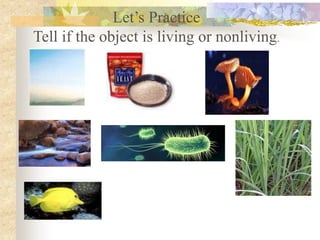
Let’s Practice
Tell if the object is living or nonliving.
Task 1
Record observations of living
and non-living things around
you.
How do we know is something is
‘living’?
 All living things are characterised as being able to do seven
things
 These are usually remembered by the mnemonic MRS GREN
M
R
S
G
R
E
N
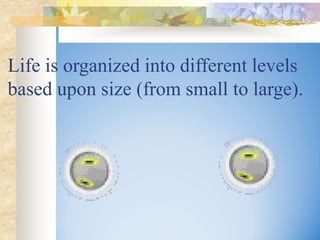
Life is organized into different levels
based upon size (from small to large).
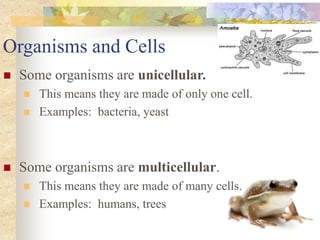
Organisms and Cells
 Some organisms are unicellular.
 This means they are made of only one cell.
 Examples: bacteria, yeast
 Some organisms are multicellular.
 This means they are made of many cells.
 Examples: humans, trees
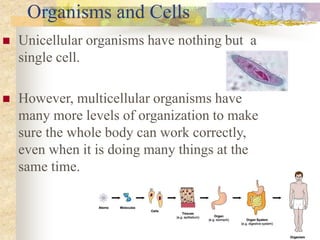
Organisms and Cells
 Unicellular organisms have nothing but a
single cell.
 However, multicellular organisms have
many more levels of organization to make
sure the whole body can work correctly,
even when it is doing many things at the
same time.
Growth
• Increase in cell size (unicellular) and/or an
increase in cell number (multicellular)
Reproduction
• Asexual- cell division (mitosis)—one cell
becomes two Ex: bacteria
• Sexual- union of sex cells (sperm and egg)
Ex: plants and animals
Movement
• 3 types:
A. Place to Place- (ex: bear running, bird
flying, etc)
B. External Part- (ex: + phototropism,
plants orient leaves toward sun)
C. Internal- (ex: cytoplasmic streaming)
Adaptation
• Changing to meet the needs of the
environment
Examples:
1. Bird migration- behavioral adaptation
Adaptation (continued)
2. Human body temperature- Physiological
adaptation
3. Hibernation- physiological adaptation
4. Hare ear length (desert vs. arctic hares)-
structural adaptation
Metabolism
• Set of chemical reactions that convert
“food” into energy
Specific Organization
• Certain parts do specific jobs (ex: heart,
nucleus, chloroplasts, etc)
Responsiveness
• Reaction(s) to various stimuli
Examples of stimuli: light, heat, pH,
vibration, smell, etc.– earthworms respond
to all of these
Branches of Biology
1. Zoology- the study of animals
2. Ichthyology- the study of fish
Why Important? Fish are indicator
species. Alert humans to potential
environmental problems
3. Mammalogy- study of mammals (NASA)
4. Ornithology- the study of birds
Why important? DDT(insecticide used in
‘50s and ’60s) Birds of prey #s declined
bioaccumulation- the build up of chemicals
or toxins in living things
5. Botany- the study of plants
Why important? Food production,
medicines
6. Microbiology- study of small life
Why important?
Medicines, bioterrorism
7. Anatomy- study of an organism’s parts
8. Physiology- study of how organism’s
parts work
Why important? Health professions,
veterinarians
9. Entomology- study of insects
Why important? West Nile virus, Yellow
fever– carried by mosquitoes
10.Genetics- study of heredity and genetic
material (DNA/RNA, chromosomes,
genes)
Why important? Cloning, research,
solving crime
11.Ecology- study of all life in a particular
area, the relationships b/t those life forms
and the environment
Why important? AMD, Overpopulation
Ozone Depletion/Greenhouse Effect
Rainforest Destruction
Pollution- other states pay to dump
garbage in PA
12.Cell Biology- the study of cells
Why Important?
Need to know about cells to learn more
about whole organisms
Early Contributions
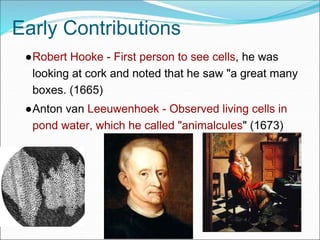
●Robert Hooke - First person to see cells, he was
looking at cork and noted that he saw "a great many
boxes. (1665)
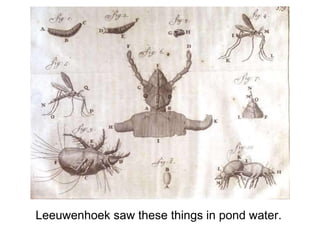
●Anton van Leeuwenhoek - Observed living cells in
pond water, which he called "animalcules" (1673)
Leeuwenhoek saw these things in pond water.
The development of the microscope – a brief
history: Robert Hooke’s development of the
compound microscope and examination of cork
tissue.
Watch YouTube Video: Cell Theory (3.30 min)
(https://youtu.be/dscY_2QQbKU)
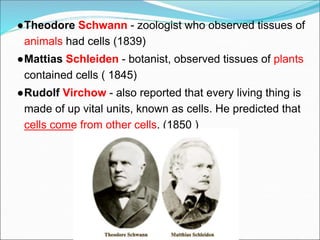
●Theodore Schwann - zoologist who observed tissues of
animals had cells (1839)
●Mattias Schleiden - botanist, observed tissues of plants
contained cells ( 1845)
●Rudolf Virchow - also reported that every living thing is
made of up vital units, known as cells. He predicted that
cells come from other cells. (1850 )
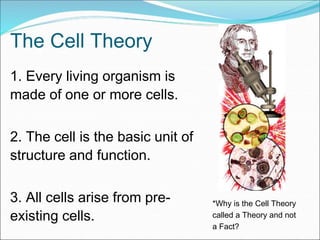
The Cell Theory
1. Every living organism is
made of one or more cells.
2. The cell is the basic unit of
structure and function.
3. All cells arise from pre-
existing cells.
*Why is the Cell Theory
called a Theory and not
a Fact?

Chapter%201.1 copy.pptx

  • 1.
    Chapter 1: Cellsand Microorganisms 1.1 Introduction to Biology
  • 2.
    What is Biology? •The study of life • The science of living things
  • 3.
    Origins of word“biology” • Biology (Greek or Latin origin) • Bios = life • Logos = study of
  • 4.
    Let’s Practice Tell ifthe object is living or nonliving.
  • 5.
    Task 1 Record observationsof living and non-living things around you.
  • 6.
    How do weknow is something is ‘living’?  All living things are characterised as being able to do seven things  These are usually remembered by the mnemonic MRS GREN M R S G R E N
  • 7.
    Life is organizedinto different levels based upon size (from small to large).
  • 8.
    Organisms and Cells Some organisms are unicellular.  This means they are made of only one cell.  Examples: bacteria, yeast  Some organisms are multicellular.  This means they are made of many cells.  Examples: humans, trees
  • 9.
    Organisms and Cells Unicellular organisms have nothing but a single cell.  However, multicellular organisms have many more levels of organization to make sure the whole body can work correctly, even when it is doing many things at the same time.
  • 10.
    Growth • Increase incell size (unicellular) and/or an increase in cell number (multicellular)
  • 11.
    Reproduction • Asexual- celldivision (mitosis)—one cell becomes two Ex: bacteria • Sexual- union of sex cells (sperm and egg) Ex: plants and animals
  • 12.
    Movement • 3 types: A.Place to Place- (ex: bear running, bird flying, etc) B. External Part- (ex: + phototropism, plants orient leaves toward sun) C. Internal- (ex: cytoplasmic streaming)
  • 13.
    Adaptation • Changing tomeet the needs of the environment Examples: 1. Bird migration- behavioral adaptation
  • 14.
    Adaptation (continued) 2. Humanbody temperature- Physiological adaptation 3. Hibernation- physiological adaptation 4. Hare ear length (desert vs. arctic hares)- structural adaptation
  • 15.
    Metabolism • Set ofchemical reactions that convert “food” into energy
  • 16.
    Specific Organization • Certainparts do specific jobs (ex: heart, nucleus, chloroplasts, etc)
  • 17.
    Responsiveness • Reaction(s) tovarious stimuli Examples of stimuli: light, heat, pH, vibration, smell, etc.– earthworms respond to all of these
  • 18.
    Branches of Biology 1.Zoology- the study of animals 2. Ichthyology- the study of fish Why Important? Fish are indicator species. Alert humans to potential environmental problems
  • 19.
    3. Mammalogy- studyof mammals (NASA) 4. Ornithology- the study of birds Why important? DDT(insecticide used in ‘50s and ’60s) Birds of prey #s declined bioaccumulation- the build up of chemicals or toxins in living things
  • 20.
    5. Botany- thestudy of plants Why important? Food production, medicines 6. Microbiology- study of small life Why important? Medicines, bioterrorism
  • 21.
    7. Anatomy- studyof an organism’s parts 8. Physiology- study of how organism’s parts work Why important? Health professions, veterinarians
  • 22.
    9. Entomology- studyof insects Why important? West Nile virus, Yellow fever– carried by mosquitoes 10.Genetics- study of heredity and genetic material (DNA/RNA, chromosomes, genes) Why important? Cloning, research, solving crime
  • 23.
    11.Ecology- study ofall life in a particular area, the relationships b/t those life forms and the environment Why important? AMD, Overpopulation Ozone Depletion/Greenhouse Effect Rainforest Destruction Pollution- other states pay to dump garbage in PA
  • 24.
    12.Cell Biology- thestudy of cells Why Important? Need to know about cells to learn more about whole organisms
  • 25.
    Early Contributions ●Robert Hooke- First person to see cells, he was looking at cork and noted that he saw "a great many boxes. (1665) ●Anton van Leeuwenhoek - Observed living cells in pond water, which he called "animalcules" (1673)
  • 26.
    Leeuwenhoek saw thesethings in pond water.
  • 27.
    The development ofthe microscope – a brief history: Robert Hooke’s development of the compound microscope and examination of cork tissue. Watch YouTube Video: Cell Theory (3.30 min) (https://youtu.be/dscY_2QQbKU)
  • 28.
    ●Theodore Schwann -zoologist who observed tissues of animals had cells (1839) ●Mattias Schleiden - botanist, observed tissues of plants contained cells ( 1845) ●Rudolf Virchow - also reported that every living thing is made of up vital units, known as cells. He predicted that cells come from other cells. (1850 )
  • 29.
    The Cell Theory 1.Every living organism is made of one or more cells. 2. The cell is the basic unit of structure and function. 3. All cells arise from pre- existing cells. *Why is the Cell Theory called a Theory and not a Fact?