Slide 9.1
Chaffey et al., Digital Marketing: Strategy, Implementation and Practice, 5th edition © Pearson Education Limited 2013
Chapter 9
Marketing communications
using digital media channels
Slide 9.2
Chaffey et al., Digital Marketing: Strategy, Implementation and Practice, 5th edition © Pearson Education Limited 2013
Learning objectives
• Distinguish between the different types of digital
media channels
• Evaluate the advantages and disadvantages of
each digital media channel for marketing
communications
• Assess the suitability of different types of digital
media for different purposes
Slide 9.3
Chaffey et al., Digital Marketing: Strategy, Implementation and Practice, 5th edition © Pearson Education Limited 2013
Questions for marketers
• Which digital communications media should we
select for different types of campaign?
• Which are the success factors which will make
our campaigns more effective?
Slide 9.4
Chaffey et al., Digital Marketing: Strategy, Implementation and Practice, 5th edition © Pearson Education Limited 2013
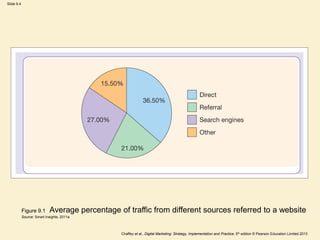
Figure 9.1 Average percentage of traffic from different sources referred to a website
Source: Smart Insights, 2011a
Slide 9.5
Chaffey et al., Digital Marketing: Strategy, Implementation and Practice, 5th edition © Pearson Education Limited 2013
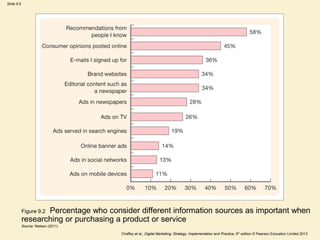
Figure 9.2 Percentage who consider different information sources as important when
researching or purchasing a product or service
Source: Nielsen (2011)
Slide 9.6
Chaffey et al., Digital Marketing: Strategy, Implementation and Practice, 5th edition © Pearson Education Limited 2013
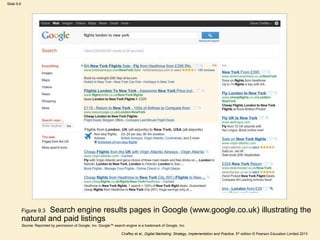
Figure 9.3 Search engine results pages in Google (www.google.co.uk) illustrating the
natural and paid listings
Source: Reprinted by permission of Google, Inc. Google™ search engine is a trademark of Google, Inc.
Slide 9.7
Chaffey et al., Digital Marketing: Strategy, Implementation and Practice, 5th edition © Pearson Education Limited 2013
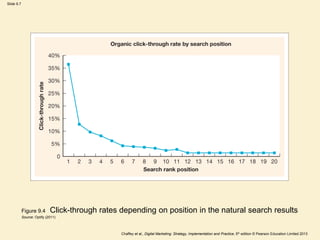
Figure 9.4 Click-through rates depending on position in the natural search results
Source: Optify (2011)
Slide 9.8
Chaffey et al., Digital Marketing: Strategy, Implementation and Practice, 5th edition © Pearson Education Limited 2013
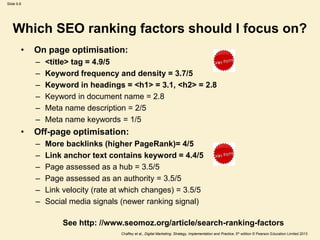
Which SEO ranking factors should I focus on?
• On page optimisation:
– <title> tag = 4.9/5
– Keyword frequency and density = 3.7/5
– Keyword in headings = <h1> = 3.1, <h2> = 2.8
– Keyword in document name = 2.8
– Meta name description = 2/5
– Meta name keywords = 1/5
• Off-page optimisation:
– More backlinks (higher PageRank)= 4/5
– Link anchor text contains keyword = 4.4/5
– Page assessed as a hub = 3.5/5
– Page assessed as an authority = 3.5/5
– Link velocity (rate at which changes) = 3.5/5
– Social media signals (newer ranking signal)
See http: //www.seomoz.org/article/search-ranking-factors
Slide 9.9
Chaffey et al., Digital Marketing: Strategy, Implementation and Practice, 5th edition © Pearson Education Limited 2013
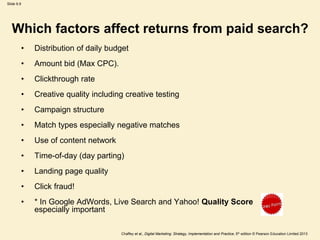
Which factors affect returns from paid search?
• Distribution of daily budget
• Amount bid (Max CPC).
• Clickthrough rate
• Creative quality including creative testing
• Campaign structure
• Match types especially negative matches
• Use of content network
• Time-of-day (day parting)
• Landing page quality
• Click fraud!
• * In Google AdWords, Live Search and Yahoo! Quality Score
especially important
Slide 9.10
Chaffey et al., Digital Marketing: Strategy, Implementation and Practice, 5th edition © Pearson Education Limited 2013
Online PR
• What it?
– ‘the management of reputation - the planned and
sustained effort to establish and maintain goodwill
and mutual understanding between an
organisation and its publics”
The UK Institute of PR (IPR)
– ‘the managed process of communication
between one group and another … (it) is the
method of defining messages and communicating
them to target audiences in order to influence a
desired response’. Public Relationships Consultants Association (PRCA)
Slide 9.11
Chaffey et al., Digital Marketing: Strategy, Implementation and Practice, 5th edition © Pearson Education Limited 2013
1
.
A
t
t
r
a
c
t
i
n
g
v
i
s
i
t
o
r
s
t
h
r
o
u
g
h
s
e
a
r
c
h
3
.
B
u
i
l
d
i
n
g
C
a
m
p
a
i
g
n
B
u
z
z
2
.
E
n
g
a
g
e
m
e
n
t
&
D
i
a
l
o
g
u
e
4
.
D
e
f
e
n
s
i
v
e
/
C
r
i
s
i
s
Online
PR
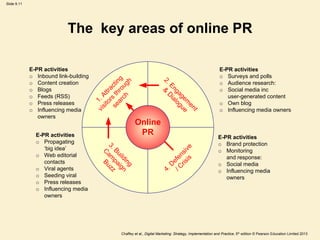
E-PR activities
o Surveys and polls
o Audience research:
o Social media inc
user-generated content
o Own blog
o Influencing media owners
E-PR activities
o Inbound link-building
o Content creation
o Blogs
o Feeds (RSS)
o Press releases
o Influencing media
owners
E-PR activities
o Brand protection
o Monitoring
and response:
o Social media
o Influencing media
owners
E-PR activities
o Propagating
‘big idea’
o Web editorial
contacts
o Viral agents
o Seeding viral
o Press releases
o Influencing media
owners
The key areas of online PR
Slide 9.12
Chaffey et al., Digital Marketing: Strategy, Implementation and Practice, 5th edition © Pearson Education Limited 2013
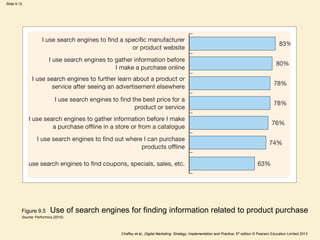
Figure 9.5 Use of search engines for finding information related to product purchase
Source: Performics (2010)
Slide 9.13
Chaffey et al., Digital Marketing: Strategy, Implementation and Practice, 5th edition © Pearson Education Limited 2013
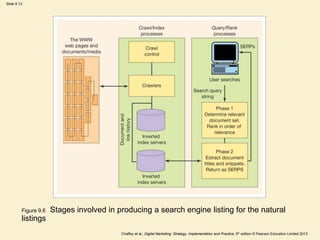
Figure 9.6 Stages involved in producing a search engine listing for the natural
listings
Slide 9.14
Chaffey et al., Digital Marketing: Strategy, Implementation and Practice, 5th edition © Pearson Education Limited 2013
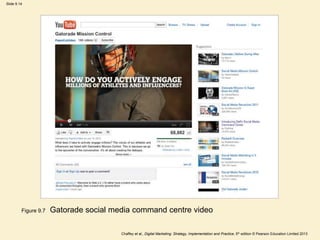
Figure 9.7 Gatorade social media command centre video
Slide 9.15
Chaffey et al., Digital Marketing: Strategy, Implementation and Practice, 5th edition © Pearson Education Limited 2013
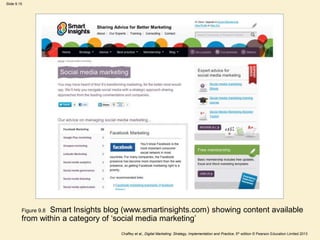
Figure 9.8 Smart Insights blog (www.smartinsights.com) showing content available
from within a category of ‘social media marketing’
Slide 9.16
Chaffey et al., Digital Marketing: Strategy, Implementation and Practice, 5th edition © Pearson Education Limited 2013
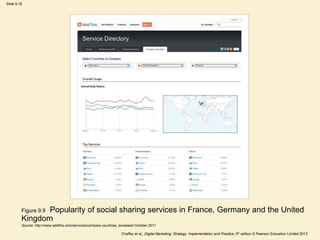
Figure 9.9 Popularity of social sharing services in France, Germany and the United
Kingdom
Source: http://www.addthis.com/services/compare-countries, accessed October 2011
Slide 9.17
Chaffey et al., Digital Marketing: Strategy, Implementation and Practice, 5th edition © Pearson Education Limited 2013
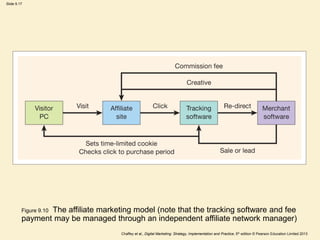
Figure 9.10 The affiliate marketing model (note that the tracking software and fee
payment may be managed through an independent affiliate network manager)
Slide 9.18
Chaffey et al., Digital Marketing: Strategy, Implementation and Practice, 5th edition © Pearson Education Limited 2013
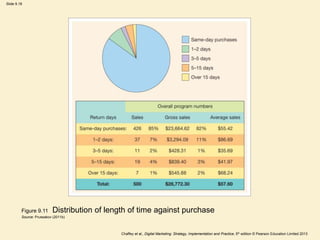
Figure 9.11 Distribution of length of time against purchase
Source: Prussakov (2011b)
Slide 9.19
Chaffey et al., Digital Marketing: Strategy, Implementation and Practice, 5th edition © Pearson Education Limited 2013
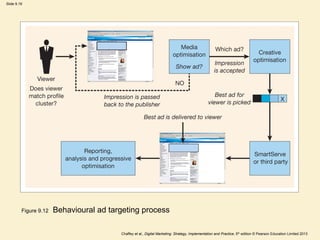
Figure 9.12 Behavioural ad targeting process
Slide 9.20
Chaffey et al., Digital Marketing: Strategy, Implementation and Practice, 5th edition © Pearson Education Limited 2013
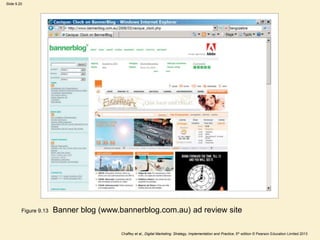
Figure 9.13 Banner blog (www.bannerblog.com.au) ad review site
Slide 9.21
Chaffey et al., Digital Marketing: Strategy, Implementation and Practice, 5th edition © Pearson Education Limited 2013
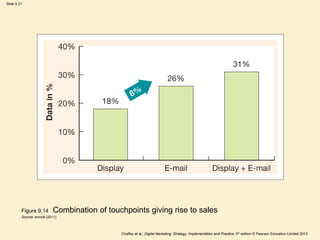
Figure 9.14 Combination of touchpoints giving rise to sales
Source: ecircle (2011)
Slide 9.22
Chaffey et al., Digital Marketing: Strategy, Implementation and Practice, 5th edition © Pearson Education Limited 2013
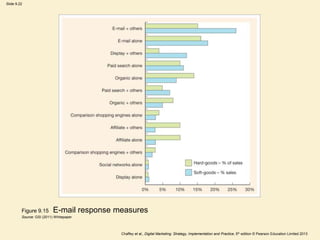
Figure 9.15 E-mail response measures
Source: GSI (2011) Whitepaper
Slide 9.23
Chaffey et al., Digital Marketing: Strategy, Implementation and Practice, 5th edition © Pearson Education Limited 2013
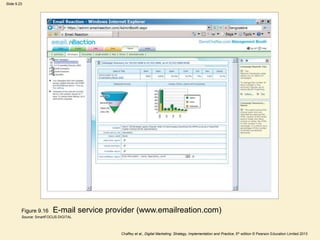
Figure 9.16 E-mail service provider (www.emailreation.com)
Source: SmartFOCUS DIGITAL
Slide 9.24
Chaffey et al., Digital Marketing: Strategy, Implementation and Practice, 5th edition © Pearson Education Limited 2013
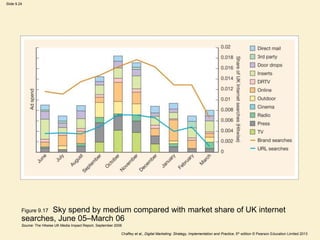
Figure 9.17 Sky spend by medium compared with market share of UK internet
searches, June 05–March 06
Source: The Hitwise UK Media Impact Report, September 2006
Slide 9.25
Chaffey et al., Digital Marketing: Strategy, Implementation and Practice, 5th edition © Pearson Education Limited 2013
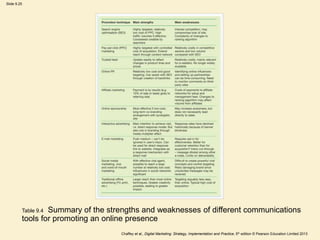
Table 9.4 Summary of the strengths and weaknesses of different communications
tools for promoting an online presence

Chapter 9.ppt

  • 1.
    Slide 9.1 Chaffey etal., Digital Marketing: Strategy, Implementation and Practice, 5th edition © Pearson Education Limited 2013 Chapter 9 Marketing communications using digital media channels
  • 2.
    Slide 9.2 Chaffey etal., Digital Marketing: Strategy, Implementation and Practice, 5th edition © Pearson Education Limited 2013 Learning objectives • Distinguish between the different types of digital media channels • Evaluate the advantages and disadvantages of each digital media channel for marketing communications • Assess the suitability of different types of digital media for different purposes
  • 3.
    Slide 9.3 Chaffey etal., Digital Marketing: Strategy, Implementation and Practice, 5th edition © Pearson Education Limited 2013 Questions for marketers • Which digital communications media should we select for different types of campaign? • Which are the success factors which will make our campaigns more effective?
  • 4.
    Slide 9.4 Chaffey etal., Digital Marketing: Strategy, Implementation and Practice, 5th edition © Pearson Education Limited 2013 Figure 9.1 Average percentage of traffic from different sources referred to a website Source: Smart Insights, 2011a
  • 5.
    Slide 9.5 Chaffey etal., Digital Marketing: Strategy, Implementation and Practice, 5th edition © Pearson Education Limited 2013 Figure 9.2 Percentage who consider different information sources as important when researching or purchasing a product or service Source: Nielsen (2011)
  • 6.
    Slide 9.6 Chaffey etal., Digital Marketing: Strategy, Implementation and Practice, 5th edition © Pearson Education Limited 2013 Figure 9.3 Search engine results pages in Google (www.google.co.uk) illustrating the natural and paid listings Source: Reprinted by permission of Google, Inc. Google™ search engine is a trademark of Google, Inc.
  • 7.
    Slide 9.7 Chaffey etal., Digital Marketing: Strategy, Implementation and Practice, 5th edition © Pearson Education Limited 2013 Figure 9.4 Click-through rates depending on position in the natural search results Source: Optify (2011)
  • 8.
    Slide 9.8 Chaffey etal., Digital Marketing: Strategy, Implementation and Practice, 5th edition © Pearson Education Limited 2013 Which SEO ranking factors should I focus on? • On page optimisation: – <title> tag = 4.9/5 – Keyword frequency and density = 3.7/5 – Keyword in headings = <h1> = 3.1, <h2> = 2.8 – Keyword in document name = 2.8 – Meta name description = 2/5 – Meta name keywords = 1/5 • Off-page optimisation: – More backlinks (higher PageRank)= 4/5 – Link anchor text contains keyword = 4.4/5 – Page assessed as a hub = 3.5/5 – Page assessed as an authority = 3.5/5 – Link velocity (rate at which changes) = 3.5/5 – Social media signals (newer ranking signal) See http: //www.seomoz.org/article/search-ranking-factors
  • 9.
    Slide 9.9 Chaffey etal., Digital Marketing: Strategy, Implementation and Practice, 5th edition © Pearson Education Limited 2013 Which factors affect returns from paid search? • Distribution of daily budget • Amount bid (Max CPC). • Clickthrough rate • Creative quality including creative testing • Campaign structure • Match types especially negative matches • Use of content network • Time-of-day (day parting) • Landing page quality • Click fraud! • * In Google AdWords, Live Search and Yahoo! Quality Score especially important
  • 10.
    Slide 9.10 Chaffey etal., Digital Marketing: Strategy, Implementation and Practice, 5th edition © Pearson Education Limited 2013 Online PR • What it? – ‘the management of reputation - the planned and sustained effort to establish and maintain goodwill and mutual understanding between an organisation and its publics” The UK Institute of PR (IPR) – ‘the managed process of communication between one group and another … (it) is the method of defining messages and communicating them to target audiences in order to influence a desired response’. Public Relationships Consultants Association (PRCA)
  • 11.
    Slide 9.11 Chaffey etal., Digital Marketing: Strategy, Implementation and Practice, 5th edition © Pearson Education Limited 2013 1 . A t t r a c t i n g v i s i t o r s t h r o u g h s e a r c h 3 . B u i l d i n g C a m p a i g n B u z z 2 . E n g a g e m e n t & D i a l o g u e 4 . D e f e n s i v e / C r i s i s Online PR E-PR activities o Surveys and polls o Audience research: o Social media inc user-generated content o Own blog o Influencing media owners E-PR activities o Inbound link-building o Content creation o Blogs o Feeds (RSS) o Press releases o Influencing media owners E-PR activities o Brand protection o Monitoring and response: o Social media o Influencing media owners E-PR activities o Propagating ‘big idea’ o Web editorial contacts o Viral agents o Seeding viral o Press releases o Influencing media owners The key areas of online PR
  • 12.
    Slide 9.12 Chaffey etal., Digital Marketing: Strategy, Implementation and Practice, 5th edition © Pearson Education Limited 2013 Figure 9.5 Use of search engines for finding information related to product purchase Source: Performics (2010)
  • 13.
    Slide 9.13 Chaffey etal., Digital Marketing: Strategy, Implementation and Practice, 5th edition © Pearson Education Limited 2013 Figure 9.6 Stages involved in producing a search engine listing for the natural listings
  • 14.
    Slide 9.14 Chaffey etal., Digital Marketing: Strategy, Implementation and Practice, 5th edition © Pearson Education Limited 2013 Figure 9.7 Gatorade social media command centre video
  • 15.
    Slide 9.15 Chaffey etal., Digital Marketing: Strategy, Implementation and Practice, 5th edition © Pearson Education Limited 2013 Figure 9.8 Smart Insights blog (www.smartinsights.com) showing content available from within a category of ‘social media marketing’
  • 16.
    Slide 9.16 Chaffey etal., Digital Marketing: Strategy, Implementation and Practice, 5th edition © Pearson Education Limited 2013 Figure 9.9 Popularity of social sharing services in France, Germany and the United Kingdom Source: http://www.addthis.com/services/compare-countries, accessed October 2011
  • 17.
    Slide 9.17 Chaffey etal., Digital Marketing: Strategy, Implementation and Practice, 5th edition © Pearson Education Limited 2013 Figure 9.10 The affiliate marketing model (note that the tracking software and fee payment may be managed through an independent affiliate network manager)
  • 18.
    Slide 9.18 Chaffey etal., Digital Marketing: Strategy, Implementation and Practice, 5th edition © Pearson Education Limited 2013 Figure 9.11 Distribution of length of time against purchase Source: Prussakov (2011b)
  • 19.
    Slide 9.19 Chaffey etal., Digital Marketing: Strategy, Implementation and Practice, 5th edition © Pearson Education Limited 2013 Figure 9.12 Behavioural ad targeting process
  • 20.
    Slide 9.20 Chaffey etal., Digital Marketing: Strategy, Implementation and Practice, 5th edition © Pearson Education Limited 2013 Figure 9.13 Banner blog (www.bannerblog.com.au) ad review site
  • 21.
    Slide 9.21 Chaffey etal., Digital Marketing: Strategy, Implementation and Practice, 5th edition © Pearson Education Limited 2013 Figure 9.14 Combination of touchpoints giving rise to sales Source: ecircle (2011)
  • 22.
    Slide 9.22 Chaffey etal., Digital Marketing: Strategy, Implementation and Practice, 5th edition © Pearson Education Limited 2013 Figure 9.15 E-mail response measures Source: GSI (2011) Whitepaper
  • 23.
    Slide 9.23 Chaffey etal., Digital Marketing: Strategy, Implementation and Practice, 5th edition © Pearson Education Limited 2013 Figure 9.16 E-mail service provider (www.emailreation.com) Source: SmartFOCUS DIGITAL
  • 24.
    Slide 9.24 Chaffey etal., Digital Marketing: Strategy, Implementation and Practice, 5th edition © Pearson Education Limited 2013 Figure 9.17 Sky spend by medium compared with market share of UK internet searches, June 05–March 06 Source: The Hitwise UK Media Impact Report, September 2006
  • 25.
    Slide 9.25 Chaffey etal., Digital Marketing: Strategy, Implementation and Practice, 5th edition © Pearson Education Limited 2013 Table 9.4 Summary of the strengths and weaknesses of different communications tools for promoting an online presence