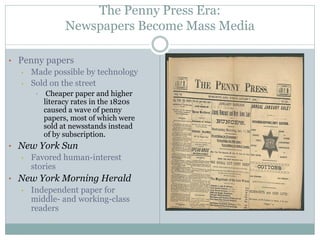
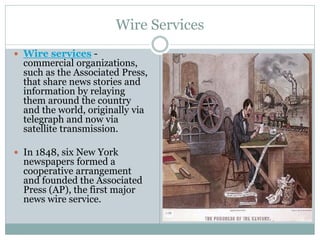
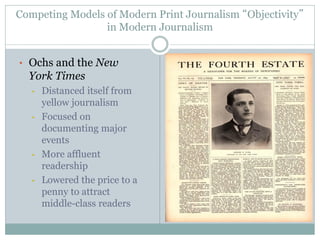
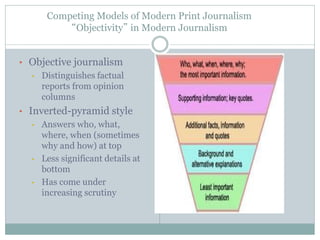
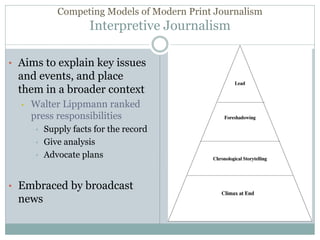
This document summarizes the history of newspapers in the United States, beginning with colonial newspapers established to share political views. It describes how technological advancements led to the development of penny papers in the 1830s, making newspapers more affordable and accessible. The era of "yellow journalism" in the 1890s emphasized sensational stories and investigations. Wire services and syndication helped papers expand their coverage. Competing models of journalism, like objectivity and interpretive reporting, emerged. Newspapers also began targeting specific audiences. While new technologies pose challenges, journalism remains important to democracy.