C H A P T E R 1 – M A J O R C O N C E P T S
INTRODUCTION TO
COMMUNICATION
I. DEFINITION OF COMMUNICATION
• The transactional process of creating meaning
• People communicating are mutually responsible for
what occurs
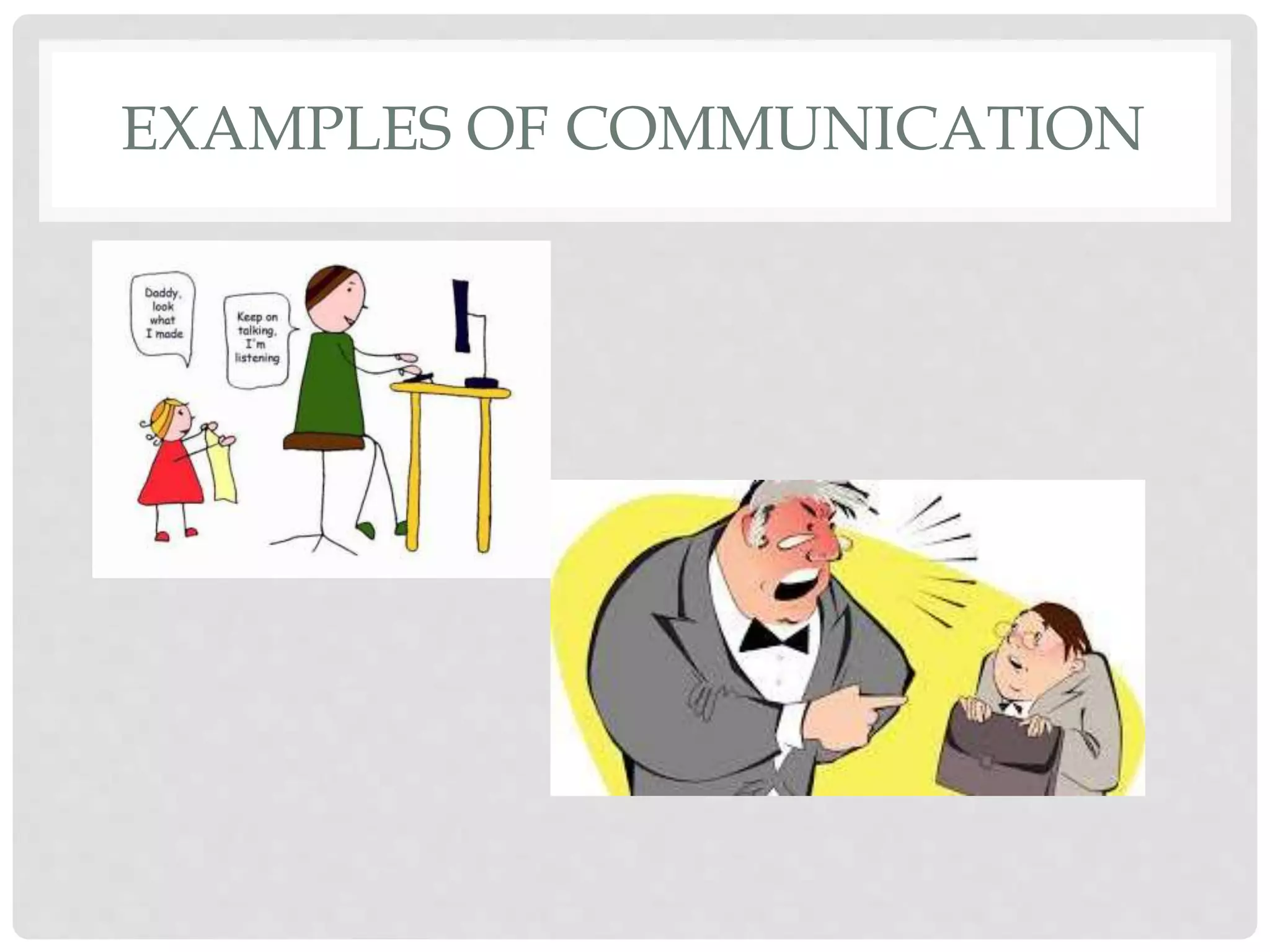
• Examples of communication
EXAMPLES OF COMMUNICATION
II. ELEMENTS OF EFFECTIVE
COMMUNICATION
• 1. context
• 2. People
• 3. Messages
• 4. Channels
• 5. Noise
• 6. Feedback
1. CONTEXT
• The interrelated conditions of communication make
up context
• A. Physical setting
• Location
• Time
• Light
• Temperature
• Distance between communicators
• Seating arrangements
1. CONTEXT
• B. historical aspect
• Look at this example. Is there a historical aspect in
these communication episodes?
• A: Excuse me! How much is this?
• B: It’s $15.
• A: Have you done what I told you?
• B: I’m sorry. I’m too busy.
1. CONTEXT
• C. Psychological aspect: the manner in which
people perceive themselves and how they
perceive those with whom they communicate.
• D. Cultural norms: guidelines that we establish for
conducting transactions.
2. PEOPLE
• Sender: forms messages, communicate them to
others through verbal and nonverbal symbols
• Receiver: processes the messages, react to them
both verbally and nonverbally
• Forms of communication vary depending on the
relationship of participants
• Meaning sent and meaning received may not be
exactly the same for the individuals involved due to
different individual experiences, feelings, ideas,
moods, occupation, religion…
3. MESSAGES
• A. meanings
• B. symbols
• C. encoding and decoding
• D. form or organisation
3.A.MEANINGS
• Ideas and feelings in the mind of a person
• To share ideas and feelings, you must form
messages comprised of both verbal and nonverbal
elements
3.B. SYMBOLS
• Verbal: words
• Nonverbal:
• facial expressions,
• gestures,
• tone of voice,
• eye contact,
• posture,
• clothing
3.C. ENCODING AND DECODING
• Encoding: transforming ideas and feelings into
symbols and organizing them
• Decoding: transforming messages back into ideas
and feelings
• Unintended meaning: created when the decoding
person receives a meaning unrelated to what the
encoder thought was being created
• Conflicting meaning: created when the verbal
symbols are contradicted by the nonverbal cues.
3.D. FORM/ORGANISATION
• When meaning is complex, people communicate in
sections or in a certain order/in a particular form to
convey the meaning
4. CHANNELS
• The route travelled by the message and the means
of transportation
• Words: by air waves
• Nonverbal cues: light waves
• Five sensory channels: examples?
5. NOISE
• A. external noise: sights, sounds… that draw
people’s attention way from intended meaning
• Internal noise: thoughts, feelings that interfere with
meaning
• Semantic noise: those alternate meanings aroused
by certain symbols that inhibit meaning
6. FEEDBACK
• Verbal or non-verbal response to the messages
MODEL OF COMMUNICATION
BETWEEN TWO INDIVIDUALS

Chapter 1 communication

  • 1.
    C H AP T E R 1 – M A J O R C O N C E P T S INTRODUCTION TO COMMUNICATION
  • 2.
    I. DEFINITION OFCOMMUNICATION • The transactional process of creating meaning • People communicating are mutually responsible for what occurs • Examples of communication
  • 3.
  • 4.
    II. ELEMENTS OFEFFECTIVE COMMUNICATION • 1. context • 2. People • 3. Messages • 4. Channels • 5. Noise • 6. Feedback
  • 5.
    1. CONTEXT • Theinterrelated conditions of communication make up context • A. Physical setting • Location • Time • Light • Temperature • Distance between communicators • Seating arrangements
  • 6.
    1. CONTEXT • B.historical aspect • Look at this example. Is there a historical aspect in these communication episodes? • A: Excuse me! How much is this? • B: It’s $15. • A: Have you done what I told you? • B: I’m sorry. I’m too busy.
  • 7.
    1. CONTEXT • C.Psychological aspect: the manner in which people perceive themselves and how they perceive those with whom they communicate. • D. Cultural norms: guidelines that we establish for conducting transactions.
  • 8.
    2. PEOPLE • Sender:forms messages, communicate them to others through verbal and nonverbal symbols • Receiver: processes the messages, react to them both verbally and nonverbally • Forms of communication vary depending on the relationship of participants • Meaning sent and meaning received may not be exactly the same for the individuals involved due to different individual experiences, feelings, ideas, moods, occupation, religion…
  • 9.
    3. MESSAGES • A.meanings • B. symbols • C. encoding and decoding • D. form or organisation
  • 10.
    3.A.MEANINGS • Ideas andfeelings in the mind of a person • To share ideas and feelings, you must form messages comprised of both verbal and nonverbal elements
  • 11.
    3.B. SYMBOLS • Verbal:words • Nonverbal: • facial expressions, • gestures, • tone of voice, • eye contact, • posture, • clothing
  • 12.
    3.C. ENCODING ANDDECODING • Encoding: transforming ideas and feelings into symbols and organizing them • Decoding: transforming messages back into ideas and feelings • Unintended meaning: created when the decoding person receives a meaning unrelated to what the encoder thought was being created • Conflicting meaning: created when the verbal symbols are contradicted by the nonverbal cues.
  • 13.
    3.D. FORM/ORGANISATION • Whenmeaning is complex, people communicate in sections or in a certain order/in a particular form to convey the meaning
  • 14.
    4. CHANNELS • Theroute travelled by the message and the means of transportation • Words: by air waves • Nonverbal cues: light waves • Five sensory channels: examples?
  • 15.
    5. NOISE • A.external noise: sights, sounds… that draw people’s attention way from intended meaning • Internal noise: thoughts, feelings that interfere with meaning • Semantic noise: those alternate meanings aroused by certain symbols that inhibit meaning
  • 16.
    6. FEEDBACK • Verbalor non-verbal response to the messages
  • 17.