
Challenges in Sustainability Engineering–Design for Whom, How and Why? Anu Ramaswami Professor and Director IGERT: Sustainable Urban Infrastructure Center for Sustainable Infrastructure Systems University of Colorado Denver (UCD)
Principles of Sustainability Engineering There have been ongoing efforts to develop guiding principles for sustainability engineering Anastas, P.; Zimmerman, J. “Design through the Twelve Principles of Green Engineering,”  Environmental Science and Technology , 37, 94A – 101A, 2003 Primarily design oriented
The Sandestin Declaration EPA’s Nine Principles of Green Engineering * ( http://www.epa.gov/oppt/greenengineering ) *as developed by more than 65 engineers and scientists at the Green Engineering: Defining the Principles Conference, held in Sandestin, Florida in May of 2003. Principle 7: Develop and apply engineering solutions, while being cognizant of local geography, aspirations, and cultures. How do engineers “do this” and teach this to students? How to integrate with system-wide environmental goals (resource conservation, carbon mitigation,..)
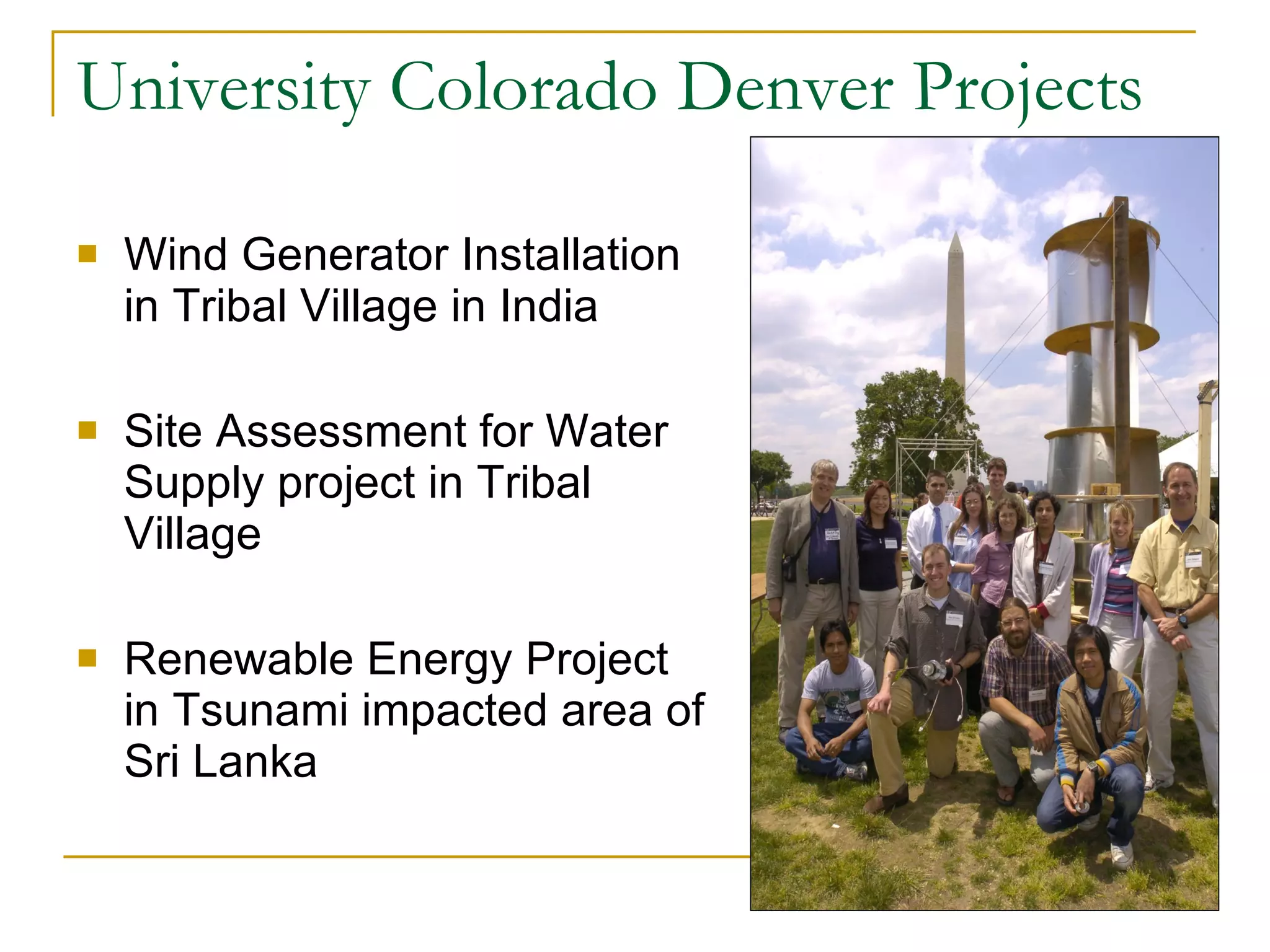
University Colorado Denver Projects Wind Generator Installation in Tribal Village in India Site Assessment for Water Supply project in Tribal Village Renewable Energy Project in Tsunami impacted area of Sri Lanka
Three Questions to Ask For whom is the project? Who sets project objectives? Whose Knowledge Counts?  How is the project implemented? Who benefits from the project? Why is the project being done in the first place?
Who owns the project? For Whom? Often US University teams undertaking developing community projects pose the entire community as the “owner”. In reality, the owner and driver often are: The Non-Governmental Organization (NGO) that pose the project Priorities and Philosophies need to be understood Important Social groups are excluded from agenda-setting Examples: Rural Women who face the actual problem
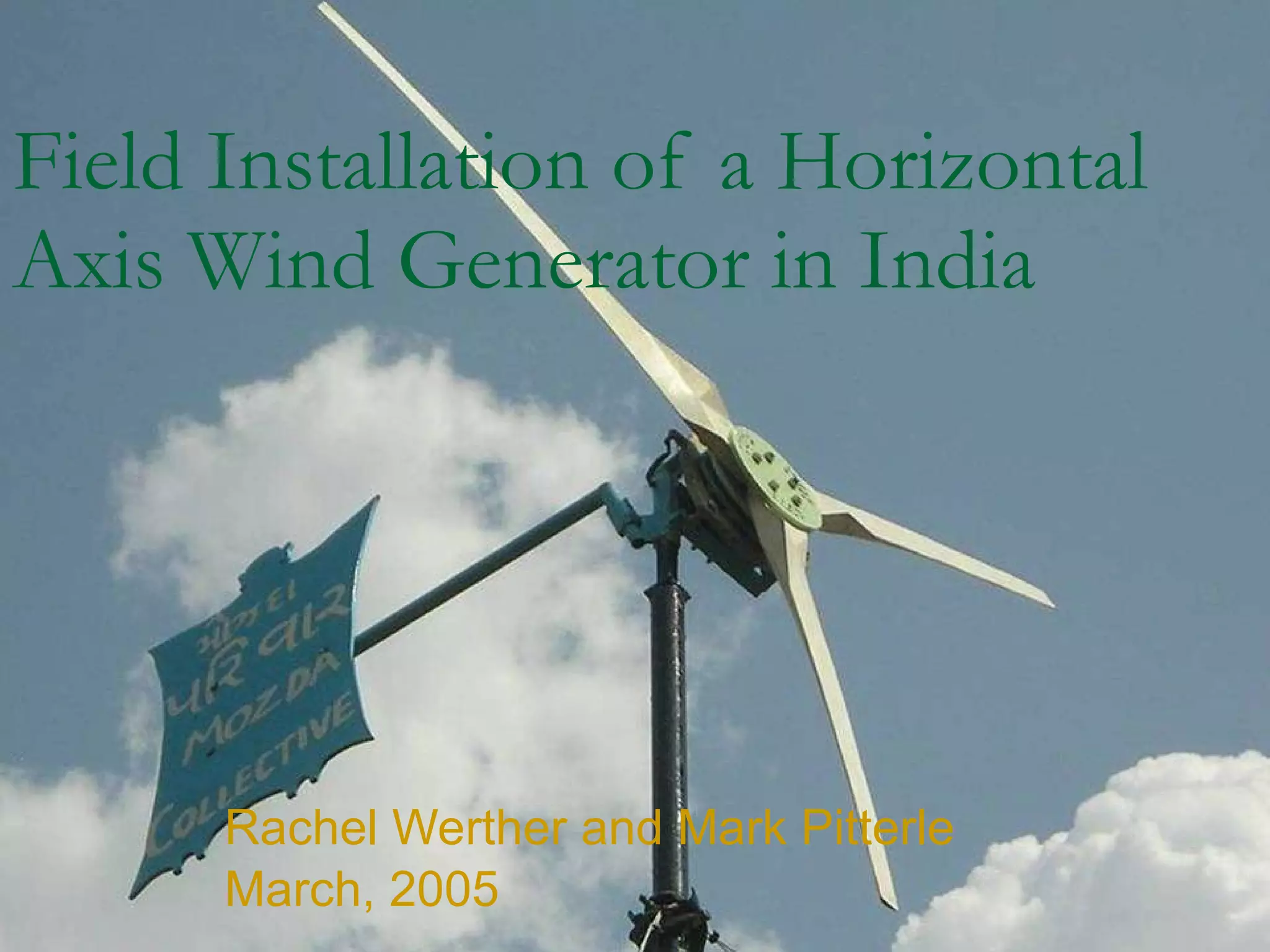
Field Installation of a Horizontal Axis Wind Generator in India Rachel Werther and Mark Pitterle March, 2005
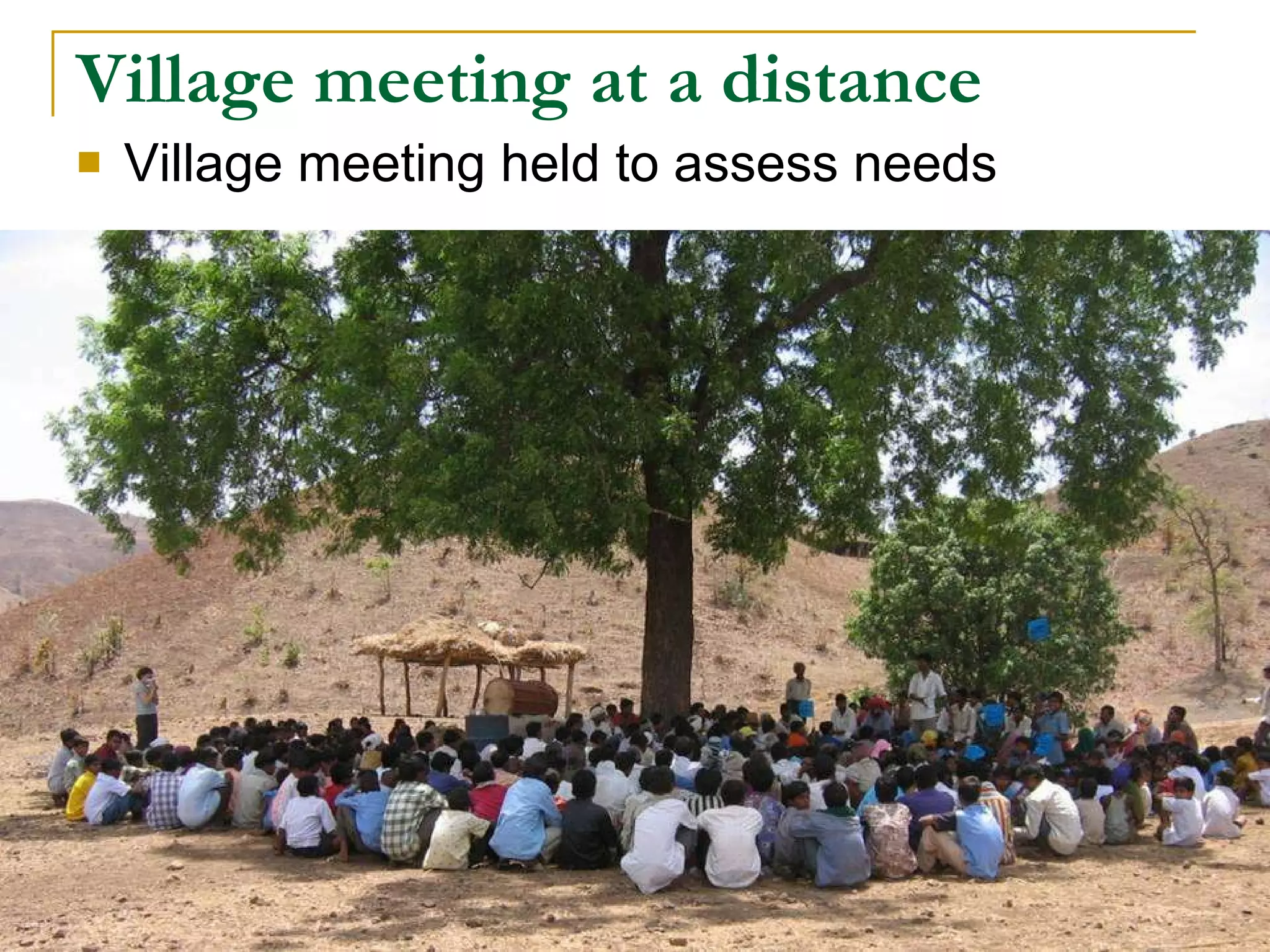
Village meeting at a distance Village meeting held to assess needs
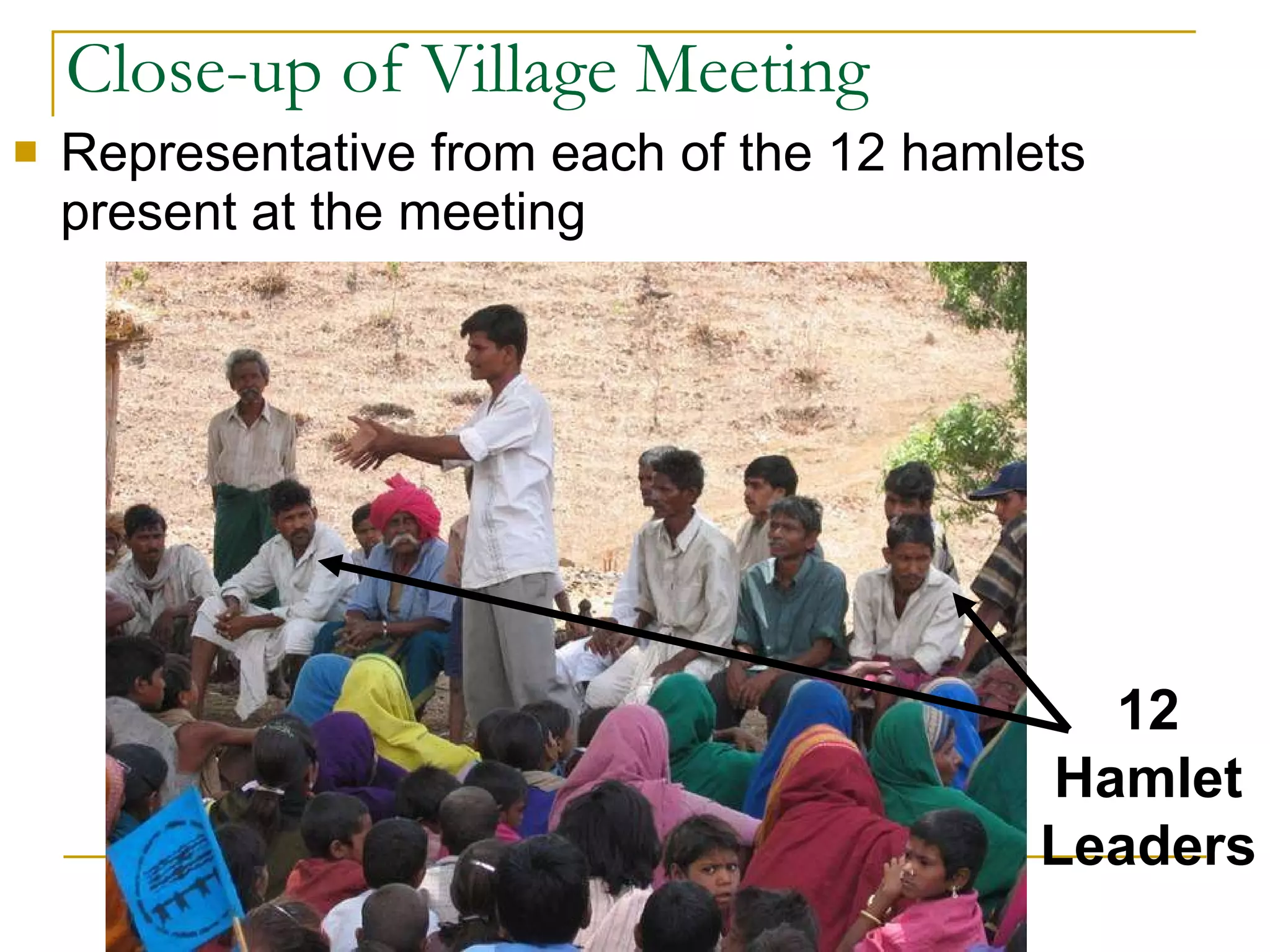
Close-up of Village Meeting Representative from each of the 12 hamlets present at the meeting 12 Hamlet Leaders
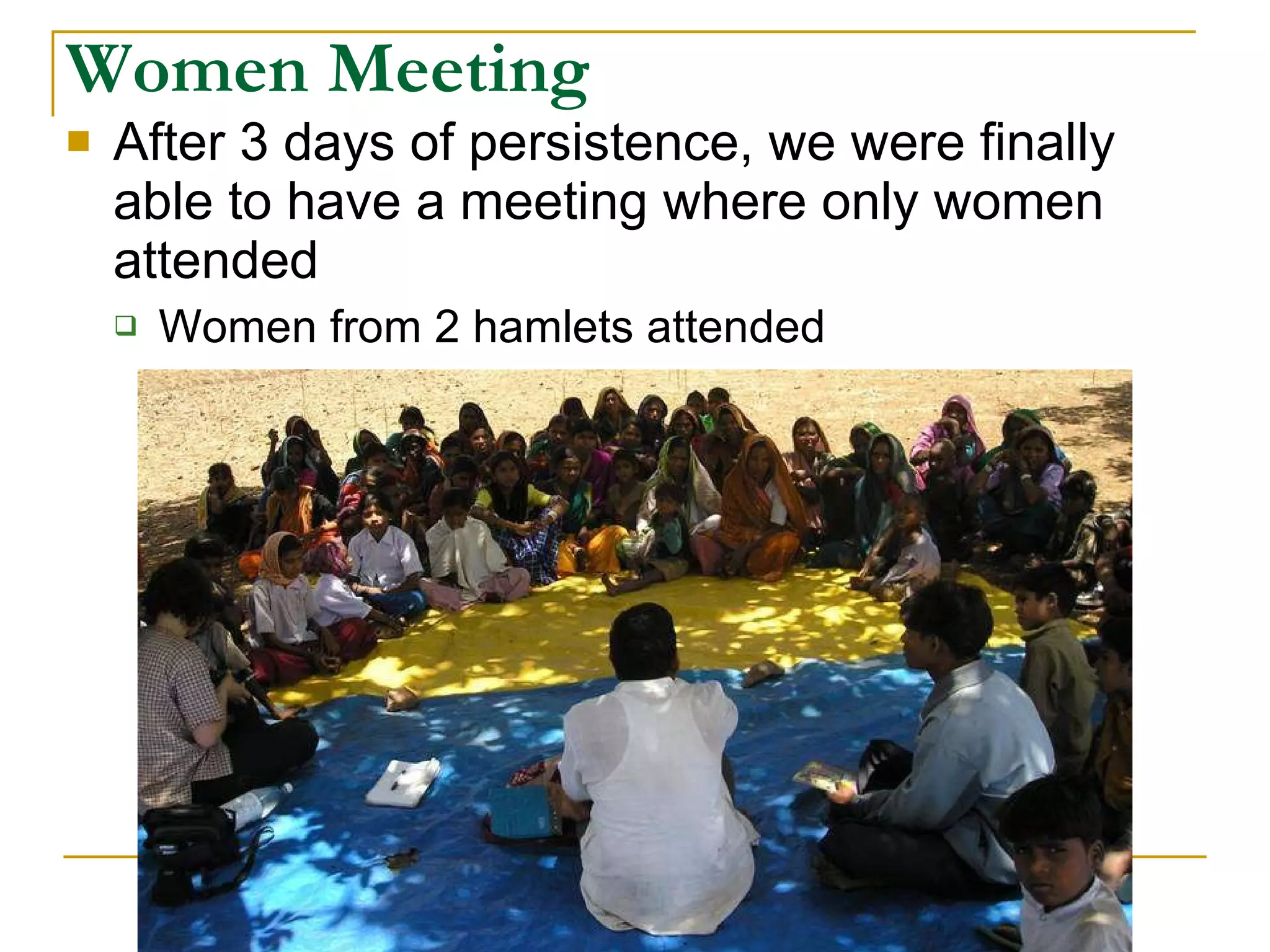
Women Meeting After 3 days of persistence, we were finally able to have a meeting where only women attended Women from 2 hamlets attended
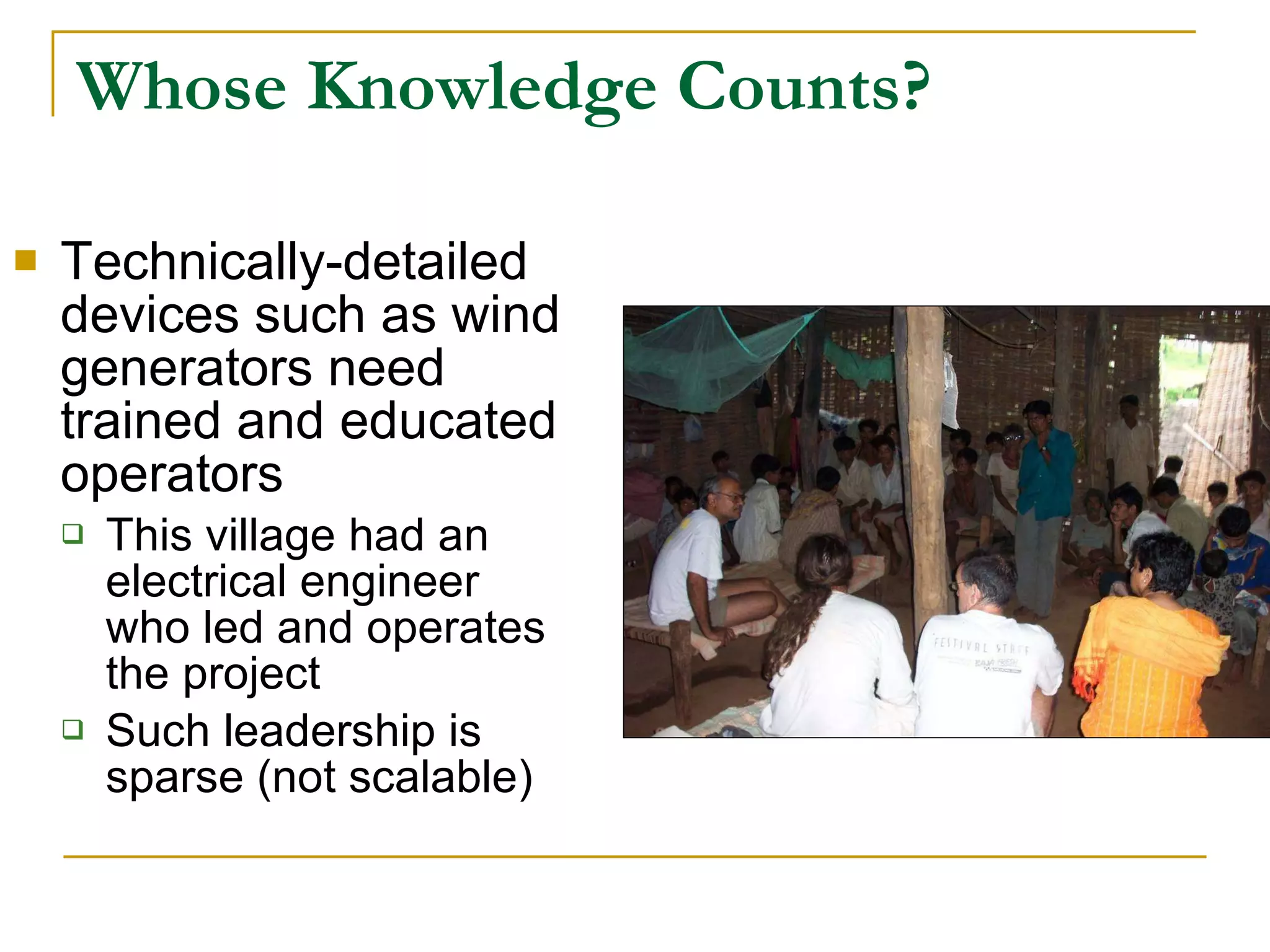
Whose Knowledge Counts? Technically-detailed devices such as wind generators need trained and educated operators This village had an electrical engineer who led and operates the project Such leadership is sparse (not scalable)
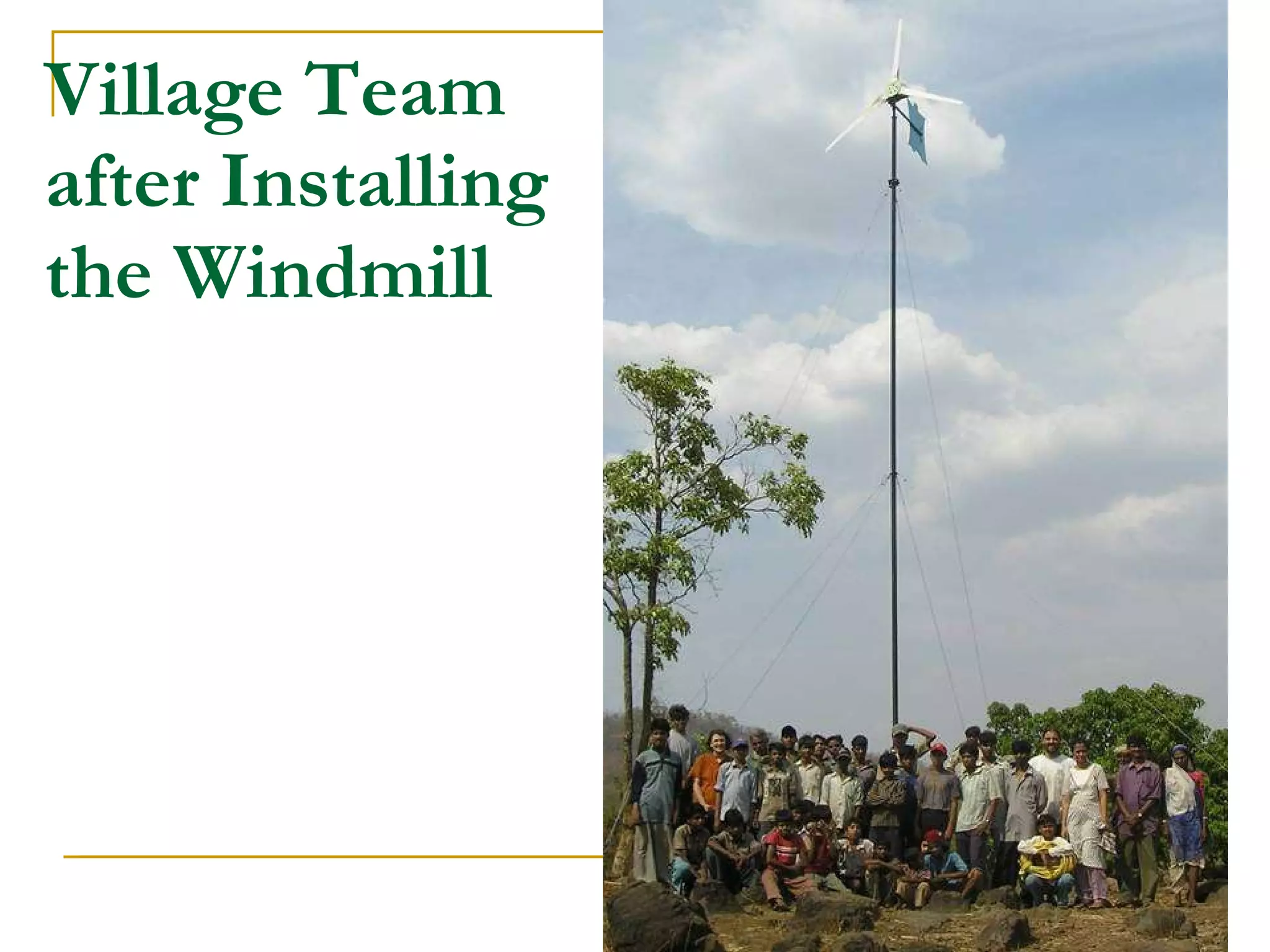
Village Team after Installing the Windmill
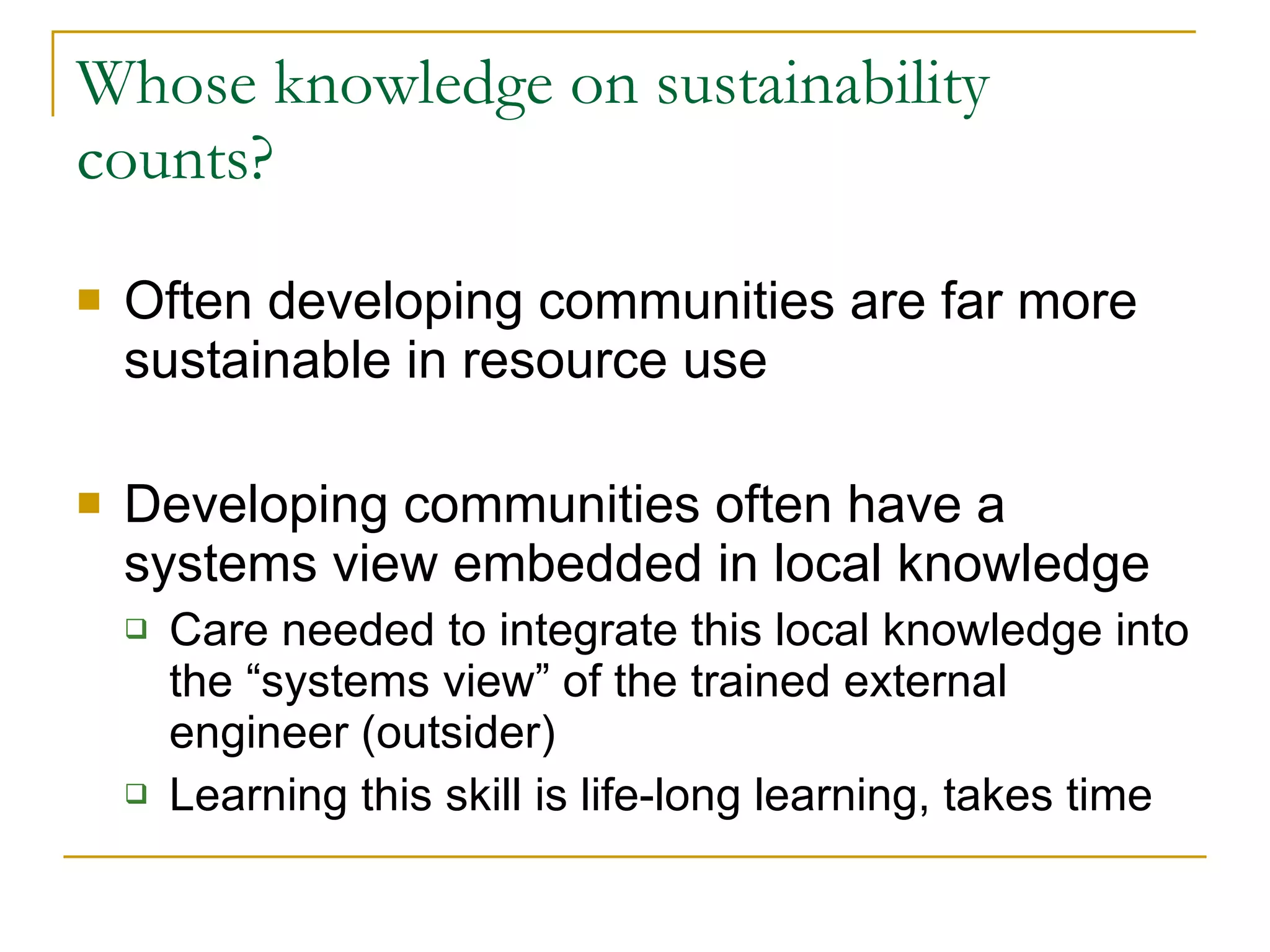
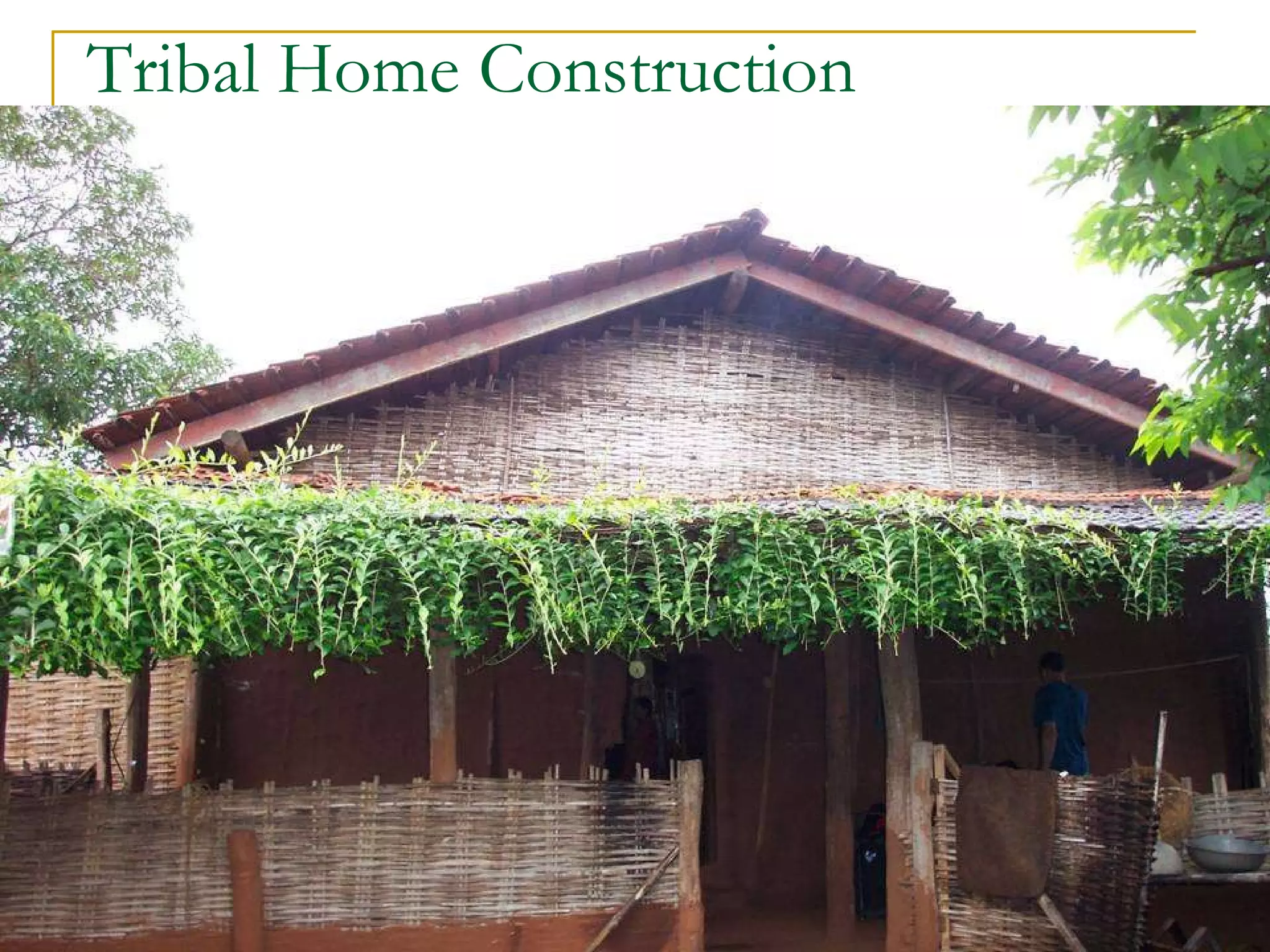
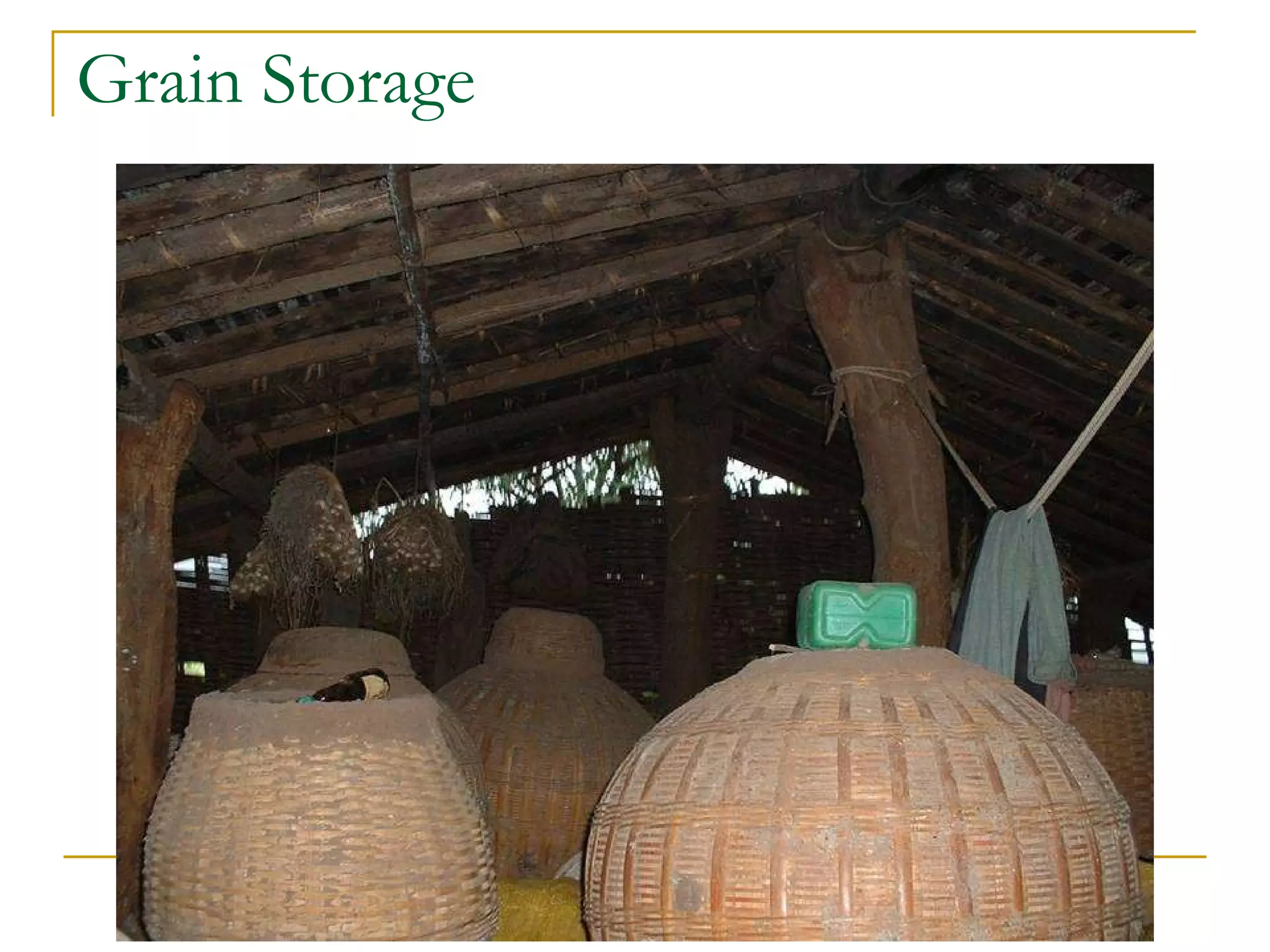
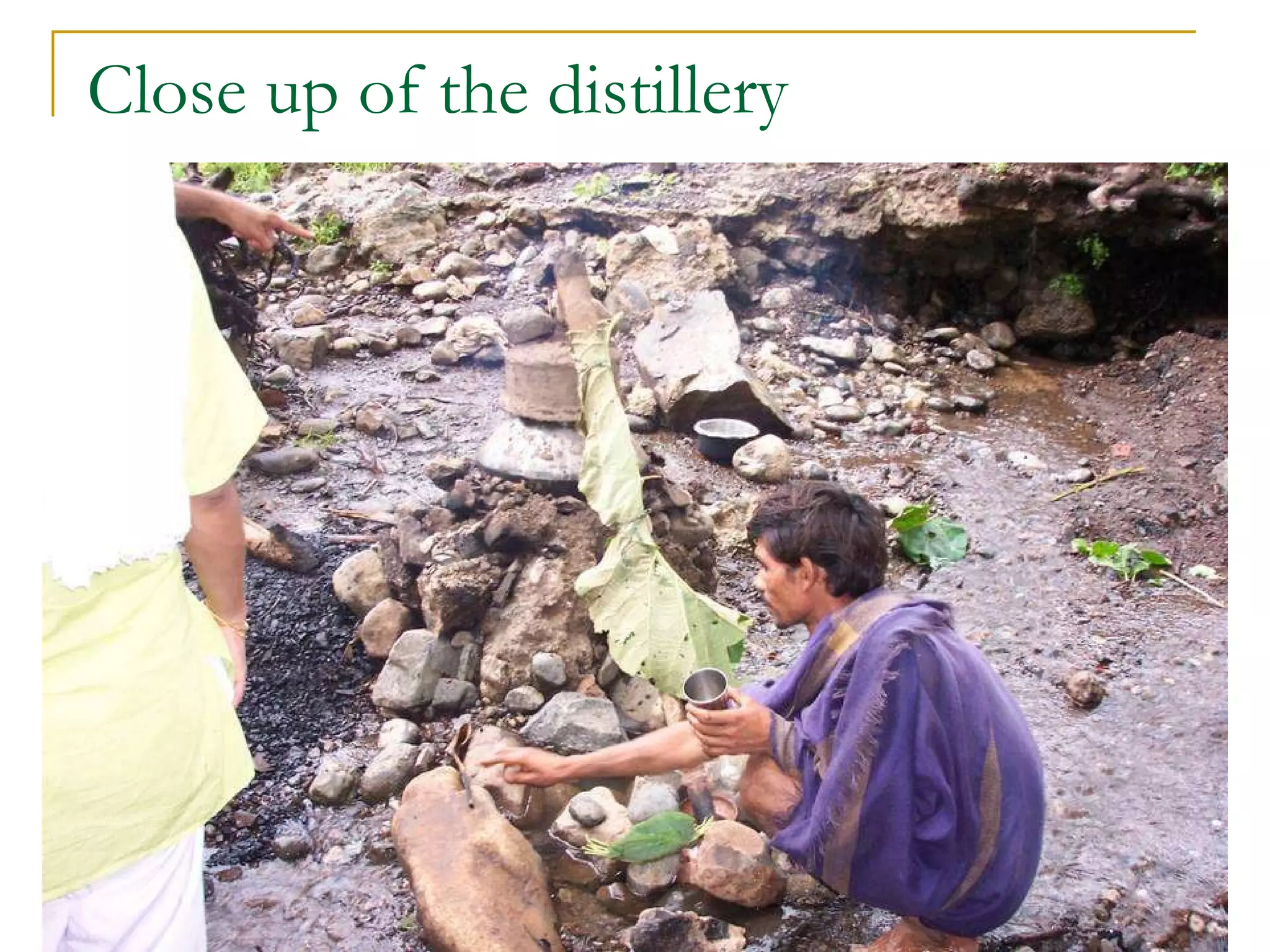
Whose knowledge on sustainability counts? Often developing communities are far more sustainable in resource use Developing communities often have a systems view embedded in local knowledge Care needed to integrate this local knowledge into the “systems view” of the trained external engineer (outsider) Learning this skill is life-long learning, takes time
Tribal Home Construction
Grain Storage
Close up of the distillery
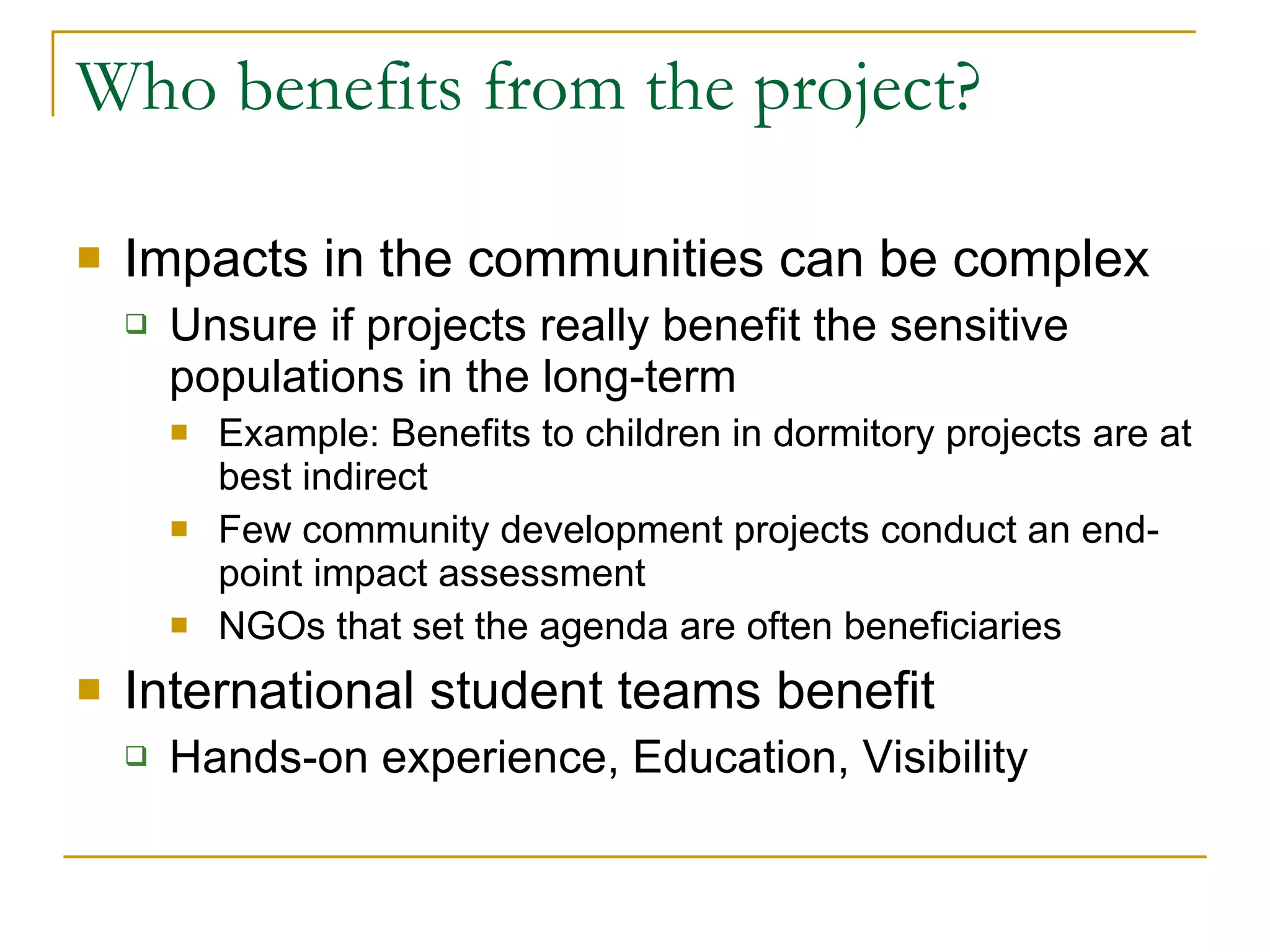
Who benefits from the project? Impacts in the communities can be complex Unsure if projects really benefit the sensitive populations in the long-term Example: Benefits to children in dormitory projects are at best indirect Few community development projects conduct an end-point impact assessment NGOs that set the agenda are often beneficiaries International student teams benefit Hands-on experience, Education, Visibility
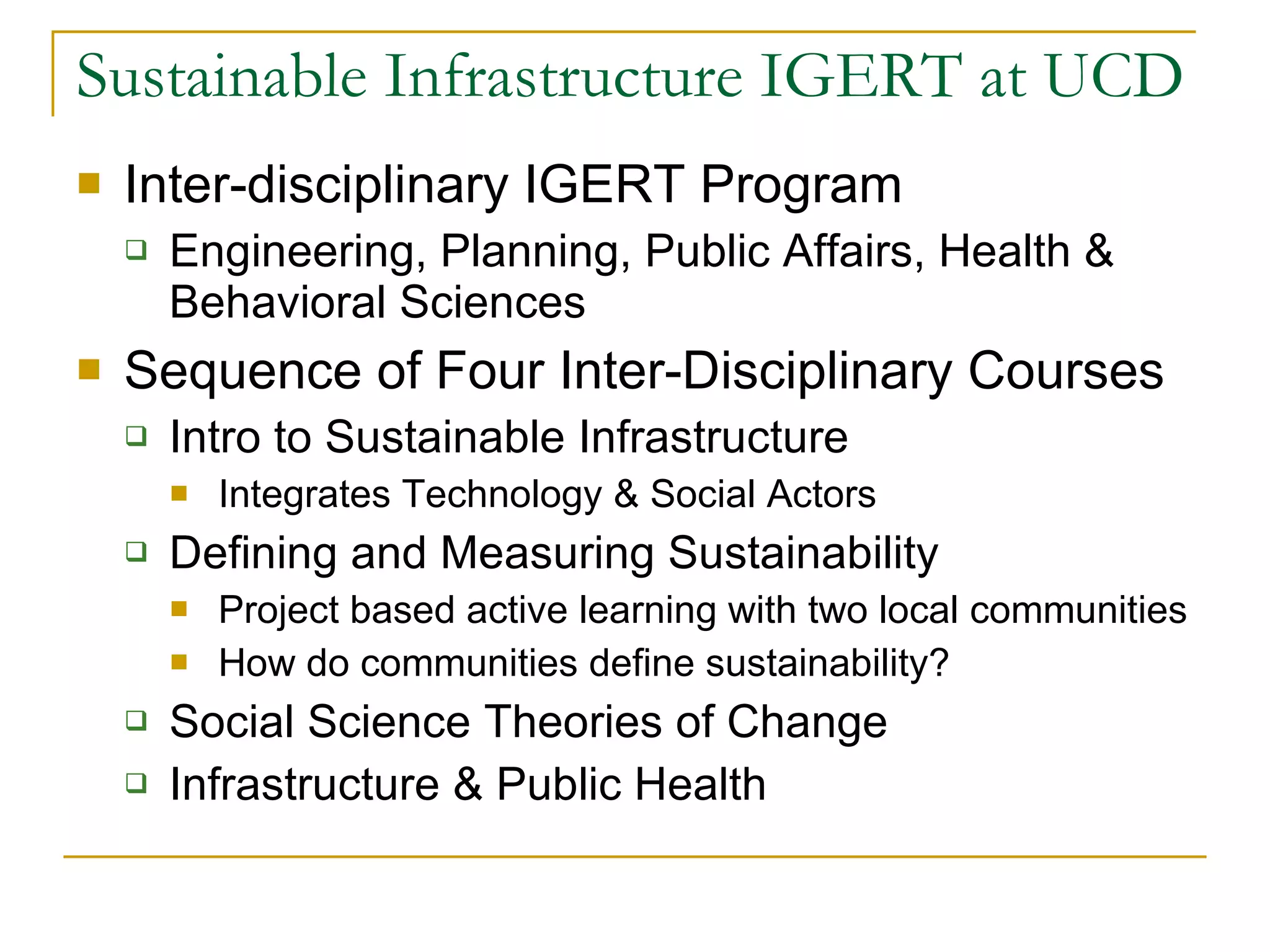
Sustainable Infrastructure IGERT at UCD Inter-disciplinary IGERT Program Engineering, Planning, Public Affairs, Health & Behavioral Sciences Sequence of Four Inter-Disciplinary Courses Intro to Sustainable Infrastructure Integrates Technology & Social Actors Defining and Measuring Sustainability Project based active learning with two local communities How do communities define sustainability? Social Science Theories of Change Infrastructure & Public Health
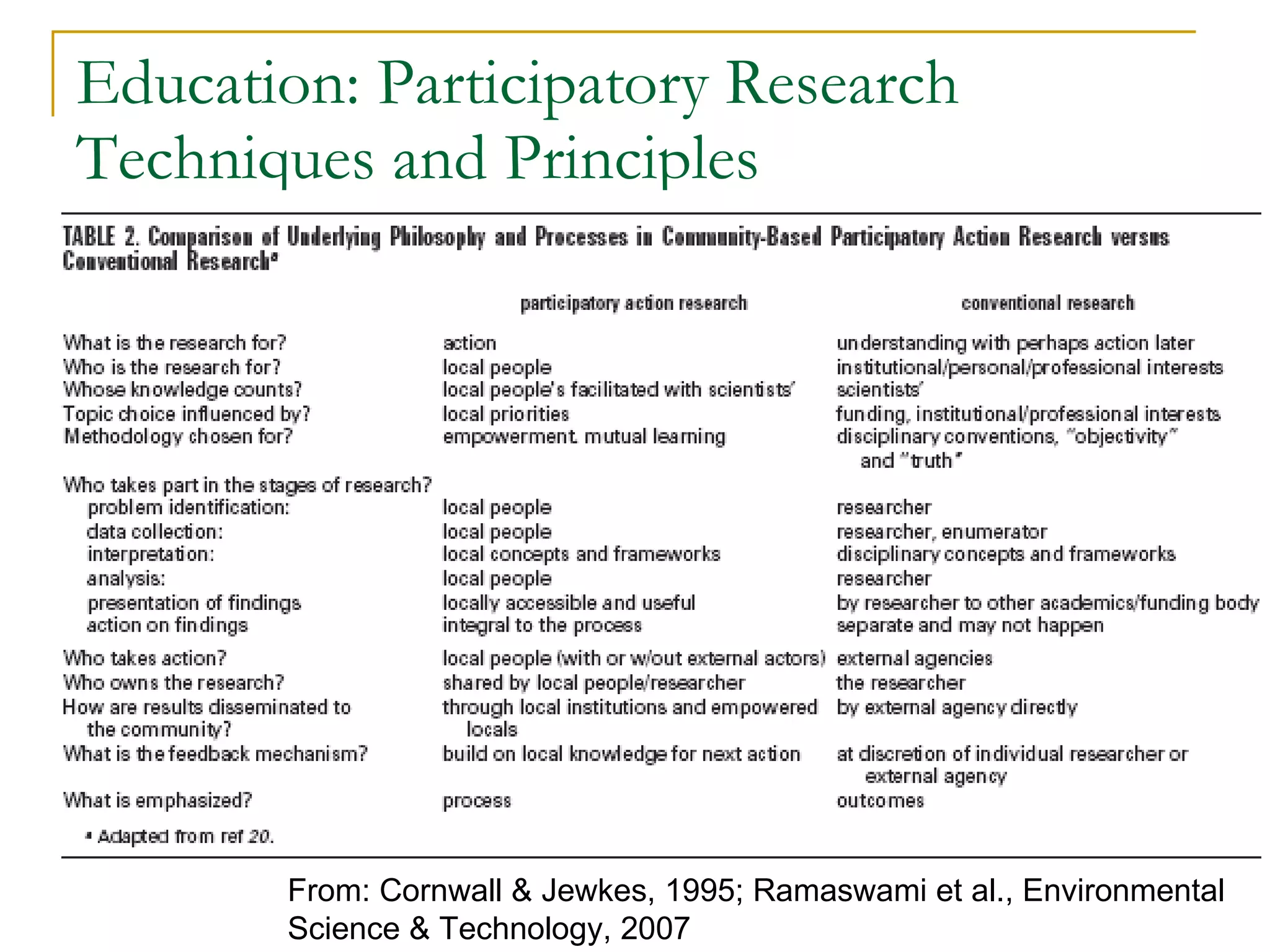
Education: Participatory Research Techniques and Principles From: Cornwall & Jewkes, 1995; Ramaswami et al., Environmental Science & Technology, 2007
Thank You! www.cudenver.edu/IGERT

Challenges in Sustainability Engineering–Design for Whom, How and Why?

  • 1.
    Challenges in SustainabilityEngineering–Design for Whom, How and Why? Anu Ramaswami Professor and Director IGERT: Sustainable Urban Infrastructure Center for Sustainable Infrastructure Systems University of Colorado Denver (UCD)
  • 2.
    Principles of SustainabilityEngineering There have been ongoing efforts to develop guiding principles for sustainability engineering Anastas, P.; Zimmerman, J. “Design through the Twelve Principles of Green Engineering,” Environmental Science and Technology , 37, 94A – 101A, 2003 Primarily design oriented
  • 3.
    The Sandestin DeclarationEPA’s Nine Principles of Green Engineering * ( http://www.epa.gov/oppt/greenengineering ) *as developed by more than 65 engineers and scientists at the Green Engineering: Defining the Principles Conference, held in Sandestin, Florida in May of 2003. Principle 7: Develop and apply engineering solutions, while being cognizant of local geography, aspirations, and cultures. How do engineers “do this” and teach this to students? How to integrate with system-wide environmental goals (resource conservation, carbon mitigation,..)
  • 4.
    University Colorado DenverProjects Wind Generator Installation in Tribal Village in India Site Assessment for Water Supply project in Tribal Village Renewable Energy Project in Tsunami impacted area of Sri Lanka
  • 5.
    Three Questions toAsk For whom is the project? Who sets project objectives? Whose Knowledge Counts? How is the project implemented? Who benefits from the project? Why is the project being done in the first place?
  • 6.
    Who owns theproject? For Whom? Often US University teams undertaking developing community projects pose the entire community as the “owner”. In reality, the owner and driver often are: The Non-Governmental Organization (NGO) that pose the project Priorities and Philosophies need to be understood Important Social groups are excluded from agenda-setting Examples: Rural Women who face the actual problem
  • 7.
    Field Installation ofa Horizontal Axis Wind Generator in India Rachel Werther and Mark Pitterle March, 2005
  • 8.
    Village meeting ata distance Village meeting held to assess needs
  • 9.
    Close-up of VillageMeeting Representative from each of the 12 hamlets present at the meeting 12 Hamlet Leaders
  • 10.
    Women Meeting After3 days of persistence, we were finally able to have a meeting where only women attended Women from 2 hamlets attended
  • 11.
    Whose Knowledge Counts?Technically-detailed devices such as wind generators need trained and educated operators This village had an electrical engineer who led and operates the project Such leadership is sparse (not scalable)
  • 12.
    Village Team afterInstalling the Windmill
  • 13.
    Whose knowledge onsustainability counts? Often developing communities are far more sustainable in resource use Developing communities often have a systems view embedded in local knowledge Care needed to integrate this local knowledge into the “systems view” of the trained external engineer (outsider) Learning this skill is life-long learning, takes time
  • 14.
  • 15.
  • 16.
    Close up ofthe distillery
  • 17.
    Who benefits fromthe project? Impacts in the communities can be complex Unsure if projects really benefit the sensitive populations in the long-term Example: Benefits to children in dormitory projects are at best indirect Few community development projects conduct an end-point impact assessment NGOs that set the agenda are often beneficiaries International student teams benefit Hands-on experience, Education, Visibility
  • 18.
    Sustainable Infrastructure IGERTat UCD Inter-disciplinary IGERT Program Engineering, Planning, Public Affairs, Health & Behavioral Sciences Sequence of Four Inter-Disciplinary Courses Intro to Sustainable Infrastructure Integrates Technology & Social Actors Defining and Measuring Sustainability Project based active learning with two local communities How do communities define sustainability? Social Science Theories of Change Infrastructure & Public Health
  • 19.
    Education: Participatory ResearchTechniques and Principles From: Cornwall & Jewkes, 1995; Ramaswami et al., Environmental Science & Technology, 2007
  • 20.