Key Aspects
of Software
Development
Key Aspects of Software
Development
Key Aspects of
Software Development
Software
Overview
Software is a critical element in modern technology, driving
innovations across industries. This presentation explores the
essential phases of the Software Development Life Cycle (SDLC)
and discusses core concepts of software design and architecture.
Understanding these fundamentals helps ensure efficient
development, quality outcomes, and successful deployment of
software products.
Introduction
Software
Development Life
Cycle
Requirements Analysis
Requirements Analysis is the first crucial phase, focusing on
gathering and understanding user needs and business
objectives. This step ensures clear documentation of functional
and non-functional requirements. Effective analysis helps align
project goals with stakeholder expectations, reducing risks and
enabling a streamlined development process.
This phase defines the overall software architecture and
design patterns to be used. It involves creating high-level
system components, data flow, and interface designs. A
robust architecture supports scalability, maintainability,
and performance, forming the foundation for reliable
software development and future enhancements.
Design and
Architecture
Testing ensures the software meets all requirements and functions
correctly under various conditions. This phase includes unit,
integration, system, and acceptance testing to identify defects.
Deployment involves releasing the software to the production
environment, ensuring smooth installation and configuration.
Effective testing and careful deployment reduce risks and
guarantee a high-quality product.
Testing and
Deployment
Types of
Software
System Software
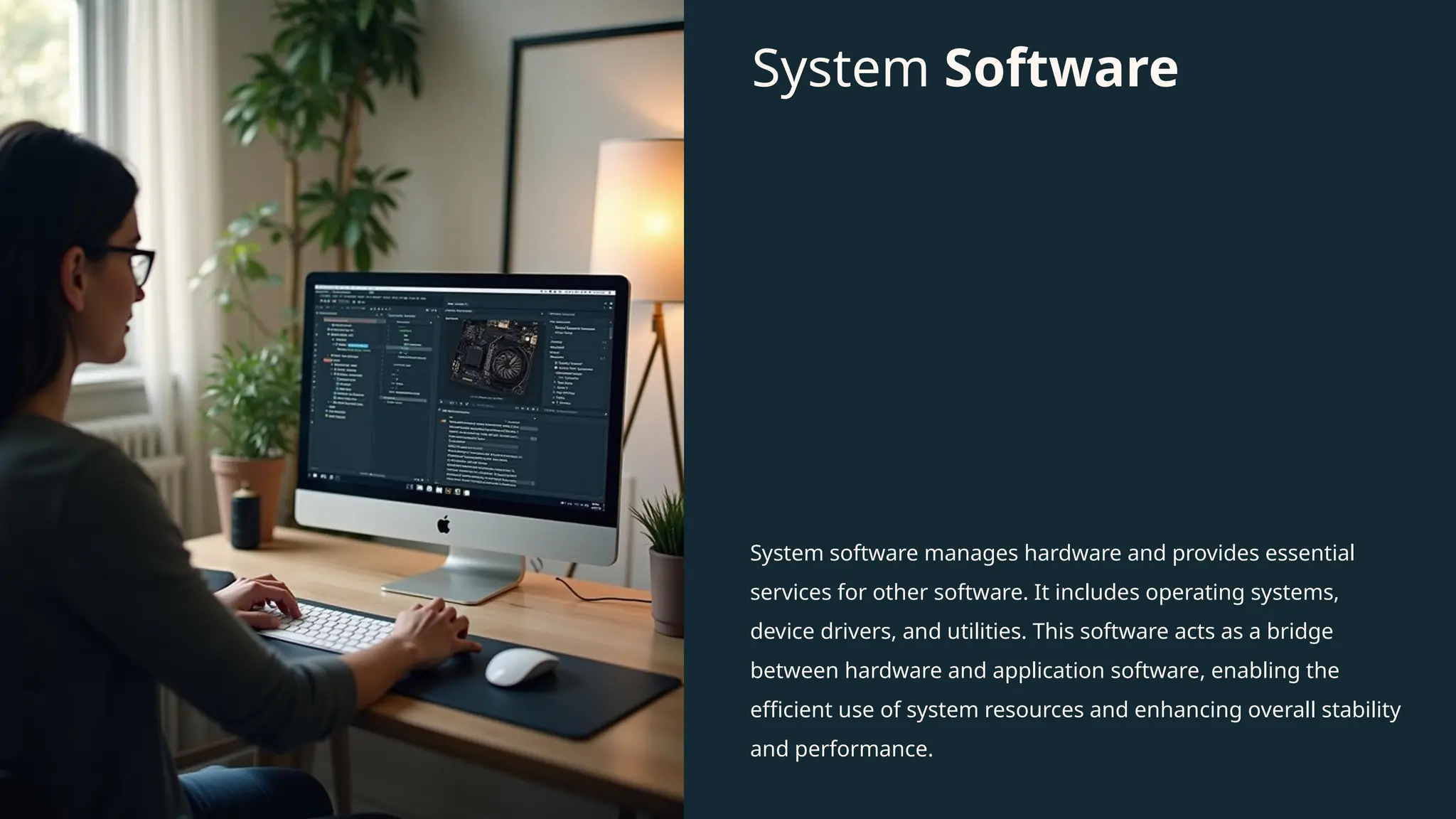
System software manages hardware and provides essential
services for other software. It includes operating systems,
device drivers, and utilities. This software acts as a bridge
between hardware and application software, enabling the
efficient use of system resources and enhancing overall stability
and performance.
Application software serves end-users by performing
specific tasks such as word processing, database
management, or graphic design. It is designed to meet
practical needs and improve productivity. Examples
include office suites, web browsers, and enterprise
software solutions.
Application
Software
Embedded software is specialized programming
integrated into hardware devices to perform dedicated
functions. It is commonly found in consumer electronics,
automotive systems, and industrial machines. This
software is optimized for reliability and real-time
performance in constrained environments.
Embedded
Software
Conclusions
Understanding the Software Development Life Cycle and the different types
of software is essential for successful project execution. Each phase, from
requirements analysis through testing and deployment, plays a crucial
role in delivering quality software. Additionally, distinguishing between
system, application, and embedded software helps tailor solutions to
specific needs and ensures effective system integration.
CREDITS: This presentation template was created by Slidesgo, and includes
icons, infographics & images by Freepik
THANK
YOU
Do you have any questions?
youremail@freepik.com
+00 000 000 000
yourwebsite.com
Please keep this slide for attribution
Mind maps
Workshop

CleanMyMac X v5.2.8 Crack for MacOS Full Version [Latest] pptx

  • 1.
    Key Aspects of Software Development KeyAspects of Software Development Key Aspects of Software Development Software Overview
  • 2.
    Software is acritical element in modern technology, driving innovations across industries. This presentation explores the essential phases of the Software Development Life Cycle (SDLC) and discusses core concepts of software design and architecture. Understanding these fundamentals helps ensure efficient development, quality outcomes, and successful deployment of software products. Introduction
  • 3.
  • 4.
    Requirements Analysis Requirements Analysisis the first crucial phase, focusing on gathering and understanding user needs and business objectives. This step ensures clear documentation of functional and non-functional requirements. Effective analysis helps align project goals with stakeholder expectations, reducing risks and enabling a streamlined development process.
  • 5.
    This phase definesthe overall software architecture and design patterns to be used. It involves creating high-level system components, data flow, and interface designs. A robust architecture supports scalability, maintainability, and performance, forming the foundation for reliable software development and future enhancements. Design and Architecture
  • 6.
    Testing ensures thesoftware meets all requirements and functions correctly under various conditions. This phase includes unit, integration, system, and acceptance testing to identify defects. Deployment involves releasing the software to the production environment, ensuring smooth installation and configuration. Effective testing and careful deployment reduce risks and guarantee a high-quality product. Testing and Deployment
  • 7.
  • 8.
    System Software System softwaremanages hardware and provides essential services for other software. It includes operating systems, device drivers, and utilities. This software acts as a bridge between hardware and application software, enabling the efficient use of system resources and enhancing overall stability and performance.
  • 9.
    Application software servesend-users by performing specific tasks such as word processing, database management, or graphic design. It is designed to meet practical needs and improve productivity. Examples include office suites, web browsers, and enterprise software solutions. Application Software
  • 10.
    Embedded software isspecialized programming integrated into hardware devices to perform dedicated functions. It is commonly found in consumer electronics, automotive systems, and industrial machines. This software is optimized for reliability and real-time performance in constrained environments. Embedded Software
  • 11.
    Conclusions Understanding the SoftwareDevelopment Life Cycle and the different types of software is essential for successful project execution. Each phase, from requirements analysis through testing and deployment, plays a crucial role in delivering quality software. Additionally, distinguishing between system, application, and embedded software helps tailor solutions to specific needs and ensures effective system integration.
  • 12.
    CREDITS: This presentationtemplate was created by Slidesgo, and includes icons, infographics & images by Freepik THANK YOU Do you have any questions? youremail@freepik.com +00 000 000 000 yourwebsite.com Please keep this slide for attribution Mind maps Workshop