THE ENVISION™ RATING SYSTEM
Envision™ was developed in joint collaboration between the Zofnass Program for
Sustainable Infrastructure at the Harvard University Graduate School of Design and
the Institute for Sustainable Infrastructure.


The Institute for Sustainable Infrastructure is a not-for-profit education and
research organization founded by the American Public Works Association, the
American Council of Engineering Companies and the American Society of Civil
Engineers.
THE IMPORTANCE OF    Planet Earth is a perilous place for humans.
INFRASTRUCTURE       Infrastructure provides:
                     • Physical Security
                     • The basis for public health
                     • Economic and commercial potential

THE REALITIES OF     • Population Growth
THE WORLD IN WHICH   • Diminished Resources
WE LIVE              • Climate Change
                     • Adaptation


A NEW FACT OF LIFE   It is no longer enough that infrastructure
                     work, that it be constructed on time and within
                     budget, or even that it last. It now must be
                     sustainable.
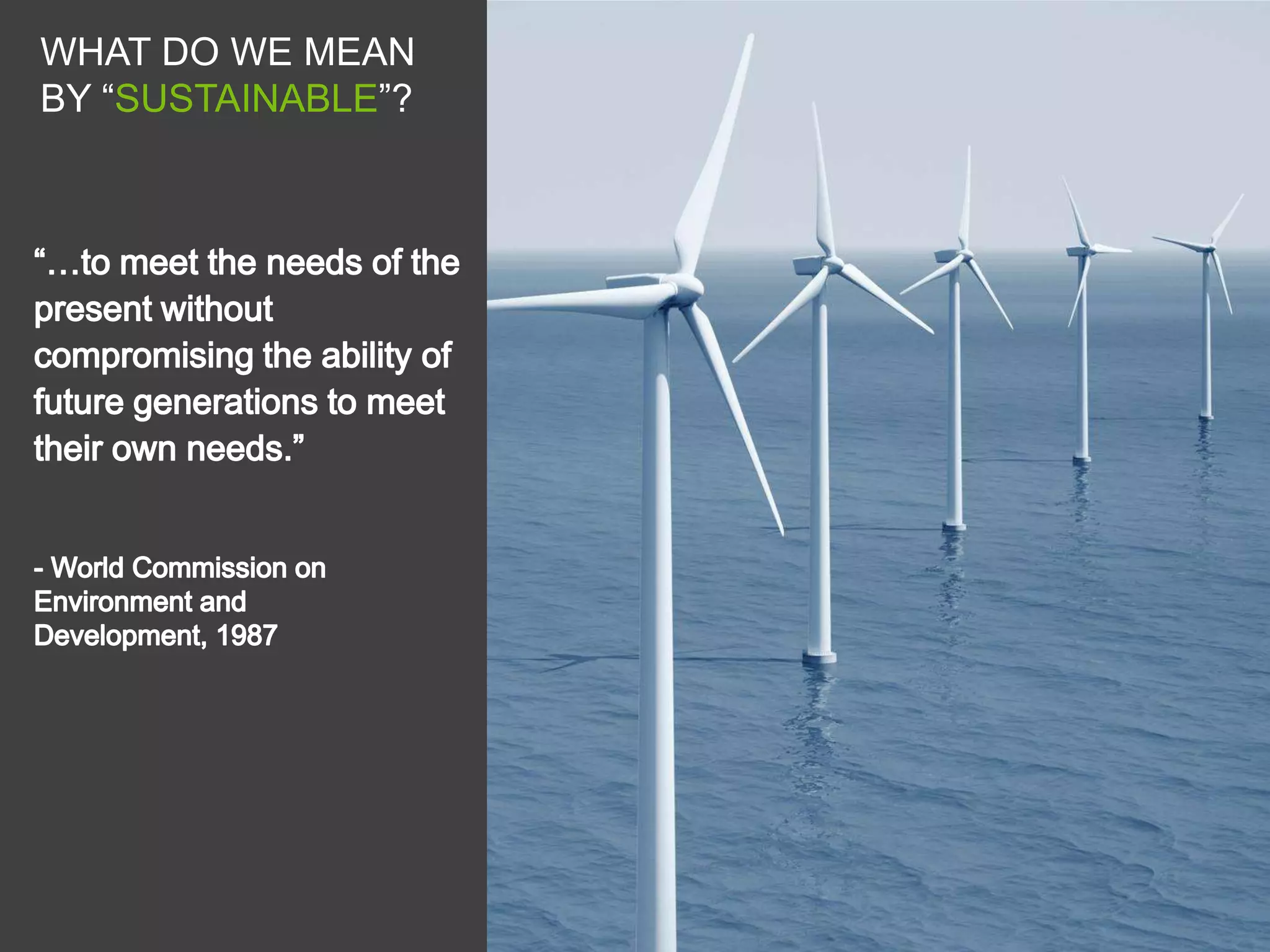
WHAT DO WE MEAN
BY “SUSTAINABLE”?
WHAT IS ENVISION™?

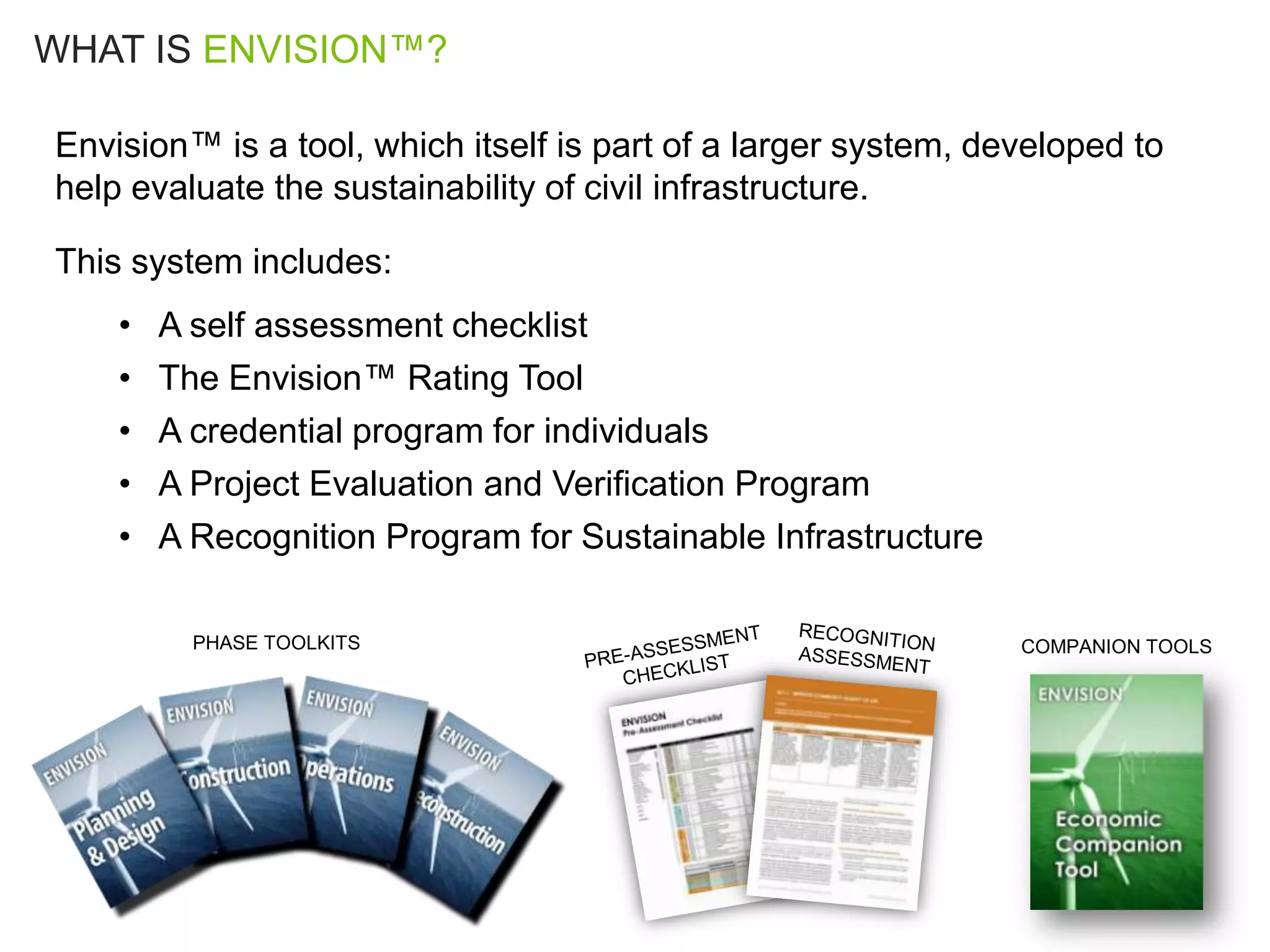
Envision™ is a tool, which itself is part of a larger system, developed to
help evaluate the sustainability of civil infrastructure.

This system includes:
    •   A self assessment checklist
    •   The Envision™ Rating Tool
    •   A credential program for individuals
    •   A Project Evaluation and Verification Program
    •   A Recognition Program for Sustainable Infrastructure

          PHASE TOOLKITS                                        COMPANION TOOLS
WHAT MAKES          • It applies to civil infrastructure
ENVISION™ UNIQUE?
                    • It includes design, planning, construction
                      and maintenance elements

                    • It is applicable at any point in an
                      infrastructure project's life cycle

                    • It speaks to the triple bottom line:
                      social, economic and environmental goals

                    • It is designed to keep pace with a
                      changing concept of sustainability
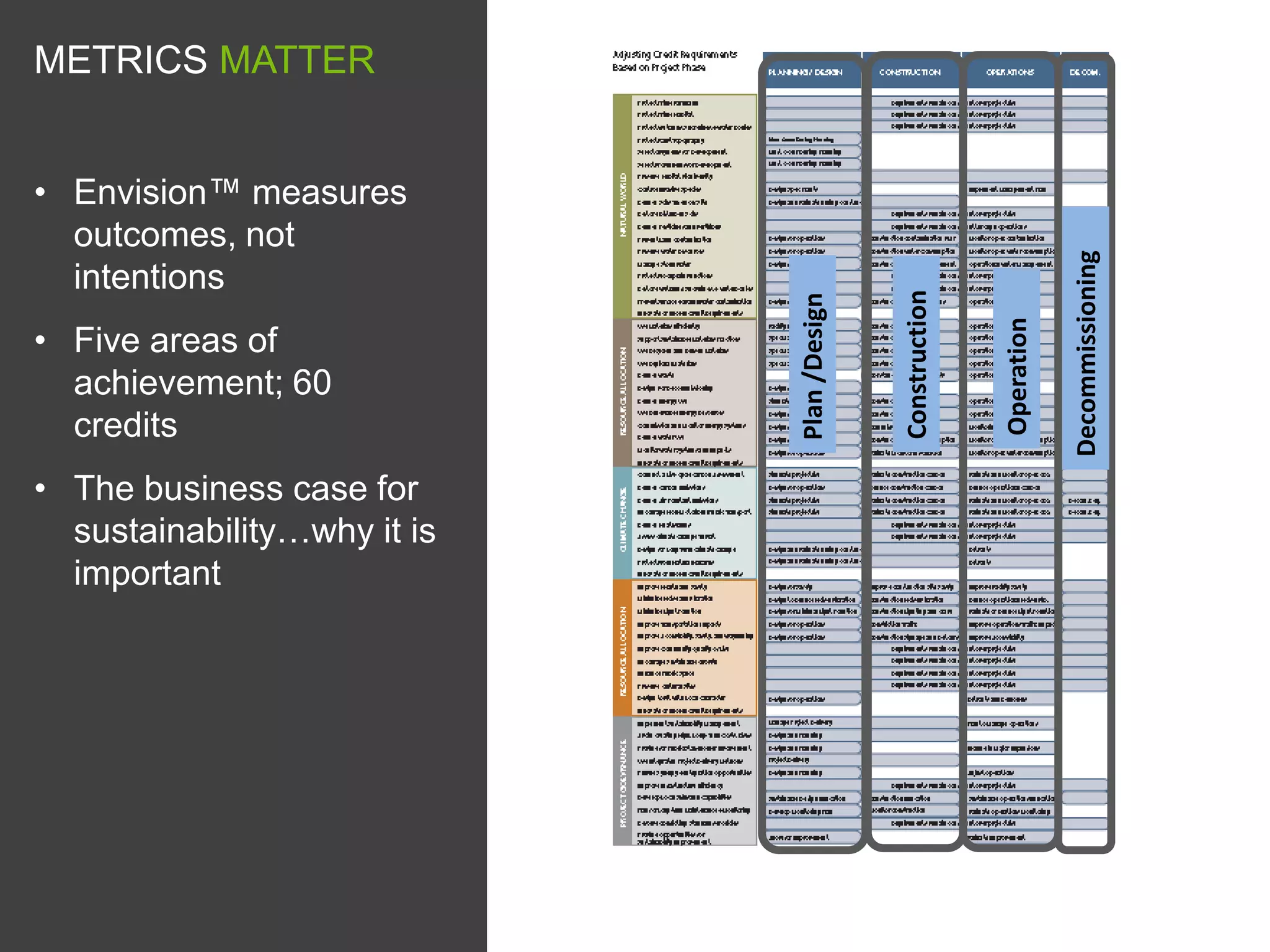
METRICS MATTER


• Envision™ measures
  outcomes, not


                                                                       Decommissioning
  intentions


                                            Construction
                             Plan /Design


                                                           Operation
• Five areas of
  achievement; 60
  credits
• The business case for
  sustainability…why it is
  important


                                                                                    7
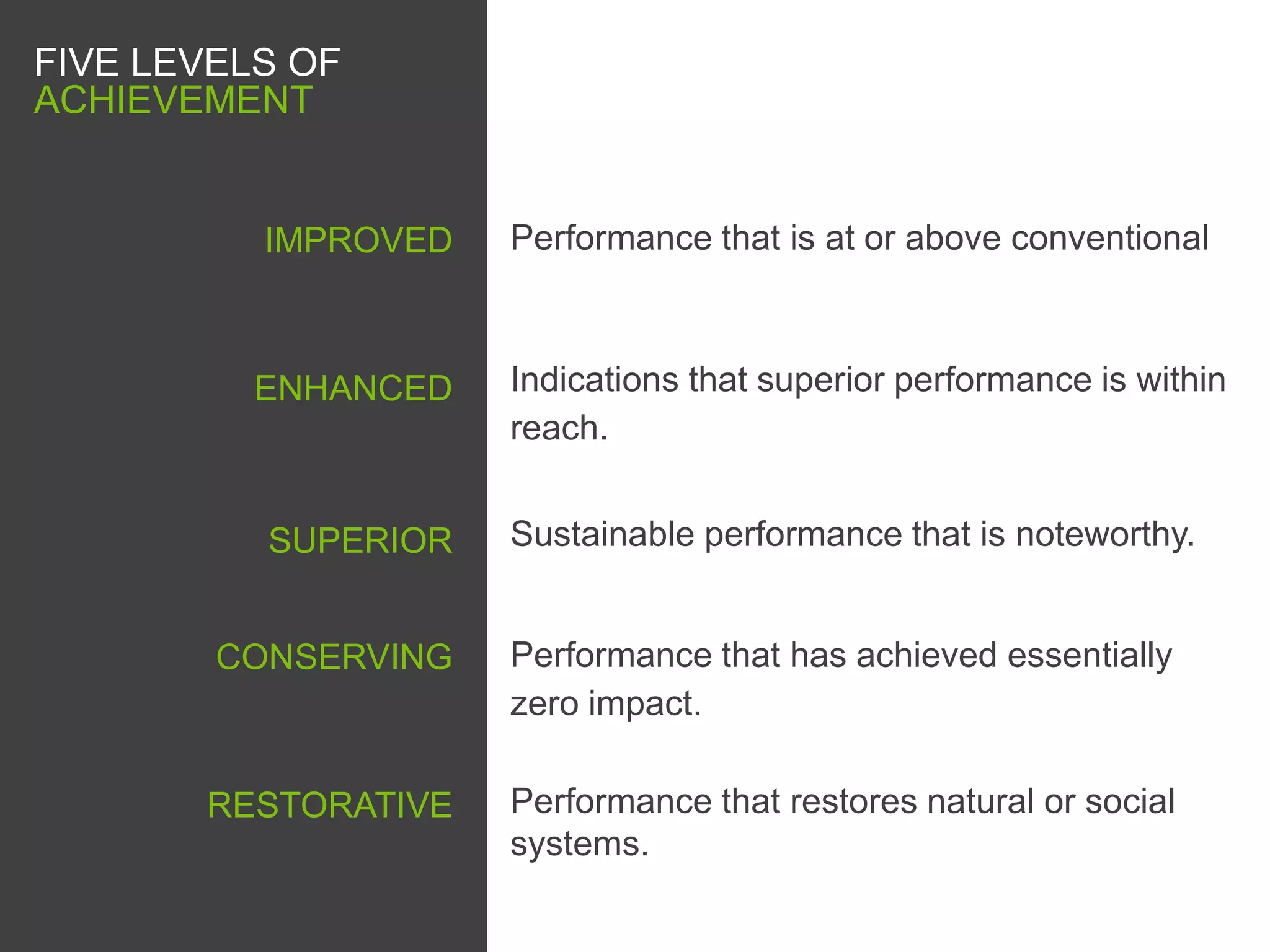
FIVE LEVELS OF
ACHIEVEMENT


          IMPROVED   Performance that is at or above conventional


          ENHANCED   Indications that superior performance is within
                     reach.


          SUPERIOR   Sustainable performance that is noteworthy.


        CONSERVING   Performance that has achieved essentially
                     zero impact.

       RESTORATIVE   Performance that restores natural or social
                     systems.
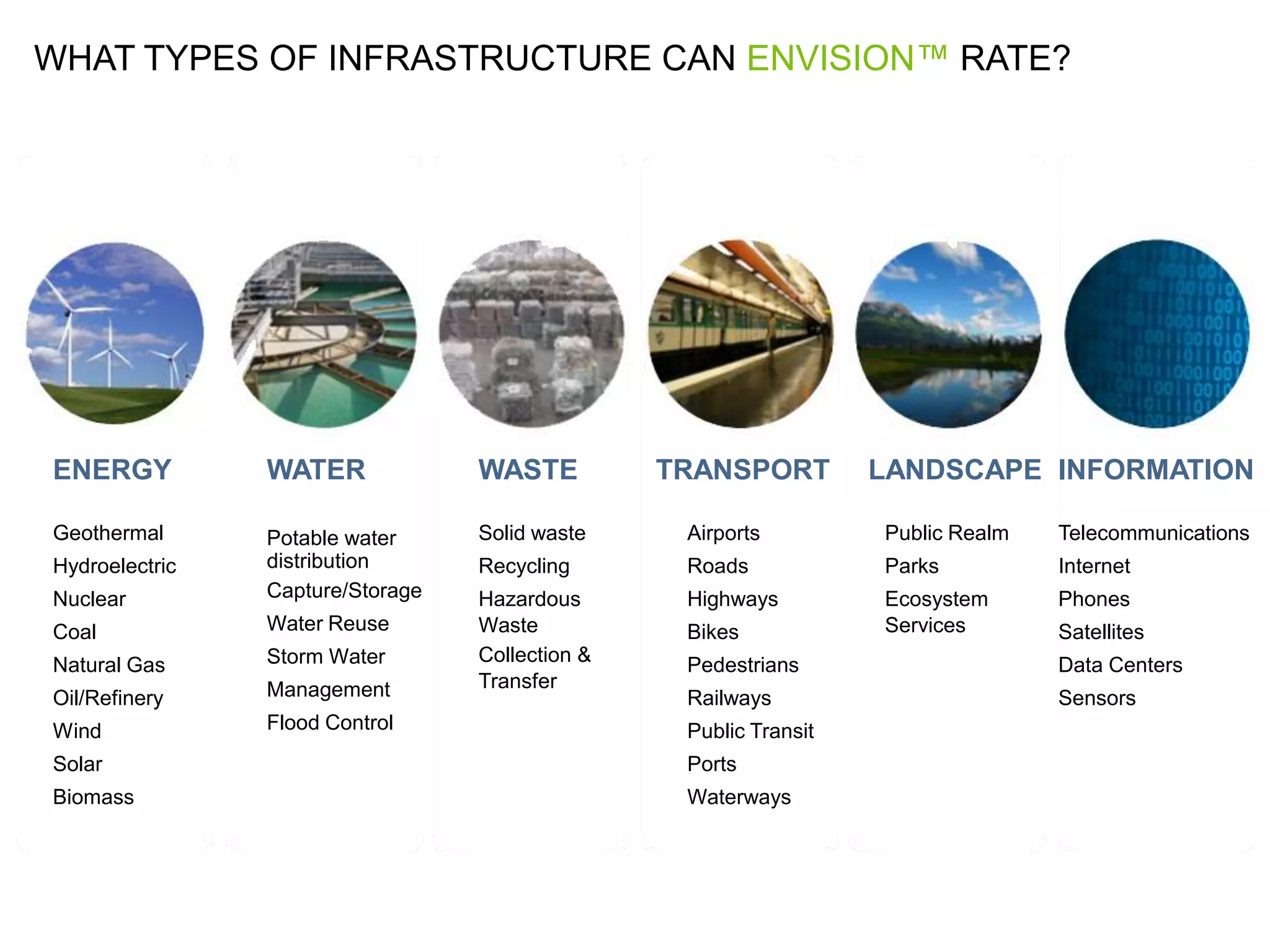
WHAT TYPES OF INFRASTRUCTURE CAN ENVISION™ RATE?


ENERGY          WATER             WASTE          TRANSPORT         LANDSCAPE INFORMATION

Geothermal      Potable water     Solid waste     Airports         Public Realm   Telecommunications
Hydroelectric   distribution      Recycling       Roads            Parks          Internet
Nuclear         Capture/Storage   Hazardous       Highways         Ecosystem      Phones
Coal            Water Reuse       Waste           Bikes            Services       Satellites
Natural Gas     Storm Water       Collection &    Pedestrians                     Data Centers
                Management        Transfer
Oil/Refinery                                      Railways                        Sensors
Wind            Flood Control                     Public Transit
Solar                                             Ports
Biomass                                           Waterways
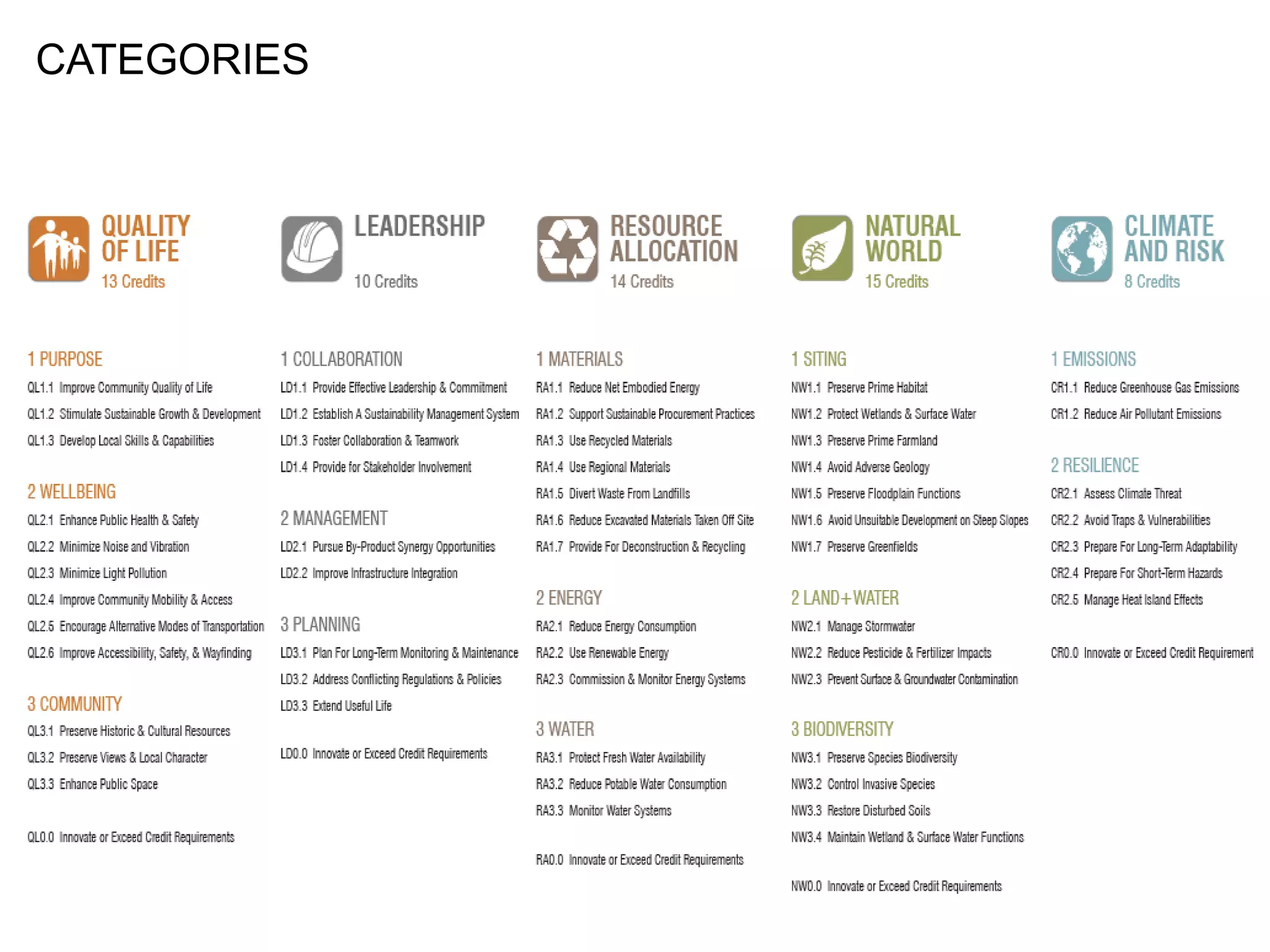
CATEGORIES
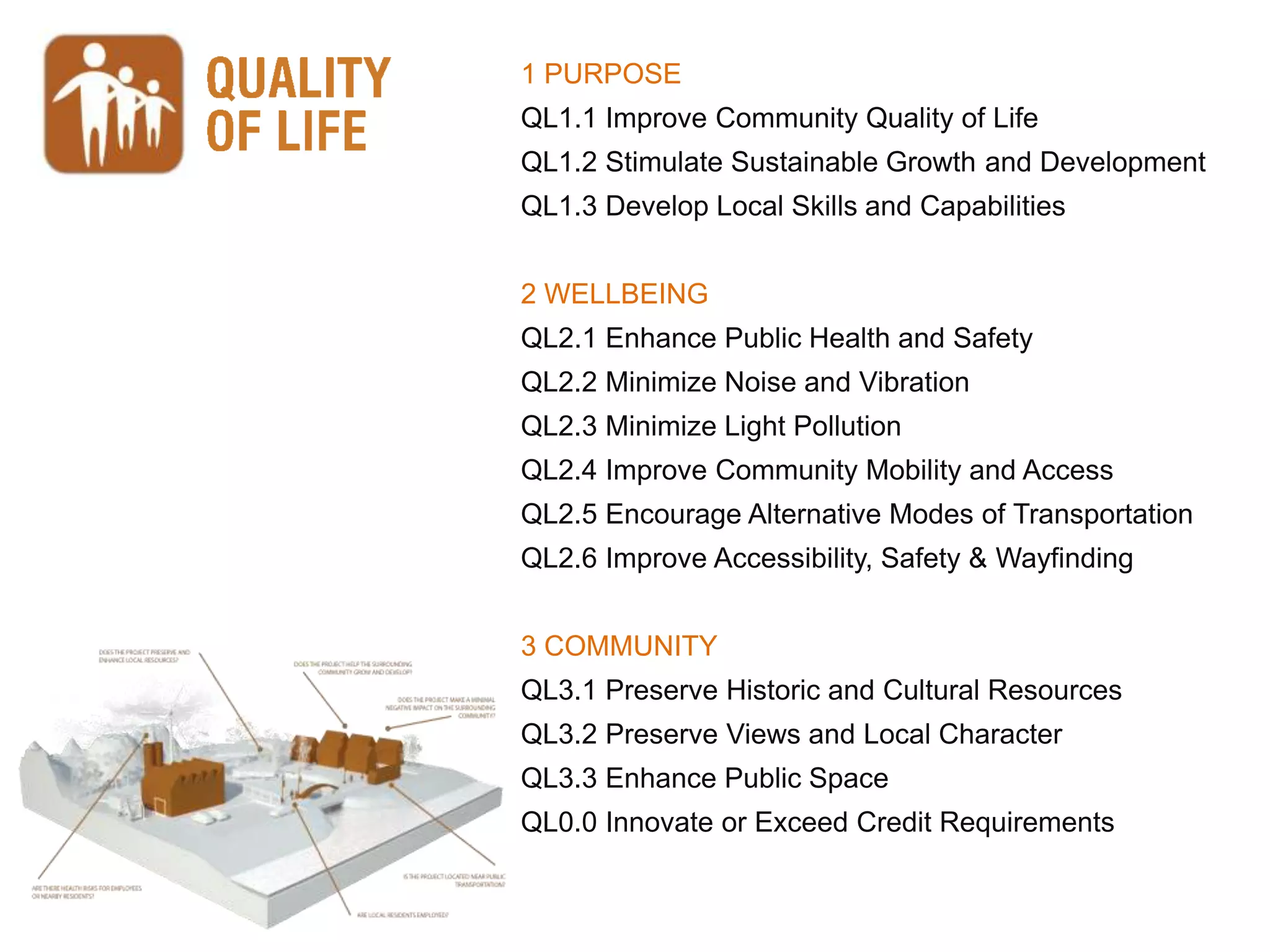
1 PURPOSE
QL1.1 Improve Community Quality of Life
QL1.2 Stimulate Sustainable Growth and Development
QL1.3 Develop Local Skills and Capabilities


2 WELLBEING
QL2.1 Enhance Public Health and Safety
QL2.2 Minimize Noise and Vibration
QL2.3 Minimize Light Pollution
QL2.4 Improve Community Mobility and Access
QL2.5 Encourage Alternative Modes of Transportation
QL2.6 Improve Accessibility, Safety & Wayfinding


3 COMMUNITY
QL3.1 Preserve Historic and Cultural Resources
QL3.2 Preserve Views and Local Character
QL3.3 Enhance Public Space
QL0.0 Innovate or Exceed Credit Requirements
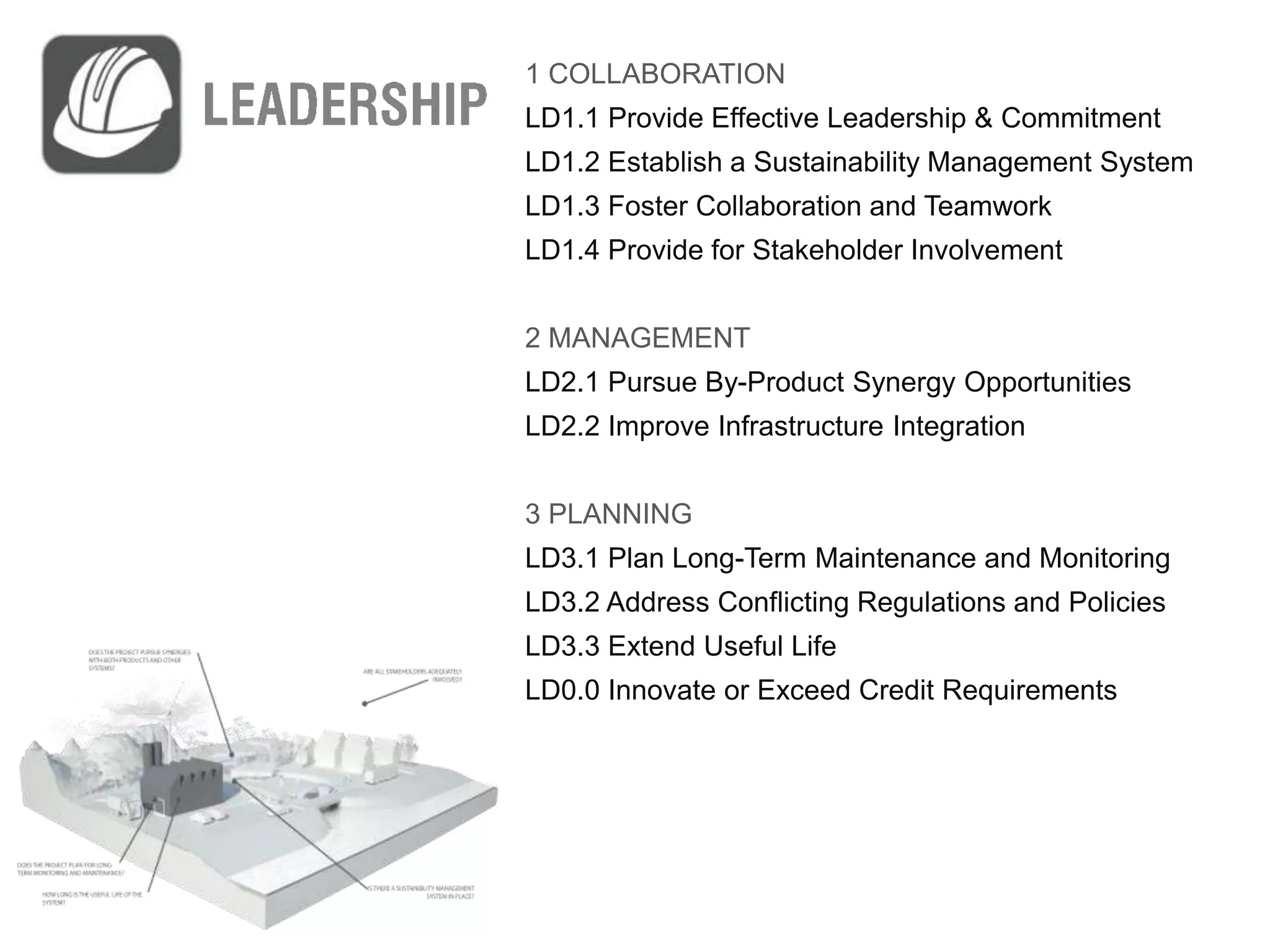
1 COLLABORATION
LD1.1 Provide Effective Leadership & Commitment
LD1.2 Establish a Sustainability Management System
LD1.3 Foster Collaboration and Teamwork
LD1.4 Provide for Stakeholder Involvement


2 MANAGEMENT
LD2.1 Pursue By-Product Synergy Opportunities
LD2.2 Improve Infrastructure Integration


3 PLANNING
LD3.1 Plan Long-Term Maintenance and Monitoring
LD3.2 Address Conflicting Regulations and Policies
LD3.3 Extend Useful Life
LD0.0 Innovate or Exceed Credit Requirements
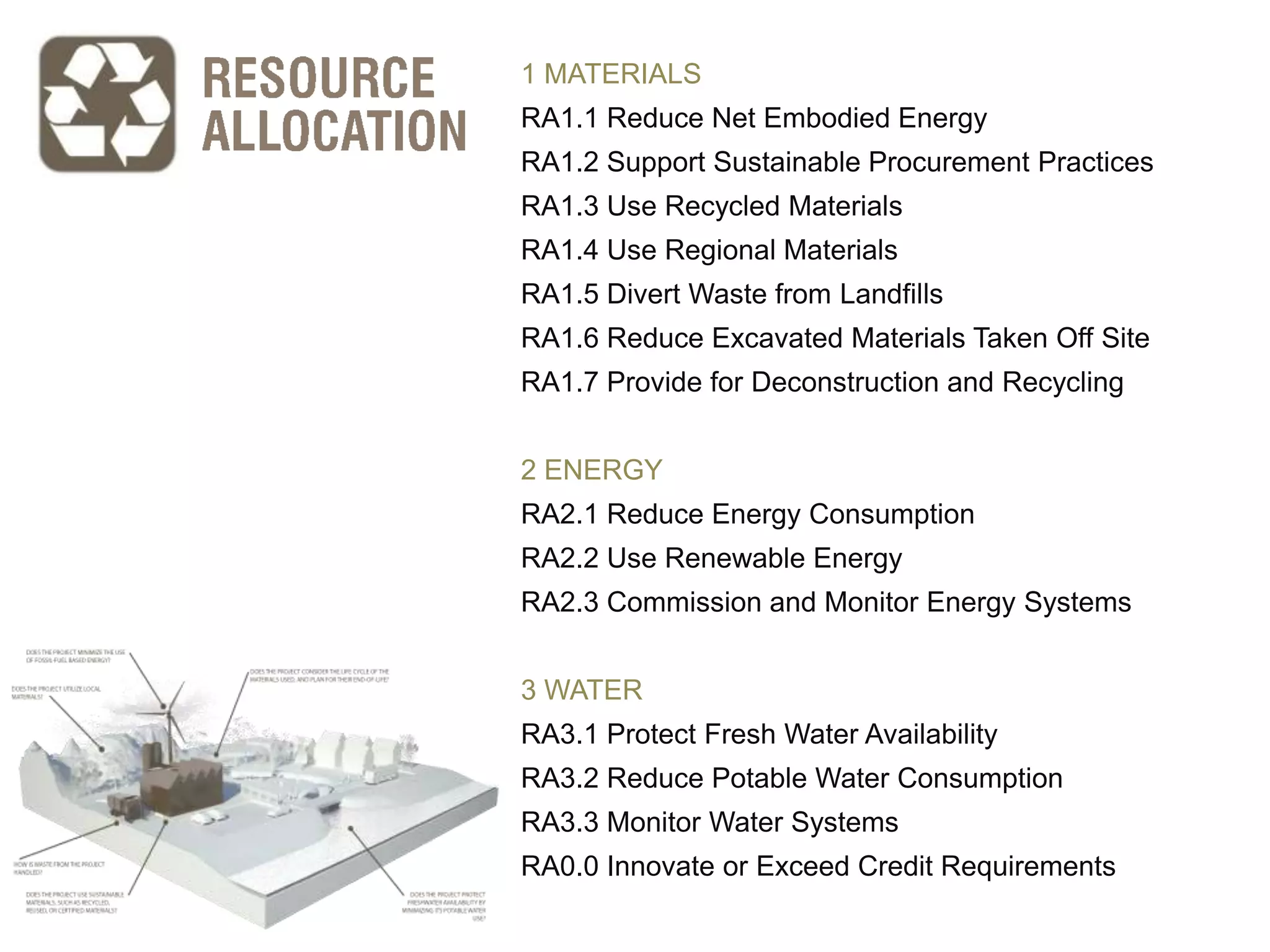
1 MATERIALS
RA1.1 Reduce Net Embodied Energy
RA1.2 Support Sustainable Procurement Practices
RA1.3 Use Recycled Materials
RA1.4 Use Regional Materials
RA1.5 Divert Waste from Landfills
RA1.6 Reduce Excavated Materials Taken Off Site
RA1.7 Provide for Deconstruction and Recycling


2 ENERGY
RA2.1 Reduce Energy Consumption
RA2.2 Use Renewable Energy
RA2.3 Commission and Monitor Energy Systems


3 WATER
RA3.1 Protect Fresh Water Availability
RA3.2 Reduce Potable Water Consumption
RA3.3 Monitor Water Systems
RA0.0 Innovate or Exceed Credit Requirements
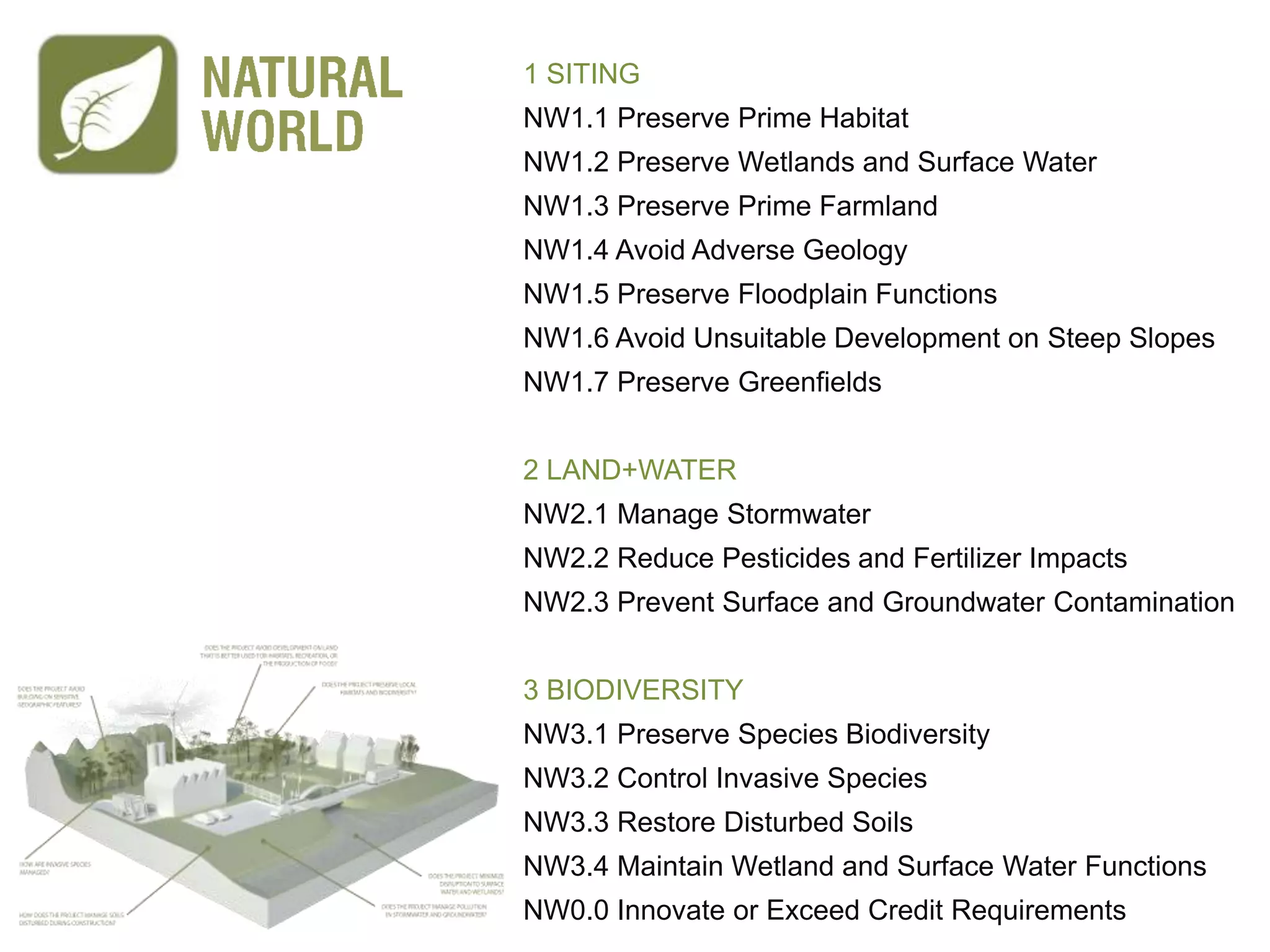
1 SITING
NW1.1 Preserve Prime Habitat
NW1.2 Preserve Wetlands and Surface Water
NW1.3 Preserve Prime Farmland
NW1.4 Avoid Adverse Geology
NW1.5 Preserve Floodplain Functions
NW1.6 Avoid Unsuitable Development on Steep Slopes
NW1.7 Preserve Greenfields


2 LAND+WATER
NW2.1 Manage Stormwater
NW2.2 Reduce Pesticides and Fertilizer Impacts
NW2.3 Prevent Surface and Groundwater Contamination


3 BIODIVERSITY
NW3.1 Preserve Species Biodiversity
NW3.2 Control Invasive Species
NW3.3 Restore Disturbed Soils
NW3.4 Maintain Wetland and Surface Water Functions
NW0.0 Innovate or Exceed Credit Requirements
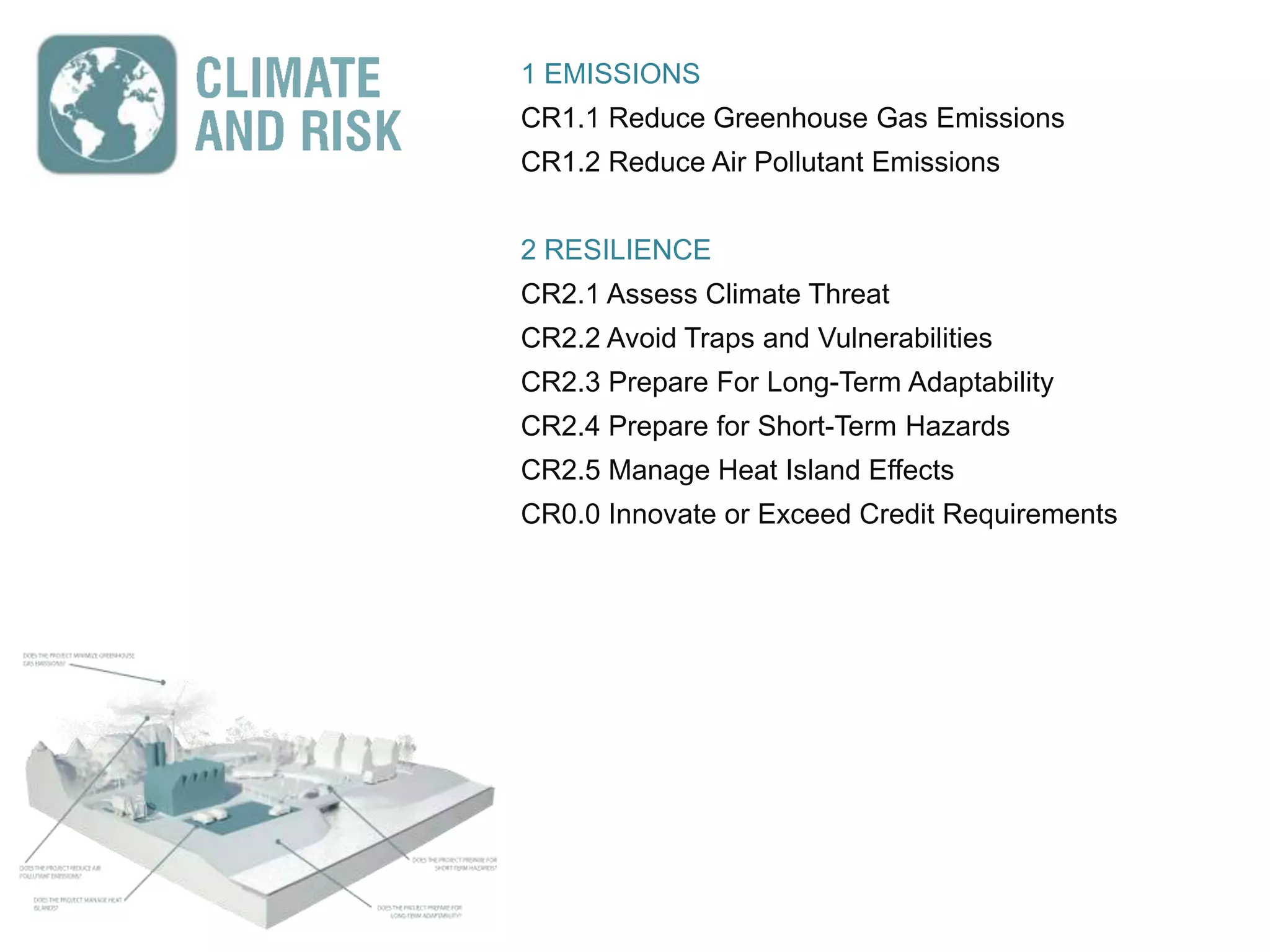
1 EMISSIONS
CR1.1 Reduce Greenhouse Gas Emissions
CR1.2 Reduce Air Pollutant Emissions


2 RESILIENCE
CR2.1 Assess Climate Threat
CR2.2 Avoid Traps and Vulnerabilities
CR2.3 Prepare For Long-Term Adaptability
CR2.4 Prepare for Short-Term Hazards
CR2.5 Manage Heat Island Effects
CR0.0 Innovate or Exceed Credit Requirements
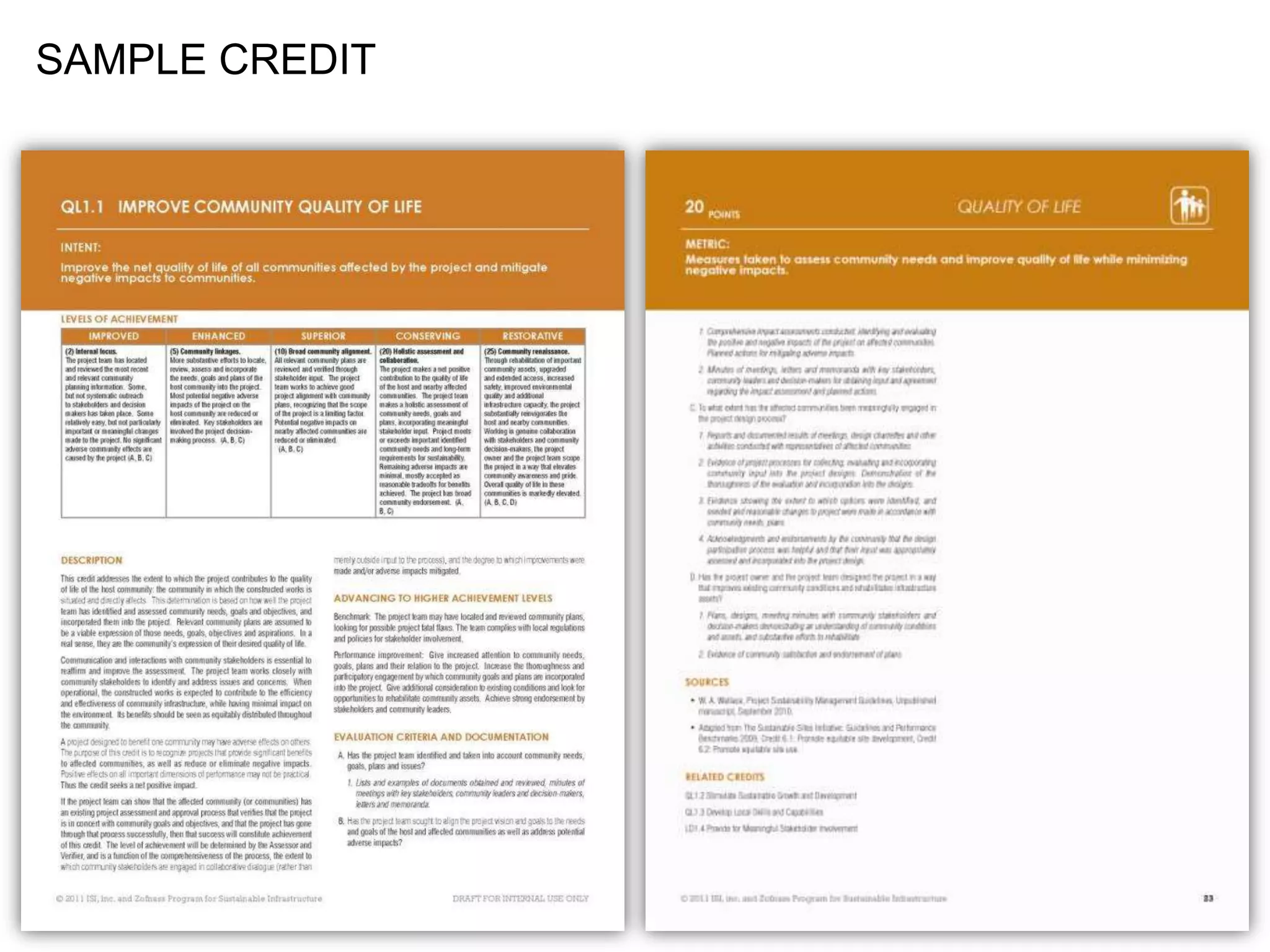
SAMPLE CREDIT
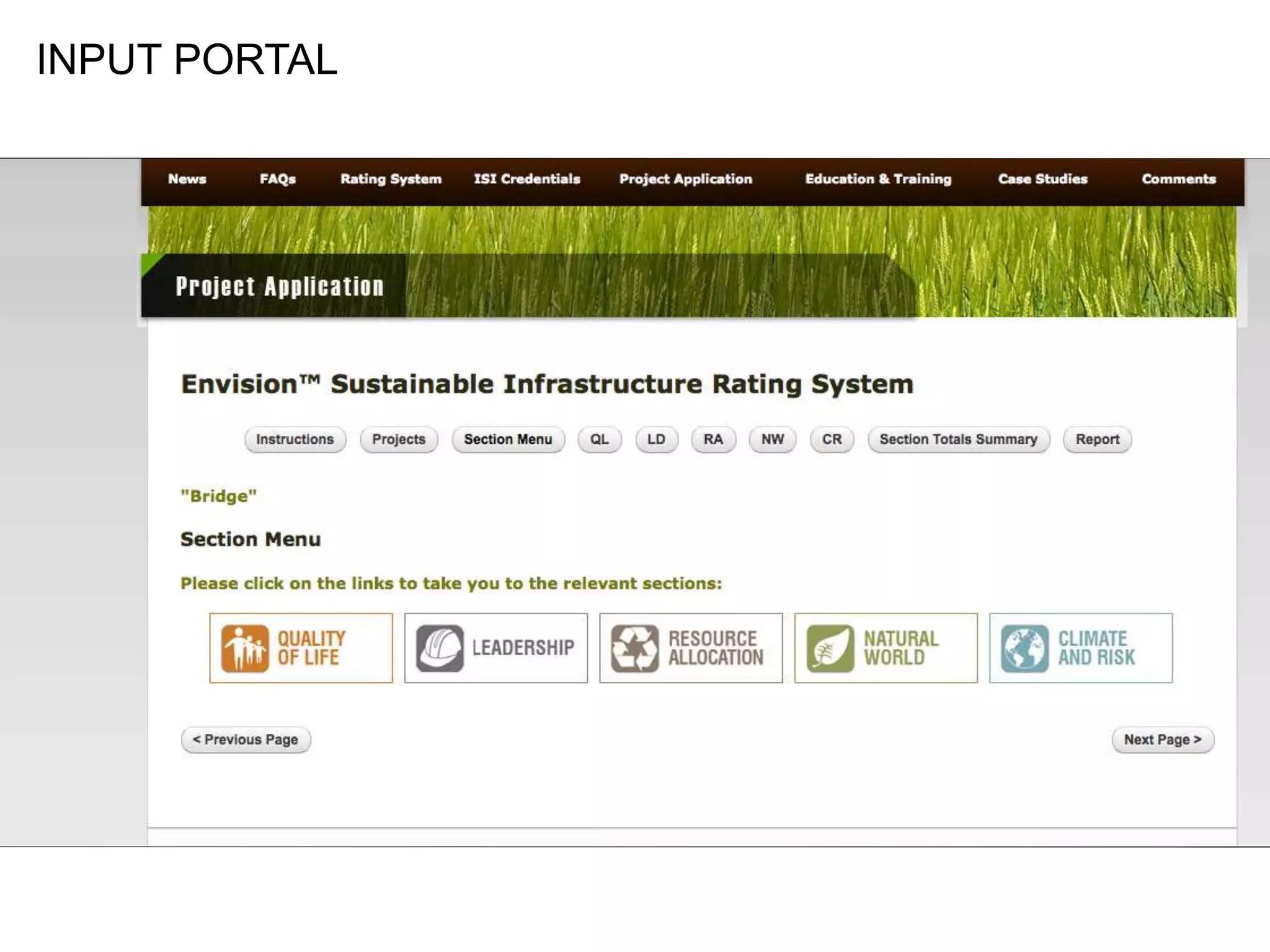
INPUT PORTAL
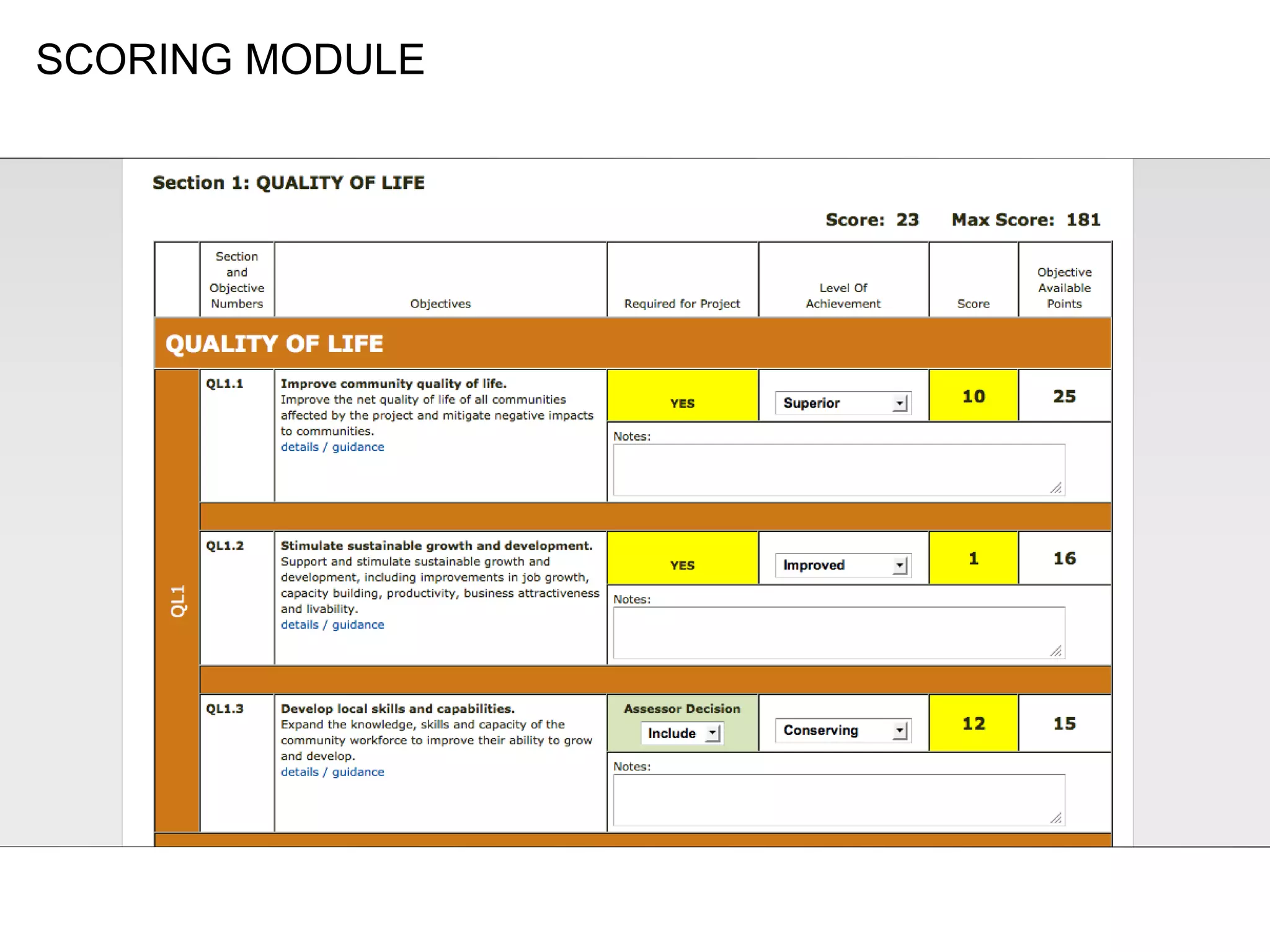
SCORING MODULE
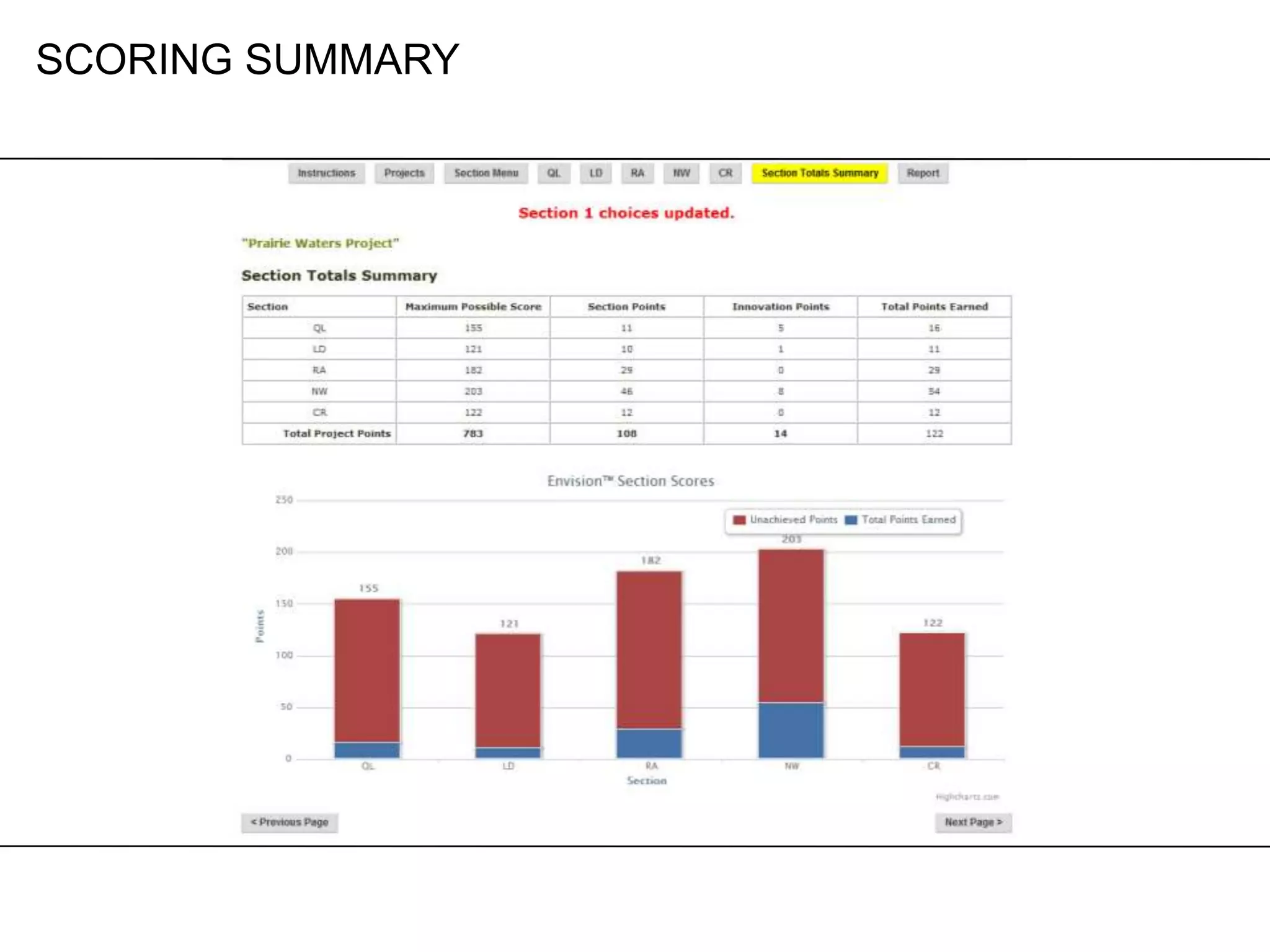
SCORING SUMMARY
FOR MORE
 INFORMATION
 ABOUT ENVISION™


sustainableinfrastructure.org


Bill Bertera, Executive Director
bertera@sustainableinfrastructure.org
(202) 218-6725

ENVISION 2.0 CERTIFICATION PROGRAM

  • 1.
  • 2.
    Envision™ was developedin joint collaboration between the Zofnass Program for Sustainable Infrastructure at the Harvard University Graduate School of Design and the Institute for Sustainable Infrastructure. The Institute for Sustainable Infrastructure is a not-for-profit education and research organization founded by the American Public Works Association, the American Council of Engineering Companies and the American Society of Civil Engineers.
  • 3.
    THE IMPORTANCE OF Planet Earth is a perilous place for humans. INFRASTRUCTURE Infrastructure provides: • Physical Security • The basis for public health • Economic and commercial potential THE REALITIES OF • Population Growth THE WORLD IN WHICH • Diminished Resources WE LIVE • Climate Change • Adaptation A NEW FACT OF LIFE It is no longer enough that infrastructure work, that it be constructed on time and within budget, or even that it last. It now must be sustainable.
  • 4.
    WHAT DO WEMEAN BY “SUSTAINABLE”?
  • 5.
    WHAT IS ENVISION™? Envision™is a tool, which itself is part of a larger system, developed to help evaluate the sustainability of civil infrastructure. This system includes: • A self assessment checklist • The Envision™ Rating Tool • A credential program for individuals • A Project Evaluation and Verification Program • A Recognition Program for Sustainable Infrastructure PHASE TOOLKITS COMPANION TOOLS
  • 6.
    WHAT MAKES • It applies to civil infrastructure ENVISION™ UNIQUE? • It includes design, planning, construction and maintenance elements • It is applicable at any point in an infrastructure project's life cycle • It speaks to the triple bottom line: social, economic and environmental goals • It is designed to keep pace with a changing concept of sustainability
  • 7.
    METRICS MATTER • Envision™measures outcomes, not Decommissioning intentions Construction Plan /Design Operation • Five areas of achievement; 60 credits • The business case for sustainability…why it is important 7
  • 8.
    FIVE LEVELS OF ACHIEVEMENT IMPROVED Performance that is at or above conventional ENHANCED Indications that superior performance is within reach. SUPERIOR Sustainable performance that is noteworthy. CONSERVING Performance that has achieved essentially zero impact. RESTORATIVE Performance that restores natural or social systems.
  • 9.
    WHAT TYPES OFINFRASTRUCTURE CAN ENVISION™ RATE? ENERGY WATER WASTE TRANSPORT LANDSCAPE INFORMATION Geothermal Potable water Solid waste Airports Public Realm Telecommunications Hydroelectric distribution Recycling Roads Parks Internet Nuclear Capture/Storage Hazardous Highways Ecosystem Phones Coal Water Reuse Waste Bikes Services Satellites Natural Gas Storm Water Collection & Pedestrians Data Centers Management Transfer Oil/Refinery Railways Sensors Wind Flood Control Public Transit Solar Ports Biomass Waterways
  • 10.
  • 11.
    1 PURPOSE QL1.1 ImproveCommunity Quality of Life QL1.2 Stimulate Sustainable Growth and Development QL1.3 Develop Local Skills and Capabilities 2 WELLBEING QL2.1 Enhance Public Health and Safety QL2.2 Minimize Noise and Vibration QL2.3 Minimize Light Pollution QL2.4 Improve Community Mobility and Access QL2.5 Encourage Alternative Modes of Transportation QL2.6 Improve Accessibility, Safety & Wayfinding 3 COMMUNITY QL3.1 Preserve Historic and Cultural Resources QL3.2 Preserve Views and Local Character QL3.3 Enhance Public Space QL0.0 Innovate or Exceed Credit Requirements
  • 12.
    1 COLLABORATION LD1.1 ProvideEffective Leadership & Commitment LD1.2 Establish a Sustainability Management System LD1.3 Foster Collaboration and Teamwork LD1.4 Provide for Stakeholder Involvement 2 MANAGEMENT LD2.1 Pursue By-Product Synergy Opportunities LD2.2 Improve Infrastructure Integration 3 PLANNING LD3.1 Plan Long-Term Maintenance and Monitoring LD3.2 Address Conflicting Regulations and Policies LD3.3 Extend Useful Life LD0.0 Innovate or Exceed Credit Requirements
  • 13.
    1 MATERIALS RA1.1 ReduceNet Embodied Energy RA1.2 Support Sustainable Procurement Practices RA1.3 Use Recycled Materials RA1.4 Use Regional Materials RA1.5 Divert Waste from Landfills RA1.6 Reduce Excavated Materials Taken Off Site RA1.7 Provide for Deconstruction and Recycling 2 ENERGY RA2.1 Reduce Energy Consumption RA2.2 Use Renewable Energy RA2.3 Commission and Monitor Energy Systems 3 WATER RA3.1 Protect Fresh Water Availability RA3.2 Reduce Potable Water Consumption RA3.3 Monitor Water Systems RA0.0 Innovate or Exceed Credit Requirements
  • 14.
    1 SITING NW1.1 PreservePrime Habitat NW1.2 Preserve Wetlands and Surface Water NW1.3 Preserve Prime Farmland NW1.4 Avoid Adverse Geology NW1.5 Preserve Floodplain Functions NW1.6 Avoid Unsuitable Development on Steep Slopes NW1.7 Preserve Greenfields 2 LAND+WATER NW2.1 Manage Stormwater NW2.2 Reduce Pesticides and Fertilizer Impacts NW2.3 Prevent Surface and Groundwater Contamination 3 BIODIVERSITY NW3.1 Preserve Species Biodiversity NW3.2 Control Invasive Species NW3.3 Restore Disturbed Soils NW3.4 Maintain Wetland and Surface Water Functions NW0.0 Innovate or Exceed Credit Requirements
  • 15.
    1 EMISSIONS CR1.1 ReduceGreenhouse Gas Emissions CR1.2 Reduce Air Pollutant Emissions 2 RESILIENCE CR2.1 Assess Climate Threat CR2.2 Avoid Traps and Vulnerabilities CR2.3 Prepare For Long-Term Adaptability CR2.4 Prepare for Short-Term Hazards CR2.5 Manage Heat Island Effects CR0.0 Innovate or Exceed Credit Requirements
  • 16.
  • 17.
  • 18.
  • 19.
  • 20.
    FOR MORE INFORMATION ABOUT ENVISION™ sustainableinfrastructure.org Bill Bertera, Executive Director bertera@sustainableinfrastructure.org (202) 218-6725

Editor's Notes

  • #3 More white- - text too big
  • #4 FIX THIRD POINT
  • #5 Add image/stock photo here?
  • #6 “Envision is part of a larger system, with tools developed to help evaluate the sustainability of civil infrastructure”This Envision system includes:A self assessment checklistA rating ToolA credential program for dinviduals““
  • #14 Stuff we can readily measure…maximize use