CLASS 8
Chapter-1
Need Of Artificial Intelligence
• Helps to solve real life problems such as
health issues and traffic issues
• Helps us in creating our personal virtual
assistant ex. Google assistant and Apple’s
Siri
• Opens path for new technologies, new
devices and opportunities
Programming without AI Programming with AI
Can answer only specific questions Answer generic questions it is meant to
solve
Making changes involves in changing the
structure of the program
Can adapt new modifications
automatically by assembling independent
pieces of information together
Modifying programs needs rewriting of
code and thus time consuming
Easy to modify and takes less time
AIMS OF AI
• Artificial Intelligence (AI) aims to develop
machines/applications that can accomplish what a
human can in terms of reasoning.ie. Replicates human
intelligence
• Solves problems that require knowledge processing
• Connect perception and action
• Game playing- proving a theorem, playing chess and
driving a car in traffic
• Expert system- exhibits intelligent behaviour, learn new
things by itself, demonstrate, explain and advise its user
DISCIPLINE OF AI
ADVANTAGE
• AI helps in reducing human power.
• AI helps in increasing productivity
• AI makes the decision making process faster.
• AI helps in reducing cost.
• AI performs repeated tasks without getting
tired or bored.
• AI is robust.
• AI helps in carrying out odd jobs.
• AI helps in improving security.
DiSADVANTAGE
• Higly expensive
• Cannot exhibit human emotions
• AI cannot learn with experience and
has no decision making capacity.
• AI is not Creative.
• Unemployment.
• Ai cannot replicate humans.
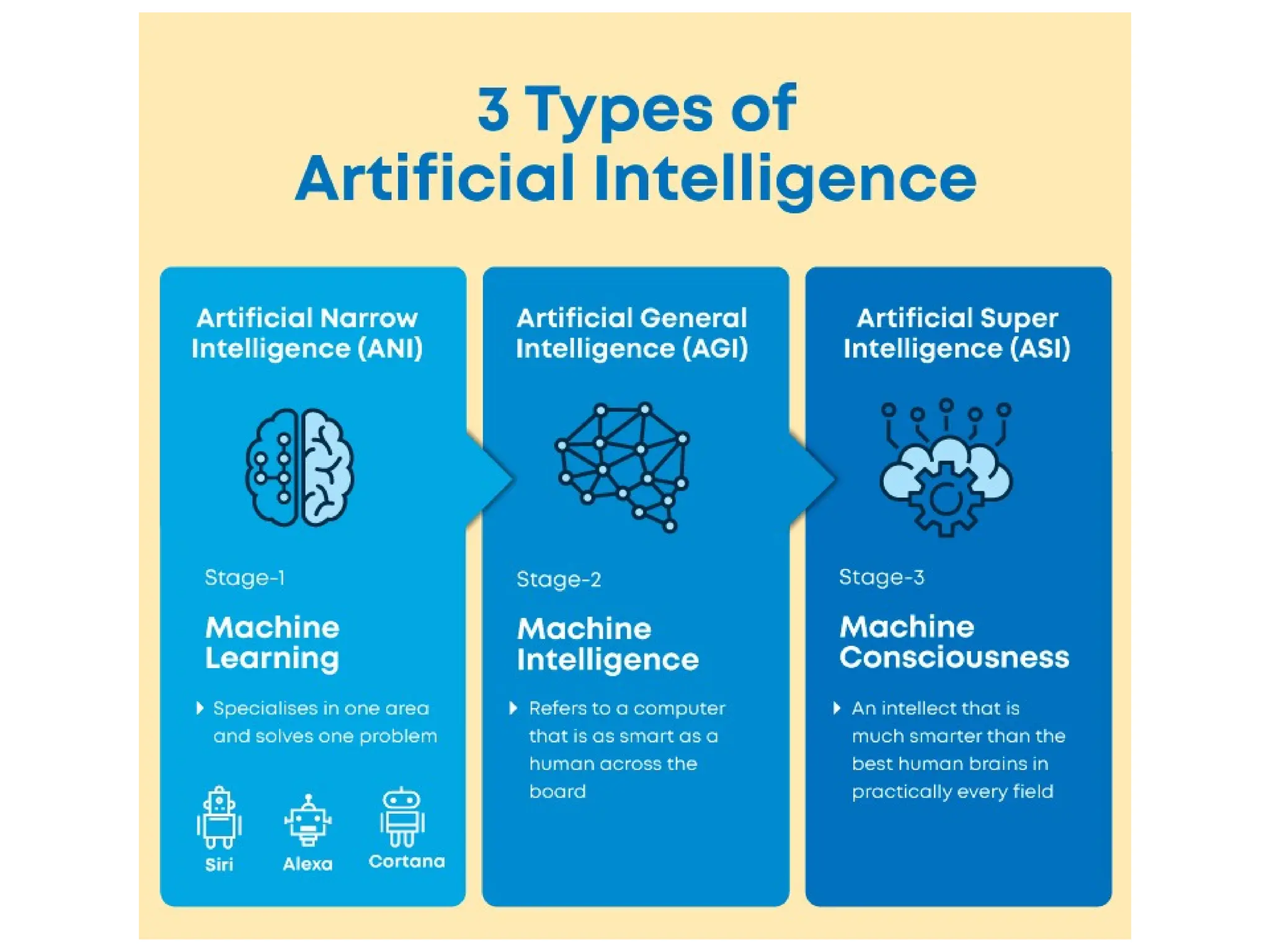
TYPE 1
ARTIFICIAL INTELLIGENCE
BASED ON CAPABILITY
TYPE 2
ARTIFICIAL INTELLIGENCE
BASED ON FUNCTIONALITY
ARTIFICIAL INTELLIGENCE
TERMINOLOGIES
ARTIFICIAL INTELLIGENCE TERMINOLOGY
Terminology
Python
Chatbot
Cloud
computing
Data
Mining
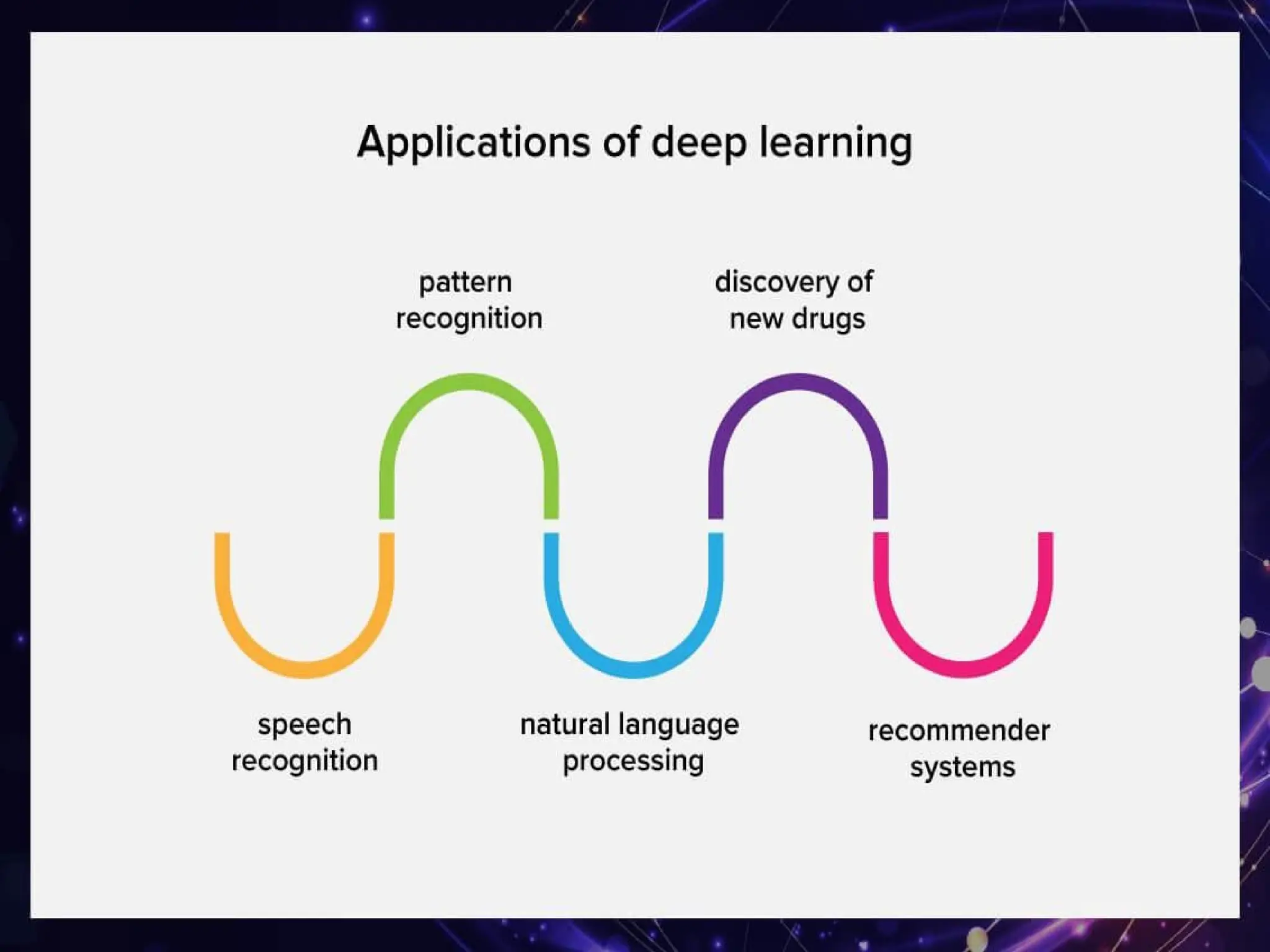
Machine
learning
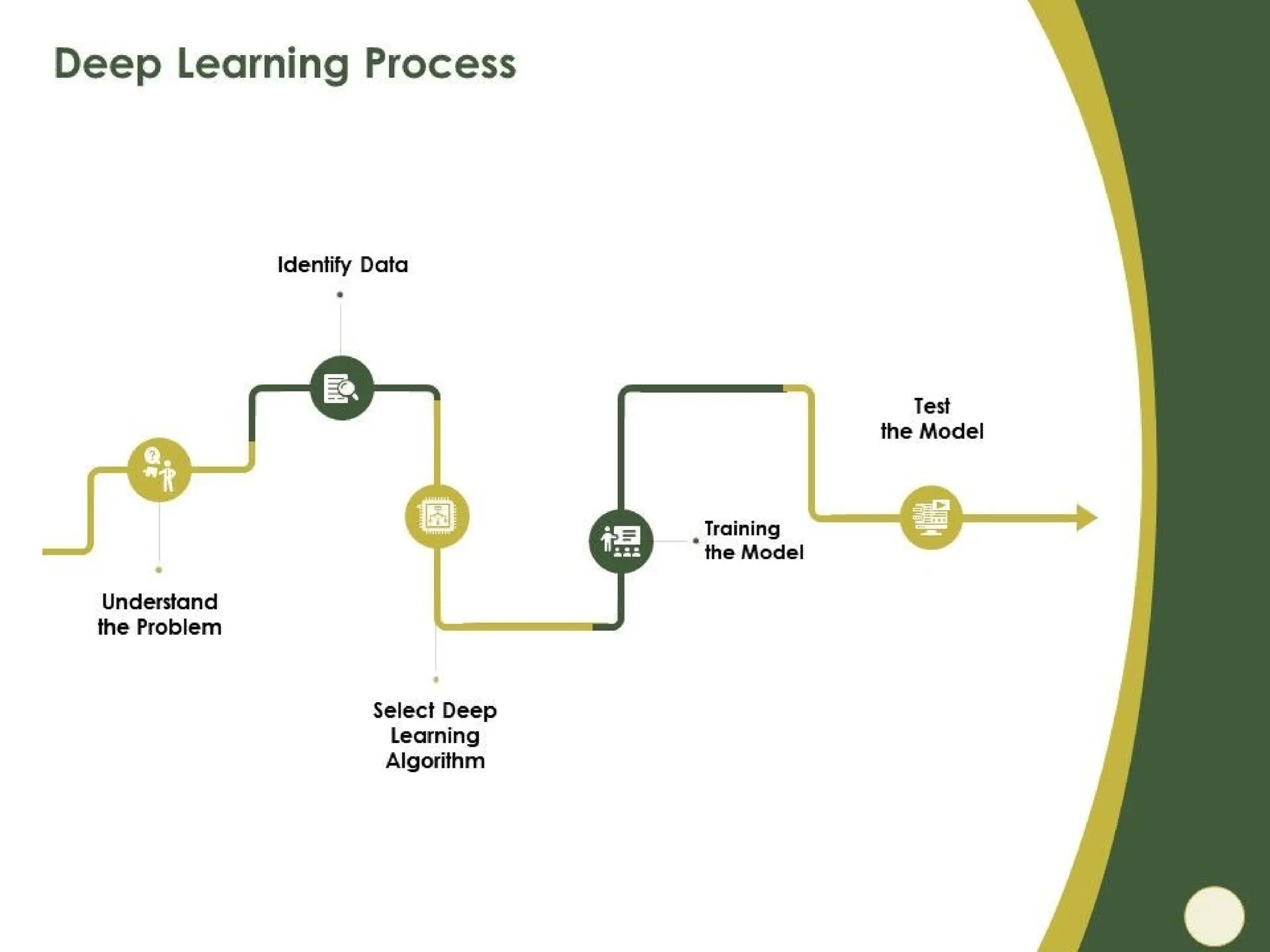
Deep
learning
Internet of
things
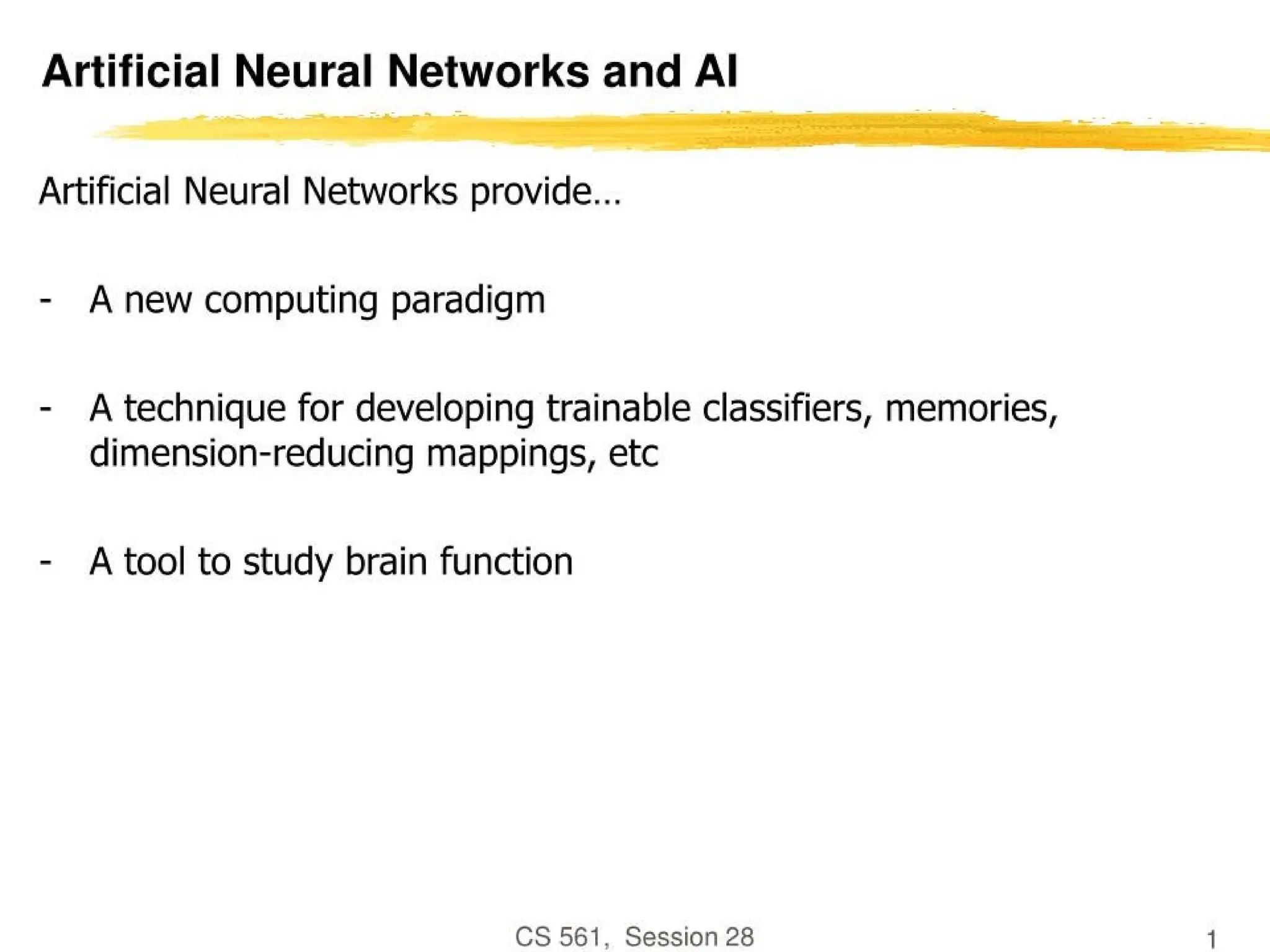
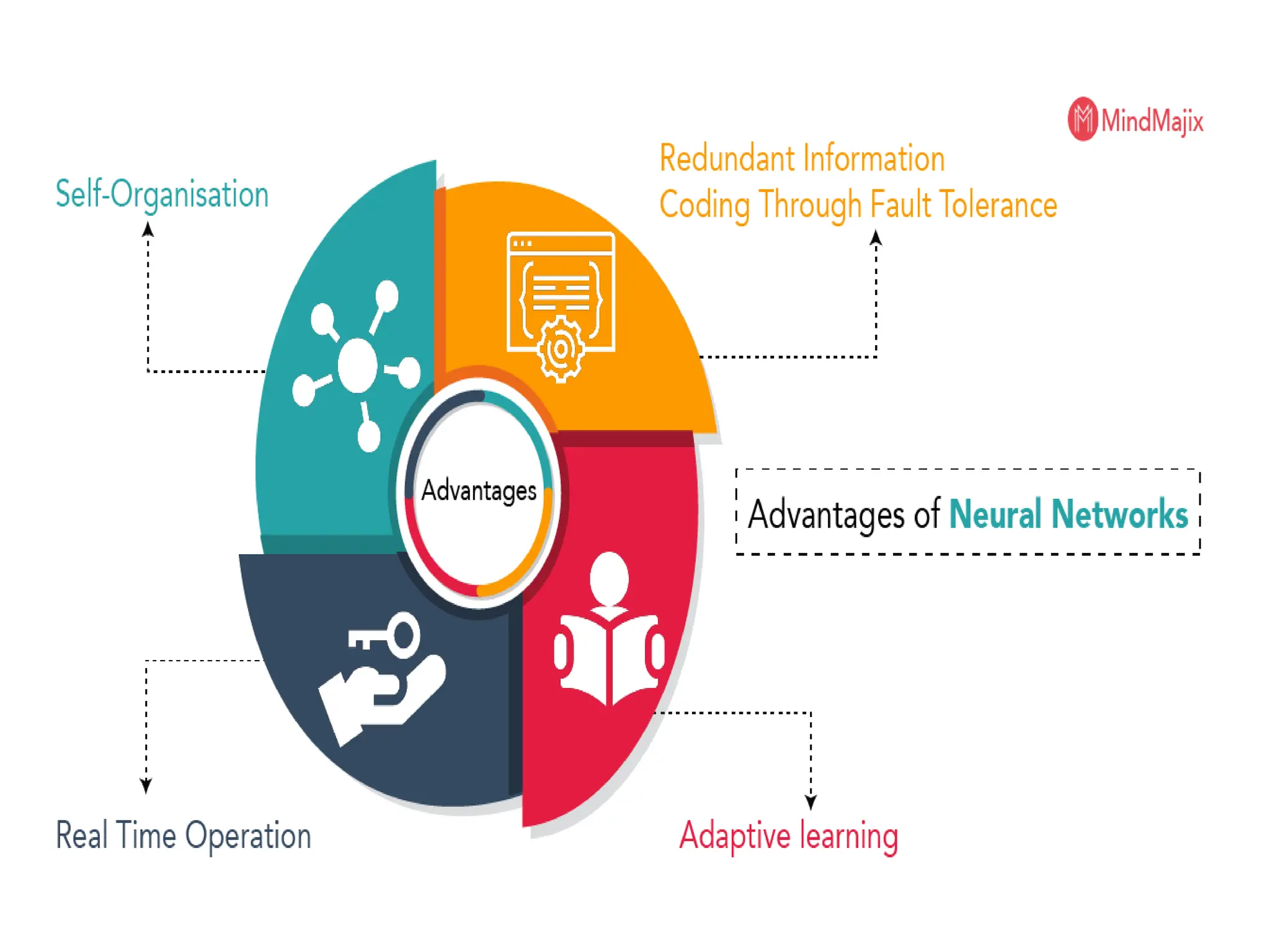
Neural
Network
Computing
• Big data refers to different types of data that are too large.
• AI will be able to not only learn how to meet the needs of their customers more
effectively but also perform tasks to a higher standard at quicker speeds through
automation.
• For example, currently, Netflix is using insights generated by Big data to produce
and recommend content that you enjoy based on your viewing history.
• However, in the future,
Netflix will be able to produce entire content written by AI that is curated to
meet your exact wants.
BIG DATA
CHATBOT
An AI chatbot is a software application
that’s used to engage in human
conversation in a natural way.
AI chatbots are commonly used across
many different industries for many
different purposes.
Chatbots are programmed to address
users' needs independently of a
human operator.
CLOUD COMPUTING
AI in cloud computing has rewritten the way technology
works for many. The impact brought about by the
combination of artificial intelligence and cloud solutions
is seen all around the world. From digital assistants to
quick, online purchases, the evidence is all over the
place.
DATA MINING
Data mining refers to the process of large data
sets.
INTERNET OF THINGS
Internet of Things in Artificial Intelligence is defining as
the capability of connecting the computing and the
networking devices. These connectivity is not only
restricted to the electronics appliances, but also
extended towards the objects and the everyday items.
DOMAINS OF ARTIFICIAL INTELLIGENCE
DATA
COMPUTER VISION
NATURAL LANGUAGE PROCESSING
DATA
One cannot think about Artificial Intelligence without thinking
about data, as data is an essential part of AI. In order for an AI
algorithm to output any prediction, it has to be fed with large
volumes of data.
Components of NLP
• NLP can be divided into two basic components.
• Natural Language Understanding
• Natural Language Generation
Natural Language Understanding (NLU)
• NLP stands for Natural Language Processing, which is a part of Computer Science,
Human language, and Artificial Intelligence.
• It is the technology that is used by machines to understand, analyse, manipulate, and
interpret human's languages.
• NLU involves the following tasks –
• It is used to map the given input into useful representation.
• It is used to analyze different aspects of the language.
Natural Language Generation (NLG)
It is the process of producing meaningful phrases and sentences in the form of
natural language from some internal representation.
It involves
Text planning −
It includes retrieving the relevant content from knowledge base.
Sentence planning −
It includes choosing required words, forming meaningful phrases, setting tone of the
sentence.
Text Realization −
It is mapping sentence plan into sentence structure.
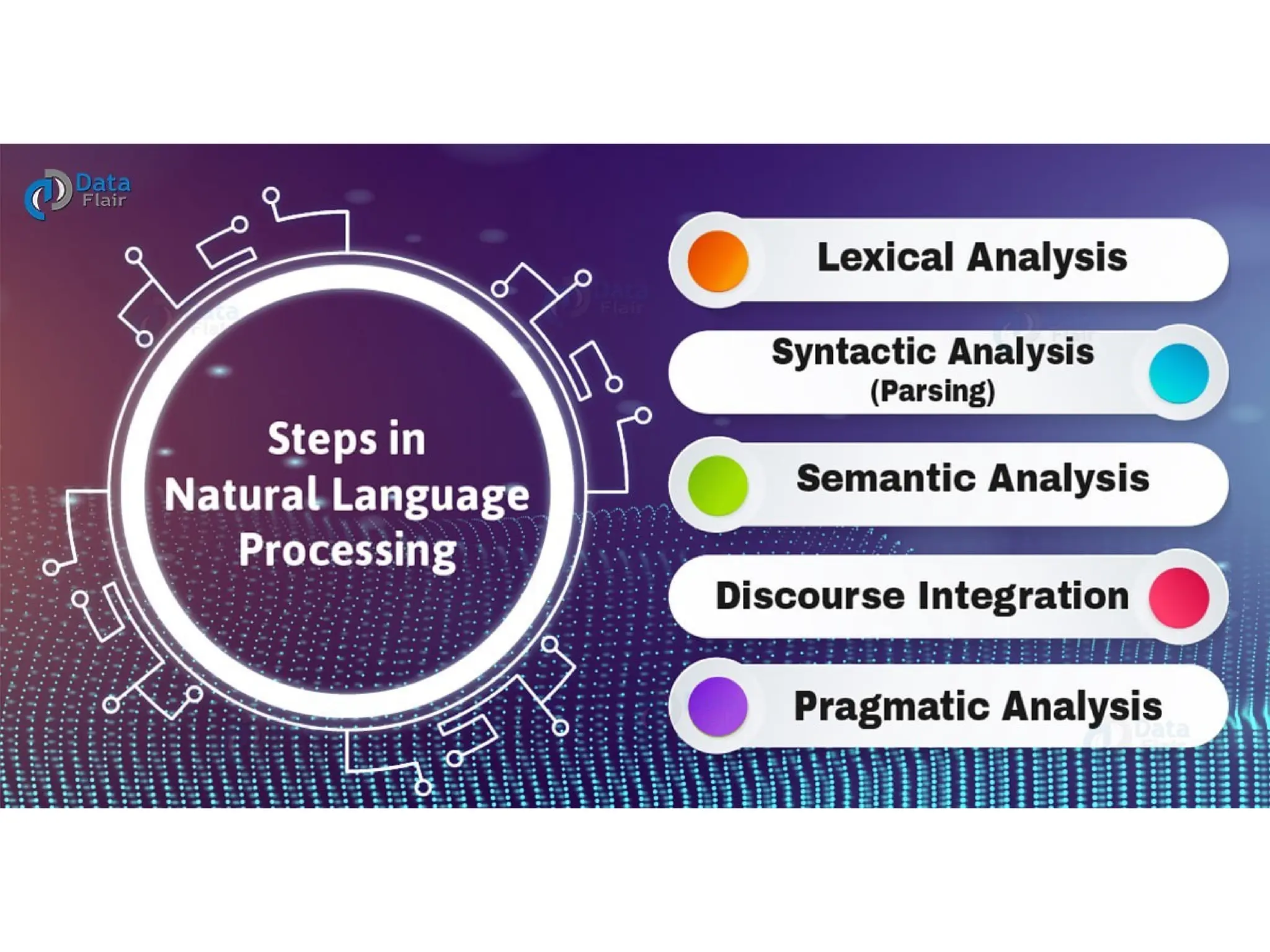
STEPS IN NLP
Lexical Analysis:
It involves identifying and analyzing the structure of words.
Lexicon of a language means the collection of words and phrases in a language.
Syntactical Analysis:
Syntactial Analysis means when we see more than one meaning in a sequence of words. It is
also termed as grammatical ambiguity.
Referential Analysis:
Referential analysis very often a text mentions as entity (something/someone), and then
refers to it again, possibly in a different sentence, using another word.
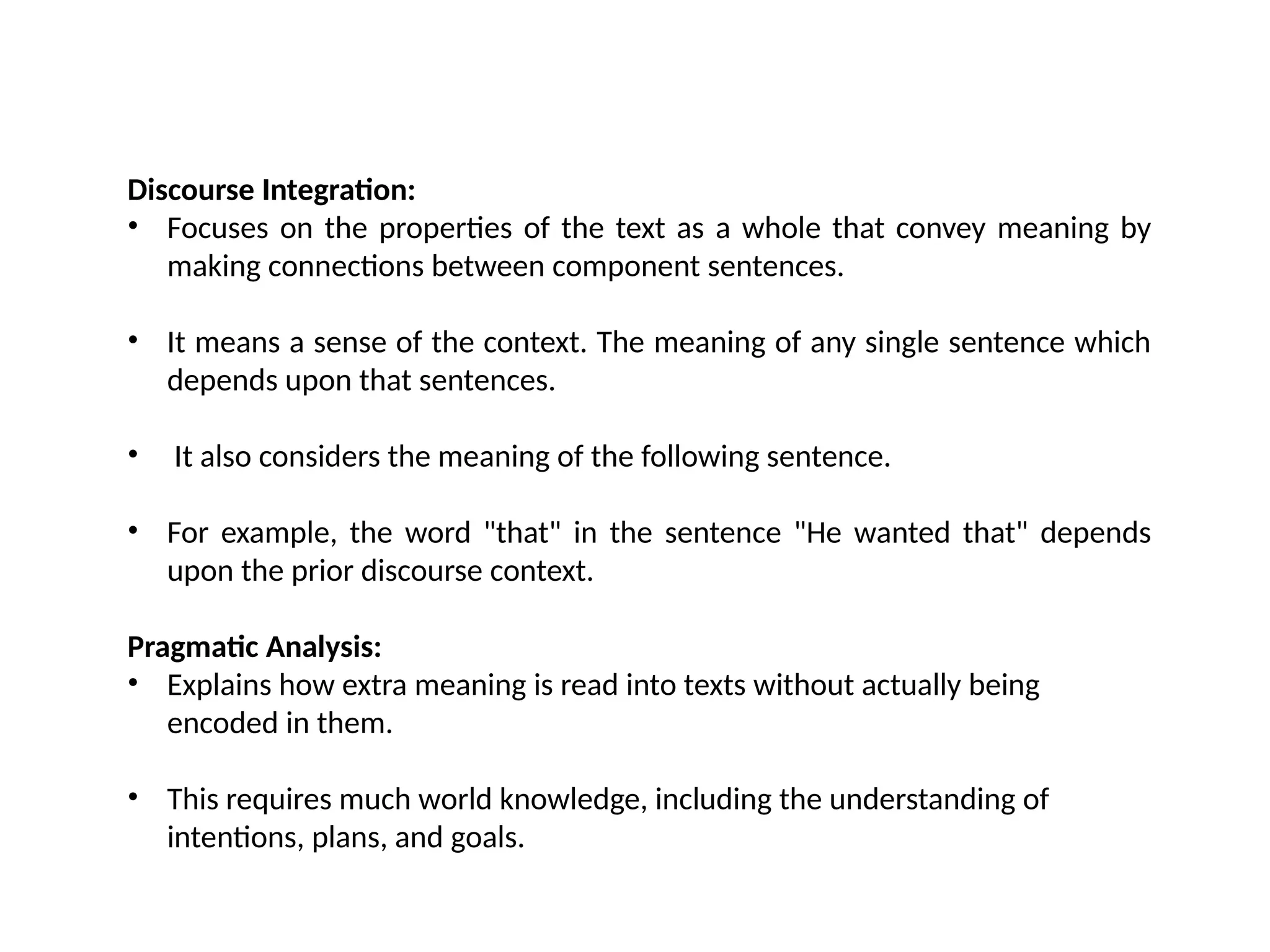
Discourse Integration:
• Focuses on the properties of the text as a whole that convey meaning by
making connections between component sentences.
• It means a sense of the context. The meaning of any single sentence which
depends upon that sentences.
• It also considers the meaning of the following sentence.
• For example, the word "that" in the sentence "He wanted that" depends
upon the prior discourse context.
Pragmatic Analysis:
• Explains how extra meaning is read into texts without actually being
encoded in them.
• This requires much world knowledge, including the understanding of
intentions, plans, and goals.
NLU NLG
NLU is the process of reading
and interpreting language.
NLG is the process of writing or
generating language.
It produces non-linguistic
outputs from natural language
inputs.
It produces constructing
natural language outputs from
non-linguistic inputs.
Difference between NLU and NLG
Computer Vision (CV)
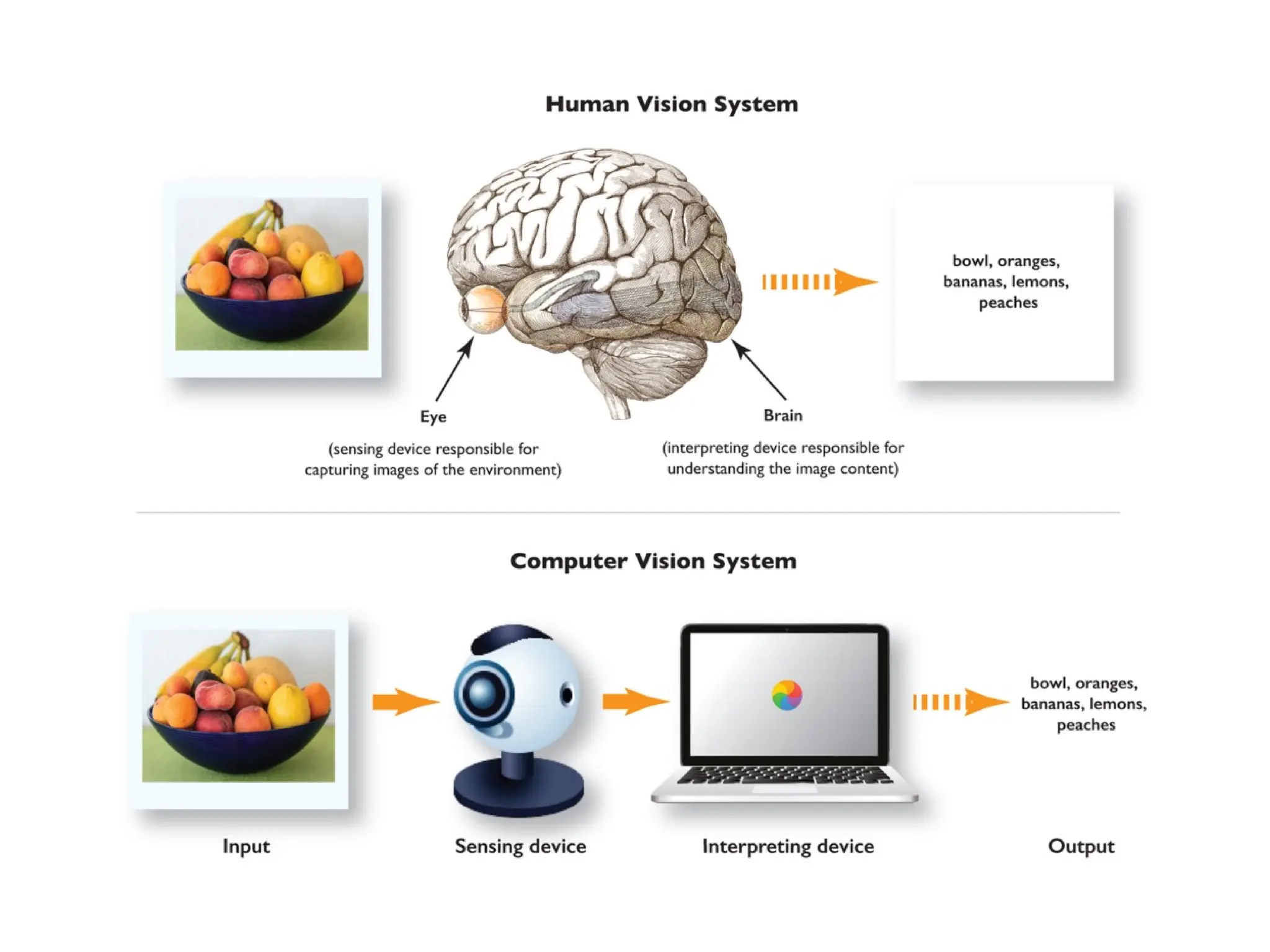
• Computer vision is one of the fields of artificial intelligence that trains and
enables computers to understand the visual world.
• Computers can use digital images and deep learning models to accurately
identify and classify objects and react to them.
• Computer Vision (CV) is a field of Artificial Intelligence (AI) that deals with
computational methods to help computers understand and interpret the content
of digital images and videos.
• Hence, computer vision aims to make computers see and understand visual data
input from cameras or sensors.
Working of computer vision
• Computer vision algorithms that we use today are based on pattern recognition.
• Image processing and computer vision, provides technical details about the process
that machines follow in interpreting images.
• In short, machines interpret images as a series of pixels, each with their own set of
color values.
Computer Vision Importance
Computer vision can automate several tasks without the need for human intervention. As a
result, it provides organizations with a number of benefits:
Faster and simpler process –
Computer vision systems can carry out repetitive and monotonous tasks at a faster rate,
which simplifies the work for humans.
Better products and services –
Computer vision systems that have been trained very well will commit zero mistakes. This
will result in faster delivery of high-quality products and services.
Cost-reduction –
Companies do not have to spend money on fixing their flawed processes because computer
vision will leave no room for faulty products and services.
Computer Vision real life example
Computer vision is being used in more areas than you might expect. From detecting early signs of
cancer to enabling automatic checkouts in retail places, computer vision has made its way into our
lives. Here are some more computer vision applications:
Face recognition –
Snapchat, Instagram, Facebook and many other social media apps use face-detection algorithms
to recognize you in pictures and apply filters on your face.
Surveillance –
Surveillance cameras use computer vision to help detect suspicious behavior in public and private
locations.
Image retrieval –
Google Images help you find relevant images when you upload an image. There are different
algorithms that analyze the content in the image uploaded and return results based on the best-
matched content.
Biometrics –
Fingerprint and iris recognition are some common methods in biometric identification that uses
computer vision.
Smart cars –
Smart cars use computer vision to detect traffic signs and lights and other visual features when
the cars go on auto mode.

ch1 class 8.pptx AN INTRODUCTION ABOUT ARTIFICIAL INTELLIGENCE

  • 1.
  • 3.
    Need Of ArtificialIntelligence • Helps to solve real life problems such as health issues and traffic issues • Helps us in creating our personal virtual assistant ex. Google assistant and Apple’s Siri • Opens path for new technologies, new devices and opportunities
  • 4.
    Programming without AIProgramming with AI Can answer only specific questions Answer generic questions it is meant to solve Making changes involves in changing the structure of the program Can adapt new modifications automatically by assembling independent pieces of information together Modifying programs needs rewriting of code and thus time consuming Easy to modify and takes less time
  • 5.
    AIMS OF AI •Artificial Intelligence (AI) aims to develop machines/applications that can accomplish what a human can in terms of reasoning.ie. Replicates human intelligence • Solves problems that require knowledge processing • Connect perception and action • Game playing- proving a theorem, playing chess and driving a car in traffic • Expert system- exhibits intelligent behaviour, learn new things by itself, demonstrate, explain and advise its user
  • 6.
  • 7.
    ADVANTAGE • AI helpsin reducing human power. • AI helps in increasing productivity • AI makes the decision making process faster. • AI helps in reducing cost. • AI performs repeated tasks without getting tired or bored. • AI is robust. • AI helps in carrying out odd jobs. • AI helps in improving security.
  • 8.
    DiSADVANTAGE • Higly expensive •Cannot exhibit human emotions • AI cannot learn with experience and has no decision making capacity. • AI is not Creative. • Unemployment. • Ai cannot replicate humans.
  • 9.
  • 11.
  • 13.
  • 14.
  • 16.
    • Big datarefers to different types of data that are too large. • AI will be able to not only learn how to meet the needs of their customers more effectively but also perform tasks to a higher standard at quicker speeds through automation. • For example, currently, Netflix is using insights generated by Big data to produce and recommend content that you enjoy based on your viewing history. • However, in the future, Netflix will be able to produce entire content written by AI that is curated to meet your exact wants. BIG DATA
  • 20.
    CHATBOT An AI chatbotis a software application that’s used to engage in human conversation in a natural way. AI chatbots are commonly used across many different industries for many different purposes. Chatbots are programmed to address users' needs independently of a human operator.
  • 22.
    CLOUD COMPUTING AI incloud computing has rewritten the way technology works for many. The impact brought about by the combination of artificial intelligence and cloud solutions is seen all around the world. From digital assistants to quick, online purchases, the evidence is all over the place.
  • 24.
    DATA MINING Data miningrefers to the process of large data sets.
  • 33.
    INTERNET OF THINGS Internetof Things in Artificial Intelligence is defining as the capability of connecting the computing and the networking devices. These connectivity is not only restricted to the electronics appliances, but also extended towards the objects and the everyday items.
  • 38.
    DOMAINS OF ARTIFICIALINTELLIGENCE DATA COMPUTER VISION NATURAL LANGUAGE PROCESSING
  • 39.
    DATA One cannot thinkabout Artificial Intelligence without thinking about data, as data is an essential part of AI. In order for an AI algorithm to output any prediction, it has to be fed with large volumes of data.
  • 42.
    Components of NLP •NLP can be divided into two basic components. • Natural Language Understanding • Natural Language Generation Natural Language Understanding (NLU) • NLP stands for Natural Language Processing, which is a part of Computer Science, Human language, and Artificial Intelligence. • It is the technology that is used by machines to understand, analyse, manipulate, and interpret human's languages. • NLU involves the following tasks – • It is used to map the given input into useful representation. • It is used to analyze different aspects of the language.
  • 43.
    Natural Language Generation(NLG) It is the process of producing meaningful phrases and sentences in the form of natural language from some internal representation. It involves Text planning − It includes retrieving the relevant content from knowledge base. Sentence planning − It includes choosing required words, forming meaningful phrases, setting tone of the sentence. Text Realization − It is mapping sentence plan into sentence structure.
  • 44.
    STEPS IN NLP LexicalAnalysis: It involves identifying and analyzing the structure of words. Lexicon of a language means the collection of words and phrases in a language. Syntactical Analysis: Syntactial Analysis means when we see more than one meaning in a sequence of words. It is also termed as grammatical ambiguity. Referential Analysis: Referential analysis very often a text mentions as entity (something/someone), and then refers to it again, possibly in a different sentence, using another word.
  • 45.
    Discourse Integration: • Focuseson the properties of the text as a whole that convey meaning by making connections between component sentences. • It means a sense of the context. The meaning of any single sentence which depends upon that sentences. • It also considers the meaning of the following sentence. • For example, the word "that" in the sentence "He wanted that" depends upon the prior discourse context. Pragmatic Analysis: • Explains how extra meaning is read into texts without actually being encoded in them. • This requires much world knowledge, including the understanding of intentions, plans, and goals.
  • 47.
    NLU NLG NLU isthe process of reading and interpreting language. NLG is the process of writing or generating language. It produces non-linguistic outputs from natural language inputs. It produces constructing natural language outputs from non-linguistic inputs. Difference between NLU and NLG
  • 49.
    Computer Vision (CV) •Computer vision is one of the fields of artificial intelligence that trains and enables computers to understand the visual world. • Computers can use digital images and deep learning models to accurately identify and classify objects and react to them. • Computer Vision (CV) is a field of Artificial Intelligence (AI) that deals with computational methods to help computers understand and interpret the content of digital images and videos. • Hence, computer vision aims to make computers see and understand visual data input from cameras or sensors.
  • 50.
    Working of computervision • Computer vision algorithms that we use today are based on pattern recognition. • Image processing and computer vision, provides technical details about the process that machines follow in interpreting images. • In short, machines interpret images as a series of pixels, each with their own set of color values.
  • 52.
    Computer Vision Importance Computervision can automate several tasks without the need for human intervention. As a result, it provides organizations with a number of benefits: Faster and simpler process – Computer vision systems can carry out repetitive and monotonous tasks at a faster rate, which simplifies the work for humans. Better products and services – Computer vision systems that have been trained very well will commit zero mistakes. This will result in faster delivery of high-quality products and services. Cost-reduction – Companies do not have to spend money on fixing their flawed processes because computer vision will leave no room for faulty products and services.
  • 53.
    Computer Vision reallife example Computer vision is being used in more areas than you might expect. From detecting early signs of cancer to enabling automatic checkouts in retail places, computer vision has made its way into our lives. Here are some more computer vision applications: Face recognition – Snapchat, Instagram, Facebook and many other social media apps use face-detection algorithms to recognize you in pictures and apply filters on your face. Surveillance – Surveillance cameras use computer vision to help detect suspicious behavior in public and private locations. Image retrieval – Google Images help you find relevant images when you upload an image. There are different algorithms that analyze the content in the image uploaded and return results based on the best- matched content. Biometrics – Fingerprint and iris recognition are some common methods in biometric identification that uses computer vision. Smart cars – Smart cars use computer vision to detect traffic signs and lights and other visual features when the cars go on auto mode.