This chapter will explore …
(1) a model of the selection process,
(2) identifying selection criteria,
(3) job-specific selection criteria for teaching,
(4) selecting personnel for other positions, and
(5) teacher shortages.
Chapter 3:
Preparing for
PersonnelSelection
in Schools
• Lecturer: VATH VARY
• Email: varyvath@gmail.com
• Tel: 017 471 1117
Course:
Human Resource Management in Education
2.
Introduction
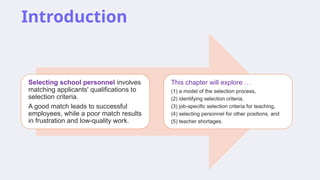
Selecting school personnelinvolves
matching applicants' qualifications to
selection criteria.
A good match leads to successful
employees, while a poor match results
in frustration and low-quality work.
This chapter will explore …
(1) a model of the selection process,
(2) identifying selection criteria,
(3) job-specific selection criteria for teaching,
(4) selecting personnel for other positions, and
(5) teacher shortages.
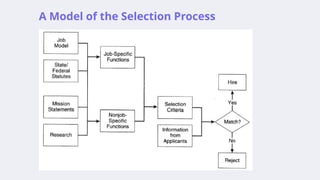
A Model ofthe Selection Process
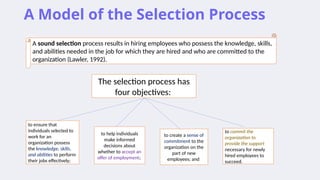
A sound selection process results in hiring employees who possess the knowledge, skills,
and abilities needed in the job for which they are hired and who are committed to the
organization (Lawler, 1992).
The selection process has
four objectives:
to ensure that
individuals selected to
work for an
organization possess
the knowledge, skills,
and abilities to perform
their jobs effectively;
to help individuals
make informed
decisions about
whether to accept an
offer of employment;
to create a sense of
commitment to the
organization on the
part of new
employees; and
to commit the
organization to
provide the support
necessary for newly
hired employees to
succeed.
5.
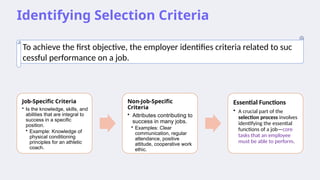
Identifying Selection Criteria
Job-SpecificCriteria
• Is the knowledge, skills, and
abilities that are integral to
success in a specific
position.
• Example: Knowledge of
physical conditioning
principles for an athletic
coach.
Non-Job-Specific
Criteria
• Attributes contributing to
success in many jobs.
• Examples: Clear
communication, regular
attendance, positive
attitude, cooperative work
ethic.
Essential Functions
• A crucial part of the
selection process involves
identifying the essential
functions of a job—core
tasks that an employee
must be able to perform.
To achieve the first objective, the employer identifies criteria related to suc
cessful performance on a job.
6.
The Americans with
DisabilitiesAct (ADA)
Impact
Essential Functions
ADA introduced
the concept of
essential
functions - tasks
fundamental to a
job that an
employee must be
able to perform to
be considered
qualified.
Focus on Job-
Specific Criteria
Employers must
concentrate on job-
specific criteria
when selecting
employees, rather
than peripheral
functions.
7.
Essential
Function
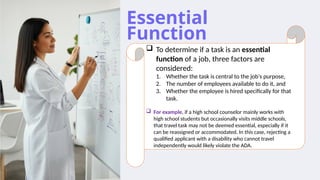
To determineif a task is an essential
function of a job, three factors are
considered:
1. Whether the task is central to the job's purpose,
2. The number of employees available to do it, and
3. Whether the employee is hired specifically for that
task.
For example, if a high school counselor mainly works with
high school students but occasionally visits middle schools,
that travel task may not be deemed essential, especially if it
can be reassigned or accommodated. In this case, rejecting a
qualified applicant with a disability who cannot travel
independently would likely violate the ADA.
8.
Identifying Selection Criteria
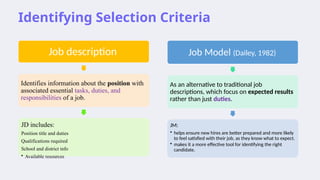
Jobdescription
Identifies information about the position with
associated essential tasks, duties, and
responsibilities of a job.
JD includes:
Position title and duties
Qualifications required
School and district info
• Available resources
Job Model (Dailey, 1982)
As an alternative to traditional job
descriptions, which focus on expected results
rather than just duties.
JM:
• helps ensure new hires are better prepared and more likely
to feel satisfied with their job, as they know what to expect.
• makes it a more effective tool for identifying the right
candidate.
9.
Writing a JobModel
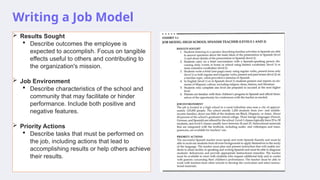
Results Sought
Describe outcomes the employee is
expected to accomplish. Focus on tangible
effects useful to others and contributing to
the organization's mission.
Job Environment
Describe characteristics of the school and
community that may facilitate or hinder
performance. Include both positive and
negative features.
Priority Actions
Describe tasks that must be performed on
the job, including actions that lead to
accomplishing results or help others achieve
their results.
10.
KEY TERMS
Job
• Ajob consists of a group of
tasks that must be
performed for an
organization to achieve its
goals.
Position
• Position is the collection of
tasks and responsibilities
performed by one person
11.
Job-Specific Selection Criteriafor
Teachers
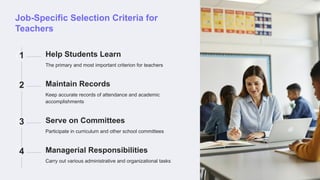
1 Help Students Learn
The primary and most important criterion for teachers
2 Maintain Records
Keep accurate records of attendance and academic
accomplishments
3 Serve on Committees
Participate in curriculum and other school committees
4 Managerial Responsibilities
Carry out various administrative and organizational tasks
12.
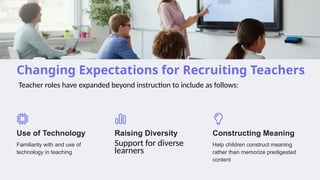
Changing Expectations forRecruiting Teachers
Use of Technology
Familiarity with and use of
technology in teaching
Raising Diversity
Support for diverse
learners
Constructing Meaning
Help children construct meaning
rather than memorize predigested
content
Teacher roles have expanded beyond instruction to include as follows:
13.
Selecting Personnel forOther
Positions
Substitute Teachers
Experiencing challenges in
finding qualified substitutes;
A frequent concern about
substitutes is their lack of
familiarity with curriculum or
special needs education.
Support Staff
Importance of emotional
maturity, self-discipline, and
tough-mindedness for
various support roles
Specialized Roles
Unique criteria for positions like counselors, psychologists, and
social workers
14.
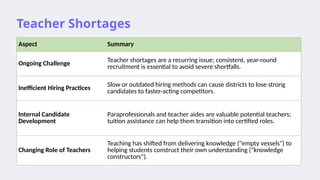
Teacher Shortages
Aspect Summary
OngoingChallenge Teacher shortages are a recurring issue; consistent, year-round
recruitment is essential to avoid severe shortfalls.
Inefficient Hiring Practices
Slow or outdated hiring methods can cause districts to lose strong
candidates to faster-acting competitors.
Internal Candidate
Development
Paraprofessionals and teacher aides are valuable potential teachers;
tuition assistance can help them transition into certified roles.
Changing Role of Teachers
Teaching has shifted from delivering knowledge ("empty vessels") to
helping students construct their own understanding ("knowledge
constructors").
15.
Summary
Personnel selection aimsto match
applicants with job-specific criteria to
ensure effective performance.
These criteria, drawn from job descriptions,
models, and legal standards, focus on essential
knowledge, skills, and abilities.
Effective teaching criteria include class
management, motivation, communication, and
student engagement, while support roles require
traits like emotional maturity, self-discipline,
initiative, and tough-mindedness.