are usually starchy pods or
grains. Cereals grains are the
most important group of crops
in the world. In
manufactured and processed
foods, it plays an obvious role
in achieving the desired
viscosity in such products as
sauces, gravies etc. Rice,
wheat and corn are three
most cultivated cereals in the
world.
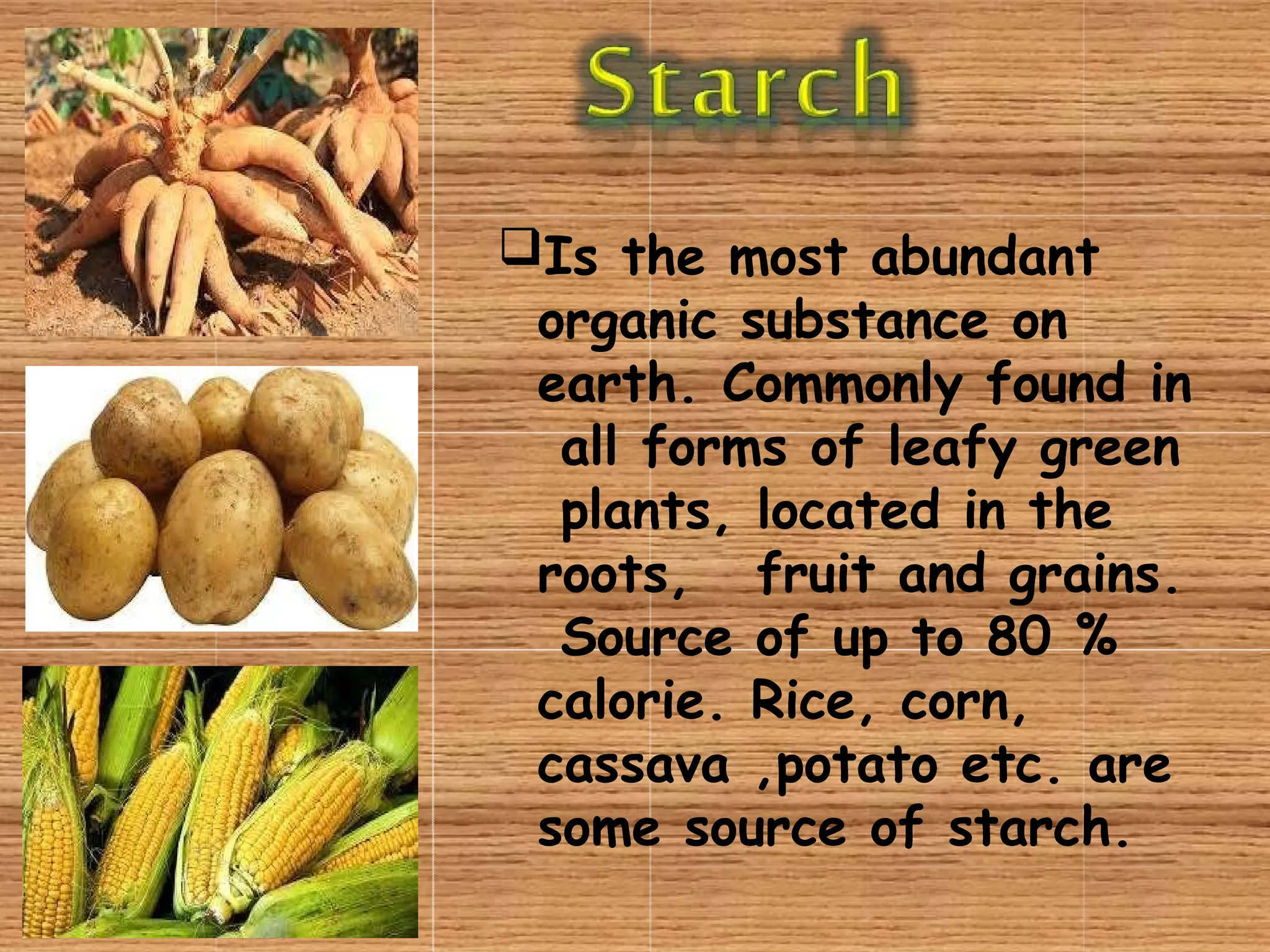
Is the most abundant
organic substance on
earth. Commonly found in
all forms of leafy green
plants, located in the
roots, fruit and grains.
Source of up to 80 %
calorie. Rice, corn,
cassava ,potato etc. are
some source of starch.
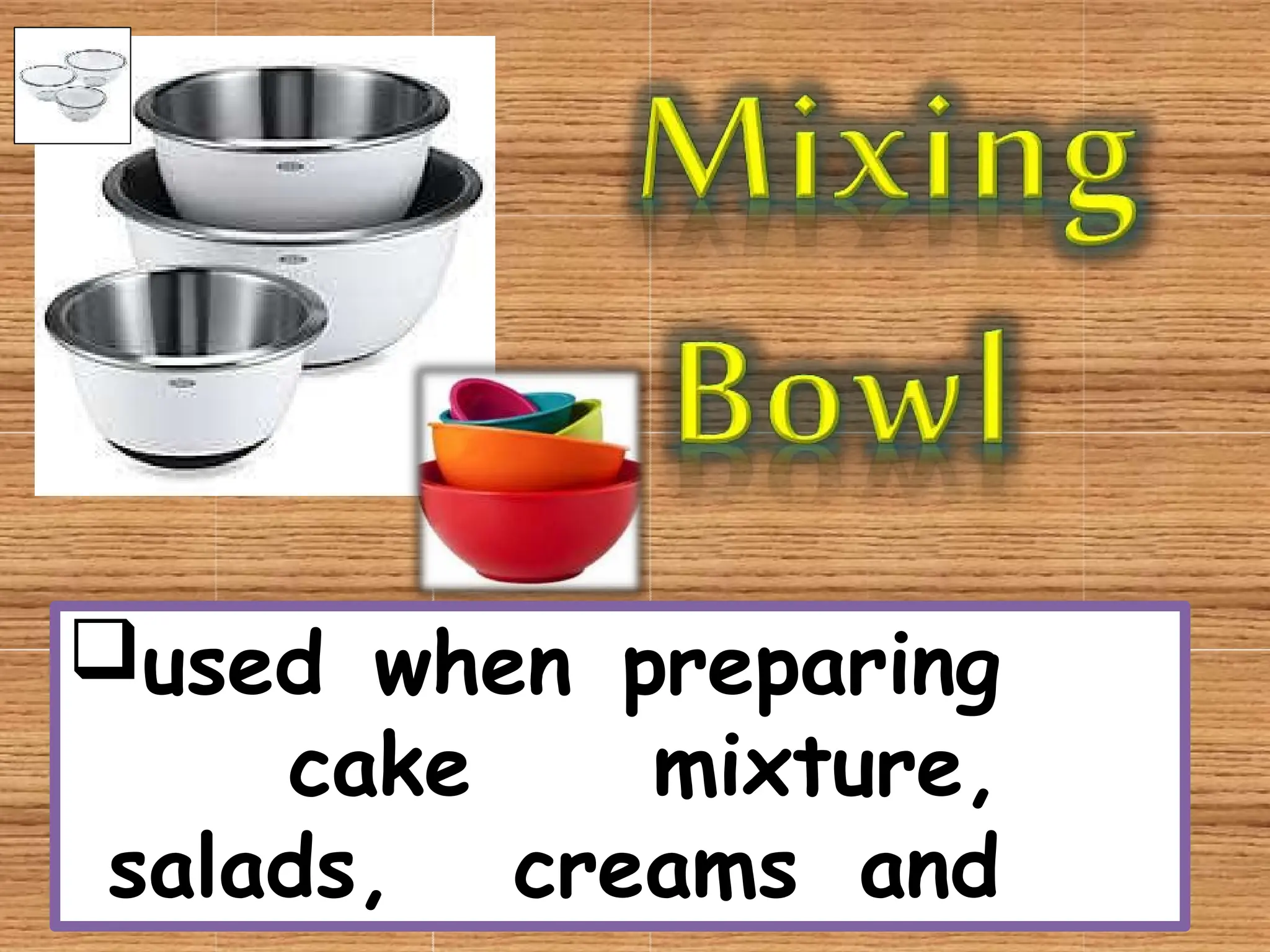
used when preparing
cake mixture,
salads, creams and
used for separating coarse
particles of flour, sugar and
any powdered ingredients
to retain finer texture.
used for beating egg whites,
egg yolk, creams and
mayonnaise.
used for mixing creams,
butter, and for tossing salads.
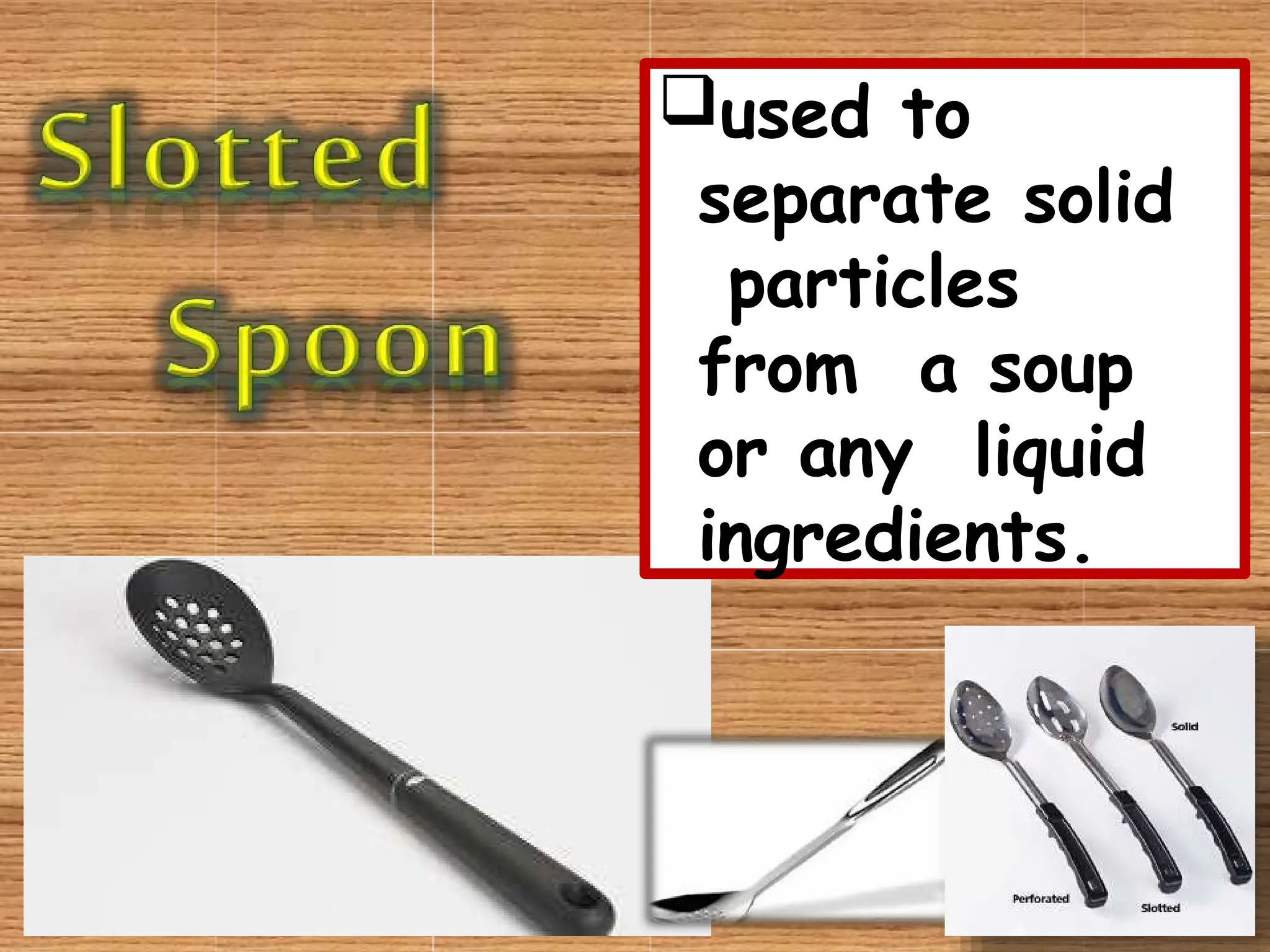
used to
separate solid
particles
from a soup
or any liquid
ingredients.
used for testing the tenderness
of meat, combining big cuts and
particles of meat and
vegetables and for blending
other ingredients
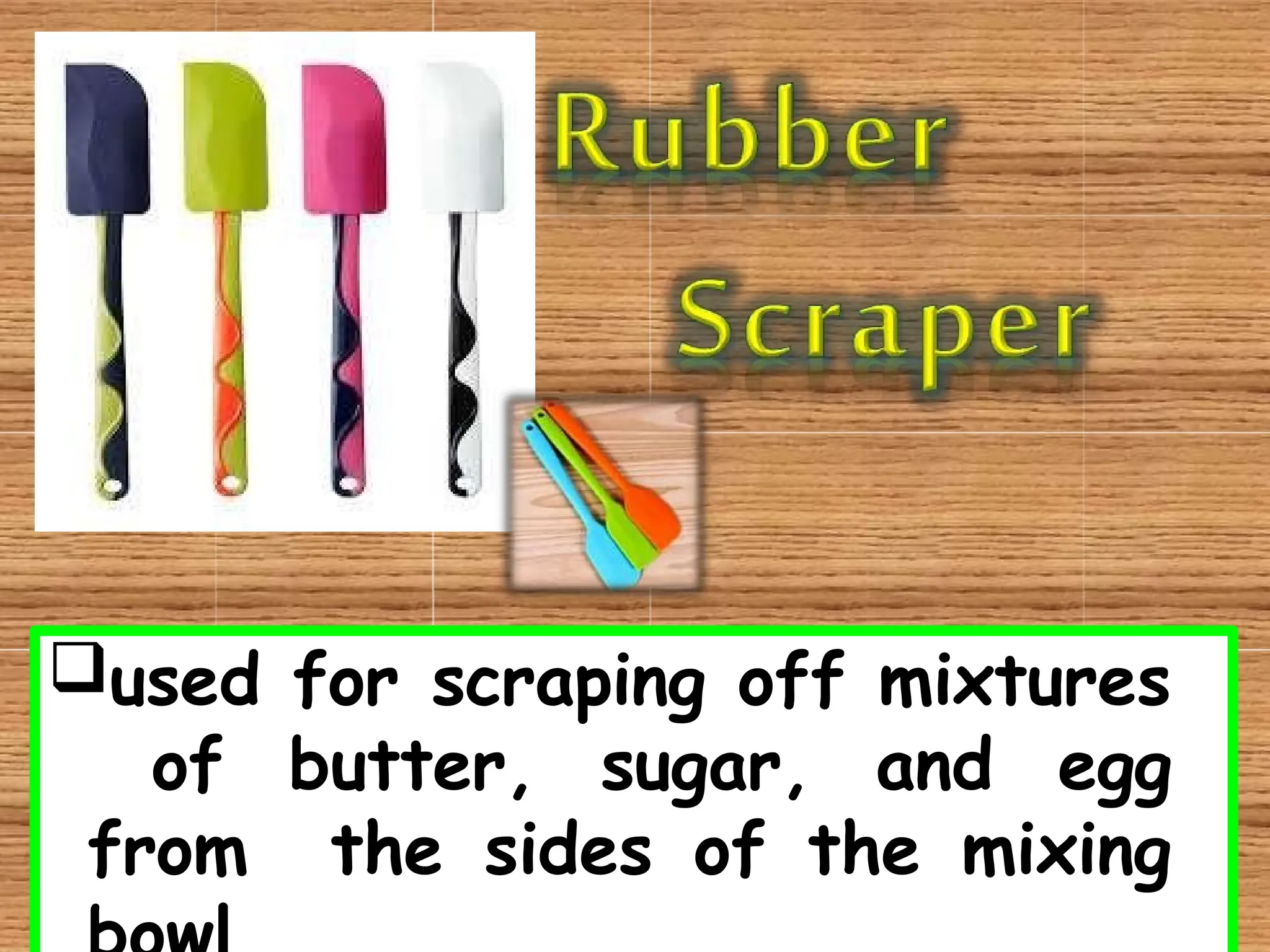
used for scraping off mixtures
of butter, sugar, and egg
from the sides of the mixing
used for separating liquids
from fine or solid food
particles.
used for handling hot
foods.
used for
measuring high
quantity of
dry and liquid
ingredients.
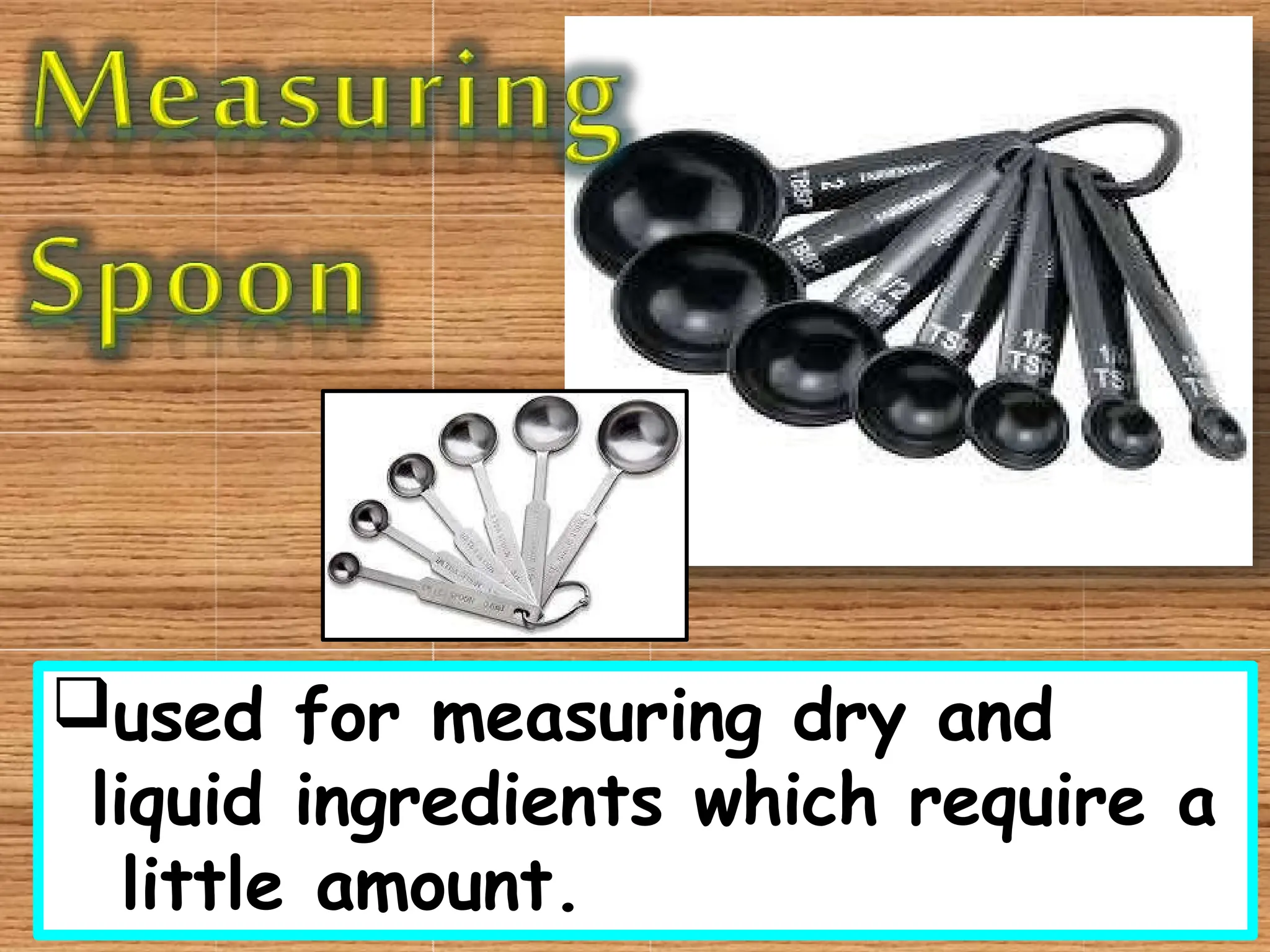
used for measuring dry and
liquid ingredients which require a
little amount.
used for cooking meat and fish
dishes with gravy and sauce.
used for cooking
rice and other
foods.
used for
tendering or
cooking meat,
chicken, and
other grains
or legumes,
such as mongo
and white
beans in
lesser time.
used for preparing sauces which
easily get scorched when
cooked directly on the stove
used for
cooking
food by
steam.
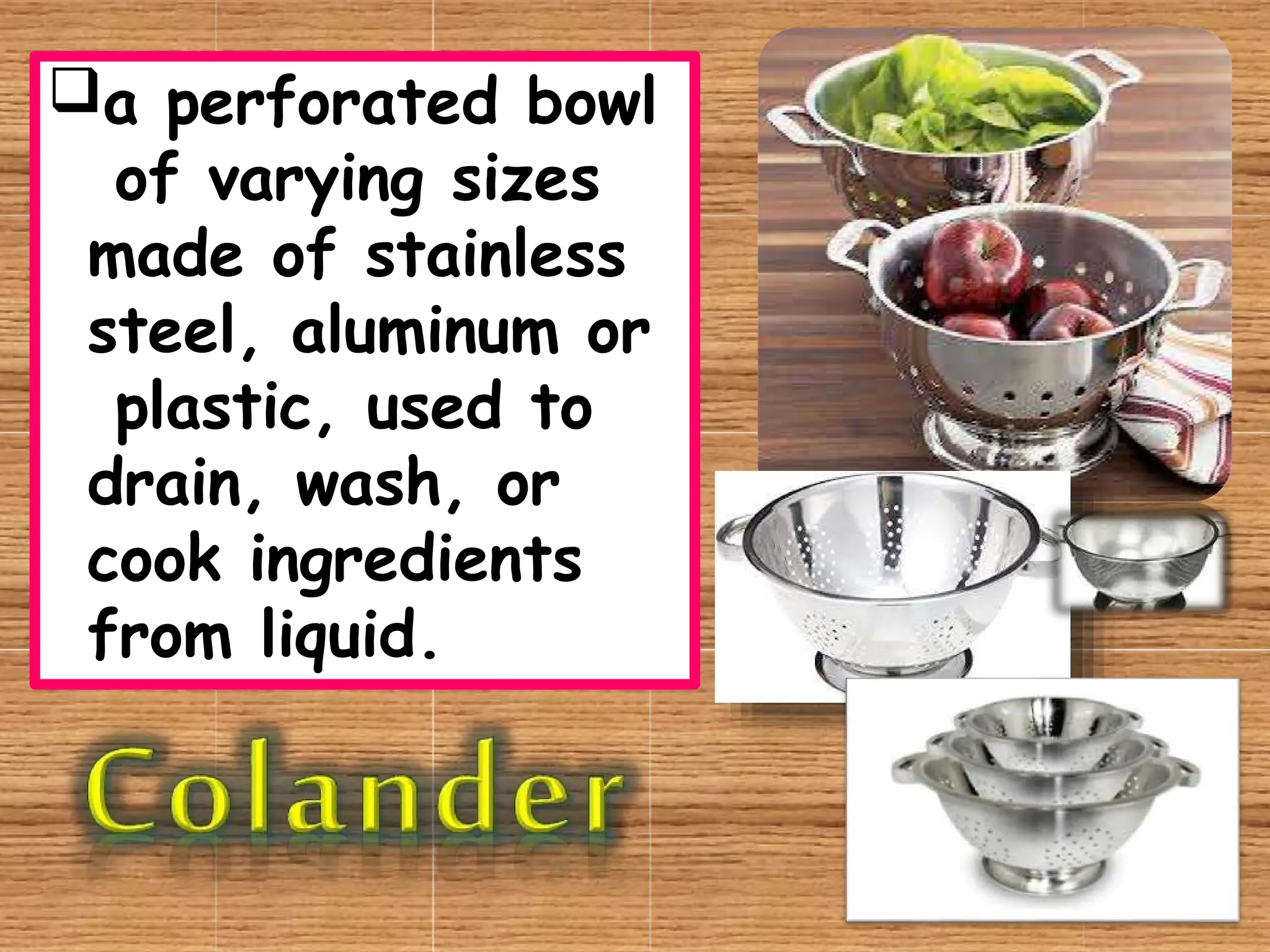
a perforated bowl
of varying sizes
made of stainless
steel, aluminum or
plastic, used to
drain, wash, or
cook ingredients
from liquid.
a plastic or
metal
container with
a lid that is
used for
keeping dry
products.
used for cutting,
sectioning, and
trimming raw meats.
a small hand tool
used generally in
decorative works
such as making
garnishes.
• Starch is a white odorless
tasteless granular or powdery
complex carbohydrate
(C6H10O5)x that is the chief
storage form of carbohydrate in
plants, is an important foodstuff,
and is used also in adhesives and
sizes, in laundering, and in
pharmacy and medicine
• A substance that is found in
certain foods (such as bread, rice,
and potatoes)
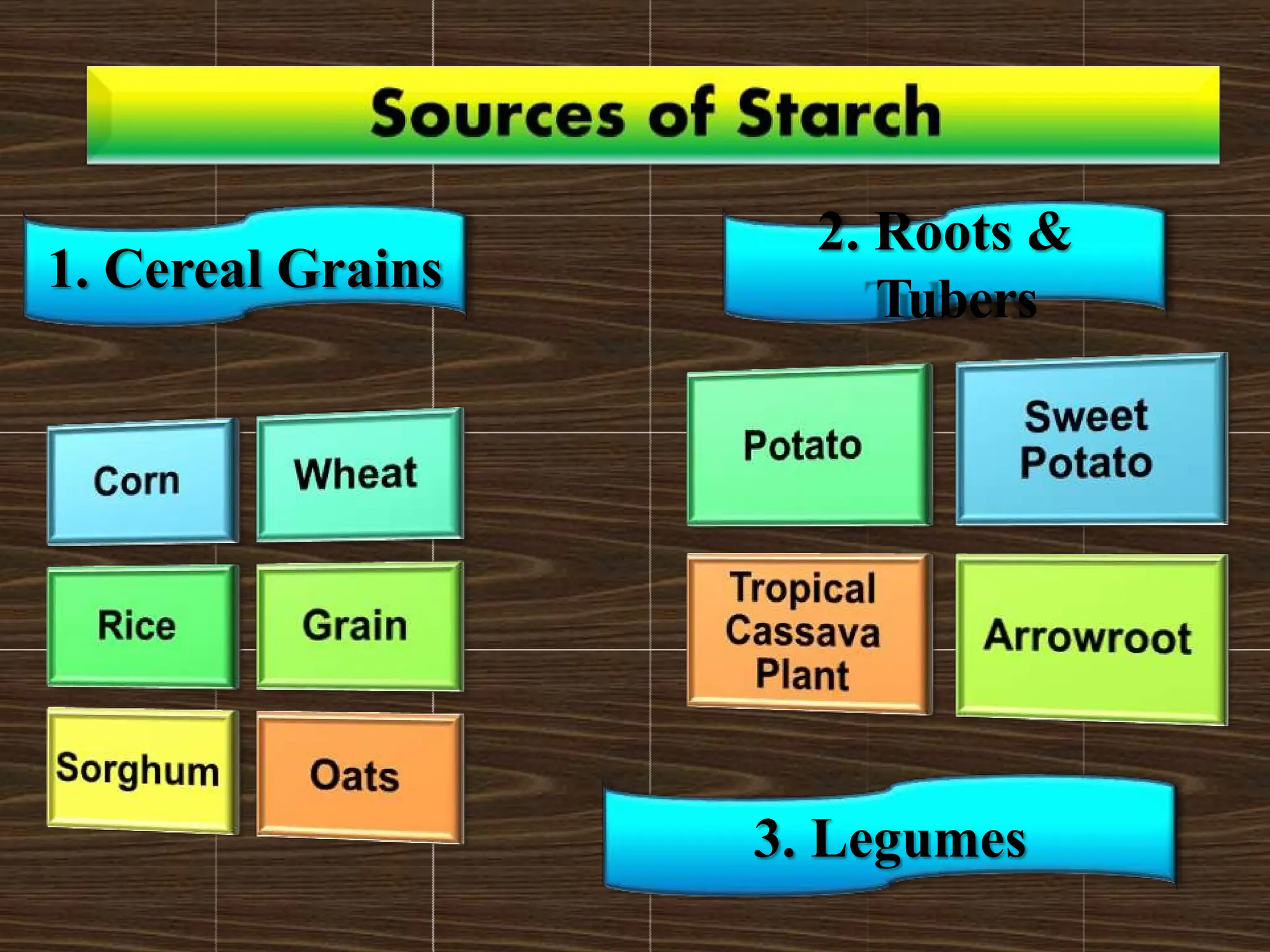
1. Cereal Grains
2. Roots &
Tubers
3. Legumes
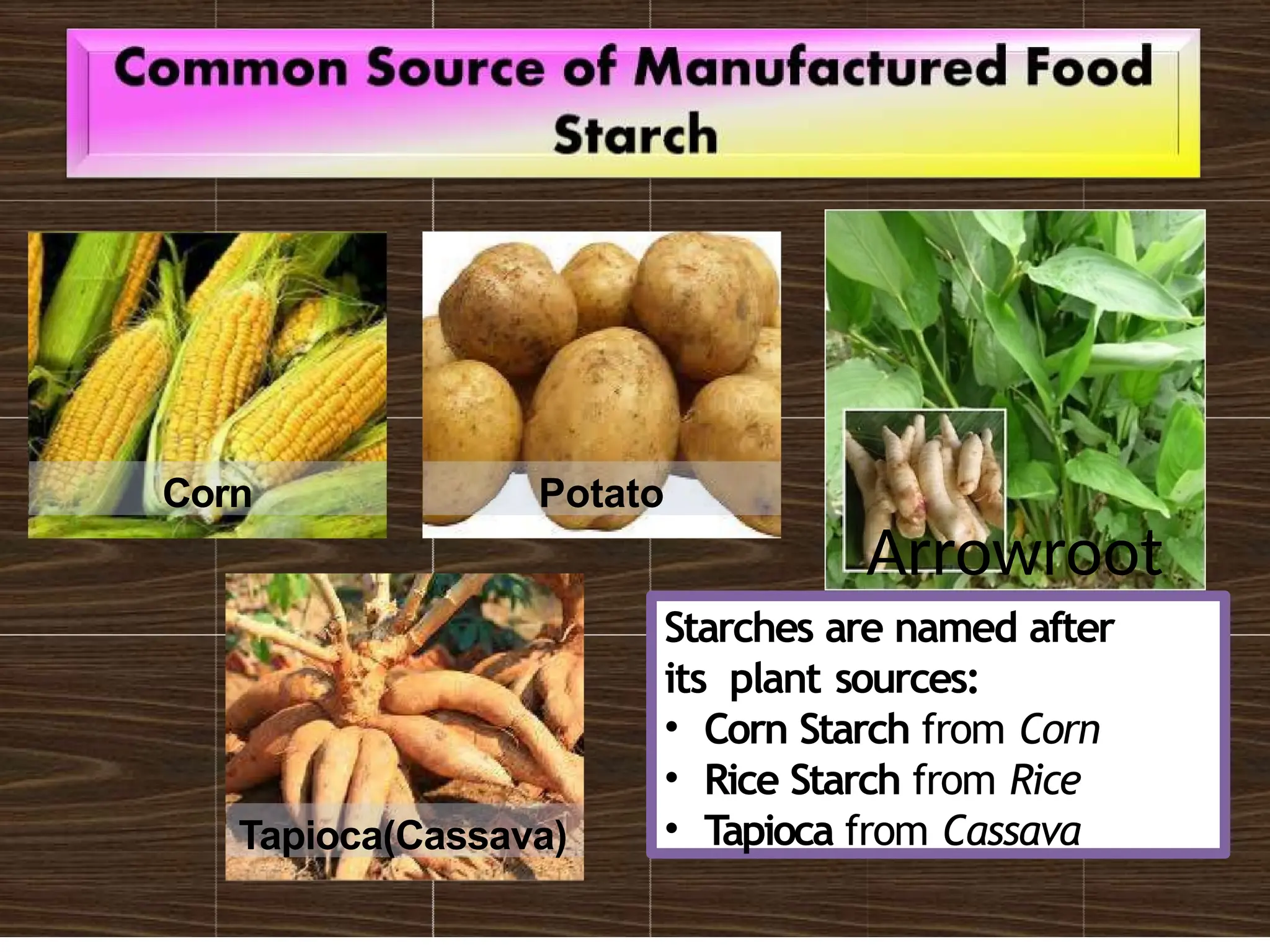
Corn Potato
Tapioca(Cassava)
Starches are named after
its plant sources:
• Corn Starch from Corn
• Rice Starch from Rice
• Tapioca from Cassava
Arrowroot
Native or Natural Starch refers to the starches
as originally derived from its plant source.
Modified Starches are starches that have been
altered physically or chemically, to modify one or
more of its key chemicals and/or physical property.
Purified Starch may be separated from grains and
tubers by a process called wet milling. This procedure
employs various techniques of grinding, screening,
and centrifuging to separate the starch from fiber
, oil,
and protein.
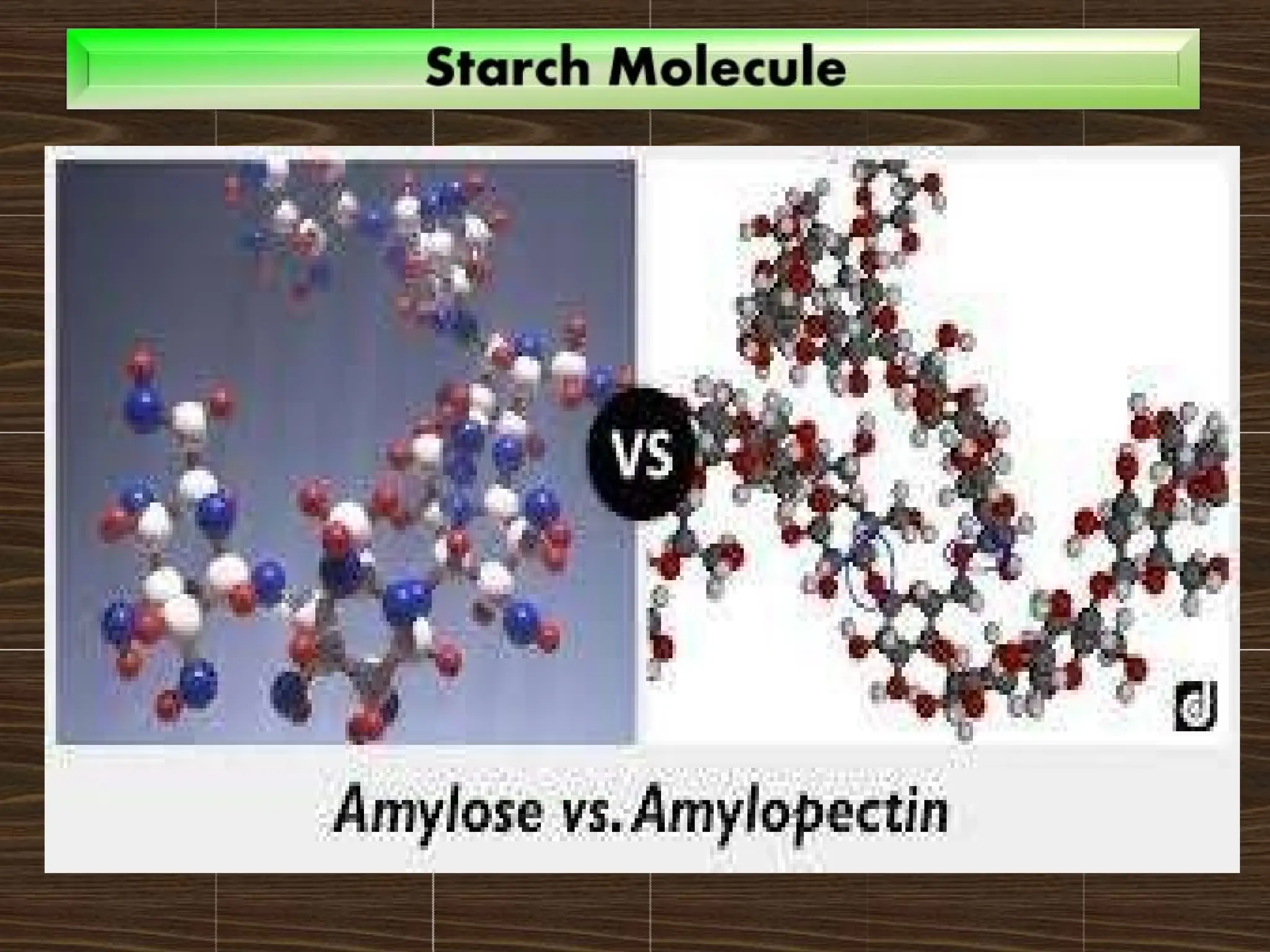
Amylose
• Is a long chain-like molecule,
sometime called linear fraction. It
contributes gelling characteristics to
cooked and cooled starch mixture.
Amylopectin
• Has a highly branched, brushy type of
structure, very different from the
long, string-like molecules of
Amylose. Cohesion or thickening
properties are contributed by
amylopectin but this fraction does
not produce gel.
Moisture,
%
19 13 13
Ash, % 0.4 0.2 0.2
Protein,% 0.06 0.1 0.4
Lipid, % 0.05 0.1 0.8
Phosphor
us, %
0.08 0.01 0.06
Amylose,
%
21 17 28
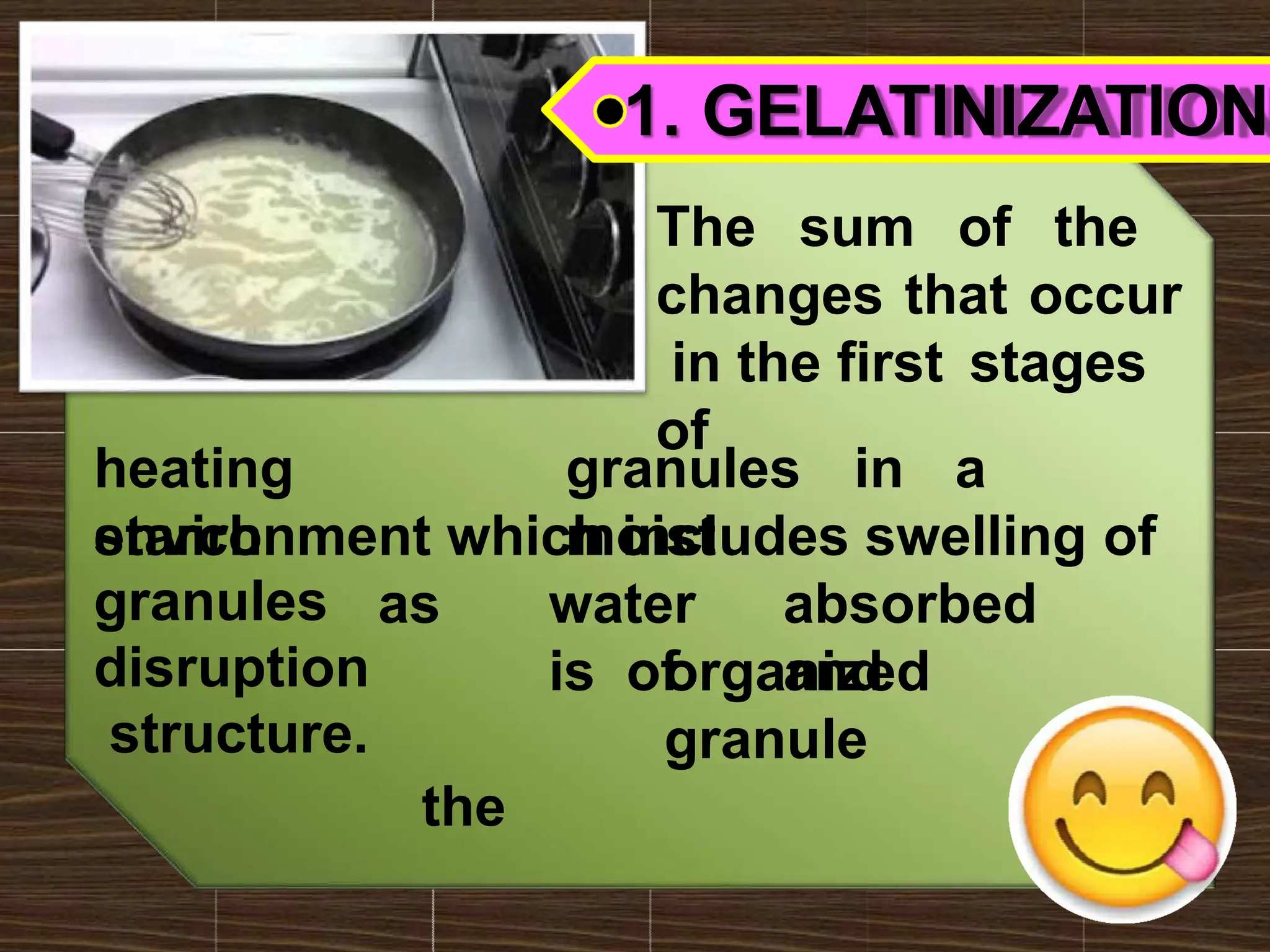
1. GELATINIZATION
The sum of the
changes that occur
in the first stages
of
heating
starch
granules in a
moist
environment which includes swelling of
absorbed
and
as water
is of
the
organized
granule
granules
disruption
structure.
2. VISCOSITY
The resistance
to flow; increase
in thickness or
consistency. When the newly gelatinized
starch is stirred, more swollen
granules
break and more starch molecules spill
causing
thickness.
increase in viscosity or
3. RETROGRADATION
Is the process in
which starch
molecules,
particularly
the
amylose fraction, re-
associate or bond together in an ordered
structure
after
disruption by
ultimately a crystalline
gelatinization;
order
appears.
Oozing of
liquid from gel
when cut and
allowed to stand (e.g. jelly or baked
custard). The oozing of liquid from a
rigid gel; sometimes called weeping.
4. SYNERESIS
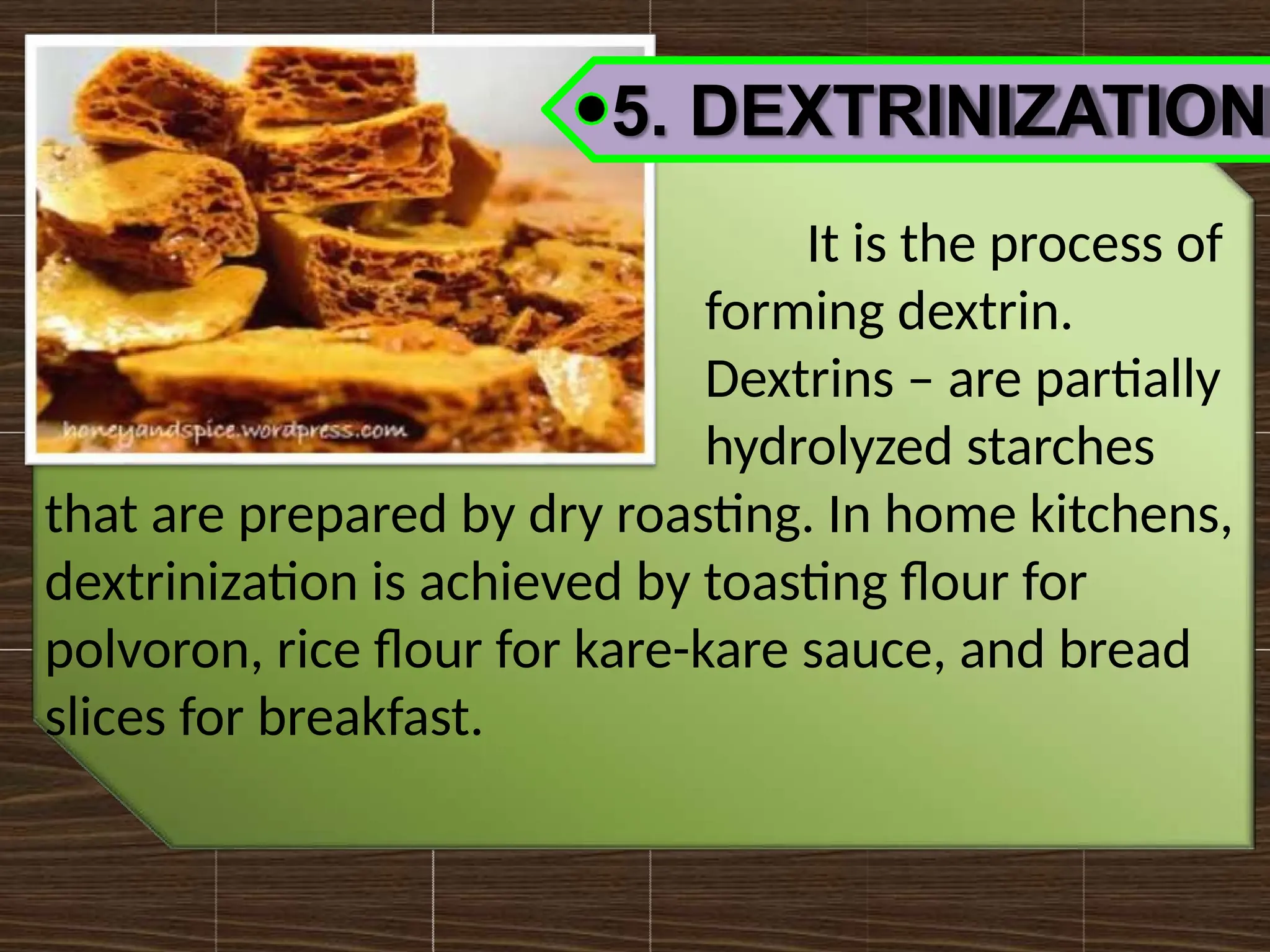
It is the process of
forming dextrin.
Dextrins – are partially
hydrolyzed starches
that are prepared by dry roasting. In home kitchens,
dextrinization is achieved by toasting flour for
polvoron, rice flour for kare-kare sauce, and bread
slices for breakfast.
5. DEXTRINIZATION
Starches undergo
hydrolysis during
cooking or processing
and during storage of food where a chemical
reaction in which a molecular linkage is broken
and a molecule of water is utilized.
6. HYDROLYSIS
• A plant (as a grass) yielding
starchy grain suitable for food;
also : its grain.
Whole Grain Cereal is a grain product
that has retained the specific nutrients
of the whole, unprocessed grain and
contains natural proportions of bran,
germ and endosperm.
Enriched Cereal are excellent sources of
thiamine, niacin, riboflavin, and iron.
Restored Cereal is one from either the entire grain or
portions of one or more grains to which there have been
added sufficient amounts of thiamine, niacin, and iron to
attain the accepted whole grain levels of these three
nutrients found in the original grain from which the cereal is
prepared.
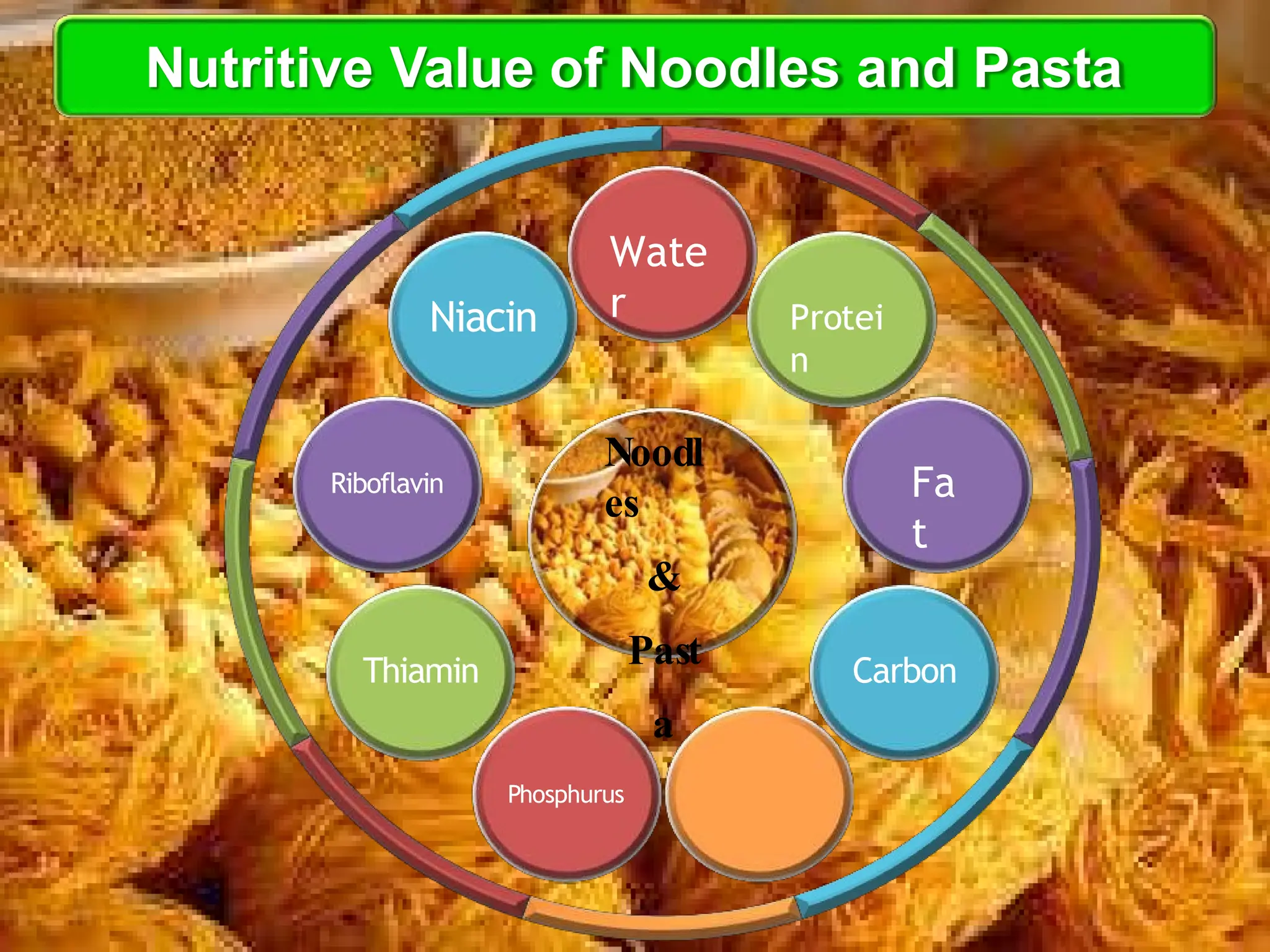
Nutritive Value of Noodles and Pasta
Noodl
es
&
Past
a
Wate
r Protei
n
Fa
t
Carbon
Calcium
Phosphurus
Thiamin
Riboflavin
Niacin
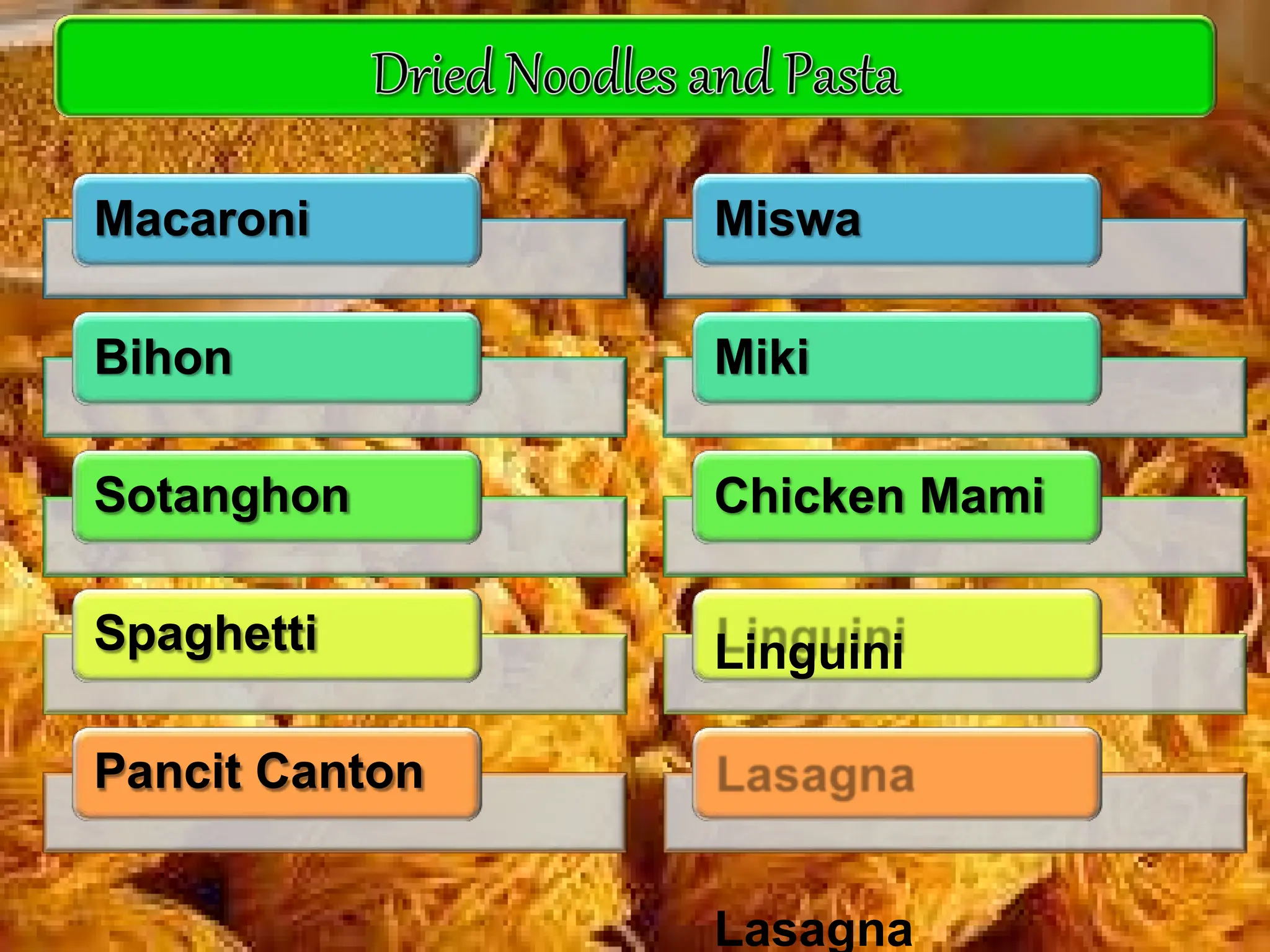
Macaroni
Bihon
Sotanghon
Spaghetti
Pancit Canton
Miswa
Miki
Chicken Mami
Linguini
Lasagna
CEREAL AND STARCH for Technology and Livelihood education

CEREAL AND STARCH for Technology and Livelihood education

  • 3.
    are usually starchypods or grains. Cereals grains are the most important group of crops in the world. In manufactured and processed foods, it plays an obvious role in achieving the desired viscosity in such products as sauces, gravies etc. Rice, wheat and corn are three most cultivated cereals in the world.
  • 4.
    Is the mostabundant organic substance on earth. Commonly found in all forms of leafy green plants, located in the roots, fruit and grains. Source of up to 80 % calorie. Rice, corn, cassava ,potato etc. are some source of starch.
  • 7.
    used when preparing cakemixture, salads, creams and
  • 8.
    used for separatingcoarse particles of flour, sugar and any powdered ingredients to retain finer texture.
  • 9.
    used for beatingegg whites, egg yolk, creams and mayonnaise.
  • 10.
    used for mixingcreams, butter, and for tossing salads.
  • 11.
    used to separate solid particles froma soup or any liquid ingredients.
  • 12.
    used for testingthe tenderness of meat, combining big cuts and particles of meat and vegetables and for blending other ingredients
  • 13.
    used for scrapingoff mixtures of butter, sugar, and egg from the sides of the mixing
  • 14.
    used for separatingliquids from fine or solid food particles.
  • 15.
  • 16.
    used for measuring high quantityof dry and liquid ingredients.
  • 17.
    used for measuringdry and liquid ingredients which require a little amount.
  • 18.
    used for cookingmeat and fish dishes with gravy and sauce.
  • 19.
    used for cooking riceand other foods.
  • 20.
    used for tendering or cookingmeat, chicken, and other grains or legumes, such as mongo and white beans in lesser time.
  • 21.
    used for preparingsauces which easily get scorched when cooked directly on the stove
  • 22.
  • 23.
    a perforated bowl ofvarying sizes made of stainless steel, aluminum or plastic, used to drain, wash, or cook ingredients from liquid.
  • 24.
    a plastic or metal containerwith a lid that is used for keeping dry products.
  • 25.
    used for cutting, sectioning,and trimming raw meats.
  • 26.
    a small handtool used generally in decorative works such as making garnishes.
  • 28.
    • Starch isa white odorless tasteless granular or powdery complex carbohydrate (C6H10O5)x that is the chief storage form of carbohydrate in plants, is an important foodstuff, and is used also in adhesives and sizes, in laundering, and in pharmacy and medicine • A substance that is found in certain foods (such as bread, rice, and potatoes)
  • 29.
    1. Cereal Grains 2.Roots & Tubers 3. Legumes
  • 30.
    Corn Potato Tapioca(Cassava) Starches arenamed after its plant sources: • Corn Starch from Corn • Rice Starch from Rice • Tapioca from Cassava Arrowroot
  • 31.
    Native or NaturalStarch refers to the starches as originally derived from its plant source. Modified Starches are starches that have been altered physically or chemically, to modify one or more of its key chemicals and/or physical property. Purified Starch may be separated from grains and tubers by a process called wet milling. This procedure employs various techniques of grinding, screening, and centrifuging to separate the starch from fiber , oil, and protein.
  • 34.
    Amylose • Is along chain-like molecule, sometime called linear fraction. It contributes gelling characteristics to cooked and cooled starch mixture. Amylopectin • Has a highly branched, brushy type of structure, very different from the long, string-like molecules of Amylose. Cohesion or thickening properties are contributed by amylopectin but this fraction does not produce gel.
  • 35.
    Moisture, % 19 13 13 Ash,% 0.4 0.2 0.2 Protein,% 0.06 0.1 0.4 Lipid, % 0.05 0.1 0.8 Phosphor us, % 0.08 0.01 0.06 Amylose, % 21 17 28
  • 37.
    1. GELATINIZATION The sumof the changes that occur in the first stages of heating starch granules in a moist environment which includes swelling of absorbed and as water is of the organized granule granules disruption structure.
  • 38.
    2. VISCOSITY The resistance toflow; increase in thickness or consistency. When the newly gelatinized starch is stirred, more swollen granules break and more starch molecules spill causing thickness. increase in viscosity or
  • 39.
    3. RETROGRADATION Is theprocess in which starch molecules, particularly the amylose fraction, re- associate or bond together in an ordered structure after disruption by ultimately a crystalline gelatinization; order appears.
  • 40.
    Oozing of liquid fromgel when cut and allowed to stand (e.g. jelly or baked custard). The oozing of liquid from a rigid gel; sometimes called weeping. 4. SYNERESIS
  • 41.
    It is theprocess of forming dextrin. Dextrins – are partially hydrolyzed starches that are prepared by dry roasting. In home kitchens, dextrinization is achieved by toasting flour for polvoron, rice flour for kare-kare sauce, and bread slices for breakfast. 5. DEXTRINIZATION
  • 42.
    Starches undergo hydrolysis during cookingor processing and during storage of food where a chemical reaction in which a molecular linkage is broken and a molecule of water is utilized. 6. HYDROLYSIS
  • 46.
    • A plant(as a grass) yielding starchy grain suitable for food; also : its grain.
  • 47.
    Whole Grain Cerealis a grain product that has retained the specific nutrients of the whole, unprocessed grain and contains natural proportions of bran, germ and endosperm.
  • 48.
    Enriched Cereal areexcellent sources of thiamine, niacin, riboflavin, and iron.
  • 49.
    Restored Cereal isone from either the entire grain or portions of one or more grains to which there have been added sufficient amounts of thiamine, niacin, and iron to attain the accepted whole grain levels of these three nutrients found in the original grain from which the cereal is prepared.
  • 51.
    Nutritive Value ofNoodles and Pasta Noodl es & Past a Wate r Protei n Fa t Carbon Calcium Phosphurus Thiamin Riboflavin Niacin
  • 52.