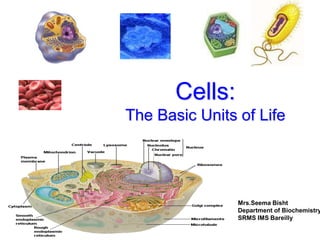
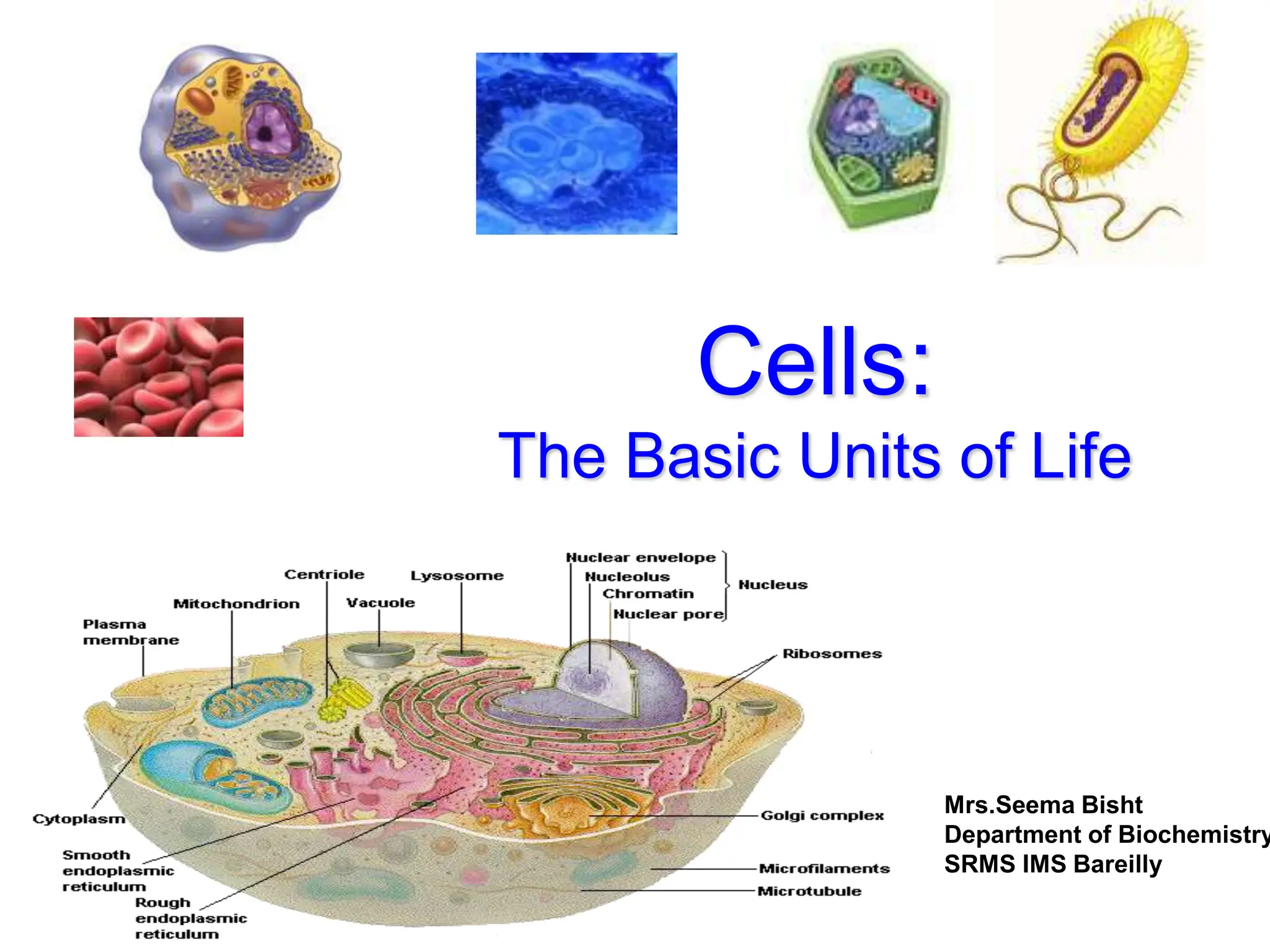
Cells:
The Basic Units of Life
Mrs.Seema Bisht
Department of Biochemistry
SRMS IMS Bareilly
The Cell Theory
1. All organisms are made of cells.
2. The cell is the basic unit of life in all
living things.
3. All cells come from existing cells.
THIS IS IMPORTANT BECAUSE IT SHOWS THAT
ALL LIVING THINGS SHARE A SIMILAR
STRUCTURE
Definition of Cell
A cell is the smallest unit that is capable
of performing life functions.
Surrounding the Cell
Cell Membrane
• Outer membrane of cell that controls
movement in and out of the cell
• Double layer
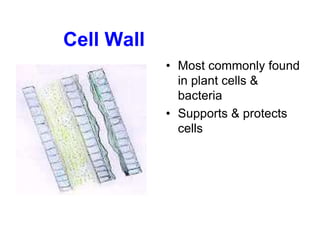
Cell Wall
• Most commonly found
in plant cells &
bacteria
• Supports & protects
cells
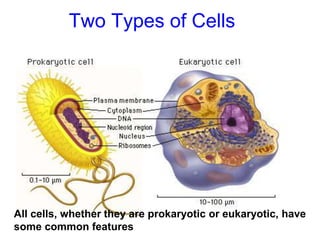
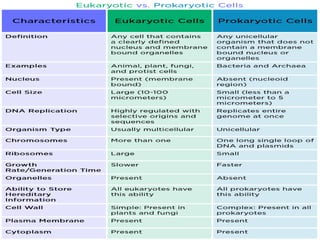
Two Types of Cells
All cells, whether they are prokaryotic or eukaryotic, have
some common features
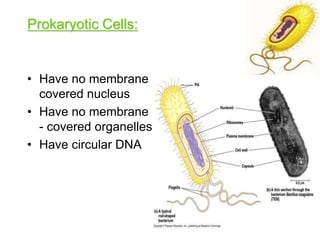
Prokaryotic Cells:
• Have no membrane
covered nucleus
• Have no membrane
- covered organelles
• Have circular DNA
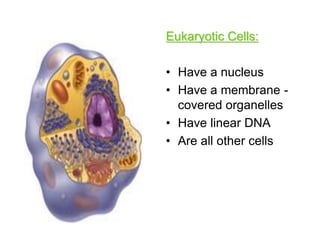
Eukaryotic Cells:
• Have a nucleus
• Have a membrane -
covered organelles
• Have linear DNA
• Are all other cells
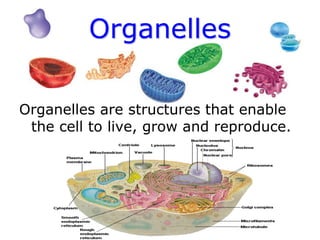
Organelles
Organelles are structures that enable
the cell to live, grow and reproduce.
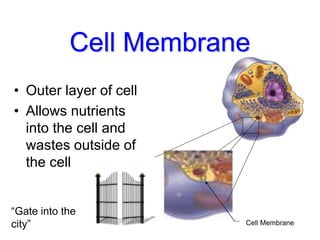
Cell Membrane
• Outer layer of cell
• Allows nutrients
into the cell and
wastes outside of
the cell
Cell Membrane
“Gate into the
city”
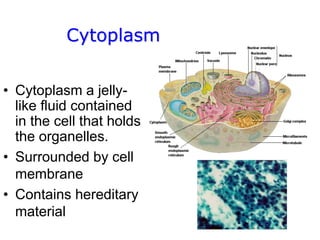
Cytoplasm
• Cytoplasm a jelly-
like fluid contained
in the cell that holds
the organelles.
• Surrounded by cell
membrane
• Contains hereditary
material
The Nucleus
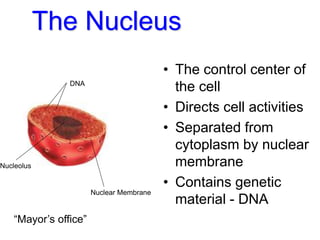
• The control center of
the cell
• Directs cell activities
• Separated from
cytoplasm by nuclear
membrane
• Contains genetic
material - DNA
DNA
Nuclear Membrane
Nucleolus
“Mayor’s office”
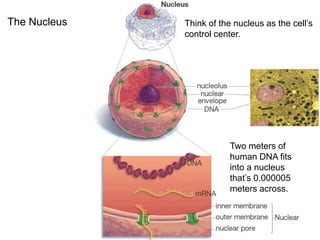
The Nucleus Think of the nucleus as the cell’s
control center.
Two meters of
human DNA fits
into a nucleus
that’s 0.000005
meters across.
Mitochondria
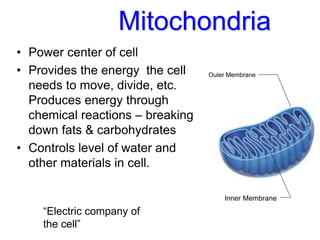
• Power center of cell
• Provides the energy the cell
needs to move, divide, etc.
Produces energy through
chemical reactions – breaking
down fats & carbohydrates
• Controls level of water and
other materials in cell.
Outer Membrane
Inner Membrane
“Electric company of
the cell”
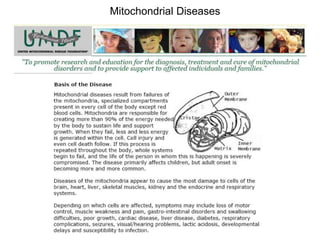
Mitochondrial Diseases
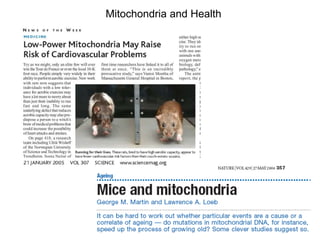
Mitochondria and Health
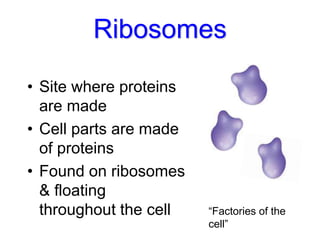
Ribosomes
• Site where proteins
are made
• Cell parts are made
of proteins
• Found on ribosomes
& floating
throughout the cell “Factories of the
cell”
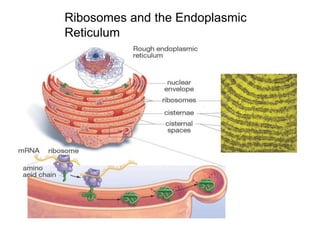
Ribosomes and the Endoplasmic
Reticulum
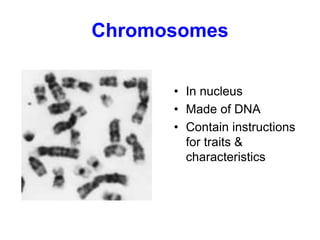
Chromosomes
• In nucleus
• Made of DNA
• Contain instructions
for traits &
characteristics
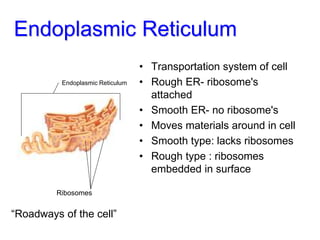
Endoplasmic Reticulum
• Transportation system of cell
• Rough ER- ribosome's
attached
• Smooth ER- no ribosome's
• Moves materials around in cell
• Smooth type: lacks ribosomes
• Rough type : ribosomes
embedded in surface
Ribosomes
Endoplasmic Reticulum
“Roadways of the cell”
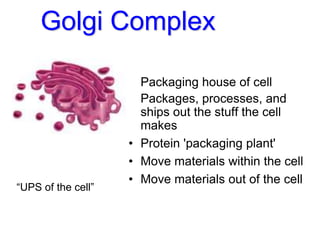
Golgi Complex
• Packaging house of cell
• Packages, processes, and
ships out the stuff the cell
makes
• Protein 'packaging plant'
• Move materials within the cell
• Move materials out of the cell
“UPS of the cell”
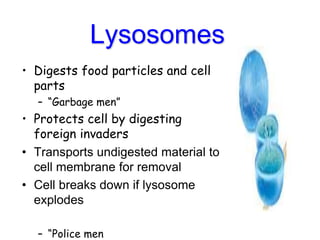
Lysosomes
• Digests food particles and cell
parts
– “Garbage men”
• Protects cell by digesting
foreign invaders
• Transports undigested material to
cell membrane for removal
• Cell breaks down if lysosome
explodes
– “Police men
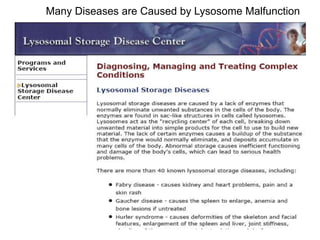
Many Diseases are Caused by Lysosome Malfunction
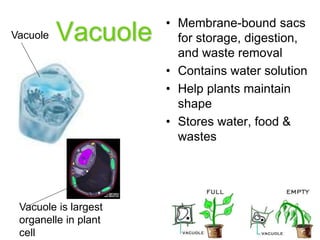
Vacuole
• Membrane-bound sacs
for storage, digestion,
and waste removal
• Contains water solution
• Help plants maintain
shape
• Stores water, food &
wastes
Vacuole
Vacuole is largest
organelle in plant
cell
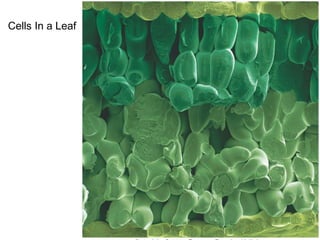
Cells In a Leaf
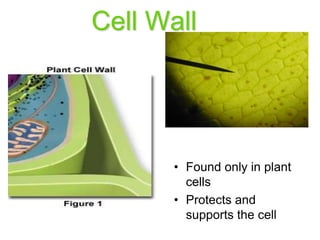
Cell Wall
• Found only in plant
cells
• Protects and
supports the cell
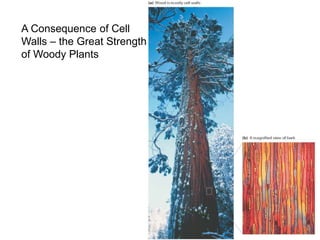
A Consequence of Cell
Walls – the Great Strength
of Woody Plants
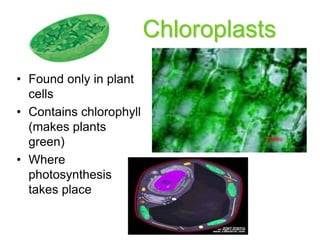
Chloroplasts
• Found only in plant
cells
• Contains chlorophyll
(makes plants
green)
• Where
photosynthesis
takes place
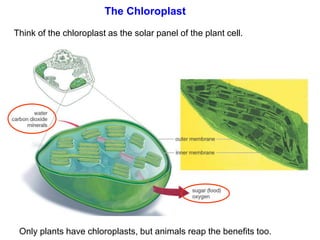
The Chloroplast
Think of the chloroplast as the solar panel of the plant cell.
Only plants have chloroplasts, but animals reap the benefits too.
Cystic Fibrosis
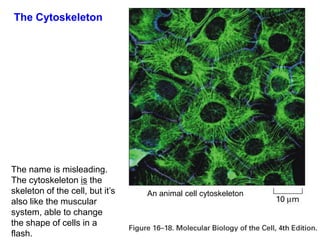
The name is misleading.
The cytoskeleton is the
skeleton of the cell, but it’s
also like the muscular
system, able to change
the shape of cells in a
flash.
The Cytoskeleton
An animal cell cytoskeleton
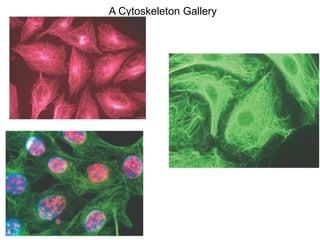
A Cytoskeleton Gallery
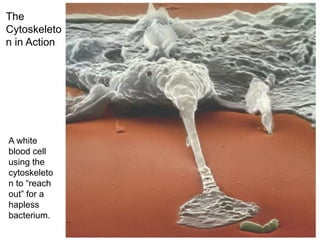
A white
blood cell
using the
cytoskeleto
n to “reach
out” for a
hapless
bacterium.
The
Cytoskeleto
n in Action
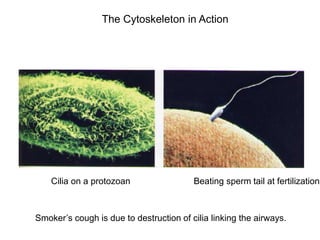
The Cytoskeleton in Action
Cilia on a protozoan Beating sperm tail at fertilization
Smoker’s cough is due to destruction of cilia linking the airways.
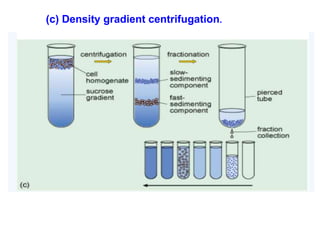
Fractionation of
cellular components.
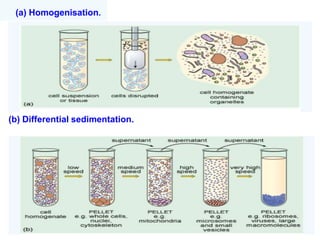
(a) Homogenisation.
(b) Differential sedimentation.
(c) Density gradient centrifugation.
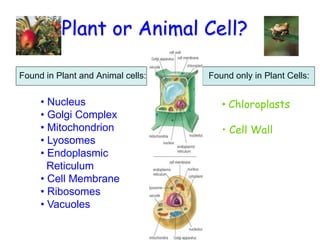
Plant or Animal Cell?
Found in Plant and Animal cells: Found only in Plant Cells:
• Nucleus
• Golgi Complex
• Mitochondrion
• Lyosomes
• Endoplasmic
Reticulum
• Cell Membrane
• Ribosomes
• Vacuoles
• Chloroplasts
• Cell Wall
https://youtu.be/d4TJ4NY1IA0?s
i=D-oziGDlK1nknnbY
cell.ppt

cell.ppt

  • 1.
    Cells: The Basic Unitsof Life Mrs.Seema Bisht Department of Biochemistry SRMS IMS Bareilly
  • 3.
    The Cell Theory 1.All organisms are made of cells. 2. The cell is the basic unit of life in all living things. 3. All cells come from existing cells. THIS IS IMPORTANT BECAUSE IT SHOWS THAT ALL LIVING THINGS SHARE A SIMILAR STRUCTURE
  • 4.
    Definition of Cell Acell is the smallest unit that is capable of performing life functions. Surrounding the Cell Cell Membrane • Outer membrane of cell that controls movement in and out of the cell • Double layer
  • 5.
    Cell Wall • Mostcommonly found in plant cells & bacteria • Supports & protects cells
  • 6.
    Two Types ofCells All cells, whether they are prokaryotic or eukaryotic, have some common features
  • 7.
    Prokaryotic Cells: • Haveno membrane covered nucleus • Have no membrane - covered organelles • Have circular DNA
  • 8.
    Eukaryotic Cells: • Havea nucleus • Have a membrane - covered organelles • Have linear DNA • Are all other cells
  • 10.
    Organelles Organelles are structuresthat enable the cell to live, grow and reproduce.
  • 11.
    Cell Membrane • Outerlayer of cell • Allows nutrients into the cell and wastes outside of the cell Cell Membrane “Gate into the city”
  • 12.
    Cytoplasm • Cytoplasm ajelly- like fluid contained in the cell that holds the organelles. • Surrounded by cell membrane • Contains hereditary material
  • 13.
    The Nucleus • Thecontrol center of the cell • Directs cell activities • Separated from cytoplasm by nuclear membrane • Contains genetic material - DNA DNA Nuclear Membrane Nucleolus “Mayor’s office”
  • 14.
    The Nucleus Thinkof the nucleus as the cell’s control center. Two meters of human DNA fits into a nucleus that’s 0.000005 meters across.
  • 15.
    Mitochondria • Power centerof cell • Provides the energy the cell needs to move, divide, etc. Produces energy through chemical reactions – breaking down fats & carbohydrates • Controls level of water and other materials in cell. Outer Membrane Inner Membrane “Electric company of the cell”
  • 16.
  • 17.
  • 18.
    Ribosomes • Site whereproteins are made • Cell parts are made of proteins • Found on ribosomes & floating throughout the cell “Factories of the cell”
  • 19.
    Ribosomes and theEndoplasmic Reticulum
  • 20.
    Chromosomes • In nucleus •Made of DNA • Contain instructions for traits & characteristics
  • 21.
    Endoplasmic Reticulum • Transportationsystem of cell • Rough ER- ribosome's attached • Smooth ER- no ribosome's • Moves materials around in cell • Smooth type: lacks ribosomes • Rough type : ribosomes embedded in surface Ribosomes Endoplasmic Reticulum “Roadways of the cell”
  • 22.
    Golgi Complex • Packaginghouse of cell • Packages, processes, and ships out the stuff the cell makes • Protein 'packaging plant' • Move materials within the cell • Move materials out of the cell “UPS of the cell”
  • 23.
    Lysosomes • Digests foodparticles and cell parts – “Garbage men” • Protects cell by digesting foreign invaders • Transports undigested material to cell membrane for removal • Cell breaks down if lysosome explodes – “Police men
  • 24.
    Many Diseases areCaused by Lysosome Malfunction
  • 25.
    Vacuole • Membrane-bound sacs forstorage, digestion, and waste removal • Contains water solution • Help plants maintain shape • Stores water, food & wastes Vacuole Vacuole is largest organelle in plant cell
  • 26.
  • 27.
    Cell Wall • Foundonly in plant cells • Protects and supports the cell
  • 28.
    A Consequence ofCell Walls – the Great Strength of Woody Plants
  • 29.
    Chloroplasts • Found onlyin plant cells • Contains chlorophyll (makes plants green) • Where photosynthesis takes place
  • 30.
    The Chloroplast Think ofthe chloroplast as the solar panel of the plant cell. Only plants have chloroplasts, but animals reap the benefits too.
  • 31.
  • 32.
    The name ismisleading. The cytoskeleton is the skeleton of the cell, but it’s also like the muscular system, able to change the shape of cells in a flash. The Cytoskeleton An animal cell cytoskeleton
  • 33.
  • 34.
    A white blood cell usingthe cytoskeleto n to “reach out” for a hapless bacterium. The Cytoskeleto n in Action
  • 35.
    The Cytoskeleton inAction Cilia on a protozoan Beating sperm tail at fertilization Smoker’s cough is due to destruction of cilia linking the airways.
  • 37.
  • 38.
  • 39.
    (c) Density gradientcentrifugation.
  • 40.
    Plant or AnimalCell? Found in Plant and Animal cells: Found only in Plant Cells: • Nucleus • Golgi Complex • Mitochondrion • Lyosomes • Endoplasmic Reticulum • Cell Membrane • Ribosomes • Vacuoles • Chloroplasts • Cell Wall
  • 41.