A Case Study of an Academic
Success Course for Transfer
Students
Dawn F. Adolfson
The Transfer
Student
Challenges
Adjust to
campus life
Lack of
attention
Increased
demands
Navigating
resources
Building
new social
circle
(Davies & Casey, 1999)
Literature Review
• Adult transitional theory
• Culture shock
• Transfer Shock
• Predictors of transfer shock
(Duggan & Pickering, 2008; Ishitani, 2008; Ivins, Copenhaver, & Koclanes, 2017)
Literature Review
• Minorities (68%), 26+ years old (Ishitani, 2008)
• GPA
• No significant difference (Glass & Harrington, 2002)
• Low GPA correlates with departure (Ishitanti, 2008)
• High first-term GPA correlates with persistence (Nadasen & List, 2016)
• Recommended institutional support (Flaga, 2006; Townsend & Wilson, 2006)
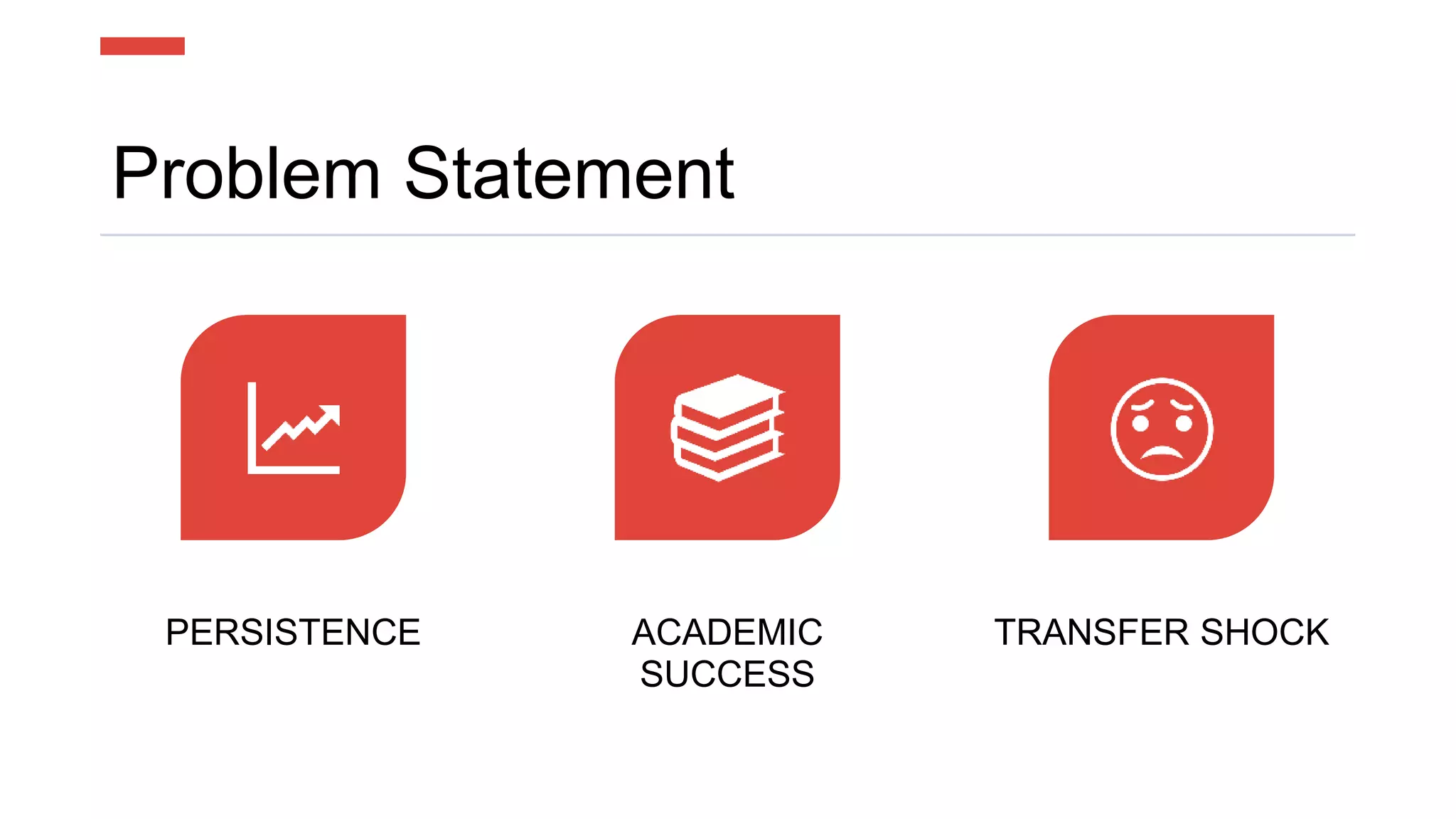
Problem Statement
PERSISTENCE ACADEMIC
SUCCESS
TRANSFER SHOCK
SLS 3140:
Academic
Success
Strategies for
Transfer
Students
Self-Regulated Learning
Goal Setting
Campus Resources
Time & Task Management
Reading & Listening Strategies
Note-Taking Strategies
Test Study Strategies
Academic Leadership
Scholarly Thinking
Purpose
Conduct a case study of the effectiveness of
SLS 3140 on persistence, academic
success, and transfer shock
Research
Questions
What is the effect of SLS 3140
on undergraduate transfer
students' persistence and
academic success?
How do transfer students
perceive that taking SLS 3140
effected their feelings of
transfer shock and their
academic skills?
Research Design
Case Study
Quantitative
Surveys
Qualitative
Interviews
Artifact
Analysis
Participants
• New transfer students
• Academic probation
students
Materials
SLS 3140
Student
assignments
Measures
Interviews
Artifact Analysis
Transfer Student Survey
(Duggan & Pickering, 2008)
Transfer Student Survey (TSS)
• Demographics
• Cognitive variable: transfer
GPA
• Noncognitive variable:
“probation score”
Probation Score:
• Reasons to attend college
• Reasons for choosing the
university
• Previous academic challenges
• Attitudes & perceptions
• Self-ratings & descriptions
(Duggan & Pickering, 2008)
Procedures
IRB & TSS
Approval
Recruit
Participants
Administer
Surveys
Collect
Artifacts
Conduct
Interviews
Analyze
Data
Limitations
Cannot generalize
Excludes non-
students
Implications
Can inform future
research
Improve the course
Promotes the use of
the course
Thank You!
• Davies, T. G. & Casey, K. (1999). Transfer student experiences: Comparing their academic and social
lives at the community college and university. College Student Journal, 33(1).
• Duggan, M. H. & Pickering, J. W. (2008). Barriers to transfer student academic success and retention.
Journal of College Student Retention: Research, Theory, and Practice, 9(4), 437-459.
doi:10.2190/CS.9.4.c
• Flaga, C. T. (2006). The process of transition for community college transfer students. Community
College Journal of Research and Practice, 30(1), 3-19. doi:10.1080/10668920500248845
• Glass, J. C. & Harrington, A. R. (2002). Academic performance of community college transfer students
and “native” students at a large state university. Community College Journal of Research and Practice,
26(5), 415-430. doi:10.1080/02776770290041774
• Ishitani, T. T. (2008). How do transfers survive after “transfer shock”? A longitudinal study of transfer
student departure at a four-year institution. Research in Higher Education, 49(5), 403-419.
doi:10.1007/s11162-008-9091-x
• Ivins, T., Copenhaver, K., & Koclanes, A. (2017). Adult transitional theory and transfer shock in higher
education: practices from the literature. Reference Services Review, 45(2), 244-257. doi:10.1108/RSR-
08-2016-0048
• Nadasen, D. & List, A. (2016). Using community college prior academic performance to predict re-
enrollment at a four-year online university. Online Learning, 20(2), 120-133. Retrieved from
https://eric.ed.gov/?id=EJ1105933
Problem Research
Design
Research
Questions
Phenomena &
Variables
Participants Data
Sources
Procedures
Transfer
students
struggle with
persistence,
academic
success and
transfer
shock, and it
remains to be
known
whether SLS
3140 course
helps transfer
students
Case Study
Multiple
Methods
What is the effect
of SLS 3140 on
undergraduate
transfer students'
persistence and
academic success?
Predictor:
• Probation Status
• Pre-Course
Survey
• Transfer GPA
• Demographics
• Grade in Course
Outcome:
• Persistence
• Academic
Success
New Transfer
Students
Returning
Transfer
Students under
Academic
Probation
Pre & Post
Course
Survey
• IRB Approval
• Recruit
Participants
• Administer
Surveys
• Collect
Artifacts
• Conduct
Interviews
• Analyze Data
How do transfer
students perceive
that taking SLS
3140 effected their
feelings of transfer
shock and their
academic skills?
Transfer Shock
Academic Abilities
Interviews
Artifact
Analysis

Case Study Research Proposal

  • 1.
    A Case Studyof an Academic Success Course for Transfer Students Dawn F. Adolfson
  • 2.
    The Transfer Student Challenges Adjust to campuslife Lack of attention Increased demands Navigating resources Building new social circle (Davies & Casey, 1999)
  • 3.
    Literature Review • Adulttransitional theory • Culture shock • Transfer Shock • Predictors of transfer shock (Duggan & Pickering, 2008; Ishitani, 2008; Ivins, Copenhaver, & Koclanes, 2017)
  • 4.
    Literature Review • Minorities(68%), 26+ years old (Ishitani, 2008) • GPA • No significant difference (Glass & Harrington, 2002) • Low GPA correlates with departure (Ishitanti, 2008) • High first-term GPA correlates with persistence (Nadasen & List, 2016) • Recommended institutional support (Flaga, 2006; Townsend & Wilson, 2006)
  • 5.
  • 6.
    SLS 3140: Academic Success Strategies for Transfer Students Self-RegulatedLearning Goal Setting Campus Resources Time & Task Management Reading & Listening Strategies Note-Taking Strategies Test Study Strategies Academic Leadership Scholarly Thinking
  • 7.
    Purpose Conduct a casestudy of the effectiveness of SLS 3140 on persistence, academic success, and transfer shock
  • 8.
    Research Questions What is theeffect of SLS 3140 on undergraduate transfer students' persistence and academic success? How do transfer students perceive that taking SLS 3140 effected their feelings of transfer shock and their academic skills?
  • 9.
  • 10.
    Participants • New transferstudents • Academic probation students
  • 11.
  • 12.
    Transfer Student Survey(TSS) • Demographics • Cognitive variable: transfer GPA • Noncognitive variable: “probation score” Probation Score: • Reasons to attend college • Reasons for choosing the university • Previous academic challenges • Attitudes & perceptions • Self-ratings & descriptions (Duggan & Pickering, 2008)
  • 13.
  • 14.
    Limitations Cannot generalize Excludes non- students Implications Caninform future research Improve the course Promotes the use of the course
  • 15.
    Thank You! • Davies,T. G. & Casey, K. (1999). Transfer student experiences: Comparing their academic and social lives at the community college and university. College Student Journal, 33(1). • Duggan, M. H. & Pickering, J. W. (2008). Barriers to transfer student academic success and retention. Journal of College Student Retention: Research, Theory, and Practice, 9(4), 437-459. doi:10.2190/CS.9.4.c • Flaga, C. T. (2006). The process of transition for community college transfer students. Community College Journal of Research and Practice, 30(1), 3-19. doi:10.1080/10668920500248845 • Glass, J. C. & Harrington, A. R. (2002). Academic performance of community college transfer students and “native” students at a large state university. Community College Journal of Research and Practice, 26(5), 415-430. doi:10.1080/02776770290041774 • Ishitani, T. T. (2008). How do transfers survive after “transfer shock”? A longitudinal study of transfer student departure at a four-year institution. Research in Higher Education, 49(5), 403-419. doi:10.1007/s11162-008-9091-x • Ivins, T., Copenhaver, K., & Koclanes, A. (2017). Adult transitional theory and transfer shock in higher education: practices from the literature. Reference Services Review, 45(2), 244-257. doi:10.1108/RSR- 08-2016-0048 • Nadasen, D. & List, A. (2016). Using community college prior academic performance to predict re- enrollment at a four-year online university. Online Learning, 20(2), 120-133. Retrieved from https://eric.ed.gov/?id=EJ1105933
  • 16.
    Problem Research Design Research Questions Phenomena & Variables ParticipantsData Sources Procedures Transfer students struggle with persistence, academic success and transfer shock, and it remains to be known whether SLS 3140 course helps transfer students Case Study Multiple Methods What is the effect of SLS 3140 on undergraduate transfer students' persistence and academic success? Predictor: • Probation Status • Pre-Course Survey • Transfer GPA • Demographics • Grade in Course Outcome: • Persistence • Academic Success New Transfer Students Returning Transfer Students under Academic Probation Pre & Post Course Survey • IRB Approval • Recruit Participants • Administer Surveys • Collect Artifacts • Conduct Interviews • Analyze Data How do transfer students perceive that taking SLS 3140 effected their feelings of transfer shock and their academic skills? Transfer Shock Academic Abilities Interviews Artifact Analysis