Title: Case Study on SDG 14:
Life Below Water
Group Members: 1. Kolhe Akash V.
2. Gade Chetan S.
3. Gadakh Sarthak
4. Thorat Om
Introduction to SDG 14
 Definition:
• SDG 14 aims to conserve and sustainably use the
oceans, seas, and marine resources for sustainable
development.
 Importance:
• Oceans are critical for biodiversity, climate regulation,
and livelihoods, especially in coastal regions of India.
• India has a vast coastline of over 7,500 km,
supporting millions of people.
Key Targets of SDG 14
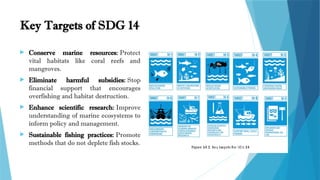
 Conserve marine resources: Protect
vital habitats like coral reefs and
mangroves.
 Eliminate harmful subsidies: Stop
financial support that encourages
overfishing and habitat destruction.
 Enhance scientific research: Improve
understanding of marine ecosystems to
inform policy and management.
 Sustainable fishing practices: Promote
methods that do not deplete fish stocks.
Importance of Marine Ecosystems
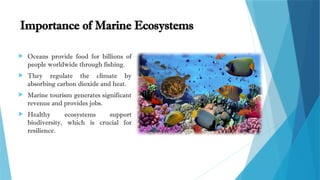
 Oceans provide food for billions of
people worldwide through fishing.
 They regulate the climate by
absorbing carbon dioxide and heat.
 Marine tourism generates significant
revenue and provides jobs.
 Healthy ecosystems support
biodiversity, which is crucial for
resilience.
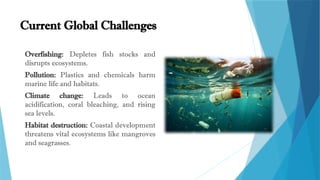
Current Global Challenges
Overfishing: Depletes fish stocks and
disrupts ecosystems.
Pollution: Plastics and chemicals harm
marine life and habitats.
Climate change: Leads to ocean
acidification, coral bleaching, and rising
sea levels.
Habitat destruction: Coastal development
threatens vital ecosystems like mangroves
and seagrasses.
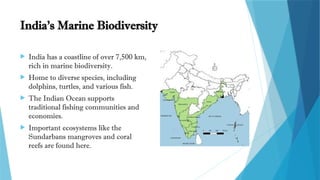
India’s Marine Biodiversity
 India has a coastline of over 7,500 km,
rich in marine biodiversity.
 Home to diverse species, including
dolphins, turtles, and various fish.
 The Indian Ocean supports
traditional fishing communities and
economies.
 Important ecosystems like the
Sundarbans mangroves and coral
reefs are found here.
Government Initiatives
 National Policy on Marine Fisheries: Aims to regulate fishing
practices and ensure sustainability.
 Coastal Regulation Zone (CRZ) notifications: Protects coastal
ecosystems from unplanned development.
 Marine Protected Areas (MPAs): Designated zones to conserve
marine biodiversity and resources.
 Awareness campaigns: Educating communities about sustainable
practices and ocean conservation.
Community Involvement
 Local communities play a crucial role in protecting marine
resources.
 Traditional fishing practices often promote sustainability and
biodiversity.
 Successful community-led initiatives can serve as models for
conservation.
 Engaging youth and local stakeholders is essential for effective
conservation.
Case Study: Marine Protected Areas (MPAs)
 India has established several MPAs to protect marine
biodiversity.
 Examples include the Gulf of Mannar and Andaman &
Nicobar Islands.
 MPAs help restore fish populations and preserve critical
habitats.
 Monitoring and enforcement are essential for their success.
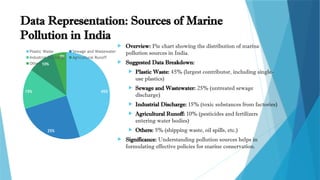
Data Representation: Sources of Marine
Pollution in India
45%
25%
15%
10%
5%
Plastic Waste Sewage and Wastewater
Industrial Discharge Agricultural Runoff
Others
 Overview: Pie chart showing the distribution of marine
pollution sources in India.
 Suggested Data Breakdown:
 Plastic Waste: 45% (largest contributor, including single-
use plastics)
 Sewage and Wastewater: 25% (untreated sewage
discharge)
 Industrial Discharge: 15% (toxic substances from factories)
 Agricultural Runoff: 10% (pesticides and fertilizers
entering water bodies)
 Others: 5% (shipping waste, oil spills, etc.)
 Significance: Understanding pollution sources helps in
formulating effective policies for marine conservation.
Campaign: “Swachh Sagar, Surakshit Sagar”
 Overview: Launched by the Government of India, this campaign aims to
clean coastlines and promote sustainable practices in marine environments.
 Objectives:
 Reduce marine pollution, particularly plastic waste.
 Raise awareness about the importance of ocean health.
 Involve local communities and stakeholders in cleanup activities.
 Activities: Beach clean-ups, awareness programs, and educational
workshops for schools and communities.
 Impact: Encourages collective action for ocean conservation and inspires
grassroots movements.
Future Directions and Solutions
 Promote sustainable fishing methods to protect fish stocks.
 Implement better waste management to reduce marine
pollution.
 Strengthen policies to protect vulnerable marine ecosystems.
 Encourage international cooperation for global ocean health.
Conclusion
 Protecting our oceans is crucial for environmental health
and human well-being.
 Everyone can contribute to marine conservation through
simple actions.
 Raising awareness and advocating for sustainable practices
is key to achieving SDG 14.
THANK YOU

Case Study on Sustainable Development Goal 14.pptx

  • 1.
    Title: Case Studyon SDG 14: Life Below Water Group Members: 1. Kolhe Akash V. 2. Gade Chetan S. 3. Gadakh Sarthak 4. Thorat Om
  • 2.
    Introduction to SDG14  Definition: • SDG 14 aims to conserve and sustainably use the oceans, seas, and marine resources for sustainable development.  Importance: • Oceans are critical for biodiversity, climate regulation, and livelihoods, especially in coastal regions of India. • India has a vast coastline of over 7,500 km, supporting millions of people.
  • 3.
    Key Targets ofSDG 14  Conserve marine resources: Protect vital habitats like coral reefs and mangroves.  Eliminate harmful subsidies: Stop financial support that encourages overfishing and habitat destruction.  Enhance scientific research: Improve understanding of marine ecosystems to inform policy and management.  Sustainable fishing practices: Promote methods that do not deplete fish stocks.
  • 4.
    Importance of MarineEcosystems  Oceans provide food for billions of people worldwide through fishing.  They regulate the climate by absorbing carbon dioxide and heat.  Marine tourism generates significant revenue and provides jobs.  Healthy ecosystems support biodiversity, which is crucial for resilience.
  • 5.
    Current Global Challenges Overfishing:Depletes fish stocks and disrupts ecosystems. Pollution: Plastics and chemicals harm marine life and habitats. Climate change: Leads to ocean acidification, coral bleaching, and rising sea levels. Habitat destruction: Coastal development threatens vital ecosystems like mangroves and seagrasses.
  • 6.
    India’s Marine Biodiversity India has a coastline of over 7,500 km, rich in marine biodiversity.  Home to diverse species, including dolphins, turtles, and various fish.  The Indian Ocean supports traditional fishing communities and economies.  Important ecosystems like the Sundarbans mangroves and coral reefs are found here.
  • 7.
    Government Initiatives  NationalPolicy on Marine Fisheries: Aims to regulate fishing practices and ensure sustainability.  Coastal Regulation Zone (CRZ) notifications: Protects coastal ecosystems from unplanned development.  Marine Protected Areas (MPAs): Designated zones to conserve marine biodiversity and resources.  Awareness campaigns: Educating communities about sustainable practices and ocean conservation.
  • 8.
    Community Involvement  Localcommunities play a crucial role in protecting marine resources.  Traditional fishing practices often promote sustainability and biodiversity.  Successful community-led initiatives can serve as models for conservation.  Engaging youth and local stakeholders is essential for effective conservation.
  • 9.
    Case Study: MarineProtected Areas (MPAs)  India has established several MPAs to protect marine biodiversity.  Examples include the Gulf of Mannar and Andaman & Nicobar Islands.  MPAs help restore fish populations and preserve critical habitats.  Monitoring and enforcement are essential for their success.
  • 10.
    Data Representation: Sourcesof Marine Pollution in India 45% 25% 15% 10% 5% Plastic Waste Sewage and Wastewater Industrial Discharge Agricultural Runoff Others  Overview: Pie chart showing the distribution of marine pollution sources in India.  Suggested Data Breakdown:  Plastic Waste: 45% (largest contributor, including single- use plastics)  Sewage and Wastewater: 25% (untreated sewage discharge)  Industrial Discharge: 15% (toxic substances from factories)  Agricultural Runoff: 10% (pesticides and fertilizers entering water bodies)  Others: 5% (shipping waste, oil spills, etc.)  Significance: Understanding pollution sources helps in formulating effective policies for marine conservation.
  • 11.
    Campaign: “Swachh Sagar,Surakshit Sagar”  Overview: Launched by the Government of India, this campaign aims to clean coastlines and promote sustainable practices in marine environments.  Objectives:  Reduce marine pollution, particularly plastic waste.  Raise awareness about the importance of ocean health.  Involve local communities and stakeholders in cleanup activities.  Activities: Beach clean-ups, awareness programs, and educational workshops for schools and communities.  Impact: Encourages collective action for ocean conservation and inspires grassroots movements.
  • 12.
    Future Directions andSolutions  Promote sustainable fishing methods to protect fish stocks.  Implement better waste management to reduce marine pollution.  Strengthen policies to protect vulnerable marine ecosystems.  Encourage international cooperation for global ocean health.
  • 13.
    Conclusion  Protecting ouroceans is crucial for environmental health and human well-being.  Everyone can contribute to marine conservation through simple actions.  Raising awareness and advocating for sustainable practices is key to achieving SDG 14.
  • 14.