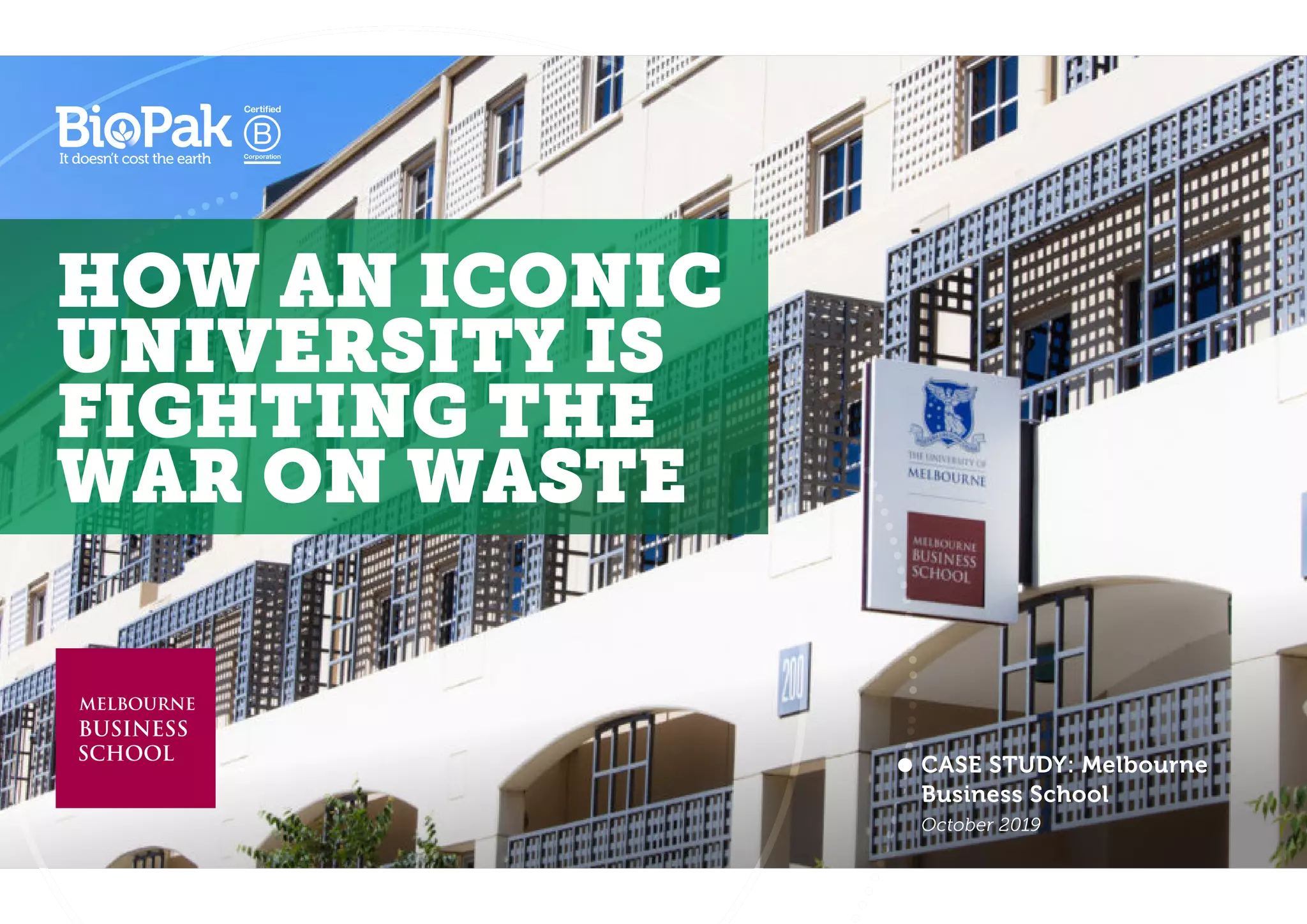
CASE STUDY: Melbourne
Business School
October 2019
HOW AN ICONIC
UNIVERSITY IS
FIGHTING THE
WAR ON WASTE
www.biopak.com
ā€œBioPak offer a circular solution and from
a business perspective made it so much
easier to move into this area.ā€
— Mark Edmonds, Facilities Manager
		
MELBOURNE
BUSINESS
SCHOOL
THE CHALLENGE
When it comes to getting food
and drinks on campus, single-
use foodservice packaging
is in abundance and has
negative consequences for
the environment. Sustainable
alternatives must be sought.
Melbourne Business School is
a world-renowned school within
Melbourne University. Its on-
campus food and drink outlets
nourish a large student body as well
as faculty members. The associated
impact on the environment needs to
be considered and managed.
Single-use foodservice packaging
and disposables are frequently used
for the sake of practicality and food
safety, but have significant
environmental impacts ranging from
how the materials are sourced to
the disposal options once used.
THE SOLUTION
MBS teamed up with BioPak
in a bid to reduce negative
environmental impacts caused
by single-use plastics, replacing
disposable foodservice plastic
with compostable bioplastic
alternatives instead.
MBS Facilities Manager Mark
Edmonds, while recognising the
importance of implemeting reusable
solutions where practical, recognised
that single-use plastic in on-campus
food outlets could not be fully
eliminated.
MBS have sreduced their waste
to landfill by switching to BioPak
compostable packaging and joining
the BioPak compost service – which
facilitates the collection of used BioPak
compostable cups and packaging,
along with food and organic waste
produced at MBS.
Environmental sustainability was a
must and it was also important to look
at the practical things – like easy
ordering, fast delivery, and great range
of products. MBS composting
program saw them adopt
environmentally conscious solutions to
set an example and reduce waste to
landfill on campus.
THE RESULT
Switching to compostable
packaging is a simple step that
makes a big difference especially
on campus at universities, where
large quantities of food and
drink are consumed.
• Currently, MBS are diverting
between 2,000 and 3,000
kilograms of compostable waste,
that previously went to landfill,
each month.
• By simply doing this MBS are
avoiding methane emissions, a
greenhouse gas 28 times more
potent than Co2, by reducing
waste to landfill. They are also
removing the need for fossil-fuel
based plastics, which are
contaminated with food and
therefore not to recycled, within
on-campus food outlets.

Case study: Melbourne Business School closes the loop

  • 1.
    CASE STUDY: Melbourne BusinessSchool October 2019 HOW AN ICONIC UNIVERSITY IS FIGHTING THE WAR ON WASTE
  • 2.
    www.biopak.com ā€œBioPak offer acircular solution and from a business perspective made it so much easier to move into this area.ā€ — Mark Edmonds, Facilities Manager MELBOURNE BUSINESS SCHOOL THE CHALLENGE When it comes to getting food and drinks on campus, single- use foodservice packaging is in abundance and has negative consequences for the environment. Sustainable alternatives must be sought. Melbourne Business School is a world-renowned school within Melbourne University. Its on- campus food and drink outlets nourish a large student body as well as faculty members. The associated impact on the environment needs to be considered and managed. Single-use foodservice packaging and disposables are frequently used for the sake of practicality and food safety, but have significant environmental impacts ranging from how the materials are sourced to the disposal options once used. THE SOLUTION MBS teamed up with BioPak in a bid to reduce negative environmental impacts caused by single-use plastics, replacing disposable foodservice plastic with compostable bioplastic alternatives instead. MBS Facilities Manager Mark Edmonds, while recognising the importance of implemeting reusable solutions where practical, recognised that single-use plastic in on-campus food outlets could not be fully eliminated. MBS have sreduced their waste to landfill by switching to BioPak compostable packaging and joining the BioPak compost service – which facilitates the collection of used BioPak compostable cups and packaging, along with food and organic waste produced at MBS. Environmental sustainability was a must and it was also important to look at the practical things – like easy ordering, fast delivery, and great range of products. MBS composting program saw them adopt environmentally conscious solutions to set an example and reduce waste to landfill on campus. THE RESULT Switching to compostable packaging is a simple step that makes a big difference especially on campus at universities, where large quantities of food and drink are consumed. • Currently, MBS are diverting between 2,000 and 3,000 kilograms of compostable waste, that previously went to landfill, each month. • By simply doing this MBS are avoiding methane emissions, a greenhouse gas 28 times more potent than Co2, by reducing waste to landfill. They are also removing the need for fossil-fuel based plastics, which are contaminated with food and therefore not to recycled, within on-campus food outlets.