Casa Tutorial Committee Report

      Prepared for the December 15, 2009
         Staff Development Session at
          Casa Grande High School
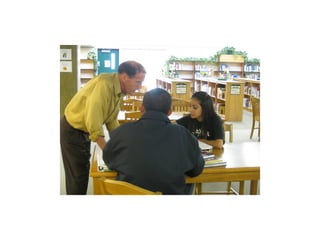
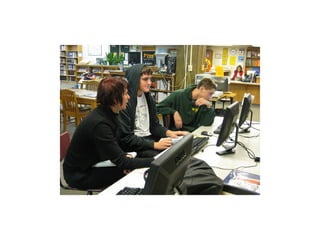
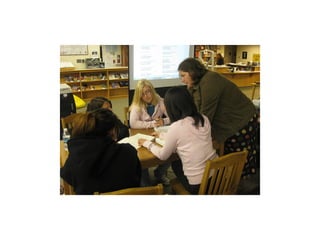
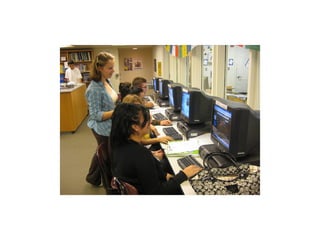
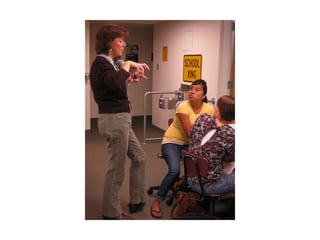
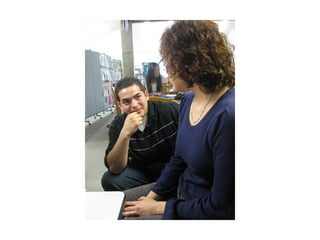
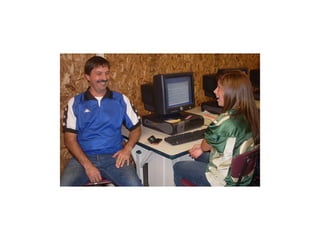
Some students use
 tutorial wisely...
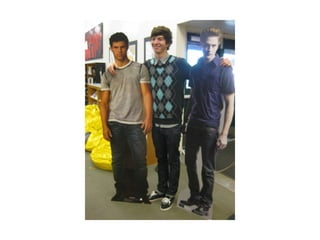
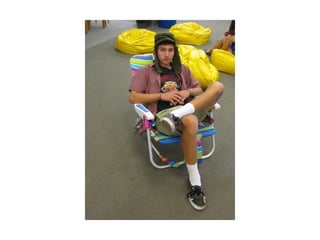
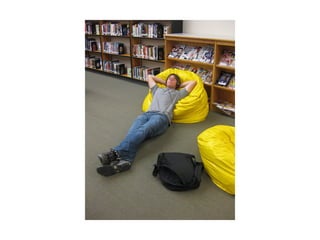
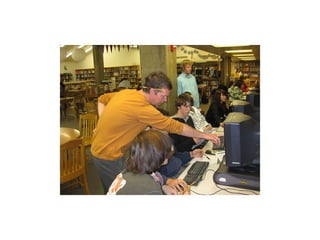
Some students don't...
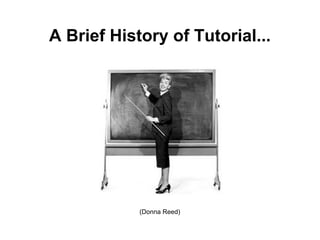
A Brief History of Tutorial...


            (Donna Reed)
...used for self-directed learning...
...focus on students
who are not succeeding...
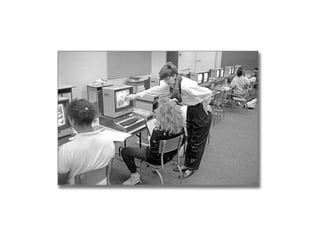
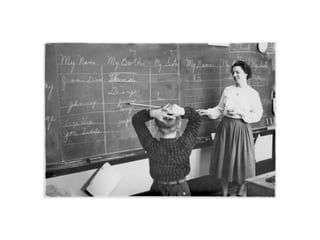
...extra time, attention, support
    (that some students need
        to be successful)...
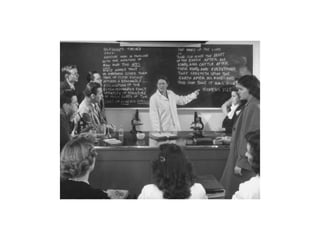
...environment where students
can focus in small groups with
     assistance of teacher...
...proper implementation
 with all stakeholders on board =
increased student achievement...
...effective in increasing
       student performance
for the majority of attendees...
A Brief History of Tutorial
        @ Casa...


         (Sharon Roberts-Cagle)
A Brief History of Tutorial
          @ Casa...

It was part of our switch from a six-period schedule to a
block schedule.

Students were thought to need a longer break after 100
minutes of sitting in class, and having a long tutorial and
then a long lunch seemed conducive to that outcome.

Teachers needed a break to go to the bathroom and the
copy room.
                    (Sharon Roberts-Cagle)
A Brief History of Tutorial
          @ Casa...

Tardy problems were reduced because there was no
longer a reason to be tardy after such a long break.

Except for sixth and third when students return late from
lunch, tardies are not nearly the problem they used to be.


                   (Sharon Roberts-Cagle)
A Brief History of Tutorial
          @ Casa...

Students are able to go to class on an A day, write a draft
of an essay or complete homework problems, come back
to that class the next B day for editing or homework help,
and then turn in the new-and-improved assignment on the
next A day.


                   (Sharon Roberts-Cagle)
A Brief History of Tutorial
          @ Casa...

It was never believed that all students would use tutorial
at all times.

However, tutorial does support those students who want
and seek out help.


                   (Sharon Roberts-Cagle)
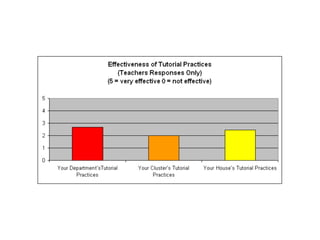
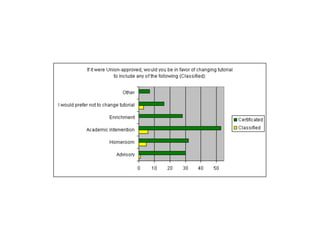
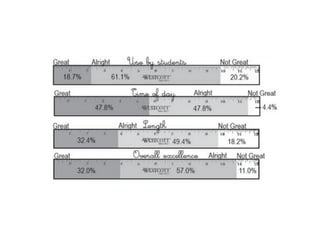
What does Casa staff say
    about tutorial?
Go to SurveyMonkey.com
(ask a tutorial committee member for the login information)


         to read the comments.
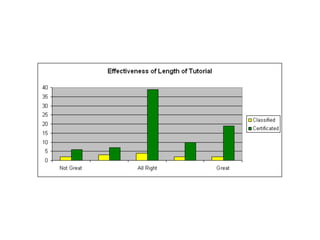
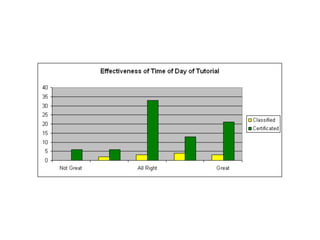
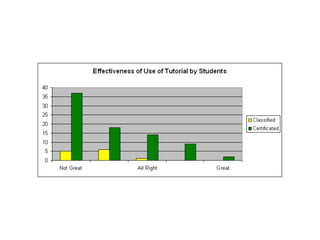
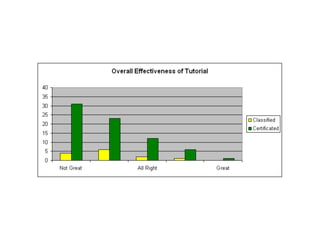
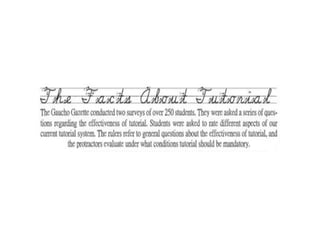
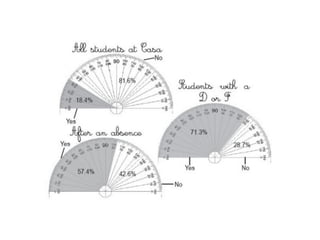
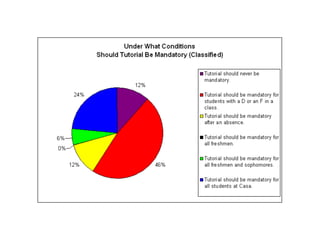
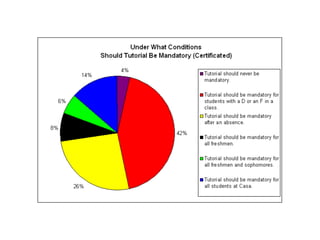
What do Casa students say
     about tutorial?
So how do other high schools
      handle tutorial?
Piner
(No tutorial.)


    (Tom Kinney)
Elsie Allen
(No tutorial.)


    (Tom Kinney)
El Molino
(No tutorial.)


    (Tom Kinney)
San Marin
(No tutorial.)


    (Evelyn Tseng)
Armjio
(No tutorial.)


    (Anna Koval)
Windsor
(No tutorial.)


    (Anne Osterlye)
Napa
(No tutorial.)


    (Maria Walker)
Petaluma
(Not sure.)


  (Linda Scheele)
New Tech
Grade-level support classes
Teachers keep office hours
Advisory: 30-minutes long, twice per week spent "delving into"
their "Student Success Skills"
Students with poor grades and a free period are placed in a class
with a teacher who has a prep


                            (Anna Koval)
Lowell
They have what’s called “registry.” As for what they do during
registry: "not a whole lot most of the time."
Sometimes the students take surveys, or fill out papers.
Sometimes the counselors come in and work with the students.
Reg runners make announcements.
Peer resource students work with the freshman regs.
Students stay in the same reg for four years and graduate as a
group, with their reg teacher handing out their diplomas.
They have a committee examining the reg structure now.


                            (Anna Koval)
San Rafael
They have tutorial.
They have advisory.
Sometimes it’s one, sometimes it’s the other.
Whatever class you’re in, it’s the room you stay in.
Advisory is like a homeroom and the curriculum is like Study
Skills.
Tutorial is like a study hall.


                            (Donna Reed)
Tamalpais
On Mondays, they meet with every class with 5 minute breaks
between periods.
T&Th they have periods 1-4 with 2 breaks.
W&F periods 5-7 and tutorial.
Tutorial is an hour.
It’s Period 5 > Break > Tutorial > Break > Period 6 > Lunch >
Period 7.


                           (Donna Reed)
Montgomery
"Guided Study" -- obligatory for everyone.
There’s a 5-minute window at the end of period/block 1/2.
Whatever class they’re in before Guided Study, they stay where
they are.
They can get a pass to go to another class, but it must be pre-
arranged the day before, and there’s only a certain number of
passes that can be handed out.
If they are going to another class, they have to sign out and sign
in.
No one’s wandering around after the 5-minute window, and the
campus supervisors enforce it.
But it’s more like an SSR period/study hall for doing homework.
Few students use the time to get help, but they can, of course.

                            (Anne Osterlye)
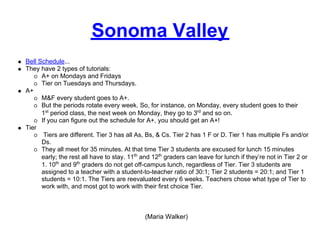
Sonoma Valley
Bell Schedule...
They have 2 types of tutorials:
      A+ on Mondays and Fridays
      Tier on Tuesdays and Thursdays.
A+
      M&F every student goes to A+.
      But the periods rotate every week. So, for instance, on Monday, every student goes to their
      1st period class, the next week on Monday, they go to 3rd and so on.
      If you can figure out the schedule for A+, you should get an A+!
Tier
       Tiers are different. Tier 3 has all As, Bs, & Cs. Tier 2 has 1 F or D. Tier 1 has multiple Fs and/or
      Ds.
      They all meet for 35 minutes. At that time Tier 3 students are excused for lunch 15 minutes
      early; the rest all have to stay. 11th and 12th graders can leave for lunch if they’re not in Tier 2 or
      1. 10th and 9th graders do not get off-campus lunch, regardless of Tier. Tier 3 students are
      assigned to a teacher with a student-to-teacher ratio of 30:1; Tier 2 students = 20:1; and Tier 1
      students = 10:1. The Tiers are reevaluated every 6 weeks. Teachers chose what type of Tier to
      work with, and most got to work with their first choice Tier.


                                              (Maria Walker)
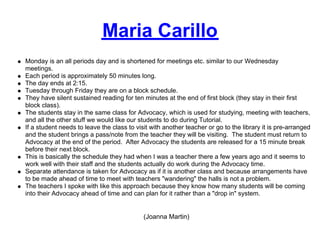
Maria Carillo
Monday is an all periods day and is shortened for meetings etc. similar to our Wednesday
meetings.
Each period is approximately 50 minutes long.
The day ends at 2:15.
Tuesday through Friday they are on a block schedule.
They have silent sustained reading for ten minutes at the end of first block (they stay in their first
block class).
The students stay in the same class for Advocacy, which is used for studying, meeting with teachers,
and all the other stuff we would like our students to do during Tutorial.
If a student needs to leave the class to visit with another teacher or go to the library it is pre-arranged
and the student brings a pass/note from the teacher they will be visiting. The student must return to
Advocacy at the end of the period. After Advocacy the students are released for a 15 minute break
before their next block.
This is basically the schedule they had when I was a teacher there a few years ago and it seems to
work well with their staff and the students actually do work during the Advocacy time.
Separate attendance is taken for Advocacy as if it is another class and because arrangements have
to be made ahead of time to meet with teachers "wandering" the halls is not a problem.
The teachers I spoke with like this approach because they know how many students will be coming
into their Advocacy ahead of time and can plan for it rather than a "drop in" system.


                                            (Joanna Martin)
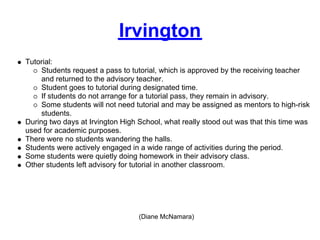
Irvington
Tutorial:
     Students request a pass to tutorial, which is approved by the receiving teacher
     and returned to the advisory teacher.
     Student goes to tutorial during designated time.
     If students do not arrange for a tutorial pass, they remain in advisory.
     Some students will not need tutorial and may be assigned as mentors to high-risk
     students.
During two days at Irvington High School, what really stood out was that this time was
used for academic purposes.
There were no students wandering the halls.
Students were actively engaged in a wide range of activities during the period.
Some students were quietly doing homework in their advisory class.
Other students left advisory for tutorial in another classroom.


                                  (Diane McNamara)
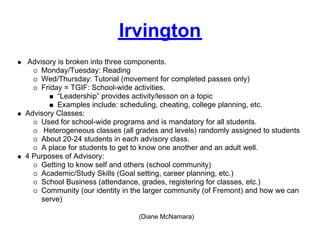
Irvington
Advisory is broken into three components.
    Monday/Tuesday: Reading
    Wed/Thursday: Tutorial (movement for completed passes only)
    Friday = TGIF: School-wide activities.
         “Leadership” provides activity/lesson on a topic
         Examples include: scheduling, cheating, college planning, etc.
Advisory Classes:
    Used for school-wide programs and is mandatory for all students.
     Heterogeneous classes (all grades and levels) randomly assigned to students
    About 20-24 students in each advisory class.
    A place for students to get to know one another and an adult well.
4 Purposes of Advisory:
    Getting to know self and others (school community)
    Academic/Study Skills (Goal setting, career planning, etc.)
    School Business (attendance, grades, registering for classes, etc.)
    Community (our identity in the larger community (of Fremont) and how we can
    serve)

                                 (Diane McNamara)
What are we doing
about tutorial now?
What else can we do?
We're not sure but
we'll figure it out together!
We need to do something,
   though, because...
Tutorial can be even better!
If we all agree to make it that way!
:)
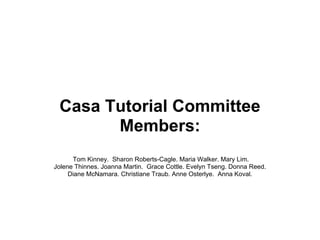
Casa Tutorial Committee
       Members:
      Tom Kinney. Sharon Roberts-Cagle. Maria Walker. Mary Lim.
Jolene Thinnes. Joanna Martin. Grace Cottle. Evelyn Tseng. Donna Reed.
     Diane McNamara. Christiane Traub. Anne Osterlye. Anna Koval.

Casa Grande High School Tutorial Committee Report

  • 1.
    Casa Tutorial CommitteeReport Prepared for the December 15, 2009 Staff Development Session at Casa Grande High School
  • 2.
    Some students use tutorial wisely...
  • 6.
  • 10.
    A Brief Historyof Tutorial... (Donna Reed)
  • 11.
  • 13.
    ...focus on students whoare not succeeding...
  • 15.
    ...extra time, attention,support (that some students need to be successful)...
  • 17.
    ...environment where students canfocus in small groups with assistance of teacher...
  • 19.
    ...proper implementation withall stakeholders on board = increased student achievement...
  • 21.
    ...effective in increasing student performance for the majority of attendees...
  • 23.
    A Brief Historyof Tutorial @ Casa... (Sharon Roberts-Cagle)
  • 24.
    A Brief Historyof Tutorial @ Casa... It was part of our switch from a six-period schedule to a block schedule. Students were thought to need a longer break after 100 minutes of sitting in class, and having a long tutorial and then a long lunch seemed conducive to that outcome. Teachers needed a break to go to the bathroom and the copy room. (Sharon Roberts-Cagle)
  • 25.
    A Brief Historyof Tutorial @ Casa... Tardy problems were reduced because there was no longer a reason to be tardy after such a long break. Except for sixth and third when students return late from lunch, tardies are not nearly the problem they used to be. (Sharon Roberts-Cagle)
  • 26.
    A Brief Historyof Tutorial @ Casa... Students are able to go to class on an A day, write a draft of an essay or complete homework problems, come back to that class the next B day for editing or homework help, and then turn in the new-and-improved assignment on the next A day. (Sharon Roberts-Cagle)
  • 27.
    A Brief Historyof Tutorial @ Casa... It was never believed that all students would use tutorial at all times. However, tutorial does support those students who want and seek out help. (Sharon Roberts-Cagle)
  • 28.
    What does Casastaff say about tutorial?
  • 37.
    Go to SurveyMonkey.com (aska tutorial committee member for the login information) to read the comments.
  • 38.
    What do Casastudents say about tutorial?
  • 42.
    So how doother high schools handle tutorial?
  • 43.
  • 44.
  • 45.
  • 46.
  • 47.
  • 48.
    Windsor (No tutorial.) (Anne Osterlye)
  • 49.
    Napa (No tutorial.) (Maria Walker)
  • 50.
    Petaluma (Not sure.) (Linda Scheele)
  • 51.
    New Tech Grade-level supportclasses Teachers keep office hours Advisory: 30-minutes long, twice per week spent "delving into" their "Student Success Skills" Students with poor grades and a free period are placed in a class with a teacher who has a prep (Anna Koval)
  • 52.
    Lowell They have what’scalled “registry.” As for what they do during registry: "not a whole lot most of the time." Sometimes the students take surveys, or fill out papers. Sometimes the counselors come in and work with the students. Reg runners make announcements. Peer resource students work with the freshman regs. Students stay in the same reg for four years and graduate as a group, with their reg teacher handing out their diplomas. They have a committee examining the reg structure now. (Anna Koval)
  • 53.
    San Rafael They havetutorial. They have advisory. Sometimes it’s one, sometimes it’s the other. Whatever class you’re in, it’s the room you stay in. Advisory is like a homeroom and the curriculum is like Study Skills. Tutorial is like a study hall. (Donna Reed)
  • 54.
    Tamalpais On Mondays, theymeet with every class with 5 minute breaks between periods. T&Th they have periods 1-4 with 2 breaks. W&F periods 5-7 and tutorial. Tutorial is an hour. It’s Period 5 > Break > Tutorial > Break > Period 6 > Lunch > Period 7. (Donna Reed)
  • 55.
    Montgomery "Guided Study" --obligatory for everyone. There’s a 5-minute window at the end of period/block 1/2. Whatever class they’re in before Guided Study, they stay where they are. They can get a pass to go to another class, but it must be pre- arranged the day before, and there’s only a certain number of passes that can be handed out. If they are going to another class, they have to sign out and sign in. No one’s wandering around after the 5-minute window, and the campus supervisors enforce it. But it’s more like an SSR period/study hall for doing homework. Few students use the time to get help, but they can, of course. (Anne Osterlye)
  • 56.
    Sonoma Valley Bell Schedule... Theyhave 2 types of tutorials: A+ on Mondays and Fridays Tier on Tuesdays and Thursdays. A+ M&F every student goes to A+. But the periods rotate every week. So, for instance, on Monday, every student goes to their 1st period class, the next week on Monday, they go to 3rd and so on. If you can figure out the schedule for A+, you should get an A+! Tier Tiers are different. Tier 3 has all As, Bs, & Cs. Tier 2 has 1 F or D. Tier 1 has multiple Fs and/or Ds. They all meet for 35 minutes. At that time Tier 3 students are excused for lunch 15 minutes early; the rest all have to stay. 11th and 12th graders can leave for lunch if they’re not in Tier 2 or 1. 10th and 9th graders do not get off-campus lunch, regardless of Tier. Tier 3 students are assigned to a teacher with a student-to-teacher ratio of 30:1; Tier 2 students = 20:1; and Tier 1 students = 10:1. The Tiers are reevaluated every 6 weeks. Teachers chose what type of Tier to work with, and most got to work with their first choice Tier. (Maria Walker)
  • 57.
    Maria Carillo Monday isan all periods day and is shortened for meetings etc. similar to our Wednesday meetings. Each period is approximately 50 minutes long. The day ends at 2:15. Tuesday through Friday they are on a block schedule. They have silent sustained reading for ten minutes at the end of first block (they stay in their first block class). The students stay in the same class for Advocacy, which is used for studying, meeting with teachers, and all the other stuff we would like our students to do during Tutorial. If a student needs to leave the class to visit with another teacher or go to the library it is pre-arranged and the student brings a pass/note from the teacher they will be visiting. The student must return to Advocacy at the end of the period. After Advocacy the students are released for a 15 minute break before their next block. This is basically the schedule they had when I was a teacher there a few years ago and it seems to work well with their staff and the students actually do work during the Advocacy time. Separate attendance is taken for Advocacy as if it is another class and because arrangements have to be made ahead of time to meet with teachers "wandering" the halls is not a problem. The teachers I spoke with like this approach because they know how many students will be coming into their Advocacy ahead of time and can plan for it rather than a "drop in" system. (Joanna Martin)
  • 58.
    Irvington Tutorial: Students request a pass to tutorial, which is approved by the receiving teacher and returned to the advisory teacher. Student goes to tutorial during designated time. If students do not arrange for a tutorial pass, they remain in advisory. Some students will not need tutorial and may be assigned as mentors to high-risk students. During two days at Irvington High School, what really stood out was that this time was used for academic purposes. There were no students wandering the halls. Students were actively engaged in a wide range of activities during the period. Some students were quietly doing homework in their advisory class. Other students left advisory for tutorial in another classroom. (Diane McNamara)
  • 59.
    Irvington Advisory is brokeninto three components. Monday/Tuesday: Reading Wed/Thursday: Tutorial (movement for completed passes only) Friday = TGIF: School-wide activities. “Leadership” provides activity/lesson on a topic Examples include: scheduling, cheating, college planning, etc. Advisory Classes: Used for school-wide programs and is mandatory for all students. Heterogeneous classes (all grades and levels) randomly assigned to students About 20-24 students in each advisory class. A place for students to get to know one another and an adult well. 4 Purposes of Advisory: Getting to know self and others (school community) Academic/Study Skills (Goal setting, career planning, etc.) School Business (attendance, grades, registering for classes, etc.) Community (our identity in the larger community (of Fremont) and how we can serve) (Diane McNamara)
  • 60.
    What are wedoing about tutorial now?
  • 62.
  • 63.
    We're not surebut we'll figure it out together!
  • 64.
    We need todo something, though, because...
  • 65.
    Tutorial can beeven better!
  • 66.
    If we allagree to make it that way!
  • 75.
  • 76.
    Casa Tutorial Committee Members: Tom Kinney. Sharon Roberts-Cagle. Maria Walker. Mary Lim. Jolene Thinnes. Joanna Martin. Grace Cottle. Evelyn Tseng. Donna Reed. Diane McNamara. Christiane Traub. Anne Osterlye. Anna Koval.